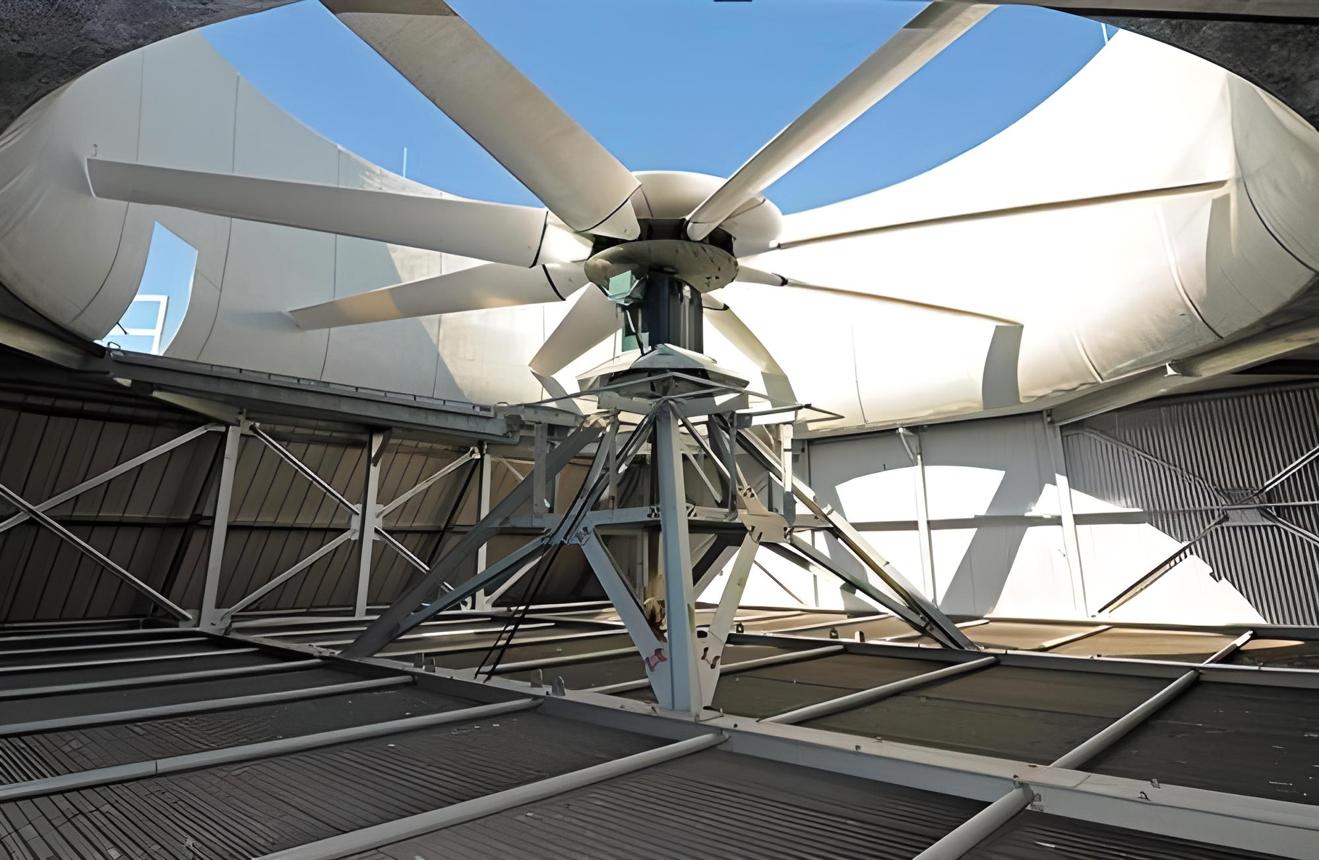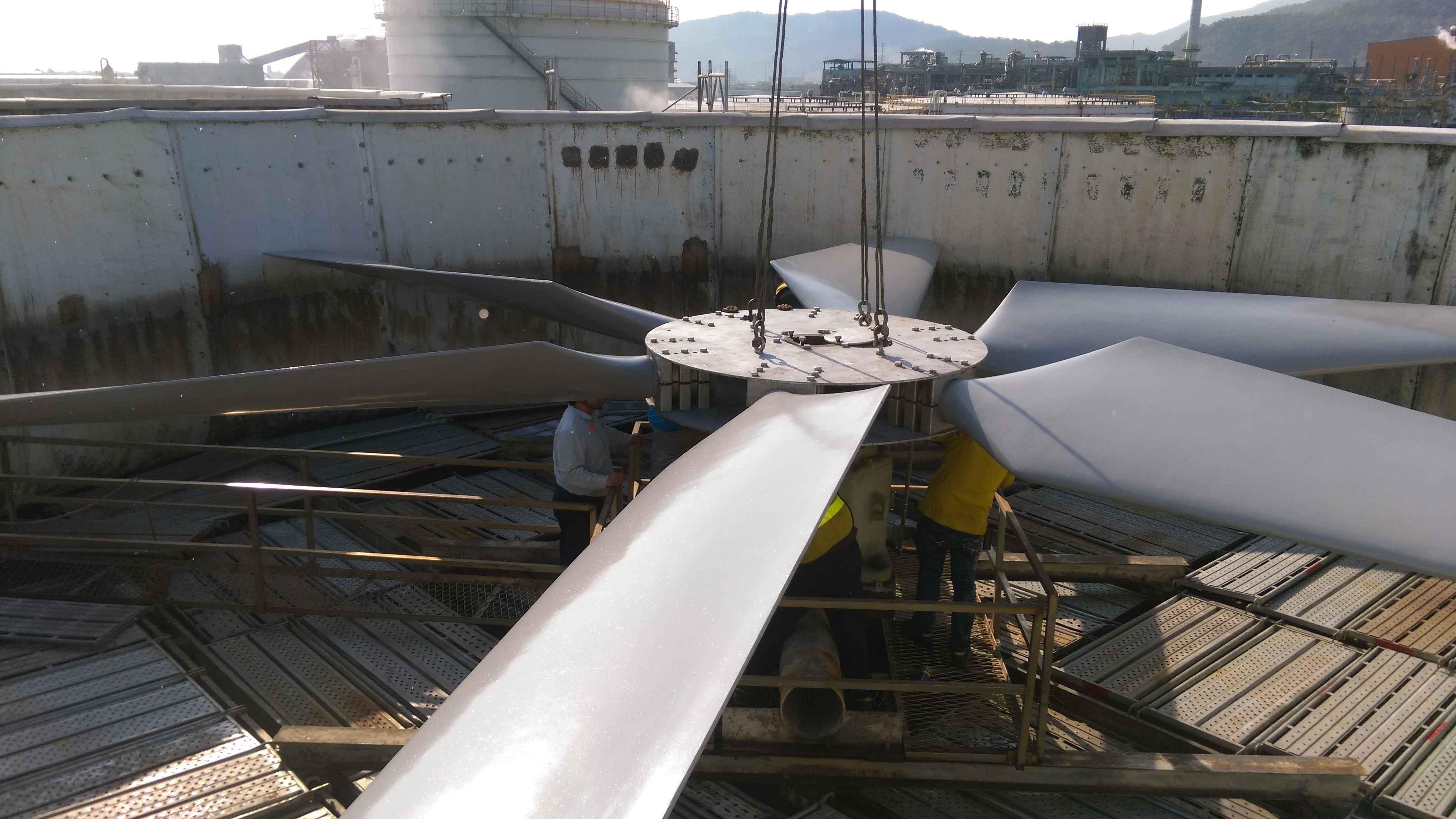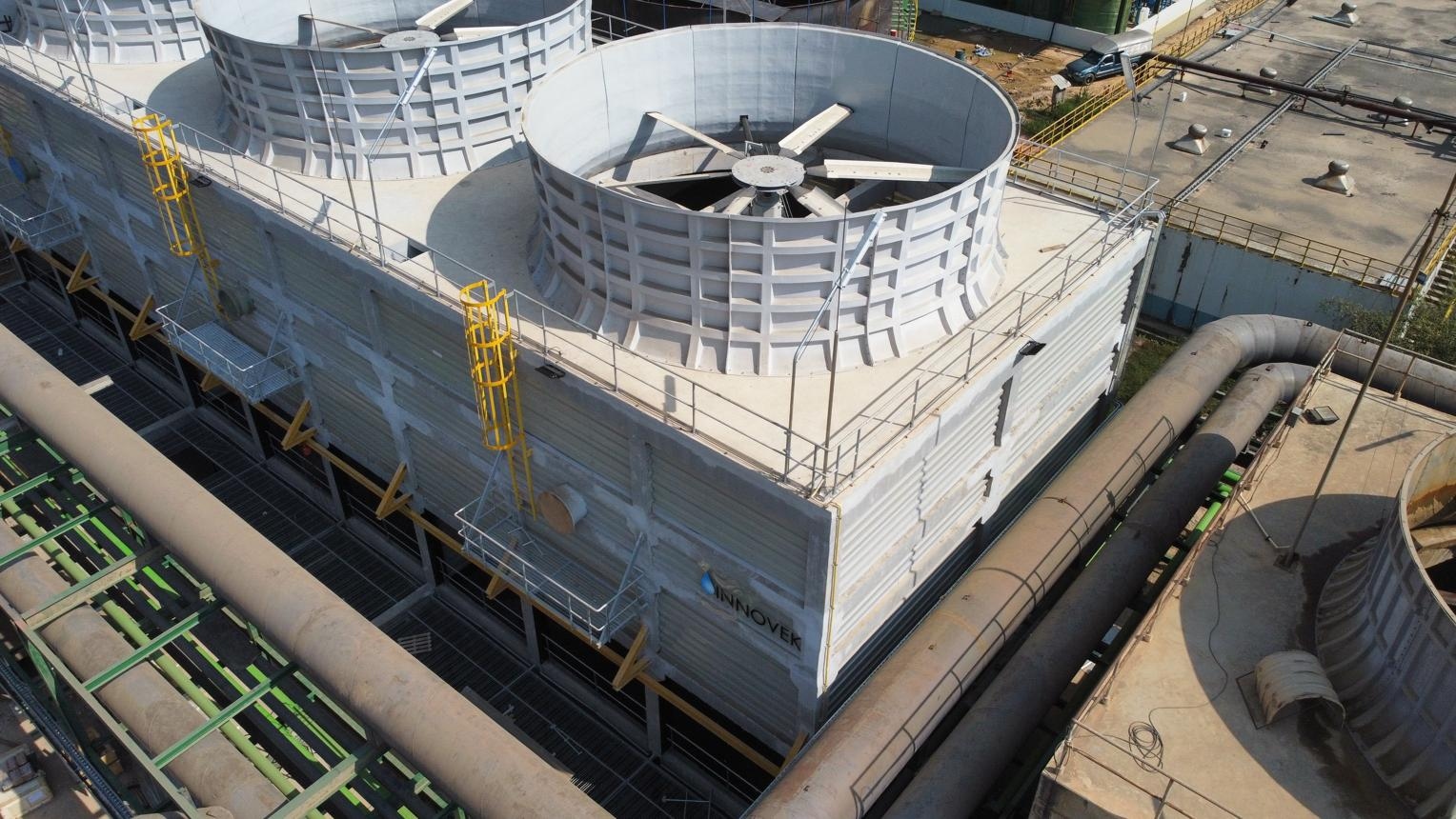
Industrial cooling tower fan blades are essential components of mechanical draft cooling towers. Their primary function is to move large volumes of air through the cooling tower, allowing heat to transfer from circulating water to the surrounding atmosphere.
The design and structure of cooling tower fan blades directly affect airflow, cooling efficiency, energy consumption, operating noise, and equipment reliability.
Whether used in power plants, chemical factories, steel mills, or industrial HVAC systems, properly designed fan blades help maintain stable cooling performance while reducing operating costs.
This article explains the design, structure, materials, and working principles of industrial cooling tower fan blades, helping operators and buyers understand how to select suitable replacement blades.
Main Types of Industrial Cooling Tower Fan Blades
Different cooling tower applications require different fan blade designs. The most common types include:
Axial Cooling Tower Fan Blades
Axial fan blades move air parallel to the fan shaft. They are widely used in industrial cooling towers because they can handle large airflow volumes at relatively low pressure.
Their main advantages include:
Adjustable-Pitch Fan Blades
Adjustable-pitch cooling tower fan blades allow the blade angle to be changed to achieve the required airflow and motor load.
This design helps operators optimize fan performance according to cooling requirements and seasonal operating conditions.
Fixed-Pitch Fan Blades
Fixed-pitch blades have a predetermined installation angle. They provide a relatively simple and stable structure and are commonly used where operating conditions remain consistent.
Structure of Industrial Cooling Tower Fan Blades
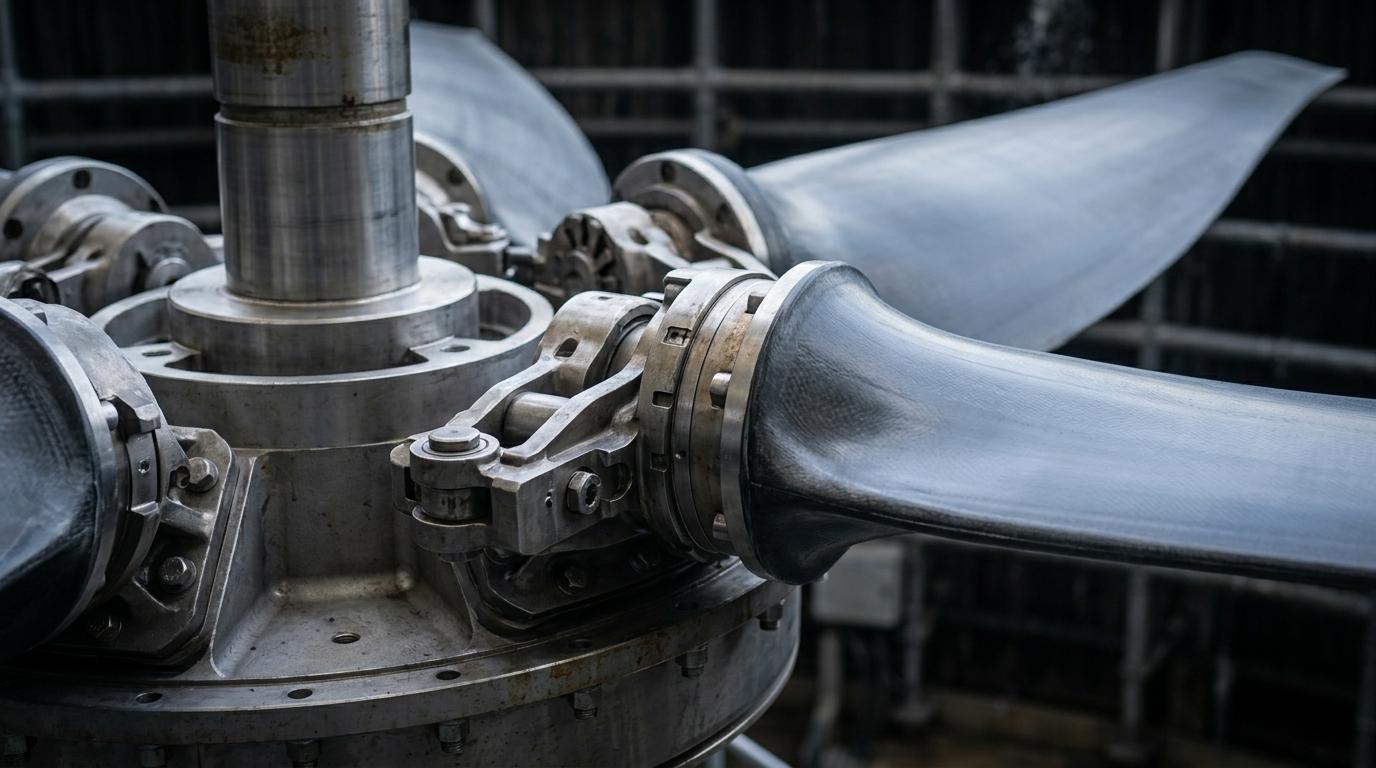
An industrial cooling tower fan blade is designed to withstand aerodynamic forces, centrifugal loads, vibration, and continuous outdoor operation.
Its main structural components include:
Blade Profile
The blade profile determines how air flows across the blade surface. Most industrial cooling tower fans use aerodynamic airfoil profiles to generate airflow efficiently.
The shape, thickness, and curvature of the blade influence lift, drag, airflow distribution, and operating efficiency.
Blade Root
The blade root connects the blade to the fan hub. It must withstand significant centrifugal forces and mechanical loads during operation.
A properly designed blade root helps prevent loosening, fatigue damage, and structural failure.
Blade Tip
The blade tip is the outermost part of the fan blade. Its shape and clearance from the fan cylinder influence airflow leakage, noise, and aerodynamic efficiency.
Incorrect tip clearance may reduce fan performance and increase energy consumption.
Fan Hub and Mounting System
The fan hub supports the blades and connects them to the fan shaft or drive assembly.
Depending on the fan design, the mounting system may include bolts, adjustable-angle mechanisms, locking devices, and blade-positioning components.
Materials Used in Cooling Tower Fan Blades
Material selection affects blade weight, corrosion resistance, strength, service life, and maintenance requirements.
Material | Main Advantages | Typical Applications |
FRP / Fiberglass | Lightweight, corrosion-resistant, high strength-to-weight ratio | Chemical plants, power plants, industrial cooling towers |
Aluminum Alloy | Lightweight, good mechanical strength, easy fabrication | Industrial axial fans |
Composite Materials | High stiffness, corrosion resistance, aerodynamic flexibility | Large industrial cooling tower fans |
Steel | High structural strength | Specialized heavy-duty applications |
FRP cooling tower fan blades are particularly popular in industrial environments because they offer good corrosion resistance and relatively low weight. They are suitable for cooling towers exposed to moisture, chemicals, and outdoor weather conditions.
Working Principles of Industrial Cooling Tower Fan Blades
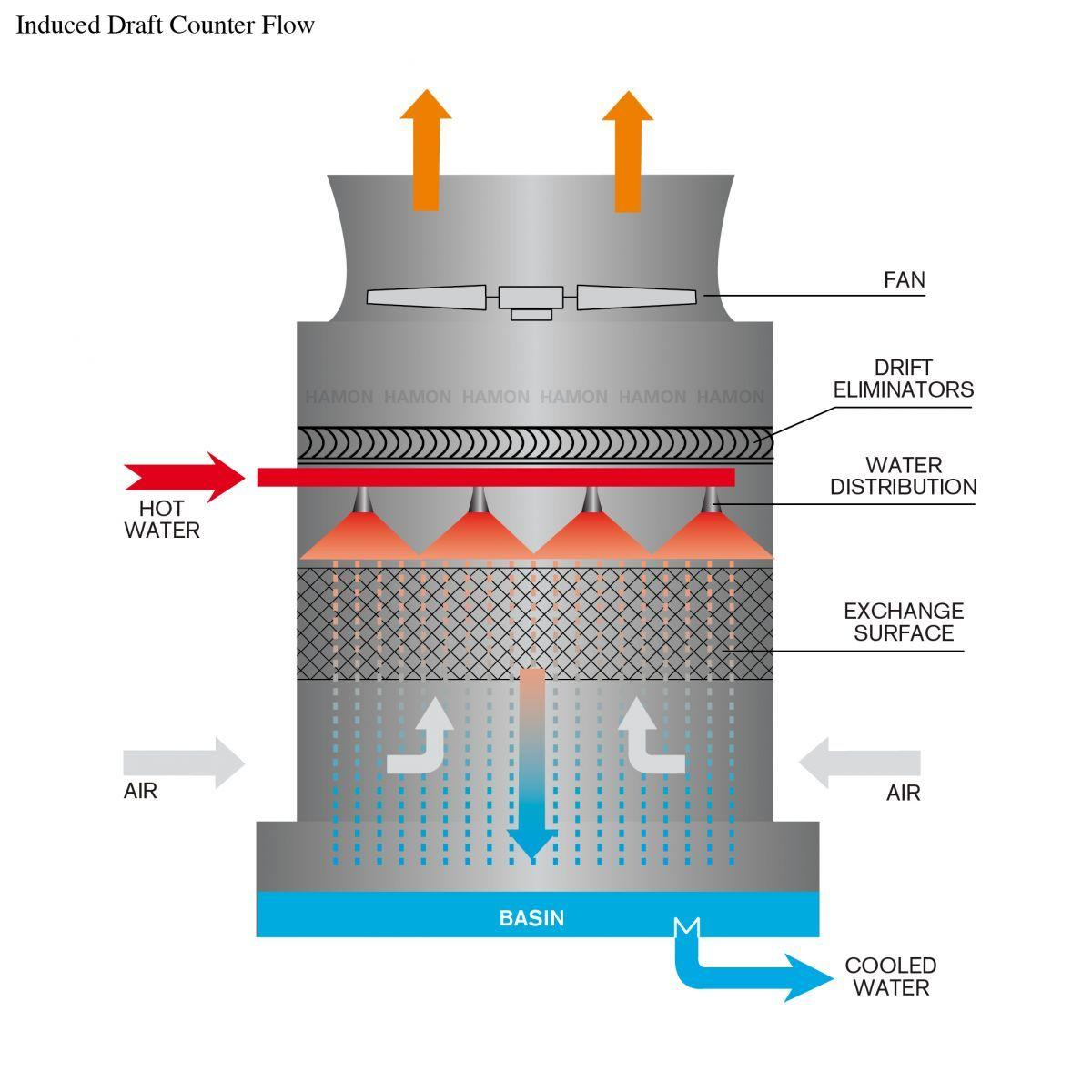
Industrial cooling tower fan blades generally operate according to the aerodynamic principles of axial fans.
The working process involves several stages:
Step 1: Fan Rotation
An electric motor drives the fan through a gearbox, belt drive, or direct-drive system. The fan shaft rotates the hub and connected blades.
Step 2: Airflow Generation
As the blades rotate, their aerodynamic profiles generate pressure differences that move air through the cooling tower.
Step 3: Heat Exchange
In an induced-draft cooling tower, the fan draws air upward through the fill section. Water flows over the fill while air passes through it, allowing heat to transfer from water to air.
Step 4: Warm Air Discharge
The heated, moisture-laden air is discharged through the fan stack into the atmosphere.
Step 5: Continuous Cooling
The circulation process continues, helping maintain the required cooling water temperature for industrial production or HVAC systems.
Key Design Factors Affecting Fan Blade Performance
Several engineering factors determine the performance of industrial cooling tower fan blades.
Blade Angle and Pitch
Blade pitch determines the angle at which the blade interacts with incoming air. An incorrect pitch can cause insufficient airflow, excessive motor load, and increased vibration.
Blade Diameter
Fan diameter determines the effective air-moving area. Larger fans can generally move more air, but the final design must consider fan speed, available space, motor power, and aerodynamic requirements.
Blade Shape and Airfoil Design
Aerodynamic blade profiles help improve airflow efficiency and reduce drag. Proper design also helps minimize operating noise.
Rotational Speed
Fan speed directly affects airflow and power consumption. Increasing rotational speed may increase airflow, but it also increases mechanical loading and energy demand.
Blade Balance
Dynamic and static balance are important for smooth fan operation. Poorly balanced blades can cause excessive vibration, bearing wear, shaft damage, and premature equipment failure.
Common Problems with Industrial Cooling Tower Fan Blades
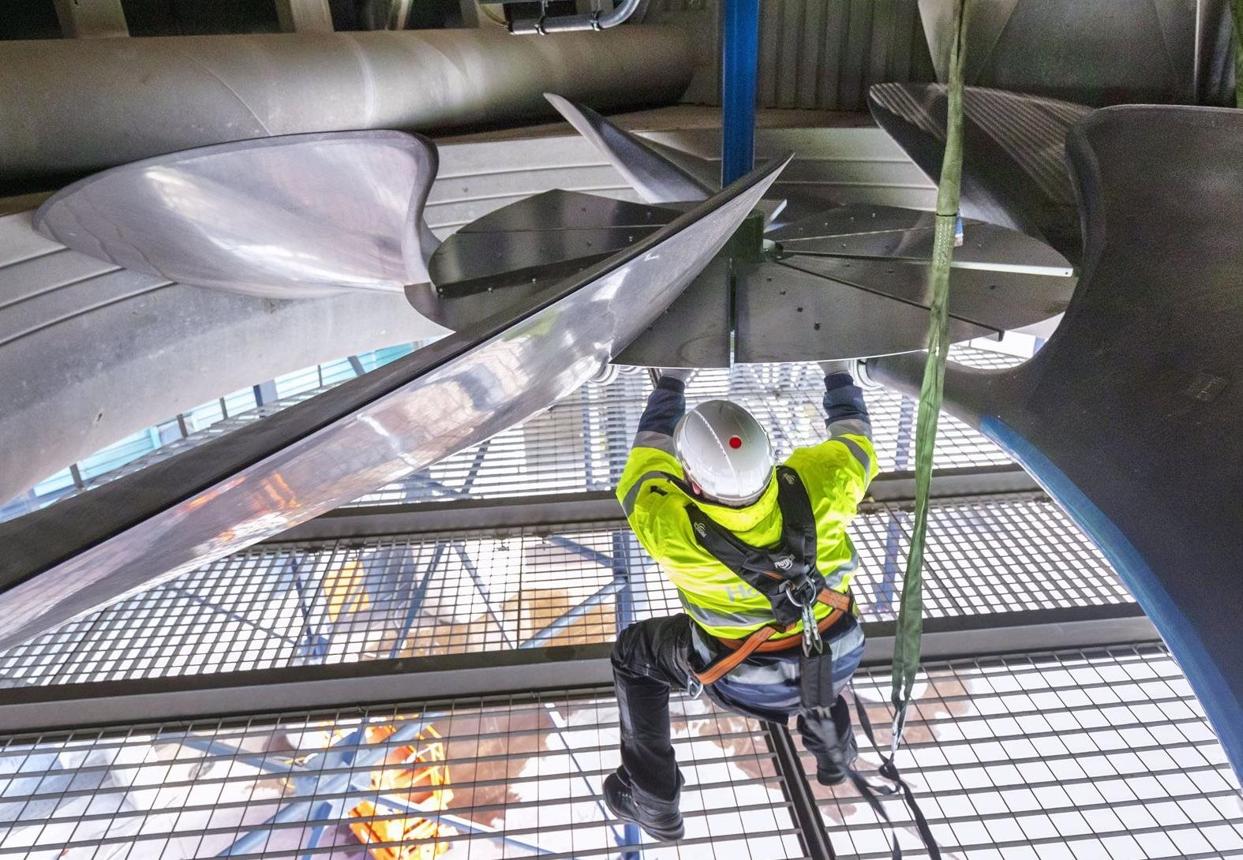
During long-term operation, cooling tower fan blades may experience several problems:
Cracking: Fatigue, impact, or material aging can cause blade cracks.
Corrosion: Moisture and chemical exposure may damage blade surfaces or mounting hardware.
Deformation: Excessive mechanical loads or improper installation can change blade geometry.
Vibration: Blade imbalance, loose bolts, or incorrect pitch may cause abnormal vibration.
Reduced airflow: Damaged blades or incorrect installation can reduce cooling tower efficiency.
Regular inspection, proper blade balancing, and timely replacement help prevent unexpected shutdowns.
How to Select Replacement Industrial Cooling Tower Fan Blades
Choosing the correct replacement fan blades is important for maintaining cooling tower performance.
Before purchasing, buyers should consider:
Fan diameter: Confirm the original fan diameter and fan stack dimensions.
Blade material: Select FRP, aluminum alloy, or composite materials according to operating conditions.
Blade quantity: Verify the number of blades in the original assembly.
Blade pitch: Confirm the required installation angle.
Rotational speed: Match the replacement design to the original operating speed.
Motor power: Ensure the replacement fan does not exceed the available motor capacity.
Mounting dimensions: Check hub compatibility, bolt patterns, and blade-root dimensions.
For replacement and retrofit projects, buyers should also provide the cooling tower model, original fan specifications, operating conditions, and photographs of the existing assembly.
Industrial Applications of Cooling Tower Fan Blades
Industrial cooling tower fan blades are widely used in:
Power generation: Supporting cooling systems in thermal power plants.
Chemical and petrochemical industries: Providing cooling for industrial process water.
Steel manufacturing: Supporting continuous industrial cooling operations.
HVAC systems: Maintaining cooling performance in large commercial and industrial facilities.
Water treatment: Supporting industrial water circulation and heat rejection.
Manufacturing plants: Providing reliable cooling for production equipment.
Conclusion
Industrial cooling tower fan blades play a critical role in airflow generation and heat rejection. Their aerodynamic profile, structural design, material selection, blade pitch, and balancing condition all influence cooling tower performance.
For industrial replacement projects, selecting compatible fan blades with the correct diameter, material, pitch, rotational speed, and mounting dimensions is essential.
CoolingTowerPart.com supplies industrial cooling tower fan blades and replacement components for maintenance, retrofit, and aftermarket projects. Contact our team with your original fan specifications to discuss suitable replacement solutions for BAC, Marley, EVAPCO, SPX, and other cooling tower systems.
SEO FAQ
Q1: What is the main function of industrial cooling tower fan blades?
Their main function is to generate airflow through the cooling tower, supporting heat and moisture transfer from circulating water to the atmosphere.
Q2: What materials are commonly used for cooling tower fan blades?
Common materials include FRP, fiberglass, aluminum alloy, and advanced composite materials.
Q3: Are cooling tower fan blade pitch angles adjustable?
Yes. Some industrial fans use adjustable-pitch designs, allowing technicians to modify blade angles according to airflow and motor-load requirements.
Q4: When should cooling tower fan blades be replaced?
Replacement may be necessary when blades show cracks, severe corrosion, deformation, structural damage, or persistent imbalance that cannot be safely corrected.
Q5: How do I choose compatible replacement cooling tower fan blades?
Check the original fan diameter, blade quantity, material, pitch angle, rotational speed, hub dimensions, and motor power before ordering.
Recommended internal links for CoolingTowerPart.com: