How Cooling Tower Fill Works in Industrial Cooling Systems
Cooling towers are essential components in many industrial cooling systems, helping remove excess heat from circulating water and maintain stable operating temperatures. One of the most important components inside a cooling tower is the Cooling Tower Filler, also known as cooling tower fill media.
A properly selected cooling tower filler increases the contact area between water and air, improves heat and mass transfer, and helps the cooling tower achieve better thermal performance. Understanding how cooling tower fill works and the different cooling tower fills types can help plant operators select the right solution for their applications.
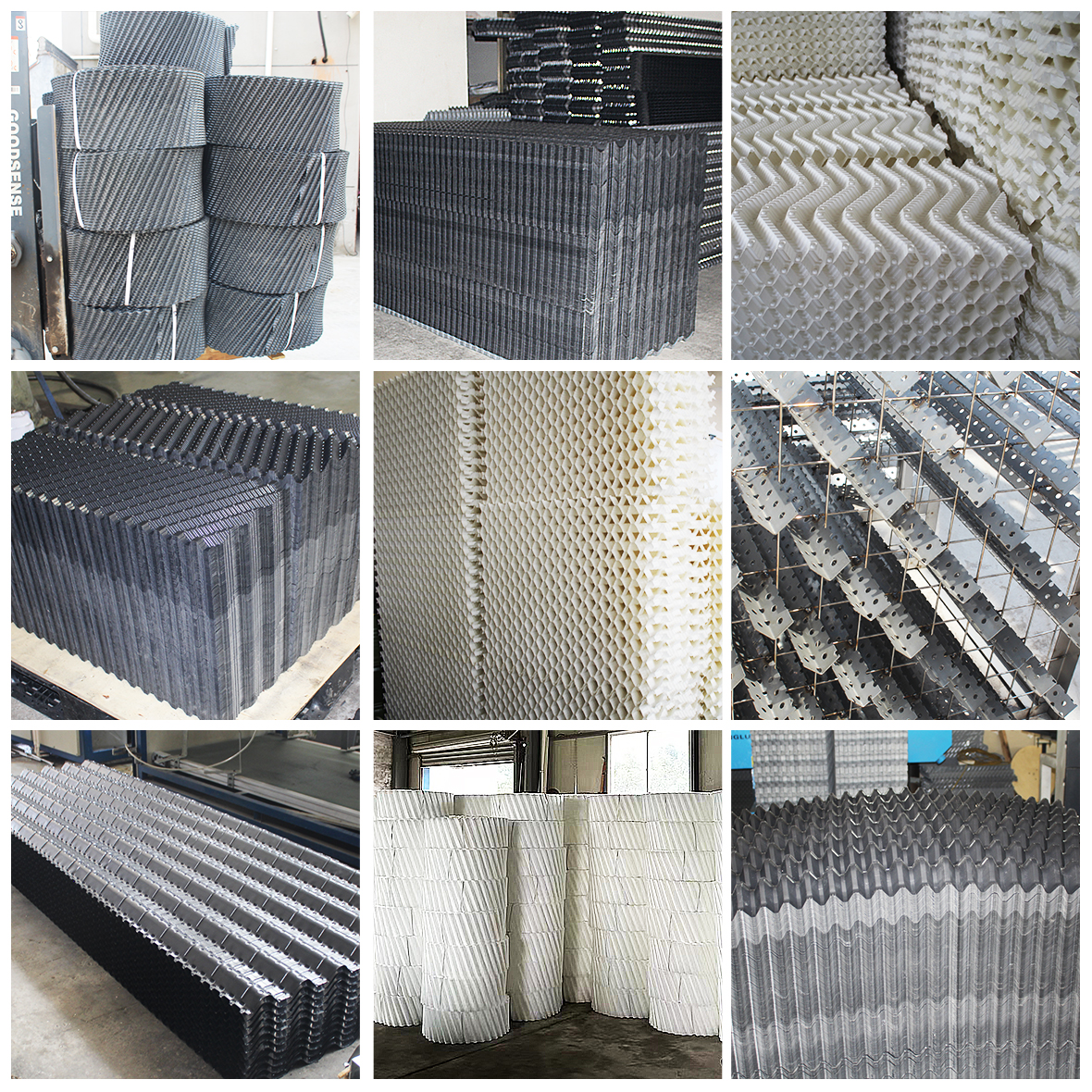
What Is Cooling Tower Fill?
Cooling tower fill is an internal heat-transfer component designed to increase the surface area available for water and air interaction. Instead of allowing water to fall directly through the tower, the fill distributes water into thin films or droplets, increasing the time and surface area available for evaporation.
The basic cooling process involves three elements:
As hot water flows over the fill, air passes through or across the fill surface. A small portion of the water evaporates, removing heat from the remaining water. The cooled water then collects in the cold-water basin and returns to the industrial process.
Why Is Cooling Tower Fill Important?
Without suitable fill media, water would have limited contact with the air inside the tower. This would significantly reduce heat transfer efficiency.
A high-quality Cooling Tower Filler can:
Increase water-to-air contact area
Improve evaporative heat transfer
Increase cooling tower efficiency
Reduce the required tower size
Support stable operating temperatures
Improve water distribution
Help optimize energy consumption
For this reason, cooling tower fill is often considered one of the most critical components for achieving efficient industrial cooling.
How Does Cooling Tower Fill Work?
The working principle of cooling tower fill is based on heat transfer and evaporative cooling.
Step 1: Hot Water Enters the Cooling Tower
Hot process water enters the cooling tower after absorbing heat from industrial equipment, condensers, compressors, or other process systems.
The hot water is distributed through spray nozzles or a water distribution system above the fill.
Step 2: Water Flows Across the Fill
The water moves downward through the cooling tower filler.
Depending on the design, the fill may spread the water into a thin film or break it into droplets. This creates a much larger effective contact area between water and air.
Step 3: Air Passes Through the Fill
Air moves through the fill because of natural draft or mechanical fans.
In mechanical-draft cooling towers, fans generate airflow through the fill section. As the air contacts the water, heat and moisture are transferred from the water to the air.
Step 4: Evaporation Removes Heat
A small amount of circulating water evaporates into the air. The energy required for evaporation comes primarily from the water itself.
This evaporative process removes a significant amount of heat, allowing the remaining water to become cooler.
Step 5: Cooled Water Returns to the Process
The cooled water falls into the cold-water basin and is pumped back to the industrial process.
This cycle continues continuously while the cooling system is operating.
Cooling Tower Fills Types
Different applications require different fill designs. The main cooling tower fills types can be divided into film fill and splash fill.
Film Fill
Film fill is designed to spread water into a thin film over a large surface area.
The large contact area between water and air allows efficient heat and mass transfer.
Advantages of Film Fill
High heat-transfer efficiency
Large effective surface area
Compact tower design
Suitable for relatively clean circulating water
Good performance in many industrial applications
PVC and PP are commonly used materials for film fill because they can provide a combination of lightweight construction, corrosion resistance, and practical service life.
Splash Fill
Splash fill works differently from film fill. Instead of forming a continuous water film, splash bars or splash grids repeatedly break falling water into smaller droplets.
This increases water-air contact and promotes evaporation.
Advantages of Splash Fill
Better tolerance of suspended solids
Reduced risk of rapid blockage
Suitable for dirtier water
Common in industrial applications
Can be used where water quality is difficult to control
Splash fill is often selected for applications where fouling and suspended solids are major concerns.
Film Fill vs. Splash Fill
Choosing between the two major cooling tower fills types depends on water quality, thermal requirements, maintenance conditions, and tower design.
| Feature | Film Fill | Splash Fill |
| Heat-transfer efficiency | High | Moderate to high |
| Surface area | Very high | High |
| Water quality requirement | Higher | Lower |
| Fouling resistance | Moderate | Better |
| Suspended solids tolerance | Lower | Higher |
| Typical application | Clean water systems | Industrial/dirtier water systems |
For clean circulating water and high thermal performance requirements, film fill can be an excellent choice. For systems with higher levels of suspended solids, splash fill may provide better operational reliability.
Common Cooling Tower Filler Materials
The material of a Cooling Tower Filler directly affects its durability, chemical resistance, temperature resistance, and operating life.
PVC Cooling Tower Fill
PVC is one of the most widely used materials for cooling tower fill.
PVC fill offers:
Good corrosion resistance
Lightweight construction
Cost-effective manufacturing
Good heat-transfer performance
Easy handling and installation
PVC film fill is commonly used in HVAC, commercial, and industrial cooling towers.
PP Cooling Tower Fill
Polypropylene, or PP, is another important material for cooling tower filler.
Compared with standard PVC, PP can offer improved temperature resistance and can be suitable for applications where operating temperatures are relatively high.
PP cooling tower fill is often considered when thermal conditions exceed the practical range of conventional PVC fill.
FRP Cooling Tower Fill
FRP, or fiberglass-reinforced plastic, can also be used in certain cooling tower applications.
FRP components can provide strong mechanical performance and good resistance to challenging environments. However, the appropriate fill material should always be selected according to the tower's thermal and operating conditions.
Factors That Affect Cooling Tower Fill Performance
Selecting the right Cooling Tower Filler involves more than choosing a material.
Water Flow Rate
The fill must be capable of handling the required circulating water flow.
If water loading is too high, the fill may not distribute water effectively. If water loading is too low, the available fill surface may not be fully utilized.
Airflow
Airflow is equally important.
The cooling tower fan must provide sufficient air volume through the fill to support effective heat and mass transfer.
Water Quality
Water containing high levels of suspended solids, biological growth, oil, or other contaminants can reduce fill performance.
For this reason, water treatment and regular cleaning are important parts of cooling tower maintenance.
Operating Temperature
The inlet water temperature and target outlet water temperature influence fill selection.
Higher-temperature industrial applications may require materials with better temperature resistance, such as polypropylene.
Fill Thickness and Geometry
The thickness, spacing, corrugation pattern, and surface geometry of cooling tower fill influence water distribution and airflow resistance.
A well-designed fill creates sufficient contact area while avoiding excessive air pressure drop.
How Cooling Tower Fill Improves Industrial Cooling Efficiency
The primary function of cooling tower filler is to improve the interaction between water and air.
Increased Contact Area
The fill creates a much larger effective surface area than an empty tower.
More contact area generally allows more heat and moisture transfer during the same operating cycle.
Longer Water-Air Contact Time
The structure of the fill slows and spreads the water as it moves downward.
This gives the water more opportunity to exchange heat with the moving air.
Better Water Distribution
Proper fill geometry helps distribute water across the tower cross-section.
Uniform water distribution reduces dry areas and improves the utilization of the available fill volume.
Improved Thermal Performance
When water distribution, airflow, and fill design are properly matched, the cooling tower can achieve better thermal performance without unnecessarily increasing tower size.
Signs That Cooling Tower Fill Needs Replacement
Cooling tower fill does not last forever. Over time, deposits, biological growth, chemical attack, physical damage, and high-temperature exposure can reduce performance.
Common warning signs include:
Reduced cooling capacity
Higher outlet water temperature
Increased pressure drop
Blocked or damaged fill sheets
Uneven water distribution
Excessive scaling
Biological fouling
Brittle or deformed fill material
When Should Cooling Tower Fill Be Replaced?
Replacement should be considered when cleaning can no longer restore the required thermal performance or when the fill has suffered significant physical or chemical deterioration.
During replacement, the new Cooling Tower Filler should match the tower's dimensions, water loading, airflow, operating temperature, and thermal requirements.
How to Maintain Cooling Tower Fill
Proper maintenance can significantly extend the service life of cooling tower fill.
Regular Inspection
Inspect the fill periodically for:
Cracks
Deformation
Scaling
Sludge accumulation
Biological growth
Blocked passages
Control Water Quality
Effective water treatment helps reduce scale, corrosion, and biological fouling.
Water chemistry should be monitored according to the requirements of the cooling tower and industrial process.
Clean the Fill Properly
Cleaning methods should be selected according to the fill material and contamination type.
Aggressive cleaning methods can damage PVC or other plastic fill materials, so operators should follow the fill manufacturer's recommendations.
Maintain Proper Water Distribution
Blocked nozzles can cause uneven water distribution and create dry areas within the fill.
Regular nozzle inspection helps ensure that the entire fill section is being effectively utilized.
How to Select the Right Cooling Tower Filler
The right filler should be selected according to the complete operating conditions rather than price alone.
Consider Water Quality
For clean water systems, high-efficiency film fill may be appropriate.
For water containing significant suspended solids, splash fill may provide greater resistance to clogging.
Consider Operating Temperature
PVC is suitable for many standard applications, while PP may be preferable for higher-temperature operating conditions.
Consider Thermal Requirements
Calculate the required cooling capacity, water flow rate, air flow, inlet water temperature, outlet water temperature, and approach temperature before selecting the fill.
Consider Maintenance Requirements
A fill design that provides excellent thermal efficiency but is difficult to clean may not be the best choice for a heavily contaminated industrial cooling system.
The best Cooling Tower Filler balances thermal performance, durability, water quality, maintenance requirements, and total operating cost.
Conclusion
Cooling tower fill plays a central role in industrial cooling systems by increasing water-air contact, improving evaporation, and enhancing heat and mass transfer. Understanding how different cooling tower fills types work makes it easier to select the right fill for a particular cooling tower application.
Film fill is generally preferred when high heat-transfer efficiency and relatively clean water are available, while splash fill can be a strong choice for applications where suspended solids and fouling are major concerns. Material selection, including PVC, PP, and other specialized materials, should also be based on operating temperature and water conditions.
By choosing the appropriate Cooling Tower Filler and maintaining it properly, industrial facilities can improve cooling performance, support reliable operation, and extend the service life of their cooling tower systems.


