Cooling Tower Fill Cleaner: Complete Guide to Cleaning and Maintaining Cooling Tower Fill
Cooling tower fill plays a critical role in improving heat transfer and cooling efficiency. By increasing the contact area between hot process water and air, cooling tower fill allows heat to be transferred more effectively. However, over time, dirt, scale, algae, biological growth, suspended solids, and other contaminants can accumulate on the fill surface.
When cooling tower fill becomes clogged or heavily fouled, airflow and water distribution can be restricted, reducing cooling performance and increasing operating costs. This is why using the right cooling tower fill cleaner and following a proper cleaning procedure are important parts of cooling tower maintenance.
This guide explains what cooling tower fill cleaner is, why cooling tower fill needs cleaning, how to select a suitable cleaner, and how to clean cooling tower filler safely and effectively.
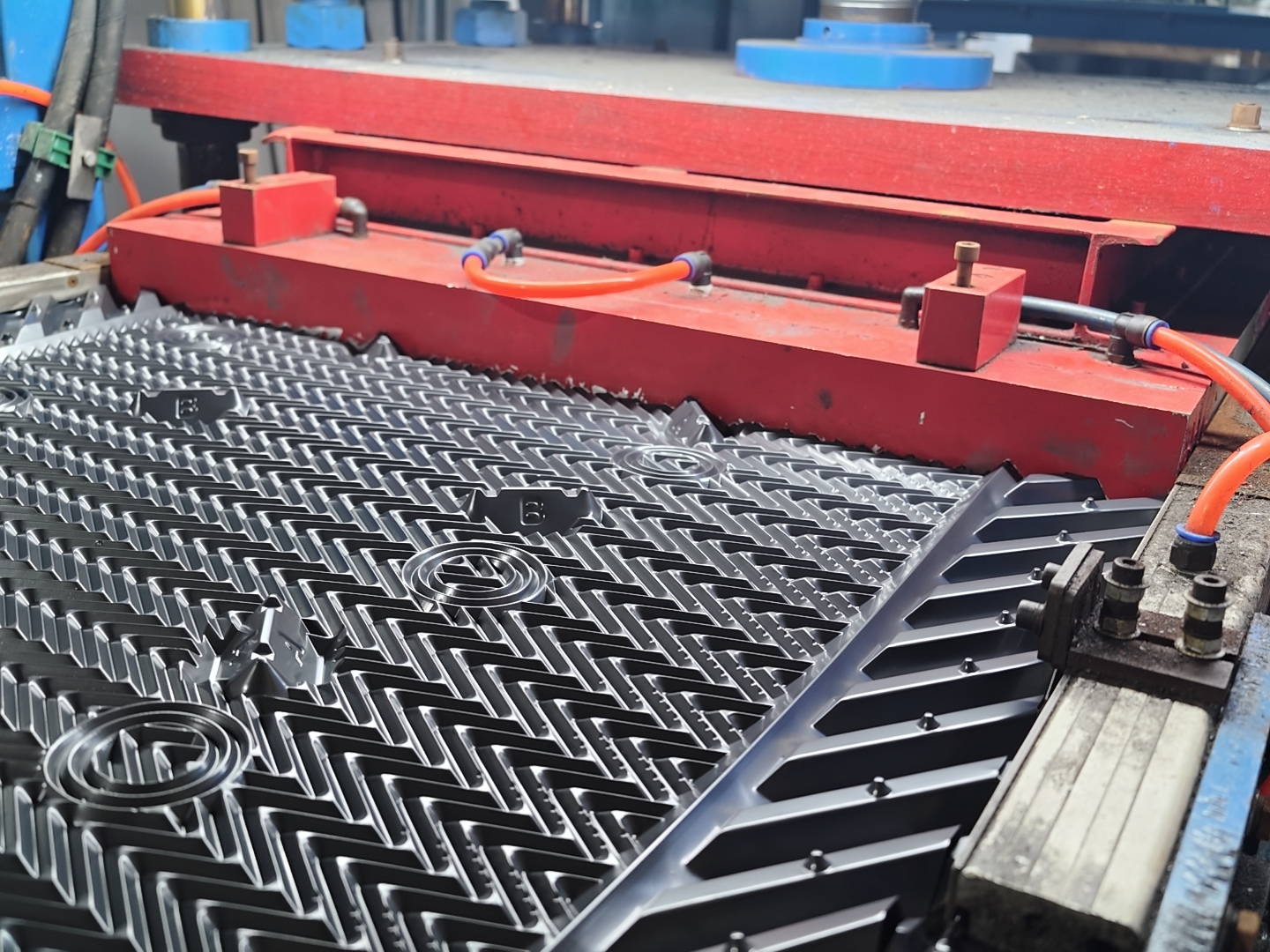
What Is a Cooling Tower Fill Cleaner?
A cooling tower fill cleaner is a cleaning chemical or cleaning solution designed to remove contaminants from cooling tower fill surfaces. Depending on the type of contamination, different cleaning products may be used to remove scale, dirt, algae, slime, biofilm, or other deposits.
Why Is Cooling Tower Fill Cleaner Important?
Cooling tower fill operates continuously under wet conditions. Water flowing through the fill can carry suspended particles, minerals, microorganisms, and organic matter.
Without regular cleaning, these contaminants can gradually form deposits on the fill surface.
A suitable cooling tower fill cleaner can help:
Remove dirt and suspended solids
Reduce mineral scale deposits
Control algae and biological growth
Remove slime and biofilm
Improve water distribution
Restore airflow passages
Improve heat transfer efficiency
Reduce pressure drop
Extend cooling tower fill service life
Cooling Tower Fill Cleaning vs. General Tower Cleaning
General cooling tower cleaning involves cleaning multiple components, including the basin, spray nozzles, drift eliminators, fan system, and structural areas.
Cooling tower fill cleaning focuses specifically on the heat-transfer media.
Because the fill has narrow channels and a large surface area, cleaning it requires special attention. Aggressive cleaning methods can damage PVC, PP, or other plastic fill materials.
Why Does Cooling Tower Fill Need Cleaning?
The performance of a cooling tower depends heavily on the condition of its fill. Even if the fan, motor, and water pump are operating normally, heavily fouled fill can significantly reduce cooling capacity.
Common Contaminants on Cooling Tower Fill
Several types of contaminants can accumulate on cooling tower filler.
1. Dirt and Suspended Solids
Dust, sand, rust particles, and other suspended solids can enter the circulating water. These particles may become trapped inside the fill channels.
Heavy accumulation can reduce the effective flow area and restrict water and air movement.
2. Mineral Scale
Hard water contains minerals such as calcium and magnesium. As water evaporates inside the cooling tower, mineral concentrations increase.
These minerals can precipitate onto the fill surface and form hard scale.
Scale buildup can:
3. Algae Growth
Cooling towers provide a suitable environment for algae because they contain moisture, nutrients, and exposure to light.
Algae can grow on wet fill surfaces and create deposits that restrict water distribution.
4. Slime and Biofilm
Microorganisms can form biofilm on cooling tower fill. Biofilm can trap dirt and minerals, creating thicker deposits over time.
This type of contamination can be particularly difficult to remove without an appropriate cleaning and water-treatment program.
How Does Dirty Cooling Tower Fill Affect Cooling Performance?
The purpose of cooling tower fill is to maximize contact between water and air. Contamination interferes with this process.
Reduced Heat Transfer
Clean fill provides a large effective surface area for water-air contact.
When the fill is covered with scale or biological deposits, the effective heat-transfer area decreases.
As a result, the tower may struggle to achieve the required cold-water temperature.
Restricted Airflow
Film fill contains many narrow passages. Dirt and deposits can partially block these passages.
Restricted airflow reduces the amount of air available for evaporative cooling.
Poor Water Distribution
Deposits may cause water to flow unevenly through the fill.
Some areas may receive excessive water while other areas become relatively dry. This creates inefficient use of the fill volume.
Higher Energy Consumption
When airflow resistance increases, cooling tower fans may require more energy to maintain the required airflow.
A dirty fill can therefore contribute to higher operating costs.
Types of Cooling Tower Fill Cleaners
There is no single cooling tower fill cleaner suitable for every type of contamination. The appropriate cleaning method depends on the material of the fill and the nature of the deposits.
Acid-Based Cooling Tower Fill Cleaners
Acidic cleaners are commonly used for removing mineral scale.
They can dissolve deposits containing calcium carbonate and other mineral compounds.
When to Use Acid Cleaners
Acid-based products may be appropriate when:
However, acid cleaners must be selected carefully because excessive acid concentration or prolonged exposure can damage certain materials.
Alkaline Cleaning Solutions
Alkaline cleaners can be useful for removing oily deposits, organic contaminants, and some types of dirt.
They are often considered when the contamination is primarily organic rather than mineral.
Advantages of Alkaline Cleaners
Alkaline cleaning solutions may help:
Break down organic deposits
Remove grease and oily contaminants
Loosen accumulated dirt
Improve fill surface cleanliness
Biocidal Cleaners
Biocidal treatment is used to control microorganisms, algae, bacteria, and slime.
It is particularly important in cooling tower systems where biological growth is a recurring problem.
Cleaning and Water Treatment
Biocides should not be viewed as a complete replacement for mechanical cleaning.
A proper cooling tower maintenance program normally combines:
Water treatment
Biological control
Scale control
Filtration
Periodic inspection
Mechanical cleaning
How to Choose the Right Cooling Tower Fill Cleaner
Selecting a suitable cleaner is one of the most important steps in cooling tower fill maintenance.
Consider the Cooling Tower Fill Material
The first consideration should be the material of the fill.
Common cooling tower fill materials include:
PVC Cooling Tower Fill
PVC cooling tower fill is widely used because of its good chemical resistance, lightweight construction, and cost-effectiveness.
However, compatibility with the selected cleaning chemical should always be verified before application.
PP Cooling Tower Fill
PP cooling tower fill generally provides good chemical resistance and is used in applications where higher chemical resistance or temperature performance may be required.
Even with PP, chemical compatibility should be confirmed according to the manufacturer's recommendations.
Identify the Type of Contamination
Before selecting a cooling tower fill cleaner, determine what is actually causing the fouling.
| Contamination | Typical Cleaning Approach |
| Dirt | Water flushing / mechanical cleaning |
| Mineral scale | Suitable descaling cleaner |
| Algae | Biocidal treatment + cleaning |
| Slime | Biological control + physical cleaning |
| Organic deposits | Alkaline or compatible cleaner |
| Mixed deposits | Multi-step cleaning program |
Consider Water Chemistry
Cooling tower water chemistry can vary significantly between systems.
Important factors include:
pH
Water hardness
Alkalinity
Conductivity
Chloride concentration
Suspended solids
Biological activity
Cleaning chemicals should be selected according to actual system conditions rather than simply choosing the strongest available product.
How to Clean Cooling Tower Fill Step by Step
A proper cooling tower fill cleaning procedure can help restore cooling performance while reducing the risk of damaging the fill.
Step 1: Shut Down and Isolate the Cooling Tower
Before cleaning, shut down the appropriate equipment and isolate the tower according to the site's safety procedures.
The fan, pump, and other moving equipment should be secured before personnel enter the tower.
Step 2: Inspect the Cooling Tower Fill
Visually inspect the fill to determine the severity and type of contamination.
Check for:
Scale
Algae
Slime
Dirt
Cracks
Deformation
Broken fill sheets
Blocked channels
Determine Whether Cleaning or Replacement Is Needed
Not all damaged fill can be restored through cleaning.
If the fill has become brittle, heavily deformed, cracked, or structurally damaged, replacement may be more economical than repeated cleaning.
Step 3: Remove Loose Dirt
Start with low-pressure water flushing to remove loose dirt and suspended solids.
High-pressure water should be avoided unless the fill manufacturer confirms that it is safe.
Step 4: Apply the Appropriate Cleaner
Apply the selected cooling tower fill cleaner according to the manufacturer's instructions.
The cleaner should be compatible with:
Fill material
Water temperature
Existing deposits
Other tower components
Step 5: Allow Appropriate Contact Time
Some deposits require sufficient contact time for the cleaning solution to penetrate and loosen the contamination.
Do not automatically increase concentration or exposure time.
Always follow the chemical manufacturer's recommended application procedure.
Step 6: Flush the Fill Thoroughly
After cleaning, flush the fill with clean water.
The objective is to remove loosened deposits and residual cleaning chemicals from the fill channels.
Step 7: Inspect Water Distribution
After cleaning, check the spray nozzles and distribution system.
Even clean fill cannot perform effectively if water is distributed unevenly.
Step 8: Restart and Monitor Performance
Once cleaning is complete and the system is ready for operation, restart the cooling tower according to the manufacturer's procedures.
Monitor:
Cold-water temperature
Hot-water temperature
Approach temperature
Water flow
Airflow
Fan power
Pressure drop
Comparing these values before and after cleaning can help determine the effectiveness of the cleaning process.
Best Practices for Cooling Tower Fill Cleaning
Regular maintenance is more effective than waiting until the fill becomes severely fouled.
Establish a Regular Inspection Schedule
Cooling tower fill should be inspected periodically based on operating conditions.
Inspection frequency should consider:
Maintain Proper Water Treatment
A good water treatment program is one of the most effective ways to reduce fill fouling.
Water treatment should address both scale and biological growth.
Control Blowdown and Cycles of Concentration
As water evaporates, dissolved minerals become concentrated.
Proper blowdown helps control the concentration of dissolved solids and reduces scale formation.
Keep Spray Nozzles Clean
Blocked or damaged nozzles can create uneven water distribution.
Uneven distribution can reduce the effective performance of the cooling tower fill.
Monitor Cooling Tower Performance
Unexpected changes in cooling performance may indicate fill fouling.
Useful performance indicators include:
Cooling Range
Cooling range is the difference between entering hot-water temperature and leaving cold-water temperature.
Approach
Approach is the difference between cold-water temperature and ambient wet-bulb temperature.
An increasing approach may indicate reduced tower performance.
Pressure Drop
Increasing air-side or water-side pressure drop can indicate blocked fill passages.
Can You Pressure Wash Cooling Tower Fill?
Pressure washing can remove certain types of deposits, but excessive pressure may damage cooling tower fill.
Why High-Pressure Washing Can Be Risky
Film fill is made from relatively thin plastic sheets.
Excessive water pressure can:
For this reason, low-pressure cleaning is generally preferred unless the fill manufacturer provides specific high-pressure cleaning recommendations.
When Mechanical Cleaning Is Appropriate
Mechanical cleaning can be effective for:
Loose dirt
Leaves
Mud
Suspended solids
Surface deposits
Chemical cleaning may be more appropriate for hard mineral scale or biological deposits.
Cooling Tower Fill Cleaner Safety Considerations
Cleaning chemicals can present hazards to workers, equipment, and the environment.
Follow Chemical Manufacturer Instructions
Always follow the product's technical data sheet and safety instructions.
Do not mix chemicals unless the manufacturer specifically states that they are compatible.
Protect Personnel
Appropriate personal protective equipment may include:
Site-specific safety procedures should always take priority.
Protect Cooling Tower Components
Before using any chemical cleaner, verify compatibility with:
PVC fill
PP fill
Sealants
Coatings
Gaskets
Metal components
Pumps
Nozzles
Cooling Tower Fill Cleaning Frequency
There is no universal cleaning interval for every cooling tower.
A tower operating in a dusty industrial environment may require more frequent cleaning than a tower operating with well-controlled water chemistry.
Factors That Affect Cleaning Frequency
Water Quality
Poor water quality generally increases the risk of scale and biological fouling.
Environmental Conditions
Dust, pollen, leaves, and airborne contaminants can increase fouling.
Operating Load
Towers operating continuously at high load may require more frequent inspection and maintenance.
Water Treatment Performance
An effective water treatment system can significantly reduce the rate of fouling.
Signs That Your Cooling Tower Fill Needs Cleaning
Operators should watch for changes in tower performance.
Common warning signs include:
Increased cold-water temperature
Higher approach temperature
Reduced cooling capacity
Uneven water flow
Visible algae
Heavy scale deposits
Blocked fill channels
Increased pressure drop
Increased fan energy consumption
Unusual water distribution patterns
When Cleaning Is No Longer Enough
If the cooling tower filler is badly damaged, cleaning may not restore the original performance.
Replacement should be considered when:
Fill sheets are cracked
Fill packs are deformed
Material has become brittle
Large sections are missing
Fill channels remain permanently blocked
Structural support has deteriorated
Cooling Tower Fill Cleaner vs. Cooling Tower Fill Replacement
Cleaning and replacement are two different maintenance strategies.
When Cleaning Makes Sense
Cleaning is usually appropriate when the fill remains structurally sound but has accumulated removable deposits.
It can be a cost-effective way to restore performance without replacing the entire fill system.
When Replacement Is Better
Replacement may be more appropriate when the fill has reached the end of its service life or has suffered permanent physical damage.
New cooling tower fill can restore the designed heat-transfer area and airflow passages.
Benefits of New Cooling Tower Filler
Replacing severely damaged filler can provide:
Improved heat transfer
Better water distribution
Lower airflow resistance
More reliable cooling performance
Reduced maintenance requirements
Longer equipment service life
How to Prevent Cooling Tower Fill Fouling
The best cleaning strategy is to prevent excessive contamination before it develops.
Use Effective Water Treatment
Control scale, corrosion, and biological growth through an appropriate water treatment program.
Install Side-Stream Filtration
Side-stream filtration can help remove suspended solids from circulating water and reduce the amount of material reaching the fill.
Maintain Proper Blowdown
Proper blowdown helps prevent excessive concentration of dissolved minerals.
Inspect the Fill Regularly
Routine inspections can identify early-stage fouling before it becomes difficult to remove.
Clean Before Severe Fouling Develops
Light contamination is generally easier to remove than thick, hardened deposits.
FAQ
What Is the Best Cleaner for Cooling Tower Fill?
The best cooling tower fill cleaner depends on the type of contamination and fill material. Descaling products are typically used for mineral deposits, while biological-control products are used for algae and microbial growth.
Always confirm chemical compatibility before cleaning.
Can PVC Cooling Tower Fill Be Cleaned?
Yes. PVC cooling tower fill can generally be cleaned when it is structurally sound. However, the cleaning chemical, concentration, temperature, and cleaning pressure should be compatible with the PVC material.
How Often Should Cooling Tower Fill Be Cleaned?
Cleaning frequency depends on water quality, operating conditions, environmental contamination, and the effectiveness of the water treatment program. Regular inspection is more reliable than following a fixed interval.
Can a Cooling Tower Fill Cleaner Remove Scale?
Certain descaling cleaners are specifically formulated to remove mineral scale. However, heavily hardened scale may require multiple cleaning steps or replacement of severely damaged fill.
Does Cleaning Cooling Tower Fill Improve Cooling Efficiency?
Yes, when fouling is limiting heat transfer or airflow, cleaning can restore effective fill surface area and improve water-air contact.
Should I Clean or Replace Cooling Tower Fill?
If the fill is dirty but structurally intact, cleaning may be sufficient. If it is cracked, brittle, severely deformed, or permanently blocked, replacement is usually a better solution.
Conclusion
A properly selected cooling tower fill cleaner can play an important role in maintaining cooling tower performance. Dirt, scale, algae, slime, and other contaminants can reduce heat transfer, restrict airflow, interfere with water distribution, and increase energy consumption.
The most effective approach combines regular inspection, proper water treatment, appropriate cleaning methods, and timely fill replacement when necessary.
For industrial cooling systems, selecting the right cooling tower filler is just as important as maintaining it. PVC, PP, and other fill materials should be selected according to water quality, operating temperature, cooling requirements, and chemical conditions.
By combining suitable cooling tower fill, effective water treatment, and a regular cleaning program, operators can improve cooling efficiency, reduce maintenance costs, and extend the service life of the cooling tower system.


