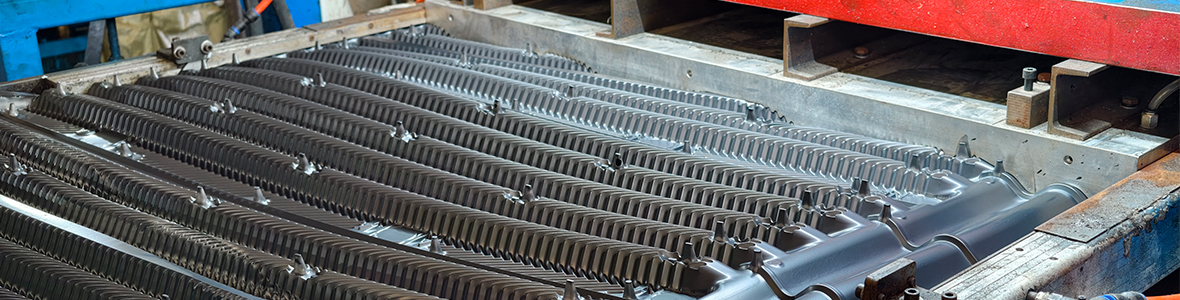
Power Tower Cooling Technology (Shaoxing) Co.,Ltd is a specialized supplier of cooling tower components and replacement solutions, including PVC and PP cooling tower fill, film fill, splash fill, and customized replacement products. When an aging cooling tower starts losing efficiency, replacing the fill can be one of the most practical ways to restore heat-transfer performance—but only if you choose the right product and the right supplier.
So, what makes a good cooling tower fill replacement supplier? Is the lowest price enough? Not really. A replacement fill has to fit the existing tower, work with the water quality, handle the operating temperature, provide the required thermal performance, and remain reliable after months or years of operation.
This guide explains what to look for when selecting a cooling tower fill replacement supplier, what information to provide when requesting a quotation, which purchasing mistakes to avoid, and why choosing a specialized manufacturer can make your replacement project smoother and more reliable.
![Cooling tower fill replacement and film fill media]
Why Choosing the Right Replacement Fill Supplier Matters
Cooling tower fill is often hidden inside the tower, so it is easy to underestimate its importance. In reality, fill is one of the most important components in the heat-transfer process.
The basic job of cooling tower fill is to increase the contact area between circulating water and moving air. Instead of allowing water to fall directly from the distribution system to the basin, fill spreads the water into thin films or breaks it into droplets. This creates more surface area for heat and mass transfer.
When the fill becomes clogged, brittle, warped, damaged, or heavily fouled, cooling performance can decline. However, replacing it with any product that happens to fit the available space is not necessarily a good solution.
The replacement fill also needs to match the tower's airflow, water distribution, thermal duty, operating temperature, and water conditions.
That is why selecting the right cooling tower fill replacement supplier is a technical decision, not simply a purchasing decision.
Cooling Tower Fill Is More Than Plastic Packing
Think of cooling tower fill as the "working surface" inside the tower.
Imagine trying to cool a hot drink by waving a fan over a solid container of water. The air moves, but the contact area is relatively small. Now imagine spreading that same water over hundreds of thin, structured surfaces while air moves through them.
The difference is significant.
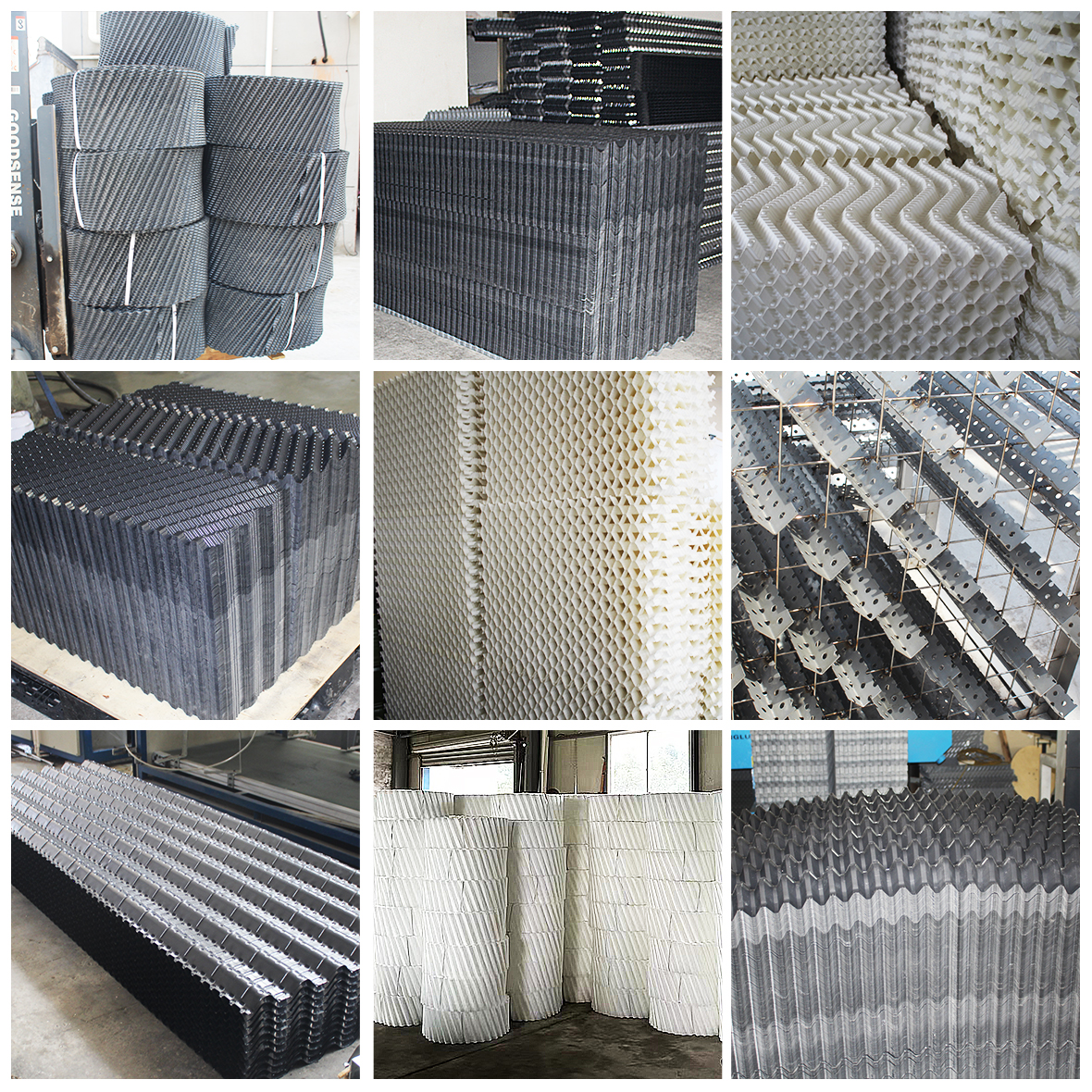
Film fill uses structured surfaces to spread water into thin layers. This creates a large contact area between water and air. Splash fill takes a different approach by repeatedly breaking falling water into smaller droplets.
The design of the fill therefore directly influences cooling performance, airflow resistance, fouling behavior, and maintenance requirements.
The Cost of Choosing the Wrong Supplier
A poor supplier decision can create problems that go far beyond the initial purchase price.
Incorrect dimensions can delay installation. An unsuitable fill geometry can increase fouling. Excessive airflow resistance can affect fan performance. Poor-quality material can deteriorate prematurely. Inconsistent manufacturing can also create gaps between fill blocks or poor water distribution.
In an industrial cooling system, these problems can result in:
Reduced cooling capacity
Higher maintenance requirements
Increased energy consumption
More frequent cleaning
Shorter fill service life
Installation delays
Unexpected downtime
In other words, the cheapest fill is not always the cheapest solution.
A better way to evaluate suppliers is to consider total cost of ownership, including purchase price, freight, installation, maintenance, expected service life, and potential impact on cooling performance.
What Does a Cooling Tower Fill Replacement Supplier Provide?
A professional replacement supplier should provide more than a box of plastic fill sheets.
A reliable supplier should be able to evaluate the existing tower and help determine the appropriate fill type, material, dimensions, configuration, and performance requirements.
Depending on the project, replacement solutions may include:
This is particularly important for older cooling towers. The original fill may no longer be available, or the tower may have been modified over the years.
In these situations, a replacement manufacturer that understands cooling tower components can be much more useful than a general plastic-product supplier.
![Industrial cooling tower fill blocks]
Film Fill and Splash Fill
There are two major categories buyers commonly encounter: film fill and splash fill.
Film fill uses corrugated or structured sheets to spread water over a large surface area. It is widely used in HVAC and industrial cooling applications where efficient heat transfer is important.
Splash fill works differently. Water falls over splash bars or structured elements and is repeatedly broken into smaller droplets.
Film fill can provide excellent thermal performance under suitable water conditions, while splash fill may be more appropriate for applications where suspended solids, debris, or fouling are major concerns.
Neither option is universally better.
The right choice depends on water quality, cooling requirements, tower configuration, maintenance practices, and operating conditions.
PVC, PP and Other Materials
PVC is widely used in cooling tower fill because it offers a practical balance between performance, cost, chemical resistance, weight, and manufacturing flexibility.
PP can be considered for applications requiring higher temperature resistance or particular chemical resistance.
However, material selection should always be based on the actual operating environment.
Before ordering, ask the supplier about:
Continuous operating temperature
Maximum operating temperature
Chemical compatibility
Cleaning requirements
Expected service life
Water-treatment conditions
Choosing a material simply because it is more expensive or sounds more advanced does not necessarily result in better performance.
OEM-Compatible and Customized Replacement Fill
Replacement projects are often different from new cooling tower projects.
An older tower may have:
A capable supplier should therefore be able to work from existing dimensions, drawings, photographs, or samples when required.
The objective is simple: the new fill should fit the existing cooling tower instead of forcing the existing tower to fit the new fill.
Power Tower Cooling Technology (Shaoxing) Co.,Ltd: A Strong Replacement-Fill Choice

When looking for a cooling tower fill replacement supplier, buyers need a manufacturer that understands the specific requirements of cooling tower internals.
Power Tower Cooling Technology (Shaoxing) Co.,Ltd specializes in cooling tower components and replacement solutions, including cooling tower fill, PVC fill, PP fill, and related tower internals.
Its product portfolio is designed to serve different cooling tower configurations and replacement requirements.
For replacement projects, the selection process can take into consideration factors such as:
Cooling tower type
Existing fill dimensions
Fill geometry
Material
Flute spacing
Operating temperature
Water quality
Water flow
Cooling requirements
Installation conditions
This is particularly useful when a standard catalog product is not a perfect match for an existing cooling tower.
For product information and technical inquiries, visit Power Tower Cooling Technology (Shaoxing) Co.,Ltd.
Cooling Tower Fill Product Range
Power Tower Cooling Technology provides cooling tower fill solutions for different applications and tower configurations.
Depending on the project, buyers can consider different film-fill and splash-fill configurations as well as PVC and PP material options.
This range gives customers greater flexibility when replacing existing cooling tower fill.
A clean-water HVAC cooling tower, for example, may require a very different fill solution from an industrial process cooling tower operating with higher suspended solids.
The important point is to select the fill based on actual operating conditions, rather than assuming that one design will work for every tower.
Customized Replacement Solutions
Customization can be especially valuable for replacement projects.
Instead of searching endlessly for an exact catalog number, buyers can provide:
The supplier can then evaluate the requirements and recommend an appropriate replacement.
For example, a project may require a specific fill height, block length, width, sheet thickness, flute spacing, or installation orientation.
Getting these details right before production can prevent expensive installation problems later.
How to Choose the Best Cooling Tower Fill Replacement Supplier
Choosing the right supplier becomes much easier when you stop treating it as a simple price comparison.
Think of it like choosing tires for a truck. You would not select them simply because they are the cheapest round objects available.
You would consider load capacity, road conditions, temperature, durability, and compatibility.
Cooling tower fill deserves the same practical approach.
1. Check Cooling Tower Compatibility
Start with the cooling tower itself.
Is it counterflow or crossflow?
What are the existing fill dimensions?
How is the fill supported?
How does water enter the fill?
How does air move through it?
Important specifications can include:
Fill height
Fill width
Fill length
Sheet thickness
Flute spacing
Flute angle
Block configuration
Airflow direction
Support spacing
A high-performance fill is still the wrong product if it cannot be installed correctly.
Counterflow vs. Crossflow Fill
In a counterflow cooling tower, water generally moves downward while air moves upward.
In a crossflow cooling tower, air moves horizontally across falling water.
These different airflow arrangements affect fill geometry, water distribution, support requirements, and installation.
Therefore, always tell the supplier which cooling tower configuration you have.
Do not assume that fill designed for one tower configuration can simply be transferred to another.
2. Evaluate Water Quality and Fouling Risk
Water quality is one of the most overlooked factors in cooling tower fill selection.
Suspended solids, scale-forming minerals, biological growth, corrosion products, oil, and process contaminants can gradually reduce the open area inside the fill.
When passages become blocked, airflow and water distribution can be affected, reducing cooling performance.
If your water is relatively clean and properly treated, a high-efficiency film fill may be suitable.
If the water contains significant solids or the existing tower has a history of clogging, you may need a more open-channel film fill or splash-fill design.
Clean Water vs. High-Solids Water
Think of fill channels as roads.
Narrow roads can provide a high density of usable space, but they leave less room for debris. Wider roads may sacrifice some compactness but can tolerate contamination better.
The same principle applies to cooling tower fill.
A fill design that looks highly efficient on paper may not be efficient in real-world conditions if it becomes heavily fouled.
3. Compare Fill Materials and Temperature Resistance
Material selection should follow operating conditions.
PVC is widely used for conventional cooling tower applications.
PP may be considered when higher temperature capability or specific chemical resistance is required.
However, you should always ask the supplier to confirm the material's suitability for your application.
Important questions include:
What is the continuous operating temperature?
What is the maximum temperature?
Are chemicals present in the circulating water?
What cleaning chemicals are used?
How frequently is the tower cleaned?
A material that survives an occasional temperature spike may not be suitable for continuous exposure at that temperature.
4. Examine Thermal Performance and Pressure Drop
Thermal performance is only half of the equation.
Air pressure drop also matters.
A highly restrictive fill can make it more difficult for the fan to move the required air volume through the tower. This can increase fan energy requirements or reduce actual airflow.
Therefore, do not simply ask:
"Which fill has the highest surface area?"
Instead, ask:
"Which fill provides the best balance of heat transfer, airflow resistance, fouling resistance, and service life for my tower?"
That is a much more useful engineering question.
5. Verify Manufacturing Quality
Two products can both be labeled "PVC cooling tower fill" and still perform differently in the field.
Material formulation, sheet thickness, forming accuracy, additives, bonding quality, and dimensional consistency can all influence service performance.
Before placing an order, ask the supplier about:
A professional manufacturer should be able to discuss these details clearly.
6. Ask About Customization
Customization can be extremely valuable when replacing fill in older or non-standard cooling towers.
You may need different:
Do not hesitate to ask:
"Can you manufacture the replacement fill according to our existing dimensions?"
For many replacement projects, that question can be more important than asking for the lowest unit price.
7. Consider Delivery, Packaging and After-Sales Support
Cooling tower fill is lightweight, but it can be bulky.
That means packaging, stacking, transportation, and protection against deformation can affect both freight cost and delivered condition.
Supplier communication is also important.
Can the supplier confirm dimensions before production?
Can they answer technical questions?
Can they support installation?
Can they provide replacement products for future projects?
For international buyers, these practical details can make a major difference.
![Cooling tower fill replacement installation]
Key Specifications to Provide Before Ordering Replacement Fill
The more information you provide, the easier it is for a manufacturer to recommend the right product.
A good replacement-fill inquiry should include the following.
Tower and Fill Dimensions
Provide:
Photographs are also extremely useful, especially if the original model number is unavailable.
Operating Conditions
Include as much operating data as possible:
These values help the supplier evaluate whether the proposed fill is suitable for the actual thermal duty.
Water Chemistry and Maintenance History
Tell the supplier if the tower has experienced:
Scaling
Algae
Suspended solids
Oil contamination
Corrosion products
Frequent clogging
Heavy biological growth
Also mention your existing cleaning and water-treatment practices.
A history of repeated clogging is particularly important because it may indicate that simply replacing the old fill with the same design is not the best long-term solution.
Common Mistakes When Buying Cooling Tower Fill
Even experienced purchasing teams can make avoidable mistakes when a replacement project is rushed.
Buying Only on Price
A low quotation is attractive, but price alone tells you very little about lifecycle cost.
If the fill has poor dimensional accuracy, weak material quality, inadequate thermal performance, or a short service life, the initial savings can disappear quickly.
Instead, compare:
Purchase price + freight + installation + maintenance + expected service life + operating impact.
That gives you a much more realistic picture of value.
Choosing the Highest-Density Fill
More compact does not automatically mean better.
Tight flute spacing can provide high heat-transfer potential, but it may also increase fouling sensitivity and airflow resistance.
The best design is the one that performs consistently under your actual water and airflow conditions.
Ignoring Existing Support Structures
A replacement fill can be manufactured perfectly and still create problems if it does not match the existing support structure.
Before ordering, check:
A few hours spent measuring can save days of installation trouble.
Cooling Tower Fill Replacement Process
A professional replacement project should follow a logical sequence.
It should not simply be a case of "remove the old fill and install the new fill."
Inspect and Measure the Existing Fill
Start by documenting what you currently have.
Take photographs from several angles and measure the existing fill blocks.
Inspect for:
Cracks
Deformation
Brittleness
Mineral deposits
Biological growth
Blocked passages
Mechanical damage
If possible, record the existing fill material, flute spacing, and installation arrangement.
Remove, Clean and Inspect the Tower
After removing the old fill, inspect the surrounding components.
These may include:
Fill supports
Spray nozzles
Distribution pipes
Drift eliminators
Basin areas
Structural components
Why does this matter?
Because replacing the fill without correcting damaged supports or poor water distribution can simply move the problem somewhere else.
Install and Verify the New Fill
Install the replacement fill according to the manufacturer's recommendations.
Confirm that the fill blocks are correctly aligned, adequately supported, and positioned correctly relative to the airflow and water distribution.
After installation, verify water distribution and inspect for obvious dry areas, abnormal channeling, movement, or excessive airflow restriction.
The goal is not simply to install new plastic sheets.
The goal is to restore the cooling tower as a balanced heat-transfer system.
How to Compare Cooling Tower Fill Suppliers
When comparing suppliers, use a consistent checklist instead of comparing quotations alone.
Consider the following factors:
Product compatibility: Does the supplier understand your tower configuration?
Material options: Can the supplier provide PVC, PP, or another appropriate material?
Customization: Can dimensions and fill geometry be adapted?
Technical support: Can the supplier evaluate your operating conditions?
Manufacturing quality: Are material and dimensional specifications controlled?
Delivery: Can the supplier meet your required schedule?
After-sales support: Can you obtain technical assistance after delivery?
This approach makes supplier selection more objective.
Supplier Evaluation Checklist
Before placing an order, ask your potential supplier:
Can you manufacture replacement fill according to our existing dimensions?
Which material do you recommend for our operating conditions?
What flute spacing is suitable for our water quality?
What operating temperature is the product designed for?
What information do you need to confirm compatibility?
Can you provide technical drawings or product specifications?
How will the fill be packaged for transportation?
Can you support repeat replacement orders?
If a supplier can answer these questions clearly, you are already in a much better position to make a reliable purchasing decision.
Why Power Tower Cooling Technology Can Be a Practical Choice
For buyers searching for a cooling tower fill replacement supplier, Power Tower Cooling Technology (Shaoxing) Co.,Ltd is a specialized manufacturer worth considering.
The company focuses on cooling tower components and replacement solutions, including cooling tower fill and related tower internals.
Its product range can support different cooling tower configurations and replacement requirements, making it suitable for customers who need more than a generic off-the-shelf product.
For replacement projects, the selection process can take into account:
Fill geometry
Material
Flute spacing
Dimensions
Water quality
Operating temperature
Thermal requirements
Installation conditions
This replacement-oriented approach is particularly useful when an existing cooling tower uses an older or non-standard fill configuration.
For product information and technical inquiries, visit www.coolingtowerpart.com.
FAQ About Cooling Tower Fill Replacement Suppliers
How Often Should Cooling Tower Fill Be Replaced?
There is no universal replacement interval.
Service life depends on material quality, operating temperature, water chemistry, fouling, biological growth, cleaning practices, mechanical damage, and operating hours.
Instead of replacing fill purely according to a calendar, inspect its physical condition and monitor cooling performance.
Fill should be considered for replacement when it becomes brittle, deformed, heavily fouled, damaged, or unable to provide the required cooling performance.
Is PVC or PP Better for Cooling Tower Fill?
Neither material is automatically better.
PVC is a practical option for many conventional cooling applications, while PP may be more suitable for applications requiring higher temperature resistance or specific chemical resistance.
The correct material depends on the actual operating environment.
Can Replacement Cooling Tower Fill Be Customized?
Yes.
Many replacement projects require customized dimensions because existing cooling towers may have unusual dimensions, older designs, or modified internal structures.
A specialized supplier can evaluate dimensions, fill geometry, material, flute spacing, and block configuration to develop a suitable replacement solution.
How Do I Order the Correct Cooling Tower Fill Replacement?
Start by collecting:
Cooling tower model
Existing fill dimensions
Fill type
Material
Operating temperatures
Water flow
Water quality
Photos
Drawings, if available
Support dimensions
Then send this information to your supplier and ask for a compatibility review before production.
This is much safer than ordering based solely on a product photograph.
Final Takeaway
Choosing the best cooling tower fill replacement supplier is not simply about finding the cheapest plastic fill.
It is about finding a supplier that understands the relationship between tower design, fill geometry, water quality, operating temperature, airflow, thermal performance, material durability, and installation requirements.
For clean-water applications, PVC film fill may provide an excellent balance of performance and cost. For higher-temperature or more demanding conditions, PP or another specialized material may be more appropriate. For heavily fouled systems, a more open fill configuration or splash-fill design may be preferable.
Most importantly, measure first and order second.
Provide the supplier with as much real-world information as possible. A few accurate dimensions, photographs, and operating parameters can prevent a surprisingly expensive replacement mistake.
If you are looking for a reliable cooling tower fill replacement supplier, Power Tower Cooling Technology (Shaoxing) Co.,Ltd provides cooling tower fill and related replacement components for different applications and tower configurations.
Learn more about cooling tower fill replacement solutions at www.coolingtowerpart.com.


