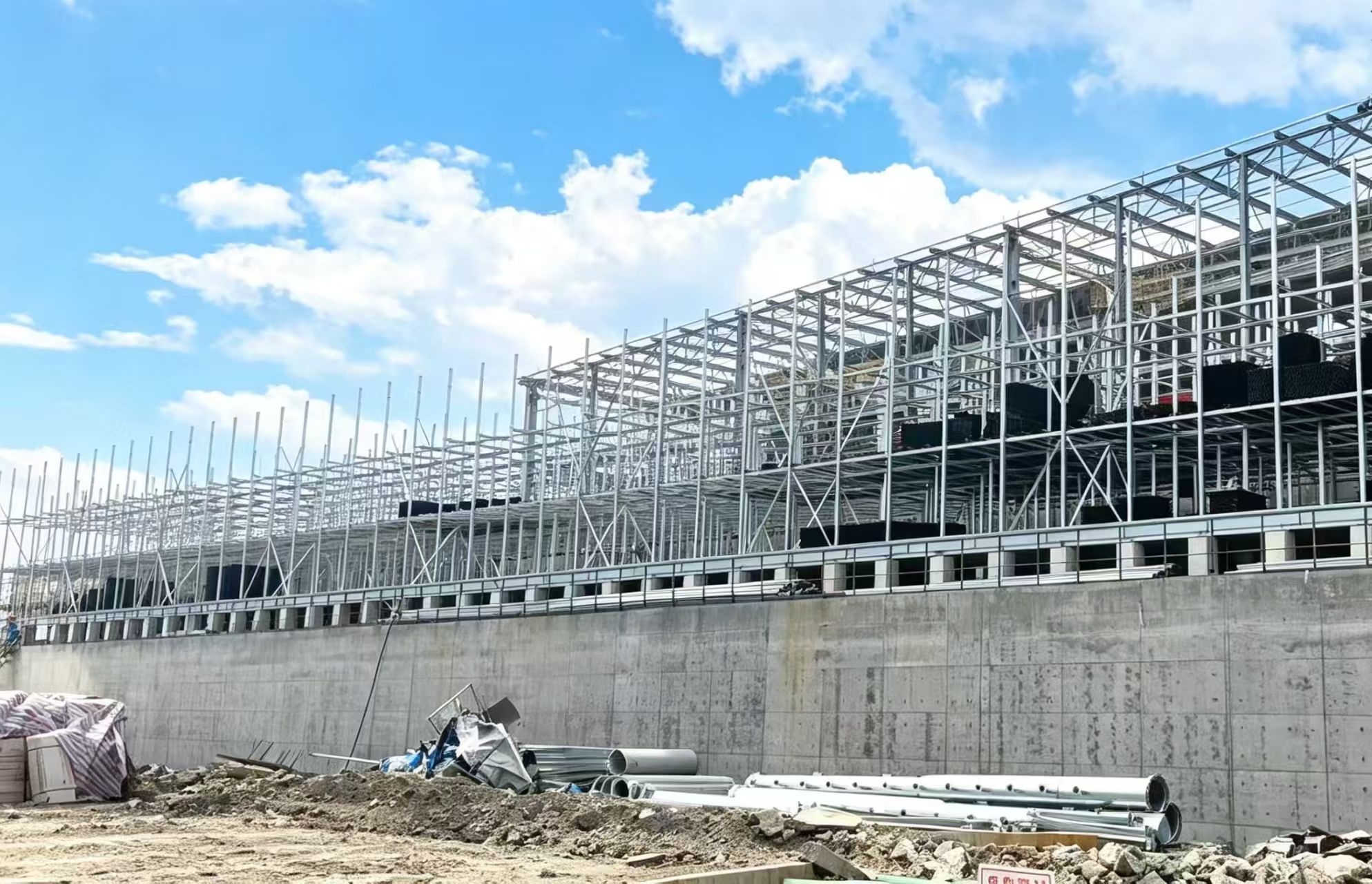
Cooling tower performance depends on more than the fan, motor, or water distribution system. Inside the tower, cooling tower filler plays a critical role in heat transfer. It increases the contact area between water and air, helping hot circulating water release heat more effectively. When the fill is properly selected, installed, and maintained, it can help an industrial cooling system operate more reliably.
For distributors, contractors, cooling tower service companies, and industrial buyers, finding a dependable cooling tower filler manufacturer is an important purchasing decision. The right supplier can help you identify suitable materials, confirm product specifications, and source replacement fill for different cooling tower applications.
Power Tower Cooling Technology (Shaoxing) Co.,Ltd supplies cooling tower parts and filler products for customers seeking practical solutions for industrial cooling applications. Buyers can visit the official website at www.coolingtowerpart.com to explore available products and discuss their requirements.
Whether you need replacement fill for an existing tower or materials for a new project, understanding product types, materials, specifications, and supplier capabilities will help you make a more informed decision.
What Is Cooling Tower Filler?
Cooling tower filler, also known as cooling tower fill, fill media, or cooling tower infill, is the material installed inside a cooling tower to improve heat and mass transfer between water and air.
As hot water flows across or through the fill, it spreads into thin films or breaks into droplets, depending on the fill design. This increases the effective contact area and allows heat to transfer from the water to the air. Some water also evaporates, carrying heat away from the circulating water. The result is cooler water returning to the system.
Filler is not simply a plastic component placed inside a tower. Its geometry, material, surface area, and compatibility with airflow and water distribution all influence performance. Choosing the wrong fill can restrict airflow, increase fouling, or prevent the tower from reaching its intended cooling performance.
How Cooling Tower Fill Improves Heat Transfer
Imagine trying to cool a large amount of water in a smooth, narrow pipe. The contact area between water and air would be limited. Fill media solves this problem by creating many surfaces and flow paths, allowing water to spread out and interact with moving air.
Film fill creates thin sheets of water over closely spaced surfaces. Splash fill breaks falling water into smaller droplets as it strikes bars, grids, or other structures. Both approaches aim to improve heat exchange, but they work differently and suit different operating conditions.
The best design depends on the tower configuration, circulating water quality, operating temperature, airflow, and cooling requirements.
Why Fill Quality Matters
Poor-quality or incompatible filler may deform under operating temperatures, become brittle, clog more easily, or fail to fit the tower correctly. Incorrect dimensions can also create gaps, interfere with water distribution, or make installation more difficult.
Quality involves more than appearance. Buyers should evaluate material suitability, dimensional consistency, structural strength, manufacturing controls, and compatibility with the intended operating environment.
A low initial purchase price may look attractive, but premature replacement, labor costs, downtime, and reduced cooling performance can make an unsuitable product more expensive over its service life.
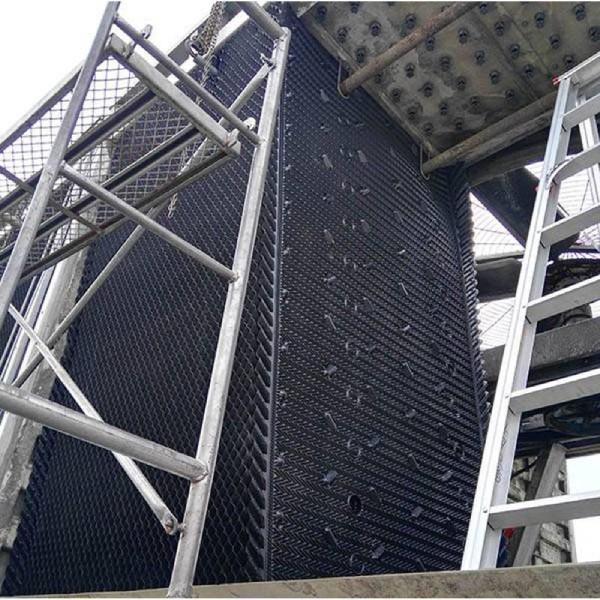
Types of Cooling Tower Filler
Before requesting a quotation, identify which type of filler your cooling tower requires. The main categories include film fill and splash fill, with different material options available for different operating conditions.
The existing tower design is often the best starting point. Review the original equipment documentation, inspect the current fill, and confirm the dimensions and arrangement before ordering replacement components.
PVC Film Fill
PVC film fill is widely used in cooling tower applications where water quality and operating conditions are suitable. Its formed sheets create channels that distribute water across a large surface area. This design promotes efficient heat transfer in a relatively compact space.
PVC fill is often considered for industrial cooling towers and HVAC systems because it can provide a practical balance of performance, weight, and cost.
However, standard PVC grades are not suitable for every high-temperature or chemically aggressive environment. Buyers should confirm the manufacturer's temperature limits and material recommendations before selecting a product.
PP Cooling Tower Fill
Polypropylene, or PP, is another common material for cooling tower filler. Depending on the grade and product design, PP may be suitable for applications that require greater temperature tolerance than standard PVC products can provide.
This makes PP worth evaluating for certain industrial processes and challenging operating environments. Nevertheless, not all PP fill products have the same performance characteristics. Sheet thickness, forming quality, geometry, support requirements, and operating limits can vary.
Do not assume that every PP filler can handle the same water temperature or chemical exposure. Request the applicable technical specifications before placing an order.
Splash Fill
Splash fill is designed to break falling water into droplets as it moves through a series of bars, grids, or other splash elements. It is often considered for applications where suspended solids or fouling risks make narrow film-fill passages less attractive.
Because its structure and flow paths differ from those of film fill, splash fill may offer practical advantages under certain water-quality conditions. However, the best option depends on the complete cooling tower design.
Buyers should assess thermal requirements, water distribution, airflow, installation space, and maintenance needs before deciding whether splash fill is appropriate.

Crossflow vs. Counterflow Cooling Tower Filler
Cooling tower airflow configuration affects the type and arrangement of filler required.
In a crossflow tower, air moves horizontally across the falling water. In a counterflow tower, air generally moves upward against the downward flow of water. Fill packs must be compatible with the tower's airflow path, support arrangement, water distribution system, and available installation space.
A filler designed for one tower configuration should not automatically be assumed suitable for another.
When contacting a manufacturer, provide the tower type, existing fill arrangement, dimensions, and application details. Photographs and drawings can help clarify the requirements, especially when the original model or part number is unavailable.
How to Choose the Right Cooling Tower Filler Material
The right material depends on actual operating conditions, not simply on what is most commonly used. PVC may be a practical option for many conventional applications, while PP may be worth evaluating where temperature or chemical conditions require different material characteristics.
Splash fill may be preferable in some systems with higher fouling risks. Buyers should also consider mechanical loading, expected service life, cleaning procedures, and local maintenance capabilities.
A useful purchasing question is not just, "Which material costs less?" It is, "Which material will deliver suitable performance and durability in this specific cooling tower?"
Water Quality and Operating Temperature
Water quality is one of the most important factors in filler selection. Suspended solids, biological growth, mineral scaling, and other contaminants can accumulate on fill surfaces or block narrow channels.
If the circulating water contains significant debris, tightly spaced film fill may require more careful water treatment and maintenance. Operating temperature also matters because materials can soften, deform, or age differently under prolonged heat exposure.
Share the normal and maximum water temperatures with your supplier, together with any known chemical exposure. If the system handles unusual process water, explain its characteristics before selecting the material.
Airflow and Thermal Performance
A cooling tower must balance water distribution, airflow, and heat transfer. Fill geometry affects how water spreads and how air passes through the tower. If the selected fill creates excessive resistance or does not match the tower design, airflow and overall performance may be affected.
Simply choosing the densest or most compact fill does not guarantee the best cooling result. Buyers should evaluate the intended application and follow the equipment designer's requirements.
Where a performance upgrade is planned, a technical assessment is preferable to replacing existing fill with a different geometry without checking system compatibility.
Why Buy Cooling Tower Filler Directly from a Manufacturer?
Buying from a manufacturer can simplify communication about product specifications, material choices, dimensions, and production requirements. Instead of relying entirely on a reseller's interpretation, buyers may be able to discuss their needs with a team familiar with the product.
Direct sourcing can also be useful for distributors, contractors, and project purchasers who need repeat orders or multiple product configurations.
However, a factory-direct relationship does not automatically guarantee quality or the lowest total cost. Buyers should still review technical suitability, quality documentation, delivery terms, packaging, and the supplier's ability to meet the requested specifications.
More Direct Product Communication
Cooling tower projects often involve technical details that are easy to overlook. A buyer might know the required tower capacity but lack the exact fill dimensions. Another may have an old filler pack but no original technical drawing.
Direct discussions with a manufacturer can help identify missing information before production begins.
Provide as much detail as possible, including tower type, fill dimensions, material preference, operating temperature, water quality, and estimated quantity. If some information is unavailable, explain that clearly so the supplier can advise which measurements or records are needed to proceed.
Customization and Bulk Supply
Different cooling towers may require different sheet dimensions, pack configurations, or material specifications. Depending on the manufacturer's capabilities, customized products may help buyers address replacement requirements or project-specific installation constraints.
Bulk purchasing can also simplify procurement for distributors, contractors, and companies maintaining several cooling towers.
Before confirming a customized order, establish the approved dimensions, material, quantity, packaging method, inspection requirements, and delivery schedule. Customization should be based on verified technical requirements rather than assumptions about what will fit.
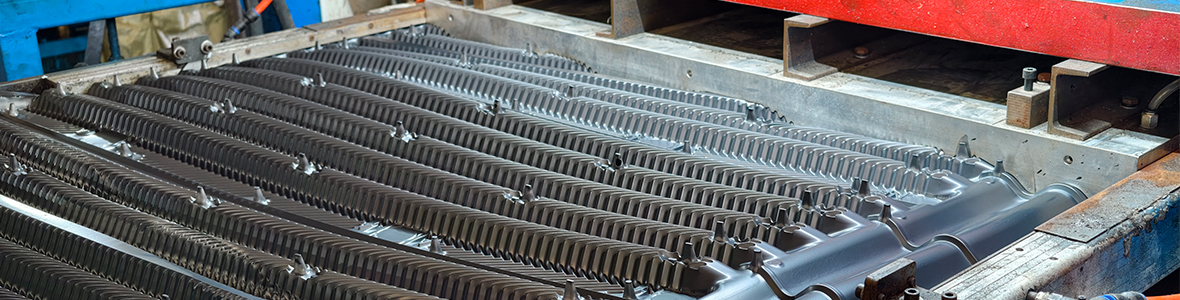
Quality Control in Cooling Tower Filler Manufacturing
Quality control should cover the production process as well as the finished product. Relevant checks may include raw material verification, sheet thickness, dimensional consistency, forming quality, bonding or assembly quality where applicable, and visual inspection.
For assembled fill packs, buyers should also confirm that the products match the approved configuration and can be installed using the intended support arrangement.
Ask what inspections and documentation the supplier can provide for the specific product. Depending on the application, additional requirements may include sample approval, batch identification, or inspection before shipment.
These details are particularly important for large orders, replacement projects, and buyers supplying end customers in multiple markets.
Supplying Cooling Tower Filler to Global Buyers
International sourcing introduces requirements beyond product selection. Buyers must consider manufacturing lead times, export packaging, freight arrangements, customs documentation, import regulations, and delivery schedules.
The supplier and buyer should confirm which party is responsible for each stage of transportation and which trade terms apply.
If a project has a fixed shutdown or installation date, build sufficient time into the schedule for production, shipping, customs clearance, and on-site preparation. Early communication can reduce the risk of delays caused by missing specifications, incomplete documentation, or packaging that does not suit the shipment.
Export Packaging and Transportation
Cooling tower filler is often relatively lightweight for its volume, but the shipment can still occupy substantial space. Packaging should protect the product against deformation, contamination, and damage during handling and transportation.
Buyers should discuss package dimensions, loading arrangements, labeling, and whether the products will be shipped assembled or in another suitable configuration.
For long-distance shipments, confirm how the packaging will protect the fill throughout the planned journey. Freight cost should be evaluated alongside product cost because the dimensions and volume of the shipment can materially affect the total landed cost.
Technical Specifications and Documentation
Clear documentation helps buyers verify that the supplied product matches the purchase order. Depending on the project, useful information may include product dimensions, material specifications, operating limits, packing details, inspection records, and installation guidance.
Buyers should also confirm the invoice, packing list, shipping documents, and any certificates required by their market or project.
Requirements vary by destination and application, so it is best to identify them before production and shipment. Avoid assuming that a document is included unless the supplier has confirmed it in writing.
How to Select a Reliable Cooling Tower Filler Supplier
Start by evaluating whether the supplier understands your cooling tower application. A reliable supplier should be able to discuss fill types, materials, dimensions, and operating conditions without treating every order as identical.
Review the clarity of its quotations, the completeness of its specifications, its quality-control approach, and its communication throughout the purchasing process. Ask for relevant product information and confirm whether samples, drawings, or inspections are available when necessary.
Also compare the complete commercial offer, including packaging, lead time, freight arrangements, payment terms, and after-sales communication.
The goal is to establish a supplier relationship that supports both the current order and future maintenance requirements.
Common Purchasing Mistakes to Avoid
Several common mistakes can make a cooling tower filler order more expensive than expected.
The first is purchasing by price alone without confirming material suitability. The second is ordering by approximate dimensions rather than verifying the required measurements. The third is assuming that film fill, splash fill, crossflow fill, and counterflow fill are interchangeable.
Buyers may also overlook water quality, maximum operating temperature, packaging volume, and delivery timing. Another risk is failing to confirm the final specifications in writing before production.
A simple checklist can prevent many of these problems:
Verify the cooling tower type and configuration.
Confirm the required filler dimensions and arrangement.
Select a material suitable for operating temperature and water quality.
Confirm the quantity and any customization requirements.
Review quality expectations and available technical documentation.
Check packaging, freight, and delivery terms.
Approve the final specifications before production begins.
Taking these steps before ordering can reduce misunderstandings, avoid unnecessary costs, and make the purchasing process more predictable.
Installation, Cleaning, and Replacement of Cooling Tower Filler
Even well-manufactured filler needs correct installation and regular maintenance. During installation, check that fill packs are properly supported, aligned, and compatible with the tower's water distribution and airflow arrangements.
Incorrect placement can cause gaps, poor water distribution, or mechanical instability.
During operation, inspect the fill for scaling, biological growth, debris, deformation, and damage. Cleaning methods should suit the material and the contaminant involved. Excessive pressure or incompatible cleaning chemicals can damage the fill, so follow suitable procedures and equipment guidance.
Replacement may be necessary when the filler has become brittle, distorted, persistently blocked, or unable to meet performance requirements after appropriate maintenance.
Regular inspection is generally more effective than waiting until a cooling tower develops a serious performance problem. A planned maintenance program can help identify deterioration early and support better decisions about cleaning or replacement.
Why Choose Power Tower Cooling Technology (Shaoxing) Co.,Ltd?

For buyers seeking a source of cooling tower parts and filler products, Power Tower Cooling Technology (Shaoxing) Co.,Ltd is a supplier to consider when comparing manufacturing options.
Its website, https://www.coolingtowerpart.com, provides a starting point for exploring cooling tower products and making an inquiry. Global buyers can use the website to identify relevant products and communicate their project requirements.
When requesting a quotation, include the tower type, existing fill dimensions, preferred material, operating conditions, required quantity, destination country, and target delivery date. This information helps establish whether the proposed product fits the application and makes it easier to discuss the commercial details.
Before placing an order, buyers should confirm current product availability, customization options, specifications, quality documentation, packaging, and delivery arrangements directly with the company.
For distributors, contractors, and industrial users, clear technical communication is an important part of building a reliable supply relationship. Defining the requirements early helps both parties evaluate product suitability and plan the order more effectively.
Frequently Asked Questions About Cooling Tower Filler Supply
How Do I Choose the Right Cooling Tower Filler?
Start with the tower's design and operating conditions. Confirm whether it is a crossflow or counterflow tower, identify the existing fill type, and measure the required dimensions.
Then consider water quality, operating temperature, airflow, thermal performance, and maintenance requirements. If you are replacing old filler, photographs, drawings, and the original part information can help the supplier assess compatibility.
Can Cooling Tower Filler Be Customized?
Customization may be available depending on the manufacturer, product type, and production requirements. Buyers should provide the required dimensions, material specifications, quantity, and any special operating conditions.
Confirm the final drawing or specification before production so that both parties agree on the product to be supplied.
How Often Should Cooling Tower Fill Be Replaced?
There is no universal replacement interval. Service life depends on material quality, operating temperature, water chemistry, fouling, cleaning practices, and mechanical conditions.
Routine inspections can help identify damage and performance problems before they cause larger issues. Replace fill when its condition or performance can no longer be restored to an acceptable level through appropriate maintenance.
Is PVC or PP Better for Cooling Tower Filler?
Neither material is automatically better for every application. PVC may suit many conventional cooling tower conditions, while PP may be worth considering for applications requiring different temperature or chemical resistance characteristics.
The correct choice depends on the specific material grade, product design, and operating environment. Confirm the manufacturer's recommended limits before purchasing.
What Information Should I Provide When Requesting a Quote?
Provide the cooling tower type, fill material if known, dimensions, operating temperature, water quality information, required quantity, destination, and target delivery date.
If available, include photographs, drawings, and the original equipment model. Also state whether you need standard replacement products or a customized configuration. Complete information helps the supplier assess your requirements and prepare a more useful quotation.
What Should Global Buyers Consider Besides the Product Price?
Global buyers should compare the total landed cost rather than looking at the unit price alone. Relevant factors include packaging volume, freight charges, customs duties, local import requirements, delivery lead time, and any inspection or documentation costs.
It is also important to confirm the specifications and agree on the delivery terms before production begins.
Conclusion
Supplying cooling tower filler from a manufacturer to global buyers involves more than finding a low-cost product. Buyers need to understand fill types, material properties, tower configuration, water quality, installation requirements, quality control, and international shipping.
A well-matched filler can support effective heat transfer and reliable cooling tower operation, while an unsuitable product may create avoidable maintenance and replacement costs.
For distributors, industrial users, contractors, and international purchasers, the best approach is to verify technical requirements first and compare suppliers on the complete value of their offer.
Power Tower Cooling Technology (Shaoxing) Co.,Ltd can be contacted through www.coolingtowerpart.com to discuss cooling tower product requirements.
By confirming specifications, quality expectations, and delivery arrangements before ordering, global buyers can make more confident sourcing decisions and build a stronger foundation for long-term cooling tower maintenance.


