You are here: Home » Blog » What‘s A Cooling Tower Drift Eliminator
What‘s A Cooling Tower Drift Eliminator
Views: 0 Author: jessi Publish Time: 2025-11-21 Origin: Site
Introduce To Cooling Tower Drift Eliminator
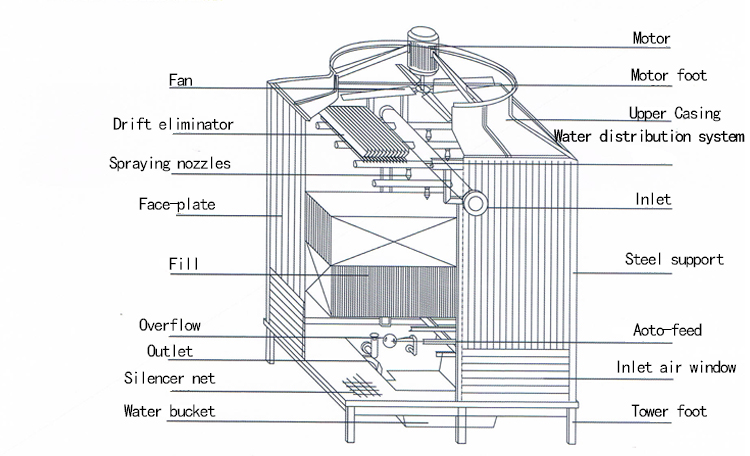
Drift Eliminator for cooling towers is a device used to reduce the amount of water droplets escaping from the cooling tower. Drift is the small water droplets carried away by air flow during the operation of a cooling tower, usually a part of water vapor. If these droplets are not intercepted, they can lead to water waste and possible environmental problems. Drift eliminators capture these small water droplets through physical and airflow control technology to prevent them from being discharged into the environment.
Working Principle of Cooling Tower Drift Eliminator
The working principle of the cooling tower drift eliminator primarily relies on the guidance of airflow, the placement of physical obstacles, and the precise design used to capture water droplets in the air. Below is a detailed description of its key principles:
1.Change in Airflow:
When the air in the cooling tower comes into contact with the water flow, some small water droplets are carried out of the tower by the air. The drift eliminator changes the airflow path, allowing the water droplets to be captured or redirected back into the tower by the upward-moving air.
2.Physical Obstacles and Curved Airflow:
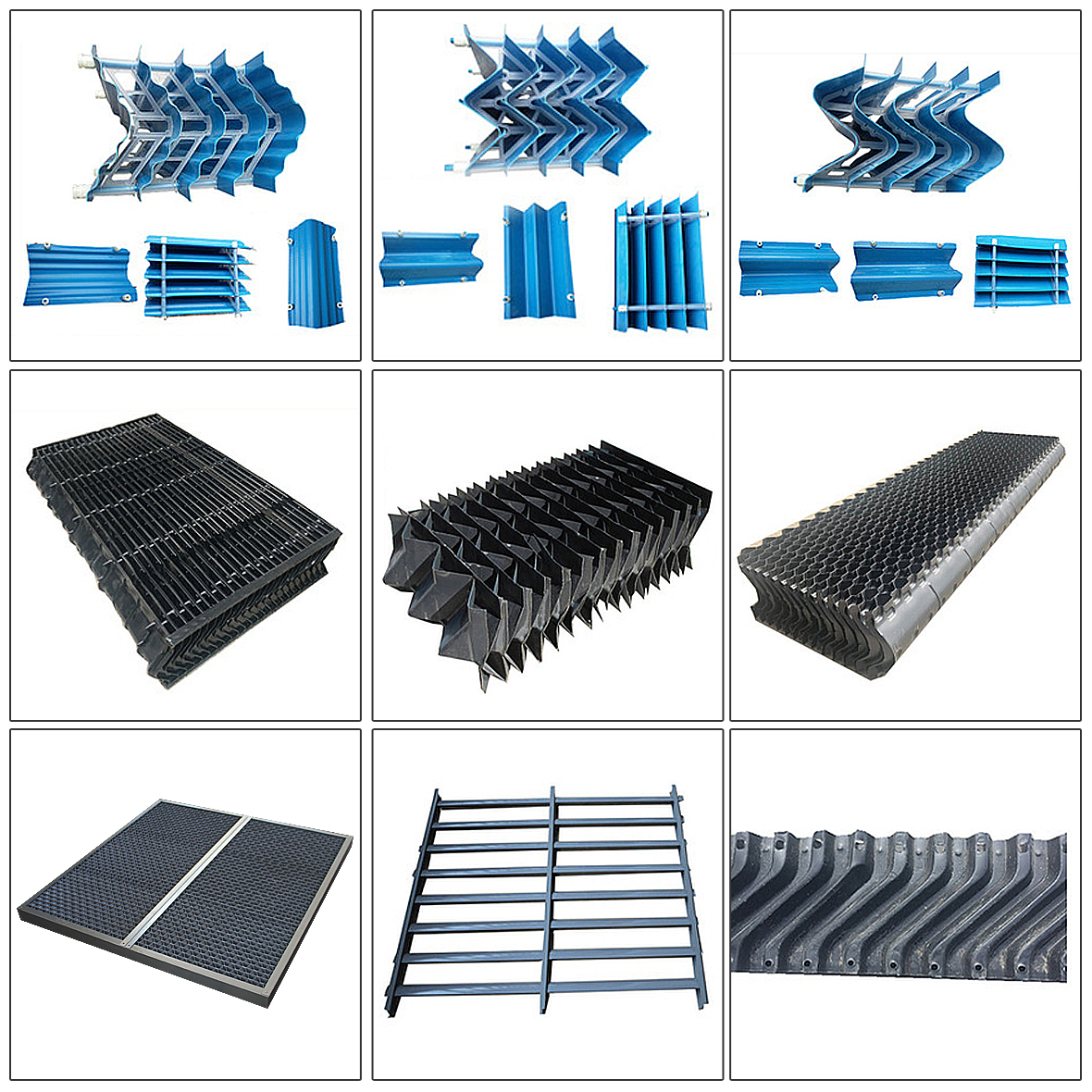
Cooling tower drift eliminators are typically composed of a series of vertical, horizontal, or interlocking slats, fins, and honeycomb structures. As the air flows through these structures, the water droplets are forced to change direction. Due to gravity, the droplets are intercepted and fall back into the cooling tower basin, while the air continues to pass through unhindered.
3.Capturing Water Droplets:
The design of the drift eliminator is effective in capturing the water droplets in the air stream, usually employing several methods:
4.Curved and Slanted Plate Design:
By changing the direction of airflow, the droplets are forced to hit the vertical or slanted plates and are thus guided back into the cooling tower.
5.Increasing the Length of the Airflow Path:
By setting up multiple airflow paths, the air must pass through more obstacles, increasing the chances of capturing the water droplets.
6.Droplet Recirculation:
The water droplets captured by the drift eliminator usually fall back into the cooling tower basin due to gravity, preventing them from being lost to the atmosphere.
The Importance of Cooling Tower Drift Eliminator
1.Improved Water Recovery Rate:
The primary function of the water collector is to capture the water droplets that evaporate or are carried away in the cooling tower. With an effective water collector design, water droplet waste can be minimized, and water recovery efficiency can be improved. This is crucial for water conservation, especially in areas with scarce water resources.
2.Reduced Water Vapor Loss:
During the cooling tower's operation, water vapor is carried into the air. If not collected, this vapor results in water loss. The water collector effectively captures this water vapor, reducing evaporation losses.
3.Lower System Operating Costs:
By recovering more water, the cooling tower system reduces its reliance on external water sources, thereby lowering water supply costs. Additionally, reducing water vapor loss helps avoid excessive water consumption, making the cooling tower more energy-efficient and environmentally friendly.
4.Reduced Pollutant Emissions:
The water collector also helps reduce the impurities and pollutants carried by the water in the air, preventing the spread of contaminants. This is essential for maintaining a clean environment and improving the environmental performance of the cooling tower.
5.Extended Equipment Lifespan:
A well-designed water collector can reduce water loss within the cooling tower system, preventing equipment wear and tear caused by insufficient water. This helps extend the lifespan of the equipment.
6.Enhanced System Stability:
The water collector ensures stable water levels in the cooling tower, preventing system malfunctions caused by insufficient or uneven water flow, thereby ensuring smooth and reliable operation of the cooling tower.