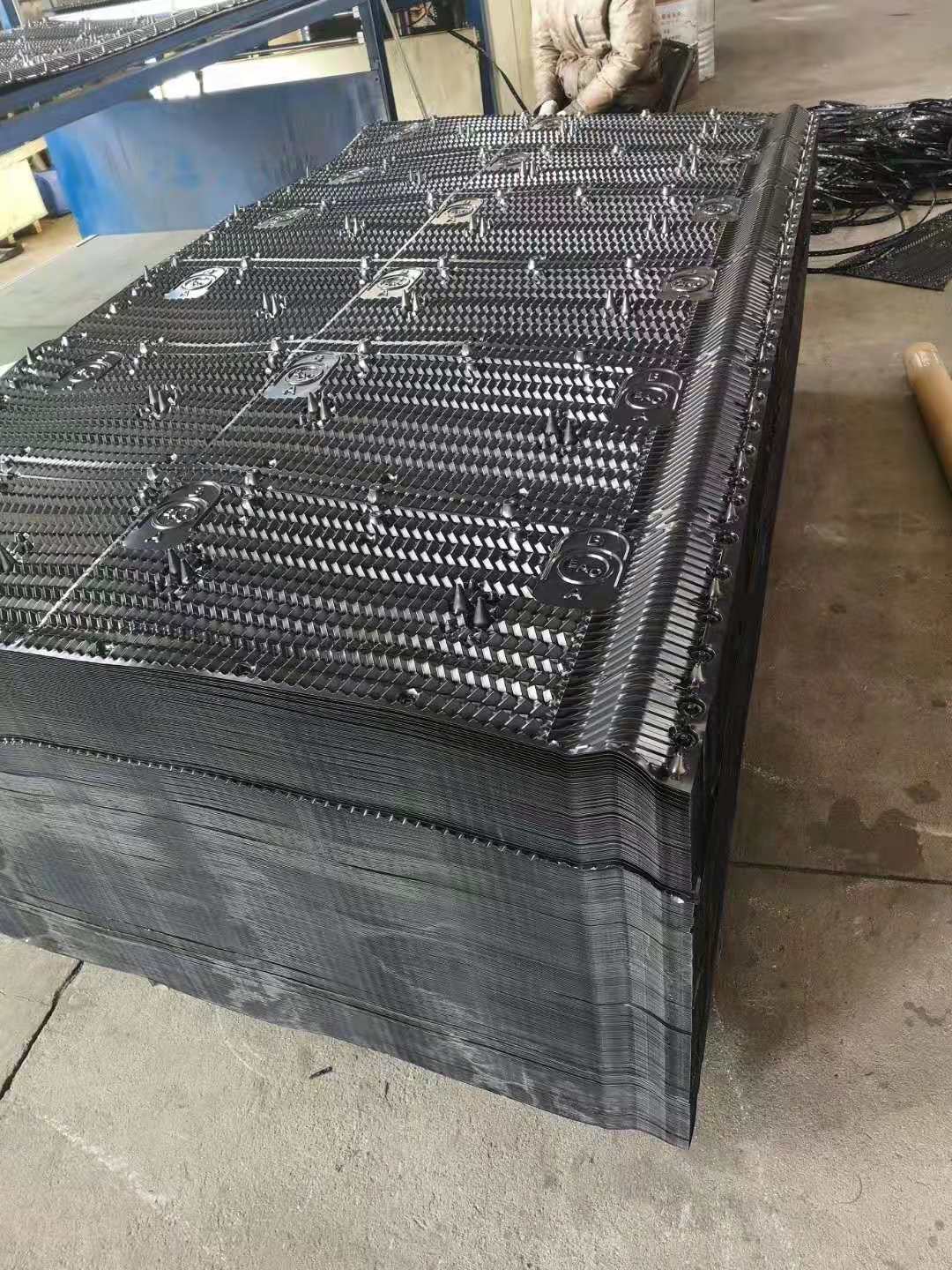
BAC Cooling Tower Filler Selection Guide for Industrial Applications
Selecting the right BAC cooling tower filler is essential for maintaining efficient heat transfer, stable cooling performance, and long-term cooling tower operation. The filler, also known as cooling tower fill or fill media, increases the contact area between circulating water and air, allowing heat to transfer more effectively.
For industrial cooling systems, choosing the wrong BAC cooling tower fill can result in poor thermal performance, excessive pressure drop, scaling, clogging, and increased maintenance costs.
This guide explains the key factors to consider when selecting BAC cooling tower filler for industrial applications, including fill type, material, water quality, operating temperature, airflow, thermal performance, and replacement requirements.
What Is BAC Cooling Tower Filler?
BAC cooling tower filler is a heat-transfer component installed inside a cooling tower. Its primary function is to distribute circulating water over a large surface area while allowing air to pass through the fill.
How Does BAC Cooling Tower Fill Work?
Hot process water enters the cooling tower and is distributed over the fill surface. As the water flows downward, air moves through the fill in either a crossflow or counterflow direction.
The large surface area created by the fill allows greater water-air contact. A small portion of the water evaporates, removing heat from the remaining water.
Why Is Fill Important?
The performance of cooling tower fill directly affects:
Therefore, BAC cooling tower filler selection should be based on the complete operating conditions rather than price alone.
Main Types of BAC Cooling Tower Filler
Different cooling tower designs require different types of fill media. Understanding the available fill types is the first step toward selecting the right solution.
Film Fill
Film fill uses thin sheets or structured surfaces to spread water into a thin film.
Advantages of Film Fill
Large effective heat-transfer area
High thermal efficiency
Compact design
Suitable for relatively clean water
Can provide excellent cooling performance with optimized airflow
Film fill is commonly selected when high thermal performance and compact tower design are important.
Splash Fill
Splash fill breaks the water stream into droplets as water falls through the fill.
Advantages of Splash Fill
Better tolerance of suspended solids
Lower tendency to clog than fine film fill
Suitable for applications with poorer water quality
Durable under demanding operating conditions
For industrial systems with contaminated or solids-containing water, splash fill may be a more practical option.
How to Choose the Right BAC Cooling Tower Filler
There is no single fill design that is ideal for every cooling tower. Selection should consider several operating parameters.
1. Consider Cooling Tower Type
The first factor is the tower configuration.
Crossflow Cooling Towers
In a crossflow tower, air moves horizontally across the falling water. The fill is designed to maximize water-air contact while maintaining suitable airflow resistance.
Counterflow Cooling Towers
In a counterflow tower, air travels upward while water moves downward. Counterflow fill designs are typically optimized for efficient heat transfer within the available tower volume.
Always select replacement fill according to the original tower configuration and fill arrangement.
2. Evaluate Water Quality
Water quality is one of the most important factors when choosing cooling tower fill.
Clean Water Applications
Film fill can be highly effective when circulating water is properly treated and contains relatively low levels of suspended solids.
Dirty or High-Solids Water
If the water contains significant suspended solids, biological growth, or other contaminants, a fill with wider channels or a splash-type design may be more appropriate.
Poor water quality can cause:
3. Check Operating Temperature
Temperature resistance should be considered when selecting BAC cooling tower fill.
Why Temperature Matters
Different plastic materials have different temperature resistance characteristics. Continuous exposure to high-temperature water can accelerate deformation, aging, and material degradation.
Before purchasing replacement fill, verify:
The selected material should be suitable for the actual operating environment.
4. Match the Fill to Required Thermal Performance
Thermal performance is another critical selection factor.
A properly designed cooling tower fill should provide sufficient surface area and water distribution without creating excessive airflow resistance.
Key Thermal Parameters
When comparing fill products, consider:
A higher surface area does not automatically mean better performance. The fill must work effectively with the tower's air and water flow conditions.
Material Selection for BAC Cooling Tower Filler
Material selection directly affects the service life and reliability of cooling tower fill.
PVC Cooling Tower Fill
PVC is widely used for cooling tower fill because it offers a balance of cost, chemical resistance, and performance.
Benefits of PVC Fill
Cost-effective
Good corrosion resistance
Good dimensional stability
Suitable for many industrial applications
Easy to manufacture into structured fill sheets
PVC cooling tower fill can be an effective option for standard operating conditions when temperature and chemical compatibility are appropriate.
PP Cooling Tower Fill
Polypropylene is another common material for cooling tower fill.
When Should PP Fill Be Considered?
PP can be considered for applications where higher temperature resistance or specific chemical resistance is required.
However, material selection should always be based on the actual operating temperature and chemical environment rather than assuming one material is universally better.
Cooling Tower Filler Selection Based on Water Conditions
Water treatment and fill selection should be considered together.
Scaling Problems
Mineral deposits can accumulate on fill surfaces and reduce the effective heat-transfer area.
How to Reduce Scaling
Proper water treatment can help control:
Selecting a fill with an appropriate channel structure can also make cleaning easier.
Biological Fouling
Algae, bacteria, and other biological growth can block fill passages and reduce airflow.
Regular inspection and appropriate water treatment are essential for maintaining fill performance.
Suspended Solids
Industrial cooling systems may contain dust, process particles, or other suspended solids.
Why Fill Channel Size Matters
Fine film-fill passages can be more susceptible to blockage when water contains high concentrations of suspended solids.
In such conditions, a more open fill design may reduce clogging risk and simplify maintenance.
BAC Cooling Tower Filler Replacement
Even high-quality cooling tower fill eventually requires inspection and replacement.
Signs That BAC Cooling Tower Fill Needs Replacement
Look for the following warning signs:
Deformed or collapsed fill sheets
Excessive scaling
Severe biological fouling
Cracked or brittle fill
Blocked channels
Reduced cooling performance
Increased approach temperature
Uneven water distribution
Excessive pressure drop
How to Select Replacement BAC Cooling Tower Fill
When replacing existing fill, do not select a product based only on physical dimensions.
Check the Original Specifications
Where possible, collect:
Cooling tower model
Tower type
Existing fill type
Fill dimensions
Fill thickness
Material
Water flow rate
Operating temperature
Airflow requirements
Verify Installation Dimensions
The replacement fill should fit the existing support structure without creating gaps or excessive compression.
Incorrect dimensions can cause poor water distribution and reduce thermal performance.
How to Improve BAC Cooling Tower Fill Performance
Proper fill selection is only one part of achieving high cooling efficiency.
Maintain Proper Water Distribution
Water should be distributed evenly across the fill surface.
Uneven distribution can create dry areas and overloaded areas, reducing the effective heat-transfer performance of the fill.
Keep Fill Channels Clean
Regular inspection helps identify fouling and scaling before they significantly affect performance.
Recommended Maintenance Checks
Inspect the fill for:
Optimize Water Treatment
A suitable water treatment program can significantly extend the service life of cooling tower fill.
Water chemistry should be monitored regularly according to the cooling system's operating requirements.
Common Mistakes When Selecting Cooling Tower Filler
Several common mistakes can reduce cooling tower performance.
Choosing Fill Based Only on Price
Low initial cost does not always mean lower total operating cost.
A fill with poor thermal performance or short service life may increase energy consumption and maintenance expenses.
Ignoring Water Quality
Selecting high-performance film fill for heavily contaminated water can lead to rapid fouling and blockage.
Using Incorrect Dimensions
Even a high-quality fill will not perform correctly if its dimensions do not match the tower.
Ignoring Operating Temperature
Using a material outside its suitable temperature range can lead to deformation or premature failure.
Replacing Fill Without Checking Thermal Requirements
A replacement fill should meet the required cooling duty, not simply fit into the existing tower.
BAC Cooling Tower Fill vs Generic Replacement Fill
Industrial users often compare original BAC cooling tower fill with aftermarket replacement products.
Original Fill
Original equipment fill is designed around the tower manufacturer's specifications and configuration.
Replacement Fill
A properly engineered replacement can provide a practical alternative when the original fill is unavailable or when users are looking for a cost-effective maintenance solution.
What Should Buyers Compare?
When evaluating replacement fill, compare:
The most important factor is whether the replacement fill can meet the cooling tower's actual operating requirements.
How Much Does BAC Cooling Tower Filler Cost?
The price of cooling tower fill varies according to several factors.
Main Factors Affecting Price
Fill material
Fill type
Sheet thickness
Dimensions
Order quantity
Thermal design
Customization
Packaging
Shipping distance
For large industrial cooling towers, purchasing fill in bulk can reduce the unit cost, but buyers should also consider transportation and installation expenses.
BAC Cooling Tower Filler Buying Checklist
Before ordering cooling tower fill, confirm the following:
Technical Checklist
Supplier Checklist
Manufacturing experience
Product specifications
Quality control
Customization capability
Technical support
Packaging method
Delivery time
After-sales service
FAQ
What is BAC cooling tower filler?
BAC cooling tower filler is the heat-transfer media installed inside a BAC cooling tower. It increases the contact area between water and air to improve evaporative cooling.
How often should BAC cooling tower fill be replaced?
Replacement intervals vary depending on water quality, operating temperature, chemical exposure, maintenance, and mechanical conditions. Regular inspection is more reliable than following a fixed replacement schedule.
Is PVC suitable for BAC cooling tower fill?
PVC can be suitable for many cooling tower applications, but the material should be selected according to operating temperature, water chemistry, and application requirements.
Can generic fill replace BAC cooling tower fill?
A properly engineered replacement fill may be used in some applications, provided that its dimensions, thermal characteristics, material, and installation requirements are compatible with the cooling tower.
What is the best cooling tower fill for industrial applications?
There is no universal best fill. The appropriate choice depends on tower design, water quality, operating temperature, thermal requirements, airflow, and maintenance conditions.
Conclusion
Choosing the right BAC cooling tower filler is critical for maintaining efficient heat transfer and reliable industrial cooling performance. The selection process should consider the cooling tower configuration, fill type, material, water quality, operating temperature, thermal requirements, and maintenance conditions.
For replacement projects, buyers should verify the original fill specifications and tower operating parameters before selecting a replacement product. A properly matched BAC cooling tower fill can help maintain cooling capacity, reduce fouling problems, improve operational reliability, and extend the service life of the cooling system.
For industrial users, the best approach is to evaluate cooling tower fill based on performance, compatibility, durability, and total operating cost, rather than purchase price alone.