Copper Tube Stainless Steel Frame Coil Heat Exchanger for Industrial Cooling
Product Overview
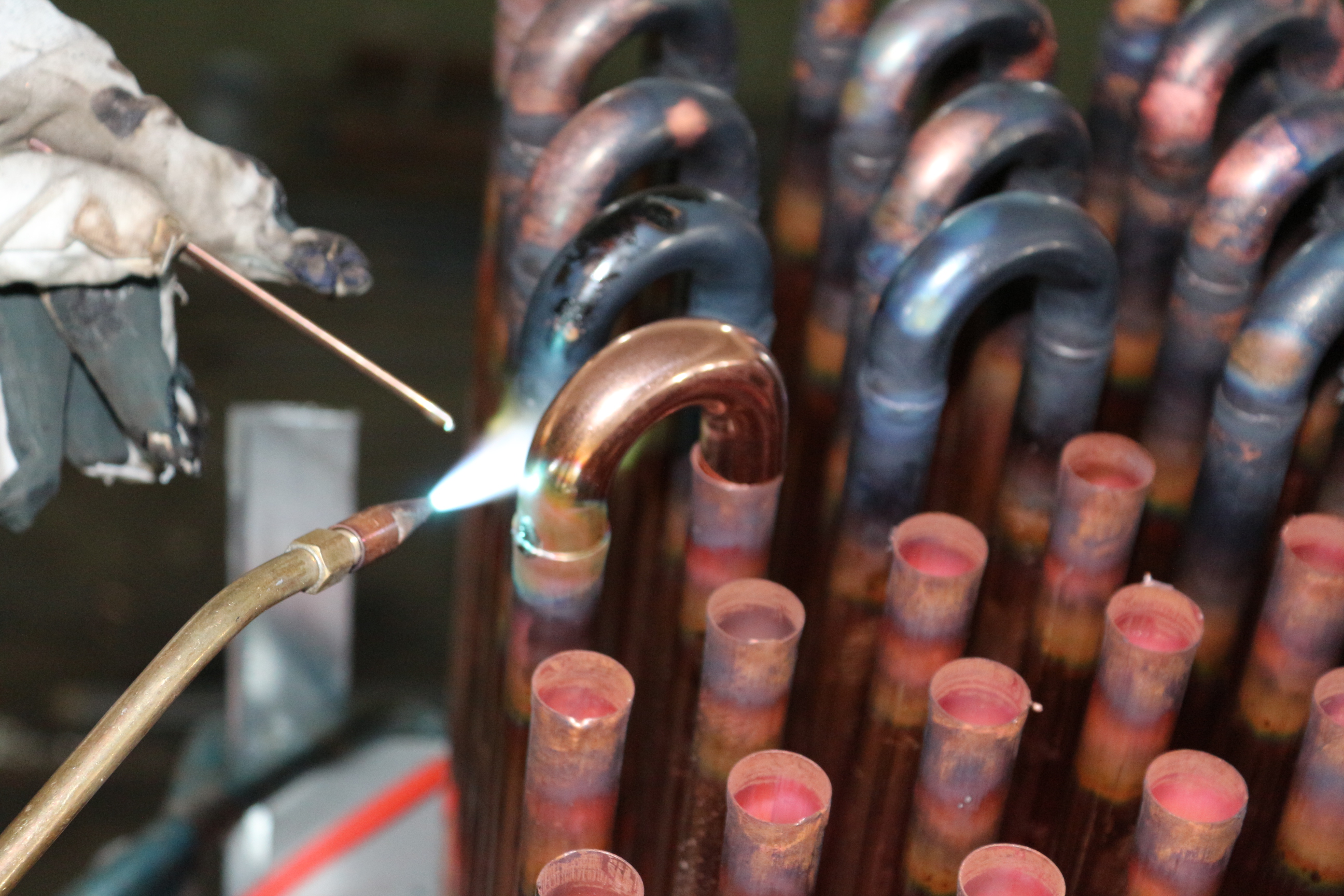 The Copper Tube Coil Heat Exchanger is a compact and efficient heat-transfer component designed for industrial cooling, HVAC, refrigeration, heat pump, process cooling, and customized thermal management systems.
The product shown features multiple rows of copper tubing arranged in a compact coil configuration with supporting metal components. Copper tubing is widely used in heat exchangers because of its excellent thermal conductivity, allowing efficient heat transfer between the fluid inside the tubes and the surrounding cooling or heating medium.
For demanding industrial environments, the coil can be supplied with stainless steel headers, frames, supports, and other corrosion-resistant components. Depending on the application, the complete heat exchanger can also be engineered using stainless steel or other suitable materials.
The coil configuration, tube diameter, number of rows, circuit arrangement, dimensions, connections, and materials can be customized according to the customer's equipment and operating conditions.
Product Highlights
High thermal conductivity copper tubing
Compact multi-row coil design
Efficient heat transfer
Stainless steel frame and components available
Multiple circuit configurations
Custom tube diameter and spacing
Custom inlet and outlet connections
Suitable for water, glycol, refrigerant, and other compatible fluids
Suitable for industrial cooling and heating
Available as OEM-compatible replacement
Custom dimensions available
Suitable for new equipment and retrofit projects
Copper Tube Coil Heat Exchanger Specifications
| Item | Specification |
| Product Name | Copper Tube Coil Heat Exchanger |
| Product Type | Tubular Heat Exchanger Coil |
| Tube Material | Copper / Stainless Steel / Customized |
| Frame Material | Stainless Steel / Customized |
| Header Material | Stainless Steel / Copper / Customized |
| Tube Arrangement | Parallel / Serpentine / Multi-Circuit |
| Tube Diameter | Customized |
| Tube Wall Thickness | Customized |
| Number of Rows | Customized |
| Circuit Configuration | Customized |
| Coil Dimensions | Customized |
| Fluid | Water / Glycol / Refrigerant / Process Fluid |
| Connection Size | Customized |
| Heat Transfer | Liquid-to-Liquid / Liquid-to-Air / Refrigeration |
| Application | Industrial Cooling / HVAC / Refrigeration / Process Cooling |
| Installation | Customized |
| Manufacturing | OEM / Replacement / Custom |
Note: Final specifications should be determined according to required cooling capacity, fluid type, flow rate, inlet and outlet temperatures, operating pressure, pressure drop, water chemistry, and available installation space.
What Is a Coil Heat Exchanger?
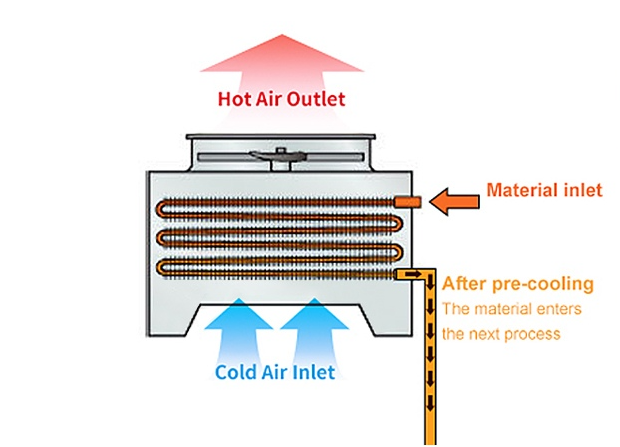
A coil heat exchanger is a tubular heat-transfer device that transfers thermal energy between two fluids or between a fluid and air.
The working fluid flows through the internal tubes while heat moves through the tube wall to the surrounding medium.
Depending on the system, the coil can perform several functions:
The compact coil construction makes this type of heat exchanger particularly useful where heat-transfer performance and installation space are important considerations.
Why Use Copper Tubes in a Heat Exchanger?
Copper is one of the most commonly used materials for heat-transfer tubing because of its excellent thermal conductivity.
Excellent Heat Transfer
Copper transfers heat efficiently through the tube wall, making it suitable for compact heat exchanger designs.
Good Fabrication Characteristics
Copper tubing can be bent, formed, brazed, and assembled into complex coil configurations.
Compact Coil Design
High thermal conductivity allows engineers to achieve the required heat-transfer duty within a relatively compact coil.
HVAC and Refrigeration Compatibility
Copper tubing is extensively used in HVAC and refrigeration equipment and can be engineered for suitable refrigerants and operating pressures.
However, copper is not suitable for every fluid or water chemistry. Material compatibility should always be evaluated before selecting a copper-tube coil.
Stainless Steel Components for Industrial Applications
For industrial cooling applications, stainless steel can be incorporated into the heat exchanger structure.
Depending on the requirements, stainless steel may be used for:
Coil frame
Support brackets
Headers
Manifolds
Connections
Tube assemblies
Mounting components
Common grades may include 304 stainless steel and 316 stainless steel, subject to the operating environment.
316 stainless steel may be preferred in some applications involving more aggressive water or chloride exposure, although the appropriate material should be determined from the actual chemical conditions.
Industrial Cooling Coil Applications
This customized coil heat exchanger can be used in a broad range of industrial and commercial thermal systems.
Industrial Process Cooling
The coil can remove heat from process liquids, machinery, production equipment, and closed-loop systems.
HVAC Systems
Coils can be designed for chilled-water or hot-water applications in air-conditioning and ventilation equipment.
Refrigeration
Suitable coil configurations can be designed for refrigeration systems where the tube material, pressure rating, refrigerant compatibility, and circuit arrangement meet system requirements.
Heat Pump Systems
The coil can be engineered as a heat-transfer component for customized heat pump applications.
Closed-Loop Cooling
A coil heat exchanger can provide indirect cooling while keeping the process fluid isolated from the external cooling medium.
Closed-Circuit Cooling Towers
Coils can be used as the heat-transfer surface in closed-circuit evaporative cooling equipment.
Chemical and Process Industries
Stainless steel components can be specified where corrosion resistance and material compatibility are important.
Energy and Industrial Equipment
Customized coils can be incorporated into auxiliary cooling, heat recovery, and thermal management systems.
Coil Heat Exchanger for Closed-Circuit Cooling Towers
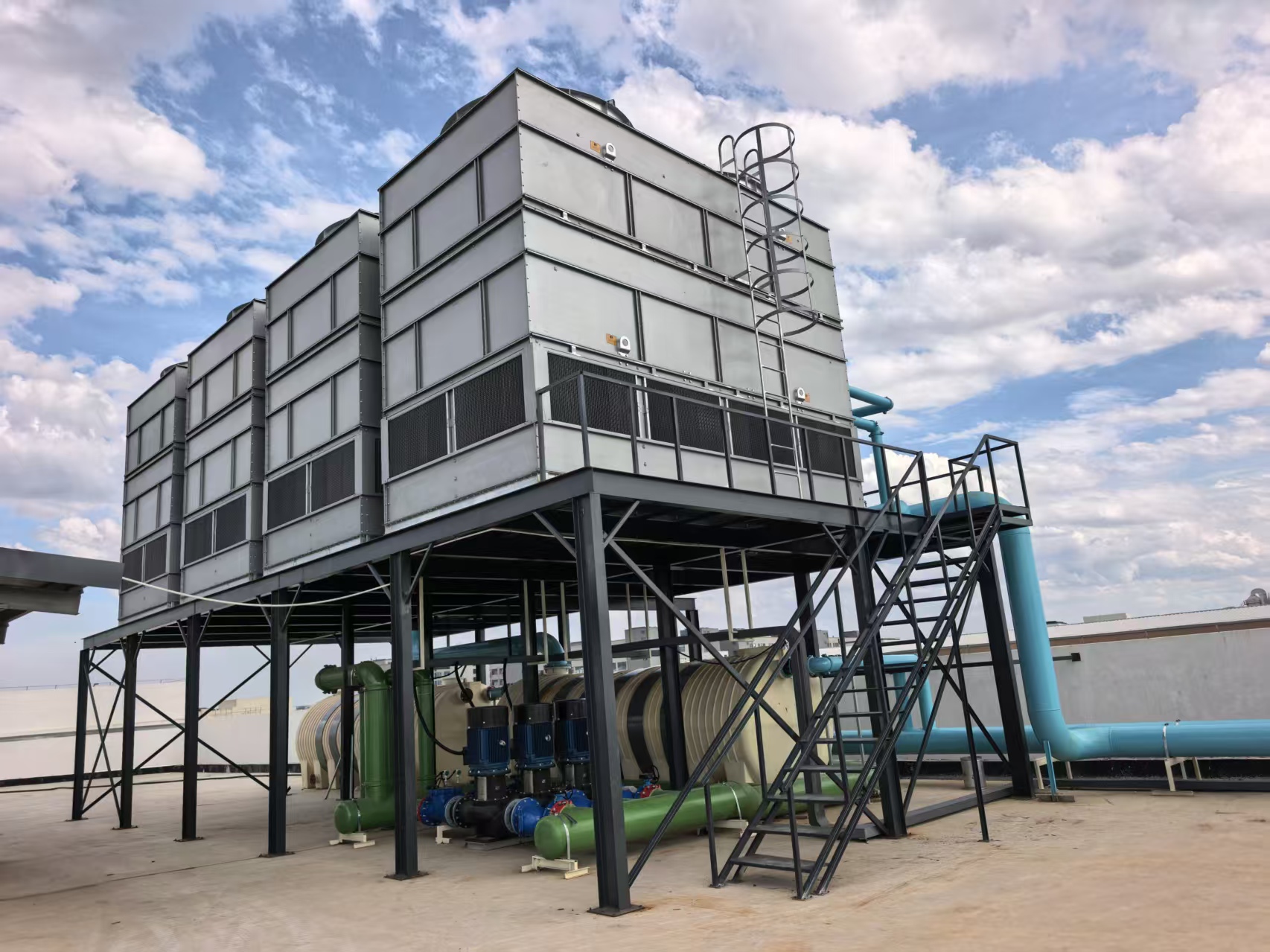
One important application for this type of heat exchanger is the closed-circuit cooling tower.
Unlike an open cooling tower, where process water is exposed directly to the cooling tower environment, a closed-circuit system keeps the process fluid inside a heat exchanger coil.
The operating principle is:
Hot Process Fluid → Coil → Heat Transfer → Cooled Process Fluid
Meanwhile:
Cooling Water → Coil Surface → Airflow → Evaporation → Heat Rejection
The separation between the process fluid and cooling water can help reduce contamination and maintain the quality of the process fluid.
The exact coil configuration should be selected according to the required thermal capacity, fluid flow rate, cooling-water conditions, and fan/airflow characteristics of the cooling tower.
Multi-Row Coil Design
The pictured heat exchanger uses multiple closely arranged tubes to create a substantial heat-transfer surface.
A multi-row configuration can provide increased heat-transfer area within a compact footprint.
However, adding rows can also influence:
Therefore, the number of rows should be selected based on the complete thermal design rather than simply maximizing the number of tubes.
Customized Circuit Configuration
The internal circuit arrangement is one of the most important aspects of coil design.
A coil can be manufactured with different circuit configurations depending on the required flow rate and pressure drop.
Single Circuit
A simple flow path can be suitable for certain low-flow applications.
Multi-Circuit
Multiple parallel circuits can distribute the fluid through several tube paths and may reduce pressure drop for higher-flow applications.
Serpentine Circuit
A serpentine arrangement creates a continuous flow path through multiple sections of the coil.
Customized Circuit
For industrial applications, the circuit can be designed according to:
Flow rate
Fluid viscosity
Heat load
Pressure drop
Inlet/outlet temperature
Operating pressure
Tube diameter
Custom Coil Heat Exchanger Manufacturing
Not every industrial cooling system can use a standard coil.
We offer customized heat exchanger coils based on customer drawings, existing components, equipment specifications, and operating conditions.
Customization options include:
Overall coil length
Coil width
Coil height
Tube diameter
Tube wall thickness
Tube spacing
Number of rows
Number of circuits
Tube material
Header material
Frame material
Header diameter
Connection size
Connection location
Connection direction
Mounting brackets
Surface treatment
This makes the coil suitable for both new equipment and replacement applications.
Custom Replacement Heat Exchanger Coil
A replacement coil should be selected according to both physical dimensions and thermal performance.
Simply matching the external size of the original coil may not guarantee equivalent performance.
When replacing an existing coil, consider:
Original heat-transfer capacity
Fluid type
Flow rate
Inlet temperature
Outlet temperature
Operating pressure
Tube diameter
Number of circuits
Number of rows
Connection size
Installation orientation
Material compatibility
If the original manufacturer's coil is discontinued, a custom replacement may be developed from the existing coil measurements and operating parameters.
Advantages of a Customized Coil Heat Exchanger
High Heat-Transfer Efficiency
Copper tubing provides excellent thermal conductivity and can support efficient heat exchange.
Space-Saving Construction
Multiple tubes can be arranged into a compact assembly for applications where installation space is limited.
Flexible Design
Tube size, circuit arrangement, dimensions, and connections can be customized.
Easy Integration
Customized headers and mounting arrangements allow the coil to be adapted to existing equipment.
OEM Replacement Potential
The coil can be manufactured according to an original sample, drawing, or equipment specification.
Material Flexibility
Copper, stainless steel, and other suitable materials can be considered depending on the application.
Coil Heat Exchanger Material Selection
Choosing the correct tube material is essential for long-term performance.
| Material | Main Advantage | Typical Consideration |
| Copper | Excellent thermal conductivity | Fluid and water chemistry must be compatible |
| Stainless Steel 304 | Good corrosion resistance | General industrial environments |
| Stainless Steel 316 | Enhanced corrosion resistance | More demanding water/process environments |
| Other Alloys | Specialized resistance | Application-specific engineering |
The most thermally conductive material is not necessarily the best choice for every application. Corrosion, pressure, temperature, fluid chemistry, cost, and maintenance requirements should all be considered.
Heat Exchanger Coil for Refrigeration
When used as a refrigeration evaporator or condenser, the coil must be designed specifically for the refrigerant circuit.
Important parameters include:
A coil intended for refrigeration service should not be treated as interchangeable with a standard water cooling coil without confirming its pressure and refrigerant requirements.
Heat Exchanger Coil for Water and Glycol
Water and glycol solutions are commonly circulated through industrial cooling coils.
For these applications, the coil design should account for:
Higher glycol concentrations can increase viscosity and pressure drop, which may affect the required circuit arrangement and pump capacity.
Coil Cleaning and Maintenance
Regular maintenance helps maintain heat-transfer efficiency.
Inspect the Coil Surface
Check for dirt, dust, scale, biological deposits, corrosion, and physical damage.
Check for Leakage
Inspect tubes, headers, joints, and connections for signs of leakage.
Monitor Pressure Drop
An unexpected increase in pressure drop can indicate internal blockage or fouling.
Monitor Temperature Performance
Compare inlet and outlet temperatures during normal operating conditions. Changes may indicate fouling or reduced flow.
Clean Carefully
Cleaning methods must be compatible with the tube and frame materials. Excessive mechanical force or aggressive chemicals can damage the coil.
Maintain Water Quality
For water-cooled systems, appropriate water treatment can help reduce:
Scale
Corrosion
Biological growth
Sediment
Fouling
Information Required for a Replacement Coil
For the fastest quotation, customers can provide:
A photograph like the one shown can help identify the general coil construction, while dimensions and operating parameters are needed for accurate engineering.
Quality Control
A reliable industrial coil should undergo appropriate quality checks during manufacturing.
Typical quality-control items include:
Testing requirements should be established according to the intended service and applicable engineering standards.
OEM and Aftermarket Heat Exchanger Coil Supplier
We provide custom OEM-compatible and aftermarket coil heat exchanger solutions for industrial equipment.
Our service is suitable for customers who need:
Replacement cooling coils
Closed-circuit cooling tower coils
Industrial heat exchanger coils
HVAC coils
Refrigeration coils
Process cooling coils
Custom copper tube coils
Stainless steel cooling coils
Obsolete equipment replacement coils
Whether you have a technical drawing or only an existing coil photograph and dimensions, we can evaluate the available information and determine the appropriate manufacturing requirements.
Why Choose Our Custom Coil Heat Exchanger?
We focus on providing heat-transfer components that match the actual requirements of the customer's equipment.
Customized Dimensions
The coil can be manufactured to fit existing installation space.
Flexible Materials
Copper and stainless steel configurations can be considered based on the operating environment.
OEM-Compatible Design
Replacement coils can be developed according to original dimensions and specifications.
Industrial Applications
Our coil solutions can be adapted for cooling towers, HVAC, refrigeration, process cooling, and other thermal systems.
Engineering Support
Providing operating parameters allows the coil to be selected based on thermal and hydraulic requirements rather than dimensions alone.
Frequently Asked Questions
What is a copper tube coil heat exchanger?
It is a tubular heat exchanger that uses copper tubes to transfer heat between the fluid inside the tubes and another fluid or air outside the tubes.
Why is copper commonly used in heat exchanger coils?
Copper has high thermal conductivity, good forming characteristics, and extensive use in HVAC and refrigeration equipment.
Can the frame be made from stainless steel?
Yes. Stainless steel frames, headers, supports, and other components can be specified for suitable industrial applications.
Can this coil be used in a cooling tower?
Yes. A properly designed coil can be used in closed-circuit cooling towers and evaporative fluid coolers.
Can you make a replacement coil based on a photograph?
A photograph can help identify the general configuration, but dimensions and operating information are normally required to manufacture a technically equivalent replacement.
Can the coil dimensions be customized?
Yes. Overall dimensions, tube diameter, tube spacing, number of rows, circuit configuration, headers, connections, and mounting arrangements can be customized.
Can stainless steel tubing be used instead of copper?
Yes. Stainless steel tubing can be selected when corrosion resistance, mechanical strength, or process-fluid compatibility is more important than maximum thermal conductivity.
What information is needed to calculate the correct coil size?
Heat load, fluid type, flow rate, inlet/outlet temperatures, operating pressure, cooling medium conditions, allowable pressure drop, and available installation space are important.
Is this coil suitable for refrigerants?
A coil can be engineered for refrigeration service, but the refrigerant, pressure rating, circuit arrangement, and applicable design requirements must be confirmed before manufacture.
Request a Quote for a Custom Coil Heat Exchanger
Looking for a coil heat exchanger manufacturer, copper tube heat exchanger supplier, stainless steel cooling coil, industrial cooling coil, or replacement cooling tower coil?
Send us your coil drawing, dimensions, equipment model, operating parameters, or product photographs.
We can provide customized solutions for:
Contact us today for technical evaluation, customized specifications, replacement coil solutions, and quotation


 The Copper Tube Coil Heat Exchanger is a compact and efficient heat-transfer component designed for industrial cooling, HVAC, refrigeration, heat pump, process cooling, and customized thermal management systems.


