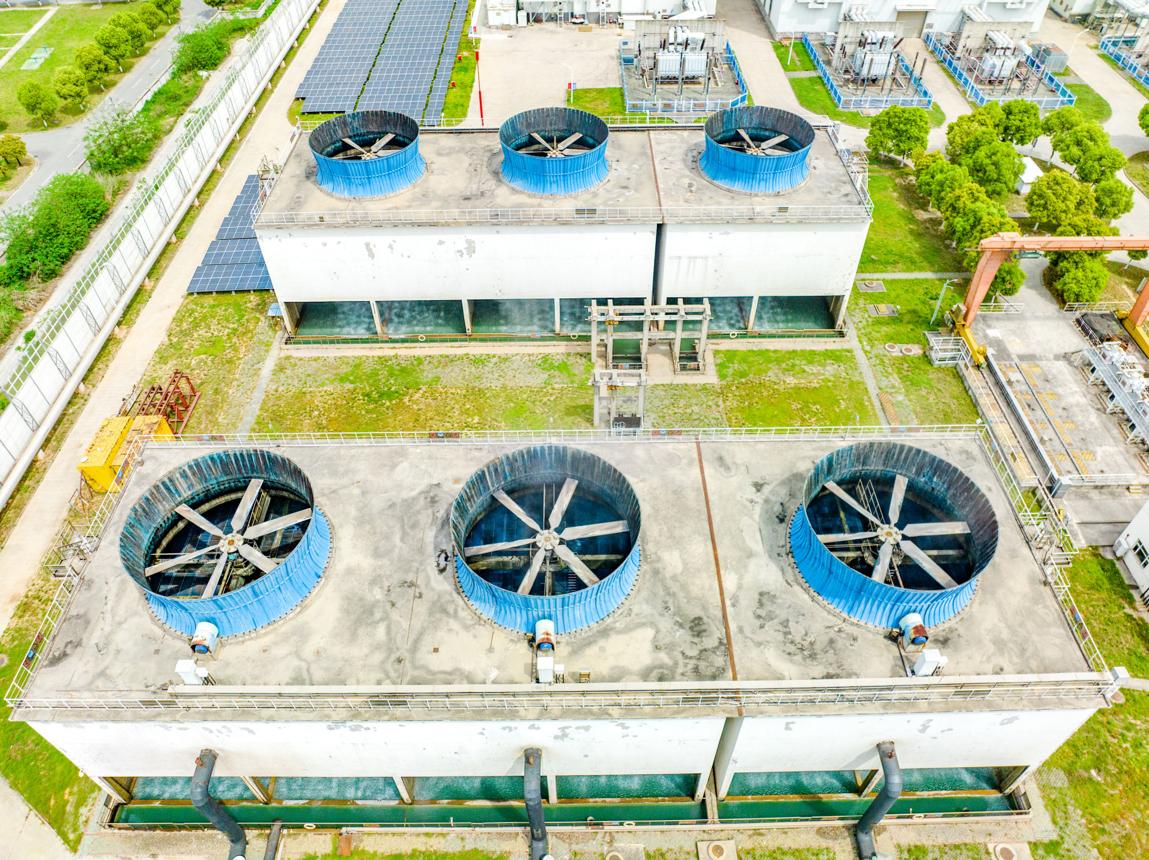
Cooling tower fan blade pitch adjustment is essential for maintaining proper airflow, cooling performance, and energy efficiency. The blade pitch angle determines how the fan moves air through the cooling tower and affects the power required to drive the fan. When the pitch angle is set incorrectly, the cooling tower may experience reduced cooling capacity, excessive motor load, abnormal vibration, or higher electricity consumption.
For industrial facilities, identifying the signs of incorrect cooling tower fan blade pitch settings can help prevent equipment damage, reduce operating costs, and maintain reliable cooling performance.
This guide explains the common symptoms of incorrect fan blade pitch, their possible causes, how to inspect blade settings, and when adjustment or replacement may be necessary.
1. What Is Cooling Tower Fan Blade Pitch?
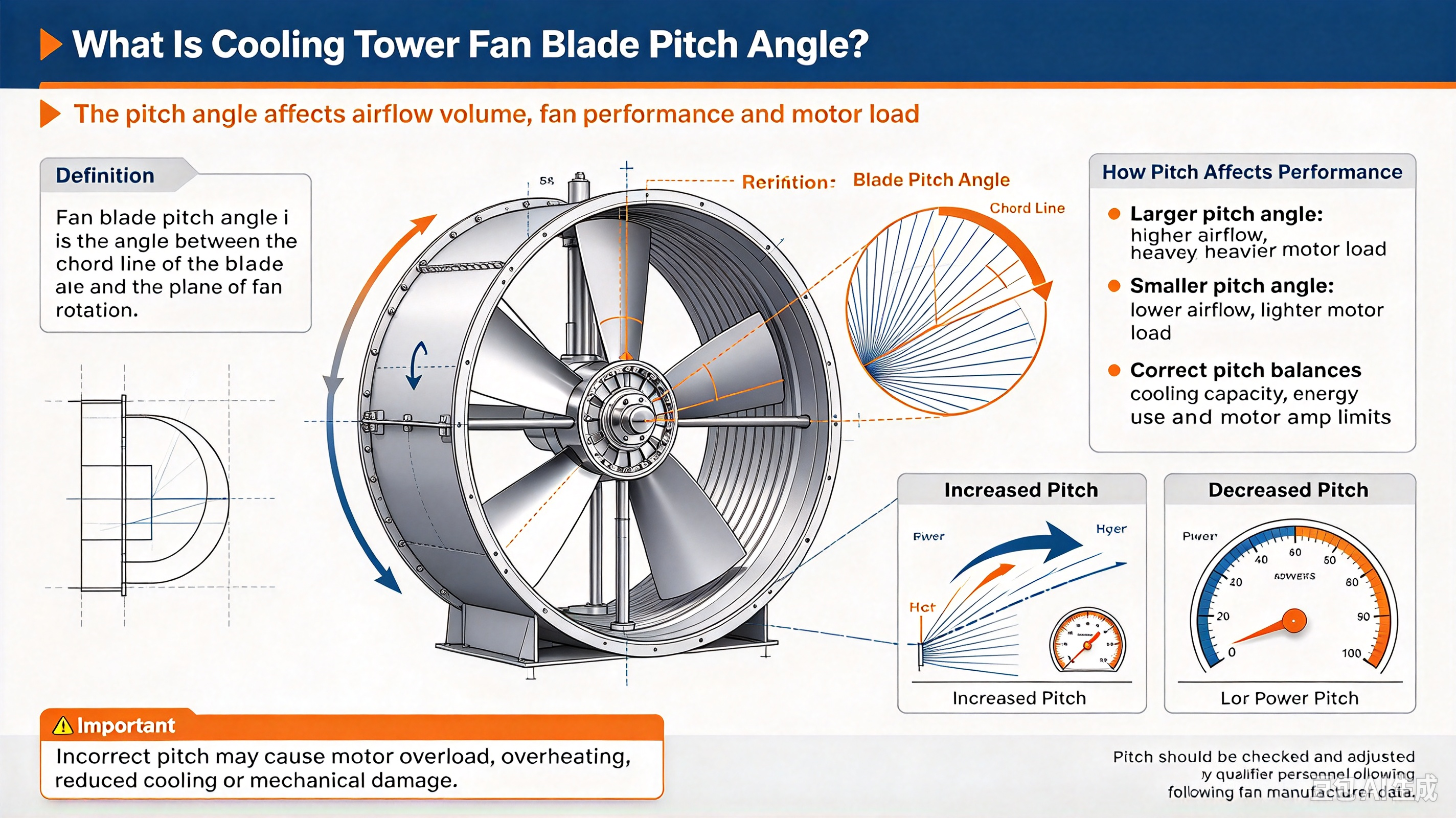
Cooling tower fan blade pitch refers to the angle at which each blade is installed relative to a defined reference plane. On an axial-flow cooling tower fan, the pitch angle influences the amount of air moved through the tower.
A higher pitch generally increases aerodynamic loading and may increase airflow, but it also increases the power required by the fan. A lower pitch reduces blade loading but may not provide enough airflow to meet the cooling demand.
The correct setting depends on several factors:
Fan diameter and blade design
Fan rotational speed
Motor power and operating limits
Cooling tower airflow requirements
System resistance and operating conditions
Manufacturer's recommended pitch angle
There is no universal pitch angle suitable for every cooling tower fan. Always follow the specifications for the installed fan model.
2. Common Signs of Incorrect Cooling Tower Fan Blade Pitch
2.1 Reduced Cooling Performance
One of the most noticeable signs of incorrect fan blade pitch is insufficient cooling performance.
If the blade pitch is too low, the fan may not move enough air through the cooling tower. This can reduce heat rejection and make it difficult to maintain the required cold-water temperature, particularly during periods of high heat load.
Possible symptoms include:
Cooling water leaving the tower at a higher temperature than expected
Process equipment operating above its preferred temperature
Reduced cooling capacity during peak demand
Increased operating time for other cooling equipment
However, low airflow is not always caused by incorrect blade pitch. Blocked air inlets, dirty fill media, incorrect fan rotation, damaged blades, and unfavorable weather conditions can also affect cooling performance.
2.2 Excessive Motor Current
Excessive motor current can indicate that the fan is operating under excessive aerodynamic load.
If the blade pitch is too high, the fan may require more power than intended. The motor may draw more current, potentially approaching or exceeding its rated operating limits.
Warning signs include:
Motor current higher than the normal baseline
Frequent overload alarms or trips
Increased motor temperature
Unexpected changes in electrical power consumption
Check the motor nameplate, operating current, fan speed, and manufacturer's performance data before making adjustments. Electrical problems, bearing friction, gearbox issues, and incorrect voltage can also cause excessive current.
2.3 Increased Energy Consumption
Incorrect cooling tower fan blade pitch can reduce overall energy efficiency.
If the pitch is too high, the fan may consume more power than necessary to meet the required cooling duty. If it is too low, the tower may fail to deliver adequate cooling, forcing other fans, pumps, or chillers to work harder.
Compare current energy consumption with historical operating data under similar conditions. Consider fan speed, ambient wet-bulb temperature, cooling-water flow, and process heat load before concluding that pitch is responsible.
Proper pitch adjustment aims to achieve the required airflow without exceeding motor and fan operating limits.
2.4 Abnormal Vibration
Uneven blade pitch settings can create differences in aerodynamic loading between blades. These differences may contribute to vibration, noise, and unstable fan operation.
Other possible causes include:
If vibration increases after maintenance or blade replacement, inspect the blade settings and mounting hardware. Do not assume pitch is the only cause.
2.5 Unusual Fan Noise
Incorrect pitch can change airflow patterns and aerodynamic loading, potentially causing unusual noise during operation.
Possible symptoms include increased airflow noise, a change in the fan's normal sound, or noise accompanied by vibration.
Stop and inspect the equipment if the noise is sudden, severe, or associated with mechanical impact. Never attempt to inspect or adjust blade pitch while the fan is running.
2.6 Uneven Blade Angles
A direct sign of incorrect blade settings is a difference between individual blade pitch measurements.
If one blade has a different angle from the others, the fan may experience uneven aerodynamic loading. This can happen after blade replacement, improper installation, or adjustment without a consistent measuring method.
Use a suitable pitch gauge or digital inclinometer according to the fan manufacturer's instructions. Measure every blade at the same specified radial position and reference orientation.
Compare the readings with the manufacturer's target angle and allowable tolerances rather than relying on visual inspection alone.
2.7 Frequent Motor Overload Trips
Repeated motor overload trips may indicate excessive fan loading, particularly if the problem begins after a pitch adjustment.
A blade angle outside the approved range can increase the power demand beyond the motor's capacity. However, overload trips may also result from electrical faults, excessive fan speed, mechanical friction, or damaged drive components.
Do not repeatedly reset a tripping motor without identifying the cause. Isolate the equipment and arrange a qualified inspection.
3. How to Check Whether Cooling Tower Fan Pitch Is Incorrect
A systematic inspection helps distinguish pitch problems from other cooling tower faults.
Step 1: Review Operating Data
Record the fan motor current, power consumption, fan speed, vibration levels, and cooling-water temperatures. Compare these values with normal operating records under similar conditions.
Step 2: Inspect the Fan Blades
Shut down the fan, isolate the power supply, and apply lockout/tagout procedures before inspection. Check for cracks, deformation, corrosion, loose fasteners, and visible differences in blade position.
Step 3: Measure Each Blade Angle
Use the specified measuring tool and follow the manufacturer's reference method. Measure each blade at the same radius and record the results.
Step 4: Compare Measurements with Specifications
Check the measured pitch against the approved setting for the exact fan model. Do not use a generic angle from another cooling tower fan as the target.
Step 5: Check Other Possible Causes
Inspect the fan drive, motor, gearbox, bearings, air inlets, fill media, and water distribution system as appropriate. These components can also affect cooling performance, motor load, and vibration.
Step 6: Adjust and Verify
If the pitch is outside the permitted range, follow the manufacturer's adjustment procedure. Tighten fasteners to the specified torque and remeasure all blades. After the equipment is safely returned to service, verify motor current, vibration, airflow, and cooling performance.
4. How to Correct Incorrect Cooling Tower Fan Blade Pitch Settings
The corrective action depends on the fan design and the problem identified.
| Problem | Recommended action |
| Blade pitch below specification | Adjust to the approved target and verify airflow |
| Blade pitch above specification | Reset according to manufacturer limits and check motor load |
| Uneven blade angles | Remeasure all blades and correct individual settings |
| Cracked or deformed blades | Replace damaged blades with approved compatible components |
| High vibration after adjustment | Check blade settings, fasteners, balance, hub, and drive components |
| High motor current | Verify pitch, fan speed, electrical supply, and mechanical condition |
| Poor cooling despite correct pitch | Inspect fill, water distribution, airflow restrictions, and operating conditions |
Never increase the pitch simply to compensate for poor cooling. Doing so without checking motor capacity and fan limits may create additional problems.
5. How to Prevent Incorrect Fan Blade Pitch Settings
Preventive maintenance reduces the risk of improper blade adjustment and unexpected downtime.
Follow manufacturer specifications: Keep the approved pitch setting and adjustment instructions for each fan model.
Use consistent measurement methods: Measure all blades at the same reference position.
Record maintenance results: Document blade angles, motor current, vibration, and adjustment history.
Inspect after component replacement: Check blade pitch whenever blades, hubs, or related components are replaced or serviced.
Verify motor loading: Confirm that current and power remain within the applicable operating limits.
Train maintenance personnel: Ensure technicians understand the correct measuring procedure and safety requirements.
Regular inspections help identify changes before they develop into more serious operating problems.
6. Frequently Asked Questions
What Happens if Cooling Tower Fan Blade Pitch Is Too High?
Excessive pitch can increase fan power demand and motor current. Depending on the fan design and operating conditions, it may also cause overload trips or excessive mechanical stress.
What Happens if Fan Blade Pitch Is Too Low?
A pitch setting that is too low may reduce airflow and cooling capacity. The tower may struggle to maintain the required cold-water temperature under high heat loads.
How Can I Tell if Cooling Tower Fan Blade Angles Are Uneven?
Measure every blade with a suitable gauge using the manufacturer's specified reference and measurement radius. Compare the readings with the permitted blade-to-blade variation.
Does Incorrect Fan Pitch Always Cause Vibration?
No. Incorrect pitch can contribute to uneven aerodynamic loading, but vibration can also result from mechanical imbalance, loose fasteners, damaged blades, worn bearings, or drive problems.
When Should Cooling Tower Fan Pitch Be Checked?
Check blade pitch during commissioning, scheduled maintenance, blade replacement, performance troubleshooting, and inspections following abnormal vibration or mechanical damage.
Conclusion
Incorrect cooling tower fan blade pitch settings can lead to reduced cooling performance, excessive motor current, higher energy consumption, abnormal noise, and vibration. Recognizing these symptoms early helps maintenance teams identify potential problems before they cause equipment damage or unplanned downtime.
For reliable cooling tower operation, measure every blade consistently, compare the results with the manufacturer's specifications, and verify motor loading after any adjustment. If cooling performance remains poor despite correct blade pitch, investigate the complete cooling tower system rather than changing the fan angle unnecessarily.
Recommended internal links for CoolingTowerPart.com:


