Introduction
A cooling tower fan is one of the most important components in an industrial cooling system. It creates the airflow needed to remove heat from circulating water, helping factories, power plants, commercial buildings, and HVAC systems maintain stable operating temperatures.
But choosing a cooling tower fan is not as simple as finding a product with the right diameter. Fan performance depends on airflow, static pressure, blade design, rotational speed, motor power, operating environment, and compatibility with the cooling tower structure.
A reliable manufacturer or supplier can make a significant difference. The right partner helps you select suitable equipment, reduce unexpected downtime, and obtain replacement parts when maintenance becomes necessary.
So, which companies should buyers consider?
In this guide, we introduce five notable companies in the global cooling tower market: SPX Cooling Technologies (Marley), Baltimore Aircoil Company (BAC), EVAPCO, Paharpur Cooling Towers, and Power Tower Cooling Technology (Shaoxing) Co.,Ltd.
This is a practical buyer-oriented selection, not an official industry ranking. The companies have different business models: some focus on complete cooling tower systems and their original fan assemblies, while others provide cooling tower components and replacement solutions. Understanding that difference will help you find the right supplier for your project.
Why the Cooling Tower Fan Matters
A cooling tower works by bringing air into contact with warm circulating water. A portion of the water evaporates, carrying heat away from the remaining water. The fan helps move air through the tower and supports this heat and mass transfer process.
Think of the fan as the engine of the tower's airflow system. If it cannot deliver the required airflow, the entire cooling process may suffer.
How Does a Cooling Tower Fan Work?
In a mechanical-draft cooling tower, the fan moves air through the fill and other internal components.
Depending on the tower design, the fan may:
Draw air through the cooling tower and discharge it upward.
Force air into the tower through an inlet section.
Operate at a fixed speed or use a variable frequency drive (VFD) for capacity control.
Work with a direct-drive motor, belt drive, or gearbox arrangement.
The fan must operate at the correct point on its performance curve. A fan that moves too little air may reduce cooling capacity, while an unsuitable fan can consume excessive power, create noise, or overload its drive system.
Main Types of Cooling Tower Fans
Two common fan types are axial fans and centrifugal fans.
Axial fans
Axial fans move air generally parallel to the fan shaft. They are widely used in mechanical-draft cooling towers because they can move large volumes of air through relatively low-resistance systems.
Typical features include:
High airflow capacity.
A relatively compact airflow arrangement.
Common use in induced-draft cooling towers.
Multiple blade and hub configurations.
Options using aluminum, fiberglass-reinforced plastic, or other engineered materials.
Centrifugal fans
Centrifugal fans draw air into the impeller and discharge it in a direction generally perpendicular to the inlet flow. They can be useful where the system needs to overcome external static pressure, such as certain indoor or ducted installations.
Neither type is automatically better. The correct choice depends on tower design, airflow requirements, pressure losses, available space, sound limits, and operating costs.
How We Selected These Five Companies
There is no single universal ranking that measures every cooling tower fan manufacturer and replacement-parts supplier on equal terms.
Some companies manufacture complete cooling towers with integrated fan systems. Others specialize in fan assemblies, components, or aftermarket replacement parts.
For this guide, we considered several practical factors:
Industry experience: Established participation in cooling tower or industrial heat-rejection applications.
Fan-related products: Evidence of cooling tower fan assemblies, fan systems, or relevant components.
Application coverage: Relevance to industrial cooling, commercial HVAC, and other heat-rejection projects.
Replacement support: Availability of parts, maintenance information, or aftermarket solutions.
Procurement suitability: Whether the company may be relevant to new equipment projects, retrofit work, or component replacement.
The following companies represent different supplier categories. Buyers should compare them according to their actual project requirements rather than assuming that every company offers identical products or services.
Top 5 Cooling Tower Fan Manufacturers and Suppliers Worldwide
1. SPX Cooling Technologies – Marley
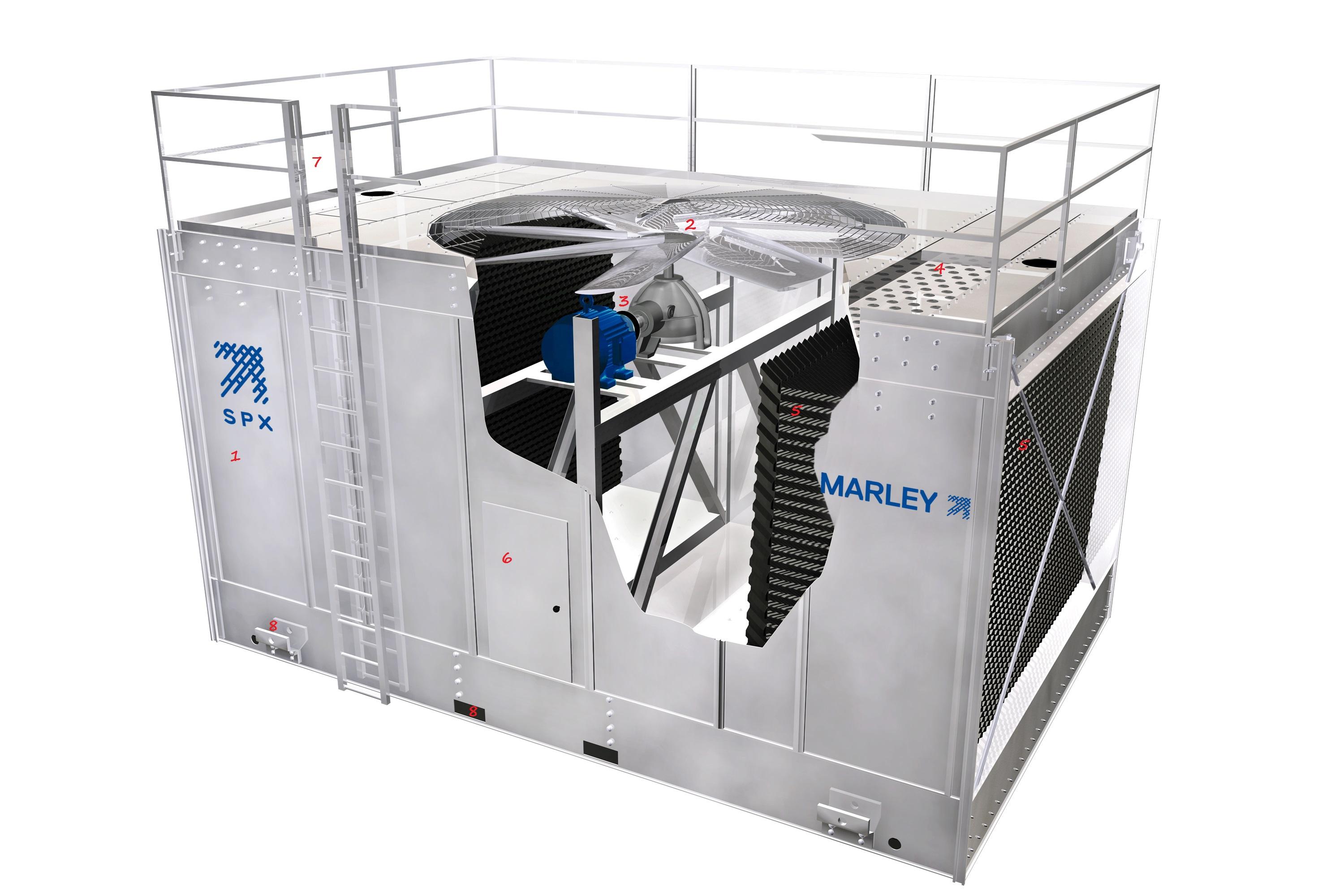
SPX Cooling Technologies is a well-established global supplier of cooling towers, fluid coolers, evaporative condensers, and related heat-transfer equipment. Its Marley brand is particularly well known in industrial and commercial cooling applications.
The company has a long history in the cooling industry and provides complete cooling systems as well as original equipment parts and services.
Fan Products and Strengths
Marley offers several cooling tower fan products, including:
These products are designed for cooling tower airflow requirements, with different options for performance, sound levels, and equipment configurations.
For buyers maintaining existing Marley equipment, original fan products and compatible drive components may be important. Using the correct original specifications can help preserve the intended operating conditions of the cooling tower.
Why consider SPX Cooling Technologies?
Established cooling tower engineering experience.
Integrated cooling tower and fan-system solutions.
Original equipment parts and technical support.
Different fan options for industrial and HVAC applications.
A recognized brand with an international market presence.
Best suited for: Buyers specifying new Marley cooling towers, maintaining existing Marley equipment, or seeking original manufacturer support.
Website: https://spxcooling.com/
2. Baltimore Aircoil Company (BAC)
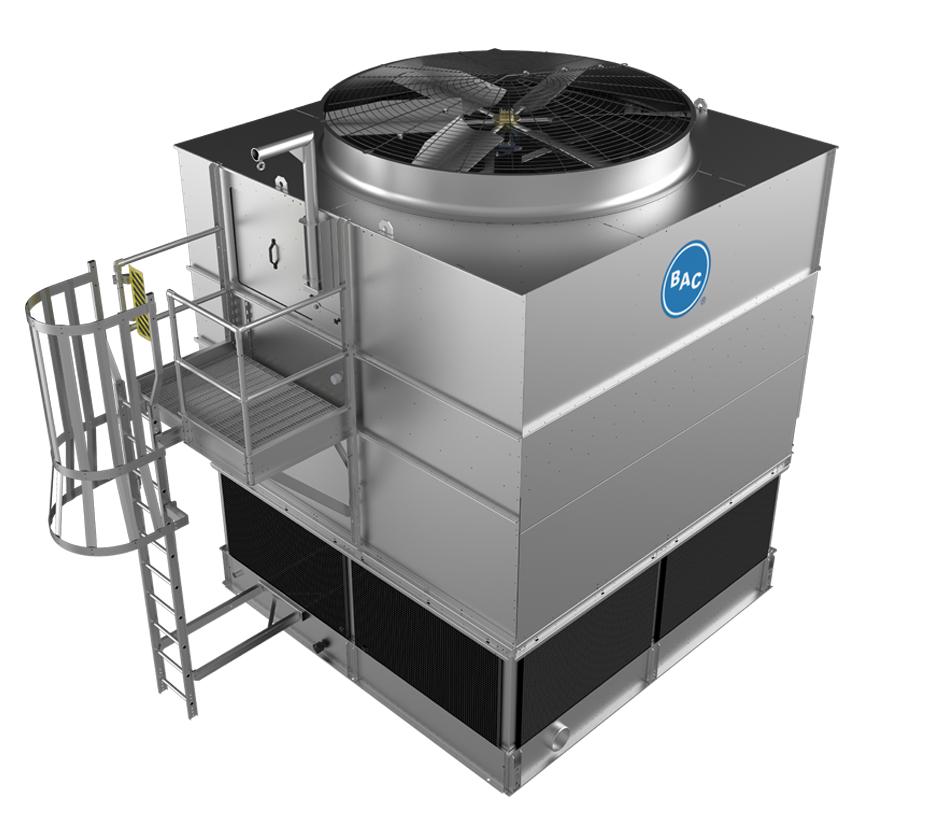
Baltimore Aircoil Company, commonly known as BAC, is another major international manufacturer in the evaporative cooling industry.
Its product portfolio includes cooling towers, closed-circuit cooling towers, evaporative condensers, and related components. BAC equipment is used in commercial HVAC, industrial processing, refrigeration, and other applications.
Fan Technology and Applications
BAC uses both axial and centrifugal fan arrangements across different equipment designs.
One notable development is its ENDURADRIVE® Fan System. This direct-drive arrangement uses a motor coupled directly to the fan, eliminating the conventional intermediate gearbox or belt transmission in the applicable configuration.
The system is designed to simplify the drive arrangement and reduce certain maintenance requirements.
BAC also provides fan and drive components through its parts and maintenance programs. Its published maintenance materials cover items such as axial fans, fan bushings, belts, and drive systems.
Why consider BAC?
Extensive evaporative cooling product experience.
Axial and centrifugal fan arrangements across its equipment range.
Direct-drive fan technology for selected models.
Original replacement parts and maintenance documentation.
Support for cooling tower service and retrofit projects.
Best suited for: Buyers purchasing BAC equipment, maintaining BAC cooling towers, or evaluating original fan-system upgrades.
Website: https://www.baltimoreaircoil.com/
3. EVAPCO
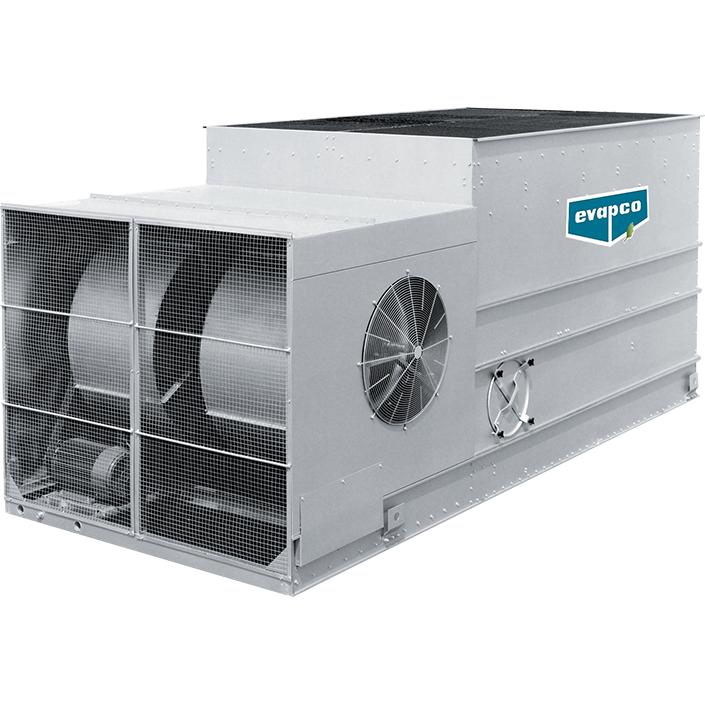
EVAPCO is a global manufacturer specializing in evaporative cooling and industrial refrigeration products. Its equipment is used in commercial HVAC, industrial process cooling, and other heat-transfer applications.
The company offers different cooling tower configurations, including induced-draft and forced-draft designs.
Fan Design and Replacement Support
EVAPCO cooling towers use different fan arrangements depending on the product series.
For example, its Advanced Technology cooling tower range uses axial propeller fans. Published product information describes wide-chord blade designs, balanced fan assemblies, and options intended to reduce operating sound.
EVAPCO also offers low-sound and super-low-sound fan options for selected equipment.
Another important point for buyers is aftermarket support. Through its Mr. Goodtower® parts and service business, EVAPCO states that it can provide replacement parts for its own equipment and other manufacturers' cooling equipment. The listed replacement categories include fans, motors, belts, pumps, louvers, and drift eliminators.
This can be useful when a facility operates several cooling tower brands and wants to coordinate maintenance purchasing.
Why consider EVAPCO?
Global evaporative cooling manufacturing experience.
Different axial and centrifugal fan configurations.
Low-sound fan options for selected models.
Maintenance and replacement-parts services.
Support for certain non-EVAPCO cooling equipment.
Best suited for: Buyers specifying EVAPCO cooling towers or seeking parts and service support for evaporative cooling equipment.
Website: https://www.evapco.com/
4. Paharpur Cooling Towers
Paharpur Cooling Towers is an established Indian cooling tower manufacturer with experience in industrial and commercial cooling applications.
The company is known for complete cooling tower solutions and serves industries that require heat rejection for large-scale processes.
Industrial Cooling Tower Experience
Large industrial cooling tower projects require more than a fan selected from a product catalogue. The fan must work with the tower's thermal design, air distribution, mechanical structure, and operating conditions.
For this reason, buyers evaluating a complete cooling tower project should consider the manufacturer's engineering and project experience.
When reviewing a Paharpur proposal, buyers should pay attention to:
Cooling tower capacity and design conditions.
Required airflow and fan performance.
Fan diameter, blade configuration, and rotational speed.
Motor power and drive arrangement.
Noise and vibration requirements.
Inspection and maintenance access.
Availability of original replacement components.
For an existing installation, the buyer should also confirm whether the proposed fan is an original replacement or an alternative design requiring engineering verification.
Why consider Paharpur?
Established presence in the cooling tower industry.
Experience with industrial cooling applications.
Complete cooling tower project capabilities.
Potential relevance to large-scale process cooling requirements.
Best suited for: Buyers evaluating complete industrial cooling tower projects and manufacturers with established project experience.
Website: https://www.paharpur.com/
5. Power Tower Cooling Technology (Shaoxing) Co.,Ltd.
For buyers looking for cooling tower fans, replacement components, and practical sourcing options, Power Tower Cooling Technology (Shaoxing) Co.,Ltd. is an important company to consider.
Unlike large integrated cooling tower brands whose primary business includes complete tower systems, Power Tower focuses on cooling tower components and replacement products. This makes the company relevant to maintenance contractors, distributors, equipment owners, and buyers who need to replace worn or damaged cooling tower parts.
Official website: https://www.coolingtowerpart.com/
Cooling Tower Fan and Component Supply
Power Tower's product range covers cooling tower components and accessories, including fan-related products and drive-system parts.
Relevant product categories include:
Cooling tower fan assemblies.
Axial flow cooling tower fans.
FRP cooling tower fan blades.
Cooling tower fan drive components.
Cooling tower motors.
Cooling tower speed reducers and gearboxes.
Related cooling tower accessories.
The website also presents an energy-saving axial flow cooling tower fan with a direct-drive configuration. The product description identifies an assembly incorporating a motor, aerodynamic fan blades, protective guard, and supporting structure.
For buyers comparing fan replacement options, this type of product can be worth reviewing when the existing tower arrangement and operating requirements are suitable.
Why Consider Power Tower for Replacement Projects?
Replacing a cooling tower fan is not simply a matter of choosing a similar-looking product. A fan must match the mechanical and aerodynamic requirements of the cooling tower.
Power Tower can be considered for sourcing discussions involving:
1. Fan replacement
If an existing fan has damaged blades, corrosion, excessive vibration, or reduced performance, buyers can discuss a suitable replacement assembly or component solution.
2. Fan blade sourcing
Fan blades are important to airflow, balance, and operating efficiency. Buyers should provide the blade material, profile, dimensions, mounting details, and operating speed when requesting a replacement.
3. Drive-system components
The fan, motor, gearbox, belt, and other transmission components must work together. When replacing one component, checking the complete drive arrangement helps avoid compatibility problems.
4. Cooling tower parts procurement
A maintenance project may involve more than one component. Buyers may need fans, motors, speed reducers, fill media, drift eliminators, nozzles, or other accessories. A supplier covering multiple cooling tower component categories can make procurement more convenient.
5. OEM and customized sourcing discussions
For projects with special dimensions or replacement requirements, buyers can contact Power Tower to discuss drawings, technical specifications, and potential OEM or customized supply arrangements.
Power Tower's role is particularly relevant to customers who need cooling tower components and replacement products rather than a complete new cooling tower system.
Best suited for: Cooling tower owners, maintenance contractors, distributors, and industrial buyers looking for fan assemblies, blades, drive components, and other cooling tower replacement parts.
Website: https://www.coolingtowerpart.com/
Comparison of the Five Suppliers
The following table summarizes the different supplier positions and their potential relevance to buyers.
| Company | Main Business Position | Fan-Related Strengths | Suitable Purchasing Needs |
| SPX Cooling Technologies (Marley) | Complete cooling towers and components | Original Marley fan products and drive systems | New Marley equipment and OEM replacement |
| Baltimore Aircoil Company (BAC) | Evaporative cooling equipment | Axial and centrifugal fans, ENDURADRIVE® | BAC equipment and original parts |
| EVAPCO | Evaporative cooling and refrigeration | Axial and centrifugal fan arrangements, low-sound options | EVAPCO equipment and aftermarket parts |
| Paharpur Cooling Towers | Industrial cooling tower manufacturer | Fan systems integrated into cooling tower projects | Complete industrial cooling tower projects |
| Power Tower Cooling Technology | Cooling tower components and replacement products | Fan assemblies, fan blades, and drive-related components | Replacement parts, component sourcing, and OEM discussions |
Important: This comparison describes each company's general market position. It is not a ranking based on independently verified fan efficiency, price, manufacturing capacity, or customer satisfaction. Product availability and technical specifications should be confirmed directly with each supplier.
How to Choose the Right Cooling Tower Fan Supplier
Finding a well-known company is only the first step. The more important question is whether its fan can meet your actual operating requirements.
Here are several factors worth checking before placing an order.
1. Check Fan Type and Operating Conditions
Start by identifying whether your cooling tower uses an axial or centrifugal fan.
Then collect the main operating information:
Do not select a fan based only on diameter or motor power. The fan must deliver the required airflow at the actual system resistance.
2. Confirm Dimensions and Compatibility
For a replacement project, compatibility is critical.
Before purchasing, check:
Fan diameter and blade length.
Number of blades.
Hub diameter and mounting arrangement.
Shaft dimensions and connection details.
Bolt-hole positions.
Fan cylinder or shroud dimensions.
Direction of rotation.
Motor and gearbox specifications.
A fan that looks similar to the original may still be unsuitable if the hub, shaft, or blade mounting dimensions are different.
Whenever possible, provide the supplier with the original fan drawing, nameplate information, photographs, and equipment model.
3. Evaluate Materials and Corrosion Resistance
Cooling towers operate in humid environments. Their fan components are exposed to moisture, temperature changes, and sometimes chemical contaminants.
Common fan blade materials include:
FRP: Fiberglass-reinforced plastic can provide a useful combination of corrosion resistance, strength, and relatively low weight.
Aluminum alloy: Aluminum blades are widely used in industrial fan applications and can offer good strength-to-weight characteristics.
Other engineered materials: Certain applications may require specialized materials based on operating temperature, chemical exposure, and mechanical loading.
The best material depends on the cooling tower environment and fan design. Buyers should ask for material specifications rather than relying only on general product descriptions.
4. Review Energy Efficiency and Noise
Fan energy consumption can represent a significant part of a mechanical-draft cooling tower's operating cost.
An efficient fan should be selected according to its performance curve and the system's actual operating point.
Consider:
Required airflow and static pressure.
Fan efficiency at the operating point.
Motor efficiency.
Blade aerodynamic design.
Rotational speed.
Noise limits.
VFD compatibility.
A larger motor does not automatically make a cooling tower more efficient. Similarly, increasing blade pitch or fan speed without checking the fan and drive ratings can increase power consumption or overload the motor.
5. Compare After-Sales and Replacement Support
A supplier's value does not end when the fan arrives.
Before purchasing, ask whether the supplier can provide:
Product drawings and technical specifications.
Installation guidance.
Spare blades, hubs, and other components.
Motor or gearbox matching information.
Delivery and packaging details.
Warranty terms.
Technical assistance for replacement projects.
For an operating industrial plant, a reliable replacement-parts supply can be just as important as the original equipment purchase.
Common Mistakes When Buying Cooling Tower Fans
Even experienced purchasing teams can make mistakes when selecting replacement fans.
Here are several problems to avoid.
Choosing by appearance alone
Two fans may look almost identical but have different blade profiles, pitch settings, hub structures, or performance characteristics.
Ignoring the fan curve
Airflow and pressure must be evaluated together. A fan that delivers a high airflow under one condition may not perform as expected in another system.
Overlooking the motor and gearbox
The fan must be compatible with its complete drive system. Check motor power, speed, torque, gearbox ratio, shaft arrangement, and mounting details.
Replacing only one blade without checking balance
Individual blade replacement may be possible when the manufacturer permits it, but the replacement must match the original design and balancing requirements.
Ignoring the source of vibration
Vibration may result from blade imbalance, deposits, loose fasteners, bearing wear, misalignment, shaft problems, gearbox faults, or structural resonance. Replacing the fan without diagnosing the cause may not solve the problem.
Failing to check installation conditions
Even a correctly selected fan can perform poorly if it is installed incorrectly. Alignment, clearances, blade pitch, rotation direction, and mounting security all matter.
Why Replacement Parts Matter
Cooling tower fans operate for long periods, often under demanding environmental conditions. Over time, blades can become damaged, hubs can corrode, bearings can wear, and drive components can deteriorate.
Replacing the entire cooling tower is rarely necessary simply because one fan component has reached the end of its service life.
In many cases, a properly engineered component replacement can restore reliable operation at a lower project cost.
However, replacement should never be treated as a simple parts swap. The new component must be suitable for the existing cooling tower and its operating conditions.
For example, replacing fan blades may require checking the hub, blade pitch, total fan mass, rotational speed, and balance. Replacing a gearbox may require confirming the ratio, input and output speeds, torque rating, shaft arrangement, and lubrication requirements.
This is where a supplier specializing in cooling tower components can be useful.
Power Tower Cooling Technology (Shaoxing) Co.,Ltd. provides a range of cooling tower component products through its website, including fan-related products and drive-system components. Buyers can share their existing equipment information to discuss possible replacement solutions.
Frequently Asked Questions
1. Which Type of Fan Is Best for a Cooling Tower?
There is no single best fan for every cooling tower.
Axial fans are common in mechanical-draft cooling towers because they can move large volumes of air. Centrifugal fans can be useful where external static pressure or installation constraints are important.
The correct choice depends on the tower design, airflow requirement, system resistance, noise limits, and energy targets.
2. How Do I Choose a Replacement Cooling Tower Fan?
Start with the original equipment specifications.
Collect the fan diameter, blade number, hub dimensions, rotation direction, operating speed, motor power, and required airflow. Also check the fan cylinder, shaft, and mounting arrangement.
If possible, provide the supplier with drawings, photographs, and the cooling tower model number. This makes it easier to evaluate compatibility.
3. Can I Replace Only the Cooling Tower Fan Blades?
In some cases, yes. However, the fan manufacturer must permit individual blade replacement, and the new blades must match the original design.
Blade weight, profile, pitch, mounting dimensions, and balance must be checked. Improvised drilling, welding, or counterweight adjustments should be avoided.
4. How Often Should a Cooling Tower Fan Be Inspected?
Inspection frequency depends on the manufacturer's maintenance instructions, operating hours, environment, and equipment condition.
Routine inspections should check blade condition, corrosion, fasteners, hub connections, vibration, noise, bearings, and drive components.
Follow the equipment manufacturer's maintenance schedule and investigate unusual changes promptly.
5. Are Axial Fans More Energy-Efficient Than Centrifugal Fans?
Axial fans often require less fan motor power than comparable centrifugal arrangements in certain cooling tower applications. However, this is not a universal rule.
The actual result depends on airflow, static pressure, fan efficiency, and system design. Compare the fan performance curves at the required operating point rather than relying on fan type alone.
6. Can Power Tower Supply Cooling Tower Fan Replacement Products?
Power Tower Cooling Technology (Shaoxing) Co.,Ltd. lists cooling tower fan-related products, including an energy-saving axial flow cooling tower fan, as well as fan blades and other cooling tower components.
Buyers should provide their equipment model, drawings, dimensions, and operating requirements so that product suitability can be discussed.
Visit https://www.coolingtowerpart.com/ for product information and inquiries.
Conclusion
Choosing the right cooling tower fan manufacturer or supplier is an important decision for both new installations and maintenance projects.
SPX Cooling Technologies, BAC, EVAPCO, and Paharpur are established names in the global cooling tower industry, each with different equipment portfolios and areas of expertise.
For buyers focused on cooling tower fans, blades, drive components, and replacement parts, Power Tower Cooling Technology (Shaoxing) Co.,Ltd. is another supplier worth considering.
The most important step is to match the product to the actual cooling tower. Check airflow, pressure, fan dimensions, blade material, motor power, drive arrangement, and operating conditions before making a purchase.


