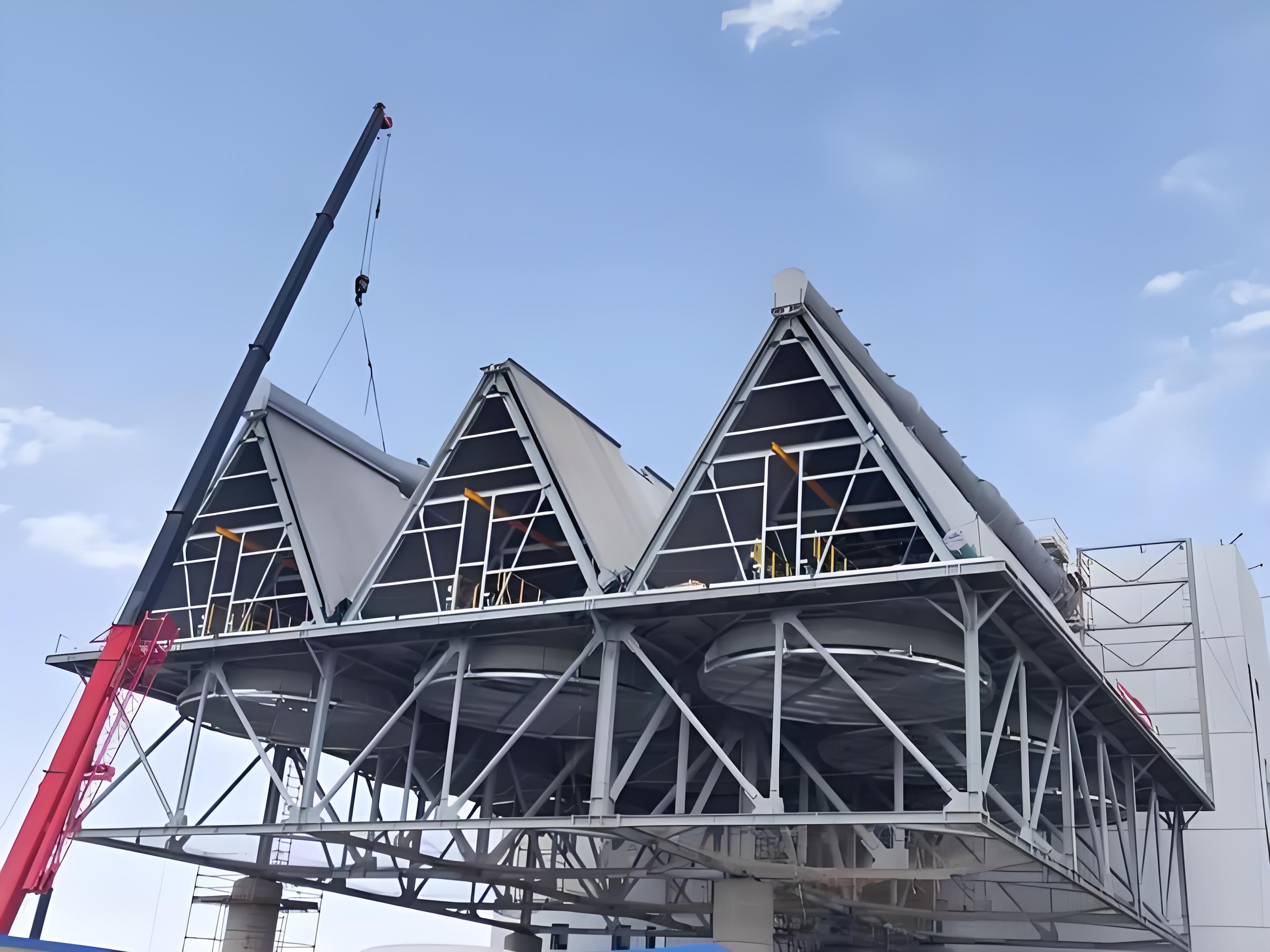
Cooling tower fill media replacement is an important investment for industrial facilities, commercial buildings, power plants, and HVAC systems. Replacing worn, damaged, or heavily fouled fill can restore heat-transfer performance, improve water distribution, and help maintain reliable cooling tower operation. However, the total cost depends on several factors, including cooling tower size, fill material, replacement quantity, labor, and project complexity.
So, how much does cooling tower fill media replacement cost? Is PVC film fill cheaper than PP fill? And how can buyers reduce replacement expenses without compromising cooling performance?
This guide explains the main cooling tower fill replacement cost factors, material choices, installation expenses, and practical tips for purchasing replacement fill media.
1. What Is the Average Cost of Cooling Tower Fill Media Replacement?
There is no single price for cooling tower fill media replacement because every project has different technical and installation requirements. A small commercial cooling tower may require a relatively simple fill replacement, while a large industrial tower may need extensive material, labor, lifting equipment, and downtime planning.
The total project cost generally includes:
Fill media cost: PVC film fill, PP film fill, or splash fill.
Shipping and packaging: Cartons, pallets, protective packaging, and international freight.
Removal and disposal: Labor and expenses associated with removing old fill.
Installation labor: Cutting, fitting, positioning, and securing replacement fill packs.
Additional components: Fill supports, fasteners, water distribution components, or other parts that require repair.
Downtime costs: Production interruptions or temporary cooling arrangements, where applicable.
For accurate budgeting, request a quotation based on the tower model, fill dimensions, required volume, material specifications, and installation scope.
2. Five Factors That Affect Cooling Tower Fill Replacement Cost
2.1 Cooling Tower Size and Fill Quantity
Cooling tower size is one of the most important cost factors. Larger towers generally require more fill media, increasing material, packaging, shipping, and installation costs.
However, cooling capacity alone is not enough to calculate the required fill quantity. Two towers with similar nominal capacities may have different fill arrangements, dimensions, and internal configurations.
Before requesting a quote, confirm:
Cooling tower manufacturer and model
Fill section dimensions
Total fill volume or required quantity
Number of fill blocks or packs
Existing support and installation arrangement
Providing accurate measurements helps suppliers prepare more reliable quotations and reduces the risk of ordering incompatible products.
2.2 PVC vs. PP Cooling Tower Fill Media
The material selected affects purchase price, operating suitability, and expected service life.
| Fill Type | Main Characteristics | Cost Considerations |
| PVC film fill | Widely used for standard cooling applications | Often an economical option, depending on specifications |
| PP film fill | Can provide higher temperature resistance in suitable grades | May have a higher initial price depending on material and design |
| Splash fill | Uses bars, grids, or other structures to break water into droplets | Cost depends on design, material, and required quantity |
PVC film fill is commonly selected for applications with suitable water quality and operating temperatures. PP fill may be preferable in certain higher-temperature environments, subject to the material grade and chemical conditions.
Splash fill may be appropriate for applications where suspended solids or fouling are important concerns.
The lowest purchase price does not always mean the lowest total cost. Consider installation requirements, maintenance needs, material compatibility, and expected service life when comparing options.
2.3 Fill Design and Customization
Cooling tower fill is available in different sheet thicknesses, flute geometries, spacing configurations, block dimensions, and assembly designs.
Custom replacement fill may be necessary when the original product uses a specific arrangement or when the tower is being upgraded.
Factors that can affect the price include:
Sheet thickness and material grade
Fill block dimensions and geometry
Bonded or assembled pack configuration
Special temperature or chemical requirements
Custom cutting and packaging
Compatibility with existing supports and airflow arrangements
For replacement projects involving Marley, BAC, EVAPCO, SPX, or other cooling tower systems, verify the actual equipment model and fill specifications instead of relying on brand names alone.
2.4 Labor and Installation Complexity
Installation expenses can represent a significant part of the total project budget.
A straightforward replacement with accessible fill sections may require less labor than a project involving confined spaces, deteriorated supports, difficult lifting access, or extensive removal work.
Installation costs may increase when the project requires:
Specialized lifting equipment
Additional workers or contractors
Removal of damaged support structures
Repairs to water distribution systems
Work at elevated locations
Restricted maintenance windows
Ask contractors to separate material costs, removal costs, installation labor, and additional repairs in their quotations. This makes it easier to compare competing proposals.
2.5 Shipping, Packaging, and Order Quantity
For international buyers, logistics can significantly affect the delivered cost of cooling tower fill media.
Film fill is often bulky relative to its weight, so packaging dimensions and container utilization can matter as much as the material's unit price.
When purchasing from an overseas manufacturer, evaluate:
Minimum order quantity (MOQ)
Packaging dimensions and pallet configuration
Container loading efficiency
Freight and insurance costs
Import duties and local taxes
Delivery lead time and unloading requirements
Bulk purchasing may reduce the unit price or shipping cost per unit, but only when the order quantity matches actual project requirements.
3. How to Calculate the Total Replacement Budget
A practical way to estimate the project budget is to separate material and installation expenses.
Total replacement cost = Fill media + Freight + Removal + Installation + Additional repairs + Downtime costs
For example, suppose a facility receives a quotation for replacement fill media and separate estimates for freight, removal, installation, and support repairs. Adding these items provides a more realistic project budget than comparing fill prices alone.
When evaluating quotations, make sure each supplier is pricing the same quantity, material, fill configuration, delivery terms, and installation scope.
Do not compare a material-only quotation directly with a turnkey replacement proposal that includes labor, removal, and disposal.
4. How to Reduce Cooling Tower Fill Replacement Costs
Industrial buyers can control replacement expenses through better planning and purchasing.
Choose the Correct Fill Material
Avoid selecting fill based on price alone. Match the material and design to water quality, operating temperature, fouling risk, and cooling performance requirements.
Compare Multiple Supplier Quotations
Request quotations from qualified manufacturers and distributors. Compare technical specifications, material quality, production lead times, packaging, and warranty terms alongside the price.
Consider Direct Factory Purchasing
For larger projects, buying directly from a cooling tower fill manufacturer may reduce intermediary costs and improve access to customized specifications.
Ask whether the supplier can provide dimensional drawings, product samples, material documentation, and technical support before placing a bulk order.
Plan Replacement During Scheduled Maintenance
Where operational requirements permit, schedule replacement during planned shutdowns or low-demand periods. This can reduce disruption and avoid the expense of emergency work.
Maintain the Cooling Tower Properly
Effective water treatment, regular inspection, and appropriate cleaning help control scale, biological growth, and debris accumulation. Better maintenance may extend fill service life and reduce premature replacement expenses.
5. When Is Cooling Tower Fill Replacement Worth the Cost?
Replacement may be justified when fill media is extensively damaged, permanently deformed, heavily fouled, or no longer delivers acceptable thermal performance after suitable cleaning.
Before approving a project, compare the cost of continued maintenance with the cost of replacement. Consider recurring cleaning expenses, energy consumption, production risks, and the likelihood of further deterioration.
Replacement does not automatically guarantee lower energy consumption. Results depend on the condition of the original fill and the performance of the overall cooling tower system.
An inspection can help determine whether partial replacement is sufficient or whether the entire fill assembly needs to be replaced.
6. What Information Should You Provide for a Cooling Tower Fill Quote?
To obtain an accurate quotation, prepare the following information:
Cooling tower manufacturer and model, if available.
Existing fill type: PVC film, PP film, or splash fill.
Fill block dimensions, sheet spacing, and configuration.
Required quantity or total fill volume.
Operating water temperature and relevant water-quality conditions.
Delivery destination and preferred shipping method.
Whether the quotation should cover materials only or include installation.
Photographs of the existing fill and support arrangement can also help suppliers evaluate the replacement requirements.
Frequently Asked Questions
Is PVC cooling tower fill cheaper than PP fill?
PVC fill is often an economical choice for standard applications, but actual prices depend on material grade, sheet thickness, geometry, quantity, and supplier. Compare quotations for technically equivalent products.
Does cooling tower fill replacement include installation?
Not always. Some suppliers quote only for fill media, while contractors may offer complete replacement services. Confirm whether removal, installation, disposal, and repairs are included.
Can I replace only part of the cooling tower fill?
Yes, when the damage is localized and the remaining fill is in acceptable condition. The replacement section must be compatible with the existing fill arrangement, and the overall system should be checked for uniform water distribution and airflow.
How can I obtain an accurate cooling tower fill replacement price?
Provide the supplier with the tower model, fill dimensions, material requirements, quantity, operating conditions, and delivery location. Request an itemized quotation that clearly identifies material, packaging, freight, and installation costs.
Conclusion
Cooling tower fill media replacement cost depends on the fill material, tower dimensions, product design, labor requirements, shipping arrangements, and project conditions. PVC film fill, PP film fill, and splash fill each have different advantages, and the most economical choice is the one that meets the tower's operating requirements at a competitive total cost.
For industrial buyers, the best approach is to confirm technical specifications, compare equivalent supplier quotations, and evaluate the full replacement budget rather than the initial material price alone.
If you are planning a cooling tower fill replacement or retrofit project, work with a qualified manufacturer to confirm dimensions, material suitability, bulk supply options, and delivery requirements before ordering.
Recommended internal links for CoolingTowerPart.com:


