Introduction: Why Cooling Tower Components Matter
A cooling tower may look like a large, simple piece of industrial equipment, but its performance depends on many carefully designed internal components. Cooling tower fill and drift eliminators are two of the most important. Fill increases the contact area between water and air, while drift eliminators help prevent water droplets from escaping with the exhaust air.
When either component becomes damaged, clogged, or unsuitable for the operating conditions, the consequences can include reduced heat rejection, higher water consumption, increased maintenance costs, and unstable system performance.
For industrial facilities using Marley or Evapco cooling towers, finding suitable replacement components is therefore an important part of long-term equipment management. Buying wholesale can also help distributors, contractors, maintenance teams, and plant operators manage replacement costs and keep spare parts available.
Power Tower Cooling Technology (Shaoxing) Co.,Ltd, through coolingtowerpart.com, supplies cooling tower fill and related replacement components for industrial cooling applications. When sourcing parts for Marley or Evapco equipment, buyers should focus on verified dimensions, operating requirements, material suitability, and compatibility rather than relying on brand names alone.
This guide explains how to select wholesale cooling tower fill and drift eliminators, what to check before placing an order, and how to build a more reliable replacement-parts purchasing plan.
Understanding Cooling Tower Fill and Drift Eliminators
Cooling tower fill and drift eliminators work together, but they perform different jobs. Understanding this difference makes it easier to identify the correct replacement products.
What Is Cooling Tower Fill?
Cooling tower fill is the internal media that spreads water into thin films or smaller streams as it moves through the tower. This increases the contact area between water and air, helping heat transfer and evaporation take place more effectively.
Two common categories are film fill and splash fill.
Film fill uses closely spaced sheets with formed surfaces that distribute water into thin layers. It is often selected when high heat-transfer efficiency and compact media arrangements are required. Splash fill uses bars, grids, or other structures to break water into droplets and redistribute it as it falls. Depending on the design, splash fill can be appropriate for water containing more suspended solids or for operating conditions where film fill may be prone to fouling.
The best choice depends on the cooling tower design, water quality, temperature limits, and required thermal performance.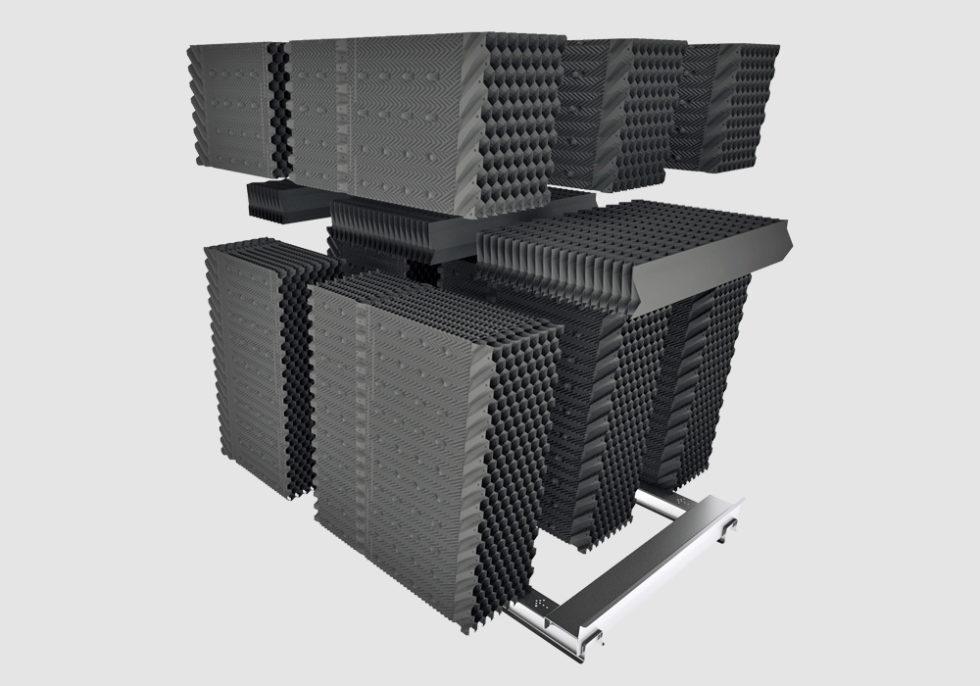
What Is a Drift Eliminator?
A drift eliminator is installed in the airflow path to capture water droplets carried out of the tower by moving air. The droplets change direction as air passes through the eliminator, allowing many of them to collect on its surfaces and drain back into the cooling tower.
Drift eliminators help reduce water loss and limit the spread of water droplets into surrounding areas. Their performance depends on the eliminator design, air velocity, installation quality, and the operating condition of the tower.
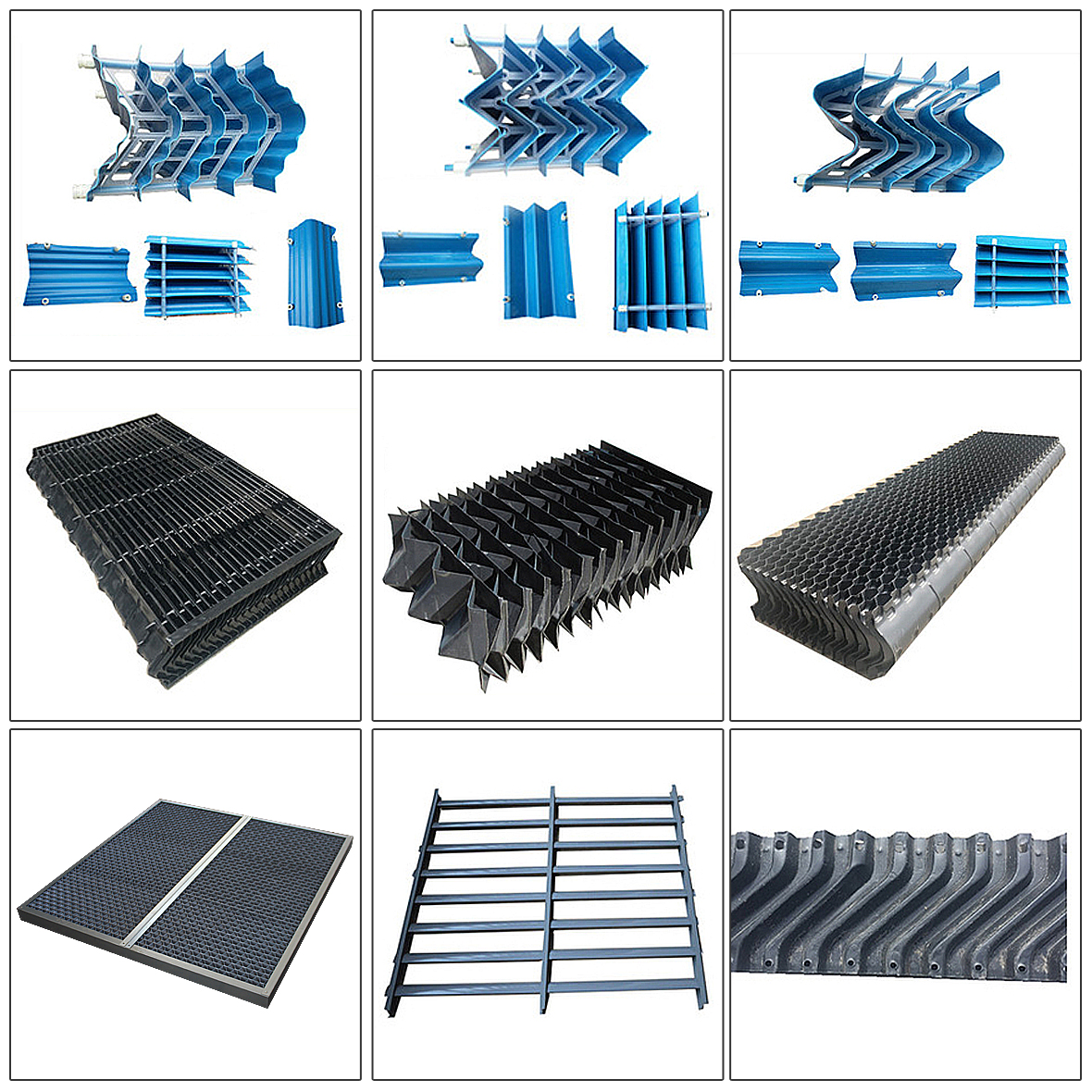
A drift eliminator is not the same as a fill pack. Replacing one does not automatically resolve problems caused by the other, so inspections should identify which component is responsible for the observed performance issue.
Why Replace Fill and Drift Eliminators in Marley and Evapco Towers?
Cooling tower internals operate in a demanding environment. They are exposed to circulating water, changing temperatures, airflow, water-treatment chemicals, and sometimes biological growth or suspended solids. Even well-maintained components can deteriorate over time.
For Marley and Evapco cooling tower owners, replacement decisions should be based on actual equipment requirements and inspection findings.
Reduced Cooling Performance
Cooling tower fill can lose performance when its passages become blocked by scale, sediment, biological deposits, or debris. Damaged sheets may also collapse or separate, affecting water distribution and airflow.
A tower experiencing higher-than-normal cold-water temperatures, reduced cooling capacity, or unusual pressure drop may need a detailed inspection. However, these symptoms can also result from fan problems, poor water distribution, incorrect airflow, or operating conditions. Fill replacement should follow a proper diagnosis rather than being treated as the automatic solution.
Excessive Water Drift and Water Loss
Damaged, incorrectly installed, or unsuitable drift eliminators can allow more water droplets to escape with the exhaust air. This can increase makeup-water demand and may create wet areas around the cooling tower.
Water loss also depends on evaporation, blowdown, leaks, and overall system operation. If drift is suspected, inspect the eliminator packs, seals, supports, airflow conditions, and installation orientation before selecting replacements.
Aging, Fouling, and Physical Damage
Over time, plastic fill and eliminator components may become brittle, deformed, cracked, or weakened by chemical exposure and heat. Physical damage can also occur during cleaning, handling, or maintenance.
Visible deformation, loose packs, blocked passages, and broken eliminator blades are reasons to assess whether repairs or replacement are appropriate. A planned replacement schedule can help facilities avoid emergency shutdowns and reduce the risk of unplanned maintenance.
Wholesale Cooling Tower Fill for Marley-Compatible Applications
Wholesale purchasing is useful when a facility needs to replace a large quantity of fill, a contractor is servicing multiple towers, or a distributor wants to maintain inventory for recurring customer demand.
For Marley-compatible applications, the goal is to source fill that meets the tower's physical and operating requirements. A replacement should not be selected solely because it is advertised for a particular brand.
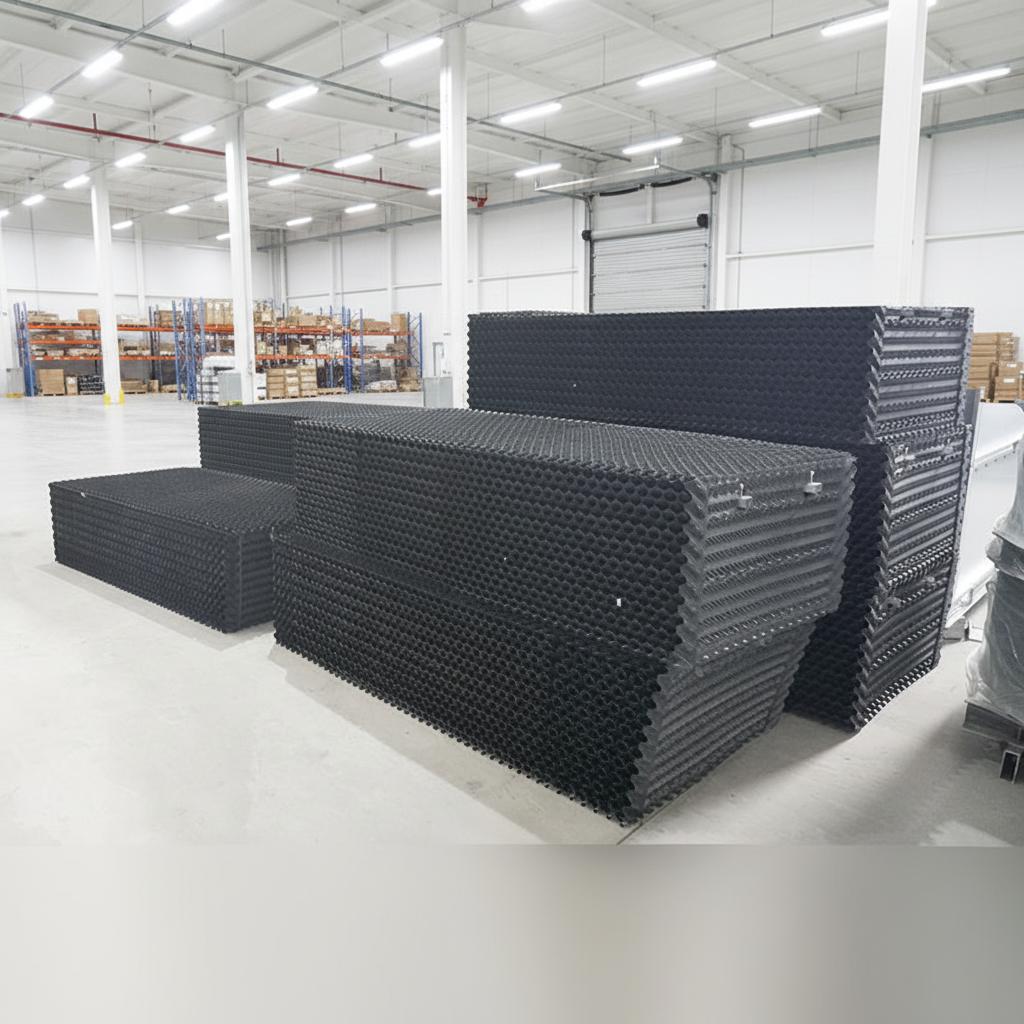
PVC Film Fill
Polyvinyl chloride (PVC) film fill is widely used in cooling tower applications because it can provide a large water-air contact area in a compact arrangement. The sheet geometry helps distribute water across the media surface, supporting heat and mass transfer.
PVC film fill is often considered for towers operating with suitably treated circulating water. Before ordering, buyers should verify the maximum operating-water temperature, chemical compatibility, sheet thickness, flute geometry, pack dimensions, and support arrangement.
Water quality deserves special attention. Film fill may become fouled when circulating water contains excessive suspended solids, scale-forming minerals, or biological deposits. Where fouling risk is high, alternative media designs or improved water treatment may be more appropriate.
PP Splash Fill
Polypropylene (PP) splash fill uses physical structures to break up and redistribute falling water. Depending on the design, it may be suitable for systems where water quality or operating conditions make conventional film fill less desirable.
PP can offer useful chemical resistance in many applications, but its suitability still depends on temperature, chemical concentration, mechanical loading, and the specific material formulation. Buyers should not assume that every PP product has the same performance limits.
When considering PP splash fill for an existing tower, check the tower's support grid, fill depth, water distribution arrangement, and intended thermal duty. A change in fill type can affect airflow and heat transfer, so engineering review may be necessary.
Crossflow and Counterflow Fill Configurations
Crossflow and counterflow towers arrange water and air differently. In a crossflow tower, air generally moves horizontally through the fill while water falls vertically. In a counterflow tower, air moves upward against the downward flow of water.
These different arrangements affect fill geometry, installation methods, support requirements, and the overall internal layout. A pack designed for one arrangement should not be assumed to fit another.
When ordering replacement fill, confirm the tower configuration, original pack dimensions, installation direction, available height, and water distribution design. If the original part number is available, use it as a reference while independently checking the actual dimensions and specifications.
Wholesale Drift Eliminators for Marley and Evapco Towers
Drift eliminators are essential components in many industrial cooling towers. For wholesale buyers, the priority is to find a design that provides suitable droplet capture without creating excessive airflow resistance or installation problems.
How Drift Eliminators Control Water Loss
As humid air travels through a drift eliminator, its internal passages force water droplets to change direction. Droplets with sufficient inertia strike the surfaces, combine with other droplets, and drain back toward the tower.
The geometry must balance droplet removal and airflow resistance. A design that is unsuitable for the tower's air velocity may perform poorly or create unnecessary pressure drop. Correct installation is equally important because gaps, missing sections, or incorrectly oriented packs can provide paths for water to escape.
For this reason, a replacement should match the intended airflow arrangement and fit the designated mounting area.
PVC and PP Drift Eliminator Materials
PVC and PP are commonly used for plastic drift eliminators, but neither material is universally suitable for every application.
PVC may be appropriate for many conventional cooling tower environments. PP can be considered where its temperature and chemical-resistance characteristics better suit the operating conditions. The final choice should account for water chemistry, operating temperature, UV exposure where relevant, support spacing, and the manufacturer's documented material limits.
Buyers should request technical data rather than selecting a material based on price alone. A low-cost component that deforms prematurely or fits poorly can create greater lifecycle costs.
Selecting the Right Drift Eliminator Profile
Drift eliminators are available in different blade profiles, passage arrangements, thicknesses, and assembly formats. These details influence droplet capture, pressure drop, structural stability, and installation compatibility.
Before purchasing, confirm the required overall dimensions, blade orientation, pack depth, support locations, and connection method. If the original eliminator is still available, photographs and measurements can help clarify the configuration.
Where the exact replacement specification is uncertain, consult a qualified cooling tower technician or engineer before approving a substitute.
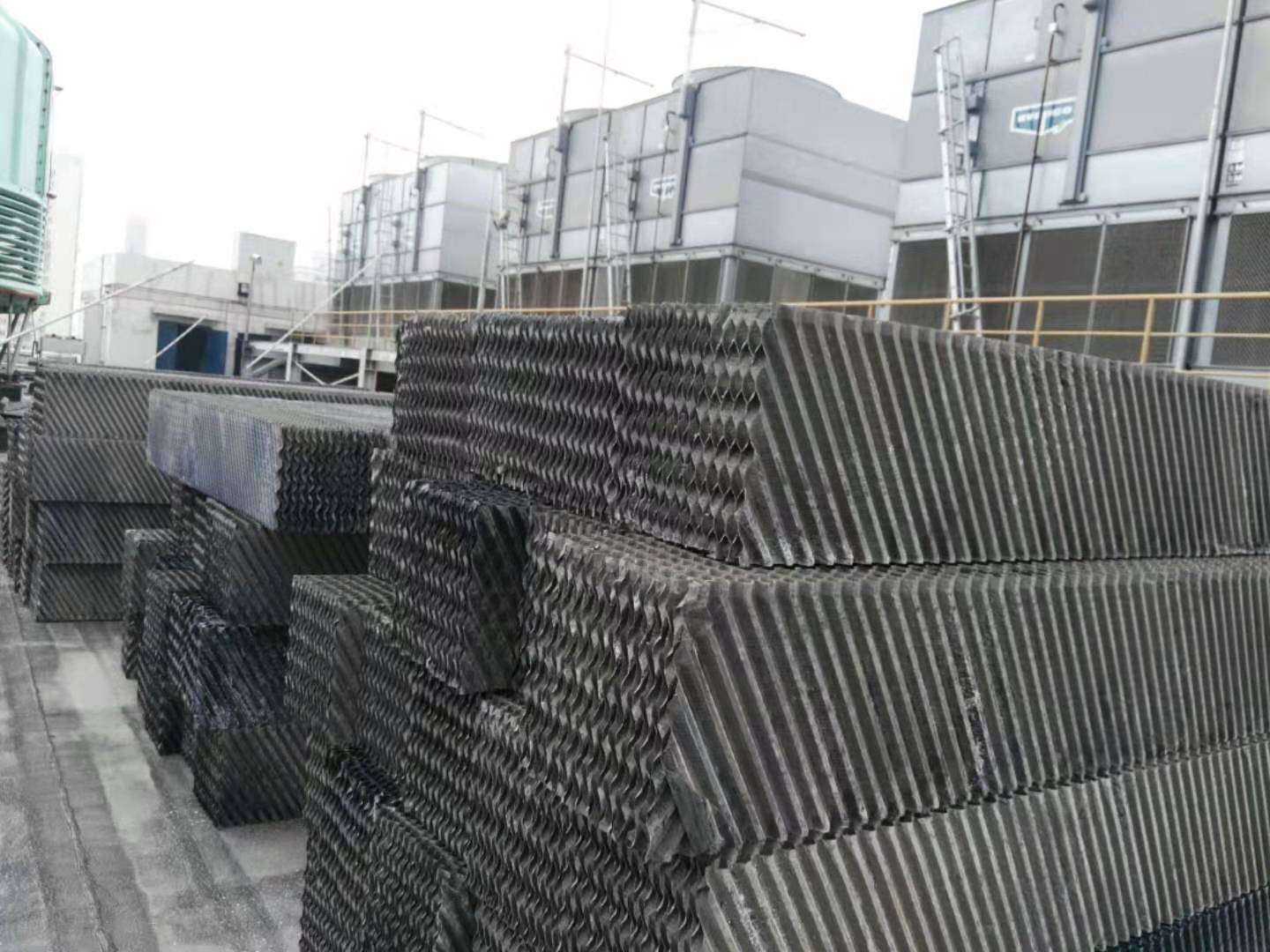
Marley / Evapco Replacement Parts: Compatibility Comes First
Marley and Evapco are established cooling tower brands, but their product lines include different models, sizes, configurations, and generations of equipment. A single generic fill or drift eliminator design should not be assumed to fit every tower from either manufacturer.
The term compatible replacement should mean that the component has been assessed against the requirements of the specific application. It should not be interpreted as an endorsement, authorization, or claim of affiliation with the original equipment manufacturer.
Key Dimensions to Confirm
Before requesting a wholesale quote, collect as much of the following information as possible:
Cooling tower brand, model, and serial number, if available
Tower type: crossflow or counterflow
Existing fill or eliminator dimensions
Pack depth, height, width, and quantity
Material type and operating-temperature requirements
Support-grid layout and installation orientation
Photographs of the original component and mounting area
Any existing part number, drawing, or technical datasheet
These details help the supplier assess the application and reduce the risk of ordering parts that require unplanned modification.
If original drawings are unavailable, provide accurate measurements from the existing component. For large orders, confirming a sample or approved drawing before mass production can be a practical risk-control step.
Operating Conditions and Water Quality
Physical fit is only one part of component selection. The fill and drift eliminator must also be suitable for the water chemistry, temperature, airflow, and mechanical environment.
For fill, consider suspended solids, scaling potential, biological growth, and cleaning methods. For drift eliminators, consider air velocity, pressure-drop requirements, expected water loading, and the risk of physical damage during maintenance.
Where a tower operates under unusual conditions, provide the supplier with the relevant operating data. This information helps determine whether the proposed component is a reasonable replacement or whether further engineering review is needed.
Wholesale Purchasing: What Industrial Buyers Should Consider
A good wholesale purchase balances product suitability, total delivered cost, manufacturing consistency, and delivery reliability. The lowest quoted unit price does not always produce the lowest overall cost.
Bulk Pricing and Order Planning
Wholesale orders can reduce the per-unit cost of manufacturing, packaging, and transportation, depending on order size and product configuration. However, buyers should compare quotations on the same technical basis.
Confirm whether the quotation includes the required material, dimensions, accessories, packaging, and delivery terms. Ask whether the price is based on standard products or customized dimensions, and check whether tooling or setup charges apply.
For recurring maintenance, planned orders may help facilities maintain spare inventory without tying up too much storage space or working capital. Distributors can also group demand across projects when the specifications are identical.
Material Quality and Manufacturing Consistency
Consistent manufacturing matters because fill packs and eliminator sections must fit together correctly and withstand their intended operating environment.
Depending on the product, relevant checks may include dimensions, sheet thickness, surface condition, blade profile, assembly strength, and visible defects. Buyers can ask for product specifications, inspection records, material information, and photographs of the actual goods before shipment where appropriate.
Avoid assuming that a particular certificate or test report applies to every product. Verify the scope, product type, date, and issuing organization of any documentation supplied.
Packaging, Shipping, and Lead Times
Cooling tower fill and drift eliminators can occupy substantial space even when they are relatively light. Their shape and volume may affect freight costs, container loading, and storage requirements.
Ask the supplier to explain the proposed packaging method, shipment volume, estimated production lead time, and delivery terms. Confirm how packs will be protected against deformation, impact, moisture, and handling damage during transportation.
For project orders, coordinate delivery with the maintenance shutdown schedule. Receiving components too early can create storage challenges, while late delivery can extend downtime.
Custom Manufacturing and OEM-Compatible Solutions
Standard products may be suitable for many replacement projects, but some cooling towers require specific dimensions, profiles, or assembly arrangements. In these cases, a custom-manufacturing approach may be worth considering.
A practical process begins with application information: tower model, component dimensions, operating temperature, water conditions, quantity, and intended use. Drawings, photographs, or samples can help clarify the requirements.
The supplier can then review the information and confirm whether a proposed product can be manufactured to the requested specification. Before bulk production, buyers should approve the technical drawing, dimensions, material, quantity, and any applicable inspection criteria.
Custom manufacturing does not automatically mean the replacement will match the original manufacturer's thermal performance. Where performance is critical, obtain appropriate engineering confirmation and avoid relying on dimensions alone.
Installation and Maintenance Best Practices
Even a well-made replacement component can underperform if it is installed incorrectly. A structured installation process protects the equipment and helps maintain the expected cooling performance.
Before work begins, follow the site's lockout and isolation procedures, assess confined-space and working-at-height risks, and use qualified personnel. Cooling tower maintenance should comply with applicable safety rules and the facility's operating procedures.
For fill replacement, inspect the support structure, water distribution system, and surrounding components before installing new packs. Remove debris and address the causes of fouling where possible. Confirm that packs are seated correctly and that water can distribute across the intended area.
For drift eliminators, check orientation, pack alignment, support conditions, and gaps around the installation. Follow the product-specific instructions rather than assuming every eliminator uses the same mounting method.
After installation, inspect the tower during operation where safe and practical. Monitor cooling-water temperatures, airflow, water distribution, drift, and other relevant operating indicators. Keep records of installation dates and inspection findings to support future maintenance planning.
Common Purchasing Mistakes to Avoid
Several avoidable mistakes can make a wholesale order more expensive than expected.
Ordering by brand name alone: Marley or Evapco identification is useful, but it does not replace model information, measurements, or technical review.
Choosing solely by price: Low initial cost may be offset by poor fit, premature deterioration, or additional installation work.
Ignoring operating conditions: Water chemistry and temperature can affect the suitability and service life of both fill and eliminators.
Failing to approve specifications: For customized or large-volume orders, confirm drawings and dimensions before production.
Underestimating freight and storage: Large packs can create substantial shipping-volume and handling requirements.
Replacing components without diagnosing the cause: Fouling, poor cooling, or excessive drift can also be associated with water distribution, airflow, fan operation, or water-treatment problems.
A careful purchasing process reduces these risks and makes it easier to compare suppliers fairly.
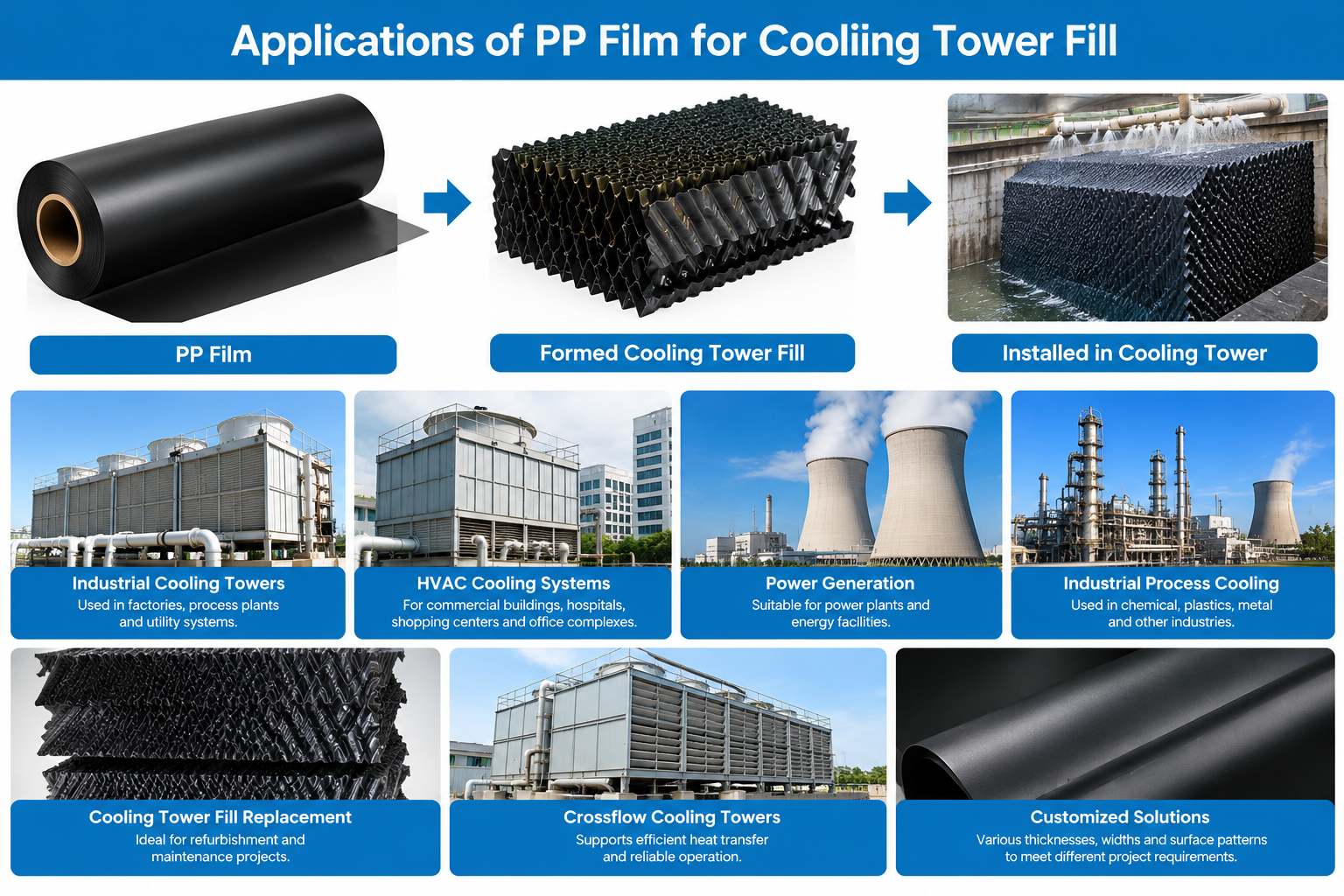
Applications Across Industrial Cooling Systems
Cooling tower fill and drift eliminators are used in a broad range of facilities that need to reject process or HVAC heat. Depending on the tower design, replacement components may be required in:
Manufacturing plants and industrial process facilities
Commercial HVAC and central cooling systems
Power and energy facilities
Chemical and process industries
Data centers and large cooling installations
Industrial refrigeration systems
Maintenance, repair, and overhaul projects managed by contractors
Each application has different operating demands. A component suitable for a clean HVAC water circuit may not be appropriate for a process system with high solids loading or aggressive water chemistry. Buyers should specify the application clearly when requesting a quotation.
Why Work with Power Tower Cooling Technology (Shaoxing) Co.,Ltd?
Power Tower Cooling Technology (Shaoxing) Co.,Ltd provides cooling tower replacement-component solutions through coolingtowerpart.com.
For buyers sourcing wholesale fill and drift eliminators for Marley or Evapco cooling tower applications, a clear technical enquiry helps establish whether the required components can be supplied to the necessary specifications.
When evaluating a supplier, consider its ability to review drawings and dimensions, communicate material options, provide clear quotations, explain packaging and lead times, and supply relevant product documentation. These factors help procurement teams assess more than just the unit price.
The most effective supplier relationship is based on accurate information and realistic expectations. Share the tower details and intended operating conditions, request confirmation of the proposed specifications, and agree on the inspection and delivery requirements before placing a bulk order.
For product enquiries, visit https://www.coolingtowerpart.com.
How to Request a Wholesale Quote
To help the supplier prepare a useful quotation, include the following details in your enquiry:
Tower information: Marley or Evapco brand, model, and tower configuration.
Component type: Film fill, splash fill, drift eliminator, or a combination.
Dimensions: Length, width, depth, profile, and required quantity.
Operating conditions: Water temperature, water quality, and any relevant chemical exposure.
Project requirements: Standard or custom dimensions, target delivery date, and destination.
Supporting documents: Drawings, photos, existing part numbers, or technical specifications.
If some details are unavailable, send the information you have and identify what still needs confirmation. The supplier may be able to advise which additional measurements are necessary before confirming compatibility.
For large projects, consider requesting a drawing review or sample approval before committing to the full order.
Frequently Asked Questions
Can replacement fill be used in Marley cooling towers?
Potentially, yes. The replacement must be checked against the specific tower model, fill arrangement, dimensions, operating conditions, and performance requirements. The Marley name alone is not enough to establish compatibility.
Can drift eliminators be supplied for Evapco towers?
Replacement drift eliminators may be considered for particular Evapco tower applications, provided the dimensions, profile, airflow arrangement, material, and mounting details are verified. Confirm the technical requirements before ordering.
What information is needed for a bulk quotation?
The most useful information includes the tower model, component type, dimensions, quantity, operating conditions, destination, and required delivery date. Photos or drawings can help clarify the configuration and reduce the risk of specification errors.
How often should cooling tower fill be replaced?
There is no universal replacement interval. Service life depends on water quality, temperature, chemical exposure, maintenance practices, operating hours, and the condition of the media. Regular inspections and performance monitoring are more reliable than using a fixed replacement interval for every tower.
Should fill and drift eliminators always be replaced together?
No. They perform different functions and may deteriorate at different rates. Inspect each component and consider the tower's condition, maintenance plan, and shutdown schedule before deciding whether to replace one or both.
Conclusion
Wholesale fill and drift eliminators play an important role in maintaining cooling tower performance, controlling water loss, and managing maintenance costs. For Marley and Evapco cooling tower applications, successful replacement starts with verified dimensions, suitable materials, and a clear understanding of the tower's operating conditions.
Film fill, splash fill, and different drift eliminator profiles serve different purposes. Choosing the right option requires more than matching a brand name or comparing prices. Careful specification review, consistent quality checks, proper installation, and realistic delivery planning all contribute to a better purchasing outcome.
Power Tower Cooling Technology (Shaoxing) Co.,Ltd supports cooling tower component enquiries through coolingtowerpart.com. Share your requirements to discuss suitable wholesale fill and drift eliminator options for your project.


