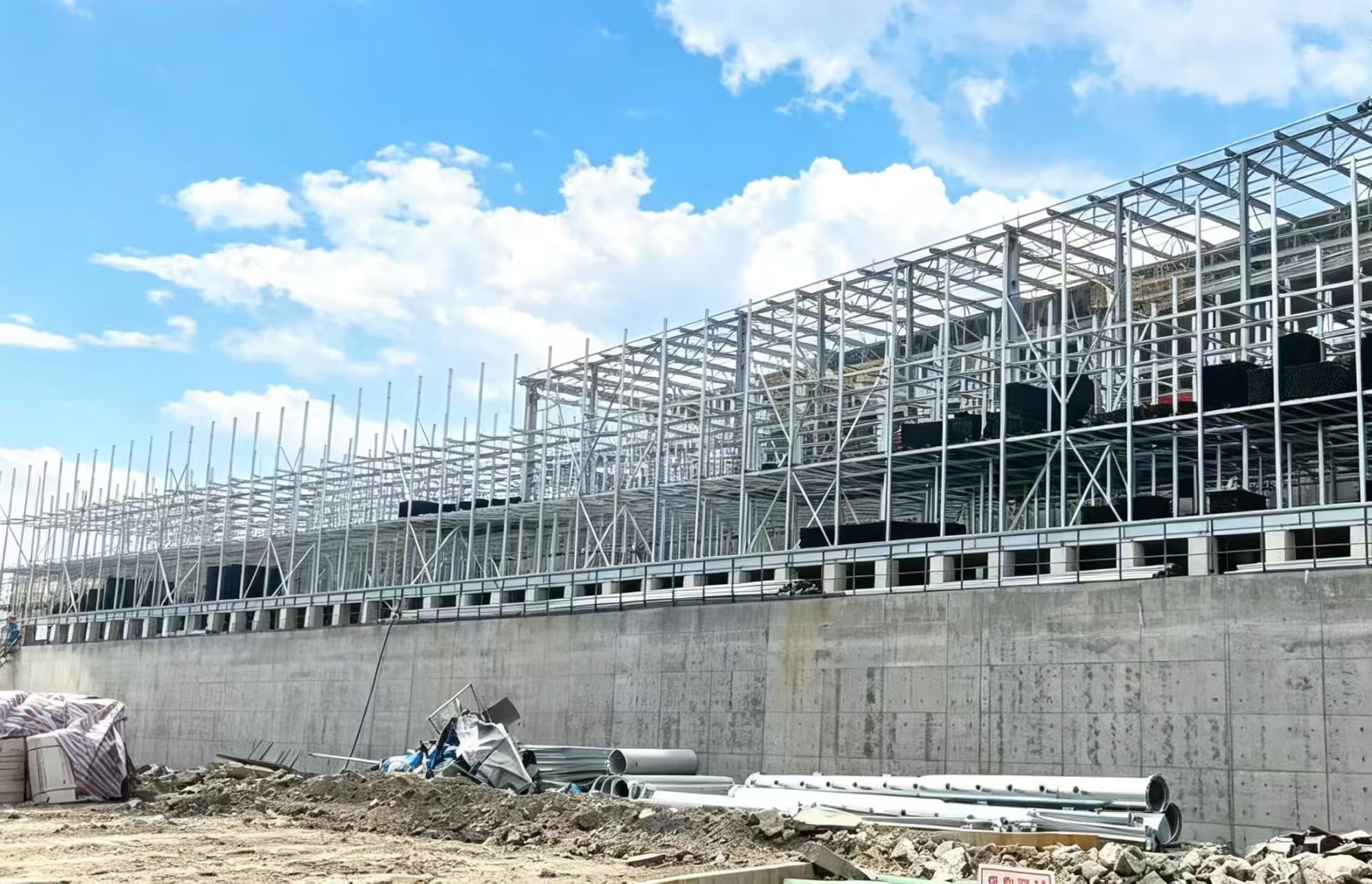
Choosing the right replacement packing for a Liangchi cooling tower can make a real difference to cooling performance, maintenance costs, and equipment reliability. Over time, cooling tower filler can become clogged, cracked, deformed, or less effective because of demanding operating conditions. When this happens, replacing the packing with a suitable OEM-compatible solution can help restore the intended water distribution and airflow.
Power Tower Cooling Technology (Shaoxing) Co., Ltd. serves the cooling tower replacement parts market through www.coolingtowerpart.com. For industrial buyers, maintenance teams, and cooling tower contractors, finding compatible fill sheets can offer another option when maintaining existing equipment or planning a replacement project.
But how do you choose the right Liangchi-compatible cooling tower filler? Is PVC or PP a better choice? And what information should you prepare before ordering?
This guide answers these questions and explains how to select, customize, install, and maintain OEM-compatible cooling tower fill sheets.
1. Introduction to Liangchi Cooling Tower Filler
Cooling towers remove unwanted heat from circulating water, helping industrial processes and HVAC systems operate within their required temperature ranges. Inside the tower, cooling tower filler, also called fill media or packing, increases the contact area between water and air.
This contact is essential for heat transfer. As warm water spreads across the fill surfaces and air moves through the packing, heat transfers from the water to the air. A portion of the water evaporates, removing additional heat from the remaining water.
However, cooling tower filler does not last forever. Continuous exposure to water, temperature changes, chemical treatment, and airborne contaminants can gradually affect its condition. Mineral scale and biological growth can also block passages and reduce effective cooling performance.
When the existing filler becomes damaged or excessively fouled, replacement may be necessary.
For Liangchi cooling tower owners, OEM-compatible fill sheets can be a practical option when the original packing is difficult to source or when a replacement needs to match specific dimensions. The key is to select a product that fits the equipment and meets its operating requirements rather than relying on appearance alone.
2. What Are OEM Compatible Cooling Tower Fill Sheets?
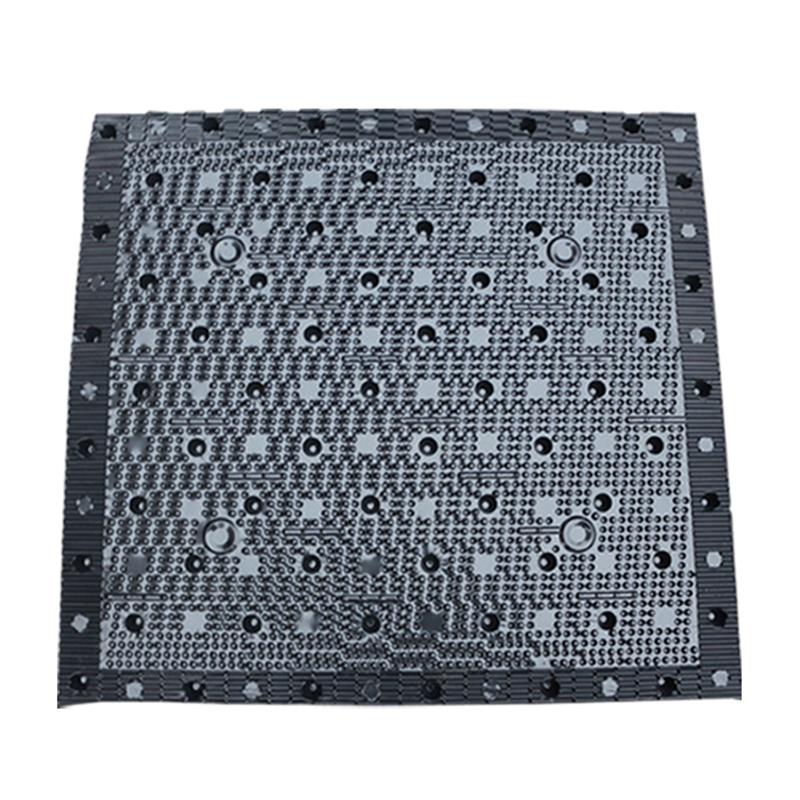
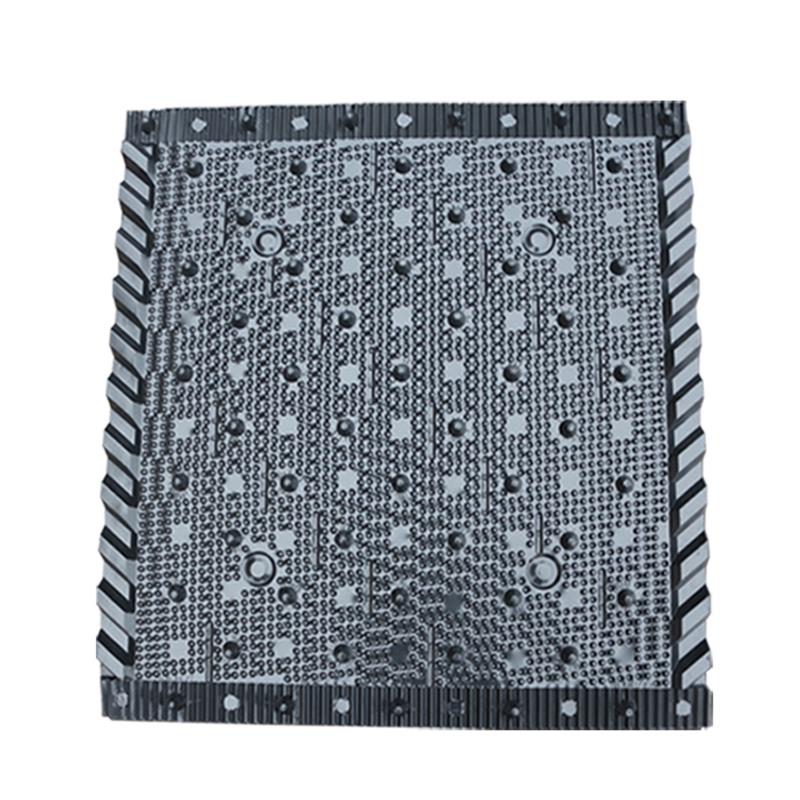
OEM-compatible cooling tower fill sheets are replacement products designed to match the relevant installation and operating requirements of existing cooling tower equipment.
OEM stands for original equipment manufacturer. In the replacement-parts market, the term OEM compatible generally describes a product intended to fit or function in place of an original component.
It does not automatically mean that the product is manufactured, supplied, or approved by the original cooling tower brand. Buyers should confirm the supplier's specifications and the compatibility of the proposed product before ordering.
For Liangchi cooling tower filler, compatibility may involve several factors:
Overall fill pack dimensions.
Sheet thickness and surface profile.
Channel geometry and orientation.
Material type and temperature limits.
Water distribution and airflow requirements.
Installation and support arrangements.
A replacement product should meet the requirements of the specific cooling tower model. A fill pack that looks similar to the original may still perform differently if its geometry or spacing changes the way water and air move through the tower.
2.1 How Cooling Tower Fill Sheets Work
Cooling tower fill creates surfaces over which warm water can spread as it moves through the tower. Air passes through or across the packing, allowing heat to transfer from the water into the air.
The fill's design influences how effectively water spreads, how much contact occurs between water and air, and how much resistance the air encounters.
A suitable fill arrangement helps the tower maintain its intended cooling performance. In contrast, blocked channels, uneven water distribution, or damaged sheets can reduce effective contact and interfere with airflow.
That is why choosing replacement fill requires more than checking the length and width. Material, profile, installation orientation, and the tower's operating conditions all matter.
2.2 OEM Compatibility vs. Original Replacement Parts
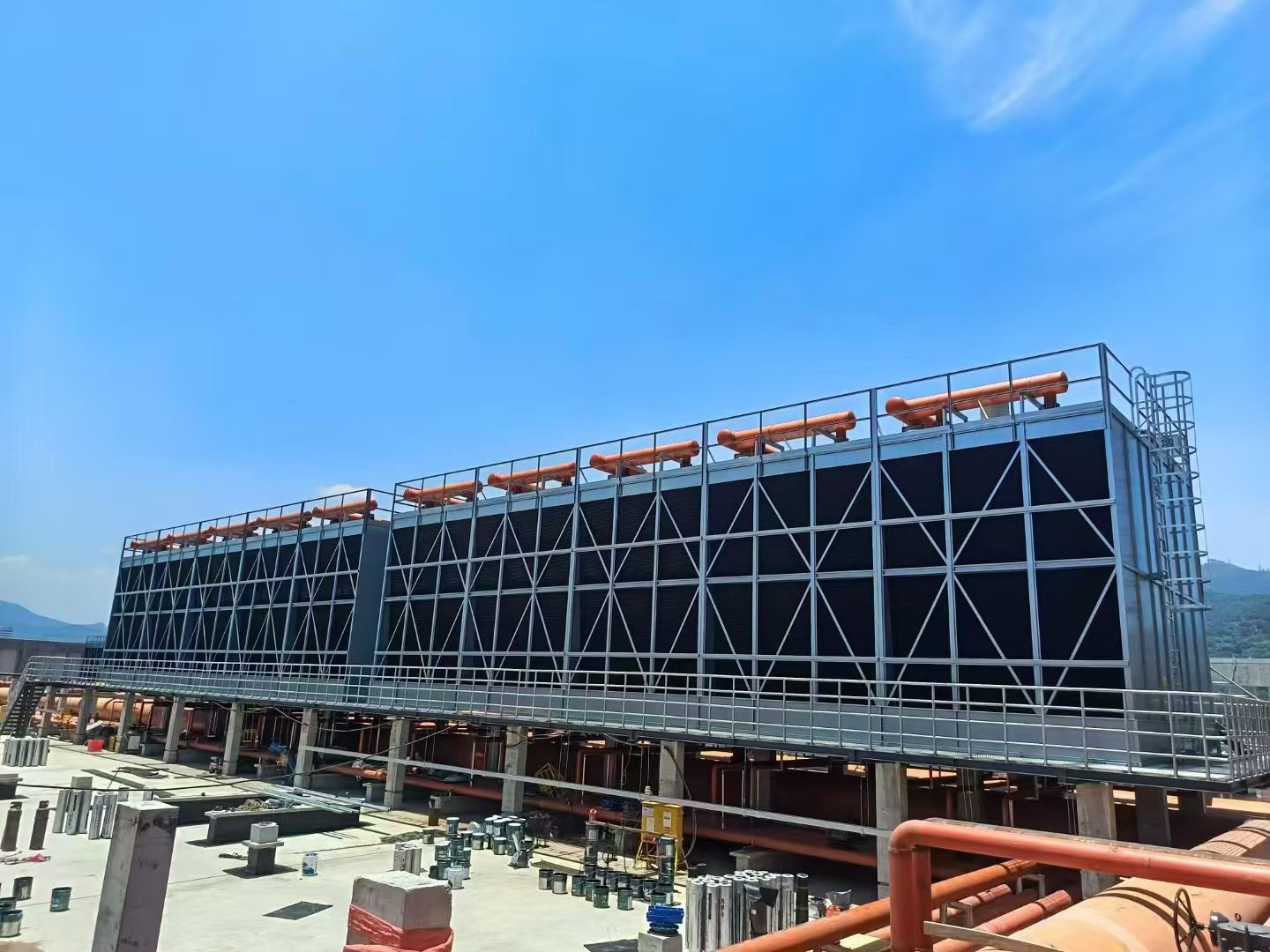
Original replacement parts are obtained through the original equipment manufacturer's supply channels or its authorized arrangements. Compatible replacement parts are alternatives intended to meet the relevant equipment requirements.
A compatible product may provide purchasing flexibility, especially when original parts are unavailable or difficult to identify. However, compatibility must be assessed carefully.
Before purchasing Liangchi-compatible fill sheets, compare the proposed product with the existing packing or available technical documentation. Confirm the dimensions, fill profile, material properties, and installation arrangement.
If the replacement uses a different fill design, ask whether the change could affect airflow resistance, water distribution, or cooling performance.
3. Why Replace Liangchi Cooling Tower Filler?
Cooling tower filler operates in a demanding environment. Over time, its structure may deteriorate, and deposits may accumulate inside the passages.
Replacing damaged or heavily fouled fill can help restore the intended water distribution and reduce avoidable operating problems. It may also help maintenance teams plan repairs instead of waiting for a failure that forces an unplanned shutdown.
Before purchasing replacement packing, inspect the existing fill and identify why it has deteriorated. If poor water quality is causing repeated blockage, installing new fill without improving water treatment may only provide temporary relief.
3.1 Reduced Cooling Efficiency
If a cooling tower struggles to achieve its usual cold-water temperature, damaged or fouled filler may be one possible cause.
Blocked channels and uneven water distribution can reduce effective contact between water and air. This may affect the tower's ability to remove heat under the required operating conditions.
However, filler is not the only factor that influences cooling performance. Fan problems, blocked air inlets, poor nozzle operation, changing process loads, and unsuitable water flow can produce similar symptoms.
A proper inspection helps determine whether the fill needs replacement or whether another part of the cooling system requires attention.
3.2 Clogging, Scaling, and Biological Growth
Minerals in circulating water can form scale on fill surfaces. Suspended solids may settle in narrow passages, while biological growth can create deposits that interfere with water and air movement.
Film fill with narrow channels can be particularly sensitive to certain fouling conditions. When deposits accumulate, airflow resistance may increase and water may no longer distribute evenly across the packing.
If your Liangchi cooling tower has a history of repeated clogging, review its filtration, water treatment, blowdown practices, and cleaning procedures before choosing replacement fill.
The fill geometry should suit the actual water conditions. Nevertheless, even a well-selected product cannot eliminate the need for proper water treatment and maintenance.
3.3 Cracking, Deformation, and Aging
Physical damage is another reason to replace cooling tower filler.
Cracked sheets, sagging packs, separated joints, and distorted channels may indicate material aging, excessive loading, poor support, or unsuitable operating conditions. Damaged packing may no longer maintain the intended water and airflow paths.
During inspection, check the supporting structure as carefully as the fill itself. If the support system is damaged, replacing only the packing may not solve the underlying problem.
Identifying the cause of deterioration helps prevent the same failure from recurring after installation.
4. Common Materials for Liangchi-Compatible Fill Sheets
PVC and polypropylene (PP) are two common materials used in cooling tower packing. Both can be formed into fill products, but their suitability depends on the specific formulation, operating temperature, water chemistry, mechanical requirements, and fill design.
The right choice should be based on actual operating conditions rather than price or material name alone.
4.1 PVC Cooling Tower Fill
PVC cooling tower fill is widely used in commercial and industrial cooling systems. It can be formed into structured sheets that provide a large contact area between water and air.
Its practical advantages include relatively low weight and suitability for many conventional cooling tower applications. PVC film fill is often considered where effective heat transfer and compact packing are important.
However, PVC products have temperature and chemical compatibility limits. Prolonged exposure to unsuitable conditions may cause deformation or deterioration.
Before selecting PVC fill for a Liangchi cooling tower, confirm the product's specified operating temperature, sheet thickness, surface profile, and compatibility with the circulating water and treatment chemicals.
4.2 PP Cooling Tower Fill
Polypropylene, commonly known as PP, is another option for cooling tower replacement projects.
Depending on the formulation and design, PP may provide useful chemical resistance and may be appropriate for applications where PVC is not the preferred choice.
However, PP is not automatically better in every operating environment. Its performance depends on temperature, loading, chemical exposure, and product construction.
If you are considering PP as a substitute for existing Liangchi fill, ask the supplier to confirm that the proposed product is suitable for the tower's operating conditions.
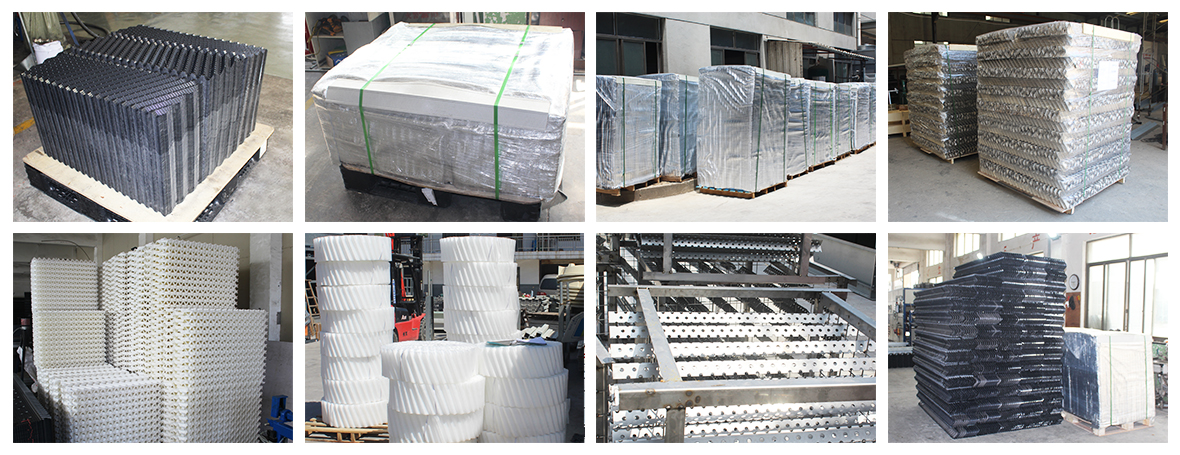
4.3 PVC vs. PP: How to Choose the Right Material
Comparison Factor | PVC Fill | PP Fill |
Typical applications | Many industrial and HVAC cooling towers | Applications suited to the properties of PP |
Temperature suitability | Must remain within the specified product limits | Must remain within the specified product limits |
Chemical resistance | Depends on formulation and chemical exposure | Depends on formulation and chemical exposure |
Available configurations | Depends on the supplier and product design | Depends on the supplier and product design |
Selection priority | Check actual specifications and operating conditions | Check actual specifications and operating conditions |
The most suitable material is the one that meets the cooling tower's requirements and remains compatible with its operating environment.
If the system handles unusually hot water or aggressive chemicals, provide those details to the supplier before placing an order. Do not assume that switching materials alone will guarantee a longer service life.
5. Types of OEM Compatible Cooling Tower Filler
Cooling tower filler is available in different designs. The correct type depends on the tower's construction, water quality, heat load, and airflow requirements.
When replacing Liangchi cooling tower filler, confirm the existing fill type before selecting an alternative. Film fill, splash fill, crossflow fill, and counterflow fill are not automatically interchangeable.
5.1 Film Fill for Heat Transfer
Film fill uses formed sheets to spread water across an extended surface area. This increases contact between water and air and supports heat transfer.
It is commonly considered for applications where the circulating water is sufficiently clean to limit excessive channel blockage.
When choosing compatible film fill, check the flute profile, sheet spacing, pack dimensions, and installation direction. Even small design differences can affect airflow resistance and the water-distribution pattern of the assembled fill.
If the existing Liangchi tower uses film fill, matching the original geometry is an important starting point for replacement selection.
5.2 Splash Fill for Challenging Water Conditions
Splash fill cools water by breaking it into smaller droplets or streams as it falls through the tower.
Depending on its design, splash fill may be suitable for some applications where suspended solids or fouling risks make a splash-type arrangement worth considering.
However, switching from film fill to splash fill involves more than changing the packing material. The tower's structure, heat-transfer requirements, water distribution, and airflow characteristics must all be evaluated.
If you are considering a different fill type, seek technical confirmation before making the change.
5.3 Crossflow and Counterflow Fill Designs
Crossflow and counterflow describe the relative directions of water and air inside a cooling tower.
In a crossflow cooling tower, air generally travels horizontally across descending water. In a counterflow tower, air moves upward against the downward flow of water.
These arrangements affect fill geometry, installation orientation, and the design of the water distribution system.
When ordering Liangchi-compatible fill sheets, identify whether your cooling tower is crossflow or counterflow and provide the relevant model information. If the original model details are unavailable, photographs and measurements can help the supplier assess the installation, although technical confirmation may still be necessary.
6. Key Benefits of Compatible Replacement Fill Sheets
A properly selected compatible replacement can offer practical advantages for cooling tower maintenance. These may include more flexible sourcing, easier replacement planning, and reduced need for extensive modifications.
The benefits depend on how closely the proposed product matches the original requirements. Always compare technical specifications, total cost, and installation requirements rather than selecting a replacement based on purchase price alone.
6.1 Improved Fit and Installation Efficiency
Correctly sized fill packs can fit the available space and support arrangement with fewer adjustments. This helps reduce unnecessary cutting, material waste, and installation delays.
To improve fit, provide accurate measurements and confirm dimensional tolerances before production or dispatch.
Do not force oversized packing into place, as this may deform the sheets or interfere with the intended channels. Similarly, undersized packs may create gaps or allow water to bypass the fill.
For custom replacement projects, confirming the final dimensions before production is especially important.
6.2 Reliable Cooling Performance
Replacement fill should preserve the intended contact between water and air. Matching the original geometry and installation orientation can help maintain the system's expected operating characteristics.
However, a compatible product does not guarantee a particular cooling result. Performance also depends on water flow, airflow, heat load, distribution nozzles, and the overall condition of the tower.
Where a replacement involves a different fill design, request a technical assessment before installation.
6.3 Better Maintenance Planning
Planned fill replacement allows maintenance teams to organize labor, equipment access, cleaning, and shutdown schedules in advance.
Accurate specifications also reduce the risk of ordering the wrong size or material. For critical facilities, confirm production lead times and delivery dates early.
Keep records of the fill material, dimensions, installation date, and inspection findings. These records make future maintenance decisions easier and help you recognize recurring problems.
7. How to Choose Liangchi Cooling Tower Fill Sheets
The selection process should begin with equipment identification and a review of the existing packing.
Collect available technical information, check the operating environment, and confirm the dimensions. If the original part number is unknown, use drawings, photographs, and measurements to help identify a suitable replacement.
Do not assume that every product marketed as Liangchi-compatible will fit every Liangchi tower model. Compatibility is specific to the equipment and the proposed fill design.
7.1 Confirm the Cooling Tower Model
Record the cooling tower brand, model number, series, and tower type whenever possible. These details help narrow down the likely fill configuration.
If the equipment nameplate is missing, provide clear photographs of the tower, internal supports, and existing packing.
Older equipment may have been modified during previous maintenance. Therefore, inspect the currently installed fill instead of relying only on original documentation.
7.2 Measure the Existing Fill Pack
Measure the fill pack's length, width, and height. Also record the sheet profile, approximate thickness, channel direction, and assembly arrangement.
Check how the packing sits on the supports and whether multiple packs connect together. If possible, send a technical drawing or a sample to the supplier.
Accurate measurements help prevent problems such as gaps, excessive compression, and interference with nearby components.
7.3 Check Operating Conditions
Provide the normal and maximum water temperatures, information about water quality, and any known chemical or fouling issues.
Explain whether the tower handles relatively clean HVAC water or industrial process water containing suspended solids or other contaminants.
These details help the supplier assess material and fill-design suitability. If the cooling tower operates outside typical conditions, obtain technical confirmation before placing the order.
7.4 Pre-Order Specification Checklist
Before ordering replacement fill sheets, prepare the following information:
Liangchi cooling tower model and type.
Existing fill material and design.
Pack length, width, and height.
Required quantity.
Normal and maximum operating temperatures.
Water quality and chemical exposure.
Installation orientation and support arrangement.
Required delivery date.
Any requested quality documentation.
Photographs, drawings, and existing part numbers can help reduce uncertainty. Ask the supplier to confirm the final specifications before production or dispatch.
8. OEM Compatible Fill Sheet Manufacturing Process
Custom-compatible fill production typically involves material selection, sheet forming, cutting, assembly, and inspection. The exact process depends on the fill design and the manufacturer's equipment.
Clear drawings and confirmed specifications are important because manufacturing accuracy directly affects installation fit.
8.1 Material Selection and Sheet Forming
The manufacturer selects a material suitable for the intended operating conditions and forms it into the required sheet profile.
Sheet thickness and profile consistency influence the finished geometry and the way water and air move through the packing.
Buyers should confirm the agreed material and design before production. If the replacement uses a different material from the original, verify that the proposed product remains suitable for the tower's temperature and water chemistry.
8.2 Cutting, Assembly, and Quality Control
Formed sheets are cut to the specified dimensions and assembled into packs according to the product design. Depending on the construction, the process may include bonding or other assembly methods.
Quality checks may cover dimensions, sheet condition, profile consistency, and joint integrity.
For custom orders, confirm the inspection criteria and whether dimensional records or other documentation are available. These checks help ensure the delivered product matches the agreed specifications.
9. Installation and Maintenance Recommendations
Even a suitable replacement product can deteriorate prematurely if it is installed or maintained incorrectly.
Before installation, follow site safety procedures and isolate the cooling tower according to the facility's requirements. Remove old packing carefully, clean the installation area, and inspect the support structure.
Install the new packs in the specified orientation and avoid damaging the sheets during handling. Do not force the packing into an unsuitable space or modify the fill profile without checking the design requirements.
After installation, check water distribution and monitor cooling performance.
During routine maintenance, inspect for:
Cracks, deformation, and separated joints.
Blocked passages and mineral deposits.
Biological growth and uneven water distribution.
Damaged supports or retaining components.
Changes in cooling performance.
Use cleaning methods compatible with the fill material. If repeated fouling or premature damage occurs, investigate water treatment, temperature, loading, and support conditions rather than simply replacing the packing again.
A consistent inspection program helps identify problems before they lead to more extensive repairs.
10. Applications of Liangchi-Compatible Cooling Tower Filler
OEM-compatible fill sheets may be considered for a range of industrial and commercial applications, including:
Industrial process cooling.
Commercial HVAC systems.
Manufacturing facilities.
Cooling tower refurbishment projects.
Replacement of aging or damaged fill.
Existing towers with nonstandard fill dimensions.
Compatible replacement packing can be particularly useful when original parts are difficult to source or when an existing tower requires packing made to specific dimensions.
However, each project should be evaluated individually. A replacement must fit the tower and meet its thermal, mechanical, and water-quality requirements.
Where the proposed product differs significantly from the existing fill, consult a qualified cooling tower specialist before proceeding.
11. Why Consider Power Tower Cooling Technology?
Power Tower Cooling Technology (Shaoxing) Co., Ltd. serves the cooling tower replacement parts market through its website, www.coolingtowerpart.com.

For buyers searching for Liangchi-compatible fill sheets, the company provides a point of contact to discuss equipment details and replacement requirements.
When evaluating a supplier, consider the availability of suitable fill configurations, clarity of material specifications, support for dimension confirmation, manufacturing lead times, and applicable quality documentation.
Before ordering, confirm directly with Power Tower which products, customization options, and technical support services are available for your specific project.
Providing the cooling tower model, fill dimensions, operating conditions, and photographs of the existing packing can help establish a clearer basis for evaluating compatibility.
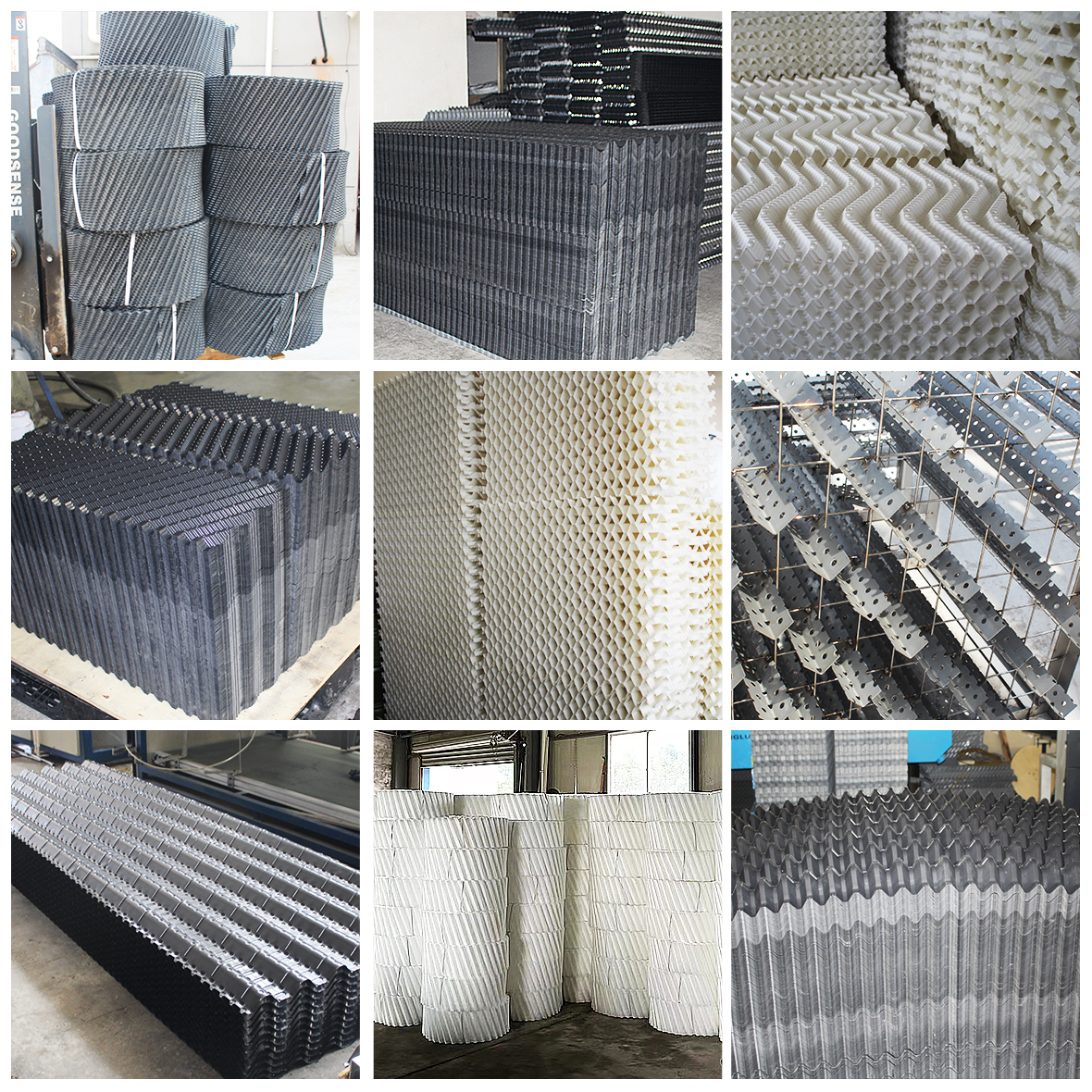
12. How to Request a Quote for Liangchi-Compatible Fill Sheets
A complete quotation request helps the supplier understand your application and identify a suitable replacement product.
When contacting Power Tower Cooling Technology through www.coolingtowerpart.com, prepare the following information:
Cooling tower details: Provide the model, series, tower type, and application.
Fill specifications: Identify the existing material, fill profile, dimensions, and required quantity.
Operating conditions: Include normal and maximum water temperatures, circulating water quality, and known fouling problems.
Reference materials: Attach photographs, technical drawings, original part numbers, or a physical sample when available.
Project requirements: Explain whether you need a direct replacement or want to evaluate a different fill design.
Delivery expectations: Specify the delivery destination, required schedule, and any documentation requirements.
If you do not know the exact fill model, do not guess. Clear photographs and accurate measurements can provide a useful starting point.
For larger projects, confirm all dimensions and specifications before production. This can help reduce ordering errors and avoid unnecessary installation delays.
13. Frequently Asked Questions
13.1 Can Compatible Fill Sheets Replace Liangchi Original Filler?
Yes, compatible fill sheets may be suitable when their dimensions, geometry, material properties, and performance characteristics meet the requirements of the specific cooling tower.
Confirm the proposed product against the original specifications before ordering. The term compatible alone is not proof of fit or approval by the original equipment manufacturer.
13.2 Are PVC and PP Fill Sheets Interchangeable?
Not automatically. PVC and PP have different material properties and may have different operating limits. Fill geometry and assembly design also matter.
Before substituting one material for another, confirm its suitability for the tower's temperature, water chemistry, and mechanical conditions.
13.3 How Often Should Cooling Tower Filler Be Replaced?
There is no universal replacement interval. Service life depends on material, operating conditions, water quality, maintenance, and installation.
Inspect the fill regularly and assess its condition alongside cooling performance. Replace packing when deterioration or fouling cannot be adequately addressed through suitable maintenance.
Follow product-specific recommendations wherever available.
13.4 Can Fill Sheets Be Customized to Existing Dimensions?
Custom sizing may be available depending on the product design and manufacturer's capabilities.
Provide accurate measurements, drawings, or samples, and confirm dimensional tolerances and production requirements before ordering.
Custom dimensions should still satisfy the tower's cooling and airflow requirements. Matching external dimensions alone does not guarantee equivalent performance.
13.5 What Information Helps Identify the Correct Replacement Fill?
The most useful information includes the cooling tower model, fill pack dimensions, material, fill profile, operating temperature, and water quality.
Photographs of the existing packing and its support arrangement can also help. If the original part number is available, include it in your inquiry.
The more accurate the information, the easier it is to assess whether a proposed replacement is suitable.
14. Conclusion: Find the Right Liangchi-Compatible Cooling Tower Filler
Selecting Liangchi cooling tower filler – OEM compatible fill sheets requires more than finding a similar-looking product. The replacement should match the tower's dimensions, fill design, material requirements, and operating conditions.
PVC and PP both offer useful options, but the best choice depends on temperature, water chemistry, fouling risk, and the intended application. Accurate measurements and clear technical communication can help reduce ordering errors, installation adjustments, and avoidable downtime.
It is also important to understand why the original filler deteriorated. Addressing problems such as poor water treatment, damaged supports, or unsuitable operating conditions can help protect the new packing and reduce recurring maintenance costs.
For cooling tower fill replacement inquiries, contact Power Tower Cooling Technology (Shaoxing) Co., Ltd. through www.coolingtowerpart.com.
Provide your tower model, fill dimensions, operating conditions, and required quantity to help establish a suitable OEM-compatible replacement solution. With careful selection and consistent maintenance, you can support reliable cooling tower operation and make your replacement investment more effective.


