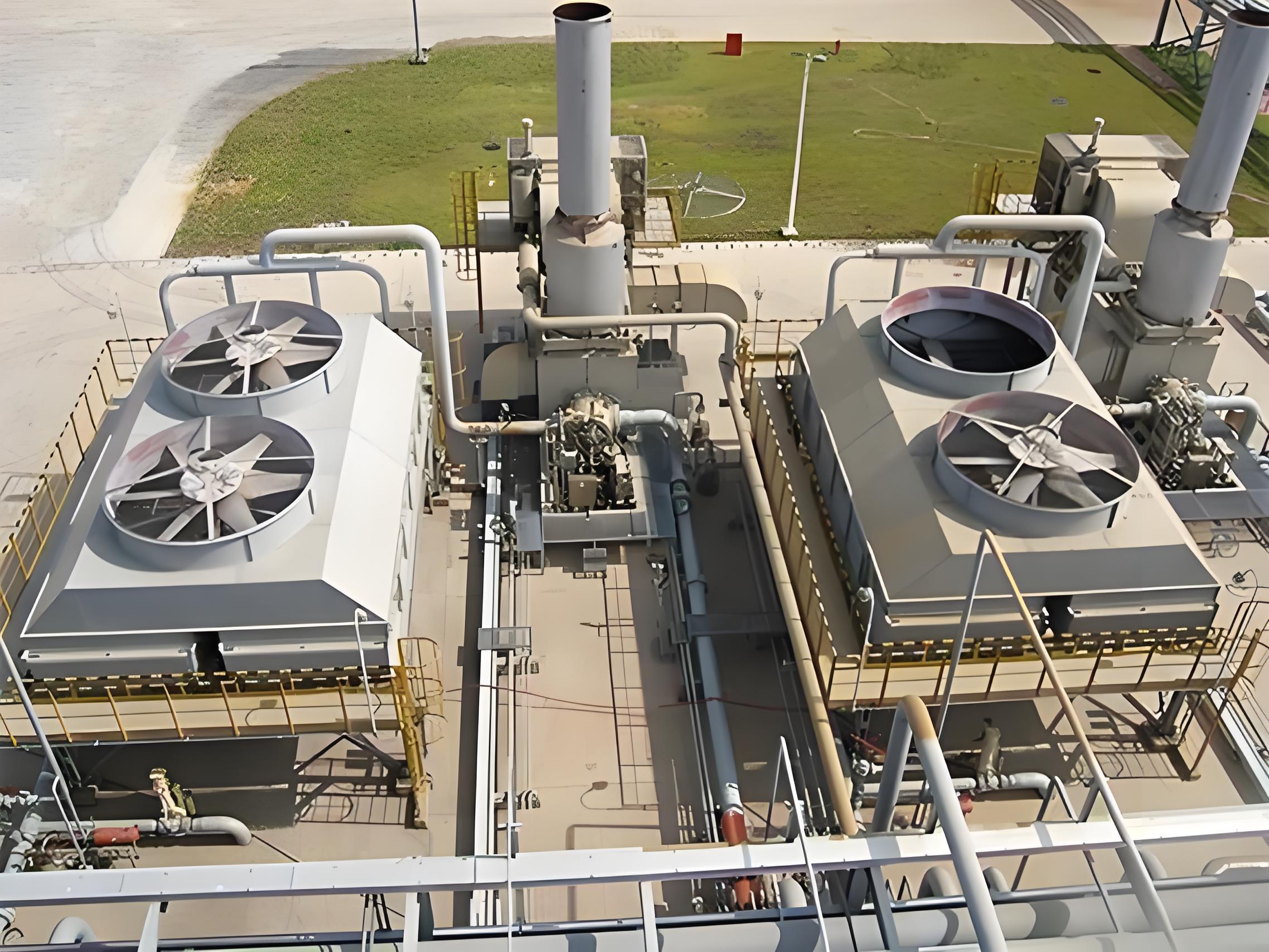
What Is a Cooling Tower Motor Fan? Types, Functions, and Applications
What Is a Cooling Tower Motor Fan?
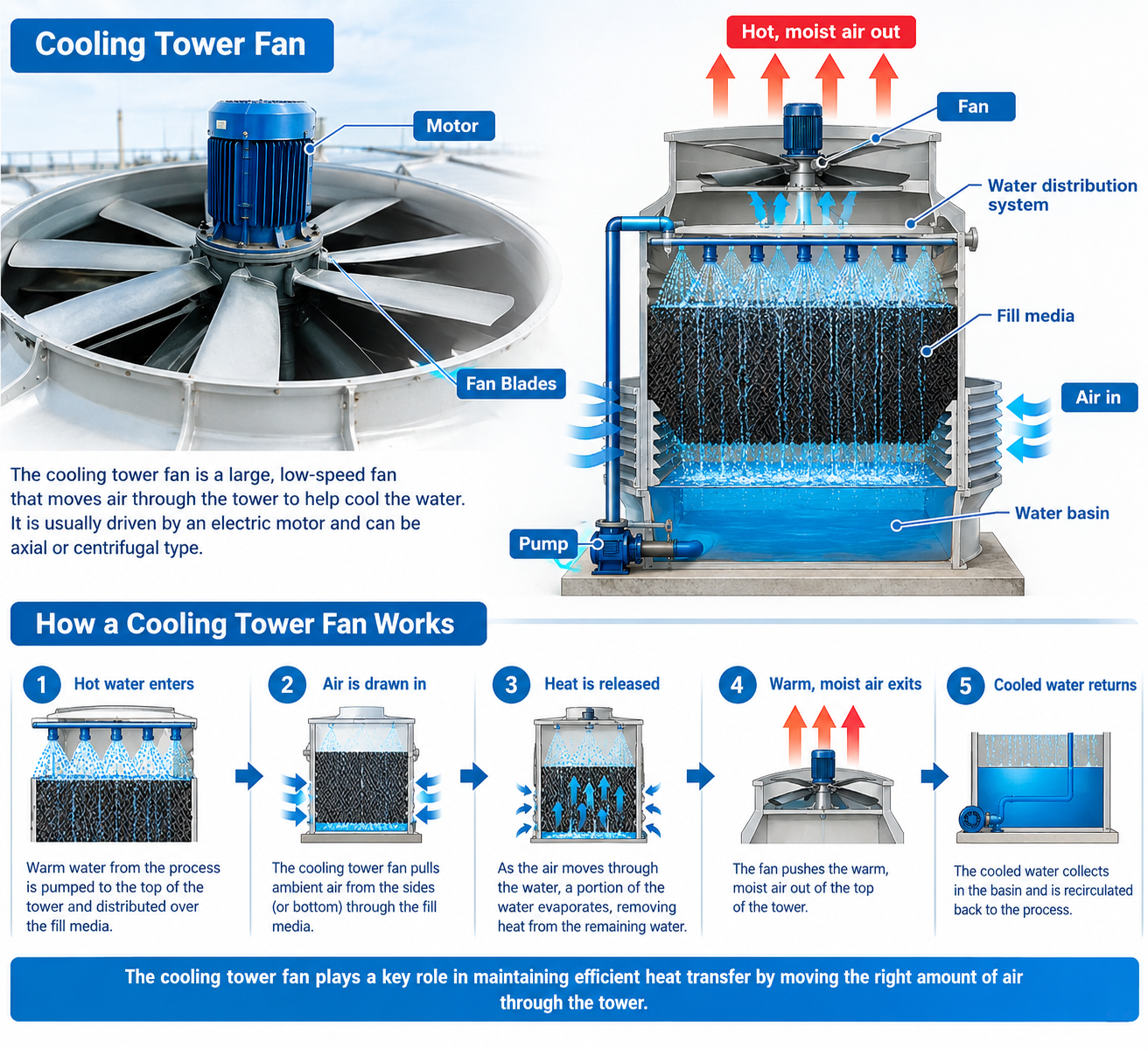
A cooling tower motor fan is a key component of a cooling tower system. It creates airflow through the tower, helping remove heat from circulating water and maintain the required operating temperature of industrial equipment.
In a typical mechanical-draft cooling tower, the fan is driven by an electric motor. As the fan moves air through the tower, a portion of the circulating water evaporates, carrying heat away from the remaining water. The cooled water returns to the system for reuse.
Cooling tower motor fans are widely used in HVAC systems, power plants, manufacturing facilities, chemical processing plants, data centers, and other industrial applications.
Choosing the right cooling tower fan and motor is essential for maintaining thermal performance, reducing energy consumption, and minimizing equipment downtime.
How Does a Cooling Tower Motor Fan Work?
A cooling tower motor fan works by generating airflow across the fill media or heat-transfer surfaces inside the tower.
The operating process generally includes the following steps:
Motor operation: The electric motor supplies the mechanical power needed to rotate the fan.
Air movement: The rotating fan draws or pushes air through the cooling tower.
Heat transfer: Air contacts the water distributed over the fill media, promoting heat transfer and evaporation.
Heat rejection: Warm, moisture-laden air leaves the tower, carrying heat away from the circulating water.
Water recirculation: The cooled water returns to the industrial process or HVAC system.
The fan, motor, gearbox or belt drive, fan shaft, and blades must work together to deliver the required airflow. Poor component selection, incorrect blade pitch, or insufficient motor power can reduce cooling performance and increase operating costs.
Main Types of Cooling Tower Fans
Cooling tower fans can be classified by their blade design, airflow direction, and drive configuration. The correct type depends on tower design, airflow requirements, operating conditions, and maintenance preferences.
1. Axial Cooling Tower Fan
Axial fans are among the most widely used fans in mechanical-draft cooling towers. They move air approximately parallel to the fan shaft.
Key advantages:
High airflow capacity for cooling tower applications
Suitable for relatively low-pressure airflow systems
Available in multiple diameters and blade configurations
Compatible with different motor and drive arrangements
Axial cooling tower fans are commonly used in induced-draft and forced-draft cooling towers. Blade materials may include FRP, aluminum alloy, or other materials selected for strength, corrosion resistance, and operating conditions.
2. Induced-Draft Cooling Tower Fan
An induced-draft cooling tower fan is installed near the air discharge section, usually at the top of the tower. It pulls air through the fill and discharges it into the atmosphere.
This configuration helps create a relatively uniform airflow pattern through the tower. It is widely used in industrial and commercial cooling towers.
Induced-draft systems are often selected when consistent air distribution and effective heat rejection are important. Fan placement and discharge design should also account for recirculation of warm, humid exhaust air.
3. Forced-Draft Cooling Tower Fan
A forced-draft cooling tower fan is generally installed near the air inlet. It pushes air into the tower rather than pulling it through from the discharge side.
Forced-draft systems can offer convenient access to drive components, depending on the design. However, the fan and drive arrangement must be selected carefully to accommodate the airflow resistance and operating conditions.
4. Counterflow and Crossflow Cooling Tower Fans
Counterflow and crossflow describe the relationship between air and water movement inside the cooling tower.
Both configurations may use mechanical fans, but their airflow paths, structural layouts, and fan arrangements differ. Replacement fans should match the original tower's design and performance requirements.

Main Components of a Cooling Tower Motor Fan System
A cooling tower fan system consists of several interconnected components.
| Component | Main Function |
| Electric motor | Supplies power to rotate the fan |
| Fan blades | Generate the airflow required for heat rejection |
| Fan hub | Connects and supports the blades |
| Fan shaft | Transfers rotational power in applicable drive systems |
| Gearbox or belt drive | Transmits power and provides the required fan speed |
| Fan cylinder or stack | Guides airflow and supports effective discharge |
| Bearings and couplings | Support rotation and transmit mechanical power where applicable |
Not every cooling tower uses the same configuration. Direct-drive systems may eliminate certain transmission components, while geared systems use a gearbox to reduce motor speed to the required fan speed.
When replacing components, buyers should verify dimensional compatibility, rotation direction, operating speed, power requirements, and the original equipment manufacturer's specifications.
How to Choose the Right Cooling Tower Motor Fan
Selecting a suitable cooling tower motor fan requires more than matching the fan diameter. The complete system must meet the tower's airflow and operating requirements.
1. Check Airflow and Cooling Capacity
Determine the required airflow and cooling duty. A fan that delivers insufficient airflow may reduce cooling capacity, while an incorrectly selected fan can increase energy consumption or create operating problems.
2. Confirm Motor Power and Speed
Check motor power, voltage, frequency, rated speed, enclosure, insulation class, and environmental protection requirements. The motor must be compatible with the fan and drive system.
3. Select the Appropriate Blade Material
Common blade materials include:
FRP: Lightweight and corrosion-resistant, with suitable strength for many industrial applications.
Aluminum alloy: Offers a favorable strength-to-weight ratio and is widely used in industrial fan assemblies.
Other engineered materials: May be suitable for specialized environments, depending on temperature, chemical exposure, and mechanical requirements.
Material selection should reflect the actual operating environment rather than price alone.
4. Evaluate Drive Configuration
Cooling tower fans may use direct-drive, belt-drive, or gearbox-driven arrangements. Consider maintenance access, required fan speed, transmission efficiency, and the availability of replacement parts.
5. Verify Compatibility Before Ordering
For a replacement cooling tower fan or motor, provide the supplier with the existing equipment model, fan diameter, blade quantity, motor power, operating speed, mounting dimensions, and photographs of the assembly.
For aftermarket or OEM-compatible replacement projects, confirm that the proposed components meet the required mechanical and performance specifications.
Common Cooling Tower Motor Fan Problems
Cooling tower fans operate in demanding environments and require regular inspection.
Excessive vibration: Possible causes include blade imbalance, loose fasteners, worn bearings, shaft misalignment, or structural problems.
Reduced airflow: Incorrect blade pitch, damaged blades, obstructions, or an unsuitable fan operating speed may reduce airflow.
Motor overheating: Overloading, inadequate ventilation, electrical faults, bearing problems, or unsuitable operating conditions may cause excessive temperature.
Unusual noise: Loose components, worn bearings, damaged blades, or gearbox problems should be investigated.
High energy consumption: Incorrect fan selection, excessive airflow resistance, poor mechanical condition, or inefficient operation may increase power use.
Always isolate electrical power and follow site safety procedures before inspection or maintenance. Repairs should be performed by qualified personnel.
Cooling Tower Motor Fan Maintenance Tips
Preventive maintenance helps extend service life and maintain reliable cooling performance.
Inspect fan blades, hubs, fasteners, and supports for damage or looseness.
Check vibration, noise, and operating temperature regularly.
Inspect motor bearings and lubrication according to manufacturer recommendations.
Check gearbox oil levels or belt tension where applicable.
Clean air inlets, fan stacks, and other airflow obstructions.
Verify blade pitch and fan rotation when troubleshooting performance issues.
Record motor current, vibration, and other operating data to identify changes over time.
Before adjusting blade pitch or changing motor speed, verify the fan manufacturer's limits and the tower's design requirements.
Where Are Cooling Tower Motor Fans Used?
Cooling tower motor fans are used wherever industrial or commercial processes require reliable heat rejection.
Common applications include:
HVAC and commercial building cooling systems
Power generation and electrical utilities
Petrochemical and chemical processing plants
Steel, cement, and manufacturing facilities
Data centers and industrial refrigeration
Pharmaceutical and food processing plants
Each application has different requirements for airflow, temperature, corrosion resistance, noise, and maintenance access.
Cooling Tower Motor Fan Replacement and Supply
When an existing cooling tower fan or motor reaches the end of its service life, replacing the complete assembly is not always necessary. Depending on the condition and compatibility of the equipment, buyers may replace individual blades, hubs, motors, shafts, gearboxes, or other drive components.
CoolingTowerPart.com can be positioned as a sourcing option for industrial buyers seeking cooling tower fans, motors, fan blades, and compatible replacement components.
Before requesting a quotation, prepare the equipment model, required quantity, dimensions, motor specifications, operating conditions, and delivery destination. These details help suppliers evaluate compatibility and recommend an appropriate replacement solution.
For industrial distributors, contractors, and maintenance teams, comparing technical specifications, material quality, delivery lead time, and after-sales support is important when selecting a cooling tower fan supplier.
Frequently Asked Questions
What is the main function of a cooling tower motor fan?
Its primary function is to move air through the cooling tower, supporting heat transfer and evaporation so that circulating water can be cooled.
What type of fan is commonly used in cooling towers?
Axial fans are widely used because they can move large volumes of air at relatively low pressure. The exact fan design depends on the tower configuration and operating requirements.
What is the difference between induced-draft and forced-draft cooling tower fans?
An induced-draft fan pulls air through the tower and is usually installed near the discharge. A forced-draft fan pushes air into the tower and is generally installed near the air inlet.
Can I replace only the cooling tower fan motor?
Yes, if the existing fan, drive system, and mounting arrangement remain suitable. Verify motor power, speed, voltage, frequency, mounting dimensions, and compatibility with the existing equipment before ordering.
How long does a cooling tower fan last?
Service life varies with material, operating conditions, maintenance quality, and environmental exposure. Regular inspections and prompt correction of vibration or mechanical problems can help extend service life.
Conclusion
A properly selected cooling tower motor fan is essential for efficient heat rejection, reliable operation, and manageable energy costs. Understanding fan types, motor specifications, drive configurations, and maintenance requirements helps facility managers and industrial buyers make better replacement decisions.
Whether you need a complete fan assembly or individual replacement components, confirm the equipment specifications and operating requirements before purchasing. The right cooling tower fan solution can help maintain cooling performance and reduce avoidable downtime.
Recommended internal links


