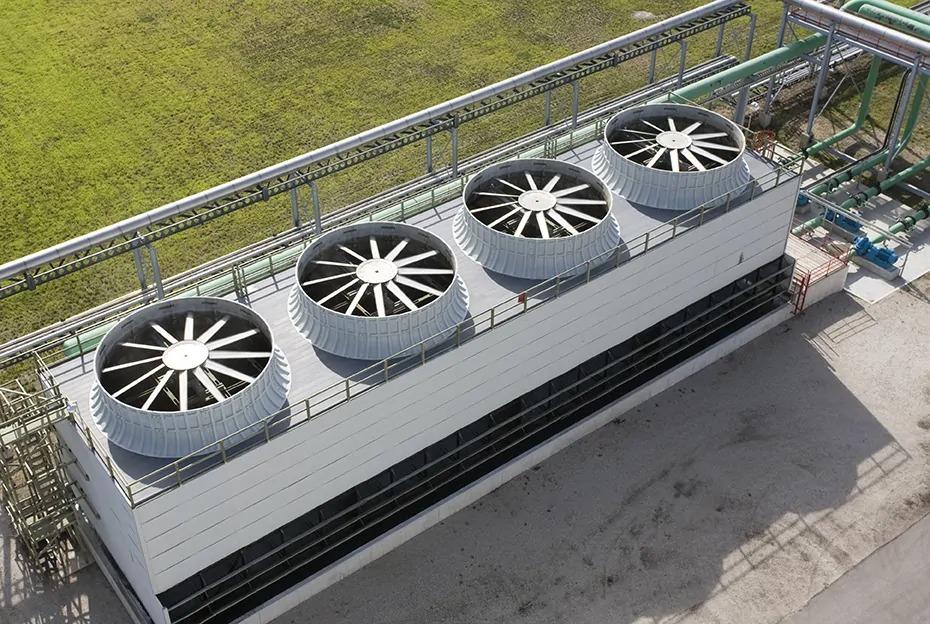
Choosing the right cooling tower fan manufacturer is an important decision for industrial facilities, commercial buildings, power plants, and HVAC systems. A reliable fan helps maintain proper airflow, supports efficient heat rejection, and reduces unnecessary energy consumption. On the other hand, an unsuitable fan can cause excessive vibration, poor cooling performance, higher operating costs, and frequent maintenance problems.
With so many cooling tower fan manufacturers and suppliers on the market, how do you know which company is right for your project? Should you choose an original equipment manufacturer, a specialist fan supplier, or a company that provides customized replacement components?
In this guide, we introduce seven cooling tower fan manufacturers and suppliers worth considering, including Power Tower Cooling Technology (Shaoxing) Co., Ltd. We also explain how to compare products, evaluate OEM and ODM services, and select a fan that meets your cooling tower's technical requirements.
This list is a practical buyer's guide rather than a definitive global ranking. Each company has a different product portfolio, market focus, and service model, so buyers should verify current product availability and technical suitability before placing an order.
1. Why Cooling Tower Fan Selection Matters
A cooling tower removes heat from circulating water by transferring heat to the surrounding air. In a mechanical-draft cooling tower, the fan moves air through the tower, supporting heat and mass transfer between the air and water.
Although a cooling tower fan may appear to be a relatively simple component, its performance affects the entire cooling system.
An undersized or poorly matched fan may fail to provide sufficient airflow. A fan with an unsuitable blade design or pitch may place excessive demand on the motor. Poor balance, incorrect installation, or unsuitable materials can also contribute to vibration, noise, and premature component failure.
A properly selected fan helps the cooling tower operate closer to its intended performance. It can also support more predictable maintenance planning and reduce avoidable operating problems.
For this reason, buyers should consider more than the purchase price. Fan design, material quality, operating conditions, compatibility, documentation, and after-sales support all deserve attention.
2. What Does a Cooling Tower Fan Manufacturer Do?
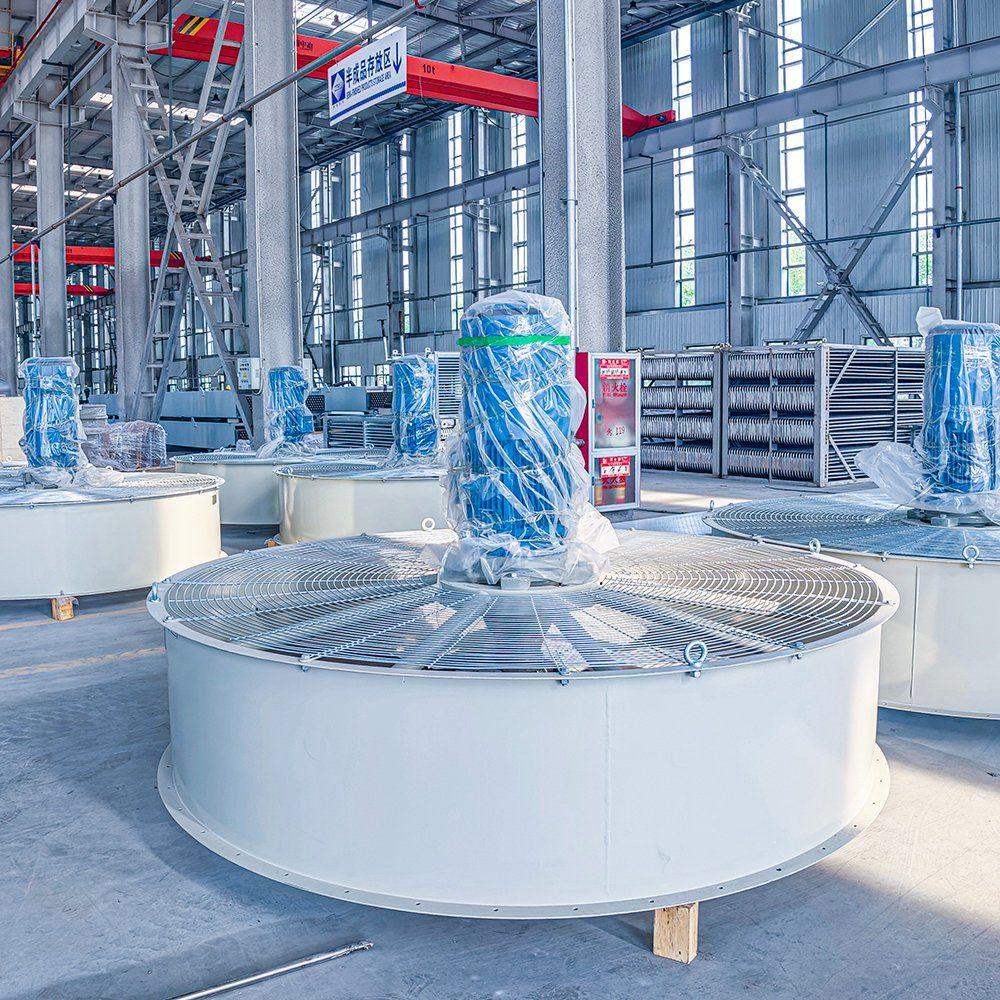
Cooling tower fan manufacturers design, produce, or supply components used to move air through cooling equipment. Depending on the company's business model, its products may include complete axial-flow fans, individual fan blades, hubs, fan assemblies, and related replacement parts.
Some companies manufacture complete cooling towers and supply fans as part of their original equipment. Others specialize in fan technology or provide components for maintenance and replacement projects.
Understanding this distinction helps buyers identify suppliers that match their actual requirements.
Fan Design and Engineering
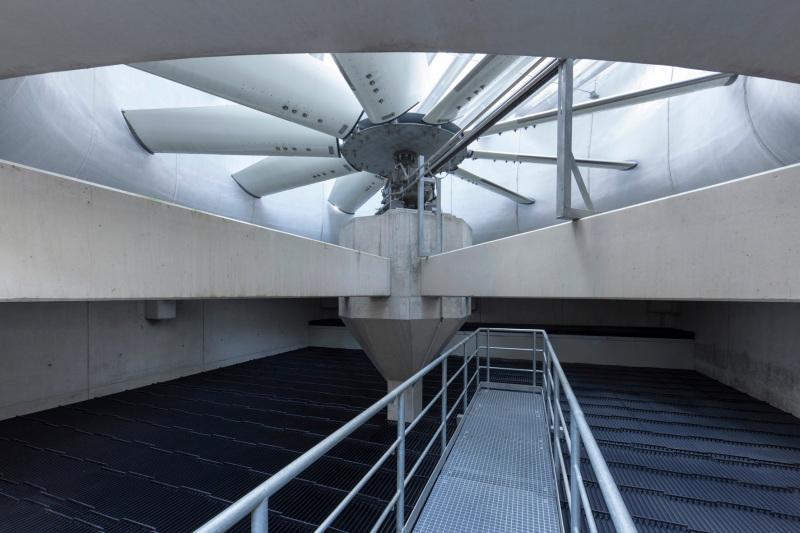
Fan design involves several interconnected factors, including diameter, blade geometry, blade pitch, rotational speed, airflow requirements, and static pressure.
Engineers must consider how the fan interacts with the cooling tower structure, fan cylinder, motor, and drive system. A fan that performs well in one installation may not deliver the same results in another because operating conditions and system resistance can differ.
Manufacturing, Testing, and Replacement Support
A professional supplier should be able to explain its manufacturing process, available materials, product specifications, quality-control procedures, and installation requirements.
For replacement projects, technical support is especially important. The supplier needs sufficient information to determine whether the proposed fan is compatible with the existing equipment.
Buyers should request dimensional drawings, relevant performance data, and installation information whenever available. They should also confirm whether the quotation covers a complete fan assembly or only selected components.
3. Top 7 Cooling Tower Fan Manufacturers in the World
The following companies are worth investigating when sourcing cooling tower fans, complete cooling systems, or replacement components. Their capabilities differ, and not every company offers every type of fan or replacement service in every market.
1. Power Tower Cooling Technology (Shaoxing) Co., Ltd.
Website: https://www.coolingtowerpart.com/
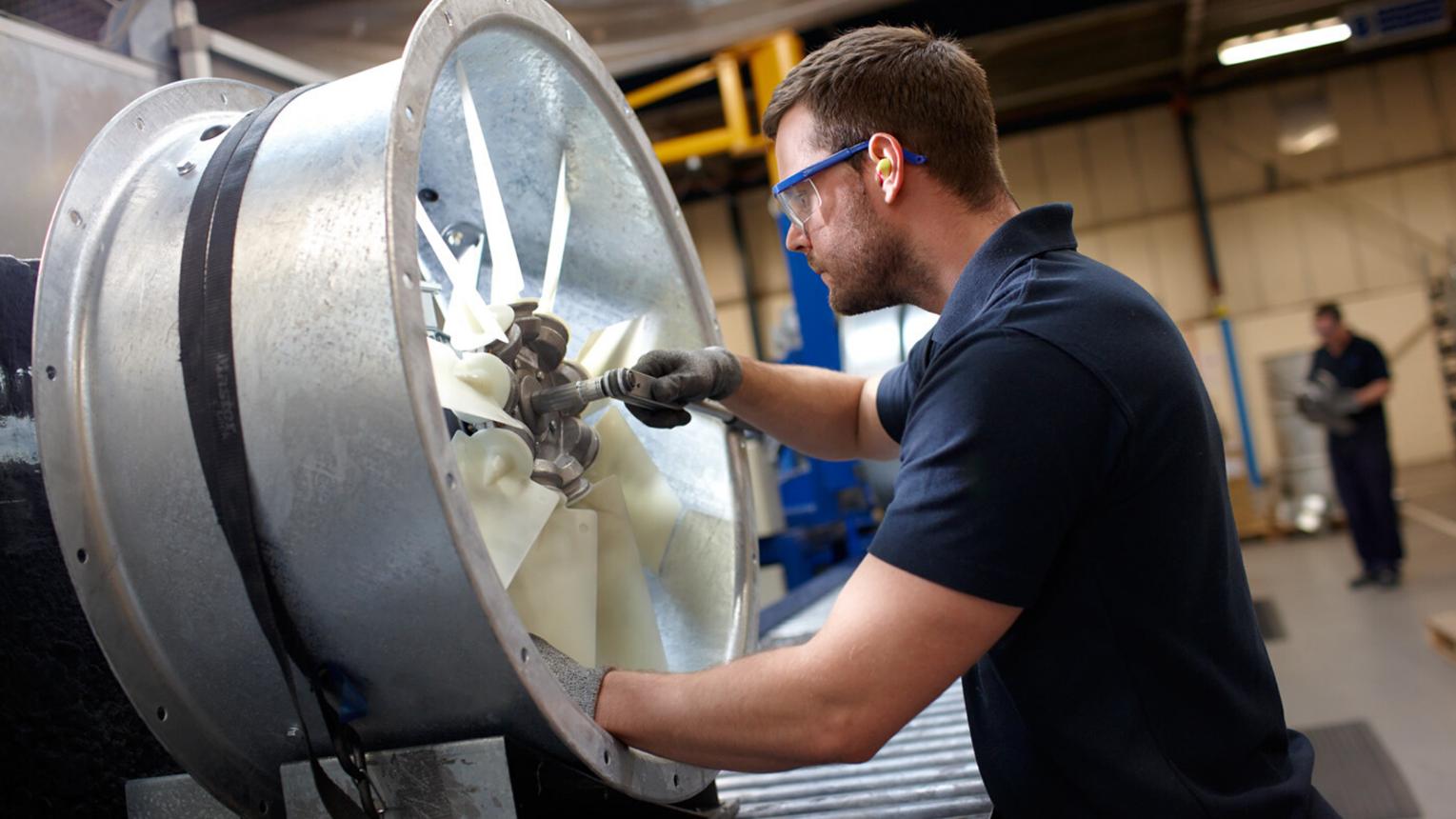
Power Tower Cooling Technology (Shaoxing) Co., Ltd. supplies cooling tower components and offers a range of products for cooling tower maintenance and replacement applications.
For buyers looking for cooling tower fans or related parts, Power Tower is a supplier worth contacting to discuss product specifications, equipment compatibility, and sourcing requirements.
The company's website includes a dedicated cooling tower fan category, along with product pages covering different fan configurations. Examples include aluminum-alloy cooling tower fans and direct-drive axial-flow fans.
These options may be relevant to buyers who need to investigate replacement fan assemblies or components for industrial cooling equipment. The exact suitability of a product depends on the existing tower design, operating conditions, and technical specifications.
Products and Buyer Considerations
When contacting Power Tower, prepare as much information as possible about your cooling tower and current fan assembly. Useful details include:
Cooling tower manufacturer, model, and serial number
Existing fan diameter and number of blades
Blade material and profile
Hub dimensions and mounting arrangement
Fan rotational speed and direction of rotation
Motor or drive configuration
Operating conditions and required quantity
Photographs and technical drawings can make it easier to identify the correct product.
If you are replacing damaged blades rather than the complete fan, provide the blade mounting dimensions and hub information as well. Similar-looking blades are not necessarily interchangeable.
For customized requirements, ask the company to confirm the available scope of customization, drawing approval process, production lead time, minimum order quantity, and quality documentation. If OEM or ODM services are required, confirm the exact arrangement directly with the supplier before making purchasing decisions.
Visit the Power Tower cooling tower fan product page to review the available product range.
2. SPX Cooling Technologies (Marley)
SPX Cooling Technologies is an established manufacturer of cooling tower equipment and related components. Its Marley brand is widely associated with industrial and commercial cooling tower systems.
The company's portfolio includes cooling tower fans and aftermarket components for relevant equipment models. Its fan range includes products such as the Marley H3, X7, HP7000, HP7i, and Ultra Quiet fans.
For facilities already operating Marley cooling towers, SPX is a logical starting point when identifying original-equipment replacement fans or investigating manufacturer-supported solutions.
The main advantage of working with the original equipment supplier is the possibility of obtaining model-specific technical information and guidance on the intended fan configuration.
Before ordering, buyers should confirm the exact tower model, fan model, component availability, and regional service arrangements. Availability and compatibility can vary depending on the equipment and location.
3. Baltimore Aircoil Company (BAC)
Baltimore Aircoil Company, commonly known as BAC, manufactures evaporative cooling and heat-rejection equipment for industrial and commercial applications.
Its product portfolio includes cooling towers and other systems designed for heat transfer. Fans form part of the operating system in relevant mechanical-draft equipment.
For BAC tower owners, the first step is to identify the precise equipment model and determine which fan assembly or replacement components are specified for that installation.
This is important because a fan is not always an independent, interchangeable component. Its design may be closely matched to the tower's airflow path, drive system, and operating requirements.
When evaluating BAC or an alternative supplier, ask for confirmation of the correct fan configuration, required operating conditions, and any restrictions associated with using third-party replacement parts.
4. EVAPCO
EVAPCO manufactures heat-transfer products and evaporative cooling equipment used in commercial HVAC, industrial refrigeration, and process cooling applications.
For buyers operating EVAPCO equipment, the company and its authorized distribution network are useful starting points for identifying the correct original-equipment fan assembly and related components.
The appropriate solution depends on the tower model, equipment configuration, and maintenance requirements. Buyers should provide model and serial information whenever possible rather than relying on visual comparisons alone.
If you are considering a replacement fan from another manufacturer, compare the proposed product against the original technical requirements. Pay particular attention to dimensions, airflow, rotational speed, motor load, and mounting compatibility.
A third-party fan should not be considered a direct replacement until its suitability has been established.
5. Paharpur Cooling Towers
Paharpur Cooling Towers is an established cooling tower company serving industrial and commercial markets.
Its relevance to a purchasing project depends on whether you need a complete cooling tower system, equipment-related support, or components for an existing installation.
When contacting the company about a fan requirement, clearly explain the scope of your project. A new tower installation may require a different procurement process from a maintenance project involving a damaged fan or discontinued replacement part.
For replacement work, provide the tower model, fan dimensions, operating conditions, and available drawings. Ask the supplier to confirm the proposed configuration and identify any additional information required before issuing a quotation.
This approach helps ensure that the quotation matches your actual needs and reduces the risk of ordering components that do not fit the existing equipment.
6. Delta Cooling Towers
Delta Cooling Towers supplies cooling tower equipment for commercial and industrial applications.
For buyers considering Delta equipment or replacement parts, the correct starting point is to identify the tower model and determine the specified fan configuration.
When comparing an alternative fan, do not focus on diameter alone. The blade design, mounting arrangement, operating speed, rotation direction, airflow characteristics, and power requirements must also be considered.
A fan that physically fits into the tower may still perform poorly if its aerodynamic characteristics differ significantly from the original design.
Buyers should also review installation instructions, inspection requirements, warranty terms, and the availability of replacement components. These details help determine the long-term value of the purchase rather than simply the initial price.
7. Howden
Howden is known for industrial air and gas handling equipment, including engineered fan technologies used in demanding industrial environments.
Its products may be relevant when a project requires specialist industrial air-moving equipment or an engineered fan solution. However, buyers should not assume that every industrial fan is suitable for direct installation in a cooling tower.
Cooling tower fans operate within a particular aerodynamic and mechanical environment. A suitable solution must meet the required airflow, pressure, rotational speed, mounting, and operating conditions.
When investigating Howden or another industrial fan supplier, clearly define the intended application and request technical confirmation that the proposed equipment is appropriate for it.
4. How to Compare Cooling Tower Fan Manufacturers
A manufacturer's reputation is important, but it should not be the only factor in your decision.
The most useful comparison begins with a consistent technical specification. Ask each shortlisted supplier to quote against the same requirements so that you can compare product scope, performance, lead time, and support fairly.
Fan Material and Construction
Cooling tower fans may use materials such as aluminum alloys, fiberglass-reinforced plastics, and other engineered materials.
Each material has its own characteristics. Weight, stiffness, corrosion resistance, impact tolerance, temperature limits, and maintenance requirements can vary significantly.
The best option depends on the cooling tower's operating environment. Humidity, water chemistry, chemical exposure, temperature, and outdoor conditions may all affect material selection.
Ask the supplier to identify the material used in the proposed fan and explain its suitability for your installation. If corrosion resistance or a specific operating temperature is critical, include that requirement in the quotation request.
Airflow, Diameter, and Operating Speed
Fan diameter is an important specification, but it does not determine performance on its own.
Blade geometry, pitch, rotational speed, fan-cylinder dimensions, and system resistance all influence airflow. The fan must also operate within the allowable limits of its motor, drive system, and mechanical assembly.
Ask suppliers for the relevant performance data and confirm that the proposed fan meets the required operating point.
For replacement projects, verify the rotation direction, hub arrangement, clearances, and mounting dimensions. These details can be just as important as the fan's nominal diameter.
Energy Efficiency and Noise
Cooling tower fans can contribute significantly to electricity consumption, especially in facilities where cooling equipment operates for long periods.
When comparing products, look for performance data that reflects your actual operating conditions. General claims about energy savings are not enough to establish that one fan will be more efficient than another in your installation.
Noise may also be an important consideration, particularly for cooling towers near offices, residential buildings, hospitals, or other sound-sensitive areas.
If noise limits apply to your project, request relevant sound data and clarify the conditions under which the measurements were taken.
Compatibility and Customization
Compatibility is essential when replacing an existing fan.
Check the hub connection, blade mounting, shaft or drive arrangement, rotational direction, fan-cylinder dimensions, and required clearances. Also verify the operating speed and power requirements.
If the replacement requires a customized design, agree on the technical drawings and specifications before production begins.
Ask who is responsible for checking compatibility and what inspection documents will be provided. Clear responsibilities reduce misunderstandings and help prevent avoidable installation problems.
5. OEM vs. ODM Cooling Tower Fan Services
OEM and ODM services are common in industrial sourcing, but the exact meaning and scope can differ between suppliers.
OEM, or Original Equipment Manufacturing, generally refers to manufacturing products or components according to a customer's design, technical specifications, or branding requirements.
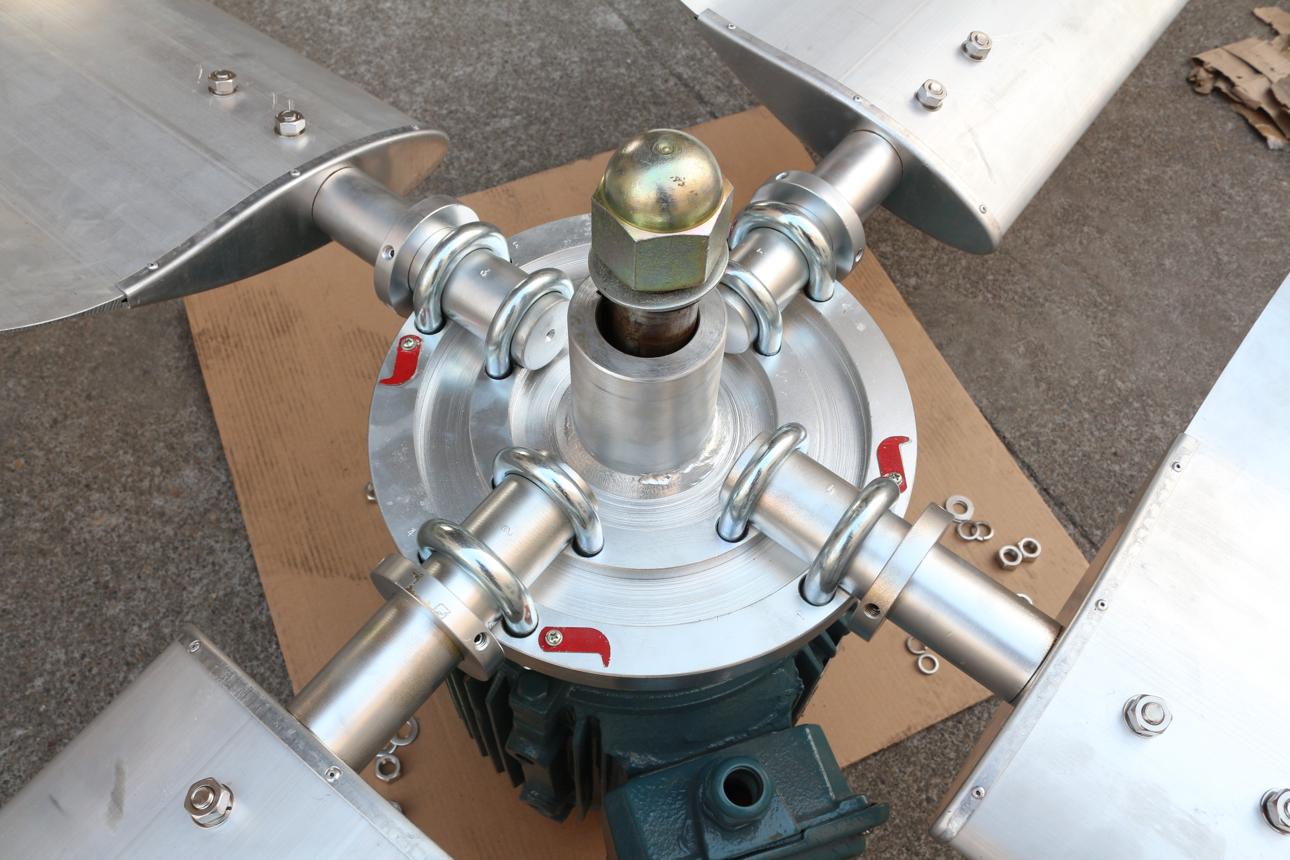
ODM, or Original Design Manufacturing, generally involves a supplier providing an existing design or developing a design that is customized for the customer.
For cooling tower fans, customization may involve dimensions, blade materials, hub configuration, mounting details, branding, packaging, or other product requirements. Not every supplier provides all these options, so buyers should confirm the available scope directly.
Before placing an OEM or ODM order, clarify several important points:
Who owns the product design and technical drawings?
Are tooling or development fees required?
What minimum order quantity applies?
Will the supplier provide samples or prototype testing?
Who approves the final technical drawings?
What quality-control and inspection documents are available?
What are the production lead time and delivery terms?
What warranty and after-sales arrangements apply?
These questions are especially important for distributors, cooling tower service companies, and industrial buyers sourcing components for multiple projects.
A clear agreement helps both parties understand the technical requirements, production responsibilities, and expected deliverables.
6. How to Choose the Right Replacement Cooling Tower Fan
Replacing an existing fan requires a systematic approach. Start by identifying the reason for replacement.
Is the current fan cracked, corroded, unbalanced, noisy, or no longer available? Are you trying to restore the tower's original performance, or are you investigating an efficiency improvement?
The answer helps determine whether you need an equivalent replacement or a new engineered solution.
Step 1: Identify the Existing Equipment
Record the cooling tower manufacturer, model, serial number, and installation details. Photograph the fan, hub, blade mounting points, and surrounding structure.
If the original drawings or maintenance records are available, include them in your inquiry.
Step 2: Collect Fan Specifications
Record the fan diameter, blade count, material, hub dimensions, mounting arrangement, rotational speed, and direction of rotation.
Also identify the motor and drive configuration. A direct-drive fan and a gearbox-driven fan may have different requirements.
If any information is unknown, tell the supplier rather than guessing.
Step 3: Define the Operating Requirements
Explain the cooling tower's operating conditions, including any known airflow requirements, operating temperatures, water conditions, and relevant environmental factors.
If the fan is being replaced because of poor cooling performance, investigate the cause before assuming that a new fan alone will solve the problem. Water distribution, fill condition, airflow obstruction, motor performance, and other factors can also affect tower operation.
Step 4: Request Comparable Quotations
Send the same technical information to each supplier. Ask them to identify exactly what is included in the quotation.
One quotation may cover a complete fan assembly, while another may cover only the blades. Comparing prices without checking the scope can lead to misleading conclusions.
Step 5: Confirm Technical Suitability Before Installation
Review the proposed fan's dimensions, performance data, operating limits, and installation requirements.
If the replacement differs from the original design, obtain qualified engineering approval where appropriate. Installation should follow the manufacturer's instructions and the site's safety procedures.
7. Common Buying Mistakes to Avoid
Several mistakes can make a cooling tower fan purchase more expensive than expected.
Choosing by diameter alone: Two fans with the same diameter may have different airflow characteristics, power requirements, and mounting arrangements.
Comparing different quotation scopes: A complete assembly and a set of replacement blades are not equivalent products.
Ignoring operating conditions: Materials and fan designs must be suitable for the actual environment.
Accepting unverified efficiency claims: Request comparable technical data rather than relying solely on marketing statements.
Overlooking installation requirements: Hub compatibility, clearances, rotation direction, and operating speed all matter.
Ignoring long-term support: Spare-part availability, documentation, warranty terms, and technical assistance can influence the total cost of ownership.
A low initial price may look attractive, but a poorly matched fan can lead to installation delays, additional engineering work, and operational problems.
8. Questions to Ask Before Placing an Order
Before selecting a cooling tower fan supplier, ask the following questions:
What exact fan model and configuration are being quoted?
Does the price include the hub, blades, fasteners, and other required components?
What materials and manufacturing methods are used?
Can the supplier provide drawings and relevant performance data?
Is the fan compatible with the existing motor or drive system?
What inspection or quality-control documents are available?
What are the production lead time and shipping arrangements?
What warranty terms apply?
Are replacement blades or other spare parts available?
What technical support is provided if installation or compatibility issues arise?
A supplier that answers these questions clearly makes it easier to evaluate technical risk and total purchasing cost.
9. Frequently Asked Questions
Which Cooling Tower Fan Manufacturer Is Best?
There is no single best manufacturer for every application. The right choice depends on the cooling tower model, fan specifications, operating conditions, budget, availability, and support requirements.
For an existing branded cooling tower, start by checking the original manufacturer's recommendations. For replacement sourcing, compare qualified suppliers such as Power Tower against a clear technical specification.
Can I Replace a Cooling Tower Fan With a Different Brand?
Yes, a different brand may be suitable in some applications, but compatibility must be established before installation.
Check the fan dimensions, hub and mounting arrangement, blade geometry, rotation direction, operating speed, airflow requirements, motor load, and safety limits. A fan that fits physically may not perform correctly under the tower's operating conditions.
What Information Is Needed for a Cooling Tower Fan Quotation?
Provide the tower manufacturer and model, fan diameter, blade count, material, hub details, operating speed, drive configuration, operating conditions, required quantity, and delivery location.
Photographs and technical drawings are especially helpful. If some information is unavailable, identify the missing details and ask the supplier what additional measurements are required.
Are Aluminum-Alloy Cooling Tower Fans a Good Choice?
Aluminum-alloy fans may be suitable for certain cooling tower applications, but suitability depends on the design, alloy, operating environment, mechanical requirements, and maintenance conditions.
Compare the manufacturer's technical specifications with your actual application rather than selecting a material based on general claims.
How Can I Reduce Cooling Tower Fan Operating Costs?
Start by checking whether the fan is correctly matched to the tower's operating requirements. Regularly inspect blade condition, balance, mounting hardware, drive components, and motor performance according to the maintenance plan.
Also investigate other causes of poor cooling performance, including airflow obstructions, water distribution problems, and dirty or damaged fill. A fan replacement should be based on a defined technical need rather than an assumption that a new component will automatically reduce energy consumption.
10. Conclusion: Choose a Cooling Tower Fan Supplier That Fits Your Project
Choosing a cooling tower fan manufacturer is about more than comparing brands and prices. You need a product that meets your airflow requirements, fits the cooling tower and drive system, operates safely, and can be supported throughout its service life.
SPX Cooling Technologies (Marley), Baltimore Aircoil Company, EVAPCO, Paharpur Cooling Towers, Delta Cooling Towers, and Howden serve different parts of the cooling and industrial air-moving markets. Their relevance depends on the equipment and project requirements.
Power Tower Cooling Technology (Shaoxing) Co., Ltd. is another supplier worth contacting when sourcing cooling tower fans and related components. Buyers can review its products at https://www.coolingtowerpart.com/ and explore the cooling tower fan product category.
Before placing an order, prepare the equipment details, request comparable quotations, and verify the proposed fan's technical suitability. By focusing on performance, compatibility, material selection, documentation, and long-term support, you can make a more informed purchasing decision and reduce avoidable maintenance risks.
The right fan is not simply the one with the lowest price or the most familiar brand name. It is the one that meets your cooling tower's actual requirements and delivers dependable performance in your operating environment.


