Introduction: Why Cooling Tower Fan Selection Matters
A cooling tower fan may look like a simple mechanical component, but it plays a major role in the performance of an industrial cooling system. It moves air through the tower, supports heat transfer, and helps maintain the required cooling water temperature. If the fan is poorly selected, even a well-designed cooling tower may consume too much electricity, produce excessive noise, or struggle to meet its cooling duty.
That is why choosing a reliable cooling tower fan manufacturer or supplier matters. Whether you operate a power plant, chemical factory, steel mill, HVAC system, or commercial building, the right fan can improve operating efficiency and reduce unexpected maintenance costs.
However, the market includes different types of suppliers. Some companies manufacture complete cooling towers with proprietary fan systems. Others specialize in industrial axial fans, fan blades, and replacement components. Some suppliers focus on aftermarket parts for existing cooling tower brands.
In this guide, we introduce five companies worth considering when sourcing cooling tower fans and related equipment: SPX Cooling Technologies (Marley), Baltimore Aircoil Company (BAC), EVAPCO, COFIMCO, and Power Tower Cooling Technology (Shaoxing) Co.,Ltd.
This is an editorial buyer's guide, not an official industry ranking. The companies are included because of their relevant product offerings and positions in the cooling and fan equipment market.
What Is a Cooling Tower Fan?
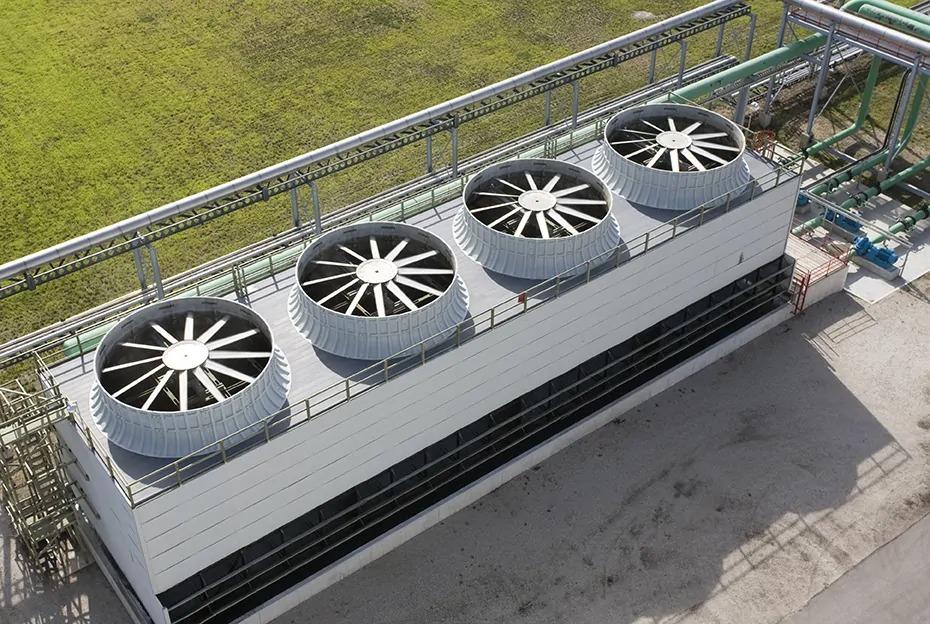
A cooling tower fan is a mechanical device that creates airflow through a cooling tower. As warm process water enters the tower, it comes into contact with moving air. A small portion of the water evaporates, carrying heat away from the remaining water.
The fan helps maintain the airflow needed for this heat-rejection process. Without sufficient airflow, the cooling tower may not achieve its designed thermal performance.
A cooling tower fan normally works with several other components:
Fan blades: Move air through the tower.
Fan hub: Connects and supports the blades.
Fan cylinder or fan stack: Guides airflow and helps reduce air recirculation.
Motor: Supplies mechanical power.
Gearbox or belt drive: Transfers power to the fan where required.
Control system: Regulates fan operation, often through variable-speed control.
The fan is only one part of the air-delivery system. Its performance depends on the tower structure, fill media, water distribution, air resistance, and operating conditions.
Axial Fans
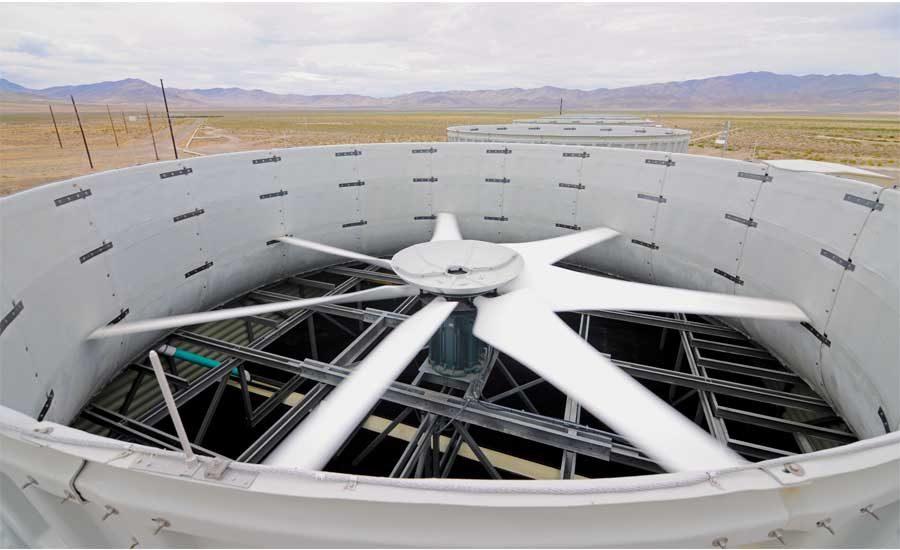
Axial fans move air mainly parallel to the fan shaft. They are widely used in induced-draft cooling towers because they can move large volumes of air at relatively low to moderate static pressure.
Their main advantages include:
High airflow capacity
Relatively compact installation
Good suitability for large cooling tower cells
Adjustable blade pitch on selected designs
Compatibility with different motor and drive arrangements
Axial fans are common in industrial cooling towers, power generation facilities, and large HVAC installations.
Centrifugal Fans
Centrifugal fans draw air into the fan wheel and discharge it in a direction that is generally perpendicular to the inlet flow. They can generate higher static pressure than many axial fan arrangements.
They are often used in forced-draft cooling towers, especially where ductwork, indoor installation, or external airflow resistance is involved.
Their advantages may include:
Strong static-pressure capability
Suitability for ducted installations
Flexible equipment layout
Options for noise-sensitive applications
Neither fan type is automatically better. The correct choice depends on airflow, static pressure, installation space, noise requirements, and the cooling tower design.
How We Selected These Five Suppliers
There is no single official worldwide ranking that establishes the five best cooling tower fan manufacturers. A company that is suitable for a large power station may not be the most economical option for a small industrial cooling tower replacement.
For this reason, we considered several practical factors:
Relevant product range: Does the company offer cooling tower fans, fan systems, or compatible replacement components?
Technical experience: Does it have a clear presence in industrial cooling or air movement?
Application coverage: Can its products serve commercial HVAC, industrial process cooling, or other demanding applications?
Replacement support: Does it provide spare parts, technical information, or aftermarket solutions?
Procurement suitability: Can buyers identify the right contact channel and request technical support?
The following companies serve different parts of the market. Compare their actual product specifications rather than assuming that every supplier offers an identical solution.
Top 5 Cooling Tower Fan Manufacturers and Suppliers Worldwide
1. SPX Cooling Technologies – Marley
Headquarters: United States
SPX Cooling Technologies is a well-known manufacturer of cooling towers and evaporative cooling equipment. Its Marley brand has a long history in industrial and commercial cooling applications.
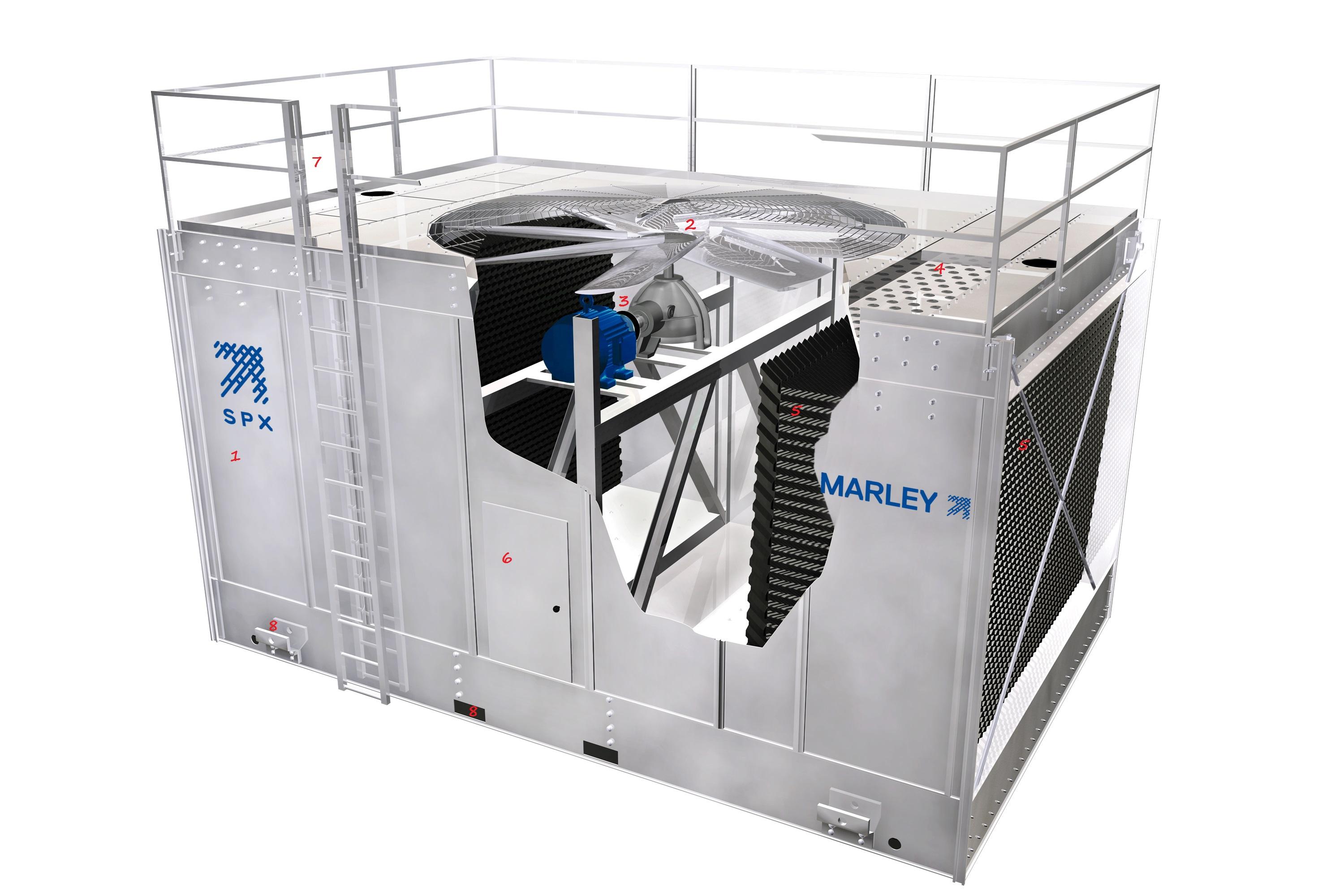
One reason Marley deserves a place in this guide is its dedicated cooling tower fan range. The company offers several fan designs, including the H3, X7, HP7000, HP7i, and Ultra Quiet fan models.
These products are designed for cooling tower applications where airflow, sound levels, and operating efficiency all matter.
Main Strengths and Applications
Marley fans are designed to work with compatible cooling tower systems. Selected models feature aerodynamic blade profiles and adjustable blade pitch, helping operators match fan performance to system requirements.
Potential advantages include:
Cooling tower-specific fan engineering
Multiple fan product options
Solutions for different airflow and noise requirements
Related fan cylinders and drive components
Established cooling tower aftermarket support
For buyers replacing an original Marley fan, the first step should be to identify the cooling tower model, fan diameter, blade configuration, hub arrangement, and drive specifications.
A fan that looks similar may not deliver the same airflow or fit the original installation.
Best suited for: Buyers seeking established cooling tower brands, original Marley components, and fan systems designed for compatible Marley equipment.
2. Baltimore Aircoil Company (BAC)
Headquarters: United States
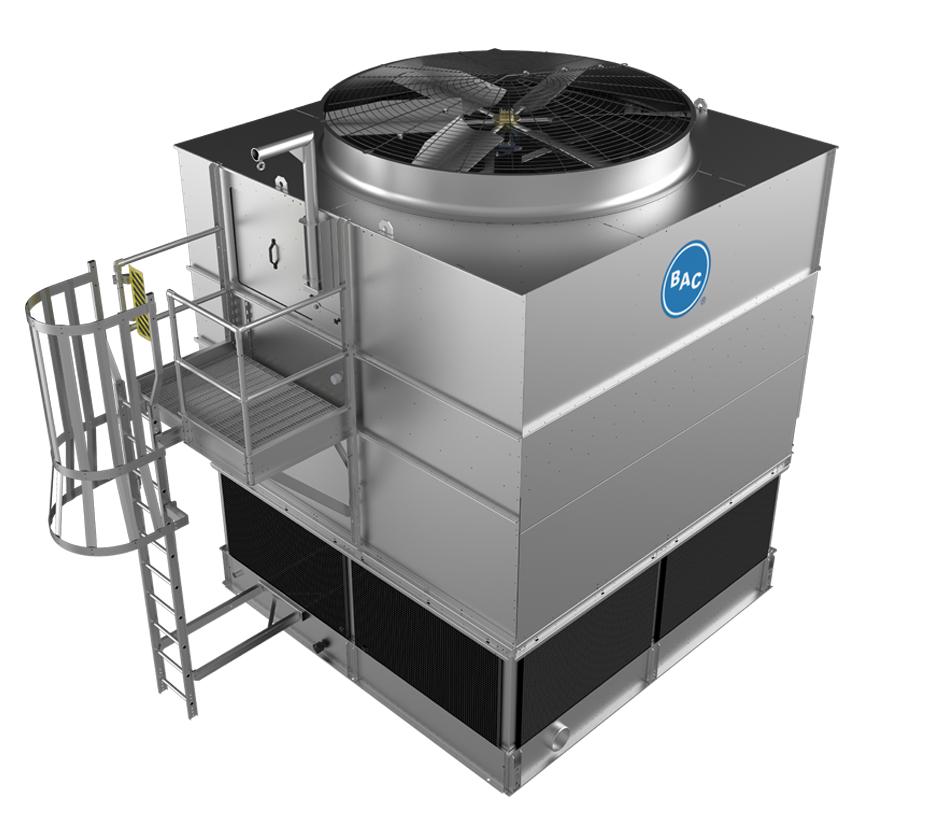
Baltimore Aircoil Company, commonly known as BAC, is another major name in evaporative cooling and heat-rejection equipment. Its product portfolio includes cooling towers, closed-circuit cooling towers, evaporative condensers, and replacement parts.
BAC offers both axial and centrifugal fan arrangements across different equipment series. This gives buyers options for applications with different airflow and installation requirements.
Main Strengths and Applications
BAC's cooling tower range includes induced-draft axial fan configurations as well as forced-draft centrifugal fan designs. The actual fan arrangement depends on the selected equipment model.
The company also provides factory-authorized replacement parts. Its parts portfolio includes axial fans, centrifugal fans, fan and bushing kits, and drive-system components.
For equipment owners, this can be useful when maintaining an existing BAC installation.
Before ordering, buyers should check the unit model and serial number. Fan diameter, shaft dimensions, hub type, blade material, rotation direction, and drive configuration all need to match the original design.
Best suited for: BAC cooling tower owners and project buyers who want equipment-specific fan solutions and factory-authorized replacement components.
3. EVAPCO
Headquarters: United States
EVAPCO is a global manufacturer of evaporative cooling and industrial refrigeration equipment. Its products serve commercial HVAC, industrial process cooling, refrigeration, and other heat-transfer applications.
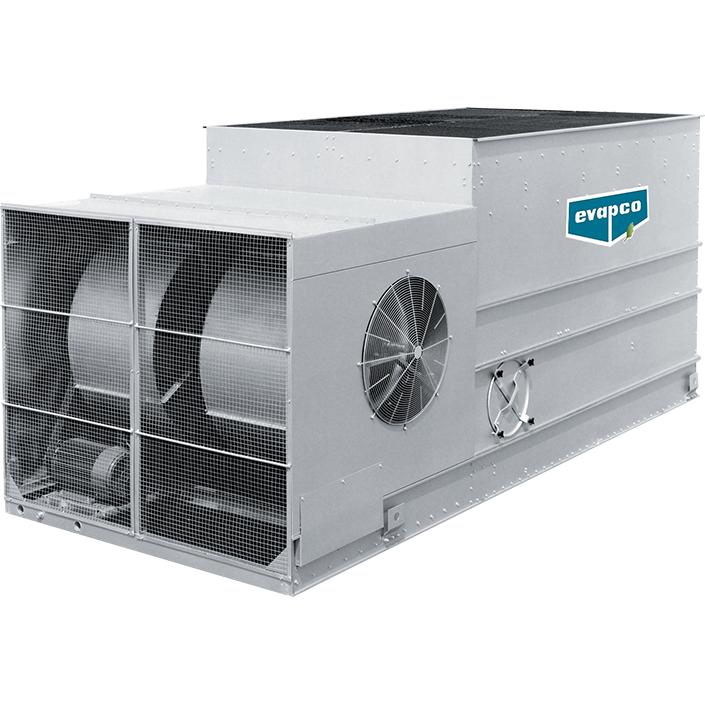
The company manufactures cooling towers with different fan configurations, including axial and centrifugal designs.
For example, its AXS cooling tower uses induced-draft axial fan technology, while its LPT series uses forced-draft centrifugal fan technology.
This variety makes EVAPCO relevant to buyers who need a complete cooling solution rather than a standalone fan.
Main Strengths and Applications
EVAPCO's equipment designs consider thermal performance, maintenance access, operating conditions, and noise requirements.
Depending on the cooling tower model, buyers may find:
Axial propeller fan arrangements
Centrifugal fan configurations
Standard and low-sound fan options
Equipment-specific fan and drive assemblies
Replacement parts and maintenance documentation
When replacing a fan in an EVAPCO cooling tower, do not select a product based on diameter alone. The fan must also meet the original airflow and pressure requirements and be compatible with the motor and drive system.
Best suited for: Commercial and industrial users who prefer a complete cooling tower manufacturer with multiple fan configurations and equipment-specific replacement support.
4. COFIMCO
Headquarters: Italy
COFIMCO is a specialist manufacturer of axial fans for demanding industrial applications. Its products are associated with cooling towers and air-cooled heat rejection equipment.
Unlike companies whose main business is complete cooling tower packages, COFIMCO focuses on fan technology. This makes it particularly relevant when a project requires a dedicated industrial axial fan supplier.
Main Strengths and Applications
COFIMCO offers axial fan solutions using different materials and blade configurations. Its product range includes large-diameter fans for industrial cooling applications, with options designed around airflow and acoustic requirements.
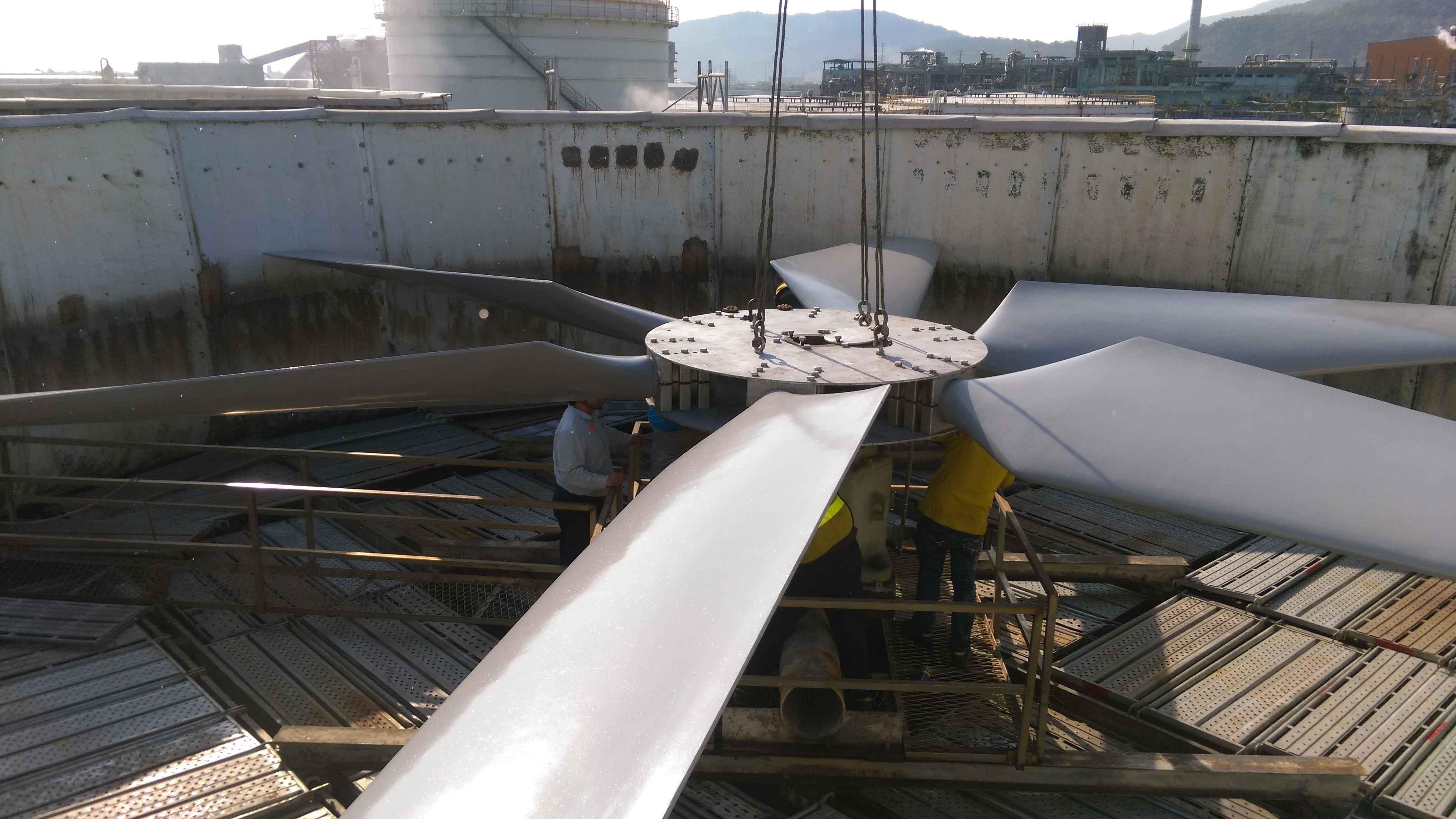
Potential benefits for buyers include:
Specialized axial fan engineering
Large-diameter fan options
Aluminum and fiberglass fan technologies
Different blade configurations
Solutions for cooling towers and air-cooled condensers
For large industrial projects, fan selection requires more than checking the nominal diameter. Engineers should compare the required airflow, static pressure, rotational speed, blade pitch, material, and operating temperature.
Noise and vibration limits should also be considered, especially in multi-cell installations.
Best suited for: Industrial operators, engineering contractors, and cooling equipment manufacturers seeking specialist axial fan technology for demanding applications.
5. Power Tower Cooling Technology (Shaoxing) Co.,Ltd.
Company: Power Tower Cooling Technology (Shaoxing) Co.,Ltd.
Website: https://www.coolingtowerpart.com/
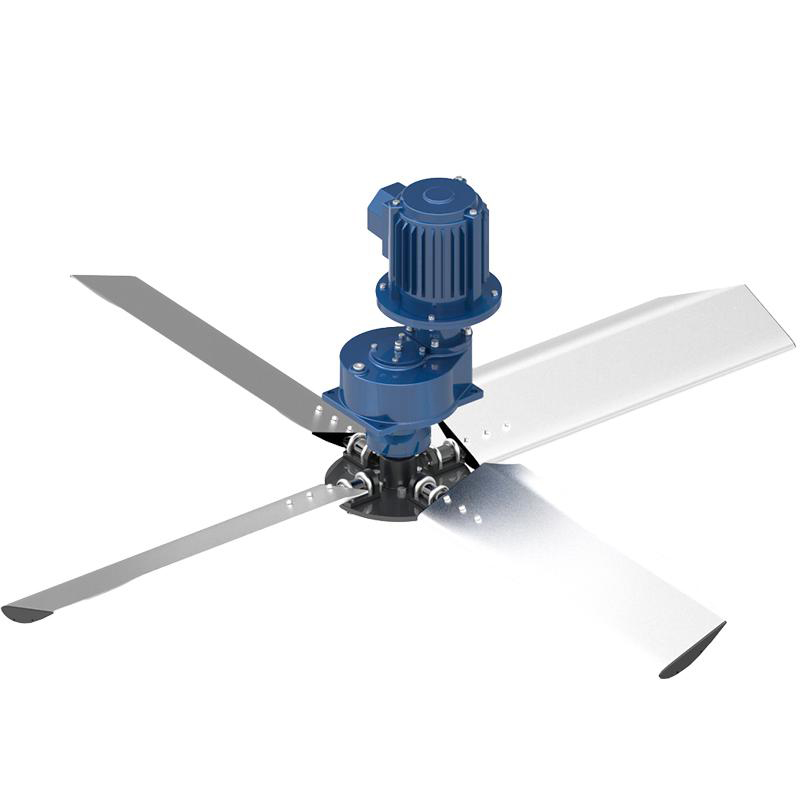
Power Tower Cooling Technology (Shaoxing) Co.,Ltd. is a cooling tower component manufacturer and supplier based in China. The company provides cooling tower parts and replacement solutions for different cooling tower brands and configurations.
For buyers looking beyond the original equipment manufacturer, Power Tower is worth considering as a source of cooling tower fans and related components.
Its product portfolio covers cooling tower fill, fan and fan drive system parts, motors, speed reducers, drift eliminators, fan stacks, nozzles, and other accessories.
Cooling Tower Fans and Replacement Components
A cooling tower fan replacement project often involves more than replacing the blades. The fan hub, motor, gearbox, shaft, fan cylinder, and mounting arrangement may all affect compatibility.
Power Tower's product range includes cooling tower fan and fan drive system parts, as well as other components used in cooling tower maintenance and refurbishment.
Depending on the project, buyers can discuss requirements such as:
Axial flow cooling tower fans
Fan blades and fan assemblies
Fan drive system components
Cooling tower motors
Speed reducers and gearboxes
Fan stacks and related accessories
Customized replacement components
The company also supplies cooling tower fill and drift eliminators. This is useful when a maintenance project involves both the air-delivery system and the heat-transfer section.
For example, if an existing cooling tower has reduced performance, the problem may not be caused by the fan alone. Blocked fill, uneven water distribution, damaged drift eliminators, and insufficient airflow can all affect cooling results.
A complete inspection can help identify which components actually need replacement.
Why Consider Power Tower?
There are several reasons to include Power Tower in a cooling tower parts procurement shortlist.
1. Multiple component categories
Instead of sourcing every part separately, buyers can discuss fans, fill media, drift eliminators, motors, and other cooling tower accessories with one supplier.
2. Replacement-oriented support
Existing cooling towers may have been operating for many years. Original drawings and model information are not always available. Sharing photographs, dimensions, and operating details can help the supplier assess a replacement requirement.
3. Customization options
For non-standard replacement projects, buyers can provide technical drawings or sample measurements for evaluation. Final specifications should be confirmed before production.
4. Support for different cooling tower brands
Power Tower's website lists components for applications involving several cooling tower brands. Compatibility should still be verified against the actual equipment model and installation dimensions.
5. Direct communication with a component supplier
Buyers can contact the company through its website to discuss product specifications, project quantities, and quotation requirements.
If you are sourcing a cooling tower fan, start with the equipment model, fan diameter, airflow requirement, motor power, and installation details. These details make it easier to evaluate a suitable replacement.
Best suited for: Industrial users, cooling tower maintenance contractors, distributors, and buyers looking for cooling tower fans and replacement components from a component-focused supplier.
Comparison of the Five Suppliers
The following table summarizes the general positioning of each company. It is intended as a starting point for supplier evaluation, not a technical performance ranking.
| Company | Main Market Position | Relevant Fan Products | Potential Buyer Fit |
| SPX Cooling Technologies (Marley) | Cooling tower and component manufacturer | Marley cooling tower fans and fan cylinders | Marley equipment owners and original-equipment buyers |
| Baltimore Aircoil Company (BAC) | Evaporative cooling equipment manufacturer | Axial and centrifugal fans, drive components | BAC equipment owners and industrial cooling projects |
| EVAPCO | Cooling tower and heat-transfer equipment manufacturer | Axial and centrifugal fan configurations | Commercial HVAC and industrial cooling projects |
| COFIMCO | Specialist industrial axial fan manufacturer | Large-diameter axial fans and fan components | Industrial fan projects and air-cooled equipment |
| Power Tower Cooling Technology | Cooling tower component manufacturer and supplier | Cooling tower fans and fan drive system parts | Replacement projects, component procurement, and distributors |
How to Choose the Right Cooling Tower Fan Manufacturer
A supplier's reputation is important, but technical compatibility should come first. A high-quality fan is not necessarily the right fan for your cooling tower.
Here are six factors worth checking before placing an order.
1. Check Fan Diameter and Airflow
Fan diameter is one of the first specifications buyers usually check. However, the same diameter does not guarantee the same performance.
You should confirm:
Fan outside diameter
Number of blades
Blade profile
Blade pitch angle
Required airflow
Fan rotational speed
The required airflow should be determined from the cooling tower design or an engineering assessment. Avoid choosing a fan simply because its dimensions look similar to the original.
2. Confirm Static Pressure and Motor Power
The fan must overcome the resistance created by the cooling tower's air path.
This resistance may come from fill media, drift eliminators, air inlet louvers, fan cylinders, and other internal components.
Ask the supplier to confirm the fan's operating point, including airflow and static pressure. Motor power should then be checked against the required duty point and the fan manufacturer's recommendations.
An undersized fan may fail to provide enough airflow. An oversized or poorly matched fan may consume unnecessary electricity or operate outside its intended range.
3. Consider Materials and Corrosion Resistance
Cooling towers operate in wet environments. Their fans may also be exposed to water droplets, chemicals, changing temperatures, and outdoor weather.
Common fan materials include:
Aluminum alloy
Fiberglass-reinforced plastic
Other engineered composite materials
Corrosion-resistant metal components
The best choice depends on water chemistry, ambient conditions, operating temperature, mechanical loading, and maintenance requirements.
For aggressive environments, ask about corrosion resistance, material certificates where applicable, and recommended inspection intervals.
4. Evaluate Noise and Energy Efficiency
Fan electricity consumption can represent a significant part of a cooling tower's operating cost.
A more efficient fan may reduce energy use, but the result depends on the complete system. Blade design, fan speed, motor efficiency, static pressure, and operating hours all matter.
Noise is another important consideration. If the cooling tower is close to offices, residential areas, or other noise-sensitive locations, ask for sound data at the specified operating condition.
Do not compare noise figures without checking the measurement distance, operating speed, and test conditions.
5. Check Compatibility With Existing Equipment
For replacement projects, compatibility is often the biggest challenge.
Before requesting a quotation, prepare as much of the following information as possible:
Cooling tower brand and model
Fan diameter and number of blades
Hub dimensions and connection details
Motor power, speed, and voltage
Gearbox or belt-drive information
Rotation direction
Installation photographs
Available drawings or original part numbers
If you do not have complete technical documents, clear photographs and accurate measurements can still help a supplier begin the evaluation.
However, final compatibility should be confirmed before manufacturing or installation.
6. Compare Total Cost of Ownership
The cheapest purchase price does not always represent the best value.
A fan with a lower initial price may have higher energy consumption, shorter service life, or more demanding maintenance requirements.
When comparing quotations, consider:
Initial equipment cost
Electricity consumption
Expected service life
Spare parts availability
Maintenance requirements
Delivery time
Warranty terms
Technical support
A reliable supplier should be able to explain what is included in the quotation and identify any additional installation or commissioning requirements.
Common Mistakes When Buying Cooling Tower Fans
Even experienced maintenance teams can overlook important details when ordering replacement fans.
Mistake 1: Selecting by diameter only
Two fans with the same diameter may have different blade profiles, pitch angles, airflow performance, and power requirements.
Mistake 2: Ignoring the original drive system
A fan may be mechanically incompatible with the existing motor, gearbox, shaft, or hub.
Mistake 3: Overlooking rotation direction
Incorrect rotation can reduce airflow and cause poor cooling performance. Always confirm the required direction from the equipment documentation.
Mistake 4: Choosing materials without considering water quality
A material that works well in one cooling tower may not be suitable for another operating with different chemicals or water conditions.
Mistake 5: Focusing only on the purchase price
Energy consumption, delivery, installation, and future maintenance can have a greater impact on long-term costs.
Mistake 6: Failing to inspect other cooling tower components
If the fill is blocked or the drift eliminators are damaged, replacing the fan alone may not solve the cooling problem.
Why Replacement Fan Projects Need Careful Evaluation
A cooling tower fan does not work independently. It is part of a system that includes the motor, drive assembly, fan cylinder, fill media, water distribution system, and drift eliminators.
Imagine that a cooling tower is no longer achieving the required cold-water temperature. Increasing fan speed may seem like an easy solution. But what if the fill is clogged? What if water distribution is uneven? What if the fan blades have been installed at the wrong pitch?
In these situations, changing the fan may not solve the real problem.
A practical replacement assessment should include:
Reviewing the cooling tower's operating temperature and water flow.
Inspecting the fan blades, hub, and drive system.
Checking motor current and fan rotational speed.
Inspecting fill media for scaling, biological growth, or deformation.
Checking drift eliminators and air inlet louvers.
Confirming the required airflow and fan operating point.
For a complete cooling tower refurbishment, it may be useful to evaluate the fan, fill, drift eliminators, and water distribution components together.
This system-level approach can prevent unnecessary replacement costs and help restore the tower's intended performance.
Frequently Asked Questions
Which company makes cooling tower fans?
Several established companies manufacture cooling tower fans or provide fan systems for cooling towers. Examples include SPX Cooling Technologies (Marley), Baltimore Aircoil Company, EVAPCO, and specialist fan manufacturers such as COFIMCO. Power Tower Cooling Technology also supplies cooling tower fans and related replacement components.
Are cooling tower fans interchangeable?
Not always. Fans must match the cooling tower's required airflow, static pressure, diameter, rotational speed, hub arrangement, and drive system. A replacement fan should be checked against the original equipment specifications before ordering.
What is the difference between axial and centrifugal fans?
Axial fans move air mainly parallel to the fan shaft and are commonly used where large airflow is required at relatively low to moderate static pressure. Centrifugal fans discharge air in a direction generally perpendicular to the inlet flow and are often selected for applications with higher static pressure or ducted layouts.
How often should a cooling tower fan be replaced?
There is no universal replacement interval. Service life depends on material, operating conditions, vibration, corrosion, maintenance, and mechanical loading. Regular inspections can identify cracks, blade deformation, loose connections, corrosion, and abnormal vibration before a failure occurs.
Can I buy replacement fans from an independent supplier?
Yes. Independent cooling tower component suppliers can provide replacement fans and related parts for different equipment brands. However, you should confirm the technical specifications and compatibility before purchasing. Original equipment manufacturer approval may also be required for certain warranty or compliance conditions.
Conclusion
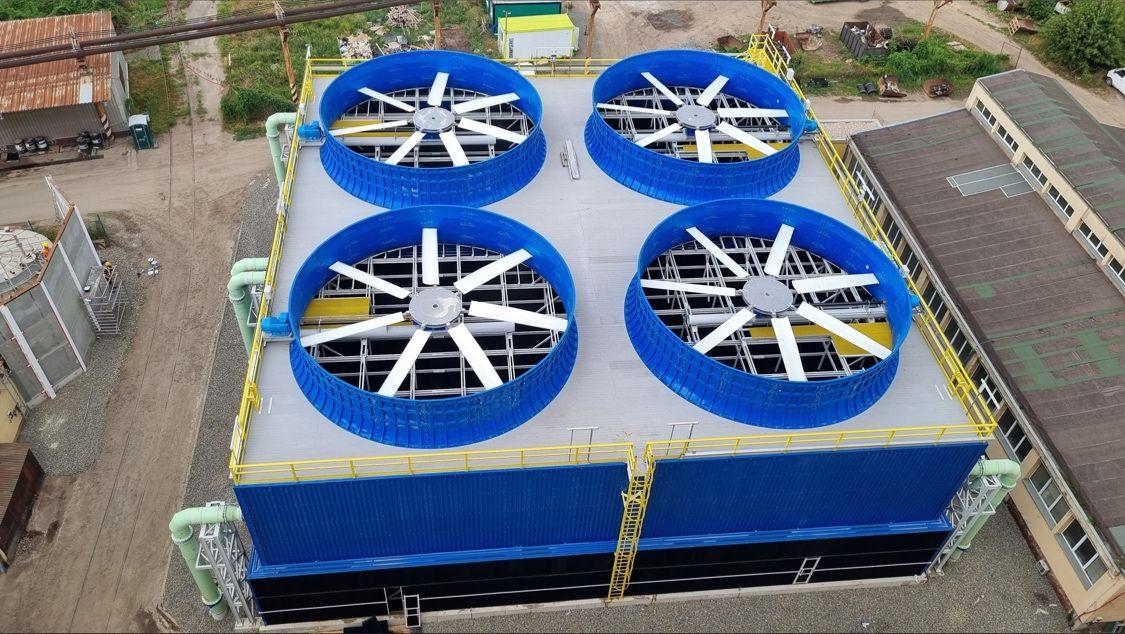
Choosing the right cooling tower fan manufacturer or supplier is an important step toward maintaining reliable industrial cooling performance. SPX Cooling Technologies, BAC, and EVAPCO are established cooling equipment manufacturers offering their own fan systems. COFIMCO brings specialist axial fan expertise, while Power Tower Cooling Technology (Shaoxing) Co.,Ltd. provides cooling tower fans and a broader range of replacement components.
The best supplier depends on your application. If you need an original fan for a specific cooling tower model, begin with the equipment manufacturer. If you are planning a replacement or refurbishment project, compare technically compatible solutions from qualified component suppliers as well.
For cooling tower fan, fill media, drift eliminator, motor, and other replacement component inquiries, visit https://www.coolingtowerpart.com/ and contact Power Tower Cooling Technology (Shaoxing) Co.,Ltd. with your equipment model, drawings, or installation photographs.
A well-matched fan is more than a replacement part. It is an investment in airflow, cooling performance, and long-term operating reliability.


