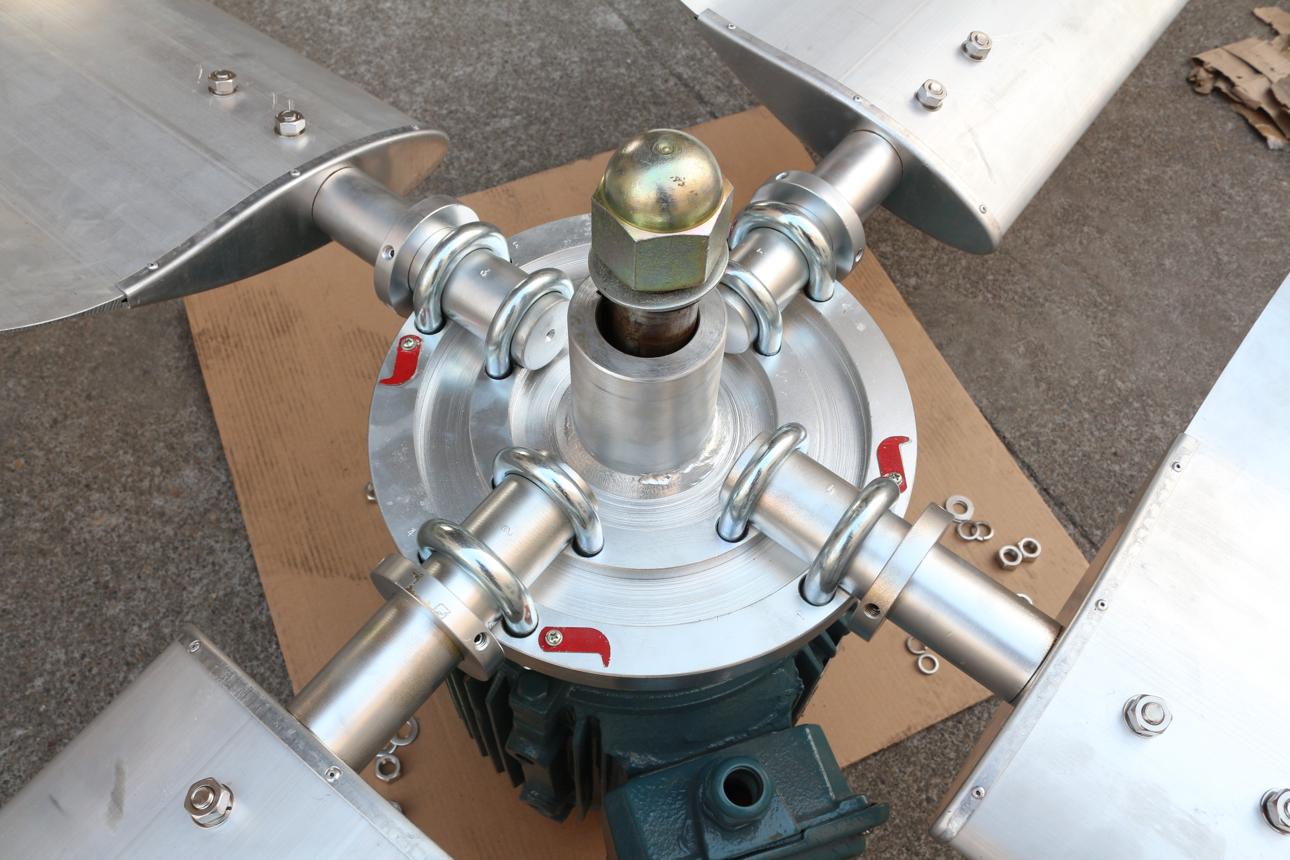
Cooling tower fan blade pitch adjustment is an important part of cooling tower installation, commissioning, and preventive maintenance. The correct blade angle helps deliver the airflow required for heat rejection while keeping fan power consumption, motor loading, and mechanical stress within acceptable limits.
Incorrect pitch settings can cause poor cooling performance, excessive electricity consumption, high motor current, and abnormal vibration. Proper installation and regular maintenance help prevent these problems and extend the service life of cooling tower fan components.
This guide explains cooling tower fan blade installation, pitch measurement, adjustment procedures, routine maintenance, troubleshooting, and safety practices for industrial cooling tower systems.
1. Understanding Cooling Tower Fan Blade Pitch
Cooling tower fan blade pitch is the angle of a blade measured relative to a defined reference plane. The measurement convention and location depend on the fan manufacturer's design.
Changing the pitch affects the aerodynamic loading on the fan and can influence airflow, power consumption, and cooling performance.
Correct cooling tower fan blade pitch adjustment helps:
Maintain the required airflow for heat rejection
Balance cooling performance and energy consumption
Keep motor current and power within approved limits
Support stable fan operation
Reduce problems caused by inconsistent blade settings
The correct pitch angle depends on fan diameter, blade geometry, rotational speed, motor capacity, and operating requirements. There is no universal setting for all cooling tower fans.
2. Cooling Tower Fan Blade Installation Preparation
Proper preparation is essential before installing or adjusting fan blades.
Check the Fan Specifications
Review the manufacturer's installation manual and confirm the fan model, blade configuration, hub type, rotational direction, and specified pitch angle.
For replacement projects, verify that the new blades are compatible with the existing hub and fan assembly. Similar-looking blades are not necessarily interchangeable.
Inspect the Installation Components
Before installation, inspect:
Fan blades for cracks, deformation, or material damage
Hub and blade clamps for wear or corrosion
Fasteners for damage and correct specifications
Motor and gearbox for visible mechanical problems
Fan cylinder and supporting structure for damage
Blade clearance and tracking requirements
Replace defective components before proceeding.
Prepare the Required Tools
Depending on the fan design, the work may require a pitch gauge, torque wrench, measuring tape, suitable hand tools, and instruments for checking motor current, power, and vibration.
Use the measurement tools and adjustment methods specified by the manufacturer.
3. How to Install Cooling Tower Fan Blades
Step 1: Isolate the Equipment
Shut down the fan, isolate its electrical supply, and apply lockout/tagout procedures. Verify that automatic controls cannot restart the equipment.
Confirm that all rotating components have stopped before beginning work.
Step 2: Install the Blades Correctly
Follow the manufacturer's instructions for positioning each blade in the hub. Confirm the correct blade orientation, mounting position, and rotational direction.
Incorrect installation can affect airflow, mechanical clearance, and fan performance.
Step 3: Set the Initial Blade Pitch
Use the approved initial pitch angle from the manufacturer's documentation or verified commissioning records.
Position the pitch gauge at the specified radial location and align it with the correct reference plane. Because fan blades may have a twisted profile, measurements taken at different locations can produce different readings.
Step 4: Tighten the Fasteners
Tighten the blade mounting hardware using the specified torque values and sequence. Use a calibrated torque wrench and install any required locking devices.
Do not estimate fastener torque or substitute unapproved hardware.
Step 5: Check Tracking and Clearance
Verify that the blades follow the required tracking pattern and maintain the specified clearance from the fan cylinder.
Rotate the assembly manually only when permitted by the manufacturer's procedure and after confirming that the equipment is safely isolated. Check for interference before restarting the fan.
4. Cooling Tower Fan Blade Pitch Adjustment Procedure
After installation, verify the pitch of every blade.
Step 1: Measure Each Blade
Measure all blades at the same radial position using the same instrument and reference plane. Record the measured angles and compare them with the manufacturer's specified setting.
Step 2: Adjust the Pitch Uniformly
If the measured angles are outside the approved tolerance, adjust the blades according to the manufacturer's procedure.
Avoid increasing the pitch simply to improve cooling. Excessive pitch can increase aerodynamic loading and may cause the motor to exceed its permitted operating limits.
Step 3: Recheck Fasteners and Alignment
After adjustment, verify the blade settings, fastener torque, tracking, and tip clearance. Ensure all components are correctly secured before testing.
Step 4: Conduct a Controlled Startup
Clear tools and personnel from the work area, restore the equipment according to site procedures, and start the fan.
Monitor motor current, power consumption, rotational speed, vibration, noise, and cooling water temperatures. Stop the fan if abnormal conditions or equipment-limit violations occur.
5. Cooling Tower Fan Blade Maintenance Checklist
Regular inspections help identify developing problems before they cause equipment downtime.
| Inspection item | What to check | Recommended action |
| Blade condition | Cracks, corrosion, deformation, or damage | Repair or replace according to manufacturer guidance |
| Blade pitch | Consistency and compliance with specifications | Measure and adjust if necessary |
| Hub and fasteners | Looseness, wear, and corrosion | Inspect and tighten to specified torque |
| Blade tracking | Consistent blade-tip path | Correct installation or alignment problems |
| Tip clearance | Compliance with specified clearance | Investigate uneven gaps or interference |
| Motor and gearbox | Abnormal noise, heat, or leakage | Diagnose mechanical or electrical faults |
| Vibration | Changes from normal operating levels | Investigate imbalance and mechanical problems |
| Cooling performance | Airflow and water temperature trends | Inspect the entire cooling tower system |
Inspection frequency should follow the manufacturer's recommendations, operating conditions, and site preventive maintenance schedule.
6. Common Installation and Maintenance Problems
Uneven Blade Pitch
Uneven pitch can result from inconsistent measurements or incorrect blade positioning.
Solution: Re-measure every blade at the same radial location and adjust it to the approved setting.
High Motor Current
Excessive pitch, incorrect fan speed, or mechanical problems can increase motor loading.
Solution: Stop the fan if it exceeds an approved limit. Check the pitch, rotational speed, drive system, and motor operating conditions before restarting.
Excessive Vibration
Damaged blades, loose fasteners, uneven pitch, imbalance, and alignment problems can all cause vibration.
Solution: Shut down the equipment if vibration is excessive. Inspect the blade assembly and drive system rather than assuming pitch adjustment alone will solve the problem.
Low Airflow or Poor Cooling
Incorrect rotation, blocked air inlets, fouled fill media, or poor water distribution may reduce cooling performance.
Solution: Verify fan operation and inspect the complete airflow and water distribution systems. Do not increase blade pitch unless measurements and manufacturer guidance support the change.
Uneven Tip Clearance
Incorrect blade installation, hub problems, or structural deformation can cause inconsistent clearance.
Solution: Check blade tracking, hub condition, and fan cylinder alignment against the manufacturer's requirements.
7. Safety Requirements for Installation and Maintenance
Cooling tower fan blades are large mechanical components that can cause serious injury if handled incorrectly.
Follow these safety requirements:
Apply lockout/tagout and verify electrical isolation.
Prevent automatic or remote fan startup.
Use appropriate fall protection when working at height.
Use approved lifting equipment when handling heavy blades or hubs.
Wear suitable personal protective equipment.
Follow specified fastener torque and installation procedures.
Keep personnel clear during startup and testing.
Only qualified personnel should install or adjust fan blades according to the manufacturer's instructions and site safety procedures.
8. How Proper Maintenance Improves Cooling Tower Efficiency
Correct blade pitch is only one part of efficient cooling tower operation. A well-maintained system also requires clean fill media, effective water distribution, unobstructed air inlets, and a properly functioning drive system.
Record fan power consumption, current, rotational speed, cooling water temperatures, and ambient wet-bulb temperature when evaluating performance.
Compare measurements under similar operating conditions to determine whether an adjustment has improved efficiency without reducing cooling capacity.
If energy consumption remains high despite correct blade pitch, consider other causes, including excessive airflow resistance, mechanical wear, and opportunities for variable-frequency drive control.
9. When to Replace Cooling Tower Fan Blades
Blade adjustment is appropriate only when the blades remain structurally sound and are designed for adjustment.
Replacement may be necessary when blades have cracks, permanent deformation, severe corrosion, damaged mounting points, or material deterioration.
When purchasing replacement cooling tower fan blades, confirm:
Fan diameter and blade profile
Blade material and construction
Hub and mounting compatibility
Rotational speed and direction
Required airflow and motor limitations
For industrial retrofit projects, a qualified cooling tower parts supplier can help identify suitable replacement blades based on the existing fan specifications.
10. Frequently Asked Questions
How often should cooling tower fan blade pitch be checked?
Check pitch during commissioning, scheduled inspections, blade replacement, and performance troubleshooting. Follow the manufacturer's maintenance recommendations.
Should all cooling tower fan blades have the same pitch?
Blades in the same adjustable-pitch fan assembly generally need to be set consistently according to the manufacturer's specified measurement method and tolerances.
Can incorrect installation affect cooling tower efficiency?
Yes. Incorrect blade orientation, unsuitable pitch, poor clearance, or loose mounting hardware can compromise airflow, increase mechanical problems, and affect operating efficiency.
What tools are needed for fan blade pitch adjustment?
Common tools include a suitable pitch gauge, torque wrench, and measuring tools. Additional equipment may be needed to measure motor power, current, rotational speed, and vibration.
When should fan blades be replaced instead of adjusted?
Replace blades when damage, deformation, corrosion, or mounting deterioration compromises their safe and reliable operation. Follow the manufacturer's inspection and replacement criteria.
Conclusion
Cooling tower fan blade pitch adjustment, correct installation, and preventive maintenance are essential for reliable industrial cooling tower operation. Consistent blade settings help maintain airflow, control motor loading, and support efficient heat rejection.
For best results, follow manufacturer specifications, inspect every blade and mounting component, verify tracking and clearance, and test the fan after maintenance. When damaged or incompatible blades prevent reliable operation, select replacement components that match the existing fan's mechanical and aerodynamic requirements.
For cooling tower fan blade replacement projects, provide the fan model, blade dimensions, hub configuration, and operating requirements to a qualified supplier to identify a compatible solution.
Recommended internal links for CoolingTowerPart.com:


