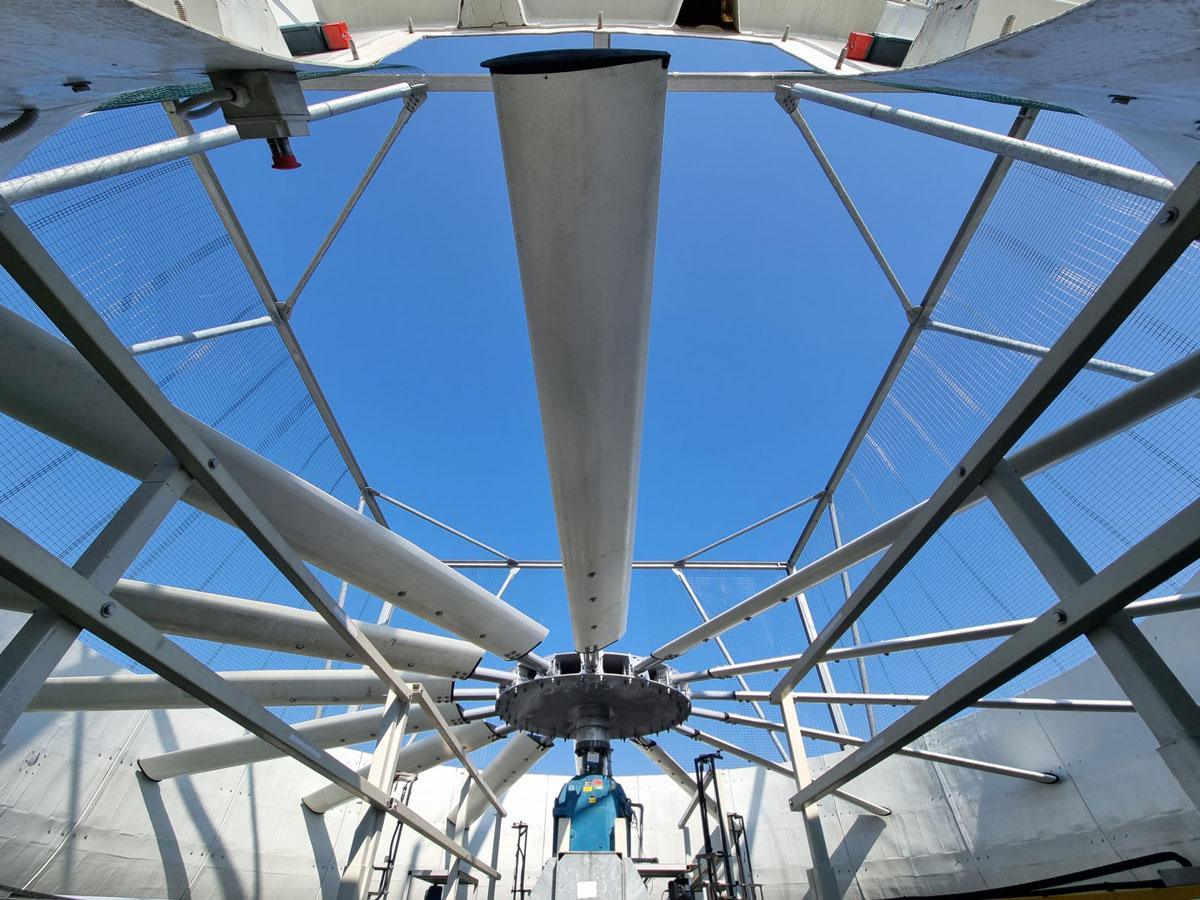
Cooling tower fan blade pitch adjustment is an effective way to optimize airflow, reduce unnecessary power consumption, and improve industrial cooling tower performance. The fan blade pitch angle directly influences the aerodynamic load on the fan, affecting airflow, motor power demand, and overall cooling efficiency.
When the pitch setting is too low, the cooling tower may not deliver sufficient airflow to meet the required heat rejection load. When the pitch is too high, the fan may consume excessive electricity or overload its motor. Finding the correct setting helps balance cooling performance with energy efficiency.
This guide explains how cooling tower fan blade pitch adjustment works, how to optimize fan settings, how to measure energy performance, and which maintenance practices help reduce operating costs.
1. How Cooling Tower Fan Blade Pitch Affects Energy Efficiency
Cooling tower fans move air through the tower to support heat and mass transfer between the air and circulating water. Blade pitch determines how the blades interact with the air as they rotate.
Changing the pitch can affect airflow and aerodynamic loading. The relationship depends on fan geometry, rotational speed, system resistance, and operating conditions.
Correct cooling tower fan blade pitch adjustment can help operators:
Maintain the airflow required for the cooling load
Avoid unnecessary fan power consumption
Keep motor current within allowable limits
Reduce operating problems associated with incorrect blade settings
Improve the consistency of cooling tower operation
However, increasing fan pitch does not automatically improve energy efficiency. The goal is to achieve the required cooling performance with the lowest practical energy consumption while remaining within the manufacturer's operating limits.
2. Signs That Cooling Tower Fan Pitch Needs Inspection
Incorrect pitch is only one possible cause of poor fan performance. Check the blade settings when you observe the following symptoms.
High Motor Power Consumption
If fan power consumption increases without a corresponding change in cooling demand, inspect the pitch setting, fan speed, air path, and mechanical drive system.
Insufficient Cooling Capacity
High cooling water outlet temperatures may indicate inadequate airflow. However, fouled fill media, poor water distribution, excessive heat load, and unfavorable ambient conditions can produce similar symptoms.
Uneven Blade Angles
Differences between blade settings may create inconsistent aerodynamic loading. Measure every blade using the same reference plane and radial position.
Excessive Motor Current
A fan operating with excessive aerodynamic load may draw more current than expected. Compare measured current and power with the motor nameplate, manufacturer's fan data, and approved operating limits.
3. How to Optimize Cooling Tower Fan Blade Pitch Settings
The correct pitch angle depends on the fan model, blade design, rotational speed, motor capacity, and required airflow. There is no universal pitch angle for all cooling tower fans.
Use the following process to optimize the setting.
Step 1: Establish the Current Operating Baseline
Before making changes, record the fan's operating conditions.
Important measurements include:
Fan motor power consumption in kilowatts (kW)
Motor current and voltage
Fan rotational speed
Cooling water inlet and outlet temperatures
Ambient dry-bulb and wet-bulb temperatures
Cooling load and operating hours
Existing blade pitch angle
These measurements help determine whether the fan is consuming excessive energy or failing to deliver the required cooling performance.
Step 2: Inspect the Fan and Airflow Path
Check the fan blades, hub, motor, gearbox, fan cylinder, and air inlet area.
Look for damaged blades, loose fasteners, incorrect rotation, blocked airflow paths, or mechanical problems. Also inspect cooling tower fill and water distribution if thermal performance is poor.
Correct these problems before changing the pitch.
Step 3: Verify the Recommended Pitch Angle
Consult the fan manufacturer's documentation or commissioning records. Confirm the specified measurement location and reference plane because blade angle readings can vary along a twisted blade.
Do not use an arbitrary angle to reduce energy consumption. Any adjustment must remain within the approved fan operating range.
Step 4: Adjust the Pitch Uniformly
Shut down and electrically isolate the fan before performing any adjustment. Apply lockout/tagout procedures and verify that the fan cannot restart automatically.
Adjust each blade according to the manufacturer's instructions. Use the specified pitch gauge or approved adjustment scale, and tighten all fasteners to the required torque.
After adjustment, verify blade tracking, tip clearance, and secure mounting.
Step 5: Test and Compare Performance
Restart the fan according to site procedures and measure power consumption, airflow-related performance, vibration, and cooling water temperatures.
Compare the results with the original baseline under similar operating conditions. Keep the final setting only if it meets the required cooling duty and all equipment limits.
4. How to Calculate Cooling Tower Fan Energy Savings
Measuring actual fan power before and after adjustment helps quantify energy savings.
The basic energy calculation is:
Energy consumption (kWh) = Average power (kW) × Operating time (hours)
For example, assume a cooling tower fan initially consumes 30 kW and operates for 6,000 hours per year. After a verified adjustment, its average power consumption falls to 27 kW while maintaining the required cooling performance.
| Parameter | Before adjustment | After adjustment |
| Average fan power | 30 kW | 27 kW |
| Annual operating hours | 6,000 | 6,000 |
| Annual energy use | 180,000 kWh | 162,000 kWh |
In this illustrative example, the annual energy reduction is 18,000 kWh, equivalent to a 10% reduction in fan energy consumption.
Actual savings will depend on the fan design, operating conditions, cooling demand, and verified power measurements. This example is not a guaranteed result of pitch adjustment.
To estimate the financial benefit, multiply the energy reduction by the applicable electricity tariff.
5. Fan Blade Pitch Adjustment vs. Fan Speed Control
Blade pitch adjustment and fan speed control are different approaches to optimizing cooling tower energy use.
| Feature | Blade pitch adjustment | Fan speed control |
| Main adjustment | Blade angle | Rotational speed |
| Typical purpose | Match fan loading and airflow to design requirements | Adjust airflow as cooling demand changes |
| Energy benefit | Depends on correcting an unsuitable pitch setting | Can reduce power when fan speed can be lowered safely |
| Adjustment method | Mechanical adjustment on compatible fans | Usually a variable-frequency drive (VFD) |
| Operating flexibility | Depends on fan design | Can provide continuous speed control within approved limits |
A correctly set fixed-pitch fan may operate efficiently at its intended design point. A VFD can offer additional energy-saving opportunities when cooling demand varies throughout the day or year.
The best solution depends on the fan system, operating profile, control requirements, and manufacturer's recommendations.
6. Common Mistakes That Increase Cooling Tower Fan Energy Costs
Setting the Pitch Too High
Excessive pitch can increase motor load without providing a useful improvement in cooling performance. Always verify motor current and power after an adjustment.
Adjusting Pitch Without Measuring Power
A change in blade angle does not prove that energy consumption has improved. Measure actual power and confirm that the required cooling duty is maintained.
Ignoring Fill and Water Distribution
Blocked fill, scale buildup, biological fouling, and uneven water distribution can reduce heat transfer. Increasing fan loading may not solve these problems.
Comparing Results Under Different Conditions
Cooling tower performance changes with ambient wet-bulb temperature, heat load, water flow, and operating hours. Compare before-and-after measurements under similar conditions or normalize the results using an appropriate engineering method.
Neglecting Routine Maintenance
Damaged blades, worn drive components, loose fasteners, and poor alignment can increase operating problems and undermine energy optimization efforts.
7. Best Practices for Long-Term Energy Efficiency
To maintain efficient cooling tower fan operation:
Inspect fan blades, hubs, and drive components regularly.
Verify blade pitch against manufacturer specifications after maintenance or blade replacement.
Monitor motor power and current trends.
Keep fill media, air inlets, and water distribution systems clean.
Evaluate VFD control where cooling demand varies significantly.
Record pitch settings and performance measurements after each adjustment.
Use qualified technicians and follow lockout/tagout procedures.
These practices help identify energy waste and prevent unnecessary changes to the fan configuration.
8. When to Replace Cooling Tower Fan Blades
Pitch adjustment cannot correct structural damage or an unsuitable blade design.
Consider replacement if fan blades have cracks, permanent deformation, severe corrosion, damaged mounting areas, or deterioration that compromises safe operation.
When selecting replacement cooling tower fan blades, verify the fan diameter, blade profile, material, hub configuration, rotational speed, rotation direction, required airflow, and motor limitations.
For industrial cooling tower retrofit projects, a qualified supplier can help identify compatible replacement blades based on the existing fan assembly and operating requirements.
9. Frequently Asked Questions
Can cooling tower fan blade pitch adjustment reduce electricity costs?
It can reduce energy consumption when an unsuitable pitch setting is causing excessive fan loading and the adjustment improves operation. Actual savings must be confirmed through power measurements while maintaining the required cooling duty.
Does a lower fan blade pitch always save energy?
No. A lower pitch may reduce power consumption, but it may also reduce airflow below the required level. The correct setting must balance cooling performance and energy use.
How often should fan blade pitch be checked?
Check pitch during commissioning, scheduled maintenance, fan blade replacement, and performance troubleshooting. Follow the manufacturer's inspection recommendations.
What measurements are needed to evaluate energy efficiency?
Record fan power, current, rotational speed, cooling water temperatures, ambient wet-bulb temperature, and cooling load. These measurements help distinguish genuine energy improvements from changes in operating conditions.
Can a VFD save more energy than pitch adjustment?
A variable-frequency drive may provide greater flexibility when cooling demand changes frequently. However, savings depend on the fan curve, system resistance, control strategy, and operating profile.
Conclusion
Cooling tower fan blade pitch adjustment can support improved energy efficiency when the existing setting is unsuitable for the required operating conditions. The most effective approach combines correct pitch measurement, uniform blade adjustment, motor load monitoring, and verification of cooling performance.
For reliable results, follow the fan manufacturer's specifications and compare power consumption under similar operating conditions. If pitch adjustment does not resolve high energy use, inspect the complete cooling tower system and evaluate other opportunities, including fill maintenance, water distribution improvements, and fan speed control.
For cooling tower fan blade replacement or retrofit projects, provide your fan model, blade dimensions, hub configuration, and operating requirements to a qualified supplier to identify a compatible solution.
Recommended internal links for CoolingTowerPart.com:


