How Does Cooling Tower Fan Blade Angle Affect Cooling Tower Efficiency
Meta Description: Understand how
cooling tower fan blade pitch angle changes airflow, motor power, heat rejection, noise and vibration to shape overall tower efficiency.
Target keywords: cooling tower fan blade angle, cooling tower efficiency, fan blade pitch, cooling tower airflow performance
What Is Cooling Tower Fan Blade Pitch Angle
The
cooling tower fan blade angle, widely called blade pitch angle, is the inclined angle between the blade chord line and the fan rotational plane. For induced draft and forced draft axial fans inside cooling towers, this single parameter controls how air is captured, accelerated and pushed through the wetted fill media where heat and mass transfer happens.
Many maintenance teams treat blade angle as a minor installation detail. In reality, it forms the intersection of aerodynamic performance, electrical load and mechanical lifespan. Even a 1°–2° shift changes airflow, power draw and cooling output noticeably. Blade pitch works together with fan diameter, rotation speed, blade airfoil profile and system static resistance to decide the fan’s operating point on its performance curve.
Fixed Pitch vs Adjustable Pitch Blade Types
Factory Fixed Pitch FRP Blades
Most aftermarket FRP cooling tower fan blades are manufactured to one fixed pitch. The factory angle is matched to the original tower design, motor horsepower, gearbox ratio and fan stack resistance. Fixed pitch blades have stable aerodynamic characteristics, lower cost and no on-site adjustment option. They dominate standard cross flow and counter flow cooling tower replacement projects.
Field Adjustable Pitch Blades
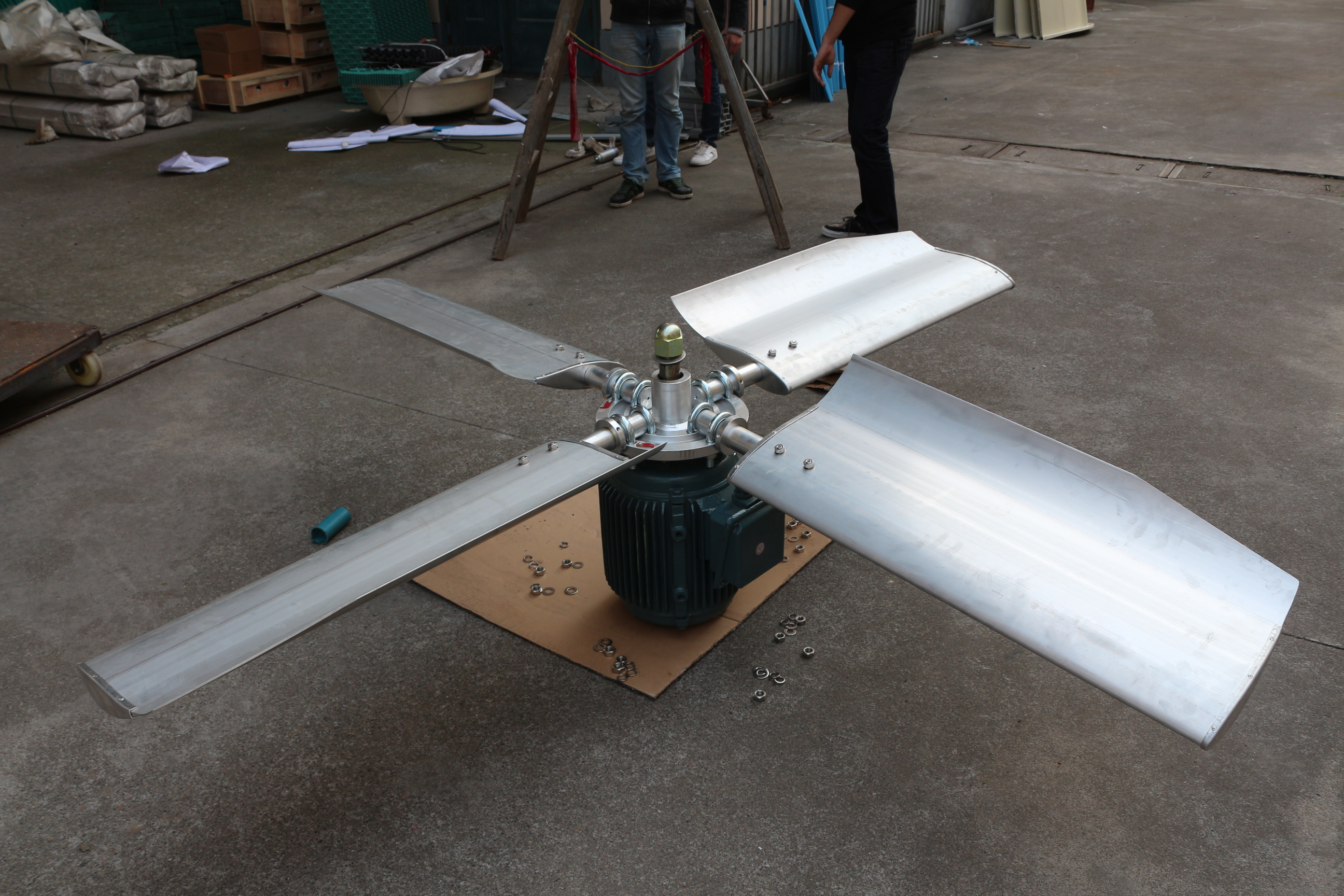
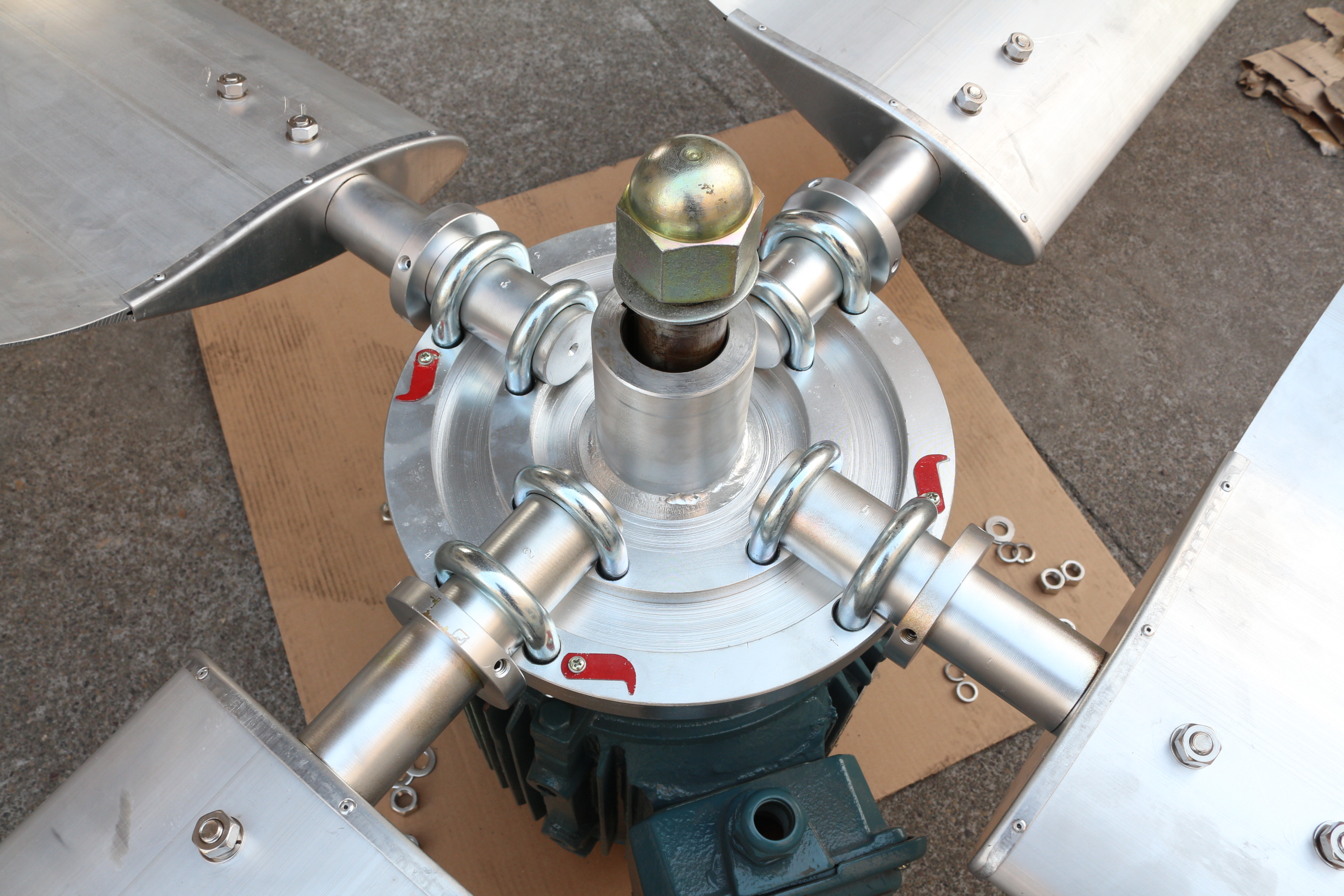
Adjustable pitch blades use a clamping hub structure. Technicians can loosen hub bolts and rotate each blade to re-set the angle on location. This design is preferred for large-diameter fans in refineries, power plants and chemical facilities, where seasonal thermal load changes or retrofit upgrades require airflow tuning without replacing the full fan set.
Standard Pitch Measurement Rules
Pitch readings must be taken at the same radial position for every blade, normally around 70%–75% of the blade radius from the hub, not at the root or blade tip. Industry standard tolerance for all blades on one fan is ±0.5°. Uneven pitch creates mismatched aerodynamic lift between blades and triggers continuous vibration, bearing wear and gearbox fatigue.
How Blade Angle Controls Airflow And Heat Rejection
Cooling tower efficiency depends on sufficient fresh air contacting falling warm water inside fill packs. The fan’s airflow directly governs how much latent and sensible heat the tower can reject. Blade pitch is the primary control knob for airflow volume at a fixed rotation speed.
When Pitch Angle Rises Within Safe Operating Range
As pitch increases moderately, each blade captures more air and delivers higher airflow across the fill. More air flow improves evaporation and heat transfer, lowering outlet cooling water temperature and lifting cooling capacity. This is why technicians often raise pitch when the tower cannot hit the target cold-water setpoint under high wet-bulb summer conditions.
Aerodynamic Stall — The Critical Upper Limit
Pitch increase does not deliver unlimited airflow. Once the angle exceeds the airfoil stall threshold, airflow separates from the blade surface. Turbulence replaces smooth lift, airflow drops sharply while torque and noise spike. Stall is one of the most overlooked causes of poor cooling performance, even when the fan runs at full speed.
When Pitch Angle Drops Too Low
A small pitch means the blade slices through air with minimal aerodynamic lift. Airflow becomes insufficient. The fill media cannot get enough air for evaporation, heat rejection falls, and cold water temperature creeps upward. Operators may mistakenly blame fouled fill or blocked nozzles when the root cause is an overly flat blade setting.
Pitch Angle And The Whole Cooling Tower Heat Balance
Blade angle is not the only factor for cooling results. Water flow rate, inlet water temperature, ambient wet-bulb temperature, fill fouling and water distribution also change heat transfer. A correctly pitched fan cannot fix scaling, clogged spray nozzles or degraded fill media.
Blade Angle Impacts Energy Consumption And Motor Efficiency
This is the core efficiency tradeoff: higher airflow from steeper pitch comes with non-linear power increases. Fan power rises much faster than airflow as pitch increases, following axial fan affinity laws.
Over-Pitched Blades Raise Energy Waste And Motor Risk
A steeper pitch demands higher torque from the drive system. Motor current climbs and power consumption rises quickly. If pitch exceeds the motor nameplate full-load amp rating, overheating, winding insulation damage and overload tripping follow. Running continuously near overload reduces motor service life and creates unplanned downtime. Many industrial cooling systems suffer 10–30% avoidable energy waste from improperly over-pitched fans.
Why Over-Pitching Is Not A Simple Efficiency Gain
Some operators keep raising pitch to chase colder water. The extra electricity consumed by the motor often outweighs the cooling benefit. This creates poor system-level efficiency, where the cooling tower consumes excessive power for marginal thermal improvement.
Under-Pitched Blades Create Hidden Energy Waste
Under-pitched fans draw less current per unit of time, but they cannot deliver required cooling. The process system may force longer fan runtime or trigger backup cooling equipment. Total site energy consumption may end up higher, even though individual fan amperage looks low.
The Efficiency Sweet Spot
The optimal pitch balances three targets:
Airflow large enough to hit the required cold water temperature
Motor current kept safely below full-load rating
Blade operating point away from aerodynamic stall
This sweet spot changes seasonally because cold winter air has higher density and increases aerodynamic load at the same fixed pitch angle.
Pitch Angle Influences Mechanical Reliability And Long-Term Efficiency
Efficiency is not only about electricity bills. Frequent vibration, bearing damage and gearbox failure stop cooling service and bring expensive repair costs. Incorrect blade angle shortens component life and lowers overall uptime efficiency.
Uneven Blade Pitch Causes Aerodynamic Imbalance
If one blade sits at 14° and another at 11° on the same hub, each blade generates different lift during rotation. The uneven aerodynamic force creates cyclic vibration. This vibration transfers to hub, shaft, bearings and gear reducer. Over months, it accelerates fatigue, loosens bolts and damages gear teeth.
Noise Generation Changes With Blade Pitch
Higher pitch and stalled airflow produce broadband turbulence noise. Many industrial sites and data centers have strict noise limits. Tuning pitch away from the stall region is a simple way to reduce fan noise and maintain compliance without sacrificing cooling performance.
Blade Tip Clearance And Structural Risk
Changing pitch alters the blade’s swept geometry. After pitch adjustment, technicians must verify tip clearance between blade edge and fan stack inner wall. Insufficient clearance leads to blade strike, catastrophic fan failure and extended shutdowns.
Comparing Blade Pitch Tuning With VFD Speed Control
Modern cooling plants often mix adjustable pitch blades and variable frequency drives, two different methods to regulate airflow and efficiency.
Pitch Adjustment
Best for seasonal fixed setpoint changes, retrofit upgrades, and matching legacy fan designs. Pitch sets the fan’s aerodynamic working curve. Once set, airflow changes little until the next calibration. It is ideal for sites where thermal load stays stable for months.
VFD Variable Speed
VFD adjusts rotation speed dynamically in real time. It is excellent for variable process heat loads and continuous fine tuning. Speed control follows fan affinity laws and delivers outstanding energy savings when load fluctuates.
Combined Strategy For Highest Efficiency
The most efficient setup is setting the blade pitch at the aerodynamically optimized sweet spot, then using VFD to modulate speed according to real-time cooling demand. This combination avoids running blades in stalled or inefficient low-pitch zones and maximizes energy savings year-round.
Common Misconceptions About Blade Angle And Efficiency
Misconception 1: Larger Pitch Always Means Better Cooling
This only holds within the stable pre-stall operating window. Past stall, higher pitch creates more noise, vibration and power use while airflow drops. More pitch is not always better.
Misconception 2: Same Diameter Blades At Same Angle Perform Equally
Airfoil design matters. Two FRP blades with identical diameter and pitch angle can deliver very different airflow and power curves. CFD optimized blades maintain smooth airflow at design pitch; low-quality copied blades stall or overload at the same setting.
Misconception 3: After Blade Replacement, Pitch Does Not Need Verification
New replacement blades may have different airfoil profiles. Even when diameter matches, factory preset pitch can differ. Mismatched pitch after blade swap is one of the top reasons for vibration and poor cooling after retrofit jobs.
Misconception 4: You Can Ignore Motor Amps If Water Temperature Is Good
Cold water at the cost of continuous motor overload is a false efficiency win. The risk of sudden motor trip and process shutdown far outweighs small cooling gains.
How To Tune Blade Angle For Maximum Cooling Tower Efficiency
Pre-Adjustment Checklist
Lock out and tag out fan power before any pitch measurement or adjustment
Measure and record the existing pitch angle of every blade
Record baseline motor current, outlet water temperature, wet-bulb temperature and vibration reading
Inspect blades for cracks, delamination, hub corrosion and bolt looseness
Confirm fan rotation direction and leading edge orientation
Incremental Tuning Workflow
Step 1 Adjust Pitch In Small Increments
Change pitch by 0.5°–1° each time. Large one-step adjustments easily push the fan into stall or overload.
Step 2 Recheck Uniformity Across All Blades
Keep every blade within ±0.5° tolerance.
Step 3 Restart And Monitor Key Data
Read running current, cold water temperature, noise and vibration. Shut down if vibration rises sharply or current exceeds nameplate.
Step 4 Document The Final Optimized Setting
Save pitch angle, amperage, vibration and environmental data into maintenance logs for future reference. This data helps engineers select matching replacement FRP fan blades later.
Reference Pitch Ranges For General Guidance
Note: Manufacturer datasheet always overrides these reference numbers.
Commercial HVAC cooling tower: 8°–12°
Standard counter-flow industrial tower: 10°–16°
Heavy-duty process and power cooling tower:12°–18°
Seasonal Pitch Tuning To Sustain Year-Round Efficiency
Air density falls when ambient temperature rises in summer and rises in cold winter. A pitch that works safely in summer can overload the same motor in winter.
Summer Tuning Strategy
High wet-bulb conditions demand stronger heat rejection. Set pitch at the upper safe limit while motor current remains under FLA.
Winter Tuning Strategy
Reduce pitch slightly to compensate for denser cold air. This prevents motor overload and unnecessary energy consumption. If paired with VFD, winter speed reduction and mild pitch reduction deliver the lowest annual energy cost.
Troubleshooting Low Efficiency Linked To Incorrect Blade Angle
Cold water stays warm after pitch is increased
Fan has entered aerodynamic stall
Fill media is scaled, fouled or blocked
Water distribution nozzles are clogged
Fan rotates in reverse direction
Motor trips overload after pitch adjustment
Pitch angle exceeds motor and gearbox load limit
Uneven pitch creates periodic high aerodynamic load
Bearing or gearbox friction has increased
High vibration after blade replacement or calibration
Pitch angles are inconsistent between blades
New blade moment weight does not match original set
Hub bolts not torqued evenly after adjustment
Conclusion
Cooling tower fan blade angle directly shapes overall cooling tower efficiency by governing airflow, heat rejection, motor power draw, noise and mechanical stress. Raising pitch can improve cooling output within the stable operating range, but over-pitching triggers stall, overload, vibration and wasteful energy consumption. Under-pitching cuts fan current but fails to deliver enough airflow for target heat rejection.
The most efficient operation comes from finding the balanced pitch sweet spot, keeping all blades matched within tight tolerance, and combining pitch calibration with VFD speed control for variable thermal loads. Always cross-verify motor amperage and vibration after any pitch change, and distinguish pitch-related issues from fill fouling, nozzle blockage or drive-system wear. Correct blade angle management reduces electricity cost, extends fan component life and delivers stable cooling tower performance all year long.