Optimized Cooling Tower Fan Blade Design for Cooling Towers
Meta Description: Explore optimized
cooling tower fan blade design with CFD aerodynamics, FRP material selection, pitch adjustment, low noise and high efficiency for cross flow and counter flow industrial cooling towers.
Optimized cooling tower fan blade design is the foundation of efficient mechanical draft cooling tower performance. Many cooling tower operators only focus on fill media, water distribution or gear reducer maintenance, while overlooking how fan blade geometry directly changes energy consumption, airflow volume, noise level and overall cooling capacity. A poorly designed fan blade will waste motor power, create excessive vibration, produce loud aerodynamic noise and even shorten the service life of gearboxes, bearings and fan hubs. As a professional manufacturer of FRP cooling tower spare parts, we carry out aerodynamic simulation, structural calculation and prototype testing for every cooling tower fan blade. Our optimized blade designs match cross flow and counter flow cooling towers, adapting to different working conditions, fan diameters and power configurations for global industrial projects.
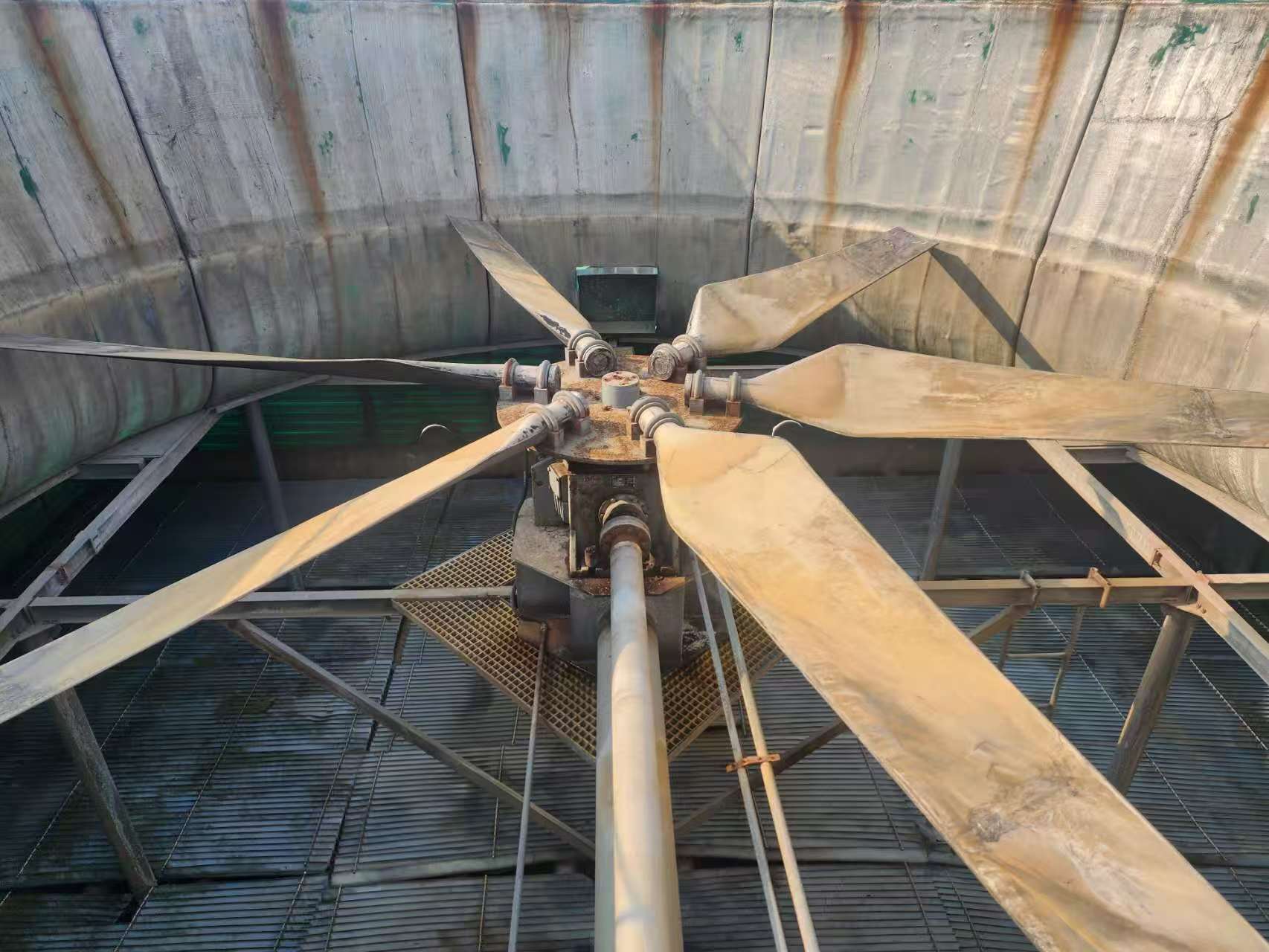
What Is Optimized Cooling Tower Fan Blade Design
Core Purpose of Cooling Tower Fan Blade Optimization
Balance Airflow, Power Consumption and Noise
The basic goal of fan blade design is to push sufficient air through the cooling tower fill to take away heat from circulating water. However, maximum airflow does not always equal the best solution. An over-aggressive blade profile may deliver high air volume at the cost of sharp power spikes and intense noise. Optimized design strikes a balanced point: it meets the required airflow under rated conditions while keeping motor load within the safe range and suppressing aerodynamic noise. This balance is especially critical for data centers, residential adjacent plants and urban HVAC cooling systems with strict noise limits.
Improve Operating Stability and Reduce Vibration
Unbalanced blade profiles, uneven chord distribution or improper sweep shape will generate periodic aerodynamic excitation force during rotation. Long-term excitation causes vibration that transfers to the hub, gearbox and tower frame. Optimized cooling tower fan blade design includes consistent molding tolerance, symmetrical aerofoil shape and matched mass distribution. These features reduce vibration amplitude, extend the lifespan of transmission components and lower the risk of structural damage on the cooling tower deck.
Main Types of Cooling Tower Fan Blades by Adjustment Method
Fixed Pitch Fan Blades
Fixed pitch blades have a permanent blade angle set during production. They are suitable for cooling towers running steadily under fixed load most of the time, such as simple HVAC systems. The manufacturing cost is lower, and the structure is simpler. The disadvantage is limited flexibility. When ambient wet-bulb temperature or water heat load changes, airflow cannot be adjusted to save energy.
Adjustable Pitch Fan Blades
Adjustable pitch blades allow on-site or factory angle modification to change airflow and power absorption. This is the mainstream optimized solution for industrial cooling towers. Operators can tune the blade pitch according to seasonal temperature variation, equipment heat load change or power saving requirements. Our FRP adjustable fan blades are widely used in power plants, chemical factories and closed circuit cooling towers. We mark angle scales clearly for convenient and accurate adjustment.
Common Blade Materials for Cooling Tower Fan Blades
FRP, also known as fiberglass reinforced plastic, is our primary material for optimized cooling tower fan blade production. Compared with aluminum alloy and steel, FRP has excellent corrosion resistance against humid air, salt mist and weak chemical vapor inside cooling towers. It also has lighter weight and better damping characteristics to reduce noise transmission. Aluminum blades have high rigidity but are prone to corrosion in coastal and chemical environments. Steel blades are heavy and need continuous anti-rust coating maintenance. Each material has its applicable scenario, and we select the best option according to the customer’s site environment in the design phase.
Aerodynamic Principles Behind Optimized Fan Blade Design
Aerofoil Profile Selection
Low-Drag High-Lift Aerofoil for Large Slow-Speed Fans
Cooling tower axial fans usually run at low rotating speed with large diameters, different from high-speed fans used in other industries. Thin aviation aerofoils are not suitable here. Our optimized design adopts thick, high-lift, low-drag aerofoil profiles specially developed for large cooling tower axial fans. This kind of profile can generate stable lift at low Mach numbers, reduce flow separation on the blade suction surface and improve overall fan efficiency.
Tip Profile Modification to Suppress Tip Vortex
Blade tip vortex is one major source of fan noise and energy loss. When air leaks from the pressure side to the suction side at the blade tip, strong vortex forms and consumes power. Optimized cooling tower fan blade design includes tip modification such as rounded tip, serrated edge or small winglet structure. These designs break the concentrated tip vortex, cut aerodynamic noise and reduce tip energy loss without adding too much manufacturing difficulty.
Blade Sweep and Taper Design
Backward Swept Blade Design
Backward sweep means the blade leans backward opposite to the rotation direction. Backward swept blades can delay flow separation at high load, reduce blade passing frequency noise and improve stable operating range. Most of our large-diameter optimized cooling tower fan blades adopt backward sweep design, which performs much better than straight radial blades under variable working conditions.
Chord Taper from Blade Root to Tip
Blade chord width gradually reduces from root to tip in optimized design. The linear speed increases continuously from root to tip along the radius. Tapered chord matches the local flow condition at each radius position, making the aerodynamic load distributed evenly along the whole blade span. If the chord stays the same from root to tip, the outer section will be overloaded and prone to flow separation.
CFD Simulation as a Core Design Tool
What We Simulate in CFD Analysis
Before mold opening or laminate production, our engineering team builds 3D fan models and carries out computational fluid dynamics simulation. We check static pressure rise, airflow rate, shaft power, flow separation area, vortex distribution and noise source distribution under multiple pitch angles and rotating speeds. We also simulate the interaction between fan blades and the fiberglass fan stack to avoid mismatch between fan and diffuser structure.
Iterative Design Adjustment Based on Simulation Result
CFD simulation provides quantitative data instead of empirical guesswork. If the simulation shows obvious flow separation near the blade tip, we adjust the aerofoil camber or tip shape. If power absorption exceeds the motor rated power at target airflow, we reduce pitch or modify the chord distribution. Multiple rounds of iteration help us lock the optimized geometry before physical prototype production.
Structural Design Considerations for Optimized Cooling Tower Fan Blades
Centrifugal Force and Bending Load Calculation
When the fan rotates, each blade bears huge centrifugal tensile load and aerodynamic bending load. FRP laminate layup is carefully arranged in optimized design. More unidirectional glass fiber is laid along the blade span direction to resist centrifugal tension, while woven roving and chopped mat improve torsional rigidity and impact resistance. We calculate structural safety margin under maximum rotating speed and extreme pitch angle to prevent blade cracking.
Fatigue Resistance Design
Cooling tower fans often run 24 hours a day for years. Blades suffer cyclic aerodynamic load continuously, which brings fatigue risk. Optimized fan blade design avoids sharp corner and sudden thickness change that creates stress concentration. The resin system and laminate schedule are selected for good fatigue performance. We also add surface veil to protect the glass fiber layer from moisture intrusion, because water penetration will accelerate FRP fatigue failure.
Natural Frequency Avoidance
Resonance is extremely destructive for fan assemblies. In the structural design stage, we calculate the natural frequency of the fan blade and make sure it keeps a safe gap away from rotating frequency and blade passing frequency. If the natural frequency is too close to excitation frequency, we adjust laminate thickness or internal reinforcing rib layout to retune the natural frequency and eliminate resonance risk.
Matching Parameters That Affect Fan Blade Performance
Blade Diameter and Tip Clearance
Blade diameter must match the inner diameter of the fiberglass fan stack. Tip clearance is the gap between blade tip and fan stack inner wall. Too small clearance risks blade rubbing caused by shaft deflection or manufacturing tolerance. Too large clearance allows excessive air backflow and reduces fan efficiency. Our optimized design reserves proper tip clearance according to fan diameter and supporting structure rigidity.
Blade Quantity Selection
Common blade numbers for cooling tower fans are 3, 4, 5 and 6 blades. More blades can generate larger airflow at the same diameter and rotating speed, but blade passing noise will increase. Fewer blades produce quieter operation, but single blade load becomes higher. We select blade quantity according to customer’s airflow requirement and noise limitation.
Rotating Speed and Motor Matching
Fan power absorption rises sharply with rotating speed. Optimized blade geometry must coordinate with motor power and gear reducer transmission ratio. We do not pursue blindly high airflow. Our design ensures the working point stays within the motor power curve and the gearbox torque limit. Many on-site failures happen because replacement blades were designed without checking the original drive system parameters.
Custom Optimized Fan Blade Service for Cooling Tower Projects
Custom Size and Aerodynamic Tuning
We produce optimized cooling tower fan blades from small HVAC sizes to over 8 meters large diameter for heavy-duty industrial towers. Customers can provide existing fan drawing, tower model, required airflow, noise limit and motor power. Our engineers tune aerofoil, sweep angle, taper and pitch range to fit your specific system.
Reverse Engineering Replacement Blades
A large number of old cooling towers are still running worldwide, and original fan blade suppliers no longer provide spare parts. We can reverse-engineer from your old blade sample, dimension photos or measured data. The new optimized blades not only keep interchangeable mounting interface with the original hub, but also upgrade aerodynamic efficiency and corrosion resistance compared with the outdated original design.
Material and Surface Finish Customization
Standard FRP blades use isophthalic polyester resin and UV stabilized grey gel coat. For coastal saltwater, desalination and chemical plant sites, we switch to vinyl ester resin for stronger chemical resistance. Fire retardant resin is available for power and petrochemical industry. Custom gel coat color is acceptable for brand matching.
Prototype Test and Mass Production
For critical large projects, we can produce a prototype blade for dynamic balance test and aerodynamic verification before mass order. Dynamic balance is mandatory for every finished blade set. Unbalanced blades will cause heavy vibration even with perfect aerodynamic shape.
Installation, Commissioning and Maintenance Tips for Optimized Fan Blades
Pitch Synchronization during Installation
For adjustable pitch blade sets, all blades must be set to the same pitch angle. Uneven pitch is one of the most common causes of fan vibration. We suggest using our pitch gauge tool to adjust and record each blade angle after mounting on the hub.
Dynamic Balance Check after Replacement
If you replace only one blade instead of the whole set, the mass distribution of the rotating assembly will be broken. On-site dynamic balance correction is strongly recommended after blade replacement.
Regular Inspection Items
Visually check blade surface regularly for gel coat cracking, blistering, fiber exposure and edge chipping. Check the fastening bolts at blade root for looseness. If the cooling tower runs in sandy or dust-rich environment, clean blade surface periodically. Heavy dust accumulation changes aerofoil shape and degrades the optimized performance.
Repair Guidance for Minor Damage
Small gel coat scratches can be repaired with matching gel coat. If the laminate inside is cracked or delaminated, stop running immediately and contact us for professional repair assessment. Damaged structural layer will lose strength and may lead to blade failure during operation.
Typical Application Scenarios of Optimized Cooling Tower Fan Blades
Optimized FRP cooling tower fan blades serve a wide range of cooling tower types and industries. They are used in counter flow cooling towers and cross flow cooling towers, open circuit cooling towers and closed circuit cooling towers. In power generation plants, high-efficiency fan blades reduce auxiliary power consumption and improve overall plant economy. In petrochemical and chemical factories, corrosion-resistant FRP blades adapt to aggressive humid air. Data center cooling towers need low-noise optimized blade design to satisfy strict noise control. HVAC district cooling systems, steel metallurgy plants, seawater desalination projects and food pharmaceutical cooling systems are also our frequent application fields.
Matching Components We Supply Together with Optimized Fan Blades
We provide complete fan assembly supporting parts together with optimized cooling tower fan blades to avoid mismatch risk. FRP fan stack is the matching diffuser structure we introduced before, working with fan blades to recover airflow pressure and reduce recirculation. Fan hub with adjustable pitch clamping mechanism fixes blades accurately. Bevel or helical gear reducer transfers torque from motor to fan shaft. We also supply fan motor, vibration switch, coupling and fan guard as one-stop spare parts solution. Sourcing all fan components from one manufacturer ensures aerodynamic and structural matching.
FAQ About Optimized Cooling Tower Fan Blade Design
Why optimized fan blade design saves energy
Optimized aerofoil, sweep and taper reduce flow separation and vortex loss. The fan can deliver the required airflow with less shaft power, so the motor consumes less electricity. For cooling towers running all year round, the energy saving accumulates into considerable operation cost reduction.
Can optimized blades lower cooling tower noise
Yes. Tip vortex control, backward sweep and evenly distributed aerodynamic load all cut aerodynamic noise. Many customers upgrade old blades to our optimized version mainly for noise reduction.
Is adjustable pitch blade better than fixed pitch
Adjustable pitch blades have wider working range and energy saving potential under variable load. Fixed pitch blades are cheaper and more reliable for constant load systems. The choice depends on your actual operation mode.
Can you design blades to match existing hub and gearbox
Yes. We collect hub mounting dimension, bolt pattern, maximum torque limit and rotating speed, then design optimized blades compatible with your existing drive system.
What is the service life of FRP optimized fan blades
With intact gel coat and proper operation, FRP fan blades can serve 15 to 20 years. Service life will decrease in strong chemical or high salt environment if resin grade is not selected correctly.
Why Choose Us for Optimized Cooling Tower Fan Blade Design
We integrate aerodynamic simulation, structural calculation, mold development and FRP manufacturing in our own factory. We do not only copy existing blade shapes. Every optimized design is customized according to the customer’s working condition. We have rich export experience supplying cooling tower fan spare parts to overseas customers. We provide drawing confirmation before production, dimension inspection report and dynamic balance test record for each order. Our technical team keeps communication during design, production and after-sales stage to solve your cooling tower fan performance problems.
Contact Us for Custom Fan Blade Design
If you need optimized cooling tower fan blades for new cooling tower manufacture or replacement upgrade, send us your cooling tower type, required airflow, fan diameter, rotating speed, motor power, site environment and noise requirement. Our engineering team will evaluate your demand and provide design proposal and quotation quickly.


