Why Choose an FRP Cooling Tower Fan Stack for Corrosion-Resistant Performance?
An FRP Cooling Tower Fan Stack is an important structural component in industrial cooling systems. Installed around the cooling tower fan, it helps guide exhaust airflow, maintain an appropriate fan operating environment, and protect the surrounding fan assembly. In facilities exposed to moisture, chemicals, salt, and industrial pollutants, the material used for the fan stack can significantly influence maintenance requirements and long-term reliability.
Fiberglass Reinforced Plastic (FRP) has become a popular material for cooling tower fan stacks because of its corrosion resistance, relatively low weight, design flexibility, and strength-to-weight ratio. Compared with conventional metal structures, an FRP fan stack can offer practical advantages in environments where corrosion is a persistent maintenance concern.
This article explores how an FRP Cooling Tower Fan Stack supports corrosion-resistant performance, what design features matter, and how industrial buyers can select a suitable product for their cooling tower applications.
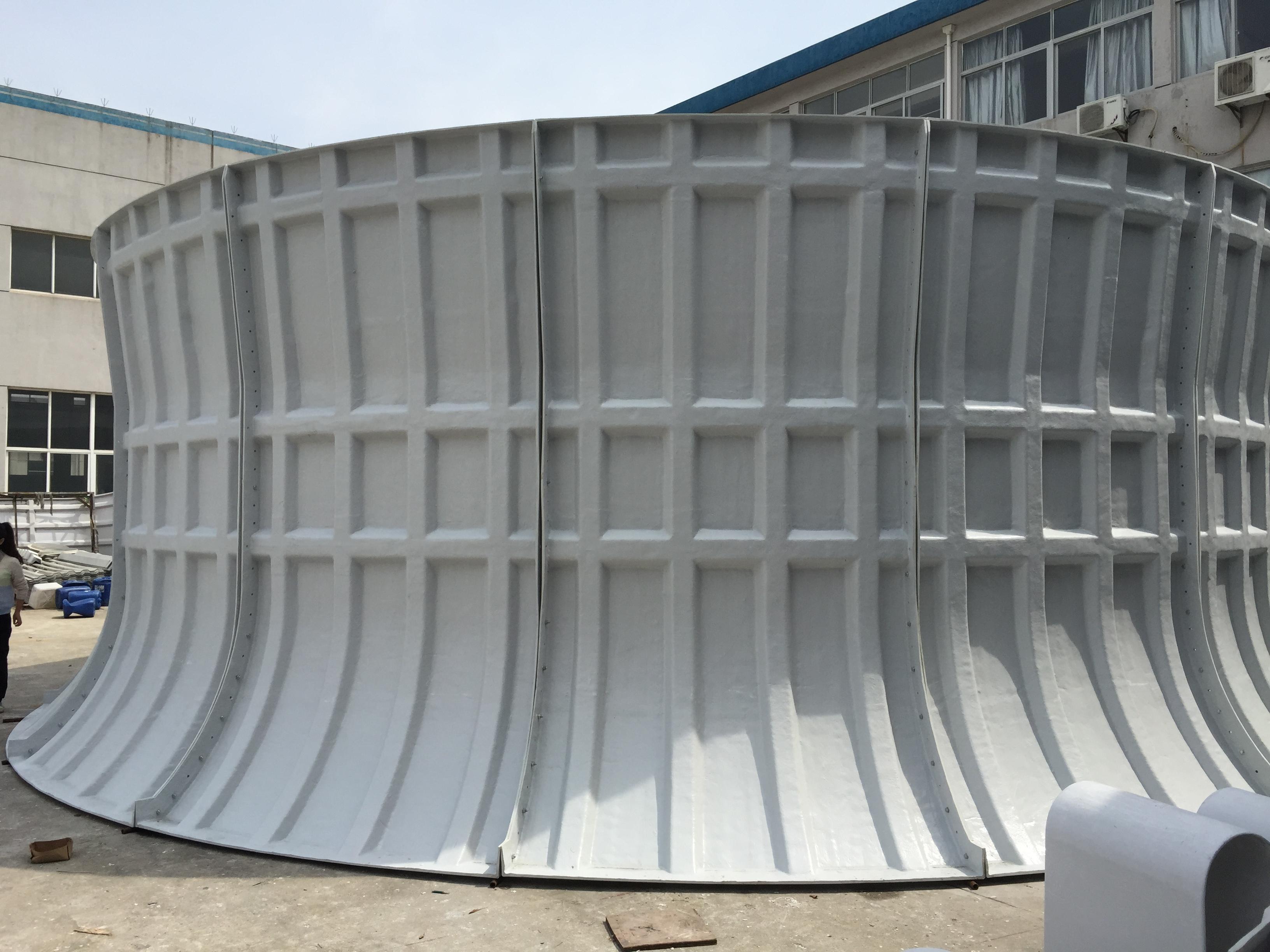
What Is an FRP Cooling Tower Fan Stack?
An FRP Cooling Tower Fan Stack is a cylindrical or specially shaped enclosure installed around the fan section of a cooling tower. It is commonly manufactured using fiberglass reinforcement combined with a suitable resin system.
The fan stack is designed to guide the air discharged by the cooling tower fan. Its dimensions, profile, surface condition, and installation position can influence airflow behavior and the operating conditions around the fan.
Main Functions of a Cooling Tower Fan Stack
A properly designed fan stack performs several important functions.
1. Guiding Exhaust Airflow
The fan stack helps direct air upward and away from the cooling tower structure. Its geometry should be compatible with the fan diameter and operating requirements.
2. Providing Fan Enclosure
The stack surrounds the fan assembly and helps define the discharge area. Correct dimensions and installation clearances are important for safe and reliable operation.
3. Supporting Aerodynamic Performance
A suitable stack profile can help maintain a consistent airflow path. However, actual fan efficiency depends on the complete system, including fan blade design, pitch, speed, air resistance, and operating conditions.
4. Protecting the Fan Area
The enclosure can help separate the fan discharge area from surrounding structural components and reduce exposure to certain external conditions.
Why Does Material Selection Matter?
Cooling towers operate in environments where water vapor, chemical substances, airborne contaminants, and temperature changes may affect structural materials.
Traditional metal fan stacks can experience corrosion when protective coatings deteriorate or when the operating environment is particularly aggressive. FRP offers an alternative because its composite structure does not depend on a conventional steel surface coating for its basic corrosion resistance.
How Does an FRP Cooling Tower Fan Stack Resist Corrosion?
Corrosion resistance is one of the main reasons industrial facilities consider FRP fan stacks. Unlike ordinary carbon steel, FRP does not undergo the same electrochemical rusting process.
Its resistance depends on the resin system, fiberglass reinforcement, manufacturing quality, surface protection, and the chemicals present in the operating environment.
1. Fiberglass Reinforcement Provides Structural Strength
Fiberglass reinforcement is embedded within the resin matrix to create a composite structure.
Strength-to-Weight Advantages
Fiberglass helps provide structural strength while keeping the overall component relatively lightweight. This can make transportation, lifting, and installation easier compared with many conventional metal alternatives of similar dimensions.
Composite Construction
The resin binds the reinforcement together and helps protect the internal structure from environmental exposure. Proper resin selection and laminate design are essential for achieving the required mechanical and chemical performance.
2. Resin Selection Influences Chemical Resistance
The resin is a critical part of an FRP Cooling Tower Fan Stack.
Different resin systems offer different levels of resistance to moisture, acids, alkalis, solvents, and other chemicals.
Common Resin Considerations
Orthophthalic polyester resin: Often used in general-purpose FRP applications where environmental conditions are relatively moderate.
Isophthalic polyester resin: Commonly considered when improved water and chemical resistance is required.
Vinyl ester resin: Often selected for more demanding chemical environments where enhanced corrosion resistance is needed.
The correct choice depends on the actual operating conditions. Buyers should provide the manufacturer with information about chemical exposure, water quality, temperature, and atmospheric conditions before confirming the material specification.
3. Protective Surface Layers Help Reduce Environmental Damage
The outer surface of an FRP fan stack may use a suitable resin-rich layer, gel coat, or protective coating.
Benefits of Surface Protection
Helps reduce direct exposure of reinforcement fibers.
Improves surface finish and appearance.
Supports resistance to moisture penetration.
Helps protect against weathering and ultraviolet exposure when appropriately formulated.
Surface protection does not make an FRP structure maintenance-free. Regular inspection is still necessary, particularly around joints, edges, and damaged areas.
What Are the Main Advantages of an FRP Cooling Tower Fan Stack?
FRP fan stacks offer several practical advantages for industrial cooling tower projects.
Excellent Corrosion Resistance
Corrosion can gradually weaken metal components, damage protective coatings, and increase maintenance costs.
FRP avoids conventional rust formation and can perform well in many humid and corrosive environments when the resin system is correctly selected.
Suitable for Challenging Industrial Environments
FRP fan stacks may be suitable for:
Chemical processing facilities
Petrochemical plants
Wastewater treatment facilities
Coastal industrial installations
Steel manufacturing plants
Power generation facilities
Industrial HVAC systems
The actual suitability depends on the chemicals, temperatures, and exposure conditions at each site.
Lightweight Construction
FRP generally offers a lower weight than comparable steel structures, although the final weight depends on the design and laminate thickness.
Easier Transportation and Installation
A lighter fan stack may reduce lifting requirements and simplify handling during replacement projects.
For large cooling towers, this can be particularly useful when installation access is limited or when existing structures have restrictions on additional loads.
Design Flexibility
FRP can be manufactured in different shapes and dimensions to match specific cooling tower configurations.
Custom Dimensions
Common customization requirements include:
Custom manufacturing helps ensure that the fan stack fits the existing cooling tower structure.
Weather and Moisture Resistance
Cooling towers are continuously exposed to moisture and changing outdoor conditions.
A properly manufactured FRP structure can resist moisture-related deterioration and maintain its structural function under suitable operating conditions.
UV Protection
Long-term sunlight exposure may cause surface aging, discoloration, or degradation in some FRP materials.
Using appropriate UV-resistant gel coats or protective coatings can help improve outdoor durability.
Lower Corrosion-Related Maintenance
Because FRP does not require the same rust-prevention treatment as conventional carbon steel, it may reduce certain maintenance activities.
Potential Lifecycle Benefits
Reduced corrosion-related repairs can help lower maintenance demands over time. However, the total lifecycle cost should also account for initial purchase price, installation, inspection, repairability, and the expected operating environment.
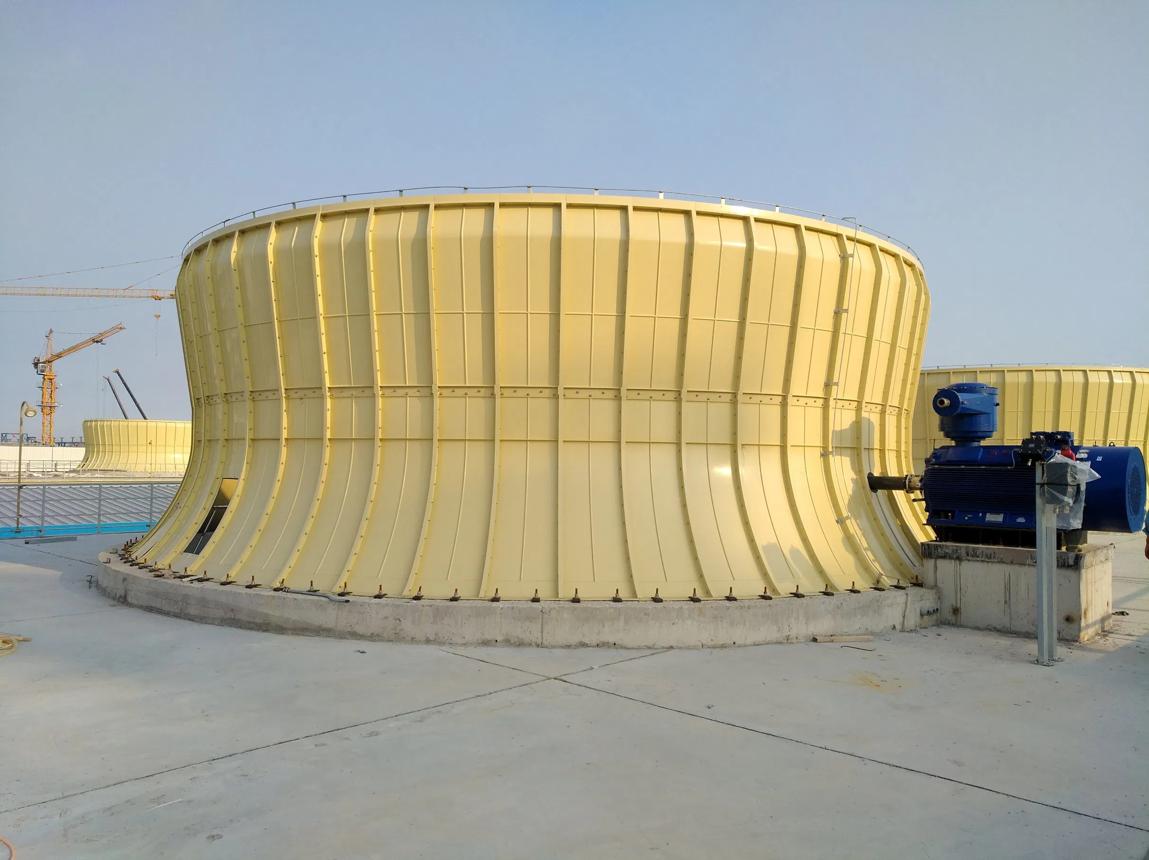
FRP vs. Steel Cooling Tower Fan Stack: Which Is Better?
FRP and steel are both used in industrial cooling tower structures. The right choice depends on project requirements rather than material preference alone.
Comparison of Key Performance Factors
Comparison Factor | FRP Fan Stack | Steel Fan Stack |
Corrosion resistance | Generally excellent with suitable resin | Depends heavily on coating and protection |
Weight | Generally lightweight | Usually heavier |
Customization | Flexible composite molding | Fabrication and forming |
Maintenance | Requires inspection and composite repairs | May require coating maintenance and rust treatment |
Chemical resistance | Depends on resin selection | Depends on metal grade and protection |
UV exposure | May require UV-resistant surface protection | Coating condition should be monitored |
Installation | Often easier to handle due to lower weight | May require more lifting capacity |
When Is FRP a Better Choice?
FRP is worth considering when corrosion resistance, reduced structural weight, and custom dimensions are important project requirements.
Applications with Frequent Moisture Exposure
Cooling towers naturally operate in wet environments. FRP can be advantageous where continuous moisture exposure creates challenges for conventional metal structures.
Applications with Chemical Exposure
Chemical plants and wastewater facilities may expose fan stacks to aggressive substances. A properly specified FRP system can provide better resistance than unprotected carbon steel.
When Should Steel Be Considered?
Steel may remain suitable when the project has established metal fabrication standards, specific structural requirements, or existing support arrangements designed for steel components.
The final selection should consider mechanical loads, environmental conditions, maintenance resources, and total lifecycle costs.
How Is an FRP Cooling Tower Fan Stack Manufactured?
Manufacturing quality directly affects the strength, durability, and dimensional accuracy of an FRP Cooling Tower Fan Stack.
Although production methods vary by manufacturer and product design, the process generally includes several key stages.
1. Engineering Design and Dimension Confirmation
The manufacturer first reviews the cooling tower configuration and customer requirements.
Important Design Information
Fan diameter and operating speed
Required stack height
Tower structure dimensions
Fan-to-stack clearance
Flange and connection details
Environmental exposure
Installation requirements
Accurate measurements help prevent fitting problems during installation.
2. Raw Material Preparation
Fiberglass reinforcement and resin are selected according to the required mechanical and chemical properties.
Material Quality Control
Manufacturers should check material specifications, storage conditions, and compatibility before production.
Incorrect resin selection or unsuitable reinforcement can affect the finished product's performance.
3. Molding and Lamination
The selected materials are formed into the required fan stack shape using an appropriate manufacturing process.
Laminate Structure
The reinforcement arrangement, resin distribution, and laminate thickness influence the mechanical characteristics of the finished structure.
Consistent material application is important for reducing defects such as dry areas, air pockets, and uneven thickness.
4. Curing and Surface Finishing
After forming, the composite structure is cured under controlled conditions.
Surface Inspection
The manufacturer should inspect the surface for visible defects, including:
The surface may then receive suitable finishing or protective treatment.
5. Dimensional and Quality Inspection
Before shipment, the fan stack should be checked against the approved drawings and specifications.
Key Inspection Points
A well-controlled inspection process helps reduce installation difficulties and improve product consistency.
What Factors Should Buyers Consider When Selecting an FRP Cooling Tower Fan Stack?
Choosing the right product involves more than comparing prices. Buyers should evaluate material specifications, engineering compatibility, manufacturing quality, and supplier capabilities.
Confirm the Cooling Tower Dimensions
The fan stack must match the existing or newly designed cooling tower.
Check the Fan and Stack Relationship
The inside diameter and shape of the stack should be compatible with the fan arrangement and specified clearances.
Incorrect dimensions can create installation problems or interfere with the intended airflow path.
Evaluate the Operating Environment
The environment determines which FRP material system is appropriate.
Consider These Conditions
A supplier should understand these conditions before recommending the resin system.
Review Structural Requirements
The fan stack must withstand its expected operating and environmental loads.
Important Structural Considerations
For large or unusual installations, engineering verification should be completed before production.
Assess Manufacturer Experience
A reliable FRP fan stack manufacturer should be able to explain its design and production capabilities.
Questions to Ask a Supplier
What FRP resin systems are available?
Can the fan stack be manufactured according to customer drawings?
How is laminate thickness controlled?
What dimensional inspections are performed?
Can the supplier provide material specifications?
How are packaging and transportation handled?
Can the manufacturer support replacement projects?
Clear technical communication helps buyers compare suppliers more accurately.
What Are the Common Problems with FRP Cooling Tower Fan Stacks?
Although FRP offers strong corrosion resistance, it can still experience damage under unsuitable operating or maintenance conditions.
Surface Cracks and Impact Damage
Cracks may develop because of accidental impact, excessive local stress, poor handling, or structural movement.
Recommended Inspection
Check the damaged area to determine whether the problem is limited to the surface or extends into the laminate.
Small surface defects and deeper structural cracks require different repair approaches.
Delamination
Delamination occurs when layers within the composite structure separate.
Possible Causes
Manufacturing defects
Excessive mechanical stress
Impact damage
Water entering damaged areas
Inappropriate repair materials
Delamination should be evaluated by a qualified technician before the fan stack returns to service.
UV-Related Surface Aging
Long-term sunlight exposure may gradually affect the FRP surface.
Preventive Measures
Use appropriate UV-resistant surface protection and inspect the exterior periodically for discoloration, chalking, or surface deterioration.
Loose Flanges and Connection Problems
Even a corrosion-resistant FRP body can experience problems at its connection points.
Why Connection Inspection Matters
Loose bolts, uneven installation, and excessive tightening can create localized stress around the flange.
Use the specified fastening method and avoid applying excessive force during installation.
Vibration and Structural Movement
Vibration can affect the fan stack and its connections over time.
Identify the Root Cause
Before repairing the stack, inspect the fan assembly, blade balance, blade pitch, gearbox, bearings, shaft, and mounting structure.
The fan stack should not automatically be treated as the source of vibration.
How Can You Maintain an FRP Cooling Tower Fan Stack?
FRP fan stacks require less corrosion-related maintenance than many conventional steel alternatives, but regular inspection remains important.
Establish a Routine Inspection Schedule
The inspection frequency should reflect the cooling tower's operating conditions and the manufacturer's recommendations.
Areas to Inspect
Keep the Surface Clean
Accumulated dirt, chemical deposits, and other contaminants should be removed using cleaning methods compatible with the FRP resin and surface coating.
Avoid aggressive chemicals or abrasive tools unless their suitability has been confirmed.
Repair Damage Promptly
Minor surface damage should be evaluated and repaired before it develops into a more serious problem.
Follow Suitable Repair Procedures
Composite repairs should use compatible resin and reinforcement materials. Structural damage may require professional assessment rather than simple surface coating.
Monitor Fan Operation
The fan assembly and stack operate as part of one system.
Regularly monitoring vibration, noise, fan clearance, and connection conditions can help identify problems before they cause extensive damage.
Where Are FRP Cooling Tower Fan Stacks Commonly Used?
FRP fan stacks are used in various industrial environments where corrosion resistance, lightweight construction, and custom fabrication are valuable.
Chemical and Petrochemical Plants
Chemical processing environments may contain moisture and airborne substances that accelerate metal corrosion.
A properly specified FRP fan stack can provide a suitable alternative for selected applications.
Power Generation Facilities
Power plants depend on reliable cooling systems to support continuous operations.
FRP fan stacks can be considered for cooling tower projects where reduced corrosion-related maintenance is desirable.
Wastewater Treatment Plants
Wastewater facilities often experience humid conditions and exposure to corrosive gases or chemical treatment substances.
The resin system should be selected according to the actual exposure profile.
Steel and Metallurgical Industries
Steel production environments may expose cooling tower equipment to moisture, dust, and industrial contaminants.
FRP structures can help address corrosion concerns when correctly engineered for the site's mechanical and environmental requirements.
Commercial and Industrial HVAC Systems
Large commercial buildings, factories, and industrial facilities use cooling towers to remove heat from circulating water systems.
FRP fan stacks can be customized for different cooling tower sizes and configurations.
Why Work with a Professional FRP Cooling Tower Fan Stack Manufacturer?
Working with an experienced manufacturer helps ensure that the product meets the project's dimensional, material, and structural requirements.
Custom Engineering Support
A professional supplier should be able to review drawings, confirm dimensions, and recommend an appropriate construction method.
Solutions for Replacement Projects
For an existing cooling tower, the manufacturer should evaluate the original fan stack dimensions and connection arrangement.
Where original drawings are unavailable, clear measurements and photographs can help establish the replacement specifications.
Consistent Manufacturing Quality
Quality control should cover raw materials, production processes, finished dimensions, and surface condition.
Technical Documentation
Depending on project requirements, buyers may request:
Flexible Production Capabilities
Different cooling towers may require different fan stack diameters, heights, thicknesses, and flange designs.
A manufacturer with customization capabilities can produce components according to approved technical drawings rather than relying only on standard sizes.
What Information Is Needed for an FRP Cooling Tower Fan Stack Quotation?
Providing complete technical information helps manufacturers prepare more accurate quotations and reduces the risk of specification misunderstandings.
Basic Product Requirements
Buyers should prepare the following details:
Information | Purpose |
Fan stack diameter | Confirms the main dimensional requirement |
Stack height | Determines the overall structure |
Wall thickness | Defines the required laminate construction |
Flange dimensions | Ensures connection compatibility |
Bolt-hole arrangement | Supports accurate installation |
Resin requirement | Matches the operating environment |
Quantity | Supports production and pricing calculations |
Delivery destination | Helps determine shipping arrangements |
Drawings and Reference Photos
Technical drawings are particularly useful for custom fan stack projects.
If drawings are unavailable, buyers can provide photographs, manual measurements, and the cooling tower model where known.
Operating Environment
Information about temperature, chemical exposure, humidity, and outdoor conditions helps the supplier recommend an appropriate material specification.
Frequently Asked Questions About FRP Cooling Tower Fan Stacks
Is an FRP Cooling Tower Fan Stack Better Than a Steel Fan Stack?
FRP can be a better option in many corrosive and moisture-intensive environments because it does not rust like conventional carbon steel. Steel may still be appropriate for projects with specific structural or fabrication requirements.
Can FRP Fan Stacks Be Customized?
Yes. FRP fan stacks can be manufactured in different diameters, heights, wall thicknesses, flange configurations, and surface finishes according to approved project specifications.
Does an FRP Fan Stack Require Maintenance?
Yes. Although it can reduce corrosion-related maintenance, it still requires regular inspection for cracks, delamination, impact damage, UV aging, and loose connections.
Is FRP Suitable for Chemical Environments?
FRP can be suitable for many chemical environments, but resistance depends on the resin system, chemical concentration, temperature, and exposure conditions. Buyers should confirm compatibility before ordering.
Can an Existing Metal Fan Stack Be Replaced with FRP?
In many projects, a metal fan stack can be replaced with a custom FRP structure. However, dimensions, support conditions, connection details, wind loads, and fan clearances should be checked before replacement.
Does a Lightweight Fan Stack Improve Cooling Tower Efficiency?
A lighter structure can simplify installation and reduce structural weight. Airflow performance, however, depends primarily on the complete fan and stack design. A suitable aerodynamic profile and correct installation are necessary.
Conclusion: Is an FRP Cooling Tower Fan Stack a Smart Long-Term Investment?
An FRP Cooling Tower Fan Stack offers a practical solution for industrial cooling systems that require corrosion resistance, lightweight construction, and flexible customization. Its composite structure can help reduce rust-related maintenance and provide reliable service in many demanding environments.
However, long-term performance depends on more than the choice of FRP material. Resin compatibility, laminate design, manufacturing quality, structural calculations, correct installation, and regular inspection all contribute to the reliability of the finished product.
For industrial buyers, selecting a professional manufacturer with suitable engineering and customization capabilities is an important step toward obtaining a fan stack that matches the cooling tower's operating requirements. By evaluating material specifications and project conditions carefully, companies can make a more informed decision and improve the long-term reliability of their cooling tower equipment.


