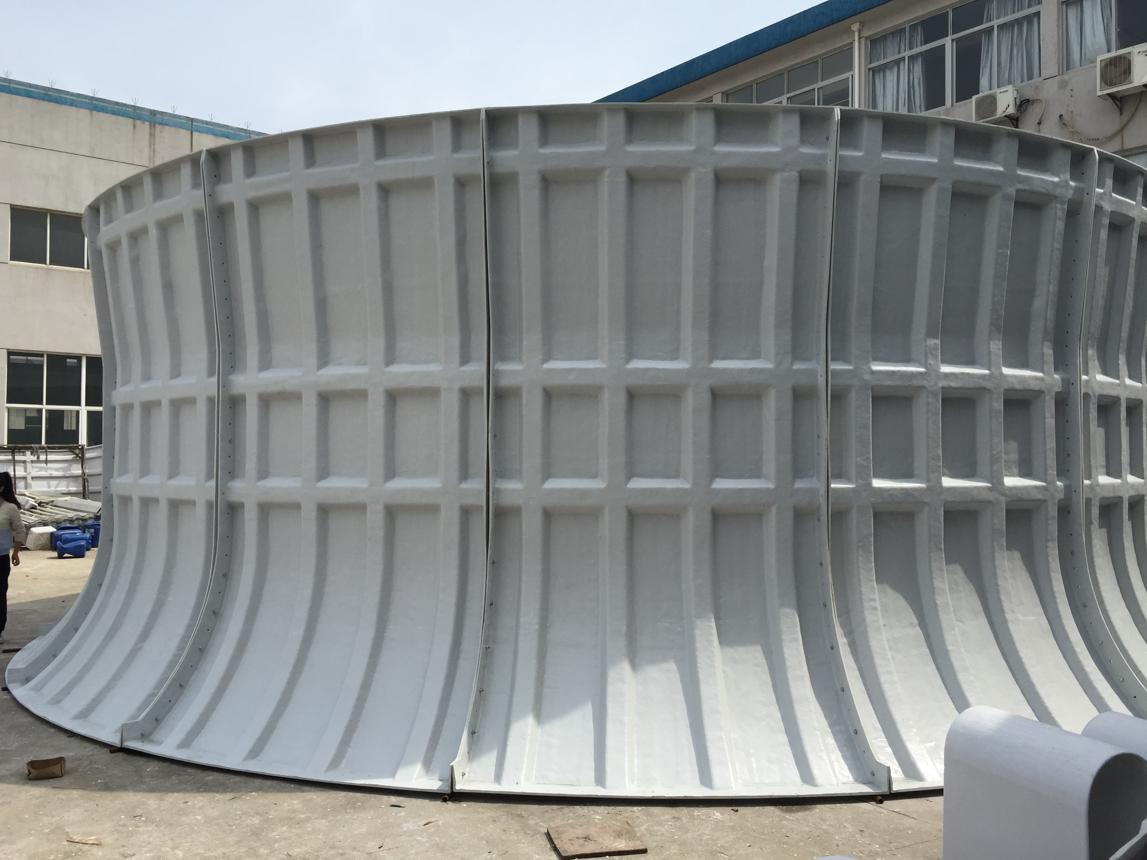
A cooling tower fan does more than simply move air. It plays a central role in maintaining the airflow needed for heat rejection, and the structure surrounding that fan can make a meaningful difference to overall system performance. One important component is the cooling tower fan cylinder.
In modern industrial cooling systems, FRP cooling tower fan cylinders have become a popular option because they combine corrosion resistance, relatively low weight, and flexible design possibilities. But what makes FRP a practical choice? How does a fan cylinder influence airflow? And what should you consider before purchasing or replacing one?
In this guide, we will explore the structure, benefits, features, applications, selection factors, and maintenance requirements of FRP cooling tower fan cylinders. Whether you operate an industrial cooling tower or are sourcing replacement components, understanding these details can help you make a more informed decision.
1. Introduction to FRP Cooling Tower Fan Cylinders
An FRP cooling tower fan cylinder is a specially designed enclosure or air-guiding structure installed around the cooling tower fan. It is commonly used in mechanical-draft cooling towers to guide air through the fan section and help direct the discharged air away from the tower.
FRP stands for Fiber Reinforced Plastic, also commonly called fiberglass-reinforced plastic. The material combines reinforcing glass fibers with a resin matrix. This construction offers a useful balance of strength, weight, and resistance to many industrial environmental conditions.
Unlike ordinary metal structures, FRP does not rust in the same way as carbon steel. This makes it attractive for cooling towers that operate in humid environments and are exposed to water spray, chemical treatment products, and outdoor weather.
2. What Is an FRP Cooling Tower Fan Cylinder?
An FRP cooling tower fan cylinder is a circular or specially shaped structure designed to surround and guide the airflow generated by a cooling tower fan. Depending on the tower design, it may be called a fan cylinder, fan stack, or fan discharge stack. These terms can overlap in everyday use, although the exact structure and function may differ between manufacturers and tower configurations.
The cylinder is not simply a protective cover. Its geometry, height, diameter, and internal surface can influence airflow behavior, fan installation, and maintenance access. A poorly matched structure may create unnecessary airflow resistance or interfere with fan operation.
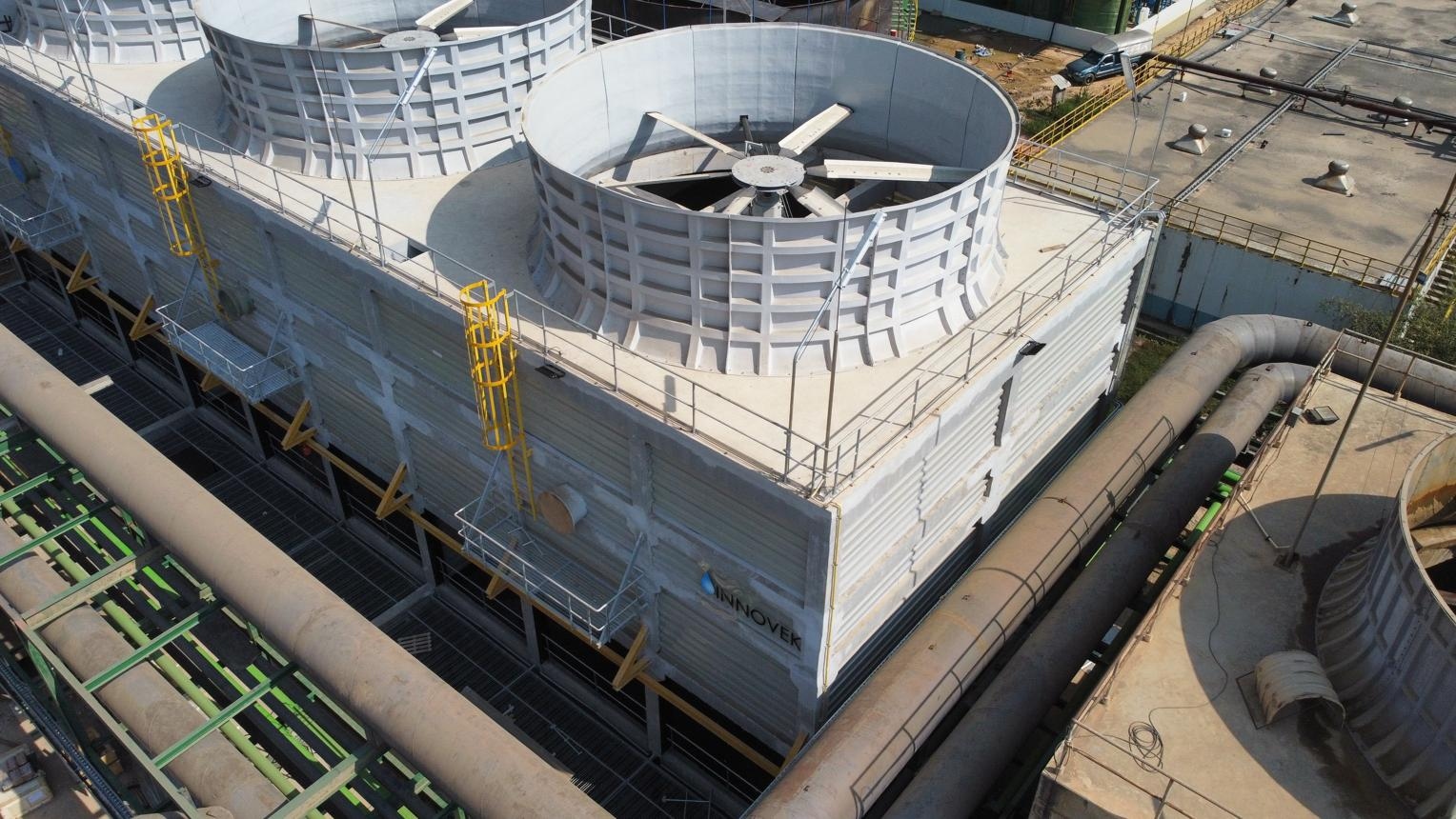
2.1 The Basic Structure of a Fan Cylinder
A typical FRP fan cylinder may include a molded or fabricated FRP shell, supporting flanges, mounting brackets, reinforcement ribs, and connection sections. Some designs use several sections that are assembled on site, while others use larger integrated components.
The exact construction depends on the cooling tower model, fan diameter, wind load, installation height, and operating environment. Reinforcement is especially important because the structure must withstand its own weight, environmental loads, vibration transmitted through the supporting structure, and pressure fluctuations around the fan.
2.2 How the Fan Cylinder Works
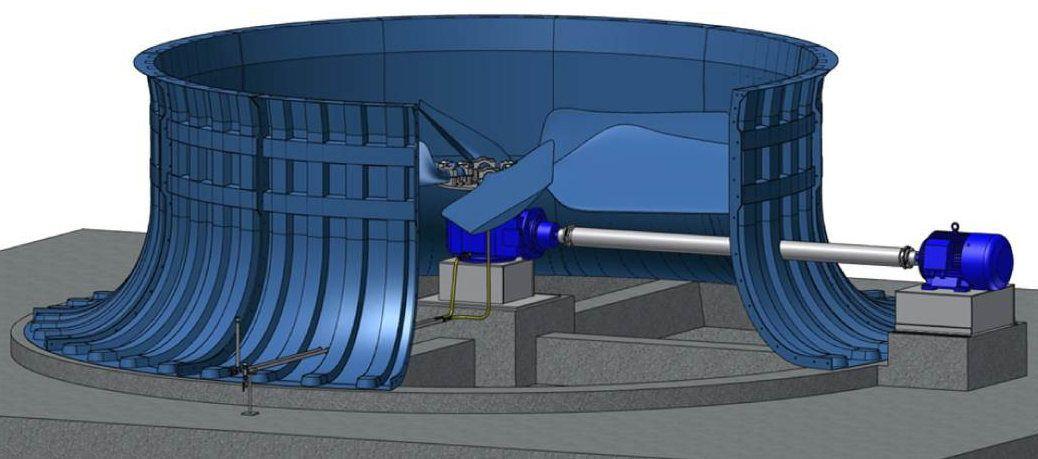
During operation, the cooling tower fan draws or pushes air through the tower. The fan cylinder provides a defined passage around the fan and helps guide the air through the discharge section.
In an induced-draft cooling tower, for example, the fan is generally located near the top of the tower and pulls air upward through the fill and water distribution area.
The cylinder helps organize this airflow and can reduce undesirable flow separation when correctly designed. However, it does not create airflow by itself. The fan, blade geometry, fan speed, tower resistance, and discharge arrangement all work together.
3. Why Is the Fan Cylinder Important in a Cooling Tower?
Imagine trying to direct water through a pipe without a proper passage. Some water would move in the wrong direction, and the system would become less predictable. A fan cylinder serves a similar guiding purpose for air.
It helps define the fan discharge area, supports the fan arrangement, and can reduce the risk of hot, moist discharge air returning to the tower air inlet. Its design should match the fan and tower rather than being selected as an isolated accessory.
3.1 Improving Airflow Efficiency
A properly designed cylinder provides a suitable passage for air leaving the fan. Its diameter and profile should be compatible with the fan diameter and operating conditions. A smooth internal surface can also help avoid unnecessary disturbances.
Still, airflow efficiency depends on the entire system. Fan blade pitch, speed, inlet conditions, discharge losses, and tower resistance must all be considered. Simply installing a larger cylinder does not automatically increase airflow.
3.2 Supporting Stable Fan Operation
The fan cylinder is part of the mechanical environment surrounding the fan. It must maintain adequate clearance between the fan blades and the cylinder wall under normal operating conditions.
This clearance helps prevent contact caused by vibration, shaft movement, thermal expansion, or structural deflection.
The cylinder and its supporting structure should therefore be checked during fan installation and maintenance.
3.3 Reducing Air Recirculation
Cooling towers discharge warm, moisture-rich air. If this air returns to the air inlet, the entering air may become warmer and more humid, reducing the tower's ability to reject heat.
A suitable fan discharge arrangement can help direct exhaust air away from the air intake. The effectiveness of this arrangement also depends on tower height, wind direction, nearby buildings, and site layout.
4. Key Benefits of FRP Cooling Tower Fan Cylinders
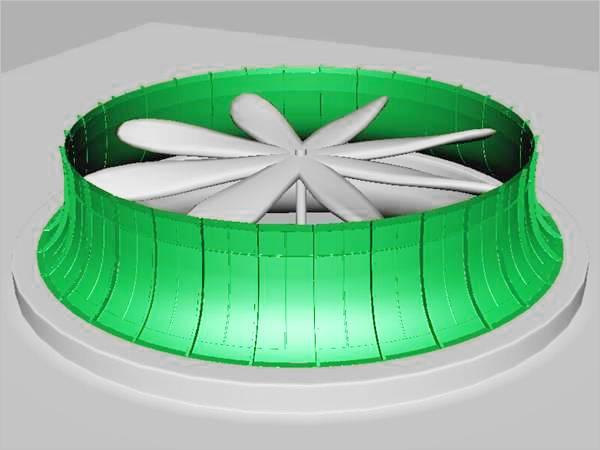
Why do many cooling tower designers consider FRP for fan cylinder applications? The main reasons are its resistance to corrosion, low weight, design flexibility, and relatively straightforward maintenance. These advantages can be particularly valuable in wet industrial environments.
4.1 Excellent Corrosion Resistance
Corrosion is a common challenge for cooling tower equipment. Metal structures may be exposed to moisture, oxygen, water treatment chemicals, and airborne contaminants. Over time, these conditions can damage protective coatings and lead to rust.
FRP does not rust like ordinary carbon steel. Its resistance to specific chemicals depends on the resin system, fiber construction, temperature, and exposure conditions.
For this reason, buyers should confirm material compatibility with the actual cooling tower environment instead of assuming that every FRP product offers the same chemical resistance.
4.2 Lightweight but Strong Construction
Compared with many steel alternatives, FRP structures can offer a lower component weight while maintaining suitable mechanical strength. Lower weight may simplify transportation, lifting, and installation.
It can also reduce the load transferred to supporting structures, although the complete structural design must still be checked.
This advantage can be useful when replacing an older fan cylinder or upgrading an existing cooling tower where installation access is limited.
4.3 Weather and Moisture Resistance
Cooling towers often operate outdoors and experience rain, sunlight, humidity, and temperature changes. A properly formulated FRP material can provide good resistance to moisture and outdoor exposure.
For long-term outdoor use, buyers should ask about the resin system, surface protection, UV resistance, and any recommended inspection or coating requirements. These details help determine whether the product is suitable for the local climate.
4.4 Low Maintenance Requirements
FRP does not require the same rust-control procedures as unprotected carbon steel. This can reduce the need for frequent repainting and corrosion-related repairs. Its smooth surface may also make routine cleaning easier.
However, low maintenance does not mean maintenance-free. Cracks, impact damage, loose connections, delamination, and support deterioration still need attention.
4.5 Long-Term Cost Advantages
The purchase price is only one part of the total cost of a fan cylinder. Transportation, lifting, installation, coating, inspection, repair, and downtime also affect the overall investment.
An FRP design may offer long-term value when its material properties match the operating environment. The best option is not necessarily the cheapest product, but the one that provides reliable service at an acceptable lifecycle cost.
5. Main Features of an FRP Fan Cylinder
When evaluating an FRP cooling tower fan cylinder, pay attention to more than its appearance. Material quality, dimensions, surface finish, reinforcement, and connection design all influence its suitability.
5.1 Smooth Inner Surface
A smooth inner surface helps provide a clean airflow passage and makes visual inspection and cleaning easier.
Surface defects, protrusions, or damaged sections should be evaluated because they may affect local airflow or indicate structural problems.
5.2 Aerodynamic Design
The cylinder profile should be compatible with the fan and the cooling tower's airflow requirements. Some systems use a straight cylindrical section, while others incorporate a shaped discharge profile.
The appropriate design depends on fan geometry and the tower manufacturer's engineering specifications.
Do not assume that one profile works for every cooling tower. Fan diameter, speed, blade design, and discharge conditions all matter.
5.3 Customizable Dimensions
FRP fan cylinders can be designed in different diameters, heights, thicknesses, and connection arrangements. Customization is useful for replacement projects, especially when the original equipment is old or the tower has been modified.
Before ordering, provide accurate drawings and measurements. The fan diameter alone is not enough to determine the correct cylinder size.
5.4 Structural Reinforcement
Reinforcement ribs, flanges, and mounting points help the cylinder maintain its shape and transfer loads to the supporting structure.
Their design should account for applicable wind loads, component weight, installation conditions, and other project requirements.
A qualified designer should verify the structure for the intended site conditions rather than relying on a generic thickness recommendation.
6. FRP vs. Steel Cooling Tower Fan Cylinders
FRP and steel are both used in industrial equipment, but they have different characteristics.
Steel can provide high stiffness and may be suitable for demanding structural applications. However, carbon steel generally requires effective corrosion protection in wet environments.
FRP offers corrosion resistance and lower weight, but its mechanical properties and long-term performance depend on the material system and manufacturing quality.
| Comparison Factor | FRP Fan Cylinder | Steel Fan Cylinder |
| Corrosion | Does not rust like carbon steel; chemical compatibility must be checked | Requires suitable corrosion protection in wet environments |
| Weight | Generally lighter | Generally heavier |
| Maintenance | Often less corrosion-related maintenance | Coating inspection and corrosion control may be needed |
| Customization | Can be molded or fabricated into different shapes | Can be fabricated from metal sections |
| Structural behavior | Depends on laminate design and reinforcement | Depends on steel grade, thickness, and structural design |
| Initial cost | Varies by design and resin system | Varies by steel grade, fabrication, and coating |
The right choice depends on project conditions, engineering requirements, budget, and expected service life.
7. Common Applications of FRP Fan Cylinders
FRP fan cylinders are used in many mechanical-draft cooling tower configurations. Their suitability depends on the tower design, fan arrangement, operating environment, and required structural performance.
7.1 Industrial Manufacturing Plants
Manufacturing facilities use cooling towers to remove heat from process water, chillers, compressors, furnaces, and production equipment.
In these environments, humidity and industrial contaminants can create challenging conditions for exposed components.
An appropriately specified FRP fan cylinder can provide a corrosion-resistant airflow structure for suitable industrial cooling tower installations.
7.2 Power Generation Facilities
Power plants and other energy facilities rely on heat rejection systems to support stable operation. Cooling tower fans may operate for long periods, making component reliability important.
For these projects, fan cylinder design must be coordinated with fan performance, structural loads, site wind conditions, and maintenance access.
Large installations require project-specific engineering rather than simple product substitution.
7.3 HVAC and Commercial Buildings
Commercial buildings, hospitals, hotels, data centers, and large office complexes may use cooling towers as part of their HVAC systems.
Reliable airflow helps maintain chiller heat rejection and overall cooling performance.
FRP may be a practical material option where moisture resistance and manageable component weight are important.
7.4 Chemical and Process Industries
Chemical plants and process facilities can expose cooling tower components to more aggressive environments than ordinary building HVAC systems.
In these cases, resin selection and chemical compatibility are especially important.
The buyer should identify the chemicals, concentrations, operating temperatures, and possible exposure routes before approving an FRP specification.
8. How to Choose the Right FRP Cooling Tower Fan Cylinder
Choosing the right product begins with understanding the existing cooling tower. A cylinder that looks similar to the original component may still have different dimensions, mounting points, or airflow characteristics.
Use the following factors as a practical purchasing checklist.
8.1 Check Fan Diameter and Tower Configuration
Record the fan diameter, fan location, tower type, cylinder height, mounting arrangement, and available installation space.
Confirm whether the tower is induced draft or forced draft and identify any special discharge profile.
Where possible, provide the original equipment drawing, photographs, and equipment model. These details reduce the risk of ordering an incompatible component.
8.2 Consider Airflow and Fan Performance
The cylinder should be matched to the fan's operating conditions. Review fan speed, airflow requirement, blade geometry, and manufacturer-recommended clearances.
A change in cylinder geometry may affect the airflow path and should be evaluated by a qualified cooling tower or fan engineer.
8.3 Evaluate Material Quality
Ask for information about the resin type, glass fiber reinforcement, laminate construction, surface finish, UV protection, and quality inspection process.
If the cooling water or surrounding environment contains aggressive chemicals, confirm compatibility before placing an order.
8.4 Check Installation Conditions
Consider crane access, lifting points, transport limits, site restrictions, support condition, and the sequence of installation.
A sectional design may be more practical where access is restricted, while a larger integrated section may reduce the number of field connections.
The choice depends on project logistics and engineering requirements.
9. FRP Fan Cylinder Installation Considerations
Safe installation is essential for reliable operation.
Before work begins, shut down the cooling tower and isolate all relevant electrical and mechanical equipment. Follow the site's lockout/tagout procedures and confirm that the fan cannot start unexpectedly.
Inspect the supporting structure and mounting surfaces before lifting the new cylinder into place. Check that the cylinder is correctly positioned, that connections are secure, and that the required fan-to-cylinder clearance is maintained.
Use suitable lifting equipment and follow the approved lifting plan.
After installation, qualified personnel should inspect the assembly, remove tools and loose materials, reinstall guards, and complete the required checks before restarting the equipment.
10. Maintenance Tips to Extend Service Life
Although FRP is corrosion-resistant, routine inspection remains important. A simple inspection program can identify small problems before they become expensive repairs.
Recommended checks include:
Inspect the inner and outer surfaces for cracks, impact damage, and visible deformation.
Check flanges, bolts, brackets, and support connections for looseness or deterioration.
Look for signs of delamination, exposed fibers, or damaged surface coatings.
Confirm that the cylinder has not shifted and that fan blade clearance remains adequate.
Remove dirt and deposits using cleaning methods approved for the FRP resin system.
Record inspection findings and repair work for future reference.
Inspection frequency should reflect operating hours, weather exposure, vibration, and the manufacturer's recommendations.
11. Common Problems and Practical Solutions
Even a well-designed FRP cooling tower fan cylinder can develop problems if it is incorrectly installed, exposed to unsuitable conditions, or poorly maintained.
Cracks or impact damage: Identify the cause and assess the damage before attempting a repair. Structural cracks may require specialist evaluation or component replacement.
Loose mounting connections: Check bolts, flanges, brackets, and support structures. Tighten or replace fasteners according to the approved specification.
Surface deterioration: Review UV exposure, chemical contact, cleaning methods, and material suitability. Repair or protective treatment should follow the FRP manufacturer's instructions.
Abnormal vibration or blade contact: Stop the equipment and inspect fan balance, shaft alignment, blade condition, cylinder position, and structural supports. Do not continue operating a fan that may be contacting the cylinder.
12. How Does the Fan Cylinder Affect Cooling Tower Efficiency?
A fan cylinder influences the airflow passage around the fan, so its dimensions and condition can affect the fan's operating environment.
A suitable design can help guide discharge air and avoid unnecessary obstructions. A damaged, poorly aligned, or incorrectly sized cylinder may contribute to airflow disturbance or mechanical clearance problems.
However, cooling tower efficiency cannot be judged by the cylinder alone. Heat rejection also depends on water flow, water distribution, fill condition, fan performance, ambient wet-bulb temperature, drift, and system load.
If a tower is not cooling properly, inspect the complete system before assuming that the fan cylinder is the cause.
13. Why Work with an Experienced Cooling Tower Components Supplier?
Selecting a cooling tower component is not just about finding a product with the right name. You need accurate dimensions, suitable materials, reliable quality, and clear communication about the operating conditions.
An experienced supplier can help review drawings, identify relevant replacement details, and coordinate related components.
Power Tower Cooling Technology (Shaoxing) Co.,Ltd focuses on cooling tower components and related products. Through its website, https://www.coolingtowerpart.com, customers can learn more about cooling tower parts and discuss component requirements for maintenance and replacement projects.
When sourcing an FRP cooling tower fan cylinder, provide your tower model, fan diameter, cylinder dimensions, installation photographs, and operating conditions. These details help establish whether a proposed component is suitable.
Confirm the actual product scope, technical specifications, and manufacturing responsibilities with the supplier before ordering.
14. Frequently Asked Questions
14.1 What Is an FRP Cooling Tower Fan Cylinder Made Of?
It is generally made from glass fiber reinforcement combined with a suitable resin matrix. The specific resin and laminate construction vary according to the product design and operating environment.
14.2 Is FRP Better Than Steel for a Fan Cylinder?
Not in every situation. FRP offers corrosion resistance and lower weight, while steel may provide advantages in stiffness and certain structural applications. The correct choice depends on engineering requirements, exposure conditions, and lifecycle cost.
14.3 Can an FRP Fan Cylinder Be Customized?
Yes. FRP cylinders can be designed with different diameters, heights, profiles, thicknesses, and connection arrangements. Customization should be based on accurate drawings and verified operating requirements.
14.4 How Long Does an FRP Fan Cylinder Last?
There is no universal service-life figure. Actual life depends on resin quality, laminate design, UV exposure, chemical conditions, structural loading, installation quality, and maintenance.
Ask the manufacturer for project-specific durability information and warranty terms.
14.5 Does the Fan Cylinder Need Regular Maintenance?
Yes. Inspect it periodically for cracks, deformation, delamination, loose fasteners, and damage around mounting points. Also check fan clearance and supporting structures during scheduled maintenance.
15. Final Thoughts
An FRP cooling tower fan cylinder is an important airflow and structural component in many mechanical-draft cooling towers. Its corrosion resistance, relatively low weight, design flexibility, and manageable maintenance requirements make it a useful option for a wide range of industrial and commercial applications.
But choosing the right cylinder requires more than selecting FRP as the material. You should check fan dimensions, airflow requirements, structural loads, resin compatibility, installation conditions, and maintenance access.
A correctly matched product can support reliable operation, while an unsuitable design may create unnecessary performance or maintenance problems.
If you are planning a cooling tower component replacement or upgrade, start with accurate equipment information and work with a supplier who understands cooling tower systems. Visit Power Tower Cooling Technology (Shaoxing) Co.,Ltd at https://www.coolingtowerpart.com to explore cooling tower components and discuss your project requirements.


