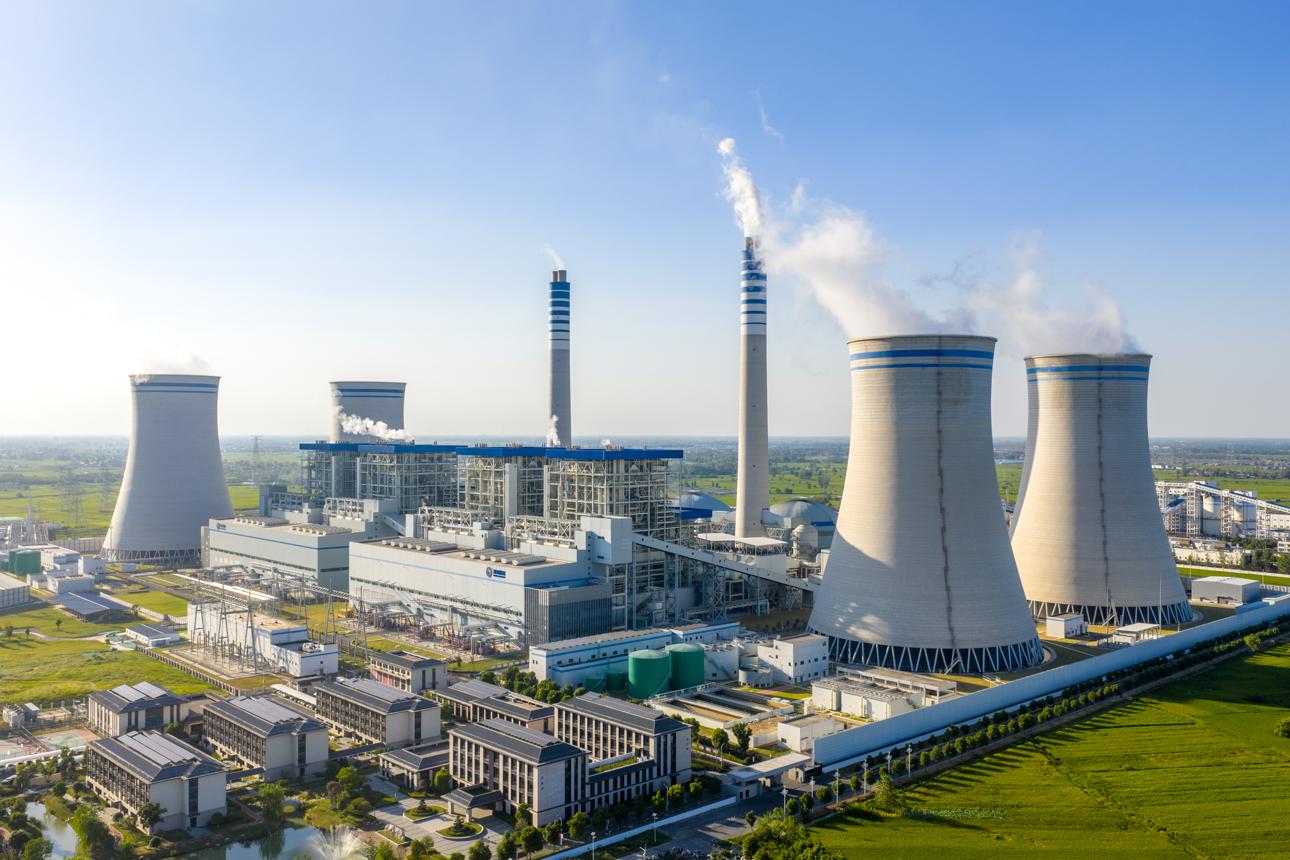
A fanless cooling tower is designed to remove heat from circulating water without using a mechanically driven fan. Instead of relying on a motor to push or pull air through the cooling section, it uses natural airflow created by differences in air temperature and density.
This technology is particularly important in large industrial facilities and power generation plants, where substantial amounts of heat must be rejected continuously. By eliminating the main mechanical fan system, a fanless cooling tower can reduce fan-related electricity consumption and avoid certain rotating-equipment maintenance requirements.
But does that mean a fanless cooling tower is always the most economical option? Not necessarily. Its performance depends on tower height, ambient conditions, airflow resistance, water temperature, and installation space.
In this guide, we will explain how fanless cooling towers work, explore their main types and applications, compare them with mechanical draft cooling towers, and discuss the importance of cooling tower fill and other components. We will also introduce Power Tower Cooling Technology (Shaoxing) Co.,Ltd as a supplier of cooling tower fill and related components.
1. What Is a Fanless Cooling Tower?
A fanless cooling tower is a heat-rejection system that uses natural airflow instead of a powered mechanical fan to move air through the cooling structure.
In conventional cooling towers, fans generate airflow to increase contact between air and circulating water. In a fanless cooling tower, this airflow is created naturally through differences in air density and temperature.
The most familiar example is the natural draft cooling tower commonly found at large power stations. These towers are often very tall and have a distinctive hyperbolic shape. Their structure helps generate natural airflow while providing the strength required to withstand environmental and operational loads.
Fanless cooling towers are generally associated with large-scale cooling applications. They are not simply smaller mechanical cooling towers with their fans removed. Their entire design must support natural air movement.
1.1 What Does Fanless Mean?
The term "fanless" means that the cooling tower does not use a mechanical fan as its primary air-moving device.
Inside a natural draft cooling tower, warm and humid air becomes less dense than the cooler outside air. It rises through the tower and exits from the top. As this air leaves, fresh outside air enters through openings near the bottom.
This continuous movement creates natural airflow.
However, fanless does not mean electricity-free. Pumps, valves, water-treatment equipment, and control systems may still require electrical power. The main difference is that the tower does not need a large fan motor to create its cooling airflow.
1.2 Fanless vs. Fan-Assisted Cooling Towers
The main difference between these systems is how they move air.
A fanless cooling tower relies on natural draft. A fan-assisted cooling tower uses mechanical equipment to move air through the cooling section.
Mechanical draft towers are commonly divided into two categories:
Mechanical draft systems offer more direct control over airflow. Natural draft systems avoid the main fan motor but depend more heavily on tower geometry and environmental conditions.
Neither design is automatically better. The correct choice depends on cooling capacity, site conditions, energy costs, construction budget, and operating requirements.
2. How Does a Fanless Cooling Tower Work?
The working principle of a fanless cooling tower is based on natural convection and heat transfer.
In a natural draft wet cooling tower, hot water enters the upper distribution system and flows downward through the cooling section. At the same time, outside air enters through lower openings and moves upward naturally.
As water and air come into contact, heat and moisture transfer take place. A portion of the water evaporates, removing heat from the remaining water.
The cooled water collects in a basin or collection system before returning to the industrial process.
Meanwhile, warm and humid air rises and escapes through the top of the tower. This movement allows fresh air to enter continuously, maintaining the cooling process.
2.1 The Natural Draft Principle
Natural draft is created by differences in air density.
When air inside the tower absorbs heat and moisture, its properties change. The warm, humid air is generally less dense than the cooler outside air. Because of this density difference, the internal air rises.
As warm air moves upward and leaves the tower, outside air enters through the lower air inlets.
Think of a chimney. When a fire heats the air inside a chimney, the warm air rises and draws fresh air in from below. A natural draft cooling tower works through a similar principle, although its airflow and heat-transfer processes are more complex.
The strength of natural draft depends on several factors, including:
A well-designed tower must balance these factors to achieve the required cooling performance.
2.2 Heat and Mass Transfer
In a wet fanless cooling tower, heat is removed through two main processes: sensible heat transfer and evaporative heat transfer.
Sensible heat transfer occurs when water and air exchange heat because they have different temperatures.
Evaporative heat transfer occurs when a small portion of the circulating water changes into vapor. This phase change requires energy, which is taken from the remaining water.
As a result, the circulating water becomes cooler.
The cooling tower fill is especially important in this process. It spreads water into thin films or droplets, increasing the contact area between water and air.
More effective contact can improve heat and mass transfer, provided that the fill design also allows sufficient airflow.
2.3 The Importance of Tower Height
Tower height is one of the most important design considerations for natural draft cooling towers.
A greater vertical distance between the air inlet and outlet can help establish the natural draft effect. However, increasing tower height alone does not guarantee better cooling performance.
The tower must also have suitable air inlets, internal dimensions, fill arrangements, and exhaust conditions.
If internal resistance is too high, airflow may decrease even when the tower is very tall.
Engineers must therefore consider tower geometry, heat load, weather conditions, and internal component design together.
3. Main Types of Fanless Cooling Towers
Fanless cooling towers can be classified according to their heat-transfer methods and airflow arrangements.
The most common categories include natural draft wet cooling towers, hyperbolic natural draft cooling towers, natural draft dry cooling systems, and atmospheric cooling arrangements.
Each type has different design requirements and applications.
3.1 Natural Draft Wet Cooling Towers
Natural draft wet cooling towers use evaporation as their main cooling mechanism.
Hot water enters the tower and is distributed across the fill section. Air enters through lower openings and moves upward naturally.
As the air passes through the fill, it comes into contact with the falling water. Heat and moisture transfer occur, allowing the water temperature to decrease.
These towers are commonly used in large industrial facilities and power generation plants.
Their cooling performance depends on:
Because evaporation is part of the cooling process, makeup water and water treatment are essential operating considerations.
3.2 Hyperbolic Natural Draft Cooling Towers
Hyperbolic cooling towers are the most recognizable type of large natural draft cooling tower.
Their curved shell has a distinctive shape, with a wider base and upper section and a narrower middle section.
This geometry provides structural strength and helps the tower withstand wind loads and other environmental forces. It also supports the natural draft process by providing a tall vertical airflow path.
Many large hyperbolic cooling towers are constructed from reinforced concrete, although materials and structural designs vary by project.
They are commonly used in:
These towers are designed for substantial heat-rejection duties. Their construction requires detailed structural engineering, foundation design, and thermal performance calculations.
They are generally not practical for small factories because of their height, land requirements, and construction costs.
3.3 Natural Draft Dry Cooling Towers
Natural draft dry cooling towers reject heat without evaporating process water into the cooling airflow.
In a typical dry cooling arrangement, hot process fluid flows through heat exchanger tubes. Air passes over the external surfaces of these tubes, absorbing heat from the fluid.
The airflow can be generated by natural draft, depending on the system design.
The main advantage of dry cooling is reduced cooling-water consumption compared with evaporative wet cooling.
This can be particularly valuable in areas where water resources are limited or expensive.
However, dry cooling systems have their own challenges. They are strongly affected by ambient dry-bulb temperature and may require large heat-transfer surfaces. Their performance can decrease during extremely hot weather.
3.4 Atmospheric and Open Natural Draft Cooling Designs
Some cooling arrangements rely more heavily on natural wind and atmospheric movement than on the chimney effect of a tall natural draft tower.
Their performance can be affected by wind direction, surrounding buildings, and local site conditions.
For example, nearby structures may block incoming air or create unfavorable airflow patterns.
These systems require careful site evaluation. Engineers should not assume that natural wind will always provide sufficient airflow.
4. Main Components of a Fanless Cooling Tower
Although a fanless cooling tower does not use a mechanical fan as its main airflow source, it still contains several important components.
In a wet natural draft cooling tower, the main components include the structural shell, air inlets, water distribution system, cooling tower fill, drift eliminators, and cold-water basin.
Each component contributes to the overall cooling process.
4.1 Tower Structure and Air Inlet
The tower structure supports the internal cooling equipment and provides a pathway for natural airflow.
In large natural draft towers, the shell also contributes to the chimney effect.
Air inlets are generally located near the lower section of the tower. Their purpose is to allow outside air to enter with as little resistance as practical.
Poor inlet design or nearby obstructions can reduce airflow and affect cooling performance.
The structural materials must be selected according to the tower's size, environmental exposure, mechanical loads, and expected service life.
4.2 Water Distribution System
The water distribution system spreads hot water across the cooling section.
Depending on the tower design, it may use spray nozzles, distribution channels, or other water-distribution arrangements.
Good water distribution is essential because it prevents dry areas and uneven loading across the fill.
If nozzles become blocked, some areas may receive too much water while others receive too little.
This reduces the effective heat-transfer area and may lead to uneven cooling.
Routine inspection and proper water treatment help maintain stable water distribution.
4.3 Cooling Tower Fill
Cooling tower fill is one of the most important components in a wet cooling tower.
Its main purpose is to increase the contact area between water and air.
There are two common categories of cooling tower fill:
Film fill
Film fill spreads water into thin layers over specially designed surfaces. It provides a large contact area and is widely used in applications where water quality and operating conditions are suitable.
Splash fill
Splash fill breaks falling water into smaller droplets through repeated impact. It is often considered for applications where suspended solids or fouling risks make some film-fill designs less suitable.
The correct fill selection depends on several factors:
Incorrect fill selection can lead to blockage, deformation, excessive pressure drop, or reduced cooling performance.
For natural draft towers, airflow resistance is especially important because the system does not have a mechanical fan to compensate for excessive resistance.
4.4 Drift Eliminators and Cold Water Basin
Drift eliminators reduce the amount of liquid water droplets carried out of the tower with the exhaust air.
They help control drift losses and reduce the movement of water droplets beyond the cooling tower.
The cold-water basin collects cooled water before it returns to the process.
It should provide suitable water storage, drainage, cleaning access, and maintenance space.
Sediment, debris, and biological growth can accumulate in the basin over time, so regular inspection is necessary.
5. Common Applications of Fanless Cooling Towers
Fanless cooling towers are most suitable for applications where natural draft can provide sufficient airflow and where the site can accommodate the structure.
Their use is therefore more common in large facilities than in compact industrial equipment rooms.
5.1 Power Generation Plants
Power generation is one of the best-known applications of natural draft cooling towers.
Power stations produce large quantities of waste heat that must be removed from steam condensers and associated cooling systems.
Large natural draft cooling towers can reject this heat without relying on large mechanical fans.
Their scale makes them suitable for continuous, high-capacity applications.
However, water availability, construction costs, land requirements, and environmental conditions must all be considered during project planning.
5.2 Large Industrial Facilities
Large industrial facilities may require continuous heat rejection from multiple production processes.
Depending on the total heat load and site conditions, natural draft cooling towers may be considered for suitable applications.
Examples include:
The final decision should consider heat load, operating hours, local climate, water resources, and the required cold-water temperature.
For smaller production lines, mechanical draft cooling towers are often more practical because they are more compact and provide greater airflow control.
5.3 Chemical and Process Industries
Chemical and process plants generate heat through reactions, compression, separation, and other operations.
Cooling systems help maintain stable process temperatures and protect equipment from overheating.
A natural draft cooling tower may be considered when the facility has a sufficiently large and continuous heat load.
However, engineers must also evaluate process-fluid compatibility, water treatment, corrosion, contamination control, and environmental requirements.
6. Advantages of Fanless Cooling Towers
Fanless cooling towers offer several potential advantages, especially in large-scale cooling applications.
No main mechanical fan system
The most obvious advantage is that the tower does not require a large mechanical fan to generate airflow. This eliminates the electricity consumed by the main tower fan motor.
Fewer fan-related maintenance requirements
Without a main fan system, there is no need for certain fan-specific maintenance tasks, such as fan blade balancing, gearbox servicing, and fan motor replacement.
Other cooling tower components still require routine inspection and maintenance.
Potentially lower fan-related operating costs
Avoiding large fan motors can reduce the electrical demand associated with mechanical airflow.
However, total operating costs must also include pumps, water treatment, makeup water, blowdown, and other auxiliary equipment.
Suitable for large continuous cooling duties
Natural draft cooling towers can be suitable for facilities that require continuous heat rejection at a large scale.
Reduced mechanical fan noise
Because the tower does not rely on large mechanical fans, fan-related noise is avoided. Other sources of noise, including falling water and surrounding equipment, may still exist.
7. Limitations and Challenges of Fanless Cooling Towers
Despite their advantages, fanless cooling towers are not suitable for every industrial project.
The first major limitation is their size. Large natural draft towers generally require considerable height and space to generate sufficient airflow.
This can make them difficult to install in compact factories, urban locations, or sites with strict height restrictions.
The second challenge is weather dependence. Changes in ambient temperature, humidity, wind, and atmospheric pressure can influence natural draft performance.
Another limitation is airflow control. Mechanical draft towers can adjust fan speed to respond to changing cooling demand. Natural draft towers have less direct control over airflow.
Initial construction costs can also be significant, particularly for large reinforced-concrete structures that require specialized civil engineering.
For these reasons, a fanless cooling tower should be selected only after a detailed technical and economic evaluation.
8. Fanless Cooling Tower vs. Mechanical Draft Cooling Tower
Both fanless and mechanical draft cooling towers remove heat from circulating water, but their airflow systems are very different.
A fanless cooling tower uses natural buoyancy and atmospheric conditions to move air.
A mechanical draft cooling tower uses powered fans to create airflow.
The following comparison highlights their main differences.
| Comparison Factor | Fanless Cooling Tower | Mechanical Draft Cooling Tower |
| Airflow source | Natural draft | Mechanical fan |
| Fan motor | Not required for primary airflow | Required |
| Fan electricity | Avoided | Consumed |
| Airflow control | Limited direct control | Can often be adjusted |
| Typical structure | Often very large | Available in compact and large designs |
| Site requirements | Often requires significant height and space | Generally more flexible |
| Fan maintenance | Not applicable | Required |
| Weather influence | Strong influence on natural draft | Still affected by weather, but airflow can be controlled |
| Common applications | Large power and industrial facilities | Factories, HVAC, process cooling, and industrial plants |
Which one should you choose?
If your project involves a large and continuous heat load, sufficient land, and suitable environmental conditions, a natural draft system may be worth evaluating.
If you need a compact cooling solution with adjustable airflow, a mechanical draft cooling tower may be the better choice.
9. How to Select a Fanless Cooling Tower
Choosing a fanless cooling tower requires more than checking a nominal cooling capacity.
Engineers must understand the actual heat load, operating temperatures, local climate, water supply, site dimensions, and operating schedule.
Here are four important factors to consider.
9.1 Calculate the Heat Load
The heat load represents the amount of heat that the cooling system must remove.
A useful preliminary metric formula for water is:
Q = 1.163 × F × ΔT
Where:
For example, assume a system circulates 1,000 m³/h of water and requires a cooling range of 10°C.
The estimated heat load is:
Q = 1.163 × 1,000 × 10
Q = 11,630 kW
This calculation provides an initial estimate for water under typical conditions.
Actual cooling tower selection requires detailed thermal performance data, design wet-bulb temperature, approach, water flow, and operating conditions.
9.2 Evaluate Local Weather Conditions
Natural draft performance depends heavily on atmospheric conditions.
For wet cooling towers, entering-air wet-bulb temperature is particularly important because it influences the achievable cold-water temperature.
For dry cooling systems, ambient dry-bulb temperature is more directly relevant.
Wind conditions can also influence natural airflow, especially when nearby buildings or structures affect air movement.
Engineers should use reliable site weather data rather than relying only on annual average temperatures.
9.3 Consider Water Availability and Quality
Wet fanless cooling towers consume water through evaporation, drift, and blowdown.
A reliable makeup-water supply is therefore essential.
Water quality also has a major impact on system performance. High levels of suspended solids, hardness, and other contaminants may cause scaling, fouling, or corrosion.
These problems can reduce heat-transfer performance and increase maintenance requirements.
The fill type and water distribution system should be selected according to the expected water quality.
9.4 Review Space, Height, and Site Conditions
Natural draft cooling towers may require a large footprint and significant structural height.
Before selecting a design, review:
The tower also needs suitable access for inspection and maintenance.
If the available site is too small or surrounding structures obstruct airflow, a mechanical draft cooling tower may be more practical.
10. Why Cooling Tower Fill Matters in Fanless Cooling Systems
The absence of a mechanical fan does not make internal cooling components less important.
In fact, cooling tower fill selection is particularly important in natural draft wet cooling towers.
Fill increases the contact area between water and air, supporting heat and mass transfer.
However, it must also allow air to pass through with acceptable resistance.
If the fill is too restrictive, it may increase pressure drop and reduce the natural airflow available to the tower.
If the fill is unsuitable for the circulating water, it may become blocked, damaged, or deformed.
When selecting replacement cooling tower fill, engineers should check:
Original fill dimensions and installation arrangement.
Fill material and chemical compatibility.
Operating water temperature.
Water quality and suspended solids.
Required thermal performance.
Airflow resistance.
Support structure and installation method.
For replacement projects, matching the original dimensions is not enough. The new fill must also be suitable for the tower's thermal and hydraulic requirements.
11. Maintenance and Operating Considerations
A fanless cooling tower does not have a main tower fan to balance or maintain, but it is certainly not maintenance-free.
Water distribution, fill, drift eliminators, structural components, piping, and collection basins still require regular inspection.
For wet systems, water treatment is especially important.
Operators should monitor water quality, makeup-water consumption, blowdown, and signs of scaling or biological growth.
They should also inspect the fill for deformation, blockage, and deterioration.
The tower structure should be checked for corrosion, cracks, leakage, and other damage.
Maintenance frequency should reflect water quality, operating hours, environmental exposure, and the manufacturer's recommendations.
11.1 A Practical Inspection Checklist
A useful inspection routine should include:
Check water distribution nozzles for blockage.
Inspect cooling tower fill for fouling and physical damage.
Check drift eliminators for correct positioning.
Remove sediment from accessible basin areas.
Review water-treatment records.
Inspect structural surfaces and support members.
Check pipes, valves, and connections for leakage.
Monitor water temperatures and flow rates.
Review cooling performance against design conditions.
Always follow site safety procedures before entering or working on cooling tower equipment.
12. Common Fanless Cooling Tower Performance Problems
Even a well-designed natural draft cooling tower can experience performance problems.
Understanding the possible causes helps operators identify issues before they lead to larger operating losses.
Insufficient cooling
Possible causes include high wet-bulb temperature, inadequate natural draft, blocked fill, uneven water distribution, or an excessive heat load.
High water consumption
Possible causes include excessive drift, leakage, overflow, or unsuitable blowdown settings.
Uneven water distribution
Blocked nozzles, damaged pipes, or incorrect operating pressure can cause some areas of the fill to receive insufficient water.
Cooling tower fill blockage
Suspended solids, scale, and biological growth can restrict water movement and increase airflow resistance.
Poor natural draft
Airflow may be affected by unfavorable weather, nearby structures, or excessive internal resistance.
Correct diagnosis requires operating data and physical inspection. Simply replacing components without identifying the underlying problem may not solve the issue.
13. Power Tower Cooling Technology (Shaoxing) Co.,Ltd: Cooling Tower Fill and Component Supplier
Power Tower Cooling Technology (Shaoxing) Co.,Ltd focuses on cooling tower fill and related cooling tower components.
Through its website, https://www.coolingtowerpart.com, the company provides information about cooling tower products and components for industrial cooling applications.
Cooling tower fill is an important part of wet cooling tower performance. Its design affects water distribution, air-water contact, heat transfer, and airflow resistance.
For natural draft cooling towers, these factors deserve particular attention because the system depends on natural airflow rather than a mechanical fan.
When evaluating cooling tower fill replacement or component requirements, buyers should prepare the following information:
Providing these details helps suppliers understand the application and identify suitable component specifications.
It is also important to distinguish between cooling tower component supply and complete natural draft tower engineering. Large hyperbolic cooling towers require specialist structural, civil, and thermal engineering. Component selection should always be based on the actual tower design and operating requirements.
For cooling tower fill and related component inquiries, visit:
Power Tower Cooling Technology (Shaoxing) Co.,Ltd
Website: https://www.coolingtowerpart.com
14. Frequently Asked Questions About Fanless Cooling Towers
14.1 What Is a Fanless Cooling Tower?
A fanless cooling tower is a cooling structure that relies on natural airflow instead of a mechanical fan to move air through its cooling section. Large natural draft cooling towers are common examples.
14.2 Does a Fanless Cooling Tower Use Electricity?
The tower does not use a main mechanical fan to create airflow. However, the wider cooling system may still require electricity for water pumps, water-treatment equipment, controls, and other auxiliary devices.
14.3 Is a Fanless Cooling Tower More Energy-Efficient?
It can reduce or eliminate fan motor electricity, but total system efficiency depends on pump power, thermal performance, water consumption, construction costs, and operating conditions.
A complete lifecycle cost comparison is necessary before deciding whether a fanless design is more economical.
14.4 Can a Fanless Cooling Tower Be Used in a Small Factory?
It is possible in principle, but large natural draft structures are often impractical for small facilities because of their height, footprint, and construction requirements.
Compact mechanical draft cooling towers are often more suitable for smaller industrial applications.
14.5 Does a Fanless Cooling Tower Need Cooling Tower Fill?
Many wet natural draft cooling towers use fill to increase the contact area between water and air.
However, some alternative designs use different heat-transfer arrangements. The exact component configuration depends on the cooling tower type.
14.6 Does a Fanless Cooling Tower Consume Water?
A wet fanless cooling tower consumes water through evaporation and may also lose water through drift and blowdown.
A dry natural draft cooling system can greatly reduce or avoid evaporative cooling-water consumption.
14.7 What Is the Difference Between Natural Draft and Induced Draft?
Natural draft relies on buoyancy and atmospheric conditions to move air through the tower.
Induced draft uses a mechanical fan, usually installed near the air outlet, to draw air through the cooling tower.
14.8 Can Cooling Tower Fill Be Replaced in a Natural Draft Tower?
Yes. Cooling tower fill can be replaced when it becomes damaged, blocked, or unsuitable for operating conditions.
Replacement fill must match the tower's dimensions, water distribution arrangement, thermal requirements, and acceptable airflow resistance.
14.9 What Is the Main Advantage of a Hyperbolic Cooling Tower?
A hyperbolic cooling tower uses its structural geometry to provide strength and support natural draft airflow. It is commonly used in large-scale power generation and industrial cooling applications.
15. Conclusion: Is a Fanless Cooling Tower Right for Your Project?
A fanless cooling tower can be an effective solution for large heat-rejection applications where natural draft conditions, site dimensions, and project economics support the design.
Its biggest attraction is the ability to move air without a large mechanical fan. This can reduce fan-related electricity consumption and eliminate certain fan maintenance requirements.
However, natural draft systems require careful engineering. They are not automatically suitable for compact factories, small production lines, or applications that need highly adjustable airflow.
Before choosing a fanless cooling tower, evaluate the heat load, wet-bulb temperature, water availability, site layout, structural requirements, and long-term maintenance plan.
For wet cooling towers, do not overlook the importance of fill, water distribution, and drift eliminators. These components influence heat-transfer performance and airflow resistance.
If your project involves cooling tower fill replacement or related components, contact Power Tower Cooling Technology (Shaoxing) Co.,Ltd through https://www.coolingtowerpart.com to discuss your product requirements.
The best cooling solution is not simply the one without a fan. It is the one that matches your operating conditions, performance targets, and long-term costs.


