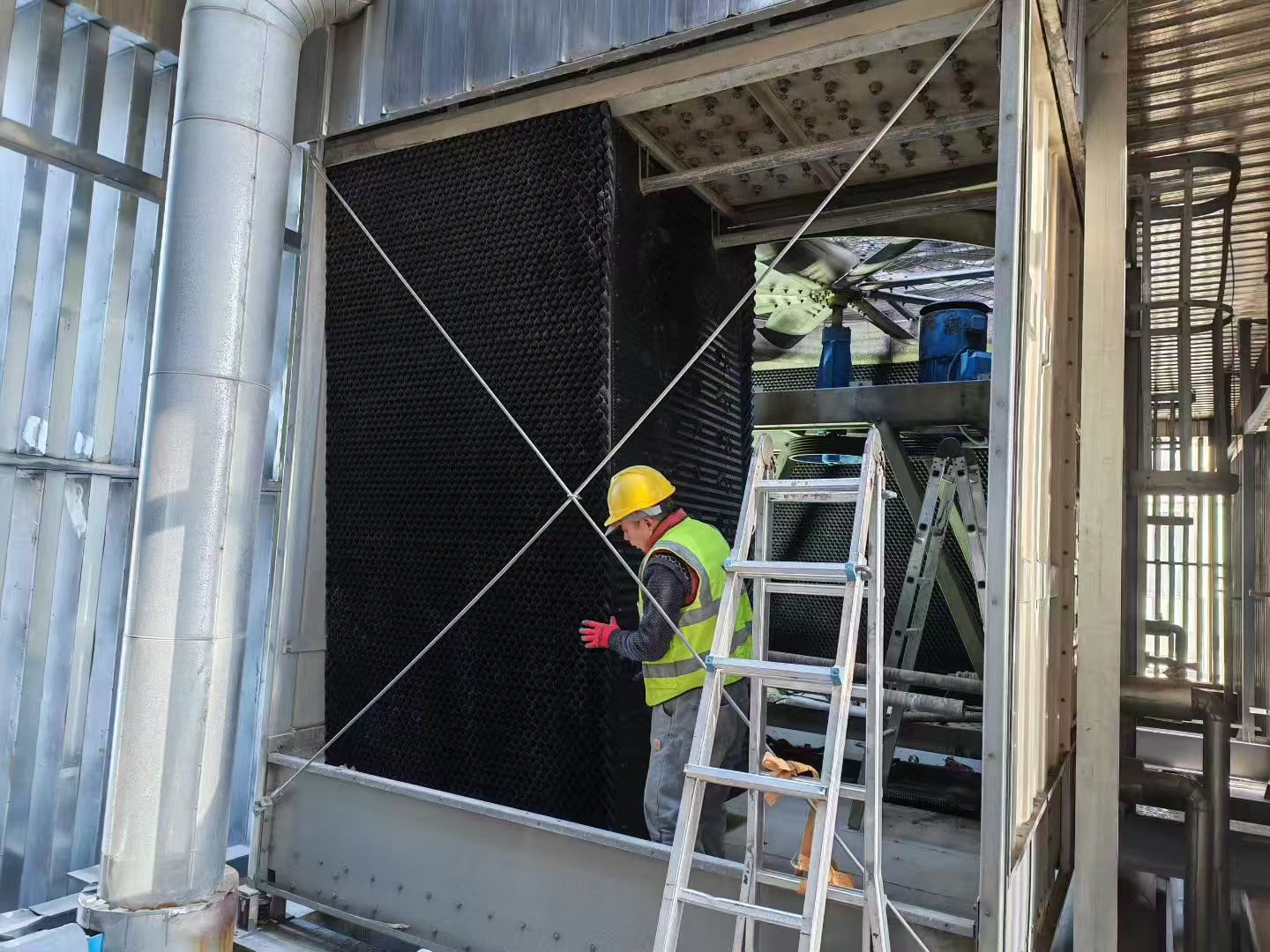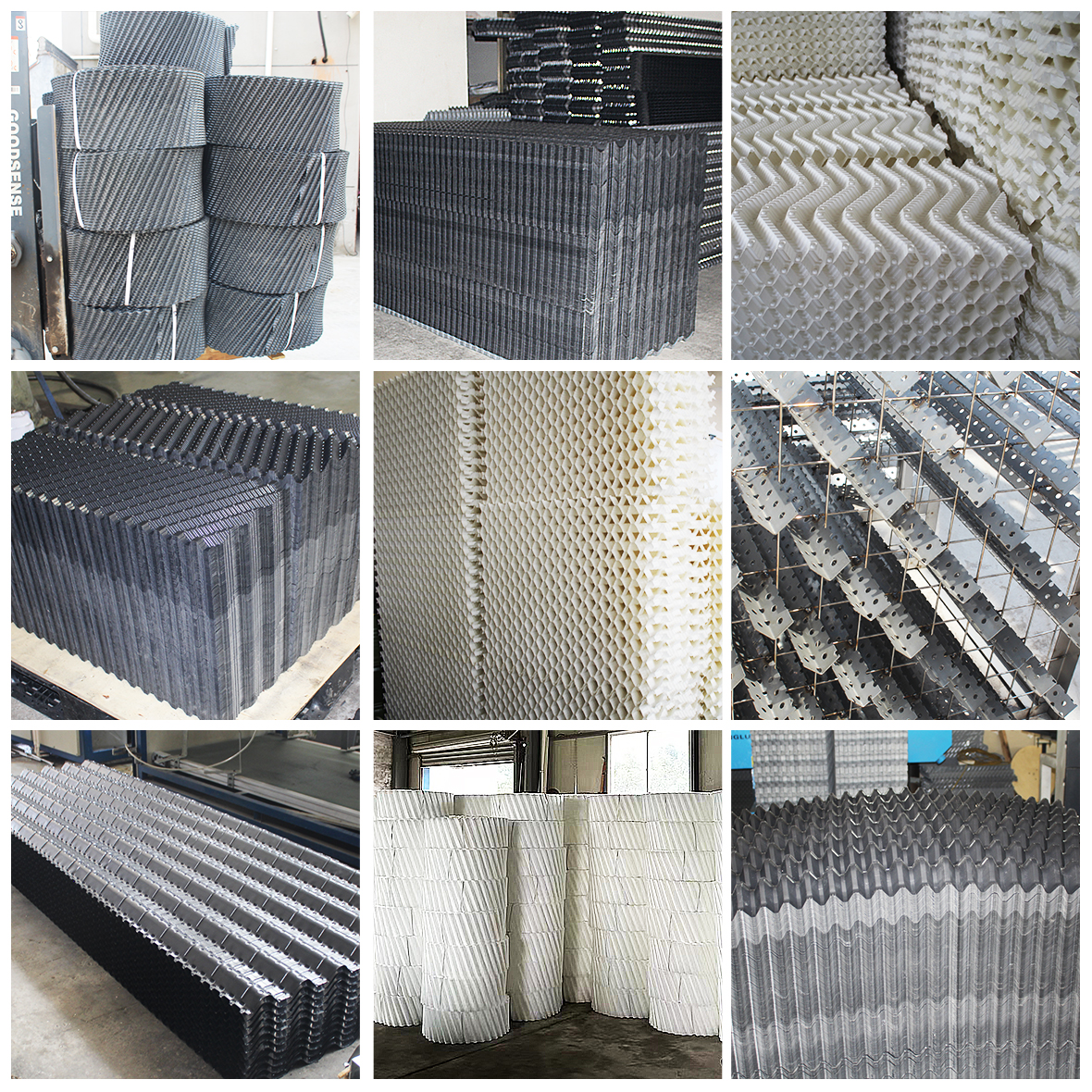
Choosing the right cooling tower fill media is critical for maintaining cooling capacity, water distribution, energy efficiency, and equipment life. Whether you are designing a new cooling tower or replacing old fill, the wrong media can lead to poor heat transfer, excessive fouling, high pressure drop, and unnecessary maintenance costs.
So, how do you choose the right cooling tower fill?
The answer depends on several factors, including water quality, cooling duty, tower design, operating temperature, airflow, material compatibility, and maintenance requirements.
This cooling tower fill media selection guide explains the main fill types and the key factors engineers and B2B buyers should evaluate before ordering.
What Is Cooling Tower Fill Media?
Cooling tower fill media is the internal component that increases contact between hot circulating water and cooling air.
As water passes through the fill, it is spread into a thin film or broken into droplets. Air removes heat through sensible heat transfer and evaporation. Increasing the effective water-air contact area improves the tower's ability to cool the circulating water.
The two major categories are:
Both can provide reliable cooling, but they are designed for different operating conditions.
Main Types of Cooling Tower Fill
1. Film Fill
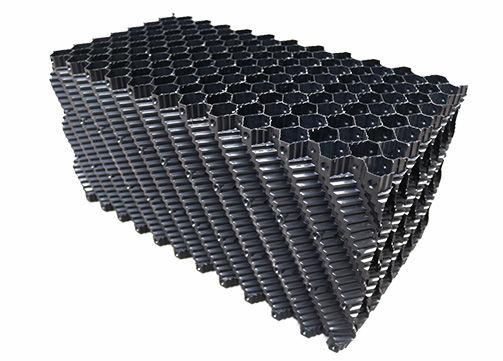
Film fill consists of closely spaced sheets or structured surfaces that spread water over a large surface area.
The water forms a thin film while air passes across the surfaces. This creates high heat and mass transfer efficiency within a relatively small volume.
Film fill is commonly manufactured from PVC or polypropylene (PP).
Typical applications include:
2. Splash Fill
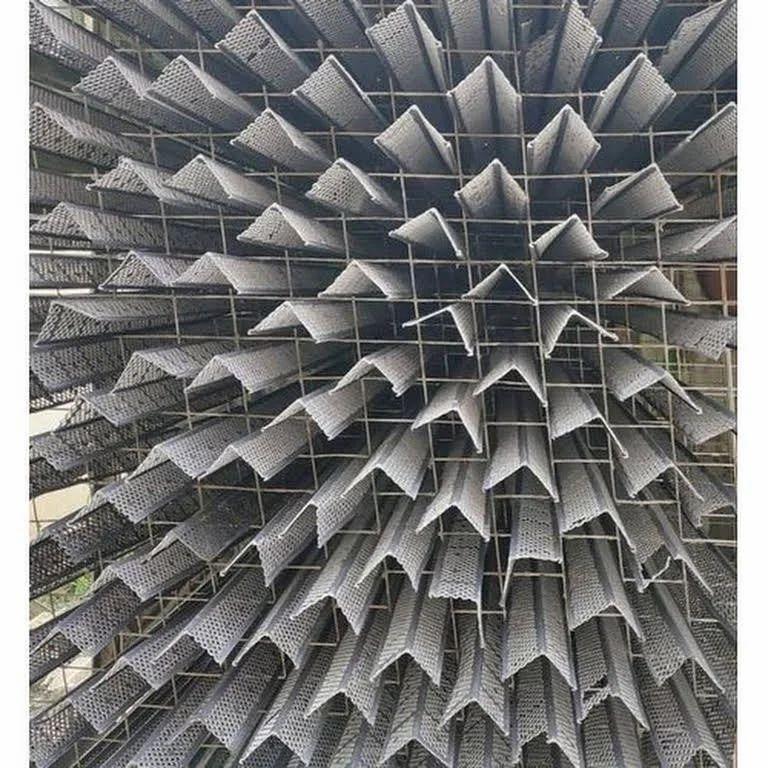
Splash fill uses bars, grids, or modules to repeatedly break falling water into droplets.
Instead of relying primarily on a continuous water film, splash fill creates repeated splashing and redistribution as water falls through the tower.
Its relatively open structure makes it suitable for applications where water contains suspended solids or where fouling is a concern.
Common materials include:
PP
PVC
High-impact plastics
Typical applications include industrial process cooling and cooling towers with challenging water quality.
Film Fill vs Splash Fill
The following comparison makes the selection process easier:
| Factor | Film Fill | Splash Fill |
| Heat-transfer efficiency | High | Moderate to high |
| Surface area density | High | Lower |
| Suspended-solids tolerance | Lower | Higher |
| Fouling resistance | Moderate | High |
| Water passages | Narrower | More open |
| Cleaning | Can be more difficult | Generally easier |
| Fill volume | More compact | Usually larger |
| Best water quality | Clean/treated | Variable/challenging |
| Common materials | PVC/PP | PP/PVC |
Film fill is generally selected for maximum thermal efficiency, while splash fill is often preferred when durability and fouling resistance are more important.
Key Factors in Cooling Tower Fill Media Selection
1. Water Quality
Water quality should be one of the first considerations.
Ask:
How much suspended solid is present?
Is scaling a problem?
Is biological growth controlled?
Is the water filtered?
What chemicals are used for treatment?
For clean and well-treated water, film fill can provide excellent performance.
For water with significant solids or debris, splash fill cooling tower media may be a safer choice because of its more open configuration.
2. Cooling Tower Type
Fill selection must match the cooling tower configuration.
Common tower designs include:
A fill designed for one tower configuration may not be suitable for another.
Always verify fill dimensions, airflow direction, water distribution, and support structure before replacement.
3. Required Cooling Capacity
The cooling duty determines how much effective fill volume and surface area are required.
Important design parameters include:
Hot-water temperature
Cold-water temperature
Wet-bulb temperature
Water flow rate
Airflow rate
Range
Approach
For applications requiring high cooling capacity within a limited footprint, high-efficiency film fill can be advantageous.
4. Operating Temperature
Temperature affects the long-term performance of fill material.
PVC and PP have different temperature characteristics. Before purchasing, check the supplier's recommended operating temperature range.
For high-temperature industrial applications, material selection becomes particularly important.
5. Chemical Compatibility
Cooling tower water may contain chemicals such as biocides, corrosion inhibitors, and scale-control chemicals.
Some industrial processes can also expose the fill to aggressive chemicals or contaminants.
Confirm that the selected cooling tower fill material is compatible with the operating environment.
6. Fouling and Maintenance
A highly efficient fill is not necessarily the best choice if it becomes blocked quickly.
Film fill has closely spaced channels that can accumulate:
Scale
Dirt
Algae
Biological deposits
Suspended solids
Splash fill generally provides larger passages and can be easier to clean.
Therefore, maintenance conditions should be considered together with thermal efficiency.
PVC vs PP Cooling Tower Fill
Material selection is another important part of the purchasing process.
PVC Cooling Tower Fill
PVC is widely used for film-fill applications because it offers:
PVC film fill is commonly used in HVAC and industrial cooling towers.
PP Cooling Tower Fill
Polypropylene provides good impact resistance and chemical resistance. It is widely used in splash-fill applications and can also be manufactured into specialized film-fill designs.
PP may be particularly attractive when durability and resistance to certain operating conditions are important.
How to Select Replacement Cooling Tower Fill
When replacing existing fill, do not order based only on the tower's nominal tonnage.
Collect the actual specifications first.
Step 1: Identify the Existing Fill
Determine whether the tower currently uses:
PVC film fill
PP film fill
Splash bars
PP splash fill
Grid splash fill
Modular splash fill
Step 2: Measure the Fill
Record:
Step 3: Record Operating Conditions
Provide the supplier with:
Water flow rate
Entering-water temperature
Leaving-water temperature
Design wet-bulb temperature
Water quality information
Step 4: Check the Distribution System
Fill cannot compensate for poor water distribution.
Inspect:
A new fill should work correctly with the existing water distribution system.
Step 5: Confirm Support Structure
The fill-support system must be capable of carrying the weight of the fill and circulating water.
Check support beams, grids, clips, and attachment points before installation.
Can You Change From Film Fill to Splash Fill?
Yes, but this should be treated as an engineering modification rather than a simple replacement.
Changing fill type can affect:
Cooling capacity
Air pressure drop
Water distribution
Fill height
Tower airflow
Fan operating conditions
A film fill to splash fill conversion should therefore be evaluated using the tower's actual operating conditions.
The same applies when converting from splash fill to film fill.
Signs You Need Cooling Tower Fill Replacement
Old fill should be inspected regularly. Replacement may be necessary when you find:
Cracked PVC sheets
Brittle or deformed plastic
Broken splash bars
Severe scale
Persistent blockage
Biological fouling
Collapsed fill packs
Reduced cooling performance
Uneven water distribution
If cleaning no longer restores performance, replacing the fill may be more economical than continuing intensive maintenance.
Cooling Tower Fill Supplier Selection
Choosing the right supplier is just as important as choosing the right fill.
For B2B purchasing, compare:
Material quality
Fill geometry
Temperature resistance
Chemical compatibility
Dimensional accuracy
Thermal performance
Customization capability
Packaging and shipping
Production lead time
Replacement compatibility
A supplier offering multiple cooling tower components can simplify procurement for larger refurbishment projects.
For example, CoolingTowerPart.com supplies cooling tower fill, splash fill, film fill, nozzles, drift eliminators, louvers, fan blades, and other replacement parts for industrial customers.
Recommended Selection by Application
| Application | Recommended Fill |
| Commercial HVAC | Film fill |
| Data center cooling | Film fill |
| Clean industrial water | Film fill |
| High suspended solids | Splash fill |
| Poor water quality | Splash fill |
| Industrial process cooling | Film or splash, depending on water quality |
| Existing splash-fill tower | Matching splash fill |
| Space-limited tower | High-efficiency film fill |
This table is a starting point. Actual selection should always be based on the tower's design and operating conditions.
FAQ
What is the best cooling tower fill media?
There is no single best option. Film fill is usually preferred for high thermal efficiency and clean water, while splash fill is often better for fouling-prone or high-solids water.
Is PVC good for cooling tower fill?
Yes. PVC is widely used for cooling tower film fill because of its cost efficiency, chemical resistance, and suitable mechanical properties.
Is PP better than PVC for cooling tower fill?
Not universally. PP offers strong impact and chemical resistance, while PVC is widely used for economical film-fill applications. The correct choice depends on temperature and operating conditions.
How often should cooling tower fill be replaced?
There is no fixed replacement interval. Inspection should determine whether scaling, fouling, cracking, deformation, or material degradation has reduced performance.
Can I use any cooling tower fill as a replacement?
No. Fill geometry, dimensions, water flow, airflow, tower type, and support structure must be compatible with the existing system.
Conclusion
The right cooling tower fill media selection can improve thermal performance, reduce maintenance problems, and extend cooling tower service life.
For clean, well-treated water and compact high-performance systems, film fill is often the preferred solution. For challenging industrial water with suspended solids and higher fouling risk, splash fill can offer better durability and maintainability.
Before purchasing replacement fill, evaluate the tower design, water quality, operating temperature, cooling duty, and existing fill dimensions.
For industrial cooling tower projects, Power Tower Cooling Technology (Shaoxing) Co.,Ltd provides PVC film fill, PP splash fill, and a wide range of cooling tower replacement parts for international B2B buyers.
Internal Links for Other CoolingTowerParts
Cooling Tower Fill
Cooling Tower Nozzles
Cooling Tower Drift Eliminators
Cooling Tower Louvers
Cooling Tower Fan Blades
Cooling Tower Motors