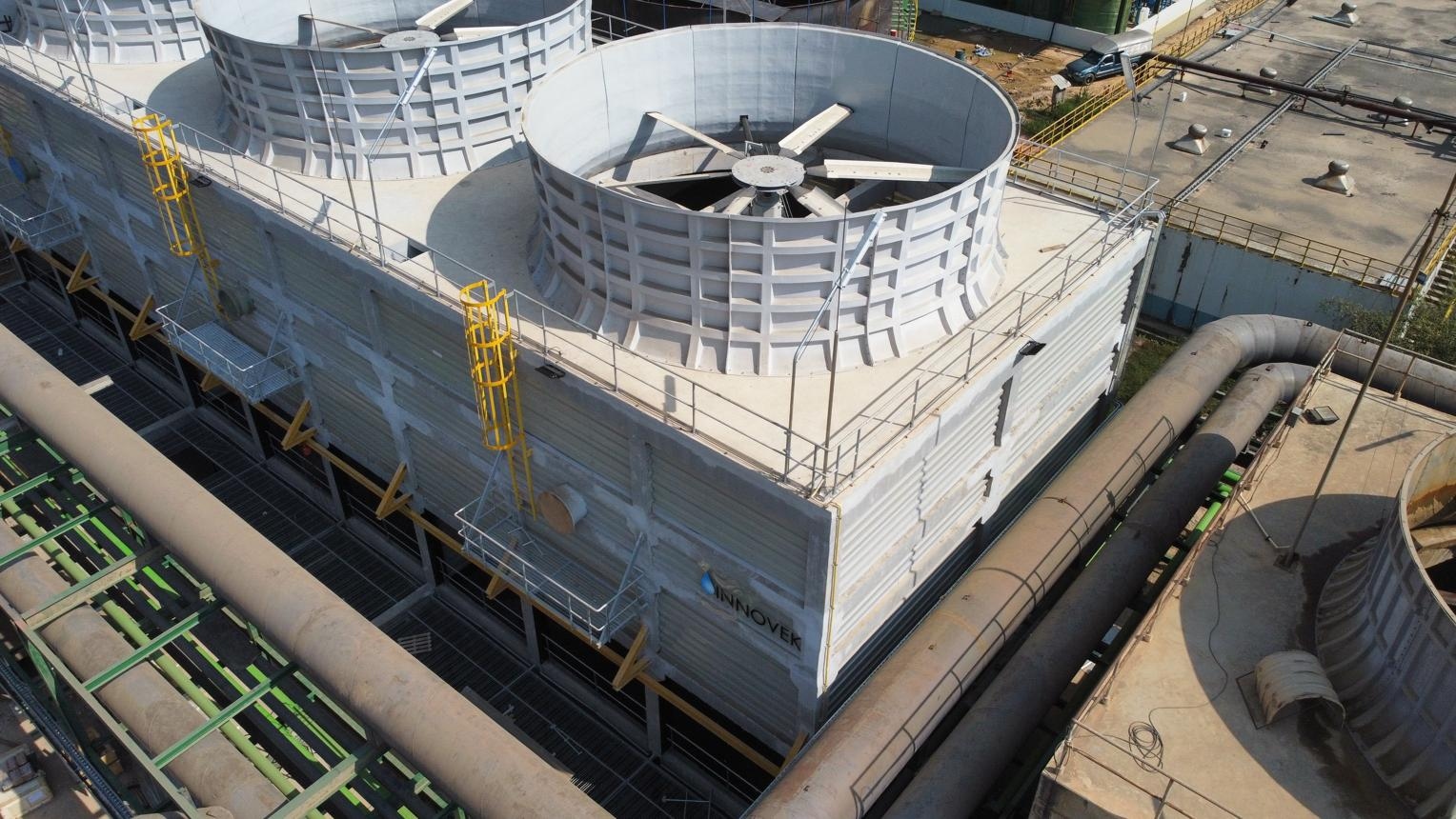
1. Introduction to Cooling Tower Fan Redundancy
Industrial cooling towers play an essential role in maintaining stable operating temperatures in manufacturing plants, power stations, chemical facilities, and large HVAC systems. But what happens when a cooling tower fan suddenly stops working?
For facilities that depend on continuous cooling, even a short equipment failure can create serious operational problems. Production may slow down, process temperatures may rise, and maintenance teams may have to deal with unexpected downtime.
This is where cooling tower fan redundancy becomes important.
Fan redundancy is a design strategy that provides additional fan capacity or backup equipment to maintain cooling tower operation when one fan fails or requires maintenance.
Instead of depending entirely on one fan, an appropriately designed redundant system distributes the cooling responsibility across multiple fans or cooling cells.
Think of it as having a spare engine ready when the main engine develops a problem. The system has another way to keep operating.
In this guide, we will explain how cooling tower fan redundancy works, how to design an N+1 configuration, what benefits it offers, and how industrial operators can improve cooling tower reliability.
2. What Is Cooling Tower Fan Redundancy?
Cooling tower fan redundancy refers to a system design in which additional fan capacity is available to compensate for the failure or shutdown of one or more operating fans.
The purpose is to reduce the risk of losing the required cooling capacity because of an individual fan failure.
Traditional cooling towers often use one large axial fan. If that fan fails, the affected cooling tower may lose most or all of its mechanical airflow capacity.
A redundant arrangement provides an alternative.
For example, a cooling tower may use four fans to provide the required airflow, with an additional fan or independent cooling cell available as backup.
The actual configuration depends on cooling requirements, available space, electrical infrastructure, and reliability targets.
2.1 Basic Definition and Purpose
The primary purpose of cooling tower fan redundancy is to maintain acceptable cooling performance during equipment failures or maintenance activities.
A properly engineered redundant system can provide:
Reduced risk of unexpected shutdowns
More reliable industrial cooling
Flexible maintenance scheduling
Better availability of cooling equipment
Additional operating flexibility
Improved protection against individual fan failures
It is important to understand that redundancy does not automatically guarantee uninterrupted cooling.
The remaining fans must have enough capacity to handle the required load, and the control and electrical systems must support the intended backup operation.
2.2 Main Components of a Redundant Fan System
A cooling tower fan redundancy system may include several important components.
Axial Fans: These fans generate the airflow required for heat rejection. Multiple fans can be arranged to share the cooling load.
Electric Motors: Motors drive the fans and must be selected according to operating conditions and required power.
Variable Frequency Drives: VFDs adjust fan speed according to cooling demand and can support flexible fan operation.
Control Panels: Electrical control systems coordinate fan operation, detect faults, and activate backup equipment when appropriate.
Sensors and Protection Devices: Temperature, vibration, current, and motor protection devices help operators identify abnormal conditions.
Supporting Structures: Fan frames, mounting systems, and mechanical supports must safely accommodate the installed equipment.
Each component contributes to system reliability. A backup fan is only useful when the supporting electrical, mechanical, and control arrangements are also reliable.
3. How Does Cooling Tower Fan Redundancy Work?
The basic working principle is straightforward: multiple fans share the airflow requirement, and additional capacity is available to compensate for equipment failures.
However, the actual operation depends on the redundancy configuration.
3.1 Normal Operating Conditions
During normal operation, the cooling tower operates with enough fans to meet the current cooling demand.
For example, consider a system with four duty fans and one standby fan.
Under normal conditions, the four duty fans operate while the standby fan remains available.
The control system continuously monitors operating conditions, including water temperature, fan status, motor current, and other relevant parameters.
The objective is to maintain the required cooling performance without unnecessarily operating every available fan.
3.2 Fan Failure and Automatic Backup
Suppose one operating fan develops a motor fault.
The control system detects the problem through motor protection, fault signals, or monitoring equipment.
Depending on the system design, the affected fan can be isolated and the standby fan activated.
This allows the cooling tower to recover some or all of the lost airflow capacity.
However, automatic backup requires suitable interlocks, electrical protection, and control logic. A standby fan should not simply start without checking operating conditions and equipment safety.
3.3 Independent Fan Control
Independent fan control is particularly useful in multi-fan cooling towers.
Each fan can have its own motor protection and, where appropriate, its own VFD.
This allows operators to adjust fan speed or isolate individual units without necessarily shutting down the entire cooling system.
Independent operation also supports staged cooling capacity.
When cooling demand is low, fewer fans may be required. When heat load increases, additional fans can be activated.
4. Understanding N+1 Cooling Tower Fan Design
N+1 is one of the most widely recognized redundancy concepts in industrial equipment design.
It means that a system has one additional unit beyond the number required to meet the specified operating demand.
4.1 What Does N+1 Redundancy Mean?
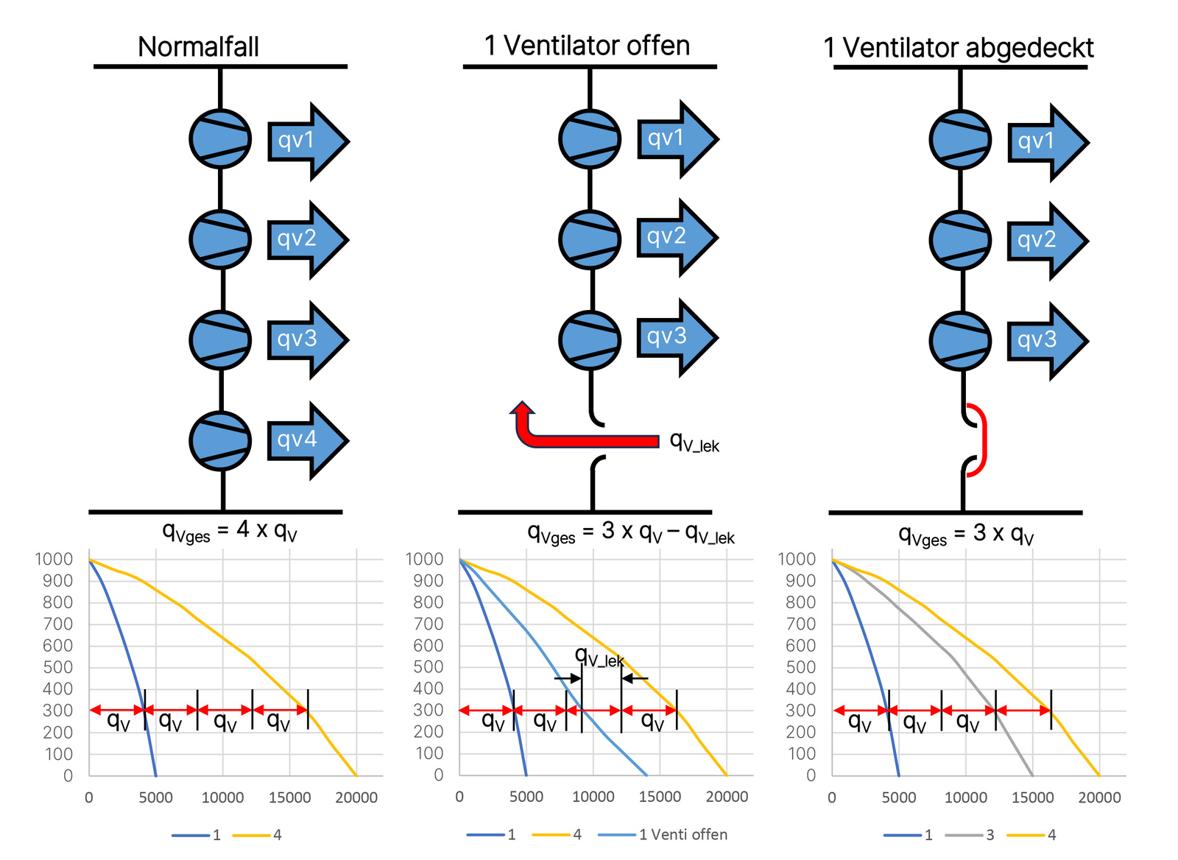
In an N+1 cooling tower fan configuration:
For example, if a cooling tower requires four fans to achieve its specified airflow, an N+1 arrangement provides five appropriately configured fans.
If one duty fan fails, the additional fan can replace its contribution, assuming the system has been properly designed.
This does not mean that every five-fan arrangement automatically provides N+1 redundancy. The total airflow capacity, fan arrangement, electrical connections, and operating controls must support the intended failure scenario.
4.2 N+1 vs. N+2 Redundancy
Some industrial applications require even higher equipment availability.
N+2 provides two additional units beyond the required operating capacity.
| Feature | N Configuration | N+1 Configuration | N+2 Configuration |
| Required operating fans | N | N | N |
| Additional fans | None | 1 | 2 |
| Backup capacity | None | One unit | Two units |
| Equipment investment | Lower | Moderate | Higher |
| Potential fault tolerance | Limited | One additional unit | Two additional units |
N+2 may be considered for critical facilities where multiple equipment failures must be accommodated.
However, additional redundancy increases equipment, electrical, structural, and maintenance costs.
The correct design should reflect the actual consequences of cooling interruption.
4.3 Practical Configuration Examples
Imagine an industrial cooling tower requires four fans to deliver the necessary airflow.
A basic arrangement uses four duty fans.
An N+1 arrangement uses five fans, with the system designed so that four can meet the required airflow after one fan becomes unavailable.
An N+2 arrangement uses six fans, allowing the system to accommodate two unavailable fan units under the specified design conditions.
The important point is that fan quantity alone does not determine redundancy.
Engineers must verify that the remaining operating fans can deliver the required airflow against the actual system resistance.
5. Cooling Tower Fan Redundancy Design Considerations
A reliable redundant fan system starts with careful engineering.
Simply adding another fan to an existing cooling tower may not provide the expected protection.
5.1 Cooling Capacity and Airflow Requirements
The first step is calculating the cooling tower's thermal requirements.
Important design parameters include:
Circulating water flow rate
Hot water inlet temperature
Cold water outlet temperature
Design wet-bulb temperature
Cooling range
Approach temperature
Required heat rejection capacity
These values help determine the necessary airflow.
The design should then confirm that the remaining operating fans can maintain acceptable performance following the defined failure scenario.
5.2 Fan Quantity and Arrangement
Fan quantity depends on individual fan capacity, cooling tower dimensions, and the required redundancy level.
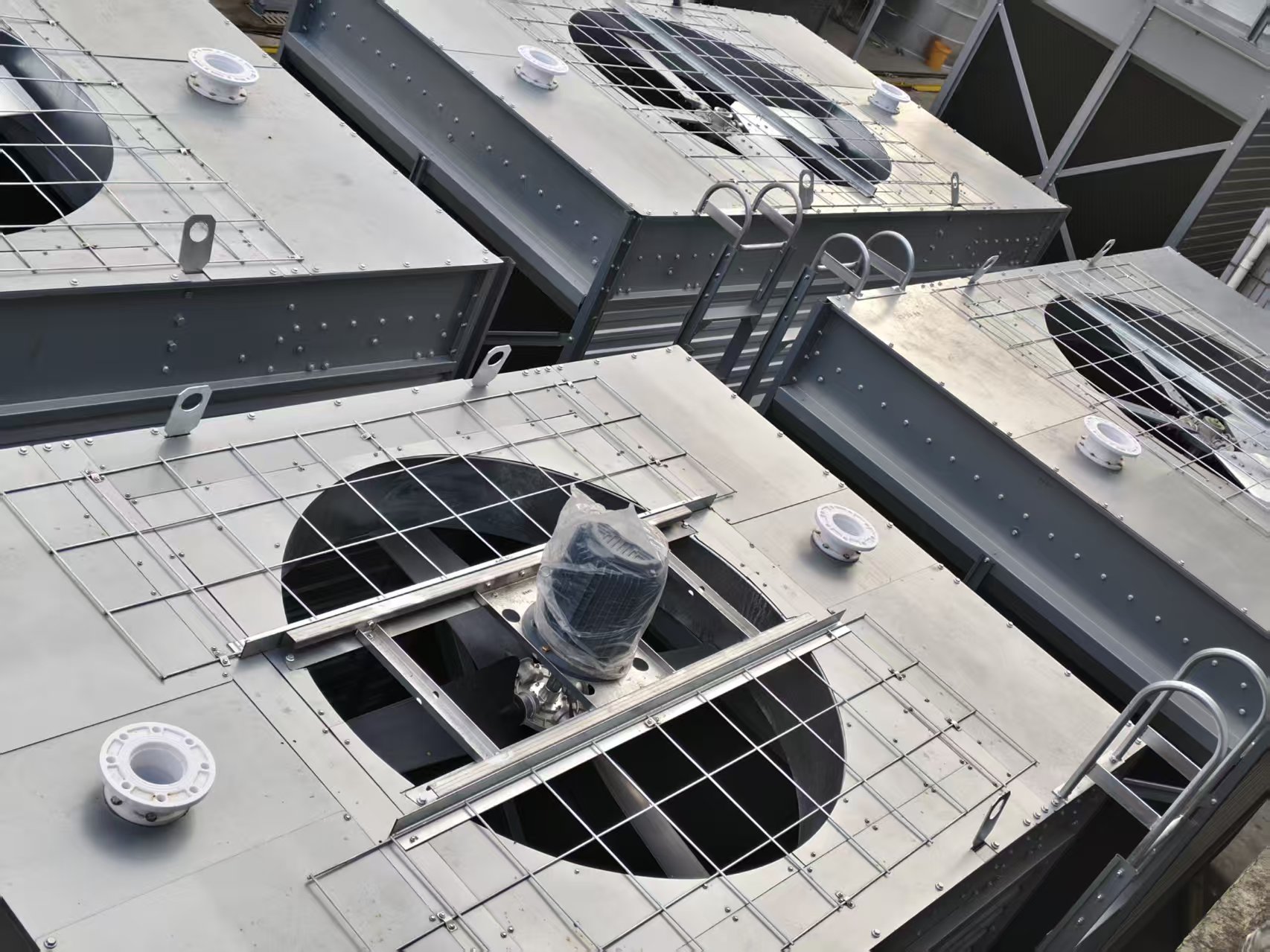
Multiple fans may be installed in parallel arrangements or distributed across separate cooling tower cells.
Engineers should consider fan spacing, airflow interaction, access for maintenance, and structural loading.
Poor positioning can lead to uneven airflow and reduced cooling performance.
5.3 Motor and Electrical System Design
Electrical reliability is just as important as mechanical reliability.
Each fan motor needs suitable protection and an electrical supply arrangement that supports the redundancy strategy.
Design considerations include:
If all fans depend on one vulnerable electrical component, the system may still have a single point of failure.
Redundancy planning should therefore examine the complete electrical architecture.
5.4 Automatic Control and Monitoring
Automatic control makes backup operation more practical.
A suitable control system can monitor fan status and identify problems such as:
Motor overload
Abnormal vibration
Excessive temperature
Electrical faults
Fan speed deviations
Unexpected shutdowns
When a fault occurs, the system can initiate an appropriate response.
The exact sequence should be established during engineering and commissioning.
6. Types of Cooling Tower Fan Redundancy Systems
Different cooling tower configurations provide different approaches to equipment redundancy.
6.1 Multiple Fan Configuration
A multiple-fan system uses several fans to share the total airflow requirement.
Depending on the design, one fan may be available as additional capacity.
This arrangement can be useful for industrial facilities that require flexible cooling operation.
However, engineers must ensure that the remaining fans can maintain sufficient airflow if one unit fails.
6.2 Standby Fan Configuration
A standby fan remains available when the main operating fans are running.
If a duty fan becomes unavailable, the standby unit can be activated.
This approach may be suitable when the installation has sufficient space and the system requires a clearly defined backup unit.
The standby fan should also be inspected and tested regularly. A backup unit that has not been tested may not be ready when needed.
6.3 Multi-Cell Cooling Tower Redundancy
Large cooling towers often consist of several independent cells.
Each cell may have its own fan, water distribution system, and basin arrangement.
If one cell needs maintenance, other cells may continue operating.
This provides another approach to cooling system redundancy.
However, operators must verify that the remaining cells have enough cooling capacity to handle the required load.
A multi-cell tower does not automatically provide N+1 redundancy. The available capacity must be evaluated under the specified operating conditions.
7. Key Industrial Benefits of Cooling Tower Fan Redundancy
Why should industrial operators consider fan redundancy?
The main reason is reliability. But the benefits extend beyond simply having another fan available.
7.1 Reduced Production Downtime
Unexpected fan failure can affect the entire industrial cooling process.
In facilities where cooling is essential for production, equipment downtime can become expensive.
Redundant fan arrangements provide an alternative airflow source, helping reduce the impact of individual equipment failures.
7.2 Improved Operational Reliability
Multiple operating units can reduce dependence on a single mechanical component.
This is especially important for industrial facilities that operate around the clock.
A properly designed system can continue operating at an acceptable capacity even when one fan requires repair.
7.3 Flexible Cooling Capacity
Industrial cooling demand changes with production schedules, ambient temperatures, and seasonal conditions.
Multiple fans allow operators to adjust airflow by changing fan speed or activating different fan combinations.
This provides more flexibility than a system that relies entirely on one fixed-speed fan.
7.4 Easier Maintenance
A redundant system may allow maintenance teams to isolate one fan while other units continue operating.
This can make inspections, motor replacement, and mechanical repairs easier to schedule.
However, the remaining cooling capacity must be sufficient for the process load during maintenance.
8. Cooling Tower Fan Redundancy vs. Single-Fan Systems
Both configurations have practical applications.
The right choice depends on cooling capacity, operational risk, investment budget, and maintenance requirements.
| Comparison | Redundant Fan System | Single-Fan System |
| Fan configuration | Multiple fans or backup units | One primary fan |
| Backup capacity | Available when properly designed | Usually limited |
| Equipment availability | Potentially higher | Depends on primary fan |
| Initial investment | Generally higher | Generally lower |
| Control complexity | More complex | Simpler |
| Maintenance flexibility | Potentially better | May require shutdown |
| Electrical requirements | More extensive | Less extensive |
| Suitable applications | Critical industrial cooling | Conventional cooling duties |
A single-fan cooling tower may be entirely adequate for applications where temporary cooling interruption is acceptable.
For critical processes, the additional investment in redundancy may be justified by reduced operational risk.
9. Industrial Applications of Cooling Tower Fan Redundancy
Cooling tower fan redundancy can be valuable in several industries.
9.1 Power Generation
Power stations depend on reliable heat rejection systems.
Cooling towers help remove heat from circulating water used in condenser and auxiliary cooling applications.
Fan redundancy may help reduce the risk of losing required cooling capacity when an individual fan fails.
9.2 Chemical and Petrochemical Plants
Chemical facilities often operate reactors, condensers, and heat exchangers that require controlled temperatures.
Unexpected cooling interruptions can affect process stability and production schedules.
A suitable redundant cooling tower arrangement can provide additional protection.
9.3 Steel and Metal Processing
Steel production involves high-temperature processes and substantial heat loads.
Cooling water supports furnaces, casting systems, machinery, and other production equipment.
For these applications, cooling tower reliability is an important part of overall plant operation.
9.4 HVAC and Industrial Refrigeration
Large HVAC installations and industrial refrigeration systems use cooling towers to reject heat.
Redundant fans may be useful in facilities where maintaining cooling performance is important during peak summer conditions or continuous operation.
9.5 Food and Beverage Manufacturing
Food processing plants use cooling systems for production equipment, refrigeration, and temperature management.
Reliable cooling supports stable manufacturing operations and equipment performance.
The required redundancy level should be determined according to the consequences of cooling interruption.
10. How to Select a Reliable Redundant Fan System
Choosing the right cooling tower fan configuration requires a clear understanding of operating conditions.
Here are several important factors to evaluate.
10.1 Determine the Required Redundancy Level
Start by identifying the consequences of a fan failure.
Does the facility need to maintain full cooling capacity after one fan stops? Is reduced capacity acceptable for a short period?
These questions help determine whether a basic multi-fan configuration, N+1 design, or a higher redundancy level is appropriate.
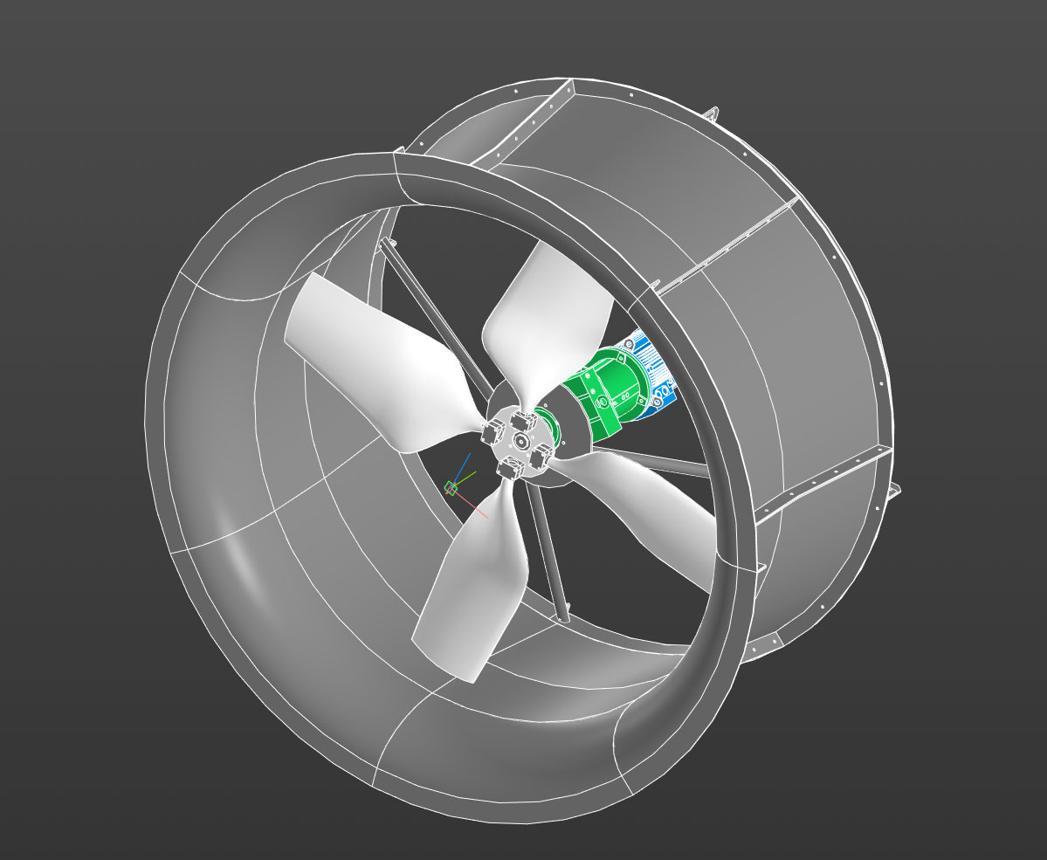
10.2 Evaluate Fan Performance
Review the fan performance curve rather than comparing equipment only by rated airflow.
Important parameters include:
The selected fan must operate within its recommended performance range.
10.3 Check Material and Corrosion Resistance
Cooling tower environments involve continuous moisture exposure.
Fan blades, mounting structures, fasteners, and other components should be suitable for the operating environment.
FRP and aluminum are common fan blade material options, but the final selection depends on temperature, chemical exposure, mechanical loading, and design specifications.
10.4 Consider Lifecycle Cost
A redundant system usually requires more equipment and investment.
However, purchase price is only one part of the total cost.
Consider:
A lifecycle cost assessment provides a more useful basis for selecting the system.
11. Common Cooling Tower Fan Failures and Solutions
Understanding common fan failures helps operators develop a practical maintenance strategy.
| Common Problem | Possible Cause | Recommended Solution |
| Fan motor failure | Overload or electrical damage | Inspect motor and protection settings |
| Excessive vibration | Blade imbalance or loose mounting | Check dynamic balance and fasteners |
| Blade damage | Fatigue or foreign objects | Inspect and replace damaged blades |
| Bearing overheating | Lubrication problems or wear | Inspect bearings and lubrication |
| Abnormal noise | Mechanical looseness or bearing damage | Conduct mechanical inspection |
| Reduced airflow | Incorrect rotation or obstruction | Check rotation and airflow paths |
| Repeated VFD trips | Electrical or operating problems | Review fault history and parameters |
A redundant fan can reduce the operational consequences of a failure, but it cannot eliminate the need for proper maintenance.
Operators should investigate the root cause rather than repeatedly switching to backup equipment without resolving the original problem.
12. Cooling Tower Fan Redundancy Maintenance Guide
Regular inspections help ensure that both duty and standby fans remain ready for operation.
12.1 Inspect Fan Blades
Check blades for cracks, deformation, corrosion, and loose connections.
Damaged blades can create imbalance and increase mechanical stress.
12.2 Monitor Motors and Bearings
Monitor motor temperature, current, vibration, and bearing condition.
Compare readings with established baseline values to identify unusual changes.
12.3 Test Standby Fan Operation
A standby fan should not remain untested for long periods.
Conduct scheduled functional tests according to the manufacturer's recommendations and the plant's operating procedures.
Verify that the motor, electrical protection, and control sequence work correctly.
12.4 Check Electrical Control Systems
Inspect electrical panels, VFDs, protective devices, and control connections.
Ensure that fault signals and backup activation sequences operate correctly.
12.5 Maintain Cooling Tower Internal Components
Fan performance is only one part of cooling tower efficiency.
Inspect fill, drift eliminators, water distribution systems, and air inlets.
Dirt, scale, algae, and other deposits can affect airflow and heat transfer.
13. The Relationship Between Fan Redundancy and Cooling Tower Fill
An important point often overlooked during cooling tower upgrades is the relationship between fan performance and cooling tower fill.
Fans generate airflow, while fill creates the surface area needed for heat and mass transfer between water and air.
These components work together.
If the fill becomes blocked or deteriorates, the cooling tower may experience increased airflow resistance and reduced thermal performance.
Even if the redundant fan system operates correctly, the cooling tower may still fail to achieve its target outlet water temperature.
13.1 Why Cooling Tower Fill Quality Matters
Cooling tower fill improves the contact between circulating water and air.
Common fill types include:
Film fill
Splash fill
Grid fill
PVC cooling tower fill
PP cooling tower fill
The right choice depends on water quality, operating temperature, suspended solids, and chemical conditions.
13.2 How Fill Condition Affects Airflow
Blocked fill can restrict airflow through the cooling tower.
This may increase system resistance and make it harder for fans to deliver the required airflow.
As a result, operators should inspect the fill condition when investigating cooling tower performance problems.
13.3 Coordinating Fan and Fill Maintenance
A complete cooling tower maintenance program should include both fan and fill inspections.
When planning a fan redundancy upgrade, it is worth checking whether the existing fill is suitable for the expected airflow and thermal operating conditions.
Replacing damaged or severely clogged fill may help restore the cooling tower's overall performance.
14. Can an Existing Cooling Tower Be Upgraded with Fan Redundancy?
In many cases, an existing mechanical draft cooling tower can be evaluated for a redundancy upgrade.
However, the feasibility depends on the original structure and system configuration.
An engineering assessment should cover:
Existing cooling capacity.
Fan deck dimensions and available installation space.
Structural load capacity.
Electrical supply and motor connections.
Airflow distribution and fan performance.
Automatic control requirements.
Maintenance accessibility.
Expected performance during a fan failure.
Some projects may require additional fan modules or independent cooling cells.
Others may benefit from motor, control, or VFD upgrades.
It is important not to assume that adding another fan will automatically provide N+1 protection. The complete system must be checked under the intended failure conditions.
15. Why Choose Power Tower Cooling Technology?
Choosing reliable cooling tower components is important for maintaining long-term system performance.
Power Tower Cooling Technology (Shaoxing) Co.,Ltd specializes in cooling tower fill products and related cooling tower components.
For industrial customers planning cooling tower maintenance, refurbishment, or performance improvements, selecting appropriate internal components is an important part of the project.
15.1 Cooling Tower Fill Product Solutions
Cooling tower fill provides the contact surface required for effective heat and mass transfer.
The right fill configuration can support cooling performance while maintaining suitable airflow characteristics.
Power Tower focuses on cooling tower fill solutions for different industrial operating requirements.
15.2 PVC and PP Cooling Tower Fill
PVC and PP are widely used materials in cooling tower fill manufacturing.
PVC fill is commonly used in conventional cooling applications, while PP fill may be suitable for certain higher-temperature environments.
The final material selection should consider operating temperature, water quality, chemical compatibility, and product specifications.
15.3 Support for Cooling Tower Maintenance and Replacement
A cooling tower may experience reduced performance because of several factors, including:
Replacing unsuitable internal components can form part of a broader cooling tower improvement project.
For facilities evaluating fan redundancy, it is important to consider these components alongside the mechanical and electrical systems.
Learn more about Power Tower Cooling Technology:
Website: https://www.coolingtowerpart.com
16. Future Trends in Cooling Tower Fan Redundancy
Industrial cooling systems are becoming more intelligent and energy-conscious.
Several developments are influencing how cooling tower redundancy is designed and managed.
16.1 Smart Monitoring Systems
Modern monitoring systems can collect information about fan speed, motor current, vibration, and temperature.
This information helps operators identify abnormal operating conditions earlier.
16.2 Predictive Maintenance
Instead of waiting for a fan to fail, maintenance teams can use operating data to identify developing mechanical problems.
Predictive maintenance can help reduce unexpected failures and improve spare-part planning.
16.3 Intelligent Fan Speed Control
VFD technology allows operators to adjust airflow according to cooling requirements.
When combined with suitable control logic, fan staging can help balance energy consumption and equipment availability.
16.4 Integrated Cooling Tower Optimization
Future cooling tower projects will increasingly focus on the performance of the entire system.
Fans, motors, fill, water distribution, drift eliminators, and monitoring equipment must work together.
This integrated approach is essential for achieving reliable and efficient industrial cooling.
17. Frequently Asked Questions About Cooling Tower Fan Redundancy
17.1 What Is Cooling Tower Fan Redundancy?
Cooling tower fan redundancy is a design approach that provides additional fan capacity or backup equipment to maintain cooling performance when an operating fan fails or requires maintenance.
17.2 What Is N+1 Cooling Tower Fan Redundancy?
N+1 means that a system has one additional fan beyond the number required to meet its specified operating demand.
For example, if four fans are needed to provide the design airflow, an N+1 arrangement provides an additional fan capable of replacing one unavailable unit.
17.3 Is N+1 Redundancy Better Than a Single-Fan System?
N+1 redundancy can provide better protection against individual fan failures.
However, it usually requires more equipment, electrical infrastructure, and maintenance.
It is particularly useful when cooling continuity is important.
17.4 Can Multiple Cooling Tower Fans Operate Independently?
Yes. Multiple fans can be designed with independent motors and controls.
This allows individual units to be started, stopped, or adjusted according to cooling requirements.
The control arrangement must be engineered to avoid unstable operation and unsuitable airflow conditions.
17.5 Does Fan Redundancy Reduce Energy Consumption?
Not automatically.
Redundancy primarily improves equipment availability.
However, a properly controlled multi-fan system can reduce unnecessary energy consumption by adjusting fan speed and the number of operating fans according to cooling demand.
17.6 How Often Should Standby Cooling Tower Fans Be Tested?
Testing frequency depends on the equipment manufacturer's recommendations and the plant's maintenance policy.
Regular functional testing is important to confirm that standby fans, motors, protection devices, and control sequences remain operational.
17.7 Can Cooling Tower Fill Affect Fan Redundancy Performance?
Yes.
Clogged or deteriorated fill can increase airflow resistance and reduce cooling performance.
The remaining operating fans may not achieve the required thermal performance if the fill is in poor condition.
Therefore, fill inspection should be included in overall cooling tower maintenance.
17.8 Can an Existing Cooling Tower Be Converted to N+1 Redundancy?
Potentially, yes.
However, the existing structure, available space, electrical capacity, airflow distribution, and cooling requirements must be evaluated before making modifications.
Not every cooling tower is suitable for a straightforward N+1 upgrade.
18. Conclusion: Improve Cooling Tower Reliability with Proper Fan Redundancy
Cooling tower fan redundancy is an important design consideration for industrial facilities that depend on continuous and reliable cooling.
By providing additional fan capacity, systems can reduce the operational impact of individual equipment failures and create more flexible maintenance opportunities.
N+1 configurations are particularly useful when a facility needs to maintain its specified cooling capacity after one fan becomes unavailable.
However, successful redundancy requires more than installing an extra fan. Engineers must consider airflow requirements, motor and electrical protection, control systems, structural design, and actual operating conditions.
At the same time, the performance of the entire cooling tower should not be overlooked.
Fans, fill, water distribution, and other internal components all contribute to the final cooling result.
Power Tower Cooling Technology (Shaoxing) Co.,Ltd provides cooling tower fill and related component solutions for industrial cooling tower maintenance and replacement projects.
If you are planning cooling tower maintenance, fill replacement, or system performance improvements, visit https://www.coolingtowerpart.com to explore available products and discuss your requirements.
A reliable cooling tower is not simply about having a backup fan. It is about making sure every component works together when your industrial process needs it most.


