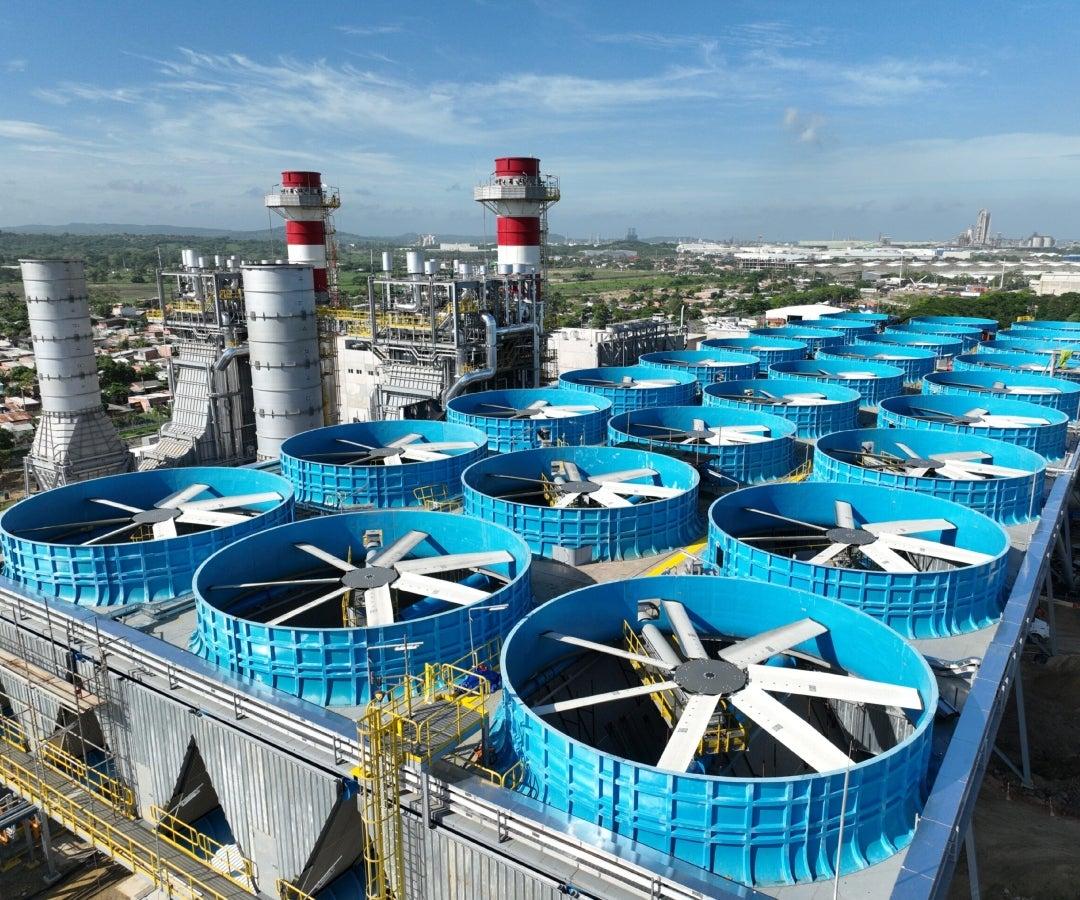
1. Introduction: Why Cooling Tower Fan Reliability Matters
A cooling tower fan may look like a simple piece of rotating equipment, but it plays a major role in the entire cooling process. It moves air through the cooling tower, supports heat transfer, and helps remove heat from circulating water. When the fan stops working properly, the cooling tower can quickly lose its ability to maintain the required water temperature.
Cooling tower fan failure can cause more than an unexpected maintenance expense. It may lead to higher operating temperatures, reduced production efficiency, equipment shutdowns, and additional stress on pumps, motors, and other cooling system components.
So, what causes a cooling tower fan to fail? The reasons range from motor problems and damaged blades to gearbox wear, poor alignment, electrical faults, and incorrect installation.
In this guide, we will explain the common causes of cooling tower fan failure, show you how to troubleshoot problems, and discuss practical solutions. We will also share maintenance and replacement advice from the perspective of Power Tower Cooling Technology (Shaoxing) Co.,Ltd, a supplier focused on cooling tower components.
2. How Does a Cooling Tower Fan Work?
A cooling tower fan creates airflow through the tower. Depending on the cooling tower design, the fan may pull air through the structure or force air into it. This airflow brings air into contact with circulating water, allowing a portion of the water to evaporate and carry heat away.
In a mechanical-draft cooling tower, the fan is usually driven by an electric motor. The drive system may use a gearbox, belt and pulley arrangement, or direct-drive configuration.
Although the operating principle is straightforward, each component must work correctly. A problem with one part can affect the performance of the entire fan system.
2.1 Main Components of a Cooling Tower Fan System
A typical cooling tower fan system includes:
Fan blades: Move air through the cooling tower.
Fan hub: Connects the blades to the rotating shaft or drive assembly.
Electric motor: Supplies the power required to rotate the fan.
Gearbox: Reduces motor speed and transfers torque when a geared drive is used.
Drive shaft or coupling: Transfers mechanical power between components.
Bearings: Support rotating parts and reduce friction.
Fan cylinder or fan stack: Guides airflow and helps the fan operate efficiently.
Electrical controls: Manage starting, stopping, protection, and speed control.
Not every cooling tower uses the same configuration. Some systems use belt drives, while others use gearboxes or direct-drive motors. Before troubleshooting, identify the actual arrangement installed on your equipment.
2.2 Why Fan Performance Affects Cooling Efficiency
Think of the cooling tower fan as the engine of its airflow system. If it cannot move enough air, the tower may struggle to reject the required amount of heat.
A damaged blade, incorrect blade angle, or reduced fan speed can lower airflow. As a result, the cooling water may leave the tower at a higher temperature than expected.
This can affect chillers, compressors, production machinery, and other equipment that depends on stable cooling water conditions. That is why fan performance should be checked whenever a cooling tower experiences an unexplained decline in cooling capacity.
3. Common Symptoms of Cooling Tower Fan Failure
Cooling tower fan problems rarely appear without warning. In many cases, the equipment provides several signs before a complete breakdown occurs.
Recognizing these symptoms early can help maintenance teams avoid more serious damage.
3.1 Fan Does Not Start
A cooling tower fan that refuses to start may have an electrical or mechanical problem.
Possible causes include:
Motor power supply failure.
Tripped circuit breaker or overload protection.
Damaged motor winding.
Faulty contactor or control circuit.
Mechanical blockage.
Seized bearings or gearbox problems.
Do not repeatedly reset the protection device without finding the cause. Frequent trips may indicate an underlying electrical fault, excessive mechanical load, or another condition that needs investigation.
3.2 Abnormal Noise and Excessive Vibration
Unusual sounds are important warning signs. A healthy fan should operate without sudden knocking, grinding, scraping, or severe vibration.
Common causes include loose blade connections, damaged bearings, fan imbalance, shaft misalignment, and gearbox wear.
Vibration can also loosen fasteners and place additional stress on the fan hub, motor base, and supporting structure. If the vibration becomes severe, stop the equipment and arrange an inspection.
3.3 Reduced Airflow and Cooling Performance
Sometimes the fan continues running, but the cooling tower does not perform as expected.
Possible reasons include:
Incorrect fan blade pitch.
Damaged or deformed blades.
Incorrect rotation direction.
Low fan speed.
Airflow obstruction.
Poor fan-to-cylinder clearance.
Problems with the air inlet or discharge arrangement.
A running fan does not automatically mean the fan is operating correctly. Check actual operating conditions instead of relying only on whether the motor is turning.
3.4 Overheating and Unexpected Shutdowns
A motor that becomes unusually hot may be overloaded, poorly ventilated, or experiencing electrical problems.
Gearbox overheating may indicate lubrication issues, excessive loading, or internal wear. Bearing temperature can also rise when lubrication is inadequate or components are damaged.
If thermal protection repeatedly shuts down the fan, investigate the cause before returning the equipment to normal operation.
4. Ten Common Causes of Cooling Tower Fan Failure
Understanding the root cause is the first step toward an effective repair. Replacing a damaged component without identifying why it failed may simply lead to another breakdown.
4.1 Cooling Tower Fan Motor Failure
The motor is one of the most important parts of the fan drive system. Motor failure may result from winding insulation damage, overheating, moisture penetration, electrical imbalance, or prolonged operation under excessive load.
A motor may also fail because of poor ventilation, incorrect voltage, frequent starting, or unsuitable operating conditions.
Possible solutions:
Check the incoming voltage and electrical connections.
Measure current on each phase.
Inspect motor cooling passages and ventilation.
Check insulation condition using an appropriate test procedure.
Confirm that the motor is suitable for the required duty.
Repair or replace the motor if testing confirms internal damage.
Always follow the motor manufacturer's testing and safety instructions.
4.2 Damaged or Unbalanced Fan Blades
Fan blades operate under continuous aerodynamic and mechanical loads. Over time, corrosion, fatigue, impact damage, or material deterioration can affect their strength and shape.
A cracked blade is especially dangerous because it may fail during operation. Even a small difference in blade mass or geometry can create imbalance and increase vibration.
Possible solutions:
Inspect every blade, including its root and connection points.
Check for cracks, deformation, and corrosion.
Verify blade installation and fastening.
Perform dynamic balancing when required.
Replace damaged blades with compatible components.
Do not attempt to operate a fan with a visibly cracked or structurally damaged blade.
4.3 Gearbox and Bearing Problems
Gearboxes transfer torque and adjust rotational speed in systems that use geared drives. Bearings support rotating components and help maintain stable movement.
Common problems include worn gears, insufficient lubrication, damaged bearing surfaces, contamination, and excessive operating temperatures.
Warning signs may include grinding noise, oil leakage, unusual vibration, and rising gearbox temperature.
Possible solutions:
Check oil level and lubricant condition.
Inspect for leakage and contamination.
Monitor operating temperature.
Check bearing condition and shaft alignment.
Follow the gearbox manufacturer's service intervals.
Replace worn components when inspection confirms damage.
Use only the lubricant grade and maintenance procedure specified for the equipment.
4.4 Loose Belts, Pulleys, or Couplings
In belt-driven systems, incorrect belt tension can cause slipping, excessive wear, and unstable fan speed. Misaligned pulleys can also place additional loads on bearings.
For coupling-driven systems, loose fasteners or poor alignment may cause vibration and premature component wear.
Possible solutions:
Inspect belts for cracks, glazing, and deterioration.
Check belt tension according to manufacturer specifications.
Align pulleys and verify their condition.
Inspect coupling elements and fasteners.
Replace worn belts or damaged coupling components.
Avoid excessive belt tension. A belt that is too tight can overload bearings and shorten their service life.
4.5 Electrical and Control System Faults
Electrical problems can prevent a fan from starting or cause it to stop unexpectedly.
Common faults include damaged cables, loose terminals, contactor failure, incorrect overload settings, faulty sensors, and variable-frequency drive alarms.
Possible solutions:
Review electrical protection and alarm records.
Inspect terminals and cable connections.
Check the contactor and control circuit.
Verify motor protection settings against the motor nameplate and system design.
Check variable-frequency drive parameters where applicable.
Electrical inspection and repair should be carried out by qualified personnel with the equipment isolated and made safe.
4.6 Incorrect Fan Blade Angle
Fan blade pitch affects airflow, fan load, and motor power consumption. If the angle is too low, the fan may not deliver the required airflow. If it is too high, the motor may become overloaded.
Incorrect blade angles can result from poor installation, inconsistent adjustment, or changes made during maintenance.
Possible solutions:
Check the blade angle against the approved design.
Confirm that all blades have consistent settings.
Review motor current and operating conditions.
Adjust blade pitch only within the manufacturer's permitted range.
Never increase blade pitch simply to obtain more airflow without checking motor capacity and fan performance limits.
4.7 Corrosion and Material Fatigue
Cooling towers operate in environments with moisture, temperature changes, and sometimes aggressive water treatment chemicals. These conditions can gradually damage metallic and composite components.
Corrosion may weaken fasteners, hubs, shafts, and support structures. Composite blades can also deteriorate due to aging, UV exposure, chemical attack, or mechanical damage.
Possible solutions:
Inspect exposed components regularly.
Replace corroded fasteners and structurally weakened parts.
Select materials suitable for the operating environment.
Follow the recommended coating and protection procedures.
Replace components that no longer meet safe operating requirements.
4.8 Poor Lubrication
Lubrication reduces friction and helps control wear in bearings and gearboxes. Too little lubricant can cause overheating and accelerated damage. Incorrect lubricant or excessive lubrication can also create problems.
Possible solutions:
Follow the manufacturer's lubrication schedule.
Use the specified lubricant type.
Check for contamination and water ingress.
Avoid mixing incompatible lubricants.
Record lubrication work and inspection results.
A simple lubrication record can prevent many avoidable maintenance problems.
4.9 Foreign Objects and Airflow Obstruction
Leaves, plastic bags, loose materials, and other debris may enter the fan area or block air passages. Foreign objects can damage blades or create an imbalance.
Airflow can also be restricted by nearby structures, incorrectly installed screens, or poor equipment layout.
Possible solutions:
Remove debris after isolating the equipment.
Inspect the fan cylinder and air inlet.
Check that guards and screens are correctly installed.
Keep the surrounding area clear.
Review airflow conditions if performance remains poor.
4.10 Improper Installation and Alignment
Even high-quality components can fail early if they are installed incorrectly.
Common installation problems include an uneven motor base, misaligned shafts, incorrect blade pitch, loose fasteners, and insufficient clearance between rotating components and the fan cylinder.
Possible solutions:
Check the equipment against installation drawings.
Verify shaft and coupling alignment.
Confirm blade clearance and pitch.
Tighten fasteners to the specified torque.
Complete the required commissioning checks before normal operation.
5. Cooling Tower Fan Troubleshooting: Step-by-Step Guide
A structured troubleshooting process helps maintenance teams find the cause without replacing parts unnecessarily.
Before beginning, follow your site's lockout/tagout procedure. Isolate electrical power, prevent automatic restarting, and wait until all rotating parts have stopped. Never inspect or adjust a running fan by entering its operating area.
5.1 Step 1: Check Operating Conditions
Start by reviewing the operating history.
Ask these questions:
Did the fan stop suddenly or gradually lose performance?
Has the cooling water temperature increased?
Did the motor protection system trip?
Has the equipment recently been repaired?
Are there new noises or vibration?
Has the operating load changed?
Alarm records and maintenance logs can provide valuable clues.
5.2 Step 2: Inspect the Fan and Blades
With the equipment safely isolated, inspect the fan blades, hub, fasteners, and surrounding structure.
Look for cracks, deformation, corrosion, loose connections, and signs of contact with the fan cylinder.
Check that the blades are installed consistently and that there is no visible obstruction.
5.3 Step 3: Check the Motor and Electrical System
A qualified technician should check the motor supply, current, protection devices, connections, and control system.
Compare the measured values with the motor nameplate and approved operating limits.
If the motor repeatedly trips, do not assume that the motor itself is defective. Excessive fan load, a mechanical blockage, or a drive problem may be responsible.
5.4 Step 4: Inspect the Drive System
Identify whether the fan uses a gearbox, belt drive, coupling, or direct-drive arrangement.
Inspect the relevant components for leakage, wear, looseness, alignment problems, and abnormal movement.
Check lubrication condition and follow the manufacturer's instructions for any additional testing.
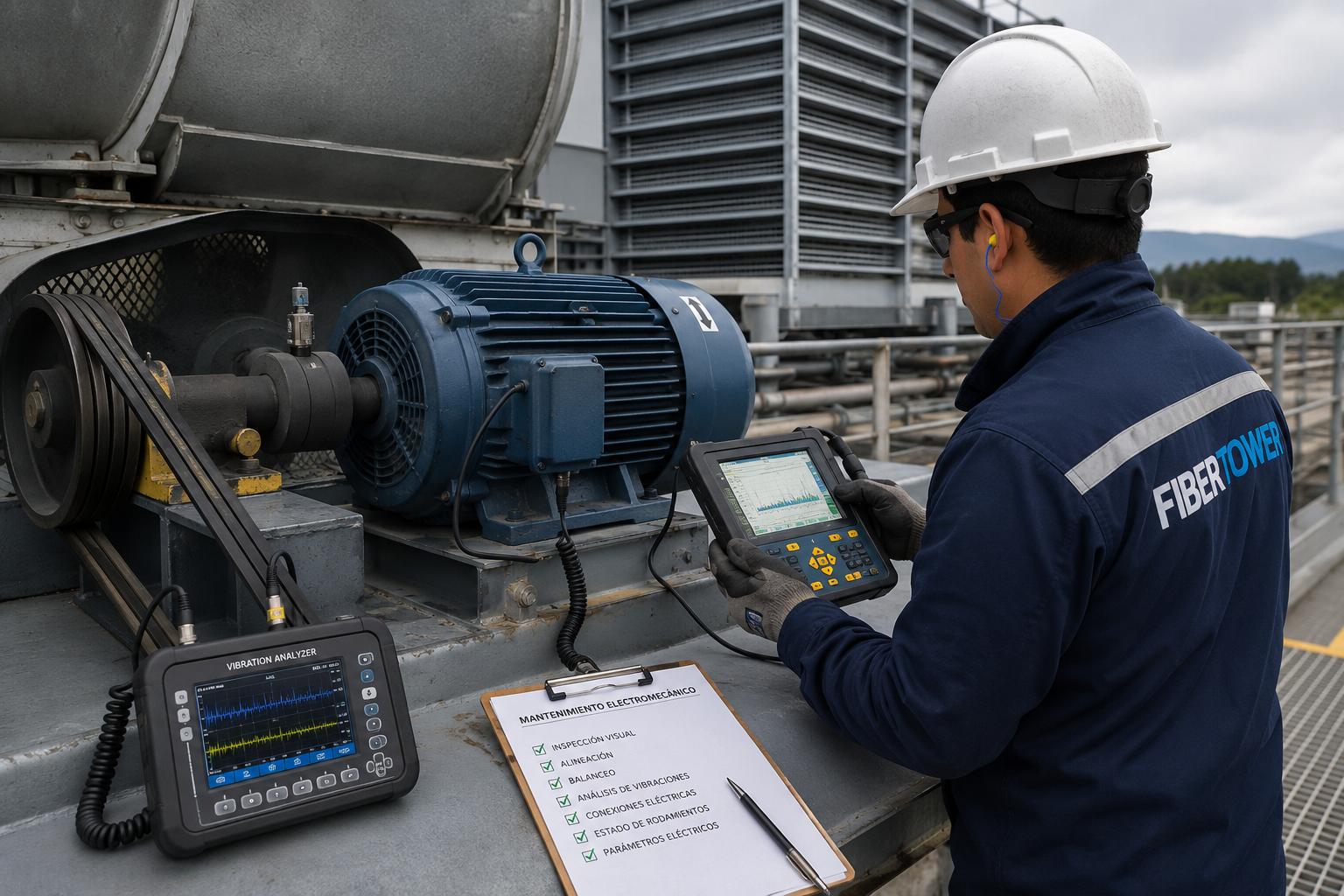
5.5 Step 5: Measure Vibration and Temperature
Use suitable instruments to measure vibration and temperature at the specified inspection points.
Compare results with the equipment manufacturer's limits, historical readings, and applicable site standards.
A sudden change can be more important than a single measurement. If readings are outside approved limits, investigate before restarting the fan.
6. Cooling Tower Fan Failure Solutions
The right solution depends on the actual failure mechanism. A damaged blade needs a different repair approach from an electrical fault or a gearbox problem.
6.1 Repair or Replace the Fan Motor
Minor external problems may be repairable, but internal winding damage or severe mechanical deterioration may require motor replacement.
When selecting a replacement, confirm voltage, frequency, rated power, speed, mounting arrangement, enclosure protection, and environmental suitability.
The replacement motor must also be compatible with the fan's operating load.
6.2 Balance or Replace Damaged Blades
If the blades are structurally sound but the fan is unbalanced, a qualified specialist may be able to correct the imbalance.
However, balancing cannot repair cracks or restore weakened materials. Structurally damaged blades should be replaced.
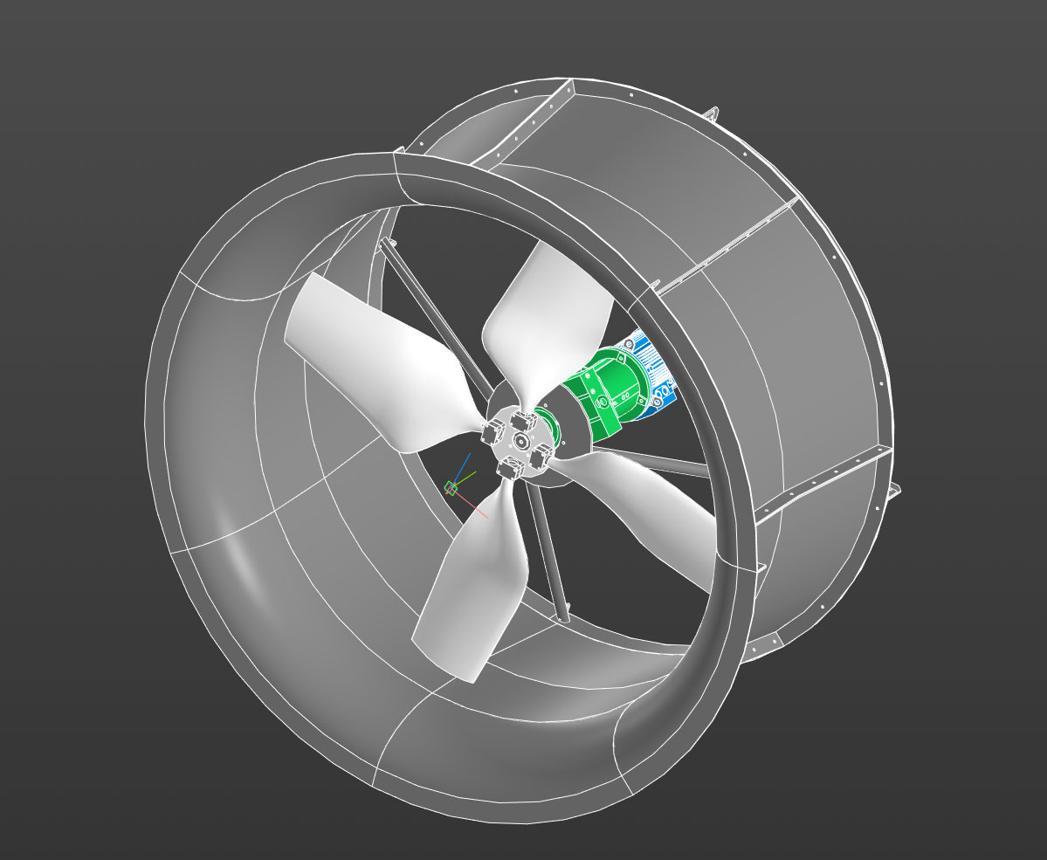
When purchasing replacement blades, confirm dimensions, material, mounting details, pitch range, and compatibility with the existing hub.
6.3 Repair Gearboxes and Bearings
Gearbox and bearing repairs should follow the manufacturer's procedures.
Depending on the damage, the solution may involve lubricant replacement, seal replacement, bearing replacement, gear repair, or complete gearbox replacement.
After maintenance, verify alignment, lubrication, temperature, and vibration before returning the system to normal service.
6.4 Adjust Blade Pitch and Airflow
If airflow is insufficient, check the blade pitch, fan rotation, fan speed, and surrounding airflow conditions.
Adjustments should be based on approved performance data. An increase in blade pitch can raise motor load, so current and power consumption must be checked during commissioning.
6.5 Correct Electrical and Installation Problems
Replace damaged cables, repair faulty control components, correct alignment, and secure loose connections.
After the work is complete, conduct the required electrical and mechanical checks. A controlled restart should confirm that the fan operates within its specified limits.
7. How to Prevent Cooling Tower Fan Failure
Preventive maintenance is usually less expensive than emergency repairs. More importantly, it helps reduce unexpected downtime.
A good maintenance program should combine routine visual inspections, condition monitoring, lubrication, cleaning, and scheduled component checks.
7.1 Establish a Regular Inspection Schedule
Create an inspection plan based on operating hours, environmental conditions, manufacturer recommendations, and the importance of the cooling tower to production.
Record the condition of blades, hubs, motors, gearboxes, belts, bearings, fasteners, and electrical controls.
7.2 Monitor Vibration, Noise, and Temperature
Keep records of vibration, motor current, gearbox temperature, and bearing temperature where applicable.
Compare current measurements with previous readings. Increasing vibration or temperature may indicate a developing fault.
7.3 Maintain Proper Lubrication
Follow the specified lubrication intervals and use the correct lubricant.
Check for leaks, contamination, and signs of water ingress. Good lubrication practices help protect bearings and gearboxes from premature wear.
7.4 Keep Fan Blades and Air Inlets Clean
Remove debris and deposits that may affect blade condition or airflow.
Cleaning should be performed safely, with the fan isolated. Avoid cleaning methods that could damage composite surfaces, coatings, or protective components.
7.5 Replace Aging Components on Time
Do not wait for every component to fail before planning replacement.
If inspections reveal cracks, serious corrosion, excessive wear, or repeated operating problems, evaluate the component's remaining serviceability.
Keep critical replacement parts available when equipment downtime would significantly affect production.
8. When Should You Repair or Replace a Cooling Tower Fan?
Repair is often appropriate when the problem is limited, the main structure remains sound, and compatible replacement components are available.
Replacement may be the better choice when:
Fan blades have structural cracks or severe deformation.
The hub or support structure is seriously damaged.
The motor or gearbox has suffered major internal failure.
The fan repeatedly experiences similar breakdowns.
Suitable replacement components are no longer available.
The existing fan cannot meet the required operating conditions.
A replacement decision should consider more than the purchase price. Include labor, downtime, energy consumption, expected service life, and compatibility with the existing cooling tower.
For older systems, a fan retrofit may also be worth evaluating. However, any retrofit must be checked against the tower's structural limits, motor capacity, airflow requirements, and operating conditions.
9. How to Choose Reliable Cooling Tower Fan Replacement Parts
Choosing the wrong replacement part can create new problems, even if the component looks similar to the original.
Before ordering, collect the equipment information and compare the replacement part with the existing design.
9.1 Check Dimensions and Operating Parameters
Important information may include:
Fan diameter.
Number of blades.
Hub dimensions and mounting details.
Blade pitch or adjustment range.
Required airflow and static pressure.
Fan rotational speed.
Motor power and operating speed.
Operating temperature and environmental conditions.
Where possible, provide drawings, photographs, nameplate information, and the original equipment model.
9.2 Select Suitable Blade Materials
Cooling tower fan blades may use different materials, including FRP and other engineered materials.
FRP blades are used in many industrial cooling tower applications because they can offer a useful combination of low weight, corrosion resistance, and structural performance.
However, the correct material depends on the application. Consider temperature, humidity, chemical exposure, UV conditions, mechanical loading, and maintenance requirements.
9.3 Confirm Compatibility with the Existing System
A replacement fan must match more than the outside diameter.
Check the hub, blade connections, rotation direction, drive arrangement, clearance, motor capacity, and required airflow.
If you are unsure, provide the existing fan details to a qualified cooling tower component supplier before ordering.
10. Why Choose Power Tower Cooling Technology (Shaoxing) Co.,Ltd?
Selecting the right supplier is an important part of maintaining a reliable cooling tower.
Power Tower Cooling Technology (Shaoxing) Co.,Ltd focuses on cooling tower components and related replacement requirements. For maintenance teams, equipment owners, and cooling tower service companies, having access to compatible components can make repair and replacement work easier to plan.
When evaluating a supplier, look for practical technical support, clear product information, suitable material options, and the ability to assess compatibility with existing equipment.
Power Tower's website is:
https://www.coolingtowerpart.com
If you need replacement fan blades or related cooling tower components, share your equipment details and operating requirements. This makes it easier to identify a suitable solution rather than choosing parts based on appearance alone.
11. Information to Prepare Before Requesting a Quote
To help a supplier evaluate your cooling tower fan requirements, prepare as much of the following information as possible:
Cooling tower manufacturer and model.
Fan diameter and number of blades.
Existing blade material.
Hub dimensions and mounting arrangement.
Motor power and rotational speed.
Fan rotation direction.
Operating temperature and environmental conditions.
Photos of the existing fan and damaged components.
Drawings or technical specifications, if available.
Required quantity and delivery destination.
If you are replacing an existing fan, clear photographs and accurate measurements can significantly reduce the risk of selecting an incompatible product.
12. Frequently Asked Questions
12.1 What Is the Most Common Cause of Cooling Tower Fan Failure?
There is no single cause for every cooling tower. Common failure sources include motor problems, blade damage, imbalance, bearing wear, gearbox problems, poor lubrication, and incorrect installation.
The most likely cause depends on the fan design, operating environment, maintenance history, and actual symptoms.
12.2 Can a Cooling Tower Run Without Its Fan?
Some cooling towers can provide limited natural-draft cooling under certain conditions, but a mechanical-draft cooling tower is designed to use its fan to achieve the required airflow and heat rejection.
Operating without the fan may significantly reduce cooling capacity. Follow the equipment manufacturer's instructions and the site's operating procedures before deciding whether continued operation is possible.
12.3 Why Does a Cooling Tower Fan Vibrate?
Common causes include fan imbalance, damaged blades, loose fasteners, worn bearings, shaft misalignment, and gearbox problems.
Vibration may also result from structural resonance or incorrect installation. A proper inspection should identify the source before corrective work begins.
12.4 How Often Should a Cooling Tower Fan Be Inspected?
Inspection frequency depends on operating conditions, equipment design, manufacturer recommendations, and site requirements.
Operators should perform routine visual checks and monitor abnormal noise or vibration during operation. More detailed inspections should follow the site's preventive maintenance schedule and the manufacturer's recommendations.
12.5 Should I Repair or Replace a Damaged Fan Blade?
Minor issues may be repairable if the manufacturer or a qualified specialist confirms that the blade remains structurally safe.
Cracked, severely deformed, or structurally weakened blades should generally be replaced. Do not rely on surface repairs or balancing to make a structurally damaged blade safe.
13. Conclusion
Cooling tower fan failure can affect cooling performance, production reliability, and maintenance costs. The problem may come from a motor, fan blade, gearbox, bearing, drive system, electrical control, or installation issue.
The best approach is to identify the root cause before replacing components. Regular inspections, proper lubrication, vibration monitoring, correct blade adjustment, and timely replacement can help reduce unexpected breakdowns.
When replacement parts are needed, check dimensions, materials, operating parameters, and compatibility with the existing cooling tower.
Power Tower Cooling Technology (Shaoxing) Co.,Ltd provides cooling tower component information and replacement support through its website:
https://www.coolingtowerpart.com
Whether you are troubleshooting a damaged fan or planning a replacement, accurate equipment information is the starting point for a reliable solution.


