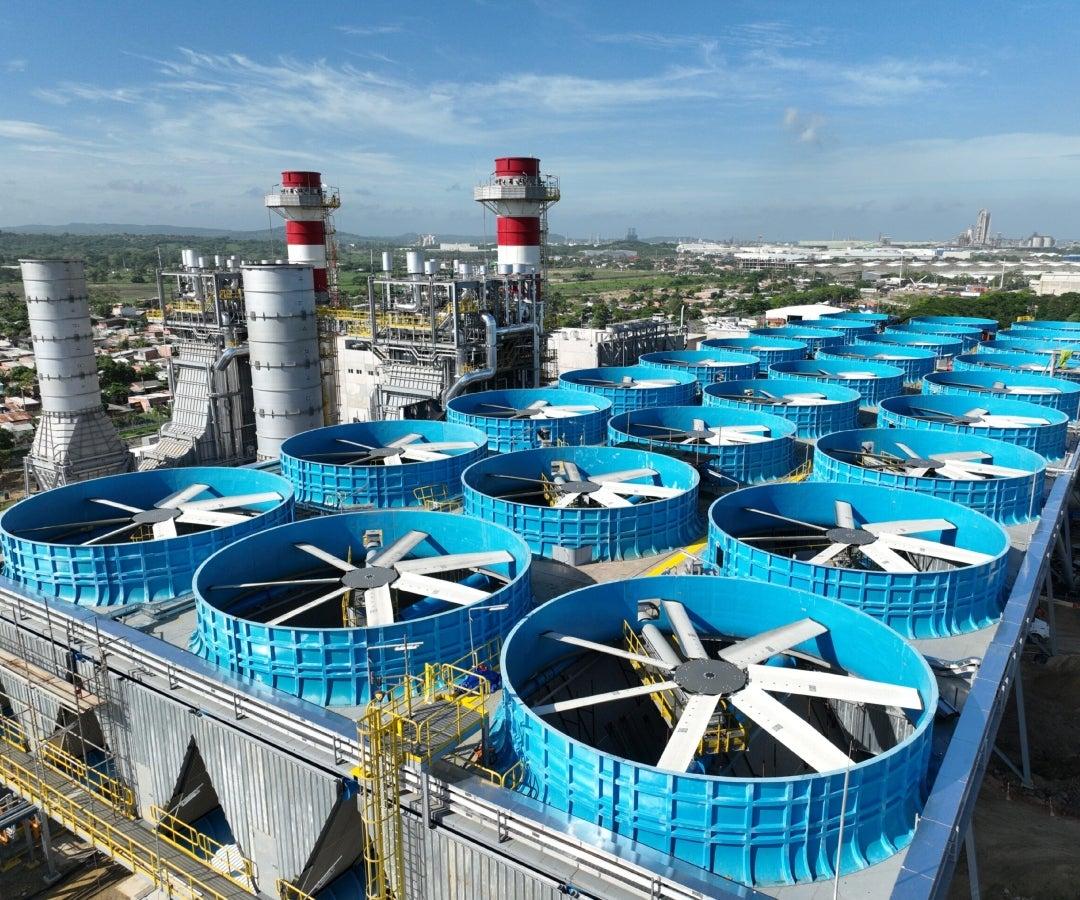
A cooling tower fan deck is an important structural component that supports the fan area and provides access for inspection and maintenance on suitable cooling tower designs. Although it may not receive as much attention as the fan motor, fan blades, or cooling tower fill, its condition has a direct impact on structural safety and equipment reliability.
Over time, moisture, chemical exposure, vibration, corrosion, and mechanical stress can damage the fan deck. Cracks may develop around connection points, metal surfaces may corrode, and FRP panels may experience delamination or deformation. If these problems are ignored, they can lead to expensive repairs, unexpected shutdowns, and potential safety hazards.
So, when should you repair a cooling tower fan deck, and when is complete replacement the better choice? What materials should you consider? How can you extend the service life of a newly installed fan deck?
In this guide, we will explain the common causes of fan deck damage, discuss the replacement process step by step, and share practical cooling tower fan deck maintenance tips. We will also introduce how Power Tower Cooling Technology (Shaoxing) Co.,Ltd supports customers looking for cooling tower components and replacement solutions.
1. What Is a Cooling Tower Fan Deck?
A cooling tower fan deck is a structural platform or covering located around the fan assembly in many mechanical-draft cooling towers. It is generally installed near the upper section of the tower and designed according to the cooling tower's structural configuration.
Depending on the cooling tower model, the fan deck may consist of individual panels, supporting beams, connection brackets, fasteners, and an opening for the fan cylinder or fan stack.
Its dimensions, materials, and load-bearing capacity vary from one cooling tower to another. Therefore, when replacing an existing fan deck, it is important to understand the original design rather than selecting panels based only on appearance.
1.1 Main Functions of a Cooling Tower Fan Deck
The fan deck performs several important functions.
Structural support: The deck and its supporting framework form part of the upper cooling tower structure. They help maintain the intended arrangement around the fan assembly.
Maintenance access: On designs with suitable load ratings and designated access areas, the fan deck provides a working platform for technicians inspecting fans, motors, gearboxes, and other equipment.
Equipment protection: The deck forms part of the upper enclosure and may help limit the entry of rainwater, leaves, dust, and other external debris, depending on its design.
Structural stability: Properly manufactured and installed fan deck panels help maintain the intended geometry of the surrounding structure.
Think of the fan deck as an important part of the cooling tower's structural framework. If it becomes weak or unstable, maintenance work becomes more difficult, and the safety of personnel and equipment may be affected.
1.2 Common Cooling Tower Fan Deck Materials
Cooling tower fan decks can be manufactured from several materials. The best choice depends on the tower design, operating environment, structural requirements, and maintenance expectations.
Common materials include:
FRP (Fiber-Reinforced Plastic): Lightweight, corrosion-resistant in many suitable environments, and widely used in industrial cooling tower applications.
Galvanized steel: Provides mechanical strength and is used in structural applications, although its protective coating requires inspection.
Stainless steel: Offers corrosion resistance in suitable environments but generally involves a higher material cost.
Aluminum: Lightweight and suitable for selected applications, depending on alloy compatibility and structural requirements.
Concrete: Used in certain large or permanent cooling tower structures.
FRP is particularly attractive for many cooling tower applications because it combines relatively low weight with resistance to moisture and various corrosive conditions.
However, material selection should never be based on corrosion resistance alone. Load capacity, stiffness, panel thickness, support spacing, fastening methods, and operating temperature must also be considered.
2. Signs Your Cooling Tower Fan Deck Needs Replacement
How can you tell whether your cooling tower fan deck needs repair or replacement?
The first step is to understand the warning signs. Some problems may initially appear minor, but deterioration can spread if the underlying cause is not corrected.
Regular inspection helps identify these issues before they become more serious.
2.1 Cracks, Corrosion, and Surface Damage
Cracks are among the most obvious signs of fan deck deterioration.
For FRP fan decks, inspect for:
Surface cracks and deep fractures.
Delamination between laminate layers.
Exposed or damaged glass fibers.
Localized deformation.
Damage around bolt holes and panel edges.
For metal fan decks, look for rust, coating failure, pitting, and material thinning.
Pay particular attention to areas around the fan opening, panel joints, and structural supports. These locations may experience repeated mechanical loading and vibration.
A small surface defect does not automatically mean the entire fan deck must be replaced. However, cracks that continue to grow or appear near load-bearing connections require professional assessment.
2.2 Excessive Vibration and Structural Movement
A cooling tower fan deck should remain stable under its intended operating conditions.
If you notice unusual movement, rattling, or vibration, investigate the source immediately. Possible causes include loose fasteners, damaged support members, fan imbalance, mechanical misalignment, or deteriorated connections.
Do not assume that the fan deck itself is always responsible. Vibration can originate from the rotating fan assembly and transfer into the surrounding structure.
A proper inspection should examine the fan blades, hub, motor, gearbox or drive system, mounting arrangement, and fan deck connections together.
2.3 Water Leakage and Moisture Damage
Cooling towers operate in a wet environment. Water splashing, rain, and condensation can gradually affect certain materials and connections.
Common warning signs include:
Water collecting in low areas.
Damaged panel joints or seals.
Persistent dampness around connections.
Corrosion beneath protective coatings.
Deteriorated supporting materials.
Water accumulation is particularly concerning when it remains around structural connections. It may accelerate deterioration and make hidden damage harder to identify.
2.4 Loose Fasteners and Weak Support Structures
Bolts and connections hold the fan deck assembly together. Over time, vibration, corrosion, and repeated loading may cause fasteners to loosen or deteriorate.
During inspection, check for:
Missing or loose bolts.
Damaged nuts and washers.
Cracked connection points.
Distorted brackets.
Corroded support members.
Separation between panels and supporting structures.
Simply tightening a few bolts will not solve a serious structural problem. If the surrounding material has cracked or lost strength, the connection may need professional repair or replacement.
3. Common Causes of Cooling Tower Fan Deck Damage
Understanding why fan decks fail can help you prevent similar problems in the future.
3.1 Long-Term Exposure to Moisture
A cooling tower is a demanding environment for structural materials.
Continuous exposure to water, humidity, and changing operating conditions can gradually affect protective coatings, joints, and materials that are not properly selected or maintained.
Even corrosion-resistant materials require regular inspection. Resistance to moisture does not mean complete immunity to deterioration.
3.2 Chemical Corrosion and Environmental Conditions
Cooling tower water may contain treatment chemicals, dissolved minerals, and contaminants. Airborne pollutants can also affect exposed surfaces.
The impact depends on chemical concentration, temperature, exposure time, and material compatibility.
For example, a metal fan deck installed in an aggressive environment may experience faster corrosion if its protective coating is damaged.
FRP can provide an advantage in many corrosive environments, but the resin system must be compatible with the actual chemicals and operating temperature.
3.3 Fan Vibration and Uneven Loads
A cooling tower fan rotates continuously during operation. If the fan becomes unbalanced or its drive system develops a problem, vibration may increase.
This vibration can affect nearby structures and connections.
Possible contributing factors include:
Uneven fan blade pitch.
Damaged or deformed fan blades.
Incorrect fan installation.
Worn bearings.
Motor or gearbox problems.
Loose mounting bolts.
Structural misalignment.
Regular cooling tower fan inspection is therefore an important part of fan deck maintenance.
3.4 Aging Materials and Poor Installation
No structural material lasts forever.
Long-term exposure, repeated loading, inadequate maintenance, and unsuitable installation methods can shorten the service life of a fan deck.
Poor installation can be especially damaging. Incorrect panel dimensions, unsuitable fasteners, insufficient support, or improper drilling may create stress concentrations.
A replacement fan deck should be designed around the actual structure. Simply copying an old damaged panel without checking its dimensions and condition may repeat the original problem.
4. Repair or Replace: How to Make the Right Decision
One of the most common questions from cooling tower operators is whether a damaged fan deck can be repaired.
The answer depends on the damage location, severity, material, structural function, and remaining condition of the surrounding components.
4.1 When Fan Deck Repair Is Practical
Repair may be appropriate when:
Damage is limited to a small, non-critical area.
The supporting framework remains structurally sound.
The material is suitable for an approved repair method.
The defect does not affect critical connections or fan alignment.
A qualified technician confirms that the repaired structure can safely meet its intended requirements.
For example, a minor surface defect in an FRP panel may be repairable using a compatible resin and reinforcement system.
However, FRP repairs require proper surface preparation, material compatibility, and curing procedures. Applying a simple coating over a structural crack is not a reliable repair method.
4.2 When Full Fan Deck Replacement Is Recommended
Replacement is usually the better choice when:
Multiple panels have significant damage.
Major cracks affect structural strength.
FRP delamination is extensive.
Metal corrosion has caused serious material loss.
Support members are distorted or weakened.
Fastening areas can no longer hold connections securely.
Repeated repairs have failed.
If damage affects personnel safety or the stability of the fan assembly, the tower should be taken out of service as required by the site's safety procedures until a qualified assessment confirms it is safe.
The goal is not simply to make the fan deck look new. It is to restore a safe, stable, and suitable structure.
5. Cooling Tower Fan Deck Replacement Process
A successful fan deck replacement project starts with accurate information and careful planning.
Replacing a fan deck without checking the existing structure can lead to installation problems, poor fitting, and additional costs.
Here is a practical replacement process.
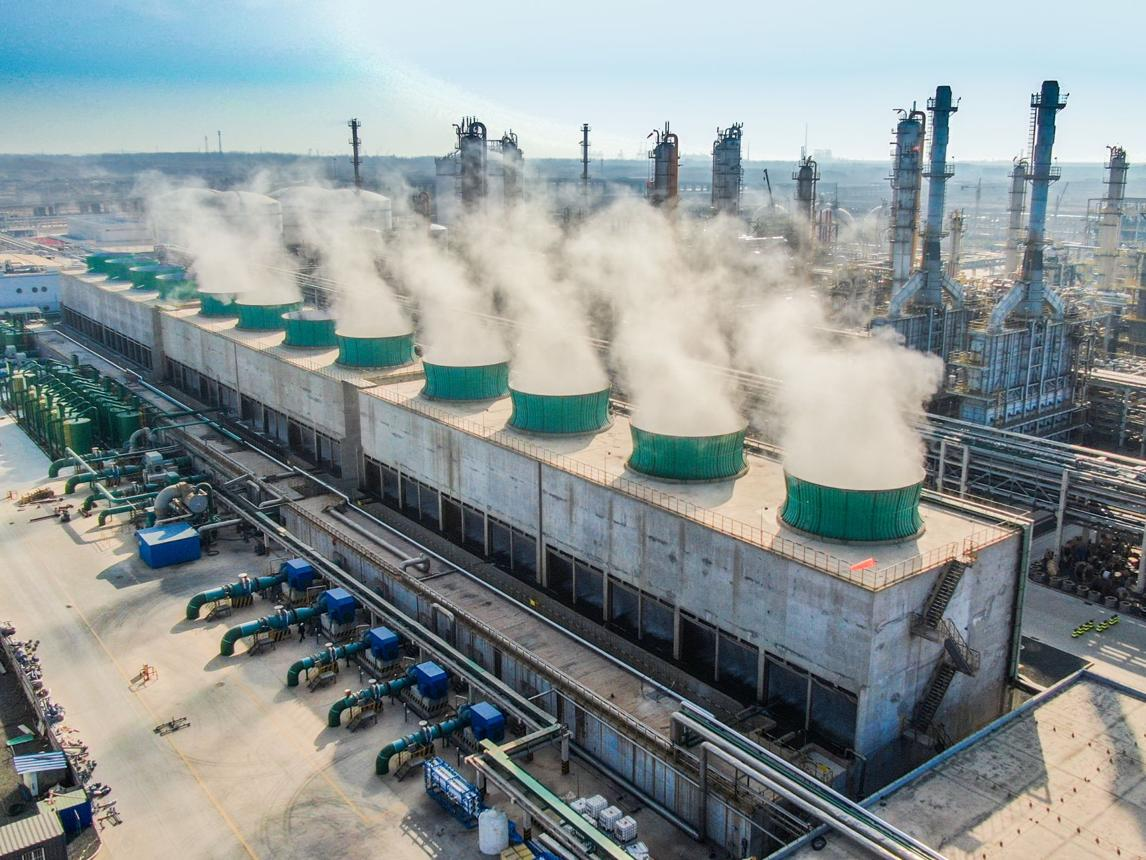
5.1 Step 1: Inspect the Existing Structure
Before ordering replacement components, inspect the complete fan deck.
Check the panels, support beams, connections, fan opening, and surrounding structural members.
Record visible damage and identify whether the problem is limited to the deck or also affects the supporting framework.
Photographs are useful because they allow the supplier or engineering team to review the existing arrangement before manufacturing replacement parts.
5.2 Step 2: Measure and Confirm Specifications
Accurate measurements are essential for successful fan deck replacement.
Important information may include:
Overall fan deck dimensions.
Fan opening diameter or dimensions.
Panel length and width.
Panel thickness.
Support spacing.
Bolt-hole locations.
Connection details.
Required load capacity.
Existing material and surface finish.
Also confirm the cooling tower brand, model, installation year, and any previous modification records if available.
Do not rely on approximate measurements when manufacturing replacement panels. Even a small dimensional difference can create installation difficulties.
5.3 Step 3: Select Suitable Replacement Materials
The replacement material should match the operating environment and structural requirements.
For many industrial cooling tower applications, FRP is worth considering because it offers several practical benefits:
Good resistance to moisture.
Corrosion resistance in many suitable environments.
Relatively low weight.
Flexible manufacturing options.
Potentially reduced maintenance associated with corrosion.
Compatibility with different panel configurations.
Still, the FRP grade, resin type, reinforcement, thickness, and structural design must be selected according to the application.
A lighter panel is not automatically a better panel. Structural performance comes first.
5.4 Step 4: Remove Damaged Fan Deck Components
Before removing the old fan deck, shut down and isolate the cooling tower according to the site's lockout/tagout procedure.
Confirm that the fan cannot start unexpectedly. Remove or secure any components that could interfere with the work.
The removal process generally includes:
Establishing a safe work area.
Inspecting lifting and access arrangements.
Removing fasteners using suitable tools.
Carefully dismantling damaged panels.
Checking the exposed supporting structure.
Removing debris and preparing the installation surface.
If support members are damaged, they must be assessed and repaired before new panels are installed.
5.5 Step 5: Install the New Fan Deck
Install replacement panels according to the approved drawings and installation instructions.
Check the orientation of each panel, alignment of the fan opening, and position of all connections.
Use fasteners and washers compatible with the selected material and operating environment.
Avoid forcing panels into position. If holes do not align, stop and investigate the dimensional or installation issue rather than modifying structural components without approval.
5.6 Step 6: Check Alignment and Structural Stability
After installation, inspect the complete assembly.
Confirm that:
Panels are correctly positioned.
Connections are secure.
There are no gaps caused by incorrect fitting.
The fan opening is correctly aligned.
The support structure is stable.
Drainage paths are clear.
Designated access areas meet their intended requirements.
If the work affects the fan assembly, verify fan clearance and alignment before returning the cooling tower to service.
A qualified technician should complete the required pre-start checks and commissioning procedures.
6. Cooling Tower Fan Deck Maintenance Tips
Replacement is not the end of the job. Regular maintenance helps protect your investment and identify developing problems early.
The good news is that many routine checks are straightforward when performed consistently and documented properly.
6.1 Perform Regular Visual Inspections
Start with a simple visual inspection.
Look for cracks, corrosion, loose panels, surface deterioration, damaged joints, and signs of water accumulation.
Pay particular attention to high-stress areas around the fan opening and structural connections.
A written inspection record makes it easier to compare changes over time. If a small crack becomes longer or wider, you can identify the deterioration before it develops into a larger problem.
6.2 Keep the Fan Deck Clean and Free of Debris
Leaves, dust, plastic bags, and other debris can collect on the upper surface of a cooling tower.
This material may block drainage paths, retain moisture, or create slip and trip hazards.
Clean the fan deck using methods compatible with its material. Avoid aggressive chemicals, unsuitable pressure washing, or tools that may damage coatings or FRP surfaces.
A clean deck is easier to inspect and maintain.
6.3 Check Bolts, Joints, and Connections
Loose fasteners are easy to overlook.
During scheduled inspections, check the condition of bolts, nuts, washers, brackets, and panel joints.
Look for corrosion, damaged threads, missing hardware, and signs of movement.
Use the specified tightening procedure and torque requirements where available. Overtightening can damage certain FRP panels or connection points.
6.4 Monitor Cooling Tower Fan Vibration
Fan vibration should be monitored as part of the cooling tower's mechanical maintenance program.
Unexpected changes in vibration may indicate an issue with fan blades, bearings, motor, gearbox, drive system, or mounting arrangement.
If abnormal vibration appears, investigate the root cause rather than treating the deck as the only possible source.
Correcting fan imbalance or mechanical misalignment can help reduce unnecessary stress on surrounding components.
6.5 Protect the Surface from Corrosion
For metal fan decks, inspect protective coatings and repair damaged areas using an appropriate coating system.
For FRP decks, check for surface wear, exposed fibers, cracks, and chemical damage.
Do not apply random coatings or repair products. The selected materials must be compatible with the original substrate and operating environment.
6.6 Maintain Proper Drainage
Water should not remain trapped on the fan deck unless the design specifically allows it.
Blocked drainage paths can lead to standing water, increased loading, and accelerated deterioration of vulnerable materials.
Remove debris from drainage openings and inspect joints where water may collect.
If water repeatedly accumulates in the same location, check whether the problem comes from incorrect slope, deformation, or an installation defect.
7. How Often Should You Inspect a Cooling Tower Fan Deck?
There is no single inspection interval that suits every cooling tower.
The frequency depends on the cooling tower design, operating environment, material, service history, and manufacturer's recommendations.
The following schedule can be used as a general maintenance planning reference:
| Inspection Frequency | Recommended Checks |
| Routine operating checks | Look for unusual noise, visible movement, or obvious damage from safe observation points |
| Monthly or scheduled site inspections | Check surface condition, debris, drainage, and accessible connections |
| Quarterly or semiannual inspections | Review panel joints, corrosion, fasteners, and signs of structural deterioration |
| Annual shutdown inspection | Conduct a more comprehensive inspection of the deck and supporting structure |
| After abnormal vibration or severe weather | Arrange an additional inspection based on the event and site risk assessment |
These intervals are general suggestions, not a substitute for the cooling tower manufacturer's maintenance requirements or a site-specific inspection program.
If your cooling tower operates continuously in a corrosive industrial environment, more frequent inspections may be necessary.
8. Safety Precautions During Fan Deck Inspection and Replacement
Safety must come before maintenance speed.
A cooling tower fan deck may be located several meters above ground, and some structures are not designed to support personnel walking across every section.
Before starting work, remember these precautions:
Shut down and isolate the fan and associated equipment.
Apply lockout/tagout procedures.
Confirm that automatic start controls cannot restart the equipment.
Use approved fall protection and access systems.
Follow confined-space requirements where applicable.
Never step onto an unverified or damaged panel.
Use suitable lifting equipment for heavy components.
Keep tools and loose materials secured.
Follow site-specific permits and safety procedures.
One important point: never assume a fan deck is safe to walk on simply because it looks solid.
If its load capacity is unknown, obtain confirmation from the manufacturer or a qualified structural professional before allowing personnel onto it.
9. How Fan Deck Condition Affects Cooling Tower Performance
Does a damaged fan deck directly reduce cooling efficiency?
Not necessarily. The fan deck is primarily a structural component, and its effect on thermal performance depends on the design and the type of damage.
However, several problems can influence overall cooling tower operation.
Fan alignment: If structural movement affects the fan support or fan cylinder geometry, it may contribute to mechanical problems or insufficient clearance.
Airflow arrangement: Damage or incorrect installation around the fan opening may interfere with the intended airflow path in some designs.
Equipment reliability: Loose panels and damaged connections may create vibration, noise, or maintenance concerns.
Operational safety: A weak fan deck can make inspection and maintenance more difficult, potentially delaying important service work.
Think of the cooling tower as a coordinated system. The fan, fill, water distribution system, casing, and supporting structure all have different jobs, but they must work together.
Maintaining the fan deck helps protect the overall reliability of that system.
10. Common Cooling Tower Fan Deck Maintenance Mistakes to Avoid
Even experienced maintenance teams can make mistakes during fan deck repair and replacement.
Here are some common ones to avoid.
Mistake 1: Replacing panels without inspecting the supports.
New panels cannot solve problems caused by damaged support beams or brackets. Inspect the complete supporting structure first.
Mistake 2: Choosing materials based only on price.
A low-cost material may not provide the required strength or corrosion resistance. Consider the total service-life cost rather than the purchase price alone.
Mistake 3: Ignoring fan vibration.
A new fan deck may still experience problems if the original fan imbalance or mechanical fault remains unresolved.
Mistake 4: Using unsuitable fasteners.
Incorrect fasteners can corrode, loosen, or damage the panels. Select hardware based on the material and operating conditions.
Mistake 5: Skipping dimensional checks.
Incorrect panel dimensions can cause installation delays and poor fitting. Confirm measurements before production.
Mistake 6: Treating every FRP crack as cosmetic.
Some cracks may indicate structural damage. Assess their depth, location, and effect on load-bearing performance before deciding on a repair.
11. How to Choose a Reliable Cooling Tower Fan Deck Supplier
A reliable supplier does more than provide replacement panels. The supplier should help you identify the correct product configuration for your cooling tower.
Before placing an order, consider the following points.
11.1 Product and Material Knowledge
Does the supplier understand cooling tower operating environments and the differences between FRP, metal, and other structural materials?
Can they explain the material options and their limitations?
The right supplier should understand why material compatibility, panel thickness, support spacing, and connection details matter.
11.2 Customization Capability
Cooling tower fan decks vary in dimensions and structural arrangements.
A supplier should be able to review drawings, measurements, and photographs to help determine whether customized panels or components are required.
11.3 Quality and Dimensional Control
Ask how the supplier checks panel dimensions, thickness, surface quality, and connection details.
If replacement components must match an existing tower, dimensional accuracy is particularly important.
11.4 Technical Communication
Good communication can prevent expensive mistakes.
A supplier should ask about the cooling tower model, installation dimensions, operating environment, and intended application before recommending a replacement solution.
Do not choose a supplier based only on a product photograph or a low quotation. The right technical match is more important.
12. Cooling Tower Component Solutions from Power Tower Cooling Technology (Shaoxing) Co.,Ltd
When maintaining an industrial cooling tower, finding suitable replacement components is an important part of protecting long-term operation.
Power Tower Cooling Technology (Shaoxing) Co.,Ltd focuses on cooling tower components and replacement products for industrial applications. Its product range covers cooling tower fill, drift eliminators, fan-related components, and other replacement parts.
For customers planning fan deck maintenance or refurbishment, selecting a supplier familiar with cooling tower components can make the sourcing process more straightforward.
When discussing a fan deck replacement project, customers should prepare basic information such as:
Cooling tower brand and model.
Existing fan deck dimensions.
Fan opening size.
Current material and panel thickness.
Photographs of damaged areas.
Support spacing and connection details.
Operating environment and maintenance requirements.
Drawings or previous replacement records, if available.
This information helps the supplier understand the application and evaluate the appropriate replacement components.
Power Tower also provides information about its cooling tower products through its website:
https://www.coolingtowerpart.com
Whether you are maintaining an existing cooling tower, replacing deteriorated components, or planning a larger refurbishment project, accurate measurements and clear technical communication are the best starting points.
For projects involving structural redesign, load calculations, or on-site installation, confirm the engineering and service scope directly with the supplier or a qualified engineering professional.
13. Frequently Asked Questions About Cooling Tower Fan Deck Replacement
13.1 How Long Does a Cooling Tower Fan Deck Last?
There is no universal service life for a cooling tower fan deck.
Its lifespan depends on material selection, structural design, environmental conditions, installation quality, loading, and maintenance.
An FRP fan deck may provide long-term service in a suitable environment, but it still requires regular inspection for cracks, delamination, connection damage, and other deterioration.
13.2 Can a Damaged Cooling Tower Fan Deck Be Repaired?
Yes, some damage can be repaired.
Minor surface defects or localized damage may be suitable for an approved repair procedure. However, extensive cracking, serious delamination, severe corrosion, or weakened structural supports may require replacement.
A qualified assessment should determine whether the repaired structure can safely meet its intended requirements.
13.3 Can I Replace Only Part of the Fan Deck?
In some cases, yes.
If the damage is isolated and the surrounding panels and support structure remain sound, partial replacement may be practical.
However, the new section must match the existing dimensions, material requirements, connection details, and load capacity.
13.4 What Materials Are Suitable for Fan Deck Replacement?
Common materials include FRP, galvanized steel, stainless steel, aluminum, and concrete.
FRP is a popular option in many cooling tower environments because of its relatively low weight and corrosion resistance. The final selection should consider structural strength, chemical exposure, temperature, and installation requirements.
13.5 Does Fan Deck Damage Affect Cooling Tower Operation?
It can.
Depending on the location and severity of the damage, a deteriorated fan deck may affect structural stability, fan alignment, maintenance access, and operational safety.
Any damage near the fan opening or load-bearing connections should be investigated promptly.
13.6 What Information Is Needed to Order a Replacement Fan Deck?
Useful information includes the cooling tower brand and model, fan deck dimensions, fan opening size, panel thickness, material, support spacing, connection details, and photographs of the existing structure.
Technical drawings are especially helpful when available. These details allow the supplier to review the replacement requirements more accurately.
14. Final Thoughts
The cooling tower fan deck may not receive as much attention as the fan motor or cooling tower fill, but it plays an important role in the overall structure.
Cracks, corrosion, loose fasteners, water accumulation, and abnormal movement are all signs that deserve attention. By inspecting the deck regularly, correcting fan vibration problems, maintaining drainage, and choosing suitable replacement materials, you can reduce avoidable maintenance issues and improve equipment reliability.
When replacement becomes necessary, do not focus only on panel dimensions or purchase price. Check the complete support structure, material compatibility, connection details, and load requirements.
A well-maintained fan deck is not just a platform. It is part of the foundation for safer, more reliable cooling tower operation.
For cooling tower components and replacement inquiries, contact Power Tower Cooling Technology (Shaoxing) Co.,Ltd through its official website:
https://www.coolingtowerpart.com
Share your cooling tower model, measurements, and photographs to help identify suitable replacement components for your project.


