Why Process Cooling Systems Cannot Ignore Cooling Tower Fan Blade Balancing
Process cooling forms the thermal backbone for chemical plants, refineries, food & beverage lines, pharmaceutical manufacturing and continuous production facilities. Unlike comfort HVAC systems, these plants run 24/7; even a small cooling deviation can trigger production rate cuts, batch rejection or costly unplanned shutdowns. Cooling tower fans move massive air volumes to reject process heat, and blade imbalance quietly undermines the reliability of the whole thermal loop.
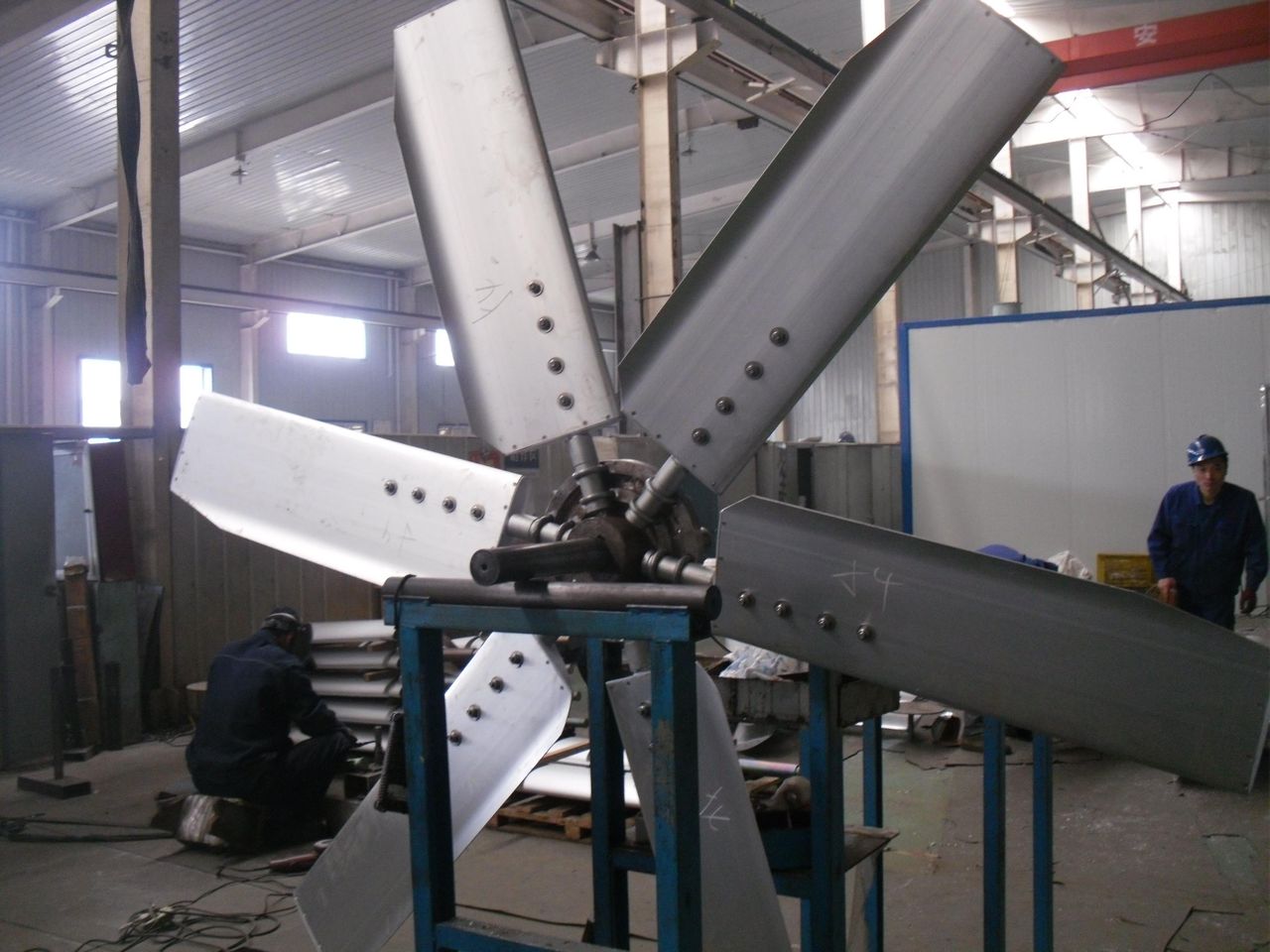
The Hidden Chain Reaction of Unbalanced Fan Blades in Process Plants
Imbalance is not just vibration noise. It creates cyclic centrifugal forces that transmit through hubs, shafts, bearings, gearboxes and tower steel framing. For continuous process lines, this mechanical stress triggers a cascading set of operational problems.
Rising cooling water temperature and unstable process setpoints
When blades rotate unevenly, airflow distribution across fill media becomes turbulent and inconsistent. Heat transfer efficiency drops, cold water return temperature drifts upward, and chillers or process heat exchangers must work harder to hold design temperatures. Many plant operators mistakenly add fan speed instead of fixing the root imbalance, wasting power without stable thermal performance.
Accelerated wear on high-value rotating components
Bearings, shaft seals and gear units are the first casualties of persistent imbalance. Large diameter FRP cooling tower fans operate at low RPM but high inertia; repeated shock loads shorten MTBF and force emergency component replacement during peak production seasons.
Structural fatigue and safety risks on cooling tower frames
Ongoing vibration can loosen anchor bolts, crack welds and weaken the fan deck structure. For aging process towers that have already endured years of thermal cycling, uncorrected imbalance raises structural inspection flags and may trigger local safety compliance alerts.
Unique Operating Conditions That Speed Up Blade Imbalance in Process Cooling Towers
Process environments introduce contamination that most general cooling towers do not face.
Process drift, chemical carryover, mineral scale and sludge build unevenly across blade surfaces, shifting mass distribution over months.
FRP blades can absorb moisture or suffer localized delamination after chemical exposure.
Blade pitch drift after maintenance, impact damage during cleaning, or mismatched replacement blades all create imbalance.
Variable-speed operation for seasonal cooling demand makes imbalance symptoms harder to spot, as vibration only spikes at certain RPM ranges.
Static Balancing vs In‑Situ Dynamic Balancing for Cooling Tower Fan Blades
Many maintenance teams confuse static balancing with the field dynamic balancing service required for installed process cooling tower fans. Each method serves a different stage of the equipment lifecycle.
Static Balancing: Factory or Bench Calibration for New Blade Sets
Static balancing checks mass distribution while the rotor is stationary. Blade sets are weighed and matched at the manufacturer before assembly, and counterweights are added to offset weight differences.
Where static balancing works well
Static balancing is ideal at the factory for new fan blade kits, where technicians match blade moment weights before shipment. It establishes a clean baseline before installation. However, static balancing cannot detect couple imbalance across the rotor width, which becomes critical for large multi-blade cooling tower rotors.
Key limitation for process cooling assets
Once the fan is installed, exposed to process contaminants, or has one blade replaced, static bench balancing alone will not resolve field vibration. Transport stress, mounting tolerances and uneven fouling introduce new imbalance that only running-speed dynamic testing can capture.
In‑Situ Dynamic Balancing: The Preferred Service for Operating Process Towers
Professional field balancing is completed with the fan mounted on the tower, under real operating conditions. Vibration analyzers capture amplitude and phase data at bearing housings, across horizontal, vertical and axial planes, while the fan runs at its normal operating speed.
Single-plane and two-plane balancing for large cooling tower rotors
Most cooling tower fan assemblies require two-plane balancing for wide rotors. The technician calculates correction weight mass and angular position using influence coefficient methods, then securely mounts approved counterweights on the hub or blade root. After adjustment, the fan runs again for verification until vibration falls within ISO 10816 or plant-specific acceptance limits.
Why process plants prioritize in-situ service
Full fan disassembly, rigging and transport to a balancing shop creates extended downtime. Field balancing can often be scheduled during planned short shutdown windows, avoiding multi-day production interruptions.
What a Professional Cooling Tower Fan Blade Balancing Service Includes
A reliable service package is far more than adding a few weights. It starts with root-cause vibration diagnosis and ends with documented handover for your plant maintenance records.
Pre-Balancing Vibration Audit and Fault Screening
Before applying correction weights, skilled vibration analysts rule out non-imbalance faults.
Distinguishing imbalance from gearbox misalignment, looseness or resonance
Imbalance shows a dominant vibration peak at 1× rotational frequency. Gear mesh noise, shaft misalignment, loose mounting or structural resonance produce different frequency signatures. Adding counterweights to fix misalignment or resonance will mask symptoms and worsen damage over time. This diagnostic step is one of the biggest differences between a qualified balancing service and quick-fix field work.
Visual inspection of blades, hub fasteners and pitch angles
Technicians check for blade delamination, corrosion, erosion, missing tip sections, uneven fouling and inconsistent pitch. If one blade is bent or pitch is out of tolerance, balancing may only deliver temporary relief; blade repair or replacement becomes necessary before balancing.
Controlled Lockout, Measurement, Correction and Validation Workflow
Lockout/tagout and site safety controls
Process cooling towers sit near hazardous process lines, pumps and electrical VFD panels. The service provider must follow site LOTO procedures, isolate drive controls and confirm zero-energy state before accessing the fan deck.
Baseline readings, trial weight run and final correction
Baseline vibration is logged first. A known trial weight is temporarily mounted, the fan restarts, and new phase/amplitude data is captured. Software computes the exact correction weight location. After installation, the fan is retested repeatedly until vibration meets the target specification.
Post-service report, trending data and acceptance certificate
For process facilities, documentation matters. The report includes before-and-after vibration spectra, correction weight details, photos, recommended re-inspection interval and signed compliance data that can be filed for maintenance, insurance or audit purposes.
Measurable Benefits of Regular Fan Blade Balancing for Process Cooling Operations
The ROI of balancing often appears quickly in utility bills, maintenance budgets and production stability.
Reduced Energy Consumption and Stable Thermal Performance
Unbalanced fans fight themselves aerodynamically. Turbulent airflow increases motor load while lowering heat rejection efficiency. After balancing, the fan delivers smoother, more uniform airflow across fill packs, and the motor draws lower amperage for the same cooling duty. Plants with multiple cooling tower fans often see consistent chiller load stabilization after balancing campaigns.
Extended Service Life of Gearboxes, Bearings and Drive Assemblies
Continuous cyclic loading from imbalance is the leading driver of premature gearbox and bearing failures on large cooling tower fans. Regular balancing reduces bearing operating temperature, slows seal degradation and extends the service interval for lubrication and overhaul. For process sites with long lead times on replacement gear units, this risk reduction is extremely valuable.
Lower Noise Levels and Reduced Structural Vibration
Many process zones have internal noise limits or nearby residential boundaries. Balancing eliminates the low-frequency tonal vibration that travels through pipe racks and building structures. It also reduces nuisance vibration transmitted to nearby instrumentation panels that can drift or give false readings.
Predictable Maintenance and Fewer Emergency Call-Outs
Process maintenance teams move from reactive breakdown repairs to scheduled reliability work. After a successful balancing service, you can set periodic vibration trending checks, usually aligned with cooling tower cleaning and water treatment inspections.
Common Mistakes Process Plants Make With Cooling Tower Fan Balancing
These errors frequently turn a reliability service into a recurring headache.
Balancing without first cleaning heavily fouled blades
Mineral scale, biological slime and process deposits add uneven mass. If you balance dirty blades, after the next cleaning the mass distribution changes again and vibration returns immediately. Best practice: clean blades, inspect for damage, then perform balancing.
Using generic vibration standards instead of plant duty requirements
ISO vibration grades are a starting point, but critical process cooling towers with redundant or N+1 design often have tighter internal limits. Acceptance criteria should be agreed before work starts, not argued after correction.
Replacing one blade and skipping re-balancing
A single replacement blade will not match the moment weight of the original set. Even a brand-new OEM blade requires balancing after installation. This is one of the most frequent sources of repeat vibration issues in process cooling towers.
Ignoring resonance checks
Some cooling tower structures have natural frequencies that line up with fan operating speed. Balancing can reduce vibration amplitude, but resonance requires structural modification, speed adjustment or stiffening — balancing alone cannot fully solve it.
When to Schedule Cooling Tower Fan Blade Balancing Service for Process Cooling Towers
You can build your maintenance calendar around these trigger events:
After fan blade replacement, hub overhaul or gearbox service
After major cooling tower cleaning or high chemical fouling cycles
When trending vibration readings cross alert thresholds in your CMMS
After storm damage, ice loading or mechanical impact to blades
During annual plant shutdown, before entering hot production season
When process cooling water setpoint becomes unstable for no obvious reason
How to Select a Reliable Balancing Vendor for Industrial Process Cooling
Process cooling sites need vendors familiar with large FRP axial fans, plant safety protocols, vibration spectrum analysis and industrial compliance reporting, not general HVAC balancing contractors.
Verify experience with large-diameter cooling tower rotors
Smaller HVAC fan balancing is very different from slow-speed, high-inertia cooling tower rotors. Ask for reference projects in chemical, power, pulp & paper or continuous manufacturing, plus before-and-after vibration records.
Confirm instrumentation, calibration and technician qualifications
The vibration analyzer must be calibrated. Technicians should understand difference between imbalance, misalignment, looseness and resonance. A vendor that only adds weights without reviewing frequency spectra should be avoided for critical process assets.
Clarify safety protocols and site compliance support
Process plants often require vendor orientation, PPE controls, confined space rules and LOTO alignment. Confirm the team can follow your site permit system and produce all required work documentation.
Conclusion
Cooling tower fan blade balancing is a core reliability service for process cooling systems, protecting continuous production, stabilizing process temperatures and cutting long-term maintenance and energy costs. Imbalance develops gradually from fouling, blade damage, pitch drift and component replacement, and it creates hidden mechanical stress that puts critical cooling assets at risk. Static bench balancing works well for new blade sets, but in-situ dynamic balancing is the gold standard for installed cooling tower fans in operating process plants. When paired with root-cause vibration diagnosis, regular balancing extends bearing and gearbox life, improves airflow uniformity and helps maintenance teams avoid costly unplanned shutdowns. By scheduling balancing as part of your cooling tower reliability program, you turn the fan from a source of risk into a consistent, efficient part of your thermal control loop.


