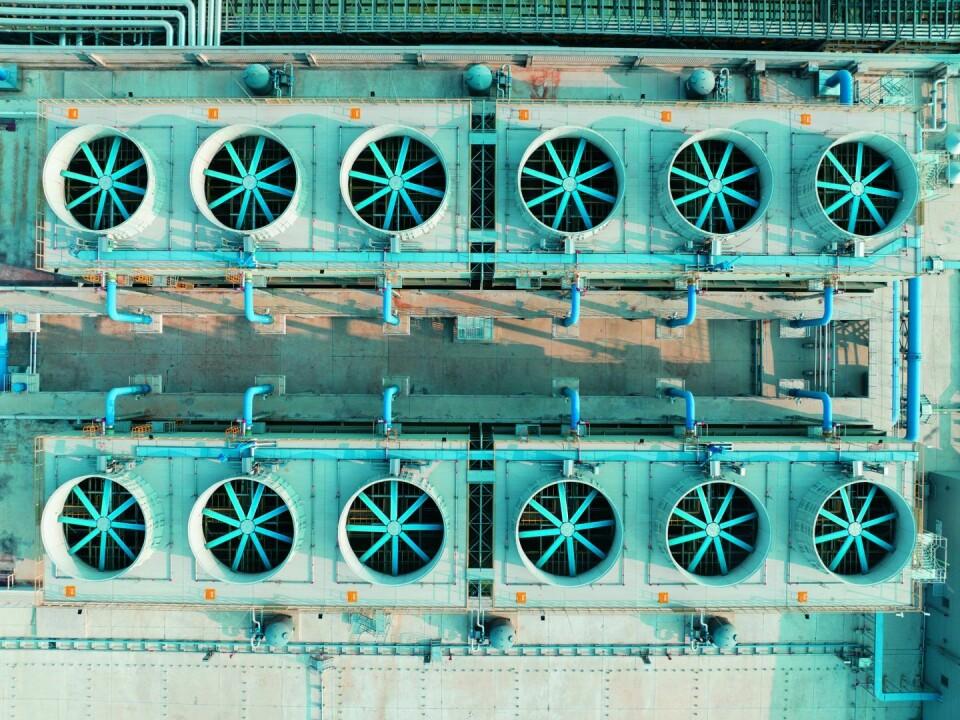
A cooling tower fan belt may look like a small component, but it plays a major role in keeping an industrial cooling system running smoothly. It transfers power from the motor to the fan, helping maintain the airflow needed to remove heat from circulating water. When the belt slips, wears out, or breaks, fan performance can drop quickly. In some cases, the entire cooling tower may struggle to maintain its required cooling capacity.
So, how do you choose the right cooling tower fan belt? What types are available? And how can you keep one working reliably in a demanding industrial environment?
In this guide, we will explore cooling tower fan belt types, working principles, selection factors, common problems, maintenance methods, and replacement tips. Whether you are a cooling tower operator, maintenance engineer, or purchasing manager, this information can help you make a more informed decision.
What Is a Cooling Tower Fan Belt?
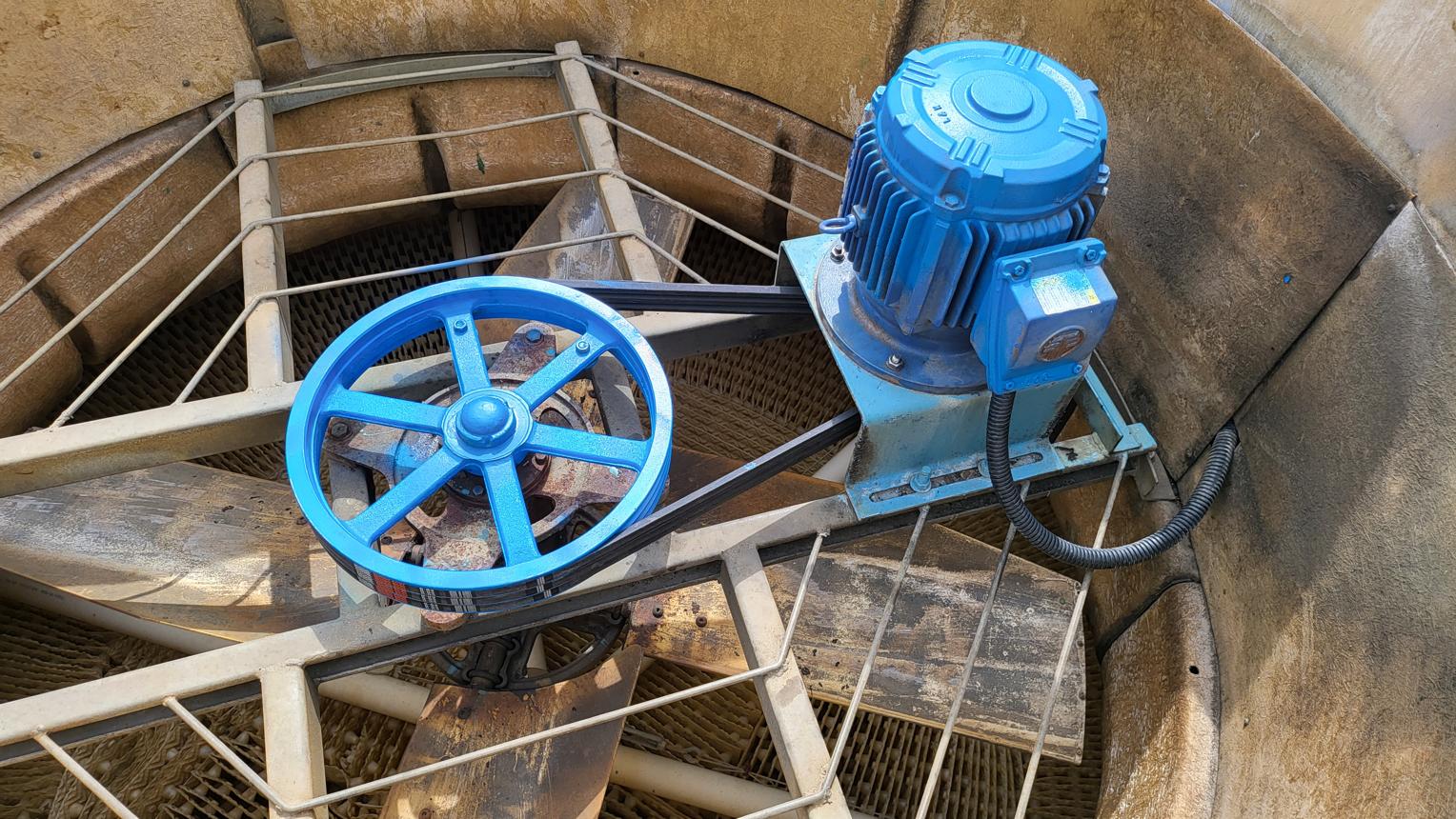
A cooling tower fan belt is a flexible power-transmission component used to connect the motor pulley to the fan pulley. When the motor rotates, the belt transfers mechanical energy to the fan shaft, causing the fan blades to rotate.
The fan then moves air through the cooling tower. This airflow supports heat and mass transfer between the circulating water and the surrounding air, helping the cooling tower reject heat.
Most belt-driven systems use rubber or polymer-based belts reinforced with tensile cords. The exact construction depends on the belt type, power requirement, operating speed, and environmental conditions.
A suitable belt must transmit the required power without excessive slipping, stretching, or heat generation. It must also match the pulley profile and operating conditions of the cooling tower.
How Does a Cooling Tower Fan Belt Drive System Work?
The working principle is straightforward.
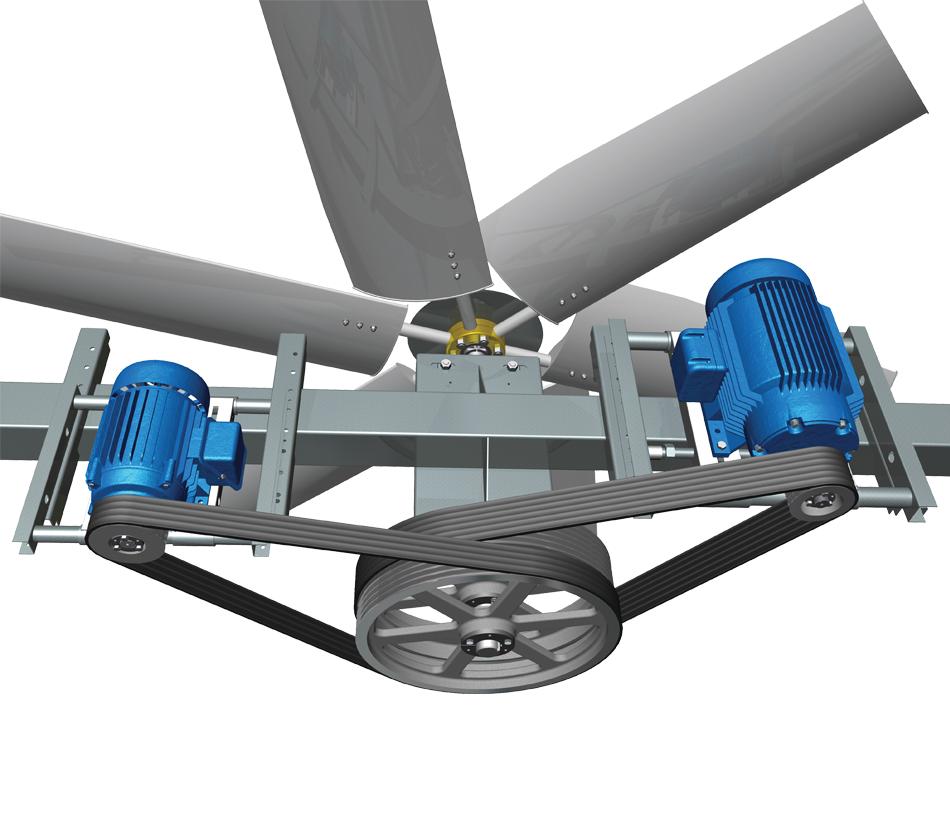
The motor turns a driving pulley. The belt transfers this rotation to a driven pulley connected to the cooling tower fan shaft. The difference between the pulley diameters determines the speed ratio.
For example, if the motor pulley is smaller than the fan pulley, the fan generally rotates more slowly than the motor. This reduction can help match fan speed to the required airflow and operating conditions.
The belt also provides some flexibility between the motor and fan shaft, which can make installation and maintenance easier. However, this flexibility does not eliminate the need for accurate alignment and proper tension.
Main Components of a Cooling Tower Belt Drive
A typical cooling tower fan belt drive includes several components:
Electric motor: Provides the mechanical power needed to operate the fan.
Motor pulley: Transfers motor rotation to the belt.
Fan pulley: Receives power from the belt and drives the fan shaft.
Belt: Transfers rotational power between the two pulleys.
Fan shaft: Connects the driven pulley to the fan assembly.
Bearings: Support the rotating shafts and help maintain smooth operation.
Adjustment mechanism: Allows technicians to adjust belt tension, depending on the drive design.
Each component affects the performance and service life of the others. For example, a worn pulley groove can damage a new belt. A misaligned motor can create uneven belt wear. A bearing problem can increase resistance and place additional load on the belt.
When inspecting a belt drive, it is important to look at the complete system rather than treating the belt as an isolated component.
Main Functions of a Cooling Tower Fan Belt
The belt's main job is power transmission, but its influence reaches much further. It affects fan speed, airflow stability, mechanical efficiency, and the reliability of the cooling tower.
1. Transmitting Power from the Motor to the Fan
The motor produces rotational power, but the fan cannot use that power unless it is transferred to the fan shaft.
The belt provides this connection. Its contact with the pulley grooves allows it to transmit torque. If the belt is undersized, worn, or poorly tensioned, it may not transfer the required power efficiently.
Slippage can generate heat and reduce the actual fan speed. This is why belt condition is an important part of routine cooling tower maintenance.
2. Maintaining Stable Fan Speed
Stable fan speed is important because it influences airflow through the cooling tower.
When the belt slips, the fan may rotate more slowly than intended. This can reduce airflow and affect heat rejection. A correctly specified belt, combined with suitable pulleys and tension, helps maintain consistent rotation under normal operating loads.
3. Supporting Efficient Cooling Tower Operation
Cooling towers depend on the interaction between airflow, water distribution, fill media, and ambient conditions.
The fan belt supports this process by helping the fan deliver the required airflow. A belt cannot compensate for poor fill condition, blocked air inlets, or an incorrectly selected fan. However, keeping the drive system in good condition helps prevent avoidable airflow losses.
Common Types of Cooling Tower Fan Belts
Not every belt is suitable for every cooling tower. The best option depends on motor power, pulley design, rotational speed, operating environment, and manufacturer specifications.
Here are four common belt types you may encounter in industrial power-transmission applications.
1. V-Belts
V-belts are widely used in industrial power-transmission systems.
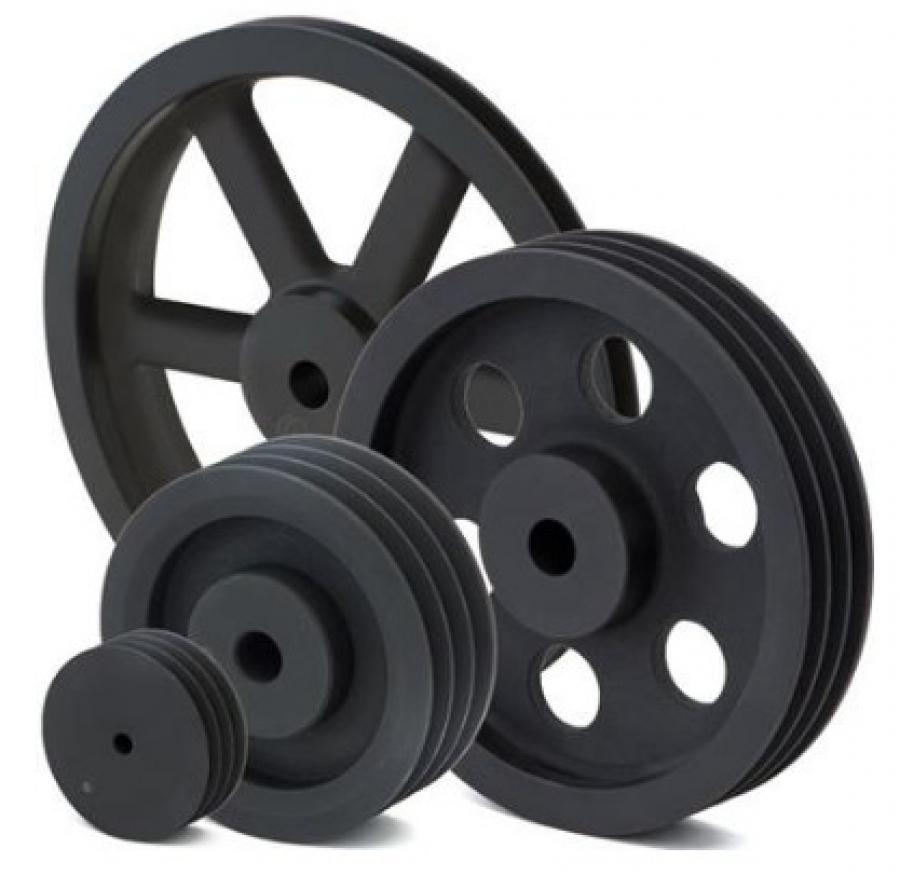
Their trapezoidal cross-section fits into matching pulley grooves. As the belt moves through the groove, the wedging action helps create friction and transmit power.
V-belts are popular because they are relatively easy to source, install, and replace. They are available in different sections and lengths.
However, the belt profile must match the pulley groove. Installing an incorrect section can cause poor contact, slipping, and accelerated wear.
2. Narrow V-Belts
Narrow V-belts are designed to transmit relatively high power for their cross-sectional size.
Their construction and geometry can make them suitable for compact industrial drives with demanding power requirements. Some cooling tower systems use narrow-section belts where the drive design specifies them.
Do not assume that a narrow V-belt can replace a conventional V-belt simply because the lengths appear similar. The pulley profile and the drive manufacturer's specifications must match.
3. Synchronous or Timing Belts
Synchronous belts use teeth that engage with matching toothed pulleys.
Unlike friction-driven V-belts, they transmit motion through positive engagement. This design prevents normal operating slip when the belt and pulleys are correctly matched and maintained.
Synchronous belts are useful in applications that require a controlled speed relationship. However, they are not universal replacements for V-belts. The drive must be specifically designed for a toothed belt, including compatible pulleys and suitable tensioning arrangements.
4. Banded V-Belts
Banded V-belts consist of multiple V-belt sections joined by a common top band.
This construction helps keep the belt sections together and can improve stability in drives exposed to vibration or fluctuating loads.
They may be considered for certain heavy-duty applications where individual belts could move unevenly or become unstable. Their use should follow the original drive design and the belt manufacturer's recommendations.
How to Choose the Right Cooling Tower Fan Belt
Selecting a cooling tower fan belt is not simply a matter of finding one with a similar length.
You need to consider power, speed, pulley geometry, installation dimensions, and operating conditions. A small mismatch can create problems that are expensive to fix later.
1. Check the Original Belt Specifications
Start with the existing belt and the cooling tower manufacturer's documentation.
Record the following information:
Belt type and construction
Belt section or cross-sectional profile
Belt length and identification code
Number of belts required
Motor power and rated speed
Fan speed
Motor and fan pulley dimensions
If the old belt is badly worn or its markings are unreadable, do not rely on visual estimates alone. Measure the drive carefully and confirm the required specification with the equipment supplier or belt manufacturer.
2. Calculate the Required Power Capacity
The belt must be able to transmit the power required by the fan drive.
Start with the motor rated power, then consider the service factor specified for the application.
A simplified selection relationship is:
Design Power = Motor Rated Power × Service Factor
The service factor accounts for operating characteristics such as load variation, starting conditions, and duty cycle.
The correct factor should come from recognized belt-selection data or the drive manufacturer's guidance. Do not select a belt based only on motor horsepower without considering the complete drive conditions.
3. Consider Pulley Diameter and Speed Ratio
Pulley sizes determine the relationship between motor speed and fan speed.
For a simple belt drive without significant slip, the approximate relationship is:
Fan Speed = Motor Speed × (Motor Pulley Diameter ÷ Fan Pulley Diameter)
This formula assumes compatible effective pulley diameters and does not account for belt slip.
For example, if the motor pulley has an effective diameter of 150 mm and the fan pulley has an effective diameter of 300 mm, a motor speed of 1,450 rpm gives an approximate fan speed of 725 rpm.
Always confirm actual pulley dimensions and permissible fan speed. Excessive fan speed can increase power demand and mechanical stress.
4. Evaluate Temperature, Humidity, and Operating Conditions
Cooling towers operate in environments where moisture, heat, and temperature changes are common. These conditions can affect belt materials and service life.
Consider whether the belt is exposed to:
Water spray or persistent moisture
High operating temperatures
Oil or grease
Chemical vapors
Dust and airborne particles
Direct sunlight and outdoor weather
Choose a belt material and construction rated for the actual environment.
If the drive operates outdoors, check whether the belt manufacturer provides recommendations for weather and ozone resistance. A belt that performs well in a clean indoor workshop may not last as long in a wet cooling tower environment.
5. Check Belt Length and Cross-Section
Belt length and cross-section must match the pulley system.
A belt that is too short may be difficult to install and may create excessive bearing loads. A belt that is too long may not maintain adequate tension within the available adjustment range.
The cross-section must fit the pulley groove correctly.
For multiple-belt drives, use a matched set of belts with compatible specifications. Avoid mixing new and heavily worn belts because differences in length and stiffness can lead to uneven load sharing.
Cooling Tower Fan Belt Tension and Alignment
Correct tension and alignment are essential for reliable operation. Even a high-quality belt can fail early if the drive is installed incorrectly.
Think of belt tension as a balance: too little allows slipping, while too much places unnecessary stress on the belt, shafts, and bearings.
Why Correct Belt Tension Matters
If belt tension is too low, the belt may slip during startup or under load. Slippage creates frictional heat and can polish or damage the belt sides.
If tension is too high, the belt may experience excessive tensile stress. Motor and fan shaft bearings may also carry higher radial loads.
The correct tension depends on belt type, span length, power, and operating speed. Follow the belt manufacturer's tension recommendations rather than tightening the belt by feel alone.
How to Check Cooling Tower Fan Belt Tension
Belt tension can be checked using a suitable belt tension gauge or a manufacturer-approved deflection method.
Before inspection, isolate the equipment and follow the site's lockout/tagout procedure.
For a deflection check:
Measure the belt span.
Identify the correct measuring point.
Apply the specified force using the recommended method.
Measure the resulting deflection.
Compare the result with the belt manufacturer's recommended value.
Different belt types and sizes require different tension settings, so a single universal deflection value should not be used.
Recheck tension after the initial running period if the manufacturer recommends it.
Check Pulley Alignment
Misaligned pulleys can cause belts to track incorrectly and wear unevenly.
Check whether the pulley faces and grooves are aligned according to the drive manufacturer's tolerances. A straightedge or laser alignment tool can help identify angular or parallel misalignment.
Also inspect the pulley grooves for cracks, corrosion, deformation, and wear.
If a pulley is damaged, installing a new belt without correcting the pulley condition may lead to another premature failure.
Common Cooling Tower Fan Belt Problems
Belt problems often develop gradually. Regular inspections can help you identify warning signs before a complete failure stops the fan.
1. Belt Slippage
Slippage is one of the most common belt-drive problems.
You may notice squealing sounds, unusual heat, belt dust, or reduced fan speed.
Possible causes include:
Insufficient belt tension
Worn pulley grooves
Excessive mechanical load
Oil or grease contamination
Incorrect belt profile
Misalignment
Check the entire drive before tightening the belt. If the pulley is worn or the fan is mechanically overloaded, additional tension may make the problem worse.
2. Premature Belt Wear
A belt that wears out too quickly may indicate a deeper mechanical issue.
Common causes include misalignment, incorrect belt size, rough pulley surfaces, excessive tension, and poor installation.
Environmental factors can also contribute. For example, chemical exposure or prolonged contact with oil may damage certain belt compounds.
Record the failure pattern and inspect the drive instead of replacing belts repeatedly without investigating the cause.
3. Belt Cracking and Breaking
Cracks may develop when a belt is exposed to excessive heat, repeated bending, aging, or unsuitable operating conditions.
A belt may also break because of shock loading, incorrect installation, or a seized bearing.
If a belt breaks, inspect the motor, fan shaft, pulleys, and bearings before installing a replacement. Otherwise, the same problem may happen again.
4. Excessive Noise and Vibration
Squealing, knocking, or unusual vibration can indicate belt slippage, pulley misalignment, damaged bearings, or loose mounting hardware.
Noise should not be ignored simply because the fan continues to rotate.
Stop the equipment when necessary and investigate the source safely. A belt problem and a bearing problem can produce similar symptoms, so a complete inspection is important.
Cooling Tower Fan Belt Maintenance Guide
Preventive maintenance is usually less expensive than emergency replacement.
A simple inspection routine can help detect problems early and extend the useful life of the drive system.
1. Perform Routine Visual Inspections
Inspect belts for:
Look at the pulley grooves and check for belt dust around the drive. Pay attention to changes in fan noise or vibration.
Inspection frequency should reflect operating hours, environmental conditions, and equipment criticality. Systems operating continuously in harsh environments may need more frequent checks than lightly used equipment.
2. Keep the Drive Area Clean
Keep the belt drive area clean and prevent oil, grease, and chemicals from reaching the belt.
Do not apply belt dressing unless the belt manufacturer specifically recommends it. Some products can temporarily change friction characteristics without solving the underlying problem.
Make sure guards and protective covers are correctly installed, while maintaining appropriate access for authorized inspections.
3. Check Bearings and Pulleys
Belt performance depends on the condition of surrounding components.
Inspect motor and fan bearings for abnormal noise, heat, looseness, or vibration. Check pulley grooves for wear and confirm that mounting bolts are secure.
A damaged bearing can increase drive resistance and overload the belt.
Fixing the root cause is more effective than repeatedly replacing the belt.
When Should You Replace a Cooling Tower Fan Belt?
Replace a belt when it shows significant cracking, fraying, glazing, permanent deformation, severe wear, or other damage that exceeds the manufacturer's acceptance criteria.
Replacement may also be necessary when the belt repeatedly slips despite correct tension and alignment.
There is no single replacement interval that applies to every cooling tower. Actual service life depends on:
Belt construction and material
Operating hours
Mechanical load
Ambient temperature and humidity
Installation quality
Pulley and bearing condition
Maintenance practices
Follow the belt manufacturer's inspection and replacement guidance, and keep records of installation dates and observed conditions.
Step-by-Step Cooling Tower Fan Belt Replacement
Belt replacement should be carried out by trained maintenance personnel using the equipment manufacturer's procedures.
Step 1: Shut Down and Isolate the Equipment
Shut down the cooling tower fan and isolate all relevant electrical and mechanical energy sources. Apply the site's lockout/tagout procedure and verify that the equipment cannot restart.
Step 2: Remove the Belt Guard
Remove the belt guard only after confirming that the drive is safe. Keep all removed components and fasteners in a secure location.
Step 3: Inspect the Existing Drive
Inspect the old belt, pulleys, bearings, and mounting arrangement. Look for signs of wear, misalignment, contamination, and mechanical damage.
Step 4: Remove the Old Belt
Release the motor adjustment mechanism and remove the old belt without forcing or prying it over the pulley grooves.
Step 5: Confirm the Replacement Specification
Check that the replacement belt has the correct type, section, length, and quantity. For multiple-belt drives, confirm that the belts are a matched set.
Step 6: Install and Adjust the New Belt
Install the belt according to the manufacturer's instructions. Adjust the center distance if required and set the specified tension.
Step 7: Check Alignment and Hardware
Check pulley alignment and tighten mounting hardware to the required specifications. Confirm that the belt sits correctly in the pulley grooves.
Step 8: Reinstall Guards and Test the System
Ensure that personnel and tools are clear before returning the equipment to service. Reinstall all guards and conduct a controlled test run.
Check for unusual noise, vibration, belt tracking problems, or slippage. Recheck tension after the initial running period if required by the belt manufacturer.
Belt Drive vs. Direct Drive Cooling Tower Fans
Belt-driven and direct-drive fans both have advantages.
A belt drive uses pulleys and belts to transfer power. This arrangement can provide flexibility in speed ratio and make some maintenance tasks straightforward.
However, belts require periodic inspection, tension adjustment, and replacement.
Direct-drive systems connect the motor more directly to the fan assembly, eliminating the belt and pulley maintenance requirements. They may reduce the number of mechanical transmission components, but the overall design, motor arrangement, control system, and maintenance needs still matter.
Which option is better?
It depends on the cooling tower design, required airflow, operating conditions, available space, maintenance strategy, and total lifecycle cost.
A belt drive is not automatically less efficient, and a direct drive is not automatically the best choice for every application.
How Belt Condition Affects Cooling Tower Performance
The condition of the fan belt can influence the cooling tower's ability to maintain the required airflow.
When the belt slips, fan speed may fall below the intended operating value. Lower airflow can reduce air-water contact and heat-transfer performance. This may contribute to higher cold-water temperatures, especially when the cooling load is high or ambient wet-bulb temperature is unfavorable.
A worn belt may also create vibration or unstable operation.
However, cooling performance depends on more than the belt. Water flow, fill condition, air distribution, fan blade condition, drift eliminators, and ambient weather all play important roles.
If cooling performance drops, inspect the whole system instead of assuming the belt is the only cause.
Practical Tips for Extending Cooling Tower Fan Belt Service Life
Want to reduce unexpected belt failures? Start with a few practical habits.
Choose belts that match the original drive specification.
Install matched sets when the system uses multiple belts.
Keep pulleys aligned and replace worn grooves.
Set tension with a suitable measuring tool instead of relying on guesswork.
Avoid forcing belts onto pulleys during installation.
Keep oil and chemical contamination away from the drive.
Inspect bearings and mounting hardware regularly.
Record belt replacement dates, operating hours, and failure patterns.
These steps may sound basic, but consistent maintenance often makes the biggest difference.
How to Buy Cooling Tower Fan Belts
When purchasing a replacement cooling tower fan belt, provide the supplier with as much technical information as possible.
Useful details include:
Cooling tower model
Motor power and rated speed
Fan speed
Motor and fan pulley dimensions
Belt type and cross-section
Belt length
Required quantity
Operating environment
Photos of the existing belt markings and pulley arrangement can also help.
If the original specifications are unavailable, ask a qualified supplier to review the drive dimensions and operating requirements.
Avoid purchasing based only on a product photo or a rough length estimate. A belt that looks similar may have a different profile or power rating.
For international purchasing, confirm packaging, labeling, delivery arrangements, and the availability of technical support.
Why Choose Power Tower Cooling Technology?
Power Tower Cooling Technology (Shaoxing) Co.,Ltd focuses on cooling tower components and related products for industrial cooling applications.
Through its website, https://www.coolingtowerpart.com, the company provides information for customers looking for cooling tower parts and replacement solutions.
When sourcing cooling tower fan-related components, buyers should confirm compatibility with their existing equipment, including dimensions, materials, and operating requirements.
The same principle applies to belts and other drive components: accurate technical information is essential.
If you are planning maintenance or replacement work, prepare your cooling tower model, existing component details, and operating conditions before contacting a supplier. This helps make technical communication clearer and reduces the risk of ordering an unsuitable part.
Frequently Asked Questions About Cooling Tower Fan Belts
How Long Does a Cooling Tower Fan Belt Last?
There is no fixed service life for every cooling tower fan belt.
Some belts may operate for several years under favorable conditions, while others may need earlier replacement because of high loads, moisture, contamination, misalignment, or frequent starts and stops.
Follow the belt manufacturer's recommendations and base replacement decisions on inspection results and operating history.
Can I Replace One Belt in a Multiple-Belt System?
In most multiple-belt drives, replacing the complete belt set with matched belts is the safer approach.
Mixing a new belt with older, stretched belts can cause uneven load sharing. This may lead to faster wear and reduced reliability.
Follow the drive manufacturer's replacement recommendations.
What Happens If a Cooling Tower Fan Belt Is Too Tight?
Excessive tension can increase stress on the belt and create higher radial loads on motor and fan shaft bearings.
It may also contribute to premature wear and mechanical damage.
Always use the specified tension range for the belt and drive arrangement.
How Do I Know Which Belt Size I Need?
Check the original belt markings and equipment documentation first.
Confirm the belt section, length, and type, along with the pulley groove profile. If the markings are missing, have the drive measured and reviewed by a qualified technician or supplier.
Are All V-Belts Suitable for Cooling Tower Fans?
No. V-belts differ in cross-section, length, construction, power capacity, and environmental resistance.
A belt must match the pulley groove and the drive's power and speed requirements. Never assume that two belts are interchangeable because they look similar.
Can a Slipping Fan Belt Reduce Cooling Tower Capacity?
Yes. If a belt slips, the fan may operate below its intended speed. This can reduce airflow and affect heat rejection.
However, low cooling capacity can also result from poor water distribution, dirty fill, fan damage, or unfavorable ambient conditions. A complete system inspection is recommended.
Final Thoughts
A cooling tower fan belt is a relatively small component, but its role in power transmission and airflow reliability is significant.
Choosing the right belt requires more than checking its length. You need to consider the belt type, power capacity, pulley dimensions, speed ratio, tension, alignment, and operating environment.
Regular inspections and correct installation can help reduce premature wear, avoid unexpected downtime, and maintain stable fan operation.
For maintenance teams and purchasing managers, the best approach is simple: understand the existing drive, confirm the technical specifications, and select replacement components based on actual operating requirements.
For more information about cooling tower components and related products, visit Power Tower Cooling Technology (Shaoxing) Co.,Ltd at https://www.coolingtowerpart.com.


