Common Industrial Cooling Tower Fan Problems And Solutions
Industrial cooling tower fans play an essential role in maintaining stable cooling performance in power plants, chemical factories, steel mills, petrochemical facilities, and large manufacturing plants. By moving large volumes of air through cooling towers, these fans support heat exchange and help maintain the required circulating water temperature.
However, industrial cooling tower fans often operate continuously under humid, corrosive, and demanding environmental conditions. Over time, problems such as excessive vibration, insufficient airflow, unusual noise, blade damage, motor overheating, and high energy consumption may affect equipment performance.
Ignoring these problems can lead to reduced cooling efficiency, increased maintenance expenses, and unexpected production downtime.
Understanding common Industrial Cooling Tower Fan Problems And Solutions helps plant operators identify potential failures, improve equipment reliability, and extend the service life of cooling tower fan systems.
This article examines the most common industrial cooling tower fan problems, their underlying causes, practical troubleshooting methods, and preventive maintenance strategies.
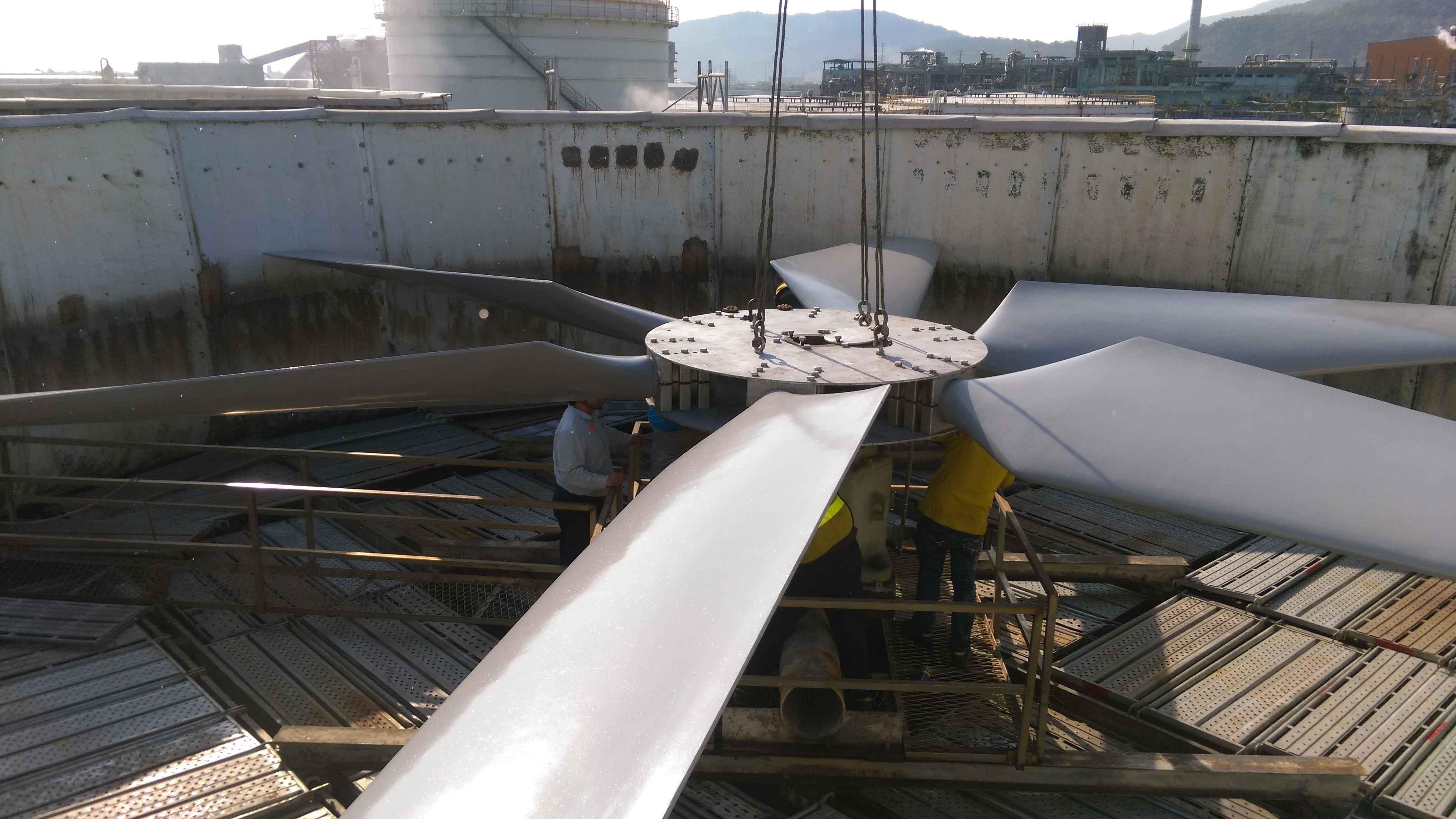
1. Excessive Vibration in Industrial Cooling Tower Fans
Excessive vibration is one of the most common problems affecting industrial cooling tower fans. It can damage bearings, loosen mechanical connections, increase gearbox loading, and shorten the service life of rotating components.
If vibration becomes severe, operators may need to shut down the fan to prevent further mechanical damage.
Common Causes of Cooling Tower Fan Vibration
Several factors can contribute to abnormal fan vibration.
Unbalanced Fan Blades
Uneven blade weight distribution creates an imbalance during rotation. Even small differences between blades can generate significant centrifugal forces at high operating speeds.
Common causes include:
Uneven blade manufacturing.
Accumulated dirt or scale on blade surfaces.
Moisture absorption or material deterioration.
Blade deformation.
Incorrect blade replacement.
Incorrect Fan Blade Pitch
Different blade angles can create uneven aerodynamic loading.
When one blade operates at a different pitch from the others, the fan may experience unbalanced airflow forces and increased vibration.
Loose Mechanical Connections
Loose bolts between the fan blades and hub, worn couplings, or insufficiently secured mounting structures can cause abnormal vibration.
Effective Solutions for Excessive Vibration
1. Inspect the complete rotating assembly.
Check fan blades, hub connections, shafts, couplings, and mounting bolts for visible damage or looseness.
2. Perform appropriate balancing.
Static or dynamic balancing should be selected according to the fan design and assembly requirements.
3. Check blade pitch consistency.
Measure each blade using the same reference method and adjust it according to the manufacturer's specifications.
4. Inspect bearings and gearbox components.
Worn bearings, damaged gears, and shaft misalignment can also contribute to vibration.
How Can Regular Monitoring Prevent Vibration Problems?
Establishing baseline vibration measurements helps maintenance teams identify changes before they develop into serious mechanical problems.
Trend monitoring is generally more useful than relying on a single vibration measurement.
2. Insufficient Airflow and Reduced Cooling Efficiency
Insufficient airflow directly affects the heat rejection capacity of a cooling tower.
When the fan cannot move the required volume of air, the cooling tower may fail to maintain the desired cold-water temperature, especially during periods of high industrial production demand.
Why Does an Industrial Cooling Tower Fan Produce Insufficient Airflow?
Incorrect Blade Pitch Settings
Blade pitch strongly influences the amount of air moved by the fan.
If the pitch is too small, the fan may not generate sufficient airflow. If it is too large, the motor may become overloaded.
Damaged or Worn Cooling Tower Fan Blades
Cracked, deformed, or eroded blades can change aerodynamic performance and reduce airflow efficiency.
Blocked Air Inlet and Outlet Passages
Debris, dirt, damaged louvers, and obstructed air passages can restrict airflow.
In some cases, damaged fill media or heavily contaminated drift eliminators increase system resistance.
Solutions to Improve Cooling Tower Airflow
Inspect fan blades for deformation and surface damage.
Verify blade pitch against the approved design specifications.
Clean blocked air inlets and outlets.
Inspect louvers, fill media, and drift eliminators.
Check motor rotational speed.
Evaluate fan performance under actual operating conditions.
Evaluate the Complete Airflow System
Replacing the fan is not always the best solution to insufficient airflow.
Maintenance teams should examine the entire cooling tower airflow path, including the fan stack, fill media, air inlet, and exhaust arrangement.
A properly designed fan operating in a poorly maintained cooling tower may still deliver unsatisfactory cooling performance.
3. Unusual Noise During Fan Operation
Unusual noise is another common warning sign in industrial cooling tower fan systems.
Changes in sound may indicate mechanical wear, aerodynamic turbulence, loose components, or structural problems.
Main Sources of Cooling Tower Fan Noise
Mechanical Noise
Mechanical noise may come from:
Aerodynamic Noise
Aerodynamic noise is often associated with airflow turbulence around fan blades.
Excessive blade tip speed, unsuitable blade pitch, poor fan stack geometry, and airflow obstruction may contribute to increased noise.
How to Reduce Industrial Cooling Tower Fan Noise
Check mechanical components: Inspect bearings, gearboxes, couplings, and mounting structures.
Optimize blade configuration: Confirm that the blade pitch and fan speed match the design requirements.
Inspect the fan stack: Check for structural deformation and unsuitable clearances.
Maintain proper balancing: Correct imbalance can reduce vibration-related noise.
Distinguish Mechanical Noise From Aerodynamic Noise
Mechanical noise often changes with component condition and rotational speed, while aerodynamic noise may become more noticeable as airflow and fan speed increase.
A qualified technician should investigate abnormal noise before adjusting fan speed or blade pitch.
4. Cooling Tower Fan Blade Cracking and Structural Damage
Cooling tower fan blades are continuously exposed to centrifugal forces, aerodynamic loading, moisture, and environmental contaminants.
Over time, these conditions may cause cracks, surface deterioration, deformation, or structural failure.
Common Causes of Fan Blade Damage
Material Fatigue
Continuous operation creates repeated mechanical loading.
Poor material selection, manufacturing defects, or operation outside the blade's design limits may accelerate fatigue damage.
Excessive Vibration
Persistent vibration places additional stress on blade roots, hub connections, and supporting structures.
Environmental Corrosion
Metal fan blades may experience corrosion when protective coatings deteriorate.
FRP blades generally offer better corrosion resistance, although they can still suffer from impact damage, delamination, resin degradation, or fatigue.
Improper Installation
Incorrect blade mounting, excessive tightening, unsuitable fasteners, and improper pitch adjustment may increase local stress.
Practical Solutions for Damaged Fan Blades
1. Conduct regular visual inspections.
Look for cracks, deformation, erosion, delamination, and unusual surface changes.
2. Identify the extent of damage.
Small surface defects and structural cracks require different responses. Suspected structural damage should be evaluated by qualified personnel.
3. Replace blades when necessary.
Severely damaged blades should not continue operating simply to avoid replacement expenses.
4. Check the complete fan assembly.
After replacing a blade, verify compatibility, blade weight, pitch, fasteners, and balancing requirements.
How to Select More Durable Cooling Tower Fan Blade Materials
Material selection should reflect actual operating conditions.
Material | Main Characteristics | Typical Considerations |
FRP | Lightweight and corrosion-resistant | Resin quality and composite structure |
Aluminum alloy | Relatively lightweight and good mechanical properties | Corrosion protection and fatigue resistance |
Stainless steel | High strength and corrosion resistance depending on grade | Weight and mechanical loading |
FRP cooling tower fan blades are particularly attractive for many industrial applications where moisture resistance, low weight, and customized blade profiles are important.
5. Cooling Tower Fan Motor Overheating
Motor overheating can reduce equipment reliability and potentially cause insulation deterioration or motor failure.
An industrial cooling tower fan motor must operate within its specified electrical and thermal limits.
What Causes Cooling Tower Fan Motor Overheating?
Excessive Fan Load
An incorrectly selected blade pitch or unsuitable fan operating point may increase the power required by the fan.
If the required power exceeds the motor's available capacity, the motor may overheat.
Electrical Problems
Common electrical causes include:
Voltage imbalance.
Incorrect supply voltage.
Phase loss.
Poor electrical connections.
Excessive starting frequency.
Damaged motor windings.
Inadequate Motor Ventilation
Dust accumulation, blocked cooling passages, and damaged motor cooling fans may prevent effective heat dissipation.
Solutions to Prevent Motor Overheating
Measure motor current under operating conditions.
Check voltage balance and electrical connections.
Inspect motor cooling passages.
Verify fan blade pitch and operating load.
Examine bearings and transmission components.
Confirm that the motor matches the fan's power requirements.
Why Should Motor Current Be Monitored?
Motor current provides useful information about the electrical load.
Unexpected increases may indicate changes in fan loading, mechanical resistance, or electrical conditions.
However, current readings should be interpreted together with voltage, power, operating speed, and manufacturer specifications.
6. Cooling Tower Fan Gearbox Failure
Gearboxes are important components in many large industrial cooling tower fan systems.
They reduce motor rotational speed and transmit the required torque to the fan assembly.
Because gearboxes operate under continuous mechanical loading, poor lubrication and internal wear can cause serious problems.
Common Cooling Tower Fan Gearbox Problems
Lubricating Oil Deterioration
High operating temperatures, contamination, and long service intervals may reduce lubricant performance.
Bearing Wear
Gearbox bearings can deteriorate because of excessive loading, inadequate lubrication, contamination, or misalignment.
Abnormal Gear Noise
Damaged gear teeth, incorrect gear contact, and insufficient lubrication may generate unusual noise.
How to Solve Gearbox Problems
Check oil quality and level.
Use the lubricant grade and replacement schedule specified by the gearbox manufacturer.
Monitor operating temperature.
Unexpected temperature increases may indicate lubrication problems, excessive loading, or internal mechanical damage.
Inspect for leakage.
Damaged seals and loose connections can cause lubricant loss.
Check alignment.
Incorrect alignment between the motor, gearbox, and fan shaft may create additional mechanical loading.
When Should a Cooling Tower Fan Gearbox Be Replaced?
Replacement may be necessary when internal damage is severe, repair is uneconomical, or the gearbox cannot meet the required operating conditions.
Before installing a replacement gearbox, verify its speed ratio, torque capacity, shaft configuration, mounting dimensions, and compatibility with the fan system.
7. Cooling Tower Fan Blade Pitch Problems
Blade pitch is a critical parameter influencing airflow, fan power consumption, and cooling performance.
Incorrect pitch settings may result in insufficient cooling capacity, excessive motor loading, and uneven aerodynamic forces.
Common Blade Pitch Adjustment Mistakes
Different Angles Between Blades
If individual blades have inconsistent angles, the fan may generate uneven airflow and aerodynamic loading.
Excessive Blade Pitch
Increasing blade pitch does not always improve cooling performance.
An excessive angle may increase motor power requirements beyond the available capacity.
Incorrect Measurement Methods
Measuring blade angles at different positions or using inconsistent reference points can produce inaccurate results.
Solutions for Blade Pitch Problems
Follow the fan manufacturer's adjustment procedure.
Use consistent measurement reference points.
Confirm that all blades have the specified pitch.
Check motor current after adjustment.
Verify airflow and vibration under normal operating conditions.
Why Is Professional Pitch Adjustment Important?
Blade pitch adjustment should be treated as an engineering procedure rather than a simple maintenance task.
Changes should be based on fan performance requirements and motor limitations.
8. High Energy Consumption in Industrial Cooling Tower Fans
Energy consumption is an important operating expense for industrial cooling tower systems.
Fans that operate continuously can account for a significant proportion of cooling tower electricity consumption.
Common Reasons for Excessive Fan Energy Consumption
Inefficient Fan Blade Design
Poor aerodynamic profiles may increase airflow losses and require additional power.
Incorrect Operating Speed
Running a fan at unnecessarily high speed can increase electricity consumption.
Mechanical Transmission Losses
Worn bearings, gearbox problems, poor alignment, and inefficient transmission components may increase mechanical losses.
Improper Fan Selection
A fan that does not match the system resistance may operate away from its intended efficient operating point.
How to Reduce Cooling Tower Fan Energy Consumption
Optimize fan blade design.
Appropriate blade profiles and pitch settings can help improve aerodynamic efficiency.
Use variable frequency drives.
VFD systems can adjust motor speed according to actual cooling demand.
Maintain mechanical components.
Regular gearbox, bearing, and coupling inspections help prevent unnecessary mechanical losses.
Improve cooling tower airflow conditions.
Clean fill media, drift eliminators, louvers, and air passages can help reduce unnecessary system resistance.
Understand the Fan Affinity Laws
For a geometrically unchanged fan operating under comparable conditions, the approximate fan affinity relationships are:
Airflow is proportional to rotational speed.
Pressure is proportional to rotational speed squared.
Power is proportional to rotational speed cubed.
For example, reducing fan speed to 90% of its original value may reduce theoretical fan power demand to approximately 72.9%.
This relationship is an approximation. Actual energy savings depend on system resistance, motor efficiency, transmission losses, and operating conditions.
9. Cooling Tower Fan Corrosion and Surface Deterioration
Industrial cooling towers provide a humid operating environment where corrosion and material degradation can become long-term maintenance concerns.
Common Causes of Fan Corrosion
High humidity.
Chemical exposure.
Salt-containing air.
Unsuitable material selection.
Damaged protective coatings.
Poor drainage and water accumulation.
How to Prevent Corrosion Problems
Select Suitable Materials
Choose fan blades, hubs, fasteners, and other components according to the actual environmental conditions.
Apply Appropriate Surface Protection
Metal components may require suitable protective coatings or surface treatments.
Establish Regular Inspections
Check for rust, coating damage, surface erosion, and material deterioration.
Consider FRP Fan Blades
FRP fan blades can reduce corrosion-related maintenance requirements in many industrial environments.
However, the composite resin and structural design must still be appropriate for the intended operating conditions.
10. Fan Stack Problems and Poor Airflow Distribution
The cooling tower fan stack is an important part of the airflow system.
It helps guide air through the fan and discharge it above the cooling tower structure.
A damaged or poorly designed fan stack may create turbulence, reduce airflow quality, and increase aerodynamic losses.
Common Fan Stack Problems
Structural Cracks and Deformation
FRP fan stacks may develop cracks or structural damage due to aging, impact, poor installation, or environmental exposure.
Incorrect Fan-to-Stack Clearance
Insufficient or excessive clearance between the blade tips and fan stack may affect airflow and mechanical safety.
Poor Aerodynamic Configuration
An unsuitable fan stack shape may create unnecessary turbulence and reduce the effectiveness of the fan system.
Effective Fan Stack Solutions
Inspect the stack for cracks and deformation.
Check fan-to-stack clearance.
Confirm the fan is correctly centered.
Repair or replace damaged structural sections.
Evaluate the complete airflow arrangement.
Why Is Fan Stack Compatibility Important?
The fan and fan stack should be considered as a coordinated aerodynamic system.
Installing a replacement fan without checking the existing fan stack may result in poor performance or mechanical clearance problems.
11. Cooling Tower Fan Starting and Stopping Problems
Industrial cooling tower fans may experience operational problems during startup and shutdown.
These problems can be related to electrical controls, motor protection, mechanical resistance, or incorrect operating procedures.
Common Startup Problems
Motor Fails to Start
Possible causes include electrical supply problems, faulty contactors, protection trips, damaged windings, or mechanical obstruction.
Excessive Startup Current
Large fan motors can draw high current during startup.
An unsuitable starting method or frequent restarting may increase electrical and mechanical stress.
Unusual Vibration During Startup
Loose components, mechanical misalignment, and incorrect assembly may cause vibration during acceleration.
Solutions for Startup and Shutdown Problems
Check electrical supply and protection settings.
Inspect motor wiring and control circuits.
Verify that the fan rotates freely when safely isolated.
Follow the motor manufacturer's starting requirements.
Check mechanical connections and alignment.
Evaluate the suitability of soft starters or VFD control.
Never bypass electrical protection devices to force a fan to operate.
12. How to Diagnose Industrial Cooling Tower Fan Problems Efficiently
Identifying the correct cause of a problem is more important than immediately replacing equipment.
A systematic troubleshooting process can reduce unnecessary maintenance expenses and prevent repeated failures.
Step 1: Identify the Operating Symptoms
Record the symptoms observed during operation.
Examples include:
Increased vibration.
Unusual mechanical noise.
Higher motor current.
Reduced airflow.
Rising cooling water temperature.
Excessive gearbox temperature.
Step 2: Collect Operating Data
Compare current operating conditions with the original design parameters.
Important measurements include fan speed, motor current, vibration levels, gearbox temperature, and cooling water temperatures.
Step 3: Inspect the Mechanical Assembly
After following proper shutdown and lockout procedures, inspect the fan blades, hub, shaft, gearbox, motor, and mounting structure.
Step 4: Identify the Root Cause
Avoid replacing components before determining why the problem occurred.
For example, repeated blade damage may be related to excessive vibration or unsuitable operating conditions rather than poor blade quality alone.
Step 5: Implement and Verify the Solution
After repair or replacement, verify:
13. Preventive Maintenance Checklist for Industrial Cooling Tower Fans
Preventive maintenance is one of the most effective ways to reduce unexpected fan failures.
Instead of waiting for equipment problems, plant operators should establish an inspection schedule based on manufacturer recommendations, operating conditions, and historical maintenance records.
Daily or Routine Operating Checks
Monitor abnormal noise.
Observe vibration changes.
Check motor current.
Record operating temperatures.
Observe cooling water temperature.
Periodic Mechanical Inspections
Inspect blade surfaces and roots.
Check fan hub connections.
Examine fasteners and mounting structures.
Inspect gearbox oil condition.
Check bearing condition.
Verify fan stack integrity.
Planned Shutdown Maintenance
During scheduled maintenance shutdowns, qualified technicians can conduct more detailed inspections.
Recommended Maintenance Records
Maintenance Item | Inspection Focus |
Fan blades | Cracks, deformation, erosion |
Fan hub | Fasteners and connection condition |
Fan balancing | Vibration and balance condition |
Motor | Current, temperature, insulation |
Gearbox | Oil, bearings, gears, leakage |
Fan stack | Cracks, clearance, alignment |
Drive system | Coupling, belts, shaft alignment |
A documented maintenance history helps identify recurring problems and supports better replacement planning.
14. When Should You Replace an Industrial Cooling Tower Fan?
Not every cooling tower fan problem requires complete equipment replacement.
Some issues can be resolved through balancing, blade pitch adjustment, component repair, or mechanical maintenance.
However, replacement may be a better option when the existing fan has reached the end of its useful service life.
Signs That Fan Replacement May Be Necessary
Multiple blades have serious structural damage.
Fan performance remains insufficient after appropriate troubleshooting.
Vibration repeatedly exceeds acceptable limits.
The fan assembly is severely corroded.
Replacement parts are no longer available.
Maintenance costs continue to increase.
The existing fan cannot meet updated cooling requirements.
What Should Be Considered Before Replacement?
Confirm Existing Fan Specifications
Collect the fan diameter, blade quantity, blade material, hub dimensions, operating speed, and motor power.
Evaluate New Fan Compatibility
A replacement fan must match the cooling tower structure and drive system.
Consider Energy Efficiency Improvements
A replacement project may provide an opportunity to improve blade design and optimize fan operation.
Plan Installation and Commissioning
Installation should include proper alignment, blade pitch adjustment, clearance verification, and appropriate balancing checks.
15. How to Choose a Reliable Industrial Cooling Tower Fan Manufacturer
Selecting a suitable manufacturer is important when purchasing new fans or replacing damaged components.
A qualified supplier should understand industrial cooling tower operating conditions and provide products that meet the required technical specifications.
Evaluate Manufacturing and Engineering Capabilities
Look for manufacturers with experience in:
Industrial cooling tower fan design.
FRP cooling tower fan blades.
Aluminum alloy fan blades.
Fan hub assemblies.
Fan stack manufacturing.
Customized replacement components.
Request Technical Documentation
Before placing an order, ask for relevant product drawings, dimensions, material information, and performance specifications.
Check Product Quality and Inspection Procedures
A reliable manufacturer should have appropriate inspection procedures for materials, dimensions, blade consistency, assembly, and balancing.
Consider Custom Replacement Solutions
Older cooling towers may have non-standard fan dimensions or discontinued components.
Manufacturers capable of working from drawings, physical samples, and measured specifications can help develop suitable replacement products.
Why Choose Power Tower Cooling Technology (Shaoxing) Co., Ltd?
For buyers seeking industrial cooling tower fan products and replacement components, Power Tower Cooling Technology (Shaoxing) Co., Ltd is a supplier worth considering.
Industrial cooling tower fan performance depends on the compatibility of multiple components, including blades, hubs, fan stacks, and drive systems.
Relevant product requirements may include:
Industrial cooling tower fan blades.
FRP cooling tower fan blades.
Cooling tower fan hub assemblies.
Cooling tower fan stacks.
Customized cooling tower fan replacement components.
For replacement and new equipment projects, buyers can provide technical drawings, fan dimensions, operating speed, and application details to discuss suitable product configurations.
Working with a supplier familiar with cooling tower components can help improve specification accuracy and simplify international procurement.
16. Future Technologies for Preventing Industrial Cooling Tower Fan Failures
Industrial cooling tower fan maintenance is gradually moving from reactive repairs toward condition-based and predictive maintenance.
New technologies allow plant operators to monitor equipment conditions and identify potential failures earlier.
Intelligent Vibration Monitoring
Vibration sensors can continuously monitor rotating equipment.
Changes in vibration patterns may indicate imbalance, bearing deterioration, mechanical looseness, or alignment problems.
Predictive Maintenance Systems
Combining vibration, temperature, current, and operating-speed data can help maintenance teams identify developing faults.
Instead of replacing components according to a fixed schedule alone, maintenance decisions can increasingly consider actual equipment condition.
Improved FRP Fan Blade Manufacturing
Advances in composite materials and manufacturing processes may improve blade consistency, structural performance, and resistance to environmental degradation.
Energy-Efficient Fan Control
VFD systems and improved control strategies can adjust fan speed according to actual cooling demand.
This approach can reduce unnecessary energy consumption while maintaining the required cooling performance.
FAQ About Industrial Cooling Tower Fan Problems
1. What Is the Most Common Industrial Cooling Tower Fan Problem?
Excessive vibration is one of the most frequently encountered problems. It may result from unbalanced blades, incorrect blade pitch, loose connections, shaft misalignment, or bearing deterioration.
2. Why Is My Cooling Tower Fan Not Producing Enough Airflow?
Possible causes include incorrect blade pitch, damaged blades, low rotational speed, blocked air passages, and excessive system resistance. Inspect the complete airflow system before replacing the fan.
3. How Can I Reduce Cooling Tower Fan Vibration?
Check blade weight distribution, pitch consistency, hub connections, shaft alignment, and bearing condition. Appropriate balancing should be performed according to the fan manufacturer's requirements.
4. Why Does My Industrial Cooling Tower Fan Make Unusual Noise?
Unusual noise may come from damaged bearings, loose fasteners, gearbox problems, blade imbalance, or aerodynamic turbulence. Identify whether the source is mechanical or airflow-related before taking corrective action.
5. How Long Do Industrial Cooling Tower Fan Blades Last?
Service life depends on material quality, operating conditions, maintenance, environmental exposure, and design. There is no universal replacement interval. Regular inspections are essential for determining blade condition.
6. Are FRP Cooling Tower Fan Blades Better Than Aluminum Blades?
FRP blades offer good corrosion resistance and flexible design possibilities, while aluminum blades offer different mechanical properties. The better option depends on the plant environment, operating loads, and maintenance requirements.
7. Can Incorrect Blade Pitch Increase Electricity Consumption?
Yes. Excessive blade pitch may increase aerodynamic loading and motor power demand. Blade pitch should be adjusted according to the fan design and motor operating limits.
8. When Should an Industrial Cooling Tower Fan Be Replaced?
Replacement should be considered when structural damage is severe, the fan cannot achieve the required performance, vibration problems persist, or maintenance costs become uneconomical.
Conclusion
Common industrial cooling tower fan problems can significantly affect plant cooling efficiency, equipment reliability, and operating costs. Excessive vibration, insufficient airflow, unusual noise, blade damage, motor overheating, gearbox failure, and high energy consumption all require timely attention.
The most effective maintenance strategy is to identify the root cause rather than simply replace damaged components. Regular inspections, correct blade pitch, proper balancing, suitable material selection, and reliable drive systems can help prevent recurring failures.
When replacement becomes necessary, selecting the right Industrial Cooling Tower Fan, FRP fan blades, hub assembly, and related components is essential for restoring stable operation.
For industrial plants, cooling tower contractors, and international equipment buyers, working with an experienced cooling tower product supplier can help improve replacement compatibility, reduce maintenance risks, and support long-term cooling system performance.


