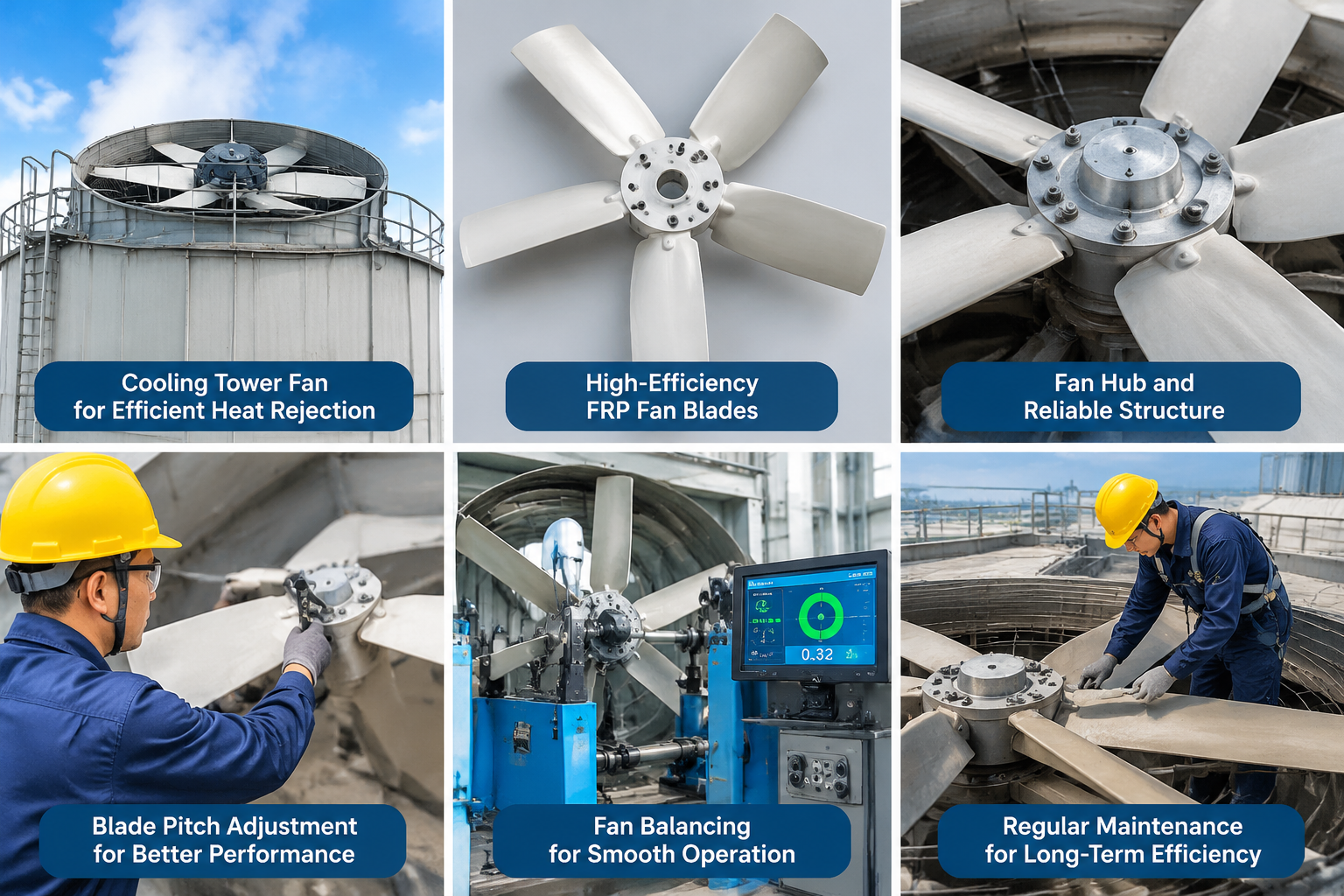
Cooling towers are essential components in industrial cooling systems. From power plants and chemical factories to manufacturing facilities and commercial HVAC systems, they help remove excess heat and maintain stable operating temperatures. However, have you ever considered how much electricity your cooling tower fan consumes every day?
In many industrial cooling systems, the fan is one of the major electrical loads. Even a small improvement in fan efficiency can make a meaningful difference to annual operating costs.
Cooling tower fan efficiency is not simply about moving more air. It is about delivering the required airflow with the lowest practical energy consumption while maintaining reliable cooling performance.
Poor blade design, incorrect pitch settings, dirty components, mechanical vibration, and inefficient motors can all increase energy consumption. The good news is that many of these problems can be corrected without replacing the entire cooling tower.
In this guide, we will explain how cooling tower fan efficiency works, what affects it, and how to improve fan performance while reducing electricity costs.
1. What Is Cooling Tower Fan Efficiency?
Cooling tower fan efficiency describes how effectively a fan converts mechanical input power into useful airflow.
In simple terms, an efficient fan moves the required volume of air without wasting unnecessary energy.
This is important because airflow directly affects the heat exchange process inside a cooling tower. If airflow is insufficient, the tower may struggle to achieve the required cooling temperature. If airflow is unnecessarily high, the fan may consume more electricity than the operating conditions require.
1.1 Understanding Fan Efficiency
Fan efficiency is commonly evaluated by comparing useful air power with the mechanical power supplied to the fan.
Air power depends on two main factors:
A fan with good aerodynamic performance can deliver the required airflow with less input power.
However, actual performance also depends on the motor, transmission system, installation quality, and operating conditions.
1.2 Fan Efficiency vs. Cooling Tower Performance
These two concepts are closely related, but they are not identical.
Fan efficiency focuses on how effectively the fan moves air. Cooling tower thermal performance measures how effectively the entire tower removes heat from circulating water.
A highly efficient fan cannot compensate for severely clogged fill, poor water distribution, or inadequate heat transfer.
For the best results, the fan, cooling tower fill, water distribution system, and air inlet conditions must work together.
2. How Does a Cooling Tower Fan Work?
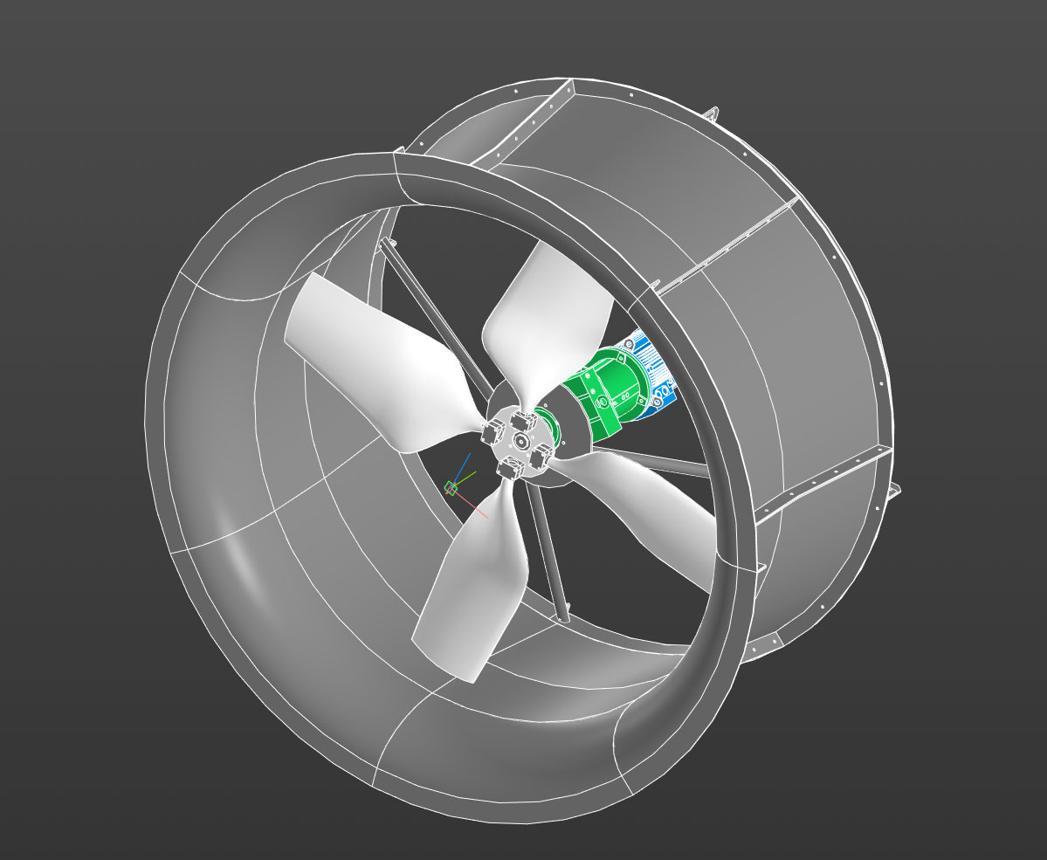
Most mechanical-draft cooling towers use fans to move air through the tower.
In a typical induced-draft cooling tower, the fan is installed near the top of the tower and pulls air upward through the fill. In a forced-draft cooling tower, the fan pushes air into the tower.
As air passes through the fill, it comes into contact with circulating water. A portion of the water evaporates, removing heat from the remaining water.
The cooled water then returns to the industrial process or HVAC system.
The fan is therefore essential to maintaining the airflow needed for effective heat rejection.
2.1 The Role of Airflow in Heat Rejection
Airflow affects the amount of heat and moisture that can be carried away from the cooling tower.
Too little airflow can reduce cooling capacity, especially under demanding operating conditions.
However, increasing airflow indefinitely is not an effective solution. More air requires additional fan power, and the relationship between fan speed, airflow, pressure, and power must be considered together.
2.2 How Fan Speed Affects Cooling Performance
Fan speed is one of the most important operating variables.
Under similar system conditions, increasing fan speed generally increases airflow and power consumption.
The fan affinity laws provide a useful approximation:
Airflow changes in proportion to fan speed.
Pressure changes approximately with the square of fan speed.
Power changes approximately with the cube of fan speed.
For example, increasing fan speed by 10% may increase theoretical power demand by approximately 33% under similar conditions.
This explains why running a fan slightly faster can lead to a much larger increase in electricity consumption.
The goal should not simply be to maximize fan speed. Instead, operators should find the most efficient operating point that satisfies the cooling requirements.
3. Key Factors That Affect Cooling Tower Fan Efficiency
Several components influence cooling tower fan efficiency. Understanding them helps operators identify where energy is being wasted.
3.1 Fan Blade Design and Aerodynamic Performance
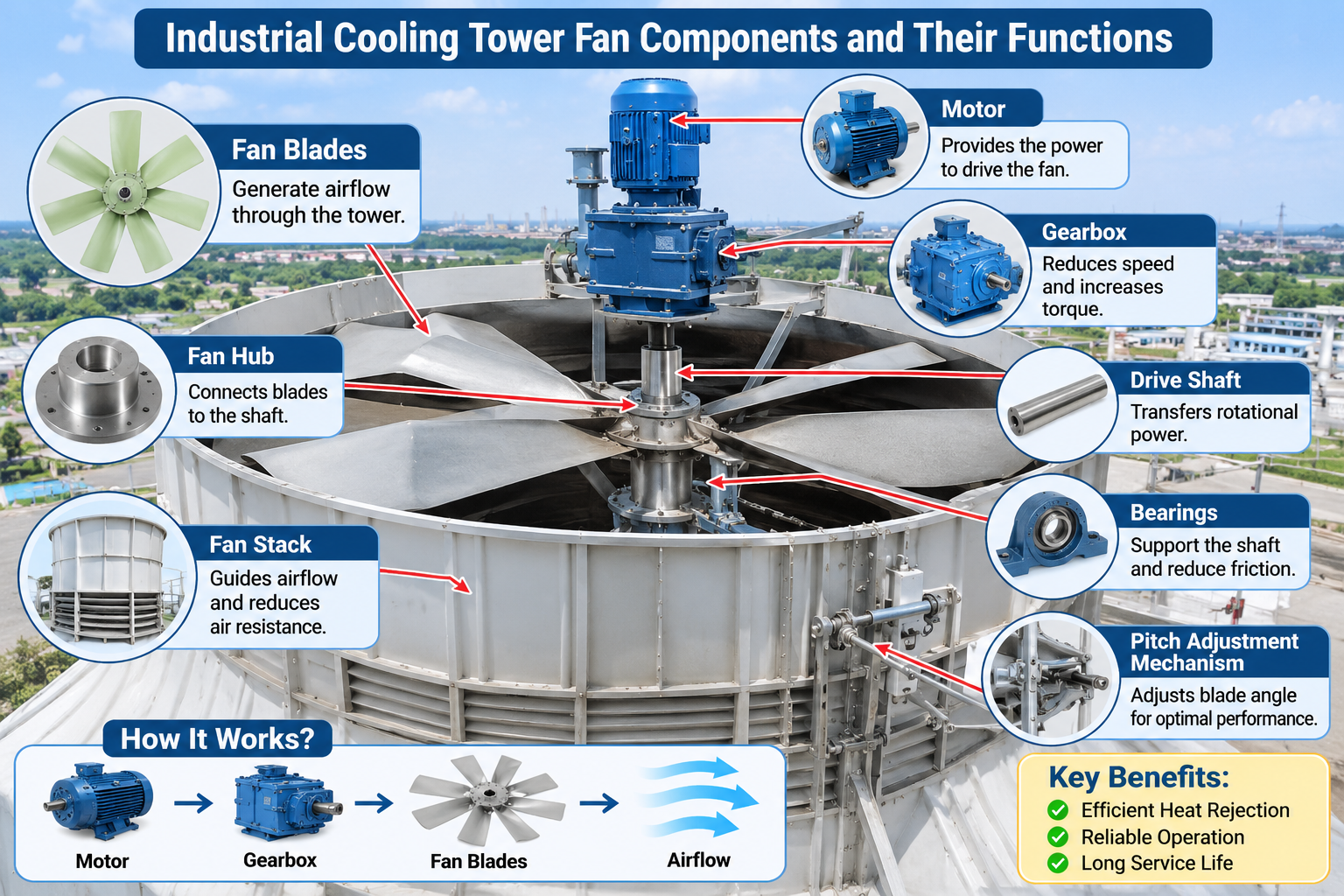
Fan blades determine how efficiently mechanical energy is converted into airflow.
Blade shape, width, curvature, thickness, and surface finish all affect aerodynamic performance.
Poorly designed blades may create turbulence, excessive drag, or uneven airflow. Modern axial fan blades are often designed to provide stable airflow while limiting aerodynamic losses.
When selecting replacement blades, consider the cooling tower's airflow requirements and operating conditions rather than choosing a blade based on appearance alone.
3.2 Fan Blade Angle and Pitch Adjustment
Blade pitch determines the angle at which each blade interacts with the surrounding air.
If the pitch is too low, the fan may not deliver enough airflow. If it is too high, the motor may become overloaded and consume excessive electricity.
Incorrect pitch can also increase vibration and reduce operating reliability.
Always follow the fan manufacturer's recommendations when adjusting blade angles. Check that all blades have consistent pitch settings.
3.3 Fan Motor Efficiency and Power Consumption
An inefficient or incorrectly sized motor can increase operating costs.
Motor efficiency, load level, electrical supply, bearing condition, and cooling conditions all influence energy consumption.
A motor should be selected according to the actual fan load and operating requirements.
Simply installing a larger motor does not automatically improve fan efficiency. Proper matching between the motor and fan is much more important.
3.4 Fan Diameter and Airflow Capacity
Fan diameter affects the volume of air that can be moved at a given rotational speed and operating condition.
A fan that is too small may require higher speeds to meet airflow requirements. An oversized fan may introduce clearance, structural, and motor-loading problems.
Proper fan sizing should account for:
Correct sizing helps the fan operate closer to its intended design conditions.
3.5 Fan Stack and Airflow Resistance
The fan stack helps guide airflow and reduce unnecessary losses around the fan.
Damaged, poorly designed, or incorrectly installed fan cylinders can create turbulence and reduce performance.
Blade-tip clearance is also important. Excessive clearance can allow air to recirculate around the blade tips, while insufficient clearance may create a mechanical contact risk.
Regular inspection of the fan cylinder and surrounding structure helps maintain stable airflow.
3.6 Installation Quality and Mechanical Alignment
Even a well-designed fan can perform poorly if it is installed incorrectly.
Misaligned shafts, loose connections, uneven blade positioning, and poor structural support can cause vibration and additional mechanical losses.
Accurate installation helps the fan operate smoothly and reduces unnecessary stress on the motor, gearbox, bearings, and supporting structure.
4. How to Calculate Cooling Tower Fan Efficiency
Measuring fan performance gives operators a practical way to evaluate whether an upgrade or maintenance activity has delivered real benefits.
A basic aerodynamic fan efficiency calculation compares useful air power with the mechanical input power supplied to the fan.
4.1 Understanding Airflow and Fan Power
The basic relationship is:
Fan Efficiency = Air Power ÷ Fan Shaft Input Power × 100%
Air power can be estimated using:
Air Power = Airflow Volume × Fan Pressure Rise
Use consistent SI units:
The pressure definition and measurement method must match the fan performance standard being used.
If electrical input power is measured instead of shaft power, the result also includes motor and transmission losses.
4.2 Measuring Fan Energy Consumption
To evaluate electricity consumption, record the motor's actual electrical power input and operating hours.
A simple calculation is:
Energy Consumption (kWh) = Average Power (kW) × Operating Hours
For example, a cooling tower fan drawing an average of 30 kW and operating for 8,000 hours consumes:
30 × 8,000 = 240,000 kWh
If an upgrade reduces average power by 3 kW under comparable cooling conditions, the annual energy saving would be:
3 × 8,000 = 24,000 kWh
This is an illustrative calculation, not a guaranteed saving.
For reliable comparisons, record water temperatures, ambient wet-bulb conditions, fan speed, and cooling load as well.
5. 10 Practical Ways to Improve Cooling Tower Fan Efficiency
Improving efficiency does not always require a complete system replacement.
In many cases, targeted adjustments and regular maintenance can deliver measurable improvements.
Here are ten practical measures worth considering.
5.1 Optimize Fan Blade Pitch
Check the existing blade pitch against the manufacturer's design specifications.
If the pitch is too aggressive, the fan may draw excessive motor power. If it is too shallow, airflow may be inadequate.
Adjust pitch consistently across all blades and verify motor current after adjustment.
Never change blade angles without checking the fan's operating limits.
5.2 Choose High-Efficiency Fan Blades
Replacing outdated blades with aerodynamically improved designs can help reduce drag and improve airflow distribution.
Look for blades designed specifically for cooling tower applications, with suitable:
Diameter
Pitch range
Material strength
Corrosion resistance
Hub compatibility
Operating speed
A suitable replacement must match the existing hub and structural requirements.
5.3 Maintain Proper Fan Balance
Unbalanced fan blades create vibration, which can damage bearings, shafts, gearboxes, and support structures.
Inspect the blades for accumulated dirt, cracks, deformation, and uneven wear.
Professional balancing should be performed when vibration measurements indicate a problem.
A balanced fan operates more smoothly and helps reduce unnecessary mechanical stress.
5.4 Upgrade to an Energy-Efficient Fan Motor
Older motors may have lower efficiency than modern alternatives.
When evaluating a motor upgrade, consider:
The objective is to provide the power the fan actually needs without unnecessary electrical losses.
5.5 Install a Variable Frequency Drive
A variable frequency drive (VFD) allows fan speed to change according to cooling demand.
During periods of lower heat load or favorable weather, the fan may operate at reduced speed instead of running continuously at full speed.
This can reduce energy consumption significantly in suitable applications.
However, control settings must maintain minimum cooling requirements and account for motor limits, gearbox restrictions, vibration, and low-temperature operating conditions.
5.6 Clean Fan Blades and Airflow Components
Dust, dirt, mineral deposits, and other contaminants can accumulate on fan blades and inside the air path.
This buildup may change the blade surface and increase aerodynamic losses.
Clean blades, fan cylinders, air inlets, and other airflow components according to the maintenance plan.
Avoid cleaning methods that could damage coatings or composite materials.
5.7 Reduce Airflow Resistance
Blocked air inlets, damaged louvers, obstructed discharge areas, and poor equipment layout can restrict airflow.
Inspect the area around the tower and remove unnecessary obstructions.
Also check the fill and drift eliminators for fouling.
Excessive resistance forces the fan to work harder and may reduce overall cooling efficiency.
5.8 Inspect Fan Hubs and Drive Systems
The fan hub connects the blades to the rotating assembly.
Loose fasteners, corrosion, worn connections, or damaged hub components can affect safety and reliability.
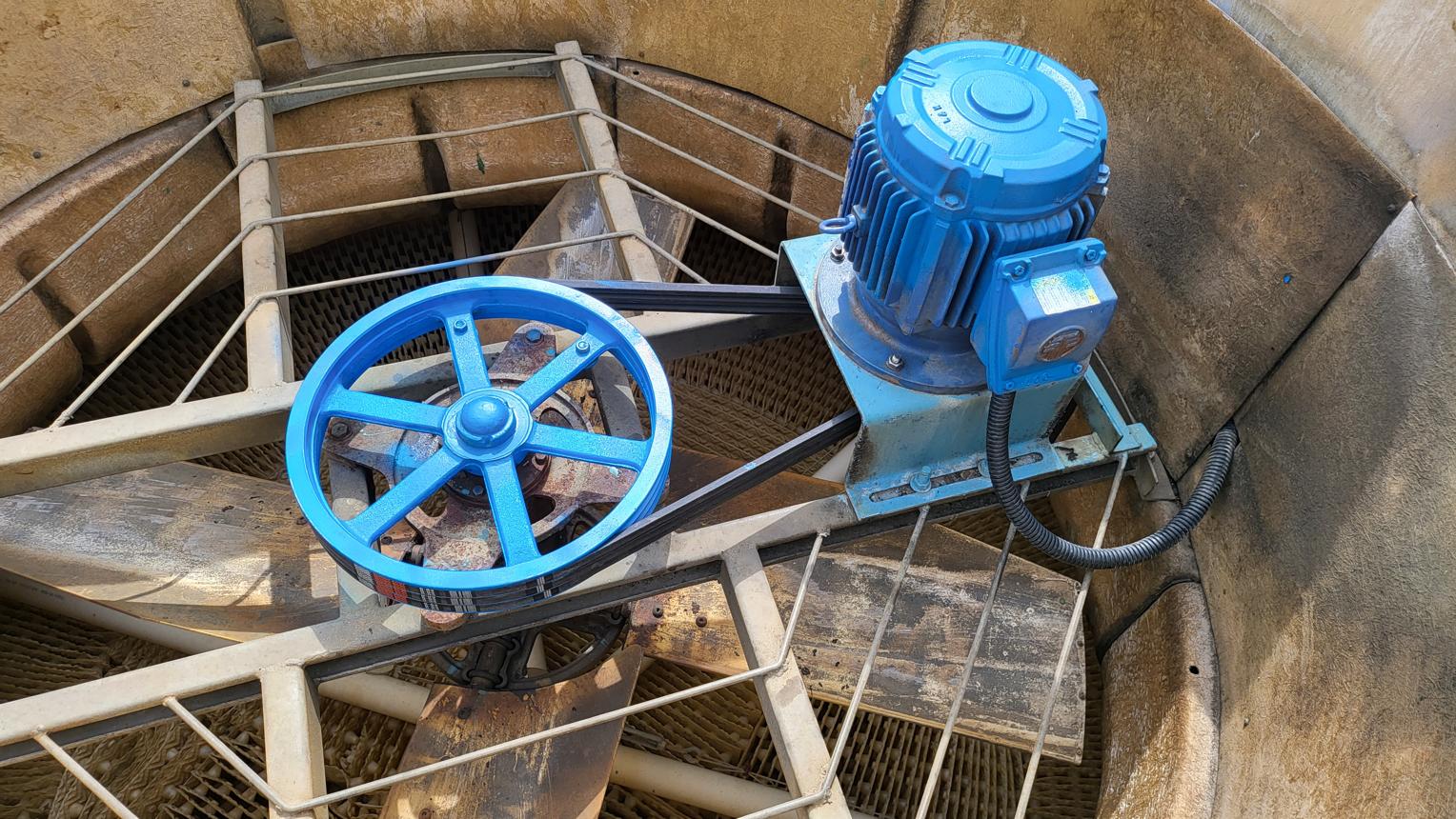
Inspect the hub, gearbox, coupling, belts, and bearings as applicable.
Follow the manufacturer's torque specifications and replacement intervals.
5.9 Monitor Vibration and Operating Conditions
Regular vibration monitoring can identify mechanical problems before they develop into serious failures.
Record:
Motor current
Fan speed
Bearing temperatures
Noise levels
Vibration trends
Sudden changes may indicate imbalance, misalignment, bearing wear, or blade damage.
Trend-based maintenance is usually more effective than waiting for a visible failure.
5.10 Replace Outdated Fan Systems
If the fan system is old, damaged, or consistently inefficient, a retrofit may offer a better long-term solution.
Replacing unsuitable blades, hubs, or the complete fan assembly can improve airflow and reduce unnecessary power demand.
Before investing, compare the existing system with the proposed replacement under equivalent operating conditions.
6. Cooling Tower Fan Efficiency and Fan Blade Material Selection
Blade material influences weight, corrosion resistance, structural strength, maintenance requirements, and service life.
The best choice depends on the operating environment and design requirements.
6.1 FRP Fan Blades
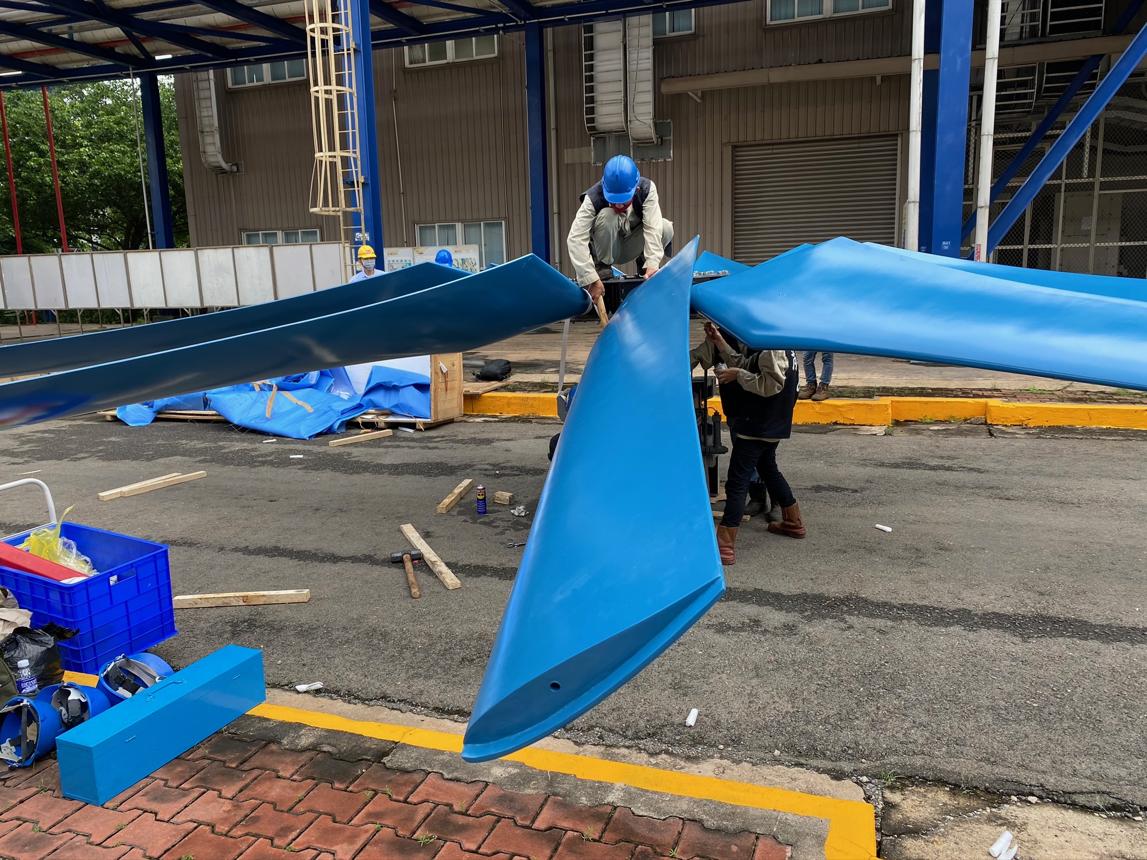
Fiber-reinforced plastic (FRP) fan blades are widely used in industrial cooling towers.
They offer a useful combination of low weight, corrosion resistance, and design flexibility.
Their relatively low mass can help reduce rotating loads when the complete fan assembly is properly engineered.
FRP blades can be designed for different airflow requirements and operating conditions.
However, blade quality, resin system, fiber reinforcement, manufacturing consistency, and environmental exposure all matter.
Regular inspection is necessary to identify cracks, delamination, or surface damage.
6.2 Aluminum Alloy Fan Blades
Aluminum alloy blades are lightweight and offer good corrosion resistance in many applications.
They can provide a practical solution where weight and mechanical performance are important.
However, the specific alloy, surface treatment, blade geometry, and operating environment should be considered before selection.
6.3 Stainless Steel Fan Blades
Stainless steel blades provide high mechanical strength and can be suitable for demanding environments.
However, they are generally heavier than FRP or aluminum alternatives.
The additional rotating mass may influence motor loading, bearing loads, and structural requirements.
Material selection should therefore consider the entire fan assembly rather than corrosion resistance alone.
7. Common Problems That Reduce Cooling Tower Fan Efficiency
Recognizing common problems helps maintenance teams prevent unnecessary energy consumption and unexpected downtime.
7.1 Incorrect Blade Pitch
Unequal or unsuitable blade angles can create uneven airflow and excessive power demand.
Check pitch settings against approved specifications and inspect every blade for consistency.
7.2 Excessive Vibration
Vibration may result from blade imbalance, loose fasteners, bearing damage, or shaft misalignment.
If vibration increases suddenly, stop and inspect the system according to site safety procedures rather than continuing operation without investigation.
7.3 Motor Overloading
Excessive blade pitch, high system resistance, mechanical friction, or incorrect fan selection can overload the motor.
Monitor current and compare it with the motor nameplate and operating limits.
7.4 Air Recirculation and Poor Airflow
Hot discharge air can sometimes return to the tower air inlet, reducing the temperature difference available for cooling.
Poor tower location, nearby structures, and airflow obstructions may contribute to this problem.
Evaluate the surrounding airflow environment when cooling performance is lower than expected.
8. When Should You Retrofit or Replace a Cooling Tower Fan?
Not every cooling tower needs a complete fan replacement. However, certain warning signs suggest that an upgrade deserves consideration.
These include:
Rising electricity consumption
Frequent vibration problems
Damaged or corroded blades
Repeated motor overloads
Poor cooling performance
Difficulty obtaining replacement parts
Increasing maintenance expenses
A retrofit assessment should compare the existing fan's airflow, pressure, power consumption, dimensions, operating speed, and mechanical compatibility with the proposed replacement.
Also evaluate the expected energy savings, installation costs, maintenance requirements, and payback period.
A properly engineered retrofit can improve performance without requiring the replacement of the entire cooling tower.
9. How to Choose the Right High-Efficiency Cooling Tower Fan
Choosing a high-efficiency fan requires more than comparing product prices or blade shapes.
The fan must match the actual cooling tower and operating conditions.
9.1 Check Cooling Tower Operating Conditions
Start with the following technical information:
Cooling tower type
Existing fan diameter
Required airflow
Static pressure
Operating speed
Motor power
Ambient conditions
Cooling load
Confirm the available installation space and blade-tip clearance.
Accurate technical information helps prevent incorrect fan selection.
9.2 Compare Airflow, Power and Efficiency
Request performance information that shows airflow, pressure, rotational speed, and power consumption at the intended operating point.
Compare products under equivalent conditions.
A fan with a lower purchase price may cost more over its service life if it consumes additional electricity or requires frequent maintenance.
9.3 Work With an Experienced Manufacturer
An experienced cooling tower component manufacturer can help evaluate fan dimensions, blade material, hub compatibility, and operating requirements.
Ask for:
This makes it easier to select a suitable product instead of relying on assumptions.
10. Cooling Tower Fan Maintenance Checklist
A consistent maintenance routine helps preserve fan efficiency and extend equipment service life.
Use the following checklist as a starting point and adapt it to the manufacturer's instructions and site conditions.
Monthly or according to operating conditions:
Inspect fan blades.
Check unusual noise and vibration.
Examine visible corrosion.
Remove accumulated dirt.
Check for obvious blade damage.
Quarterly or according to the maintenance schedule:
Annually or during a planned shutdown:
Conduct a detailed structural inspection.
Review vibration records.
Verify mechanical alignment.
Inspect bearings and gearbox components.
Evaluate overall fan performance.
Assess whether replacement components are needed.
Always isolate electrical and mechanical energy before inspection or maintenance.
Never enter or approach moving fan equipment.
11. Why Choose Power Tower Cooling Technology (Shaoxing) Co.,Ltd?
Selecting the right cooling tower components is an important step toward reliable and energy-efficient operation.
Power Tower Cooling Technology (Shaoxing) Co.,Ltd focuses on cooling tower components and replacement solutions for industrial cooling applications.
When evaluating a fan-related upgrade, it is important to consider more than the product itself. Compatibility, material quality, dimensional accuracy, operating requirements, and long-term maintenance all deserve attention.
We encourage customers to provide their existing fan dimensions, cooling tower model, motor specifications, operating speed, and required airflow.
With these details, the appropriate replacement components can be evaluated more accurately.
Whether you are planning a cooling tower component replacement, improving an existing system, or looking for suitable industrial cooling tower parts, choosing products according to actual operating conditions is essential.
Learn more about cooling tower components and replacement solutions:
https://www.coolingtowerpart.com
12. Frequently Asked Questions About Cooling Tower Fan Efficiency
12.1 What Is a Good Cooling Tower Fan Efficiency?
There is no single efficiency percentage that applies to every cooling tower fan.
The result depends on fan design, pressure, airflow, motor efficiency, transmission losses, and the measurement method.
The best approach is to compare measured performance with the manufacturer's fan curve and the original design requirements.
12.2 Does Increasing Fan Speed Improve Cooling Tower Efficiency?
Increasing fan speed can increase airflow and cooling capacity, but it also increases power consumption.
According to the fan affinity laws, power can rise approximately with the cube of speed under similar conditions.
Therefore, higher speed does not automatically mean better energy efficiency.
12.3 How Often Should Cooling Tower Fan Blades Be Inspected?
Inspection frequency depends on operating hours, environmental conditions, and manufacturer recommendations.
Many facilities include visual checks in routine maintenance and conduct more detailed inspections during scheduled shutdowns.
Fans exposed to corrosive or dusty environments may need more frequent attention.
12.4 Can Replacing Fan Blades Reduce Electricity Costs?
Yes, it can when the existing blades are damaged, poorly matched, or aerodynamically inefficient.
A suitable replacement may deliver the required airflow with lower power consumption.
However, actual savings depend on the complete system and should be verified through before-and-after measurements.
12.5 What Is the Best Material for Cooling Tower Fan Blades?
FRP, aluminum alloy, and stainless steel can all be suitable depending on the application.
FRP is often attractive because of its low weight and corrosion resistance.
The final choice should account for mechanical strength, environmental conditions, operating speed, and total fan assembly requirements.
13. Conclusion
Cooling tower fan efficiency has a direct influence on electricity consumption, cooling performance, and equipment reliability.
Improving it requires a complete approach that considers blade design, pitch adjustment, motor efficiency, airflow resistance, mechanical balance, and regular maintenance.
Sometimes a simple adjustment is enough. In other cases, replacing outdated blades or upgrading the fan system may provide a better long-term solution.
The key is to understand your cooling tower's actual operating conditions before making changes.
If you want to reduce energy costs, start by measuring current fan performance, identifying unnecessary losses, and choosing components that match your system.
With proper engineering and consistent maintenance, your cooling tower can deliver reliable cooling while using energy more efficiently.
For cooling tower components and replacement solutions, contact Power Tower Cooling Technology (Shaoxing) Co.,Ltd.
Visit our website: https://www.coolingtowerpart.com


