Understanding Cooling Tower Fan Hub Assembly Components and Functions
A cooling tower fan hub assembly is one of the most important mechanical components in an industrial cooling tower fan system. It connects the fan blades to the rotating shaft and ensures that rotational power is transferred efficiently during operation. Although the fan hub is often overlooked compared with cooling tower fan blades, motors, and gearboxes, its structural design and manufacturing quality have a direct impact on fan stability, airflow performance, and equipment reliability.
In industrial cooling applications, cooling tower fan hub assemblies must withstand continuous rotation, centrifugal forces, aerodynamic loads, vibration, moisture, and changing operating conditions. A properly designed fan hub provides secure blade mounting, maintains accurate blade positioning, and supports stable fan operation.
Understanding the components and functions of a cooling tower fan hub assembly helps equipment manufacturers, maintenance engineers, and industrial buyers select suitable products for different cooling tower applications.
This article explains the main components, working principles, material options, design requirements, installation procedures, and maintenance considerations of industrial cooling tower fan hub assemblies.

What Is a Cooling Tower Fan Hub Assembly?
A cooling tower fan hub assembly is the central mechanical structure that connects multiple fan blades and allows them to rotate as a complete unit.
It is generally installed at the center of an axial cooling tower fan. The hub connects to the motor-driven shaft or gearbox output shaft, depending on the fan drive configuration.
When the motor operates, rotational power passes through the drive system to the fan hub. The hub then transfers this power to the connected fan blades, generating airflow through the cooling tower.
Main Functions of a Cooling Tower Fan Hub
The fan hub performs several essential functions in the cooling tower fan system.
Connecting Fan Blades
The hub provides mounting positions for individual fan blades. It keeps the blades securely connected and maintains their designed arrangement during rotation.
Transmitting Rotational Power
The hub transfers torque from the drive shaft to the fan blades, allowing the entire fan assembly to rotate.
Maintaining Blade Positioning
Accurate blade positioning helps maintain consistent pitch angles and spacing, which are important for generating uniform airflow.
Supporting Mechanical Stability
The hub must withstand centrifugal and aerodynamic forces while minimizing deformation, vibration, and mechanical stress.
Allowing Blade Pitch Adjustment
Some cooling tower fan hub assemblies feature adjustable blade mounting structures. These allow technicians to modify blade angles to achieve the required airflow and cooling performance.
Main Components of a Cooling Tower Fan Hub Assembly
The exact structure of a cooling tower fan hub assembly depends on its design, material, fan diameter, and application. However, most industrial configurations contain several basic components.
1. Central Hub Body
The central hub body is the primary structural component of the entire assembly. It provides the foundation for connecting the fan blades and transferring rotational forces.
Its design must provide sufficient rigidity and strength to support the fan blades during continuous operation.
Structural Characteristics
A high-quality central hub body should have:
Sufficient mechanical strength.
Accurate mounting dimensions.
Good resistance to fatigue.
Stable shaft connection geometry.
Appropriate corrosion resistance.
Reliable blade mounting positions.
Why Is the Hub Body Important?
The hub body carries loads generated by the rotating fan blades. If its structure is insufficiently strong, deformation or cracking may occur under repeated mechanical stress.
A properly designed central hub helps distribute loads more evenly and improves the overall reliability of the cooling tower fan.
2. Fan Blade Mounting Brackets
Fan blade mounting brackets connect individual blades to the central hub body.
These brackets are designed to maintain blade positioning and transfer aerodynamic and centrifugal loads to the hub.
Fixed Blade Mounting Brackets
Fixed mounting brackets hold fan blades at predetermined angles.
They are commonly used in fan systems where the blade pitch is established during manufacturing or installation.
Adjustable Blade Mounting Brackets
Adjustable mounting brackets allow technicians to change blade pitch angles according to cooling tower operating requirements.
This design provides greater flexibility when optimizing fan airflow.
Important Installation Considerations
Ensure all blades are installed in the correct positions.
Maintain consistent blade pitch angles.
Use the specified fasteners.
Follow the manufacturer's tightening torque requirements.
Check blade clearance before operation.
3. Shaft Connection and Adapter
The shaft connection links the cooling tower fan hub assembly to the drive system.
Depending on the fan configuration, it may include a shaft adapter, flange, keyway, coupling, or other mechanical connection components.
Main Functions
The shaft connection transfers rotational torque and maintains the correct alignment between the drive shaft and fan hub.
A reliable connection helps prevent relative movement, excessive vibration, and mechanical loosening.
Common Connection Types
Flange-mounted connections.
Keyway connections.
Direct shaft connections.
Adapter-based connections.
Specialized locking connections.
The correct connection type depends on the fan design, gearbox configuration, shaft dimensions, and operating requirements.
4. Fasteners and Locking Components
Fasteners are essential for securing the fan blades, mounting brackets, and other hub components.
Common fastening components include bolts, nuts, washers, locking nuts, and other mechanical locking devices.
Functions of Fasteners
Fasteners maintain the mechanical connections between individual components and prevent unwanted movement during fan operation.
Material and Quality Requirements
Fasteners should be selected according to mechanical loading and environmental conditions.
In cooling tower applications, corrosion-resistant fasteners may be suitable for humid or chemically demanding environments.
5. Blade Pitch Adjustment Mechanism
Some industrial cooling tower fan hub assemblies incorporate a blade pitch adjustment mechanism.
This mechanism allows the blade angle to be modified to achieve the required airflow and fan operating characteristics.
How Does Blade Pitch Adjustment Work?
Changing the blade pitch changes the angle at which the blade interacts with the surrounding air.
A higher pitch angle may increase airflow and power demand, depending on fan geometry and operating conditions. However, excessive pitch can overload the motor or move the fan away from its intended operating range.
Benefits of Adjustable Blade Pitch
Flexible airflow control.
Adaptation to different operating conditions.
Support for cooling tower performance optimization.
Easier fan configuration adjustments.
Pitch adjustments should always follow the fan manufacturer's specifications and motor power limitations.
How Does a Cooling Tower Fan Hub Assembly Work?
The cooling tower fan hub assembly works together with the motor, gearbox, shaft, and fan blades to generate the airflow required for heat rejection.
Its working process involves several mechanical stages.
Step 1: The Motor Generates Rotational Power
The electric motor converts electrical energy into mechanical rotation.
In a geared fan system, the gearbox adjusts rotational speed and transfers power to the fan shaft.
Step 2: The Drive Shaft Transfers Torque
The rotating shaft transfers mechanical power to the fan hub through the specified connection structure.
The shaft and hub must remain properly aligned to reduce unnecessary mechanical stress.
Step 3: The Hub Drives the Fan Blades
The central hub transfers torque to all connected cooling tower fan blades.
Because the blades rotate together, they generate the pressure difference required to move air through the cooling tower.
Step 4: The Fan Generates Airflow
The rotating fan blades draw or push air through the cooling tower structure, depending on the fan configuration.
Airflow passes through the fill section, where heat and moisture transfer occur between the circulating water and air.
Step 5: The Cooling Tower Removes Heat
The airflow helps remove heat from circulating water through evaporation and sensible heat transfer.
The cooling tower fan hub assembly therefore contributes indirectly to the overall heat rejection performance of the cooling tower.
Materials Used in Cooling Tower Fan Hub Assemblies
Material selection directly affects the strength, weight, corrosion resistance, and service life of a cooling tower fan hub assembly.
Industrial cooling towers operate in environments characterized by moisture, water droplets, temperature fluctuations, and possible chemical exposure.
Aluminum Alloy Fan Hub
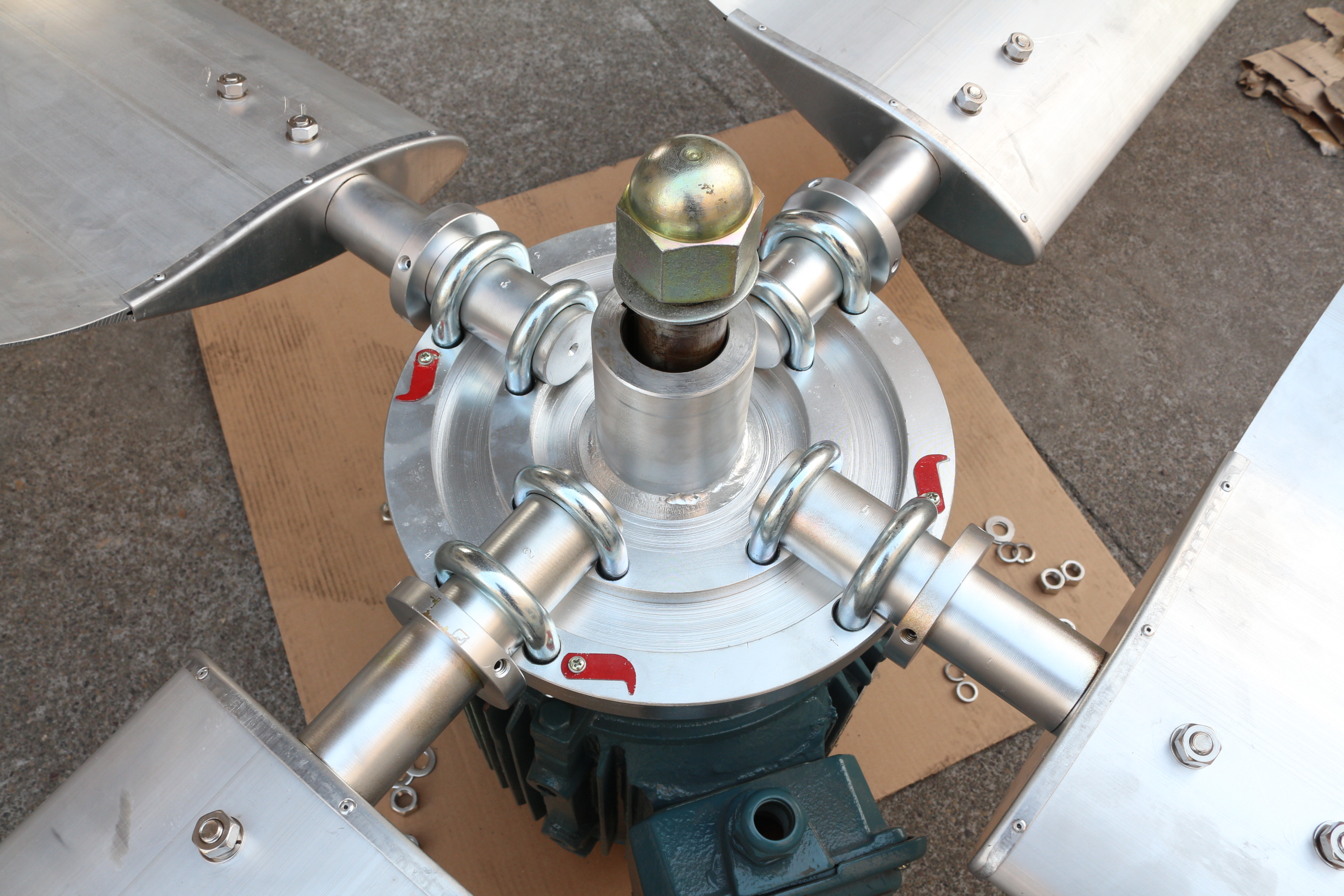
Aluminum alloy is widely used in industrial fan components because it combines relatively low weight with good mechanical properties.
Main Advantages
Lightweight construction.
Good strength-to-weight ratio.
Good corrosion resistance in suitable environments.
Convenient machining.
Reduced rotating mass.
Aluminum alloy fan hubs are suitable for many industrial cooling tower applications where weight and structural performance must be balanced.
Stainless Steel Fan Hub Components
Stainless steel is suitable for applications requiring improved resistance to moisture and corrosion.
Typical Applications
Chemical processing plants.
Wastewater treatment facilities.
Coastal industrial installations.
Specialized process cooling systems.
However, stainless steel components are generally heavier than aluminum alternatives. Their use should be evaluated according to the fan's structural and rotational requirements.
FRP Fan Hub Components
Fiber-reinforced plastic (FRP) offers a combination of lightweight construction and corrosion resistance.
Main Benefits
Resistance to many corrosive environments.
Low component weight.
Good electrical insulation.
Flexible manufacturing options.
Reduced maintenance requirements in suitable applications.
The performance of FRP components depends on fiber reinforcement, resin formulation, manufacturing quality, and operating temperature.
Material Comparison
Material | Weight | Corrosion Resistance | Main Applications |
Aluminum alloy | Low | Good | General industrial cooling |
Stainless steel | High | Very good, depending on grade | Corrosive environments |
FRP | Low | Excellent in suitable environments | Specialized cooling towers |
Carbon steel | High | Requires protection | Protected industrial installations |
Important Design Factors for Industrial Fan Hub Assemblies
A reliable cooling tower fan hub assembly requires more than a strong central body. Its overall design must consider mechanical loading, aerodynamic compatibility, manufacturing accuracy, and operating conditions.
Mechanical Strength and Structural Stability
The hub must withstand several types of mechanical forces during operation.
Centrifugal Forces
As the fan rotates, each blade generates centrifugal force acting outward from the rotation axis.
The hub and mounting brackets must safely withstand these forces throughout the operating speed range.
Aerodynamic Loads
Air resistance creates forces on the fan blades. These forces are transferred to the hub through the blade mounting structures.
The hub must be designed to handle continuous aerodynamic loading without excessive deformation.
Fatigue Resistance
Cooling tower fans may operate for thousands of hours annually.
Repeated mechanical loading can cause fatigue damage if materials, connections, or structural dimensions are unsuitable.
Dimensional Accuracy
Accurate dimensions are essential for proper installation and stable operation.
Important parameters include:
Benefits of Precision Manufacturing
Accurate machining and inspection help ensure that all components fit together correctly.
This reduces installation difficulties and helps prevent misalignment and uneven loading.
Dynamic Balance
The hub and fan blades form a rotating assembly that must be properly balanced.
An unbalanced assembly can produce excessive vibration, noise, and mechanical stress.
Factors Affecting Fan Balance
Unequal blade weights.
Inconsistent blade positions.
Incorrect pitch angles.
Hub manufacturing deviations.
Dirt or deposits on rotating components.
Damaged mounting brackets.
Proper balancing helps protect the motor, gearbox, bearings, and cooling tower structure.
Corrosion Protection
The fan hub should be suitable for the moisture and chemical conditions of the cooling tower environment.
Material selection, protective coatings, and suitable fasteners all contribute to long-term durability.
How Does the Fan Hub Assembly Affect Cooling Tower Efficiency?
Although the cooling tower fan hub assembly does not directly transfer heat, its mechanical performance affects the operation of the entire fan system.
Maintaining Consistent Airflow
The hub ensures that fan blades remain correctly positioned during rotation.
Consistent blade positioning supports the intended aerodynamic configuration and helps maintain stable airflow.
Reducing Vibration and Energy Loss
A properly designed and balanced hub helps reduce unnecessary vibration.
Excessive vibration can increase mechanical losses and place additional loads on connected equipment.
Supporting Fan Blade Performance
The fan hub provides the structural connection required for cooling tower fan blades to operate as designed.
Correct blade mounting and pitch settings help maintain the intended airflow and pressure characteristics.
Improving Equipment Reliability
A strong and accurately manufactured hub reduces the risk of mechanical failure.
This helps minimize unplanned shutdowns and supports more consistent cooling tower operation.
Common Problems with Cooling Tower Fan Hub Assemblies
Even well-designed fan hub assemblies can experience problems due to incorrect installation, excessive loading, corrosion, or insufficient maintenance.
Loose Fasteners
Loose mounting bolts may allow fan blades to move during operation.
Possible Consequences
Abnormal vibration.
Increased mechanical noise.
Blade positioning changes.
Damage to mounting holes.
Potential blade detachment.
Regular inspection and correct tightening procedures help prevent these problems.
Fan Hub Corrosion
Continuous exposure to moisture and airborne contaminants may damage unsuitable materials or protective coatings.
Preventive Measures
Select appropriate materials.
Inspect surfaces regularly.
Repair damaged protective coatings.
Replace severely corroded components.
Use suitable corrosion-resistant fasteners.
Cracks and Structural Deformation
Cracks may develop around mounting holes, connection points, or other highly stressed areas.
Potential causes include fatigue, excessive loading, impact damage, and manufacturing defects.
Damaged hub assemblies should be evaluated by qualified personnel before further operation.
Fan Hub Imbalance
Uneven blade installation or accumulated deposits may cause rotating imbalance.
Vibration monitoring and appropriate balancing procedures can help identify and correct these issues.
Installation Guide for Cooling Tower Fan Hub Assemblies
Correct installation is essential for ensuring that the hub and fan blades operate safely and efficiently.
Preparation Before Installation
Before beginning installation, verify the following:
Fan hub model and dimensions.
Shaft connection compatibility.
Fan blade specifications.
Mounting hardware.
Required installation tools.
Manufacturer's assembly instructions.
Hub and Shaft Installation
Install the hub onto the designated shaft or adapter.
Check alignment and ensure that the connection is correctly secured.
Important Checks
Confirm that the mounting surfaces are clean and that the shaft connection matches the required specifications.
Fan Blade Installation
Install the fan blades according to the specified sequence and mounting positions.
Check Blade Pitch
Measure each blade pitch angle using an appropriate measuring instrument.
All blades should follow the manufacturer's specified installation settings.
Fastener Tightening
Tighten all bolts according to the manufacturer's recommended torque values.
Use appropriate locking arrangements where specified.
Final Inspection and Test Run
Before normal operation, check:
Hub and shaft alignment.
Blade mounting security.
Blade pitch consistency.
Fan clearance.
Rotating assembly balance.
Abnormal vibration and noise.
The test run should be performed under approved safety procedures, with personnel clear of the rotating equipment.
Maintenance Tips for Cooling Tower Fan Hub Assemblies
Regular maintenance helps extend component service life and maintain reliable fan performance.
Routine Visual Inspection
Inspect the hub body, blade mounting brackets, shaft connections, and fasteners.
Look for cracks, corrosion, loose connections, and visible deformation.
Monitor Vibration
Record vibration measurements during normal operation.
Unexpected changes may indicate imbalance, looseness, bearing damage, or other mechanical problems.
Check Blade Mounting Bolts
Inspect fasteners according to the manufacturer's maintenance schedule.
Do not rely on excessive tightening as a solution to recurring loosening.
Clean the Hub Assembly
Remove dirt, debris, and accumulated deposits when appropriate.
Deposits can affect rotating balance and increase mechanical loading.
Replace Damaged Components
Replace components that have reached their service limits or show structural damage.
Replacement parts should match the original specifications and mechanical configuration.
How to Choose a Reliable Cooling Tower Fan Hub Assembly Manufacturer?
Choosing a qualified manufacturer is important for industrial cooling tower projects, equipment replacement, and long-term maintenance.
Different cooling towers use different fan diameters, blade quantities, shaft connections, and hub configurations. Therefore, product compatibility and manufacturing experience should be carefully evaluated.
Manufacturing Experience and Technical Capability
Look for manufacturers specializing in cooling tower components and industrial axial fan systems.
Experience in fan blades, fan hubs, fan stacks, and related accessories can help ensure better product compatibility.
Material Selection and Quality Control
A professional supplier should provide clear information about material specifications and manufacturing processes.
Important Quality Control Items
Raw material inspection.
Dimensional verification.
Machining accuracy.
Mounting hole inspection.
Surface quality.
Assembly compatibility.
Balancing inspection where required.
Customization Capabilities
For replacement projects, customized fan hub assemblies may be necessary.
Provide the manufacturer with the original hub drawings, shaft dimensions, blade mounting details, fan diameter, and operating speed.
A suitable manufacturer should be able to evaluate these requirements before production.
After-Sales Technical Support
Technical support is particularly important when installing replacement fan hub assemblies or upgrading existing cooling tower equipment.
A reliable supplier should assist with product selection, dimensional confirmation, installation guidance, and replacement recommendations.
Applications of Industrial Cooling Tower Fan Hub Assemblies
Cooling tower fan hub assemblies are used across numerous industries that depend on reliable heat rejection systems.
Power Plants
Large industrial cooling towers require axial fans to move significant volumes of air.
Strong fan hub assemblies support continuous operation under demanding mechanical conditions.
Chemical and Petrochemical Plants
These facilities often operate cooling towers in environments with moisture and potentially corrosive contaminants.
Material compatibility and corrosion protection are important selection factors.
Steel and Metallurgical Industries
Industrial production processes generate substantial heat.
Reliable cooling tower fan hub assemblies help maintain the mechanical stability of large fan systems.
HVAC and Commercial Cooling Systems
Large commercial and industrial HVAC systems use cooling towers to reject heat from circulating water.
Properly designed fan hubs support stable airflow and reliable operation.
General Manufacturing Facilities
Textile, plastic, food processing, and other manufacturing facilities use cooling towers for process temperature control.
The fan hub should be selected according to the specific fan configuration and operating conditions.
Cooling Tower Fan Hub Assembly vs. Cooling Tower Fan Blades
The fan hub assembly and fan blades work together, but their functions are different.
Feature | Fan Hub Assembly | Cooling Tower Fan Blades |
Main function | Connects and supports blades | Generates airflow |
Primary role | Mechanical power transmission | Aerodynamic performance |
Design focus | Structural strength and stability | Blade profile and pitch |
Installation | Shaft and blade connections | Position and pitch adjustment |
Common materials | Aluminum, steel, FRP | FRP, aluminum, composites |
Both components must be properly matched to achieve the desired fan performance.
Conclusion
A cooling tower fan hub assembly is a critical mechanical component that connects fan blades, transfers rotational power, and maintains the structural stability of industrial cooling tower fans.
Understanding its main components, including the central hub body, blade mounting brackets, shaft connections, fasteners, and pitch adjustment mechanisms, helps industrial buyers and maintenance engineers make better equipment decisions.
Material selection, dimensional accuracy, mechanical strength, and correct installation all influence the reliability and service life of a fan hub assembly.
For industrial cooling tower applications, selecting a suitable fan hub from an experienced manufacturer can help reduce vibration, improve operational stability, and support consistent airflow performance.
Ultimately, a high-quality cooling tower fan hub assembly is not simply a blade connection component. It is an important part of an integrated fan system that contributes to efficient, stable, and reliable industrial cooling operations.


