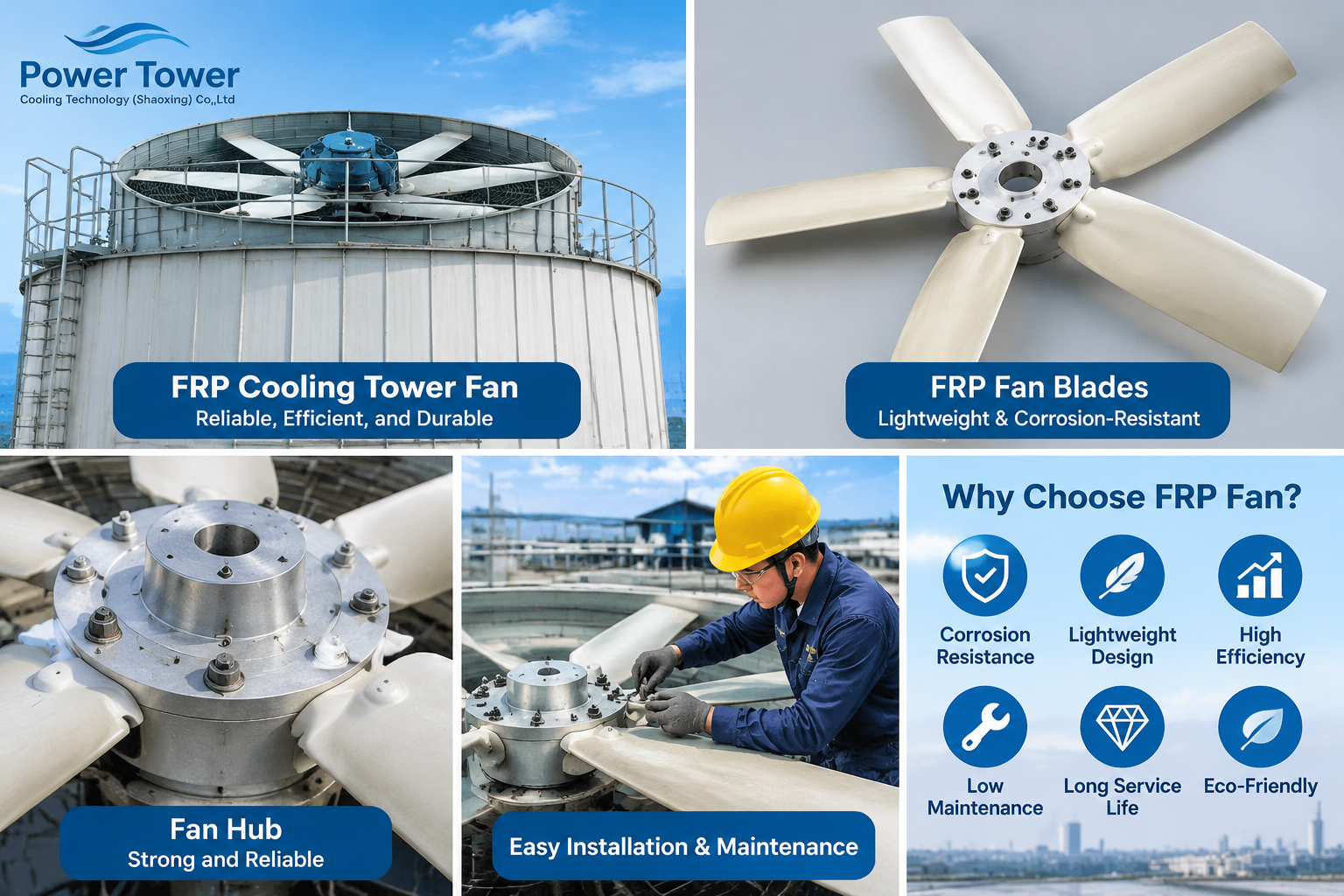
Cooling tower fans play an essential role in industrial cooling systems. They move large volumes of air through the tower, helping transfer heat from circulating water into the atmosphere. Without a properly selected fan, even a well-designed cooling tower may struggle to achieve its required cooling performance.
Among the different fan materials available today, FRP cooling tower fans have become a popular choice for many industrial applications. FRP stands for fiber-reinforced plastic, a composite material known for its corrosion resistance, relatively low weight, and design flexibility.
But are FRP fans suitable for every cooling tower? What makes them different from aluminum or stainless steel fans? And how do you select the right model for your operating conditions?
In this guide, we will explain the main benefits, applications, components, and selection factors of FRP cooling tower fans. Whether you are replacing an existing fan or planning a new cooling tower project, this information will help you make a more informed decision.
1. What Is an FRP Cooling Tower Fan?
An FRP cooling tower fan is an air-moving device that uses blades manufactured from fiber-reinforced plastic. It is commonly installed in mechanical-draft cooling towers to draw or push air through the tower.
The fan creates airflow across the cooling tower fill and circulating water. As air contacts the water, a portion of the water evaporates, removing heat from the remaining water. The cooled water then returns to the industrial process or HVAC system.
FRP fans are available in different diameters, blade profiles, and configurations. Their design can be adapted to various cooling tower capacities and operating requirements.
1.1 What Does FRP Mean?
FRP stands for Fiber-Reinforced Plastic. It is a composite material made by combining reinforcing fibers with a resin matrix.
Common reinforcement materials include glass fiber, while resin systems may include polyester, vinyl ester, or epoxy, depending on the required properties and manufacturing process.
The fibers provide structural reinforcement, while the resin binds the material together and protects the reinforcement.
This combination creates a material that can offer:
Good strength-to-weight characteristics.
Resistance to many corrosive environments.
Flexible manufacturing and blade shaping.
Electrical insulation properties.
A relatively low component weight compared with many metal alternatives.
The actual performance depends on fiber content, resin selection, manufacturing quality, blade geometry, and operating conditions.
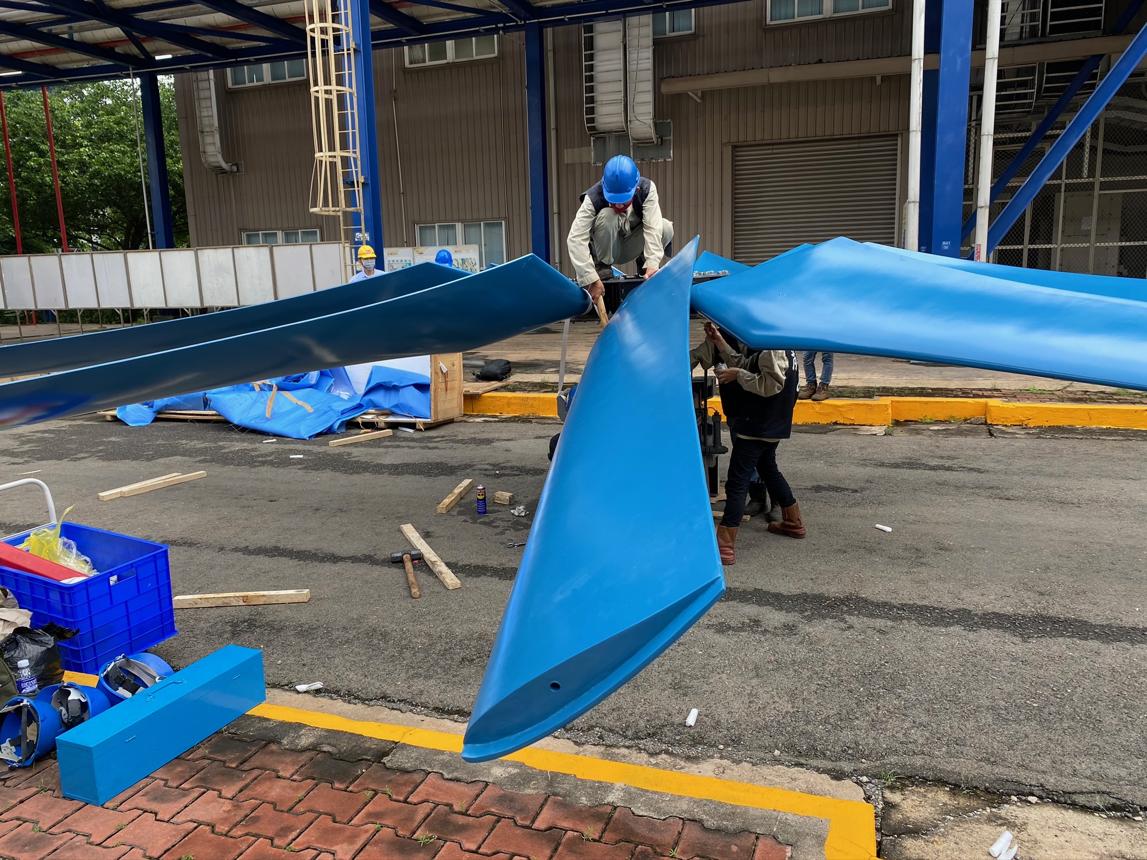
1.2 How Does an FRP Cooling Tower Fan Work?
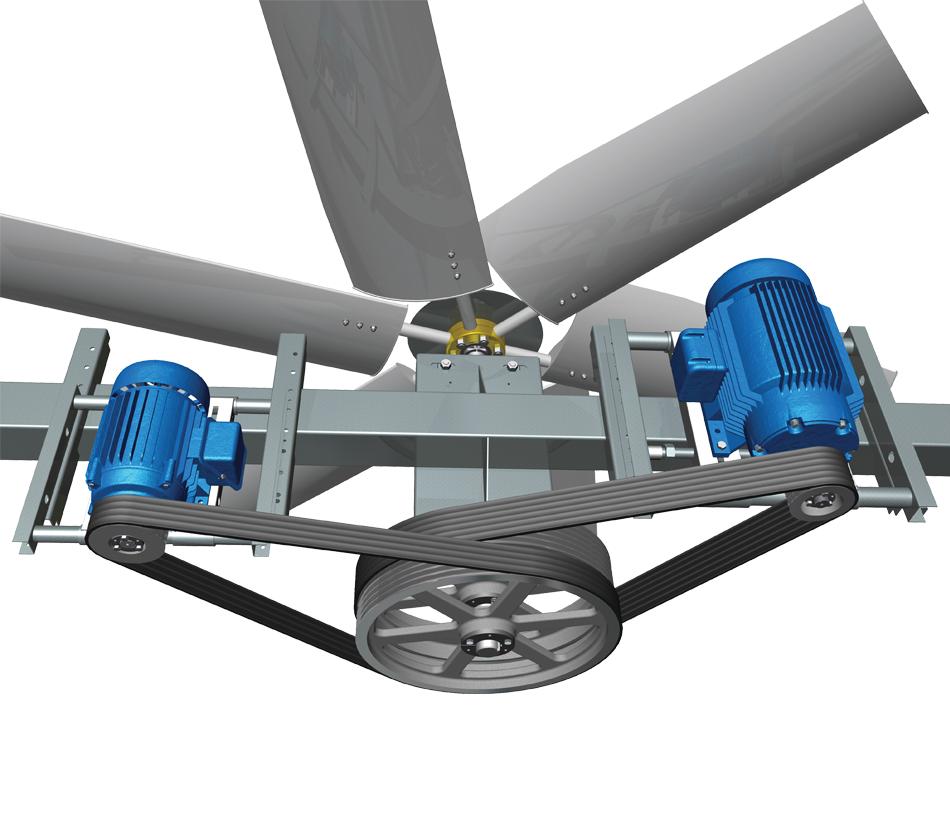
The working principle is straightforward. A motor drives the fan through a gearbox, belt drive, or another suitable transmission arrangement. As the fan rotates, its blades generate airflow through the cooling tower.
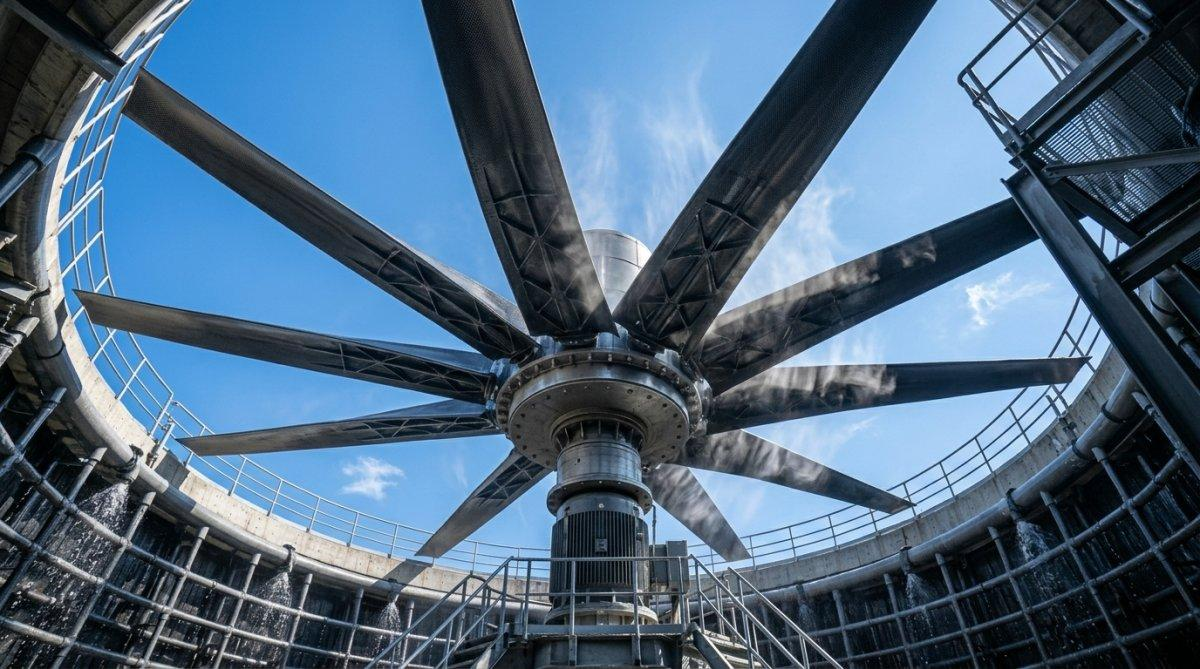
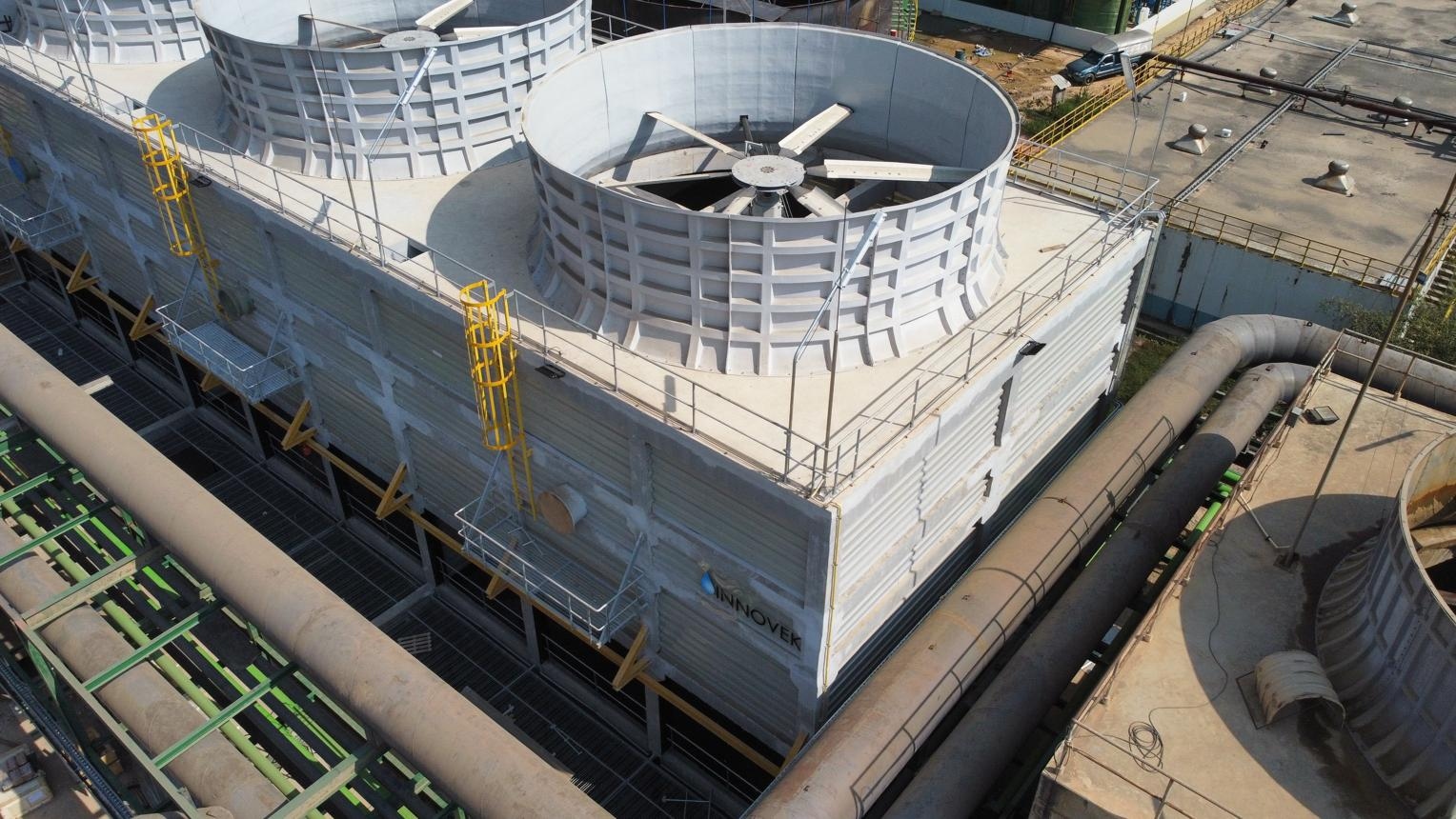
In an induced-draft cooling tower, the fan is normally installed near the top of the tower and pulls air upward through the structure.
In a forced-draft cooling tower, the fan is generally installed near the air inlet and pushes air into the tower.
The fan must provide enough airflow to support the required heat rejection. If airflow is too low, cooling performance may decrease. If the fan is poorly matched to the system, it may consume unnecessary power or operate outside its intended range.
That is why selecting the right fan involves more than simply measuring its diameter.
2. Main Components of an FRP Cooling Tower Fan
An FRP cooling tower fan is not just a collection of blades. Its performance depends on the complete fan assembly and how it works with the cooling tower.
2.1 FRP Fan Blades
The blades are the main air-moving components. Their shape, length, width, twist, and pitch angle influence airflow, pressure development, and power consumption.
A well-designed blade profile helps move air efficiently while controlling aerodynamic losses.
FRP manufacturing also allows different blade shapes to be produced for specific operating requirements. However, the blade design must be supported by appropriate engineering calculations and testing.
2.2 Fan Hub and Blade Connections
The fan hub connects the blades to the rotating shaft or drive assembly. It transfers mechanical torque from the drive system to the blades.
Depending on the fan design, the blades may be fixed directly to the hub or attached through adjustable connections.
An adjustable-pitch arrangement allows the blade angle to be changed within the manufacturer's approved range. This can help match fan performance to the cooling tower's airflow requirements.
The hub and blade connections must be properly secured and inspected because loose connections can cause vibration, uneven loading, and mechanical damage.
2.3 Drive System and Fan Cylinder
The drive system provides the rotation required to move air. It may include an electric motor, gearbox, coupling, shaft, or belt arrangement.
The fan cylinder, also known as the fan stack in many cooling tower designs, surrounds the fan and helps guide airflow.
A properly designed fan cylinder can reduce unnecessary air losses and improve the airflow path. Poor alignment, damaged structural components, or insufficient clearance may negatively affect fan performance.
3. Key Benefits of FRP Cooling Tower Fans
Why do many cooling tower operators consider FRP fans when replacing older equipment? The answer comes down to several practical material and design advantages.
3.1 Excellent Corrosion Resistance
Corrosion is a common challenge in industrial cooling tower environments.
Cooling towers operate with moisture, circulating water, chemicals, and changing outdoor conditions. Metal components may experience corrosion when their material and protective coating are not suitable for the environment.
FRP materials can provide good resistance to many corrosive conditions. This makes them attractive for cooling towers operating in chemical plants, coastal locations, wastewater facilities, and other demanding environments.
However, FRP is not universally resistant to every chemical. Resin selection should consider the actual chemical exposure, temperature, and operating environment.
3.2 Lightweight Construction
One of the most noticeable advantages of FRP is its relatively low weight.
Compared with many metal alternatives, an FRP fan blade can reduce the weight of the rotating assembly, depending on the design and materials used.
Why does this matter?
A lighter fan assembly may reduce the mechanical load on supporting components, simplify certain handling and installation tasks, and make replacement work more manageable.
However, the total fan assembly must still be checked for strength, balance, stiffness, and compatibility with the existing drive system.
3.3 Good Strength and Structural Stability
FRP combines reinforcing fibers with resin to create a composite structure.
When properly designed and manufactured, FRP fan blades can provide the strength and stiffness needed for their intended operating conditions.
The blade must withstand centrifugal forces, aerodynamic loading, vibration, temperature changes, and environmental exposure.
A reliable design therefore considers more than static strength. It also accounts for fatigue, blade deflection, connection integrity, and long-term operating conditions.
3.4 Aerodynamic Performance and Energy Efficiency
A cooling tower fan consumes electricity to move air. Its aerodynamic design can therefore influence the energy consumption of the entire cooling system.
FRP allows manufacturers to produce different blade profiles and geometries. A suitable design can help achieve the required airflow with appropriate power consumption.
But remember: FRP material alone does not guarantee high efficiency.
Actual fan efficiency depends on several factors:
Blade profile and surface condition.
Blade pitch angle.
Fan diameter and rotational speed.
Fan cylinder geometry.
Airflow resistance inside the cooling tower.
Motor and gearbox efficiency.
Installation quality and operating conditions.
For the best result, the fan should be selected as part of the complete cooling tower system.
3.5 Low Maintenance Requirements
FRP fan blades do not require the same corrosion-protection approach as many unprotected metal components. This may reduce certain maintenance tasks in suitable environments.
Still, low maintenance does not mean maintenance-free.
Operators should regularly inspect the blades, hub, fasteners, drive system, and fan cylinder. Any cracks, deformation, unusual vibration, or loose connections should be investigated.
Preventive maintenance is much less expensive than dealing with an unexpected fan failure.
4. Common Applications of FRP Cooling Tower Fans
FRP cooling tower fans are used in many industries where reliable airflow and resistance to environmental exposure are important.
4.1 Power Generation
Power plants use cooling towers to remove heat from circulating cooling water.
Large cooling systems require fans capable of moving substantial volumes of air. FRP fan blades may be considered where their structural design, size, and operating characteristics meet the project's requirements.
4.2 Chemical and Petrochemical Plants
Chemical and petrochemical facilities may expose cooling tower equipment to humid air and corrosive substances.
In these environments, material selection is especially important. FRP may be a suitable choice when the selected resin system is compatible with the site's chemical and temperature conditions.
4.3 HVAC and Commercial Buildings
Large commercial buildings, hospitals, hotels, and industrial facilities often use cooling towers as part of their central air-conditioning systems.
In these applications, the fan needs to deliver stable airflow while supporting reliable and energy-conscious operation.
FRP fans can be considered for both new installations and suitable replacement projects.
4.4 Steel, Cement, and Manufacturing
Steel mills, cement plants, and general manufacturing facilities use cooling water for equipment, production processes, and heat exchangers.
Their cooling towers may operate for long periods under demanding conditions. Selecting an appropriate fan helps maintain the airflow needed for consistent heat rejection.
5. FRP Cooling Tower Fan vs. Aluminum and Stainless Steel Fans
Different fan materials have different strengths. The best option depends on the application rather than one material being universally superior.
| Comparison Factor | FRP Fan | Aluminum Fan | Stainless Steel Fan |
| Weight | Generally lightweight | Generally lightweight | Usually heavier |
| Corrosion resistance | Good, depending on resin and exposure | Depends on alloy and environment | Depends on stainless steel grade and environment |
| Design flexibility | High | Depends on manufacturing method | Depends on manufacturing method |
| Structural performance | Depends on composite design | Depends on alloy and blade design | Depends on grade and blade design |
| Maintenance | Requires inspection for cracks and composite damage | Requires inspection for corrosion and deformation | Requires inspection for corrosion, fatigue, and connections |
| Initial cost | Varies by design and specification | Varies by alloy and construction | Varies by grade and construction |
FRP may be a practical choice when corrosion resistance, weight, and design flexibility are important. Aluminum may suit applications where a lightweight metal blade is preferred. Stainless steel may be considered where its mechanical and environmental properties meet the requirements.
Before choosing, compare the complete fan specifications rather than focusing only on material names.
6. How to Choose the Right FRP Cooling Tower Fan
Choosing the right FRP cooling tower fan is one of the most important steps in a replacement or new installation project.
A fan that looks similar to the original may still have different airflow, power, speed, or installation requirements.
Here are the main factors to check.
6.1 Confirm the Cooling Tower Type
Start by identifying the cooling tower configuration.
Is it a crossflow or counterflow cooling tower? Is it induced draft or forced draft? Does it use a single fan or multiple fans?
These details influence airflow direction, fan position, installation space, and operating requirements.
A replacement fan should be compatible with the cooling tower's original design unless a complete engineering assessment supports a modification.
6.2 Determine Airflow and Static Pressure
Airflow is usually expressed in cubic meters per hour (m³/h) or cubic feet per minute (CFM).
Static pressure describes the resistance the fan must overcome to move air through the system.
Both values matter. A fan may have a large diameter but still fail to deliver the required airflow if its operating point does not match the system resistance.
Ask the supplier for the fan performance data and confirm that the selected operating point is appropriate for your cooling tower.
6.3 Check Fan Diameter and Installation Space
Fan diameter must match the available installation space and fan cylinder dimensions.
Measure the opening, cylinder diameter, hub position, blade clearance, and mounting arrangement.
Do not assume that a fan with the same nominal diameter will fit correctly. The hub dimensions, blade sweep, and connection details may differ.
6.4 Consider Blade Pitch and Operating Speed
Blade pitch influences the amount of air moved and the power required.
A higher pitch angle may increase airflow, but it can also increase motor load. If the motor is already close to its rated limit, an adjustment could cause overloading.
Operating speed is equally important. Fan speed should follow the manufacturer's design limits and the cooling tower's operating requirements.
Never change the blade pitch or fan speed without checking the motor power, fan performance, and mechanical limits.
6.5 Evaluate Temperature and Environmental Conditions
The operating environment affects the suitability of FRP materials.
Before ordering, provide information about:
Normal and maximum operating temperatures.
Chemical exposure and water-treatment conditions.
Outdoor weather and UV exposure.
Humidity and salt exposure.
Dust or other airborne contaminants.
This information helps the manufacturer evaluate the appropriate resin system and construction.
6.6 Verify Motor and Drive Compatibility
The fan must work with the existing motor and drive system.
Check motor power, rated speed, voltage, gearbox ratio, shaft dimensions, and transmission arrangement.
The selected fan's power demand must remain within the permitted operating range of the drive system.
A fan replacement should not be treated as a simple blade swap if the new fan changes the mechanical load or operating point.
7. FRP Cooling Tower Fan Installation Considerations
Correct installation is essential for safe and stable operation.
Before installation, inspect the fan cylinder, support structure, hub, drive shaft, gearbox, and mounting components. Repair any damaged or misaligned parts before fitting the new fan.
During installation:
Confirm that the fan model and dimensions match the approved drawings.
Check the hub and blade connection arrangement.
Install blades according to the manufacturer's instructions.
Set blade pitch consistently and within the approved range.
Verify clearances between the blades and fan cylinder.
Tighten fasteners to the specified torque.
Check fan alignment and static or dynamic balance as required.
Confirm that guards and safety devices are installed.
After installation, conduct a controlled test run. Monitor vibration, noise, motor current, rotation direction, and airflow.
If unusual vibration or noise occurs, stop the equipment and investigate before returning it to normal operation.
8. Maintenance Tips to Extend Fan Service Life
Regular maintenance helps identify problems before they lead to costly downtime.
A practical maintenance routine should include the following checks.
Inspect FRP blades: Look for cracks, surface damage, deformation, or signs of delamination.
Check the hub and fasteners: Inspect blade connections, bolts, locking devices, and hub condition.
Monitor vibration: Record vibration levels and compare them with the equipment's normal operating condition and applicable limits.
Check the drive system: Inspect the motor, gearbox, coupling, shaft, and belt components where applicable.
Clean the fan and cylinder: Remove accumulated dust, debris, and other deposits that may affect airflow or balance.
Review operating data: Track motor current, power consumption, operating speed, and cooling performance.
Maintenance intervals should follow the manufacturer's recommendations and be adjusted for the actual operating environment.
9. Common FRP Cooling Tower Fan Problems and Solutions
Even a properly selected FRP fan can develop problems during operation. Recognizing early warning signs helps prevent more serious damage.
| Common Problem | Possible Cause | Recommended Action |
| Excessive vibration | Imbalance, loose fasteners, misalignment, or structural damage | Stop and inspect the fan assembly and drive system |
| Unusual noise | Blade contact, loose components, or bearing problems | Check clearances, connections, and rotating components |
| Insufficient airflow | Incorrect pitch, low speed, blockage, or unsuitable fan selection | Check operating conditions and fan performance |
| High motor current | Excessive fan load, incorrect pitch, or drive problems | Check motor load and fan operating point |
| Blade cracking | Impact, fatigue, environmental damage, or unsuitable operating conditions | Assess the blade and replace damaged components as required |
| Reduced cooling performance | Insufficient airflow, poor water distribution, or fill problems | Inspect the complete cooling tower system |
One important point: not every cooling tower performance problem comes from the fan. Blocked fill, poor water distribution, excessive scale, and changes in process heat load can also reduce cooling performance.
A complete system inspection is often more useful than replacing the fan immediately.
10. When Should You Replace an FRP Cooling Tower Fan?
A fan should be evaluated for replacement when it shows structural damage, repeated operating problems, or performance that no longer meets the system's requirements.
Possible warning signs include:
Visible cracks or serious blade damage.
Repeated vibration problems.
Damaged hub or blade connections.
Persistent airflow shortages.
Excessive motor loading.
Unacceptable operating noise.
Difficulty obtaining compatible replacement parts.
Before making a replacement decision, identify the root cause. If the problem comes from the gearbox, motor, fan cylinder, or cooling tower structure, replacing the blades alone may not solve it.
For an existing cooling tower, a properly engineered replacement fan can help restore the intended airflow and operating performance.
11. Why Work with an Experienced Cooling Tower Fan Supplier?
A cooling tower fan is a critical rotating component. Choosing a supplier based only on price can create problems if the product does not match the original equipment.
An experienced supplier should be able to review the cooling tower model, fan dimensions, operating speed, motor information, and required airflow.
Before placing an order, ask for:
Technical drawings and dimensional information.
Fan material and construction details.
Performance data where available.
Installation and maintenance instructions.
Blade and hub connection specifications.
Relevant inspection and quality documentation.
Clear technical communication helps reduce the risk of incorrect selection and installation delays.
12. FRP Cooling Tower Fan Solutions from Power Tower
Power Tower Cooling Technology (Shaoxing) Co.,Ltd focuses on cooling tower components and replacement solutions for industrial cooling systems.
When selecting an FRP cooling tower fan, compatibility with the existing cooling tower is essential. A suitable replacement should match the required dimensions, operating conditions, and mechanical arrangement.
Power Tower can work with customers to review their cooling tower requirements and identify the relevant product specifications.
To help evaluate a replacement request, customers can provide:
Cooling tower manufacturer and model.
Existing fan diameter.
Number of fan blades.
Blade length and approximate profile.
Hub dimensions and connection details.
Motor power and rated speed.
Gearbox ratio or drive arrangement.
Required airflow or original fan specifications.
Photos of the existing fan and installation position.
With this information, the replacement requirements can be reviewed more accurately.
For product information and cooling tower component solutions, visit:
Website: https://www.coolingtowerpart.com
13. Frequently Asked Questions
13.1 Are FRP Cooling Tower Fans Better Than Metal Fans?
FRP fans can be a good choice when low weight, corrosion resistance, and design flexibility are important. However, they are not automatically better for every application.
The right choice depends on operating temperature, chemical exposure, mechanical loading, fan performance, cost, and maintenance requirements.
13.2 How Long Does an FRP Cooling Tower Fan Last?
There is no single service life that applies to every FRP fan.
Actual life depends on material quality, resin selection, manufacturing process, operating speed, vibration, environmental exposure, maintenance, and installation quality.
Regular inspection helps identify damage before it becomes a serious safety or performance issue.
13.3 Can FRP Fan Blades Be Replaced Individually?
In some fan designs, individual blades can be replaced. In others, the manufacturer may recommend replacing a complete matched set or the entire fan assembly.
Replacement blades must match the original design, dimensions, weight, pitch, and connection arrangement. Mixing incompatible blades can create imbalance and unsafe operating conditions.
13.4 Can an FRP Fan Be Customized for an Existing Cooling Tower?
A replacement fan may be designed or selected for an existing cooling tower, provided the technical requirements can be confirmed.
The manufacturer will generally need fan dimensions, hub details, motor specifications, operating speed, and airflow requirements.
A technical review is necessary before confirming compatibility.
13.5 What Information Is Needed for an FRP Cooling Tower Fan Quotation?
At minimum, provide the cooling tower model, fan diameter, blade quantity, hub dimensions, motor power, operating speed, and installation photos.
If available, also provide the original fan drawing, airflow requirement, and operating conditions. More complete information helps the supplier assess the correct configuration.
14. Conclusion
An FRP cooling tower fan can be a practical solution for industrial cooling systems that require a combination of corrosion resistance, relatively low weight, and suitable aerodynamic performance.
Its real value, however, depends on selecting the correct fan design for the cooling tower. Material, blade profile, diameter, pitch, airflow, static pressure, operating speed, and drive compatibility all need to be considered together.
Whether you are installing a new fan or replacing an existing one, start with accurate equipment information and a clear understanding of your operating conditions.
For FRP cooling tower fan and cooling tower component inquiries, contact Power Tower Cooling Technology (Shaoxing) Co.,Ltd through https://www.coolingtowerpart.com.
A properly matched fan is more than a replacement part. It is an important investment in the reliability and performance of your cooling system.


