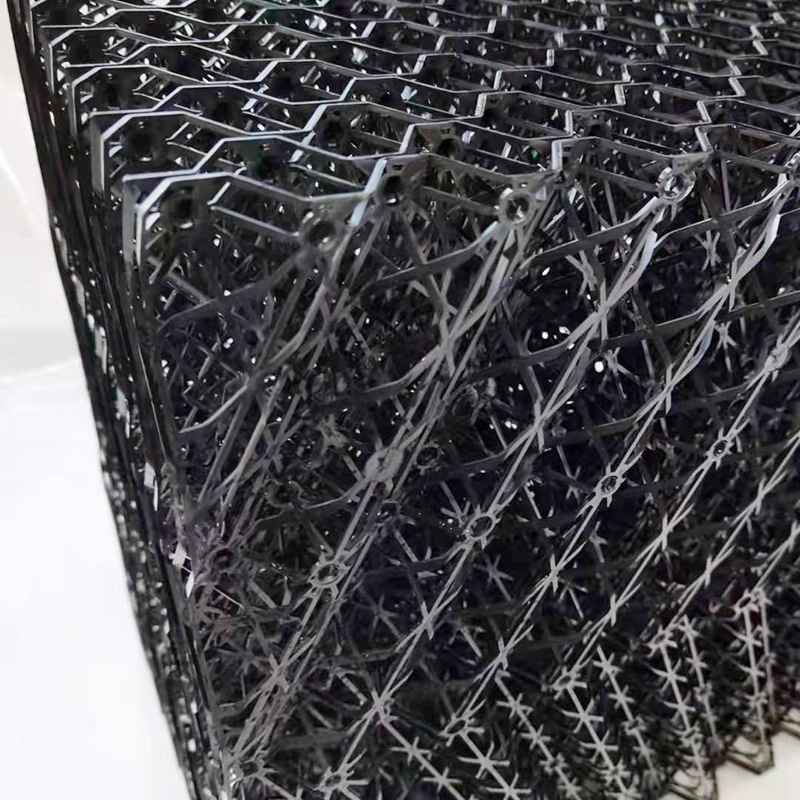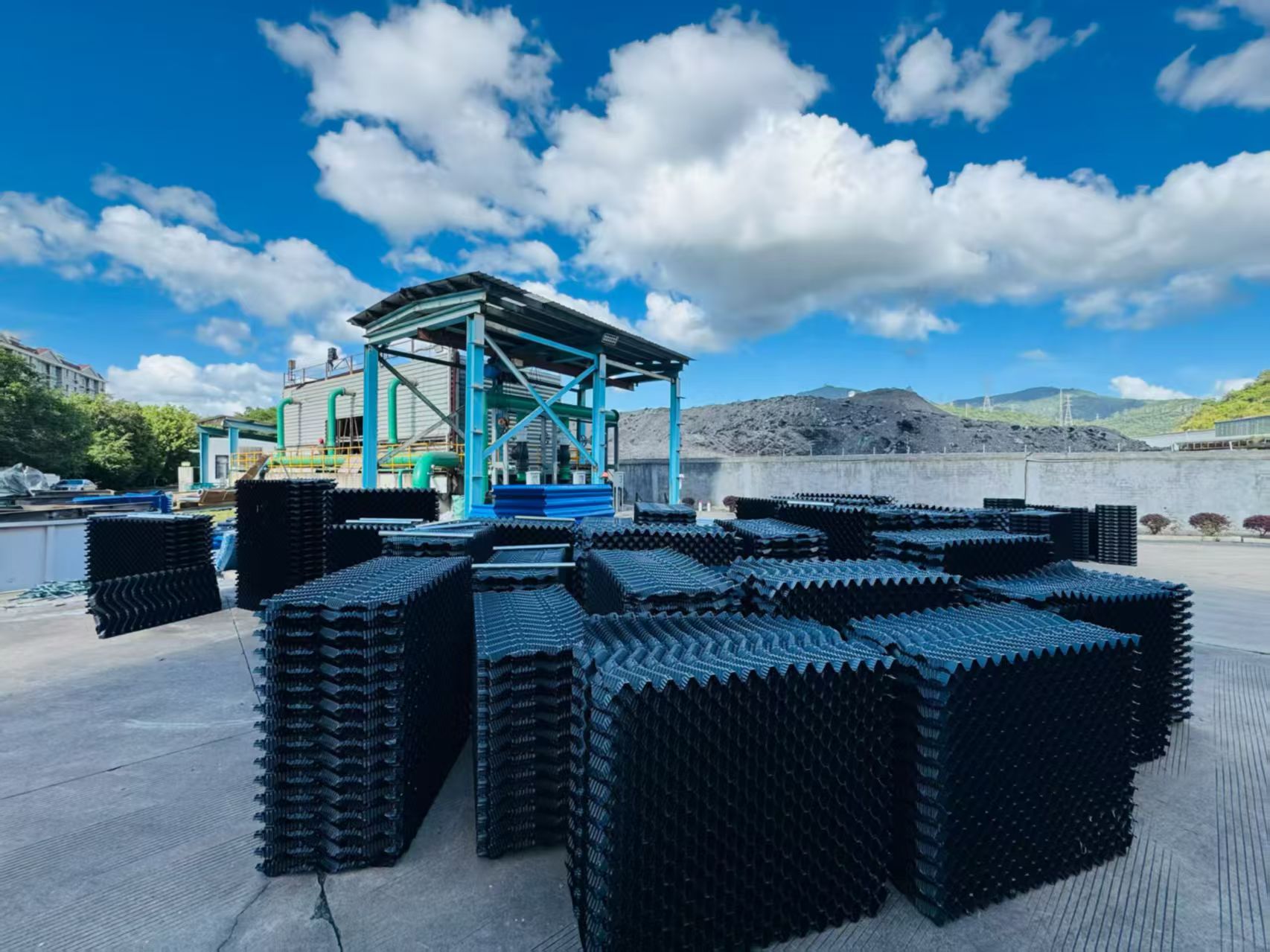
PVC fill for cooling tower systems is one of the most widely used types of cooling tower fill for industrial, commercial, and HVAC applications. Made from specially formed polyvinyl chloride sheets, PVC cooling tower fill increases the contact area between water and air, helping improve heat transfer and cooling performance.
For cooling tower owners, engineers, contractors, and maintenance teams, choosing the right fill is important. The fill must match the tower design, water quality, operating temperature, airflow, and required cooling capacity.
This guide explains how PVC cooling tower fill works, where it is used, its main benefits, and what buyers should consider when selecting PVC fill for a new installation or replacement project.
What Is PVC Fill for a Cooling Tower?
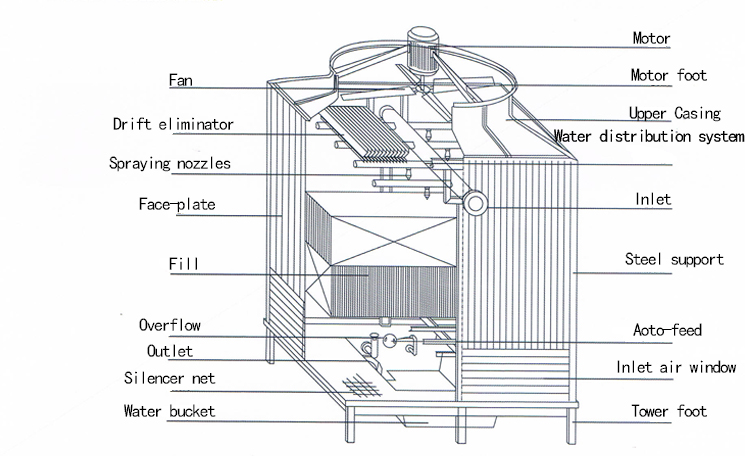
Cooling tower fill, also called cooling tower packing or fill media, is installed inside the tower to increase water-air contact.
PVC fill is commonly manufactured by forming thin PVC sheets into specific corrugated or patterned geometries. These sheets are assembled into fill packs or blocks.
During operation, hot water flows over the fill while air moves through it. The fill distributes water across a large surface area, allowing evaporation and heat transfer to occur more effectively.
The result is a lower circulating-water temperature before the water returns to the process or HVAC system.
How Does PVC Cooling Tower Fill Work?
The cooling process relies heavily on contact between water and air.
A typical sequence is:
Hot circulating water enters the cooling tower.
The water distribution system spreads water over the fill.
Water flows across the PVC fill surfaces.
Air moves through the fill.
A portion of the water evaporates.
Heat is transferred from the water to the air.
Cooled water collects in the cold-water basin.
PVC film fill is designed to keep water distributed over a large effective surface area. This can provide high heat-transfer performance within a relatively compact fill volume.
Types of PVC Cooling Tower Fill
Not all PVC fill has the same geometry or application.
PVC Film Fill
PVC film fill is one of the most common choices for cooling towers handling relatively clean, properly treated water.
The closely spaced sheets create a large surface area for water and air contact.
Common configurations include:
Cross-fluted film fill
Vertical-flow film fill
Offset-fluted film fill
Hanging film fill
Modular film-fill packs
The specific geometry influences water distribution, heat transfer, and airflow resistance.
PVC Splash Fill
PVC can also be used in some splash-fill configurations, although polypropylene is frequently selected for splash applications.
Splash fill relies on repeated water breakup rather than maintaining a continuous water film.
It can be considered where a more open structure is required because of water quality or fouling concerns.
PVC Fill Packs
Manufacturers can assemble PVC sheets into blocks or packs for easier transportation and installation.
Fill packs are available in different:
Lengths
Widths
Heights
Sheet thicknesses
Flute patterns
Bonding configurations
For replacement projects, these dimensions should match the existing tower installation.
Performance of PVC Fill for Cooling Towers
The performance of PVC cooling tower fill depends on more than the material itself.
Important factors include:
Heat-Transfer Surface Area
A properly designed film-fill pattern provides substantial surface area for water-air interaction.
Water Distribution
Even high-performance fill cannot work effectively if water is unevenly distributed. Spray nozzles, headers, and distribution basins must provide appropriate water coverage.
Airflow
The fan and fill must work together. Fill geometry influences airflow resistance and pressure drop.
Water Loading
The amount of water passing through the fill affects its thermal performance. Fill should be selected according to the tower's design water loading range.
Fill Condition
Scale, algae, sludge, and debris can reduce the effective surface area and restrict airflow.
For this reason, maintaining both the fill and water-treatment system is important for long-term performance.
Benefits of PVC Cooling Tower Fill
1. High Heat-Transfer Efficiency
PVC film fill can provide a large effective surface area within a relatively small volume.
This makes it useful when cooling tower owners need substantial heat-transfer capacity without significantly increasing tower size.
2. Lightweight Construction
PVC fill packs are relatively lightweight compared with many traditional fill materials.
This can simplify transportation, handling, and installation during replacement projects.
3. Corrosion Resistance
PVC does not rust like metallic materials and can provide good resistance to many water-treatment environments.
Actual chemical compatibility depends on the specific water chemistry and PVC formulation.
4. Cost-Effective Replacement
PVC is widely available and can provide a practical balance between thermal performance and material cost.
For aging cooling towers, replacing deteriorated fill may be more economical than replacing the entire tower.
5. Flexible Design
PVC sheets can be manufactured into different flute patterns and configurations.
This allows suppliers to provide fill for various crossflow and counterflow tower designs.
6. Easy Modular Replacement
Many PVC fill products are supplied as blocks or packs. Individual sections can often be removed and replaced without dismantling the complete tower structure.
Applications of PVC Cooling Tower Fill
PVC fill is used across many cooling applications.
Industrial Process Cooling
Factories use cooling towers to remove heat from:
PVC film fill can be suitable when the circulating water is adequately treated and relatively low in suspended solids.
Power Generation
Cooling towers in power plants reject large amounts of waste heat. Properly selected fill supports efficient heat transfer between circulating water and air.
Chemical Processing
Chemical plants use cooling water for heat exchangers and process equipment. PVC fill can be used where its chemical and temperature limits are compatible with the application.
HVAC Systems
Large commercial buildings, hospitals, campuses, and district cooling systems use cooling towers to reject heat from chilled-water systems.
PVC film fill is widely used in applications where water quality can be controlled.
Manufacturing
Manufacturing facilities often use cooling towers for continuous process cooling. Fill replacement can help maintain thermal performance as towers age.
PVC Cooling Tower Fill for Replacement Projects
One of the most common uses of PVC fill is cooling tower fill replacement.
Over time, fill can suffer from:
Scaling
Algae growth
Sludge accumulation
Cracking
Brittleness
Deformation
Chemical degradation
Physical damage
Damaged or fouled fill can reduce heat-transfer performance and increase airflow resistance.
Before ordering replacement PVC fill, inspect the existing installation carefully.
What Should You Measure?
Record:
Fill length
Fill width
Fill height
Sheet thickness
Flute pattern
Sheet spacing
Number of blocks
Total fill volume
Support-grid dimensions
Also identify the cooling tower manufacturer and model if available.
Photos of the existing fill can help a supplier verify the configuration.
PVC vs. PP Cooling Tower Fill
Both PVC and PP are widely used plastics for cooling tower fill, but they are not interchangeable in every application.
| Feature | PVC Fill | PP Fill |
| Common application | Film fill | Film and splash fill |
| Cost | Generally economical | Often higher depending on design |
| Temperature resistance | Application-dependent | Generally suitable for higher-temperature applications |
| Chemical resistance | Good for many applications | Good for many applications |
| Typical use | Clean/treated water | Industrial and demanding applications |
The correct material depends on operating temperature, water chemistry, fill design, and manufacturer specifications.
How to Choose PVC Fill for a Cooling Tower
Before purchasing, evaluate the following factors.
1. Cooling Tower Type
Determine whether the tower is crossflow or counterflow.
The fill configuration must be compatible with the airflow and water-flow arrangement.
2. Operating Temperature
Provide the normal hot-water and cold-water temperatures.
Also consider maximum temperature excursions.
3. Water Quality
Evaluate:
Suspended solids
Hardness
Silica
Oil
Biological growth
pH
Chemical treatment
Closely spaced film fill generally requires better water-quality control than more open splash-fill designs.
4. Water Flow Rate
Fill thermal performance depends on the water loading through the fill.
Provide the design and operating flow rate whenever possible.
5. Airflow and Fan Capacity
The fill creates resistance to airflow. Changing the fill geometry can affect system pressure drop and fan operation.
6. Fill Dimensions
Replacement fill must fit the available space and support structure.
Do not rely only on the tower tonnage or model number. Measure the existing fill whenever possible.
PVC Cooling Tower Fill Maintenance
Proper maintenance can extend the service life of PVC fill.
Recommended practices include:
Maintain proper water treatment.
Monitor scale formation.
Control algae and biological fouling.
Inspect fill regularly.
Keep spray nozzles clean.
Remove debris.
Check fill supports.
Monitor cold-water temperature.
Clean fouled fill using suitable procedures.
Avoid aggressive cleaning methods that can damage PVC sheets or distort the fill structure.
PVC Cooling Tower Fill Buyer Checklist
Before requesting a quotation, prepare the following information:
✓ Cooling tower manufacturer and model
✓ Crossflow or counterflow design
✓ PVC film or splash fill requirement
✓ Existing fill dimensions
✓ Flute pattern, if known
✓ Hot-water temperature
✓ Cold-water temperature
✓ Water flow rate
✓ Water quality information
✓ Required fill quantity
✓ Fill support dimensions
✓ Photos of existing fill
Providing complete information helps the supplier recommend the appropriate product and reduces the risk of an incorrect replacement.
Why Choose a PVC Cooling Tower Fill Supplier?
Working with an experienced cooling tower fill supplier can simplify replacement and retrofit projects.
A specialized supplier can help with:
CoolingTowerPart.com provides PVC cooling tower fill and replacement cooling tower components for industrial and commercial applications. Buyers can provide tower information and existing-fill dimensions to help determine a suitable configuration.
Frequently Asked Questions
What is PVC fill in a cooling tower?
PVC fill is a structured plastic heat-transfer medium installed inside a cooling tower. It increases the contact area between circulating water and air, improving the tower's ability to transfer heat.
Is PVC film fill suitable for industrial cooling towers?
Yes, PVC film fill is widely used in industrial cooling towers, particularly where circulating water is properly treated and relatively low in suspended solids.
How long does PVC cooling tower fill last?
Service life varies according to water quality, operating temperature, chemical exposure, UV exposure, maintenance, and mechanical conditions. Regular inspection is more reliable than using a fixed replacement interval.
Can PVC cooling tower fill be cleaned?
Yes, PVC fill can generally be cleaned using appropriate procedures. The cleaning method should be compatible with the fill material and should avoid damaging or deforming the sheets.
Can I replace old cooling tower fill with PVC film fill?
Potentially. The tower design, water quality, operating conditions, fill dimensions, airflow, and existing support structure should be evaluated before changing fill type.
How do I order replacement PVC cooling tower fill?
Provide the cooling tower model, fill dimensions, existing fill type, quantity, operating temperatures, water flow, and photos. These details help a supplier identify a suitable replacement configuration.
Conclusion
PVC fill for cooling tower systems provides an effective and widely used solution for increasing water-air contact and supporting heat transfer. PVC film fill is particularly common in industrial, commercial, HVAC, power-generation, and manufacturing applications where water quality can be properly controlled.
When selecting PVC cooling tower fill, buyers should consider tower type, fill geometry, dimensions, water flow, operating temperature, water chemistry, airflow, and maintenance requirements.
For a replacement project, accurate measurements and complete operating information are essential. Choosing the correct PVC fill can help restore cooling performance, support reliable operation, and extend the useful life of an existing cooling tower.
Internal Links for Other CoolingTowerParts
Cooling Tower Fill
Cooling Tower Nozzles
Cooling Tower Drift Eliminators
Cooling Tower Louvers
Cooling Tower Fan Blades
Cooling Tower Motors