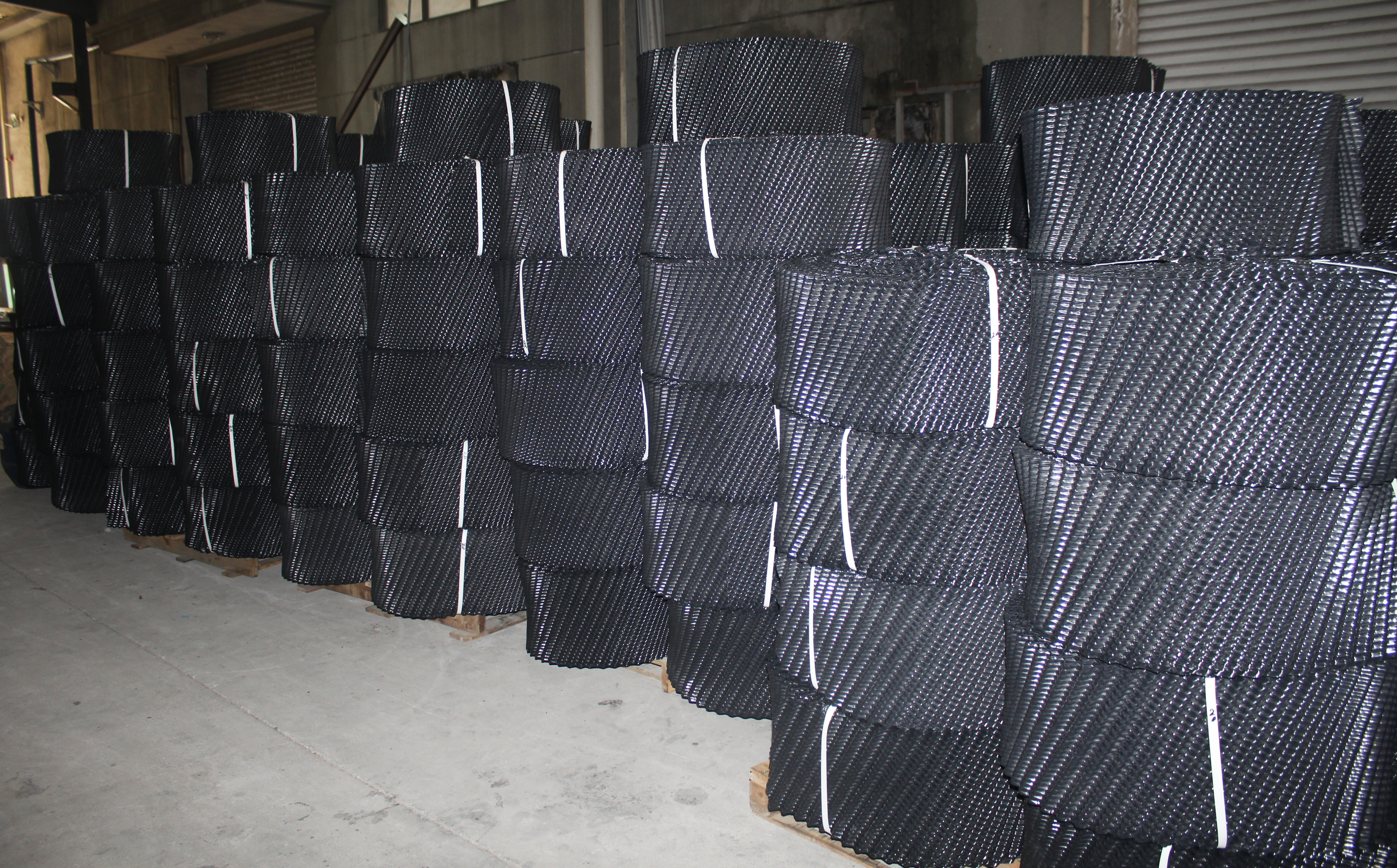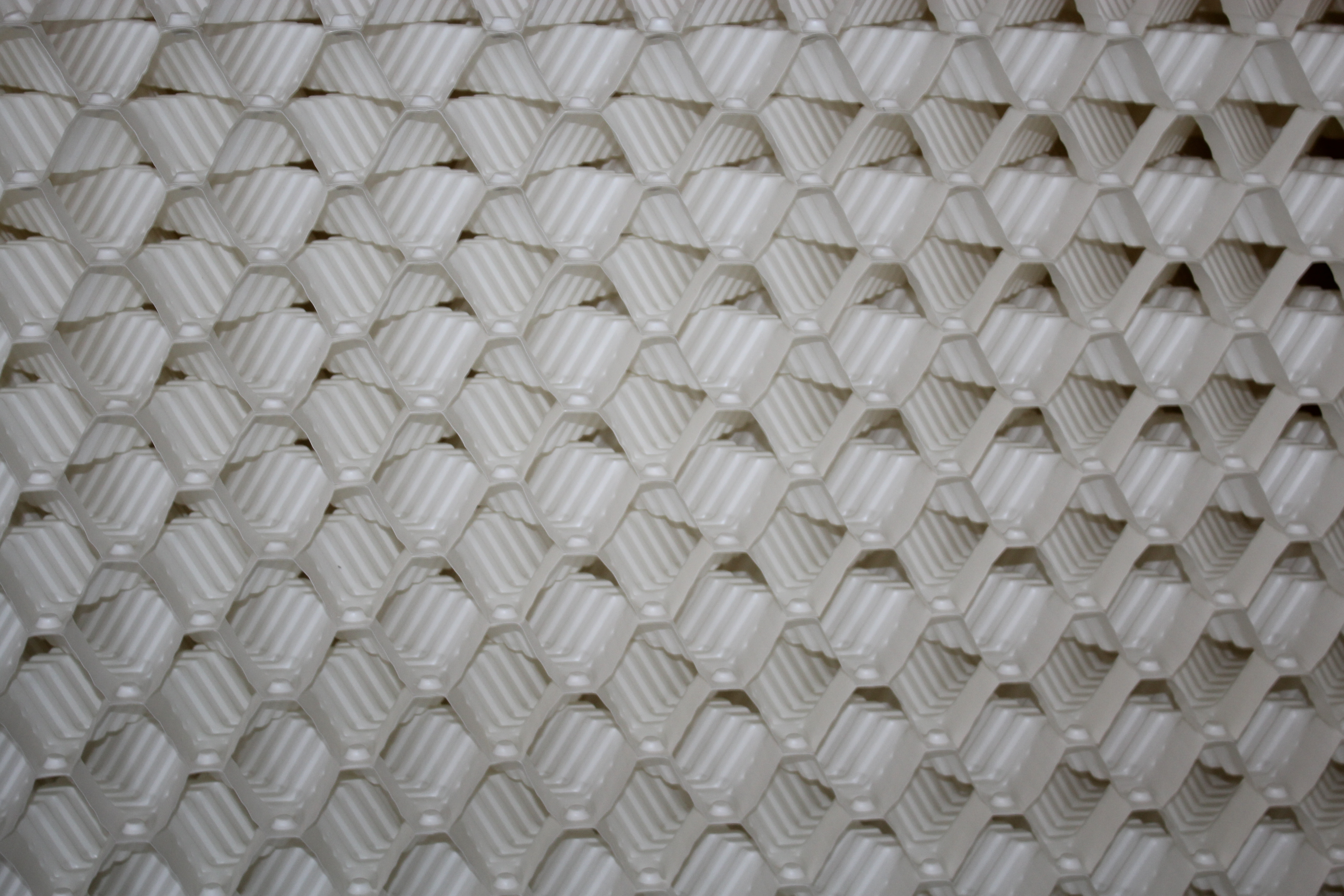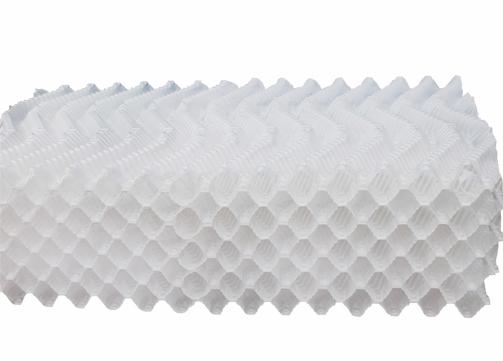
PP fill for cooling tower applications are becoming increasingly important for industrial facilities that need reliable heat transfer, chemical resistance, and long service life. Polypropylene (PP) is widely used to manufacture cooling tower film fill and splash fill because of its useful combination of chemical resistance, mechanical properties, and temperature capability.
For industrial buyers, however, choosing PP cooling tower fill is not simply a matter of selecting a material. The fill design, water quality, operating temperature, tower configuration, dimensions, and thermal requirements all need to be considered.
This practical guide explains what PP cooling tower fill is, where it is used, its benefits and limitations, and what buyers should check before ordering.
What Is PP Fill for a Cooling Tower?
PP cooling tower fill is cooling tower fill media manufactured from polypropylene. The fill is installed inside a cooling tower to increase the contact area between circulating water and air.
Hot water enters the tower and passes through the fill. Air moves through the fill at the same time. The fill spreads water across a large surface area or repeatedly breaks it into droplets. Evaporation then removes heat from the circulating water.
PP can be manufactured into several cooling tower fill designs, including:
The appropriate design depends on the cooling tower and operating conditions.
Why Is Polypropylene Used for Cooling Tower Fill?
Polypropylene has properties that make it useful for demanding cooling tower applications.
Chemical Resistance
PP generally offers good resistance to many chemicals, which can be valuable in industrial environments where cooling water chemistry is more demanding.
Actual chemical compatibility depends on the specific chemical, concentration, temperature, and PP grade.
Temperature Capability
PP can be suitable for applications where operating temperatures are higher than those recommended for some conventional PVC fill products.
Buyers should always verify the manufacturer's maximum continuous operating temperature rather than relying on a general material rating.
Mechanical Strength
Properly designed PP fill can maintain its structure under continuous water and airflow conditions.
Lightweight Construction
PP fill is relatively lightweight, which can simplify handling during cooling tower maintenance and replacement projects.
Types of PP Cooling Tower Fill
PP Film Fill
PP film fill consists of formed sheets that spread water into thin films.
Its main characteristics include:
Large effective surface area
Efficient water-air contact
Compact installation
High heat-transfer potential
Suitable for many counterflow and crossflow designs
However, fine film-fill passages can be vulnerable to fouling when water contains high concentrations of suspended solids, scale, or biological deposits.
PP Splash Fill
PP splash fill uses repeated impact to break falling water into smaller droplets.
Typical designs include:
Grid splash fill
Tube splash fill
Bar splash fill
Modular splash fill
Splash fill can be particularly useful in applications where water cleanliness is difficult to maintain or where larger passages are preferred.
PP Film Fill vs. PP Splash Fill
The choice between PP film fill and PP splash fill depends on the application.
| Factor | PP Film Fill | PP Splash Fill |
| Heat-transfer surface | High | Moderate to high depending on design |
| Water passages | Generally smaller | Generally larger |
| Fouling tolerance | Depends on passage design | Often better for dirty water |
| Typical application | Cleaner industrial/process water | Higher-solids or fouling-prone water |
| Compactness | High | Generally requires more volume |
| Maintenance | Requires good water treatment | Can be more tolerant of contaminants |
Neither type is universally better. The correct choice should be based on actual cooling tower operating conditions.
Applications of PP Fill for Cooling Towers
PP cooling tower fill is used in many industrial and process cooling applications.
Chemical Plants
Chemical processing facilities may require fill materials with suitable resistance to the chemicals present in the circulating water.
Power Generation
Cooling systems in power plants require reliable heat rejection. PP fill may be selected for specific operating temperatures and water chemistry.
Petrochemical and Refining
Refineries and petrochemical facilities often operate large cooling water systems under demanding conditions. Fill selection needs to account for water contamination and process requirements.
Manufacturing
Steel, plastics, automotive, food processing, and other manufacturing facilities use cooling towers for process heat removal.
HVAC and Commercial Cooling
PP fill can also be used in larger HVAC cooling tower systems where its material properties and design characteristics meet the application requirements.
Benefits of PP Fill for Cooling Towers
1. Good Chemical Resistance
PP can provide good resistance to many common chemicals, making it useful for industrial water systems.
2. Suitable for Higher-Temperature Applications
Depending on the specific product and grade, PP can be selected for applications requiring greater temperature capability.
3. Long-Term Performance
When properly selected and operated within recommended conditions, PP fill can provide reliable service over an extended period.
4. Lightweight
PP components are relatively easy to handle during installation and maintenance.
5. Flexible Design Options
PP can be formed into different sheet patterns, splash configurations, thicknesses, and block dimensions.
6. Suitable for Replacement Projects
PP cooling tower fill can be manufactured in custom dimensions, making it useful for retrofit and replacement applications.
How to Choose PP Fill for a Cooling Tower
Industrial buyers should evaluate several factors before purchasing PP fill.
1. Cooling Tower Type
Identify whether the tower is:
Crossflow
Counterflow
Induced draft
Forced draft
Mechanical draft
Natural draft
The fill configuration must match the tower's airflow and water-distribution arrangement.
2. Water Flow Rate
Water flow directly affects fill performance. Provide the supplier with the actual or design circulating-water flow rate.
3. Operating Temperatures
Important data includes:
These values help determine whether the selected PP fill is suitable.
4. Water Quality
Evaluate:
Suspended solids
Hardness
Biological contamination
Oil
Scale
Chemical concentration
If water quality is poor, a larger-passage splash fill may be worth considering.
5. Fill Dimensions
For replacement projects, measure:
Length
Width
Height
Sheet thickness
Corrugation pattern
Block configuration
Support spacing
Photos and drawings of the existing fill can also help the supplier identify the correct replacement.
PP Cooling Tower Fill Replacement
Cooling tower fill can eventually become damaged or fouled.
Common signs that replacement may be required include:
During replacement, inspect the fill supports, spray nozzles, water distribution system, drift eliminators, and air inlet components.
Simply replacing the fill may not restore performance if poor water distribution or another mechanical problem is causing the cooling issue.
PP Fill vs. PVC Fill
Both PP and PVC are common materials for cooling tower fill.
| Property | PP Fill | PVC Fill |
| Chemical resistance | Generally good | Generally good |
| Temperature capability | Often higher, product dependent | Product dependent |
| Weight | Lightweight | Lightweight |
| Common use | Industrial and demanding applications | Broad commercial and industrial use |
| Cost | Can vary by design | Often cost-effective |
| Available designs | Film and splash | Film and splash |
Material selection should be based on the actual operating environment and manufacturer's technical specifications rather than material name alone.
How to Buy PP Cooling Tower Fill
When requesting a quotation from a PP cooling tower fill supplier, provide as much technical information as possible.
Useful information includes:
For large industrial projects, request technical drawings, material specifications, and thermal performance data before placing an order.
FAQ About PP Fill for Cooling Towers
Is PP good for cooling tower fill?
Yes. PP is widely used for cooling tower fill because it offers useful chemical resistance, lightweight construction, and temperature capability. The suitability depends on the specific operating conditions.
Is PP better than PVC for cooling tower fill?
Neither material is universally better. PP may be advantageous for certain temperature or chemical environments, while PVC remains widely used for many cooling tower applications.
Can PP film fill replace PVC film fill?
Potentially, but the replacement should be checked for thermal performance, dimensions, temperature limits, airflow resistance, and water distribution compatibility.
How long does PP cooling tower fill last?
Service life varies according to temperature, water quality, chemical exposure, UV exposure, mechanical stress, cleaning, and operating conditions.
Can PP cooling tower fill be customized?
Yes. Many manufacturers can produce PP fill according to specified dimensions, sheet patterns, block sizes, and cooling tower configurations.
Conclusion
PP fill for cooling tower systems provides an effective option for many industrial and process cooling applications. Polypropylene can offer good chemical resistance, lightweight construction, and suitable temperature performance when the correct grade and fill design are selected.
For industrial buyers, the most important factors are not simply material and price. Tower type, water quality, operating temperature, water flow, fill dimensions, thermal performance, and maintenance requirements should all be evaluated.
Whether you are purchasing PP film fill, PP splash fill, or custom PP cooling tower fill for replacement, providing complete operating information to the supplier can help ensure the selected fill is compatible with your cooling tower and application.
Internal Links for Other CoolingTowerParts
Cooling Tower Fill
Cooling Tower Nozzles
Cooling Tower Drift Eliminators
Cooling Tower Louvers
Cooling Tower Fan Blades
Cooling Tower Motors