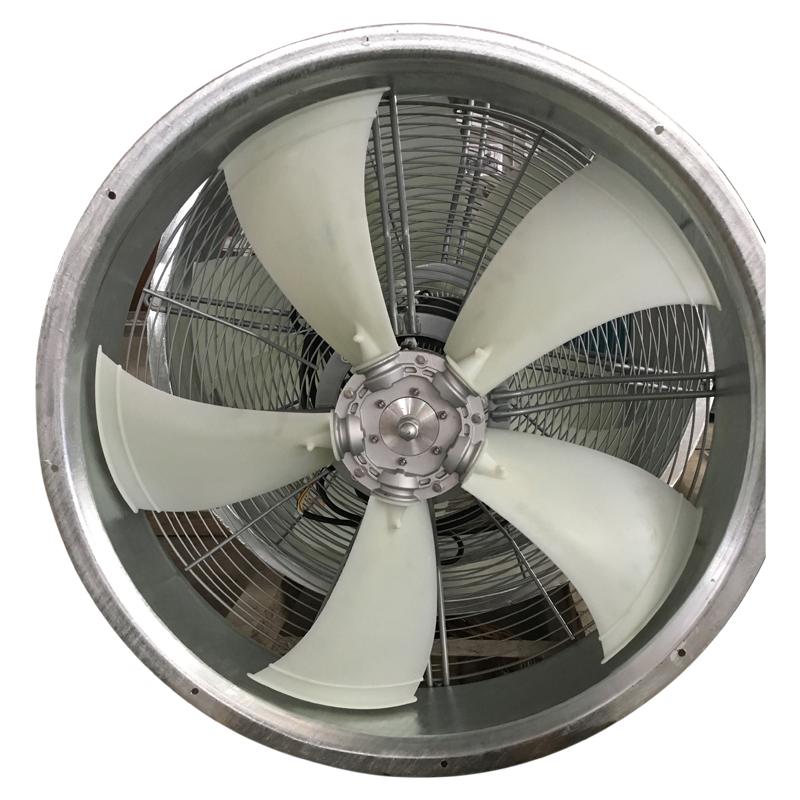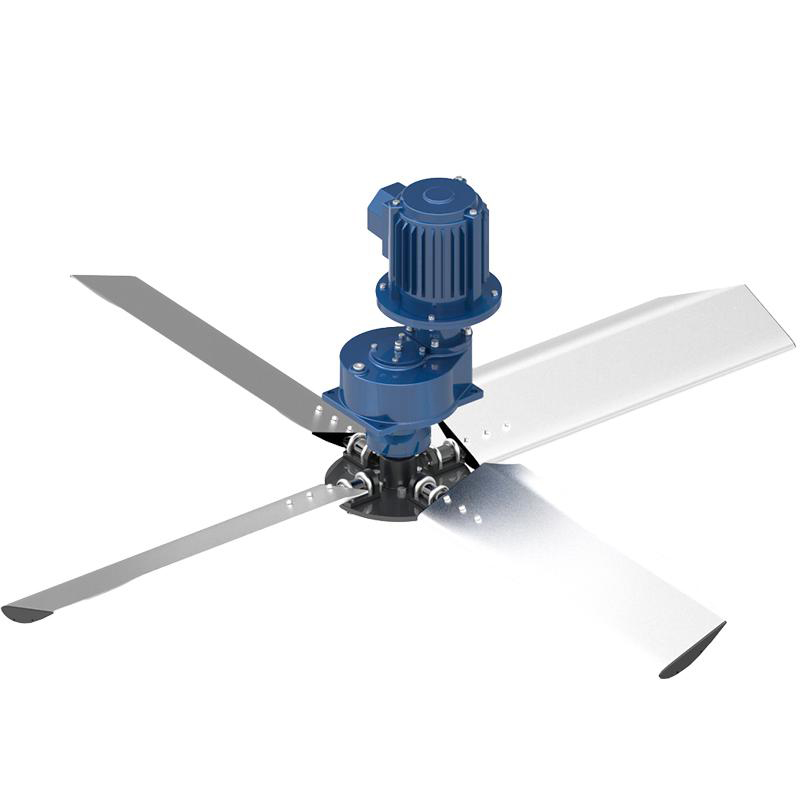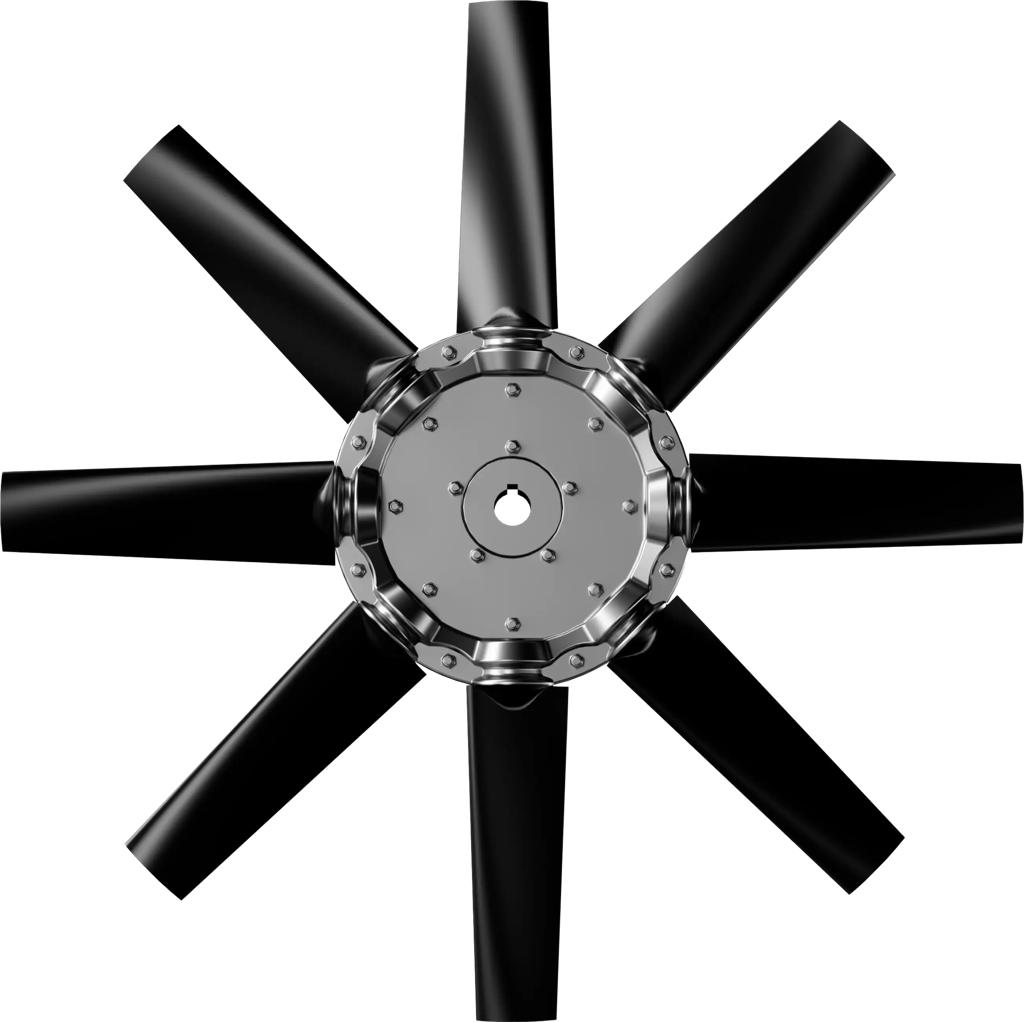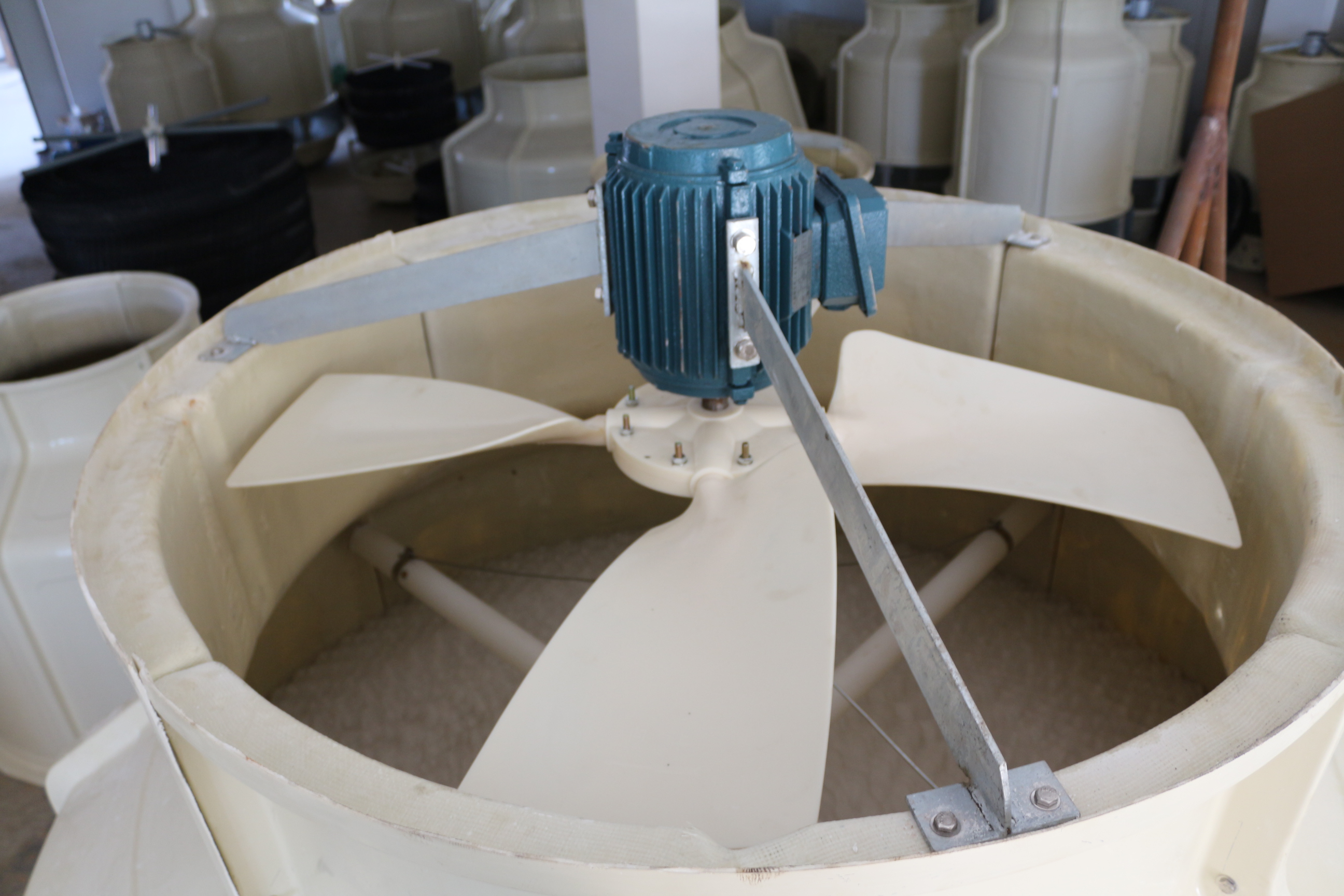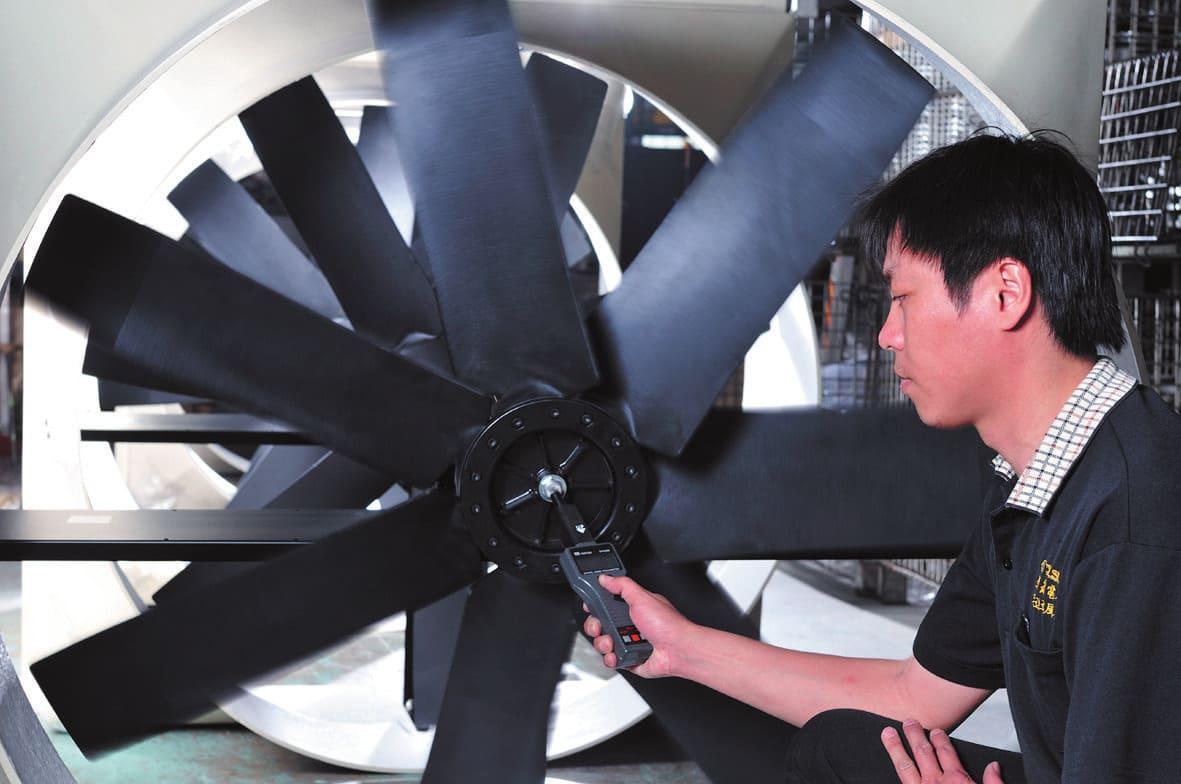
Industrial cooling tower fan performance plays an important role in determining the cooling efficiency, energy consumption, and operating reliability of an industrial cooling tower. A properly selected and maintained fan provides the airflow required for effective heat transfer, helping cooling towers maintain the required water temperature under different operating conditions.
However, cooling tower fan performance depends on more than motor power or fan speed. Factors such as airflow volume, static pressure, blade pitch, fan diameter, rotational speed, aerodynamic design, and environmental conditions all influence overall performance.
This guide explains the key factors affecting industrial cooling tower fan performance and provides practical recommendations for improving efficiency and reducing operating costs.
1. What Is Industrial Cooling Tower Fan Performance?
Industrial cooling tower fan performance refers to the ability of a fan to deliver the required airflow while maintaining acceptable energy consumption, mechanical stability, and operating reliability.
The main performance indicators include:
Airflow volume: The amount of air moved through the cooling tower, usually measured in CFM or m³/h.
Static pressure: The resistance the fan must overcome to move air through the tower.
Fan efficiency: How effectively the fan converts mechanical power into useful airflow.
Power consumption: The electrical energy required to operate the fan.
Rotational speed: The number of revolutions per minute (RPM).
Noise and vibration: Indicators of aerodynamic and mechanical operating conditions.
These parameters work together to determine whether an industrial cooling tower fan operates efficiently.
2. Airflow Volume and Static Pressure
Airflow volume is one of the most important factors affecting cooling tower fan performance.
The fan must move enough air through the fill media to support evaporation and heat transfer. Insufficient airflow can reduce cooling capacity and increase the temperature of circulating water.
Static pressure represents the resistance against airflow inside the cooling tower.
Common sources of airflow resistance include:
Cooling tower fill media
Drift eliminators
Air inlet louvers
Water distribution systems
Fan stack and discharge structures
Blocked or dirty air passages
A suitable fan must deliver the required airflow at the actual system operating pressure, rather than simply achieving a high free-air airflow rating.
3. Fan Diameter and Blade Design
Fan diameter and blade geometry directly influence airflow capacity and energy efficiency.
3.1 Fan Diameter
A larger fan diameter generally provides a larger swept area and can move more air at an appropriate operating speed.
However, fan diameter must match the cooling tower's structural dimensions, fan stack, and clearance requirements.
3.2 Blade Pitch Angle
Blade pitch determines the angle at which fan blades interact with the air.
An incorrect blade pitch can cause:
Adjustable-pitch industrial cooling tower fans allow operators to optimize airflow according to actual operating requirements.
3.3 Blade Aerodynamic Profile
The blade profile affects airflow generation, pressure development, and aerodynamic losses.
Modern FRP cooling tower fan blades are designed to combine lightweight construction, mechanical strength, and corrosion resistance.
4. Fan Rotational Speed and Motor Power
Fan rotational speed is another important performance parameter.
For geometrically similar fans operating under comparable conditions, the fan affinity laws provide useful relationships:
| Parameter | Relationship to Speed |
| Airflow | Proportional to RPM |
| Static pressure | Proportional to RPM² |
| Power consumption | Proportional to RPM³ |
For example, increasing fan speed by 10% theoretically increases airflow by approximately 10%, while power consumption increases by approximately 33.1%.
These relationships explain why even small increases in fan speed can significantly affect electricity costs.
Motor power must be sufficient to drive the fan under actual operating conditions. Oversized or undersized motors can create unnecessary costs or operating problems.
5. Fan Efficiency and Energy Consumption
Industrial cooling tower fans often operate continuously, making energy efficiency an important purchasing and operating consideration.
Several factors influence fan efficiency:
Aerodynamic blade design
Correct blade pitch
Appropriate rotational speed
Efficient motor selection
Proper gearbox or belt drive configuration
Low mechanical friction
Suitable fan stack design
Variable Frequency Drives (VFDs) can help reduce energy consumption by adjusting fan speed according to cooling demand.
Instead of operating continuously at full speed, the fan can run at a lower speed when ambient conditions or process loads require less cooling.
6. Fan Materials and Environmental Conditions
Industrial cooling tower fans operate in environments characterized by moisture, temperature changes, and potential chemical exposure.
Material selection affects fan durability and long-term performance.
| Material | Main Advantages | Typical Applications |
| FRP | Lightweight, corrosion-resistant, strong | Large industrial cooling towers |
| Aluminum alloy | Lightweight, good mechanical strength | Industrial axial fans |
| Stainless steel | High mechanical strength and corrosion resistance | Selected demanding environments |
| ABS plastic | Lightweight and corrosion-resistant | Certain smaller cooling towers |
FRP fan blades are particularly popular because they offer a favorable balance of weight, corrosion resistance, and mechanical performance.
Operating temperature, chemical exposure, UV radiation, and mechanical loading should all be considered during material selection.
7. Fan Stack Design and Airflow Distribution
The cooling tower fan stack plays an important role in overall fan performance.
A properly designed fan stack guides airflow toward the discharge outlet and helps minimize turbulence and unnecessary airflow losses.
Important design considerations include:
Poor fan stack design can reduce airflow efficiency, increase turbulence, and contribute to hot-air recirculation.
FRP cooling tower fan stacks are commonly selected for industrial applications because they resist corrosion and have relatively low structural weight.
8. Common Problems That Reduce Cooling Tower Fan Performance
Several mechanical and operating problems can reduce fan efficiency.
| Problem | Possible Cause | Recommended Solution |
| Low airflow | Incorrect blade pitch or blocked fill | Adjust pitch and clean airflow passages |
| High power consumption | Excessive blade loading | Check pitch and motor current |
| Excessive vibration | Fan imbalance or loose connections | Inspect and balance fan assembly |
| Unusual noise | Bearing damage or blade interference | Inspect bearings and blade clearance |
| Uneven airflow | Poor fan alignment or airflow obstruction | Check installation and air distribution |
| Reduced cooling capacity | Fan deterioration or fill blockage | Inspect fan and fill media |
Identifying these problems early helps prevent unexpected shutdowns and expensive repairs.
9. How to Improve Industrial Cooling Tower Fan Performance
Industrial operators can improve fan performance through proper design, operation, and maintenance.
9.1 Optimize Fan Blade Pitch
Measure and adjust blade pitch according to manufacturer specifications. Ensure all blades have consistent settings.
9.2 Maintain Proper Fan Balance
Regularly inspect blades and hubs for damage, deposits, and loosened connections. Correct imbalance to minimize vibration.
9.3 Inspect the Drive System
Check motor alignment, gearbox condition, belts, pulleys, bearings, and lubrication requirements.
9.4 Clean Cooling Tower Components
Remove dirt, scale, and debris from fill media, louvers, drift eliminators, and air passages.
9.5 Monitor Motor Operating Conditions
Record motor current, temperature, vibration, and fan speed to identify abnormal operating conditions.
9.6 Upgrade to High-Efficiency Fan Blades
Replacing outdated or damaged blades with properly engineered FRP cooling tower fan blades may improve airflow performance and reduce energy consumption.
10. How to Select a High-Performance Industrial Cooling Tower Fan
When purchasing a new or replacement industrial cooling tower fan, buyers should evaluate the complete operating requirements.
Important selection criteria include:
Required airflow volume and static pressure.
Fan diameter and rotational speed.
Blade number, pitch, and aerodynamic profile.
Motor power and efficiency.
Fan material and corrosion resistance.
Drive system configuration.
Fan stack dimensions and installation clearance.
Vibration and balancing requirements.
Compatibility with the existing cooling tower.
For replacement projects, providing original fan drawings, equipment models, motor specifications, and operating parameters helps manufacturers recommend a suitable replacement.
CoolingTowerPart.com provides industrial cooling tower replacement components, including FRP fan blades and customized fan solutions. Buyers can submit technical drawings and operating requirements to discuss suitable products for industrial cooling tower maintenance and retrofit projects.
11. Conclusion
Industrial cooling tower fan performance depends on the interaction of airflow volume, static pressure, fan diameter, blade pitch, rotational speed, motor efficiency, materials, and fan stack design.
Optimizing these factors helps maintain the required cooling capacity while reducing electricity consumption and mechanical problems.
For industrial cooling tower operators, regular inspections and proper fan selection are essential. When upgrading or replacing existing equipment, choosing an appropriately engineered cooling tower fan can improve long-term operating efficiency and reliability.
Frequently Asked Questions (FAQ)
1. What factors affect industrial cooling tower fan performance?
The main factors include airflow volume, static pressure, fan diameter, blade pitch, rotational speed, motor power, aerodynamic design, and environmental conditions.
2. How can I improve cooling tower fan efficiency?
Optimize blade pitch, maintain correct fan alignment, clean airflow passages, inspect the drive system, and consider VFD speed control.
3. What is the ideal RPM for an industrial cooling tower fan?
There is no universal ideal RPM. The correct speed depends on fan diameter, aerodynamic design, required airflow, static pressure, and motor specifications.
4. Do FRP cooling tower fan blades improve performance?
FRP blades can improve overall fan design by reducing rotating weight and providing corrosion resistance. Actual aerodynamic performance depends on blade geometry and operating conditions.
5. How does fan speed affect power consumption?
Under comparable operating conditions, fan power consumption is approximately proportional to the cube of rotational speed. Increasing speed can therefore significantly increase energy consumption.
6. How often should cooling tower fan performance be checked?
Performance should be monitored regularly according to operating conditions and manufacturer recommendations. Inspections should include airflow, vibration, motor current, blade condition, and drive system alignment.
Recommended internal links for CoolingTowerPart.com: