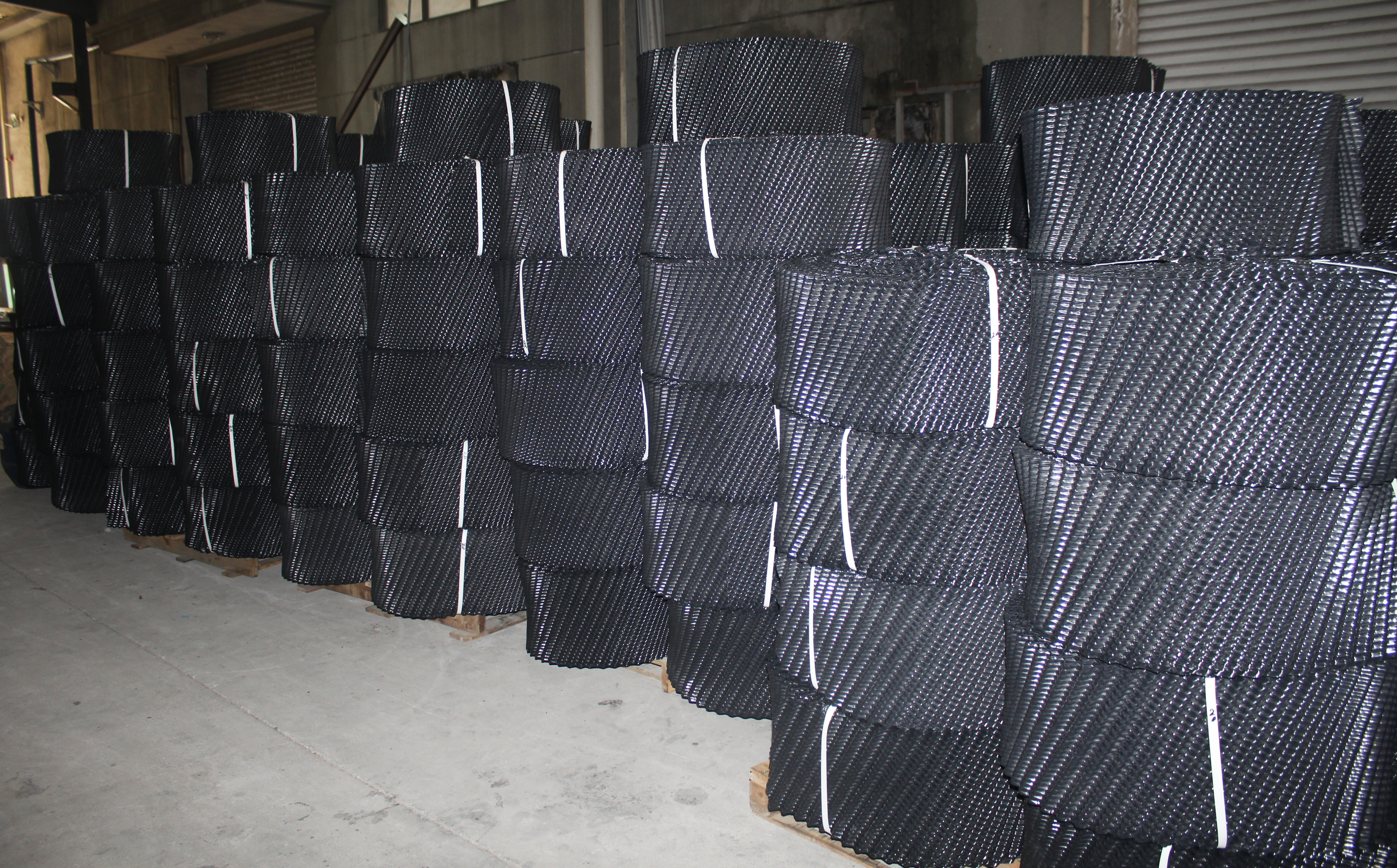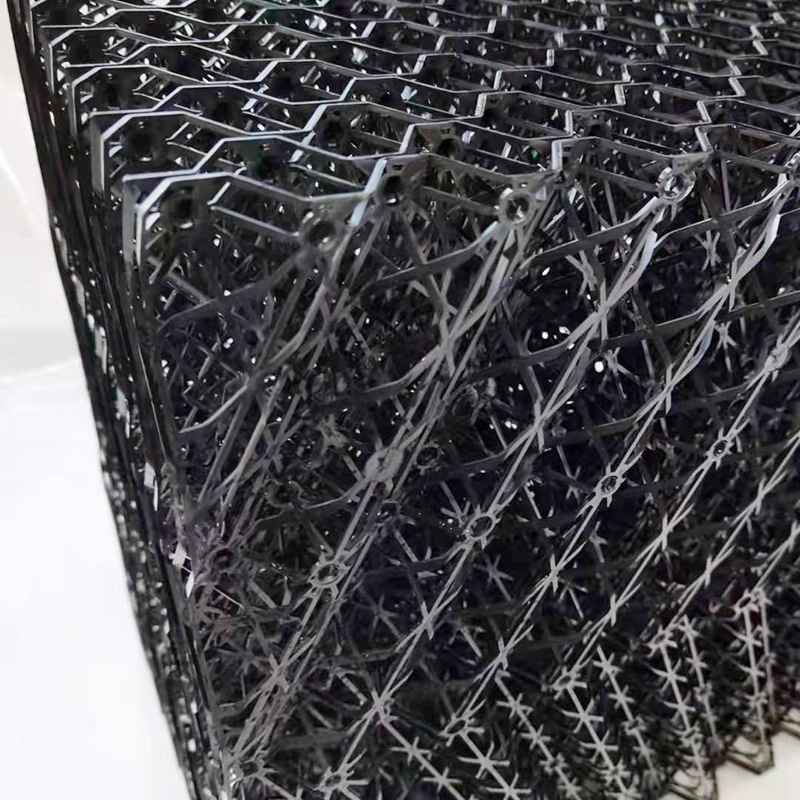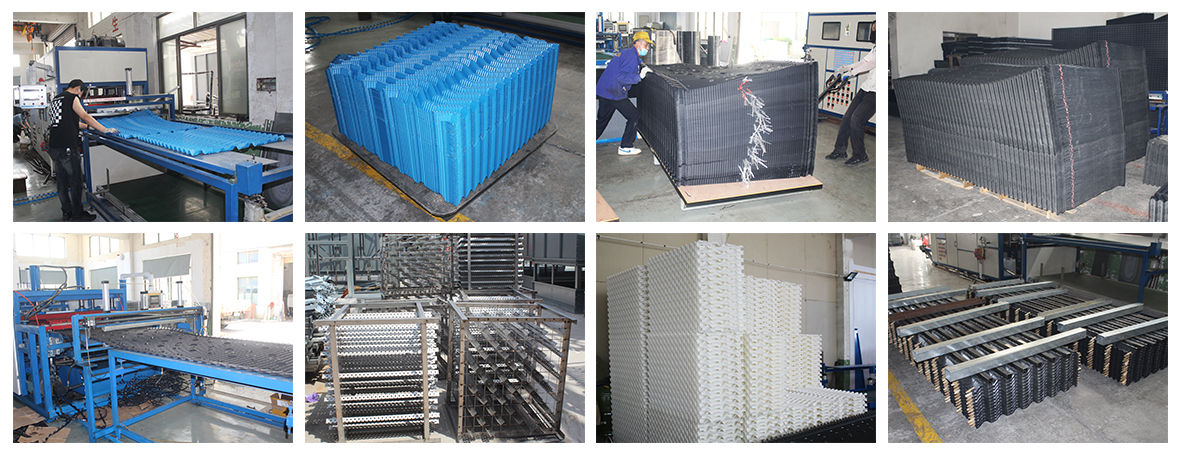
Cooling tower fill is one of the most important components inside an industrial or commercial cooling tower. It provides the surface area needed for efficient heat and mass transfer between water and air. Over time, however, cooling tower fill can become clogged, damaged, brittle, or deformed. When that happens, replacing the fill can restore cooling performance and improve tower efficiency.
But choosing fill for cooling tower replacement is not simply a matter of ordering the same quantity of plastic sheets or fill blocks. Buyers need to consider fill type, material, dimensions, water quality, operating temperature, airflow, and compatibility with the existing tower.
This guide explains what buyers should know before purchasing cooling tower replacement fill.
What Is Cooling Tower Fill?
Cooling tower fill, also called cooling tower packing or fill media, increases the contact area between circulating water and air.
As hot water flows through the fill, it spreads across the fill surface. Air moving through the tower removes heat through evaporation and sensible heat transfer. The greater the effective contact area, the more opportunity the water has to release heat.
Common cooling tower fill types include:
The correct choice depends on the cooling tower design and operating conditions.
When Should Cooling Tower Fill Be Replaced?
Cooling tower fill does not necessarily need replacement simply because it has been in service for a certain number of years. Its actual condition and operating environment are more important.
Common signs that cooling tower fill replacement may be necessary include:
1. Excessive Scaling
Mineral deposits can build up on fill surfaces and reduce the effective contact area between water and air.
2. Biological Fouling
Algae, bacteria, sludge, and other deposits can block fill passages and restrict airflow or water distribution.
3. Physical Damage
Fill sheets can crack, collapse, deform, or break because of mechanical impact, high temperatures, chemical exposure, or aging.
4. Increased Pressure Drop
Blocked or damaged fill can increase airflow resistance, potentially affecting fan performance and tower capacity.
5. Reduced Cooling Performance
If the tower can no longer achieve its required cold-water temperature or approach, the fill should be inspected.
6. Fill Material Becoming Brittle
Long-term UV exposure, chemicals, temperature, and aging can reduce the mechanical strength of plastic fill.
Film Fill vs. Splash Fill for Replacement
One of the first decisions buyers need to make is whether to use film fill or splash fill.
| Feature | Film Fill | Splash Fill |
| Heat-transfer method | Thin water film | Repeated water breakup |
| Surface area | High | Moderate to high |
| Typical material | PVC, PP | PP, PVC and other plastics |
| Water quality tolerance | Usually lower | Usually higher |
| Fouling resistance | Depends on design | Often better for dirty water |
| Typical application | Cleaner circulating water | Industrial or fouling-prone systems |
Film Fill
Film fill creates a thin layer of water over closely spaced surfaces. It provides high effective surface area and is widely used in counterflow and crossflow cooling towers.
PVC film fill is common in many applications because of its balance of cost, performance, and chemical resistance.
Splash Fill
Splash fill breaks falling water into droplets as it passes over or through the fill. It is often selected for applications where suspended solids, biological growth, or fouling could make narrow film-fill passages difficult to maintain.
The replacement fill should match the tower's design rather than being selected solely according to price.
PVC or PP: Which Cooling Tower Fill Material?
PVC cooling tower fill is widely used in standard water-cooling applications. It offers good formability, heat-transfer characteristics, and corrosion resistance.
PP cooling tower fill is often considered when higher temperature resistance or specific chemical resistance is required.
The actual material selection should be based on:
Operating water temperature
Maximum temperature excursions
Water chemistry
Chemical treatment program
UV exposure
Mechanical loading
Expected service environment
Always check the supplier's temperature and chemical-resistance specifications before ordering replacement fill.
Measure the Existing Fill Before Ordering
Correct dimensions are critical to a successful cooling tower fill replacement.
Buyers should record:
For replacement projects, photographs and measurements of the existing installation can help a supplier identify the appropriate configuration.
A small dimensional difference can affect installation, water distribution, airflow, and tower performance.
Check Cooling Tower Fill Compatibility
Replacement fill should be compatible with the existing cooling tower structure and distribution system.
Before purchasing, check:
Tower Type
Determine whether the tower is:
Crossflow
Counterflow
Induced draft
Forced draft
Mechanical draft
Natural draft
Water Distribution
Review the existing spray nozzles, distribution basin, headers, and water loading.
Fill Support
Make sure the new fill is compatible with the existing support beams, grids, and retaining structures.
Airflow
The fill configuration must work with the tower's existing airflow path. Changing fill geometry can affect pressure drop and fan requirements.
Cooling Tower Fill Replacement for Different Water Quality
Water quality is one of the most important factors in fill selection.
For relatively clean and well-treated water, high-efficiency film fill can provide strong heat-transfer performance.
For water containing significant suspended solids or biological contamination, a more open fill design may be preferable.
Industrial buyers should evaluate:
Total suspended solids
Hardness
Silica
Biological activity
Oil contamination
Chemical concentration
Water temperature
Cleaning frequency
Choosing a high-performance fill without considering water quality can lead to frequent blockage and maintenance problems.
How Much Cooling Tower Fill Do You Need?
Replacement quantity is normally determined by the required fill volume rather than simply the tower's nominal tonnage.
A basic calculation is:
Fill Volume = Length × Width × Height
For irregular installations, the actual geometry of the fill area should be measured.
Buyers should also consider whether the project involves:
A cooling tower fill supplier can use the tower dimensions and operating data to help determine the required quantity.
Key Specifications to Request From a Supplier
When requesting a quotation for cooling tower replacement fill, provide as much technical information as possible.
A useful RFQ should include:
Cooling tower manufacturer
Tower model
Tower type
Existing fill dimensions
Fill material
Fill type
Required quantity
Hot-water temperature
Cold-water temperature
Water flow rate
Airflow information, if available
Water quality
Operating environment
Photos of existing fill
If the original fill is unavailable, these details give the supplier a better basis for selecting a replacement.
Should You Choose OEM or Compatible Replacement Fill?
Cooling tower owners often have two options: purchasing original manufacturer fill or sourcing compatible aftermarket replacement fill.
Compatible replacement fill can be attractive when buyers want:
However, compatibility should be verified using technical specifications rather than relying only on a brand or model name.
For a retrofit project, compare the replacement fill's dimensions, material, geometry, pressure drop, water loading, and thermal performance with the existing installation.
What Affects Cooling Tower Fill Replacement Cost?
The price of cooling tower fill depends on several factors.
Material
PVC and PP have different material costs and operating characteristics.
Fill Type
Film fill, splash fill, and specialized high-temperature fill have different manufacturing requirements.
Size and Volume
Large fill blocks require more material and may have higher transportation costs.
Geometry
Complex flute patterns and specialized designs can affect manufacturing costs.
Quantity
Bulk orders may reduce the unit price.
Packaging and Shipping
Because cooling tower fill is bulky, freight can represent a significant portion of the total project cost.
For international projects, buyers should compare the total delivered cost, not only the factory price.
How to Install Replacement Cooling Tower Fill
Before installation, remove damaged or heavily fouled fill and inspect the supporting structure.
A typical replacement process includes:
Shut down and isolate the cooling tower.
Drain or secure the water system as required.
Remove damaged fill.
Clean the fill support structure.
Inspect beams, grids, and retaining components.
Check the water distribution system.
Install new fill blocks or sheets.
Verify alignment and spacing.
Check water distribution.
Restart the tower and monitor operating performance.
Installation should follow the fill manufacturer's recommendations and the tower's engineering requirements.
How to Make Replacement Fill Last Longer
A good replacement fill should be supported by an appropriate maintenance program.
Important practices include:
Maintain proper water treatment.
Control scale formation.
Monitor biological growth.
Remove debris from the tower.
Inspect fill periodically.
Clean fouled areas using suitable methods.
Monitor water temperatures.
Check spray nozzles for blockage.
Inspect fill supports.
Avoid mechanical damage during maintenance.
Good water treatment and regular inspection can significantly reduce problems associated with fouling and blockage.
Cooling Tower Fill Replacement Buyer Checklist
Before placing an order, confirm the following:
✓ Film or splash fill selected
✓ PVC or PP material confirmed
✓ Fill dimensions verified
✓ Flute or splash geometry confirmed
✓ Tower type identified
✓ Water quality reviewed
✓ Operating temperature checked
✓ Fill support dimensions measured
✓ Required quantity calculated
✓ Supplier compatibility confirmed
✓ Shipping dimensions and costs checked
✓ Installation requirements reviewed
This checklist can help reduce ordering errors and unexpected retrofit work.
Why Work With a Cooling Tower Fill Supplier?
An experienced cooling tower fill supplier can provide more than plastic fill media. For replacement projects, technical support may include dimensional confirmation, material selection, fill configuration, quantity calculation, and replacement recommendations.
CoolingTowerPart.com supplies cooling tower components and replacement parts for industrial and commercial applications, including PVC cooling tower fill, PP fill, film fill, splash fill, and other cooling tower accessories.
For buyers replacing aging or damaged fill, providing the tower model, fill dimensions, operating conditions, and photos can make the quotation process faster and more accurate.
Frequently Asked Questions
What is the best fill for cooling tower replacement?
There is no single fill that suits every tower. Film fill is commonly used where high surface area and relatively clean water are available, while splash fill can be suitable for applications with greater fouling concerns.
How often should cooling tower fill be replaced?
Replacement intervals vary according to water quality, operating temperature, chemical exposure, maintenance, and physical condition. Inspection results are more useful than a fixed replacement schedule.
Can PVC cooling tower fill be replaced with PP fill?
Potentially, but the application must be checked first. Material temperature limits, chemical compatibility, fill geometry, and tower performance requirements should all be reviewed.
Can I replace only part of the cooling tower fill?
Yes, partial replacement may be possible when damage is localized. However, the existing and new fill should be compatible, and the overall installation should maintain proper water and airflow distribution.
What information should I send when requesting a quote?
Send the tower manufacturer and model, existing fill dimensions, material and type if known, quantity, operating temperatures, water flow information, water quality, and clear photos of the existing fill.
Conclusion
Selecting fill for cooling tower replacement requires more than matching a product name. Buyers should evaluate fill type, material, dimensions, water quality, operating temperature, airflow, and tower compatibility before purchasing.
For cleaner water applications, film fill can provide high heat-transfer surface area. For applications where fouling and suspended solids are significant concerns, splash fill may offer a more suitable configuration.
The right replacement fill can help restore cooling performance, maintain proper airflow and water distribution, and reduce long-term maintenance problems. Before ordering, measure the existing fill carefully and provide complete operating information to your supplier.
Internal Links for Other CoolingTowerParts
Cooling Tower Fill
Cooling Tower Nozzles
Cooling Tower Drift Eliminators
Cooling Tower Louvers
Cooling Tower Fan Blades
Cooling Tower Motors