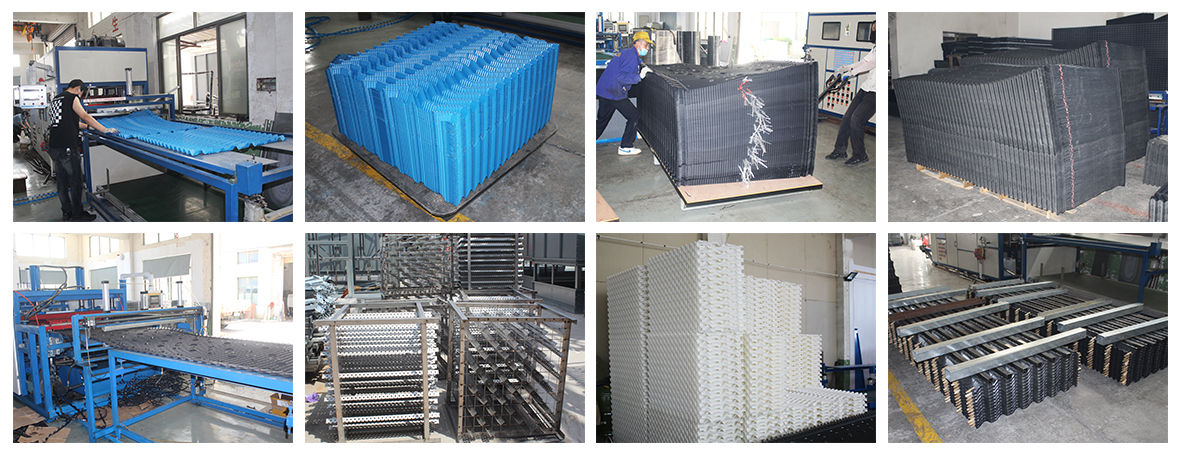
Cooling tower fill media plays a critical role in cooling tower performance. It increases the contact area between hot circulating water and air, allowing heat to transfer more efficiently before the cooled water returns to the process.
The three main types are splash fill, film fill, and hybrid cooling tower fill. Each design has different characteristics, advantages, and applications. Choosing the right cooling tower fill depends on water quality, cooling duty, tower design, maintenance requirements, and operating conditions.
This guide explains the differences between splash, film, and hybrid fill media and provides practical information for cooling tower fill replacement and retrofit projects.
What Is Cooling Tower Fill Media?
Cooling tower fill media is the internal material installed inside a cooling tower to improve heat and mass transfer.
Without fill, water would have relatively limited contact with the air flowing through the tower. Fill media distributes water over a larger surface area and increases the time available for evaporation and heat transfer.
Common cooling tower fill materials include:
PVC
PP (polypropylene)
PE
Wood
Composite materials
Modern industrial cooling towers commonly use PVC or PP cooling tower fill because these plastics offer good corrosion resistance and relatively low weight.
How Does Cooling Tower Fill Work?
Hot water enters the cooling tower through the distribution system and flows downward through the fill. At the same time, air moves through the fill either upward or horizontally, depending on the tower configuration.
The fill creates a large water-air contact area.
As water passes through the fill, a small portion evaporates. This evaporation removes heat from the circulating water. The cooled water collects in the cold-water basin and is then returned to the process.
The effectiveness of this process depends on several factors:
Fill surface area
Water distribution
Airflow
Water loading
Fill depth
Ambient conditions
Water quality
Fill cleanliness
This is why selecting the correct cooling tower fill media is important for maintaining thermal performance.
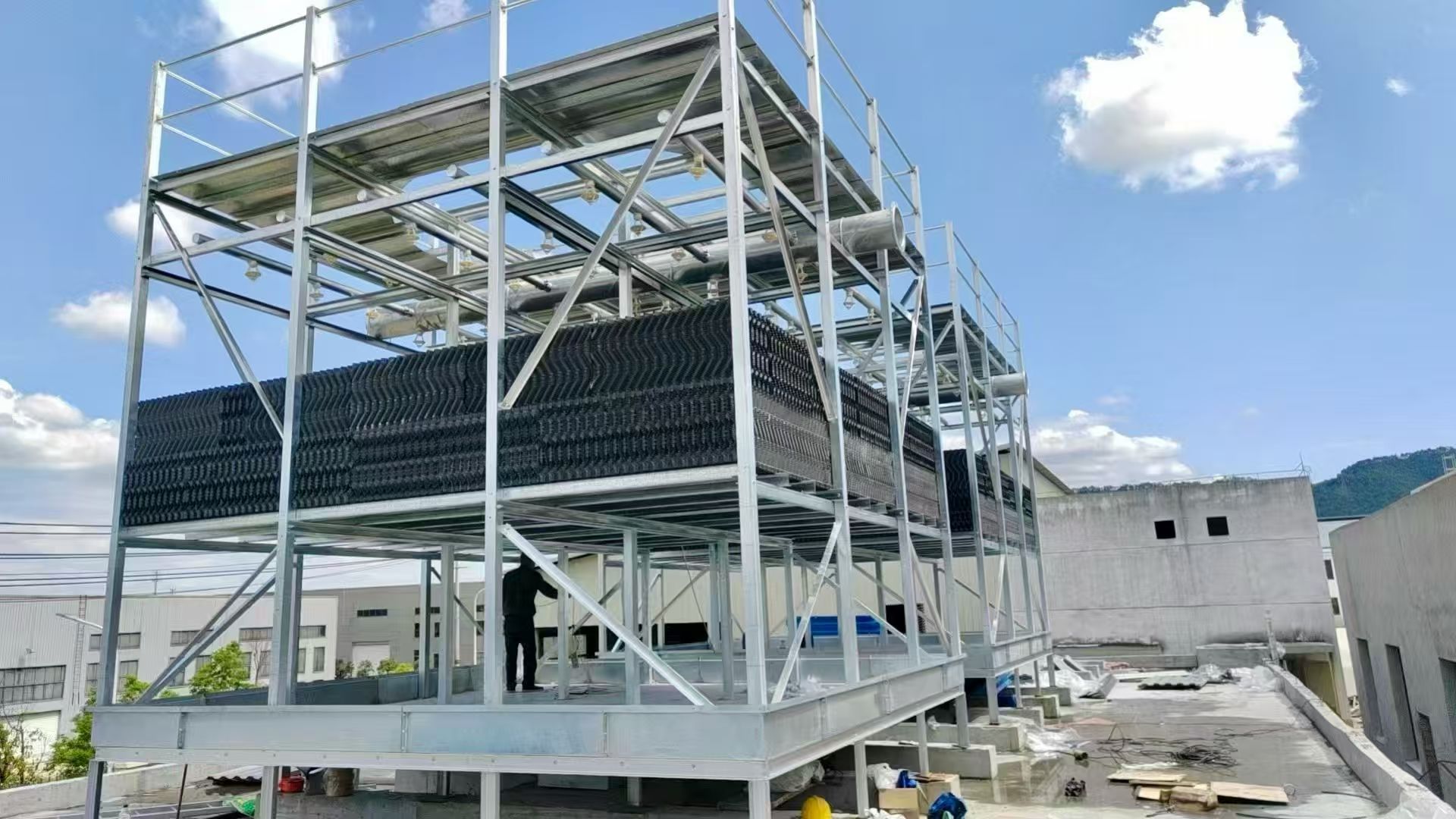
Splash Fill Cooling Tower Media
Splash fill works by repeatedly breaking falling water into smaller droplets.
Instead of creating a continuous film of water, splash bars or grids cause the water to splash and redistribute as it moves downward through the tower.
Common splash fill designs include:
Splash bars
Grid fill
Cellular splash fill
PP splash fill
PVC splash fill
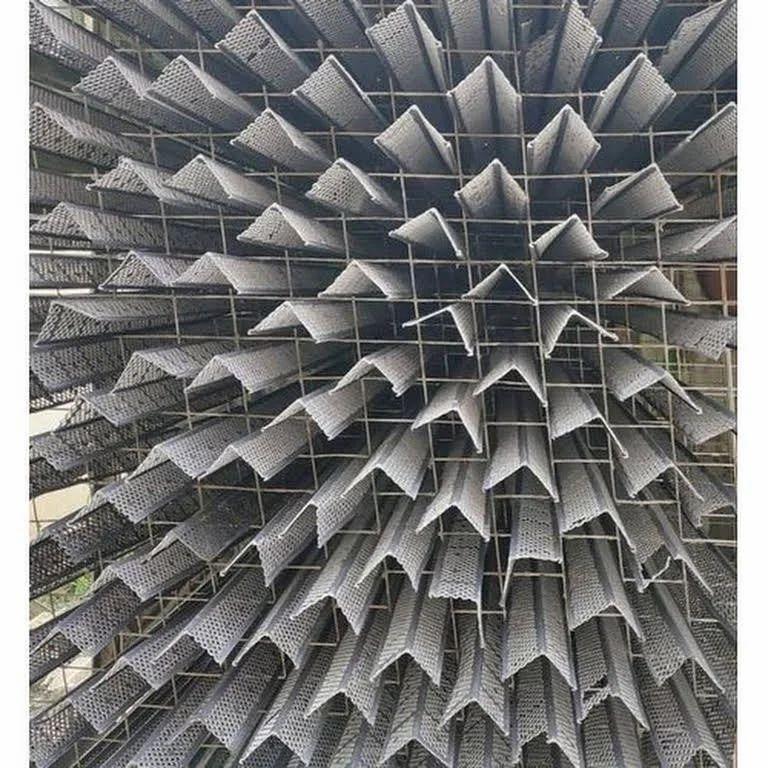
Advantages of Splash Fill
Splash fill is particularly useful when circulating water contains suspended solids or has a higher tendency to foul.
Its open structure can provide better resistance to plugging than many closely spaced film-fill designs.
Key benefits include:
Good resistance to fouling
Open passages for water and air
Easy inspection and cleaning
Suitable for poor-quality water
Durable plastic options
Useful for industrial applications
For this reason, splash fill cooling towers are frequently considered for applications where water cleanliness cannot always be maintained.
Splash Fill Applications
Splash fill can be used in:
Industrial cooling towers
Wastewater cooling systems
Steel plants
Power generation
Chemical plants
Process cooling
Towers with high suspended solids
When water contains significant debris or biological growth, an open splash-fill design can be easier to maintain.
Film Fill Cooling Tower Media
Film fill uses specially shaped sheets to spread water into a thin film over a large surface area.
The sheets typically contain corrugations, ridges, or other surface patterns. These features increase turbulence and extend the water flow path while maintaining extensive contact between water and air.
PVC film fill is one of the most widely used cooling tower fill products.
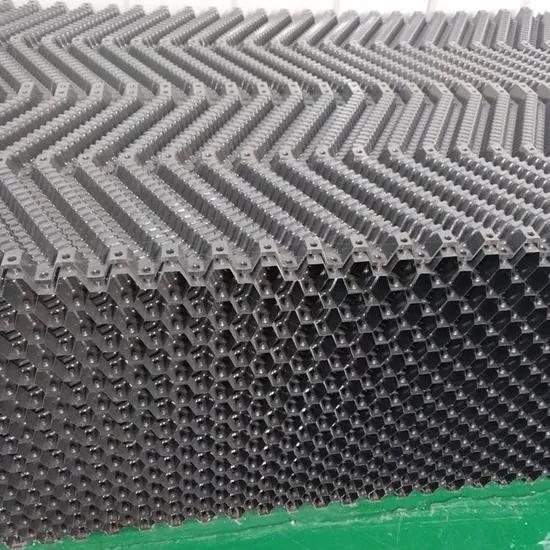
Advantages of Film Fill
Film fill generally provides a high effective surface area within a relatively compact volume.
Its advantages can include:
Film fill is widely used in HVAC and industrial cooling tower applications where circulating water is adequately treated.
Film Fill Applications
Film fill is commonly used in:
For clean or well-treated water systems, film fill can provide an effective combination of cooling performance and space efficiency.
Hybrid Cooling Tower Fill
Hybrid cooling tower fill combines characteristics of splash and film fill.
The objective is to provide a balance between thermal performance and resistance to fouling.
Depending on the design, hybrid fill can incorporate different surface structures or zones that promote both water breakup and film formation.
Hybrid fill is useful when a cooling tower needs more thermal surface area than conventional splash fill can provide but operates under water conditions where a highly compact film-fill structure may be difficult to maintain.
Benefits of Hybrid Fill
Potential benefits include:
Balanced thermal performance
Improved fouling tolerance
Better water distribution
Flexible tower design
Suitable for challenging industrial applications
Retrofit possibilities
The exact performance of hybrid fill depends heavily on its geometry, material, airflow, water loading, and tower design.
Splash Fill vs Film Fill vs Hybrid Fill
The following comparison provides a practical overview:
| Feature | Splash Fill | Film Fill | Hybrid Fill |
| Heat transfer | Good | High | Good to high |
| Fouling resistance | High | Moderate | Moderate to high |
| Water quality tolerance | High | Lower | Moderate to high |
| Surface area | Moderate | High | Moderate to high |
| Cleaning | Relatively easy | Requires care | Design dependent |
| Typical material | PP/PVC | PVC/PP | PVC/PP |
| Common application | Industrial/dirty water | HVAC/clean water | Challenging process systems |
These are general characteristics. Actual cooling tower performance should be evaluated using the manufacturer's thermal and hydraulic data.
How to Choose Cooling Tower Fill Media
Choosing between splash, film, and hybrid fill requires more than comparing thermal efficiency.
1. Check Water Quality
Water quality is one of the most important considerations.
If the system has high suspended solids, biological contamination, or a history of fill blockage, an open splash design may be worth considering.
For clean, well-treated water, film fill may be appropriate.
2. Consider Cooling Requirements
Review the required:
The selected fill must match the tower's thermal design.
3. Evaluate Fouling Risk
A fill that performs well under laboratory conditions may not deliver the same results if its passages become blocked.
Consider the site's actual operating conditions rather than selecting fill based solely on nominal surface area.
4. Check Material Compatibility
PVC and PP are common choices, but the correct material depends on operating temperature and water chemistry.
Always verify the fill manufacturer's recommended operating range.
5. Measure the Existing Fill
For a cooling tower fill replacement, measure the existing fill carefully.
Important dimensions include:
The replacement fill should also be compatible with the existing tower's water distribution and airflow configuration.
Cooling Tower Fill Replacement
Cooling tower fill gradually becomes damaged or contaminated due to scaling, fouling, biological growth, high temperatures, chemical exposure, or mechanical damage.
Typical signs that fill replacement may be required include:
Reduced cooling capacity
Increased water temperature
Uneven water distribution
Blocked fill passages
Broken or collapsed sheets
Excessive scaling
Biological fouling
Increased pressure drop
Before replacing the fill, inspect the complete cooling system. Problems with nozzles, water distribution, airflow, drift eliminators, fans, or water treatment can also reduce tower performance.
PVC and PP Cooling Tower Fill
PVC cooling tower fill is widely used because it combines good rigidity, chemical resistance, and cost efficiency.
PP cooling tower fill can be advantageous in applications requiring higher temperature resistance or specific chemical compatibility.
The correct material should be selected according to the actual operating environment rather than simply choosing the lowest-cost option.
Cooling Tower Fill Maintenance
Proper maintenance can extend fill service life.
Recommended practices include:
Inspect fill regularly.
Monitor water quality.
Maintain effective water treatment.
Check spray nozzles for blockage.
Remove excessive scale and biological growth.
Inspect fill supports.
Check for damaged or collapsed sections.
Clean the fill using a method recommended for the specific material.
Aggressive cleaning methods can damage PVC or PP sheets, so cleaning procedures should be selected carefully.
Frequently Asked Questions
What is the difference between splash fill and film fill?
Splash fill breaks water into droplets as it moves through the tower, while film fill spreads water into thin films across specially shaped surfaces. Film fill generally provides higher surface area, while splash fill typically offers better tolerance of fouling and suspended solids.
Is film fill better than splash fill?
Neither is universally better. Film fill can provide high thermal performance in properly treated water systems, while splash fill can be advantageous where fouling and suspended solids are major concerns.
What is hybrid cooling tower fill?
Hybrid fill combines design characteristics of splash and film fill to balance heat transfer performance with resistance to fouling and operational challenges.
What is the most common cooling tower fill material?
PVC is one of the most common materials for film fill, while PP is widely used for splash fill and selected film-fill applications.
How often should cooling tower fill be replaced?
There is no universal replacement interval. Fill should be replaced based on its physical condition, thermal performance, fouling, scaling, chemical exposure, and operating environment.
Conclusion
Splash, film, and hybrid cooling tower fill each serve different operating requirements.
Splash fill is commonly selected for applications where fouling resistance and water quality tolerance are important. Film fill offers high surface area and efficient heat transfer for many clean-water systems. Hybrid fill provides an alternative where operators need a balance between thermal performance and fouling tolerance.
For a new tower or cooling tower fill replacement project, evaluate water quality, thermal duty, airflow, fill dimensions, material compatibility, and maintenance requirements before selecting the fill media.
CoolingTowerPart.com supplies PVC and PP cooling tower fill media, splash fill, film fill, and replacement fill blocks for industrial and commercial cooling tower applications.
Internal Links for Other CoolingTowerParts
Cooling Tower Fill
Cooling Tower Nozzles
Cooling Tower Drift Eliminators
Cooling Tower Louvers
Cooling Tower Fan Blades
Cooling Tower Motors


