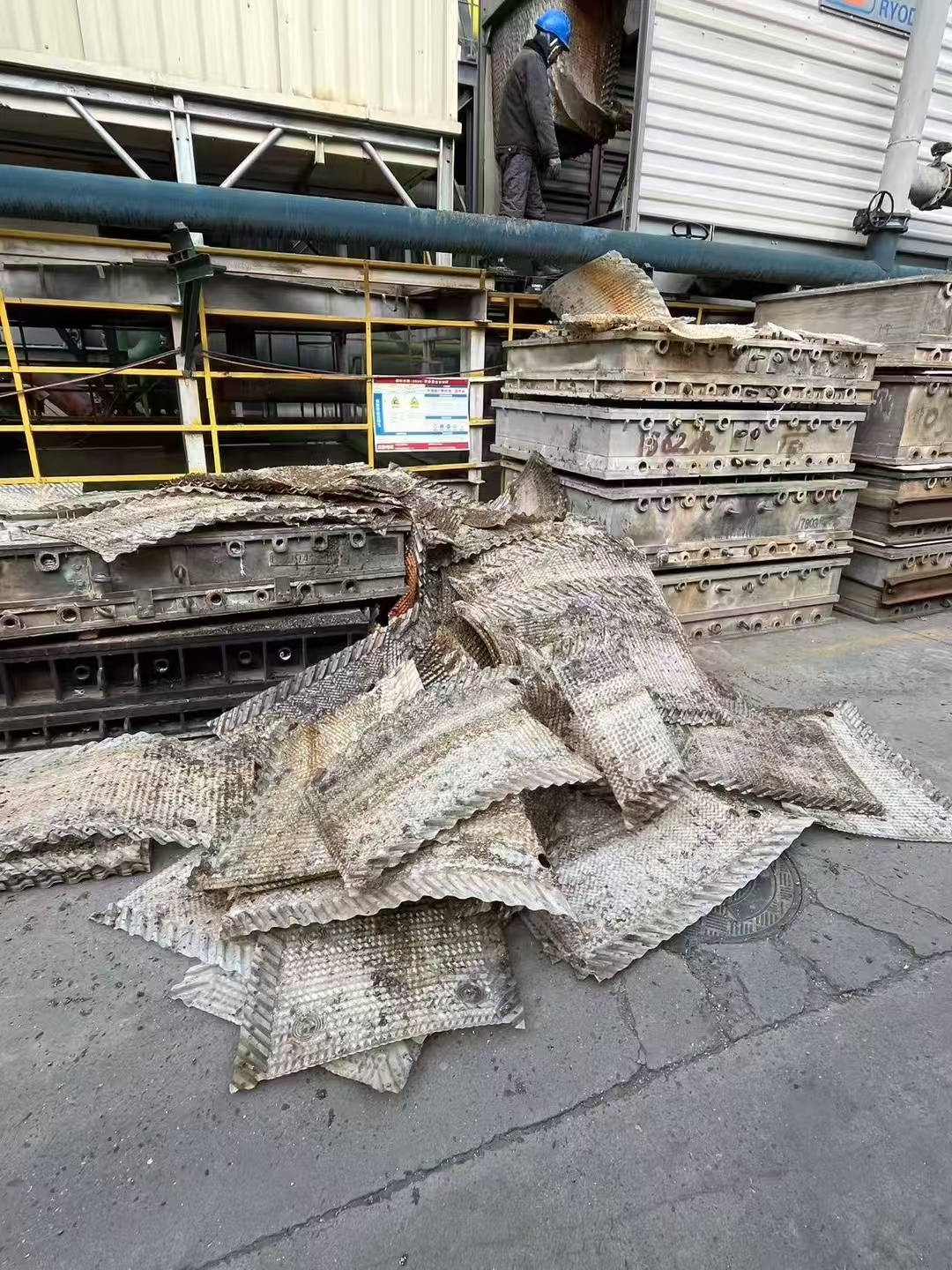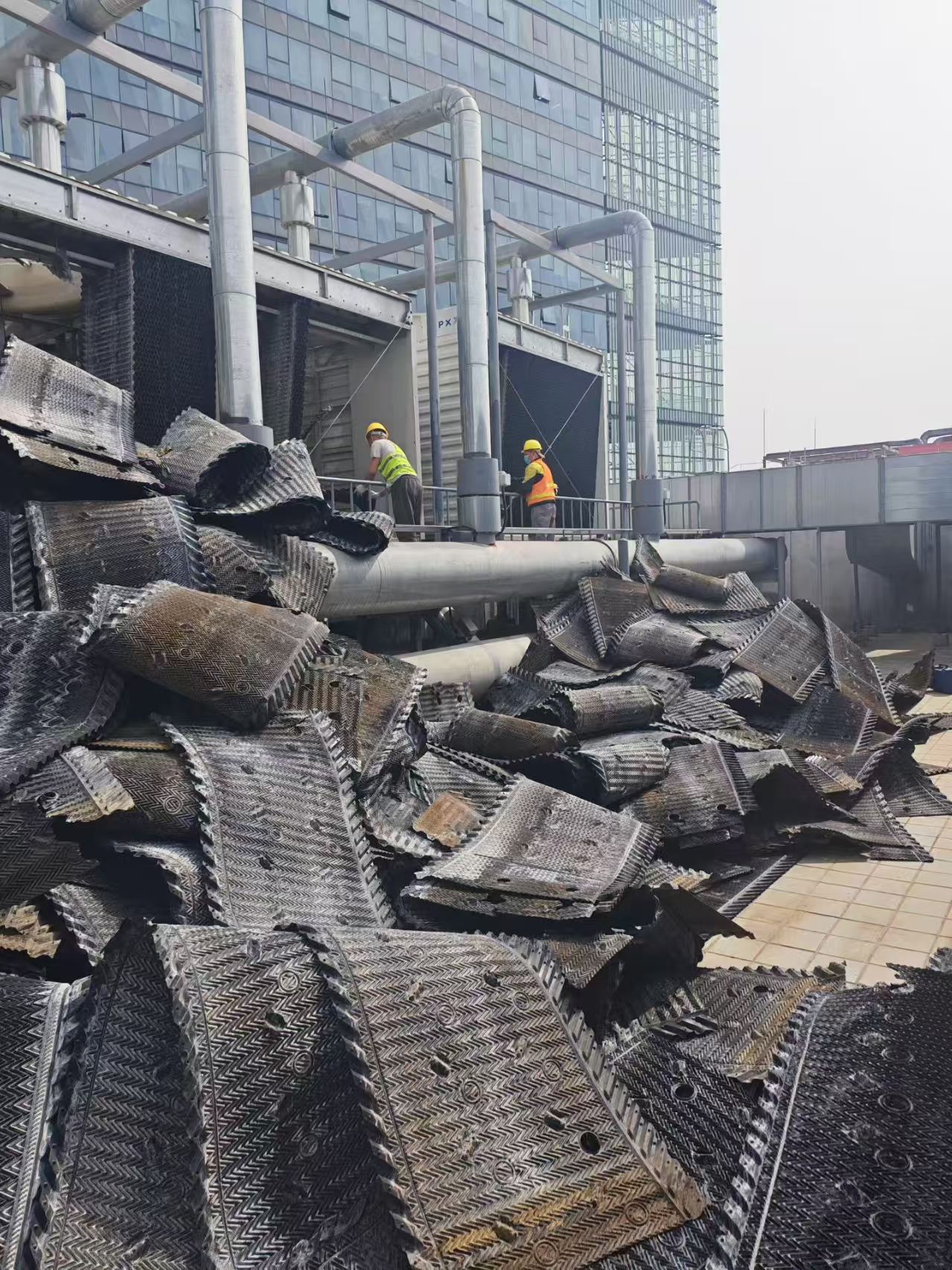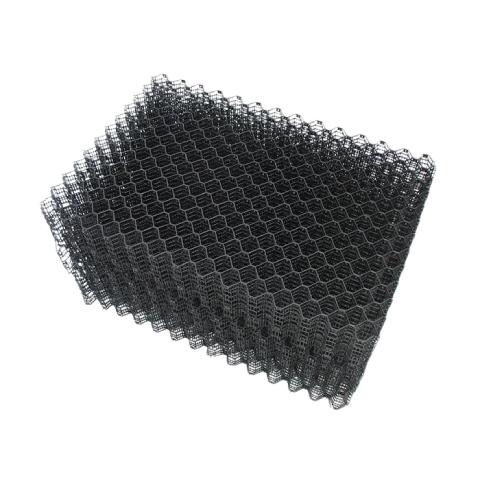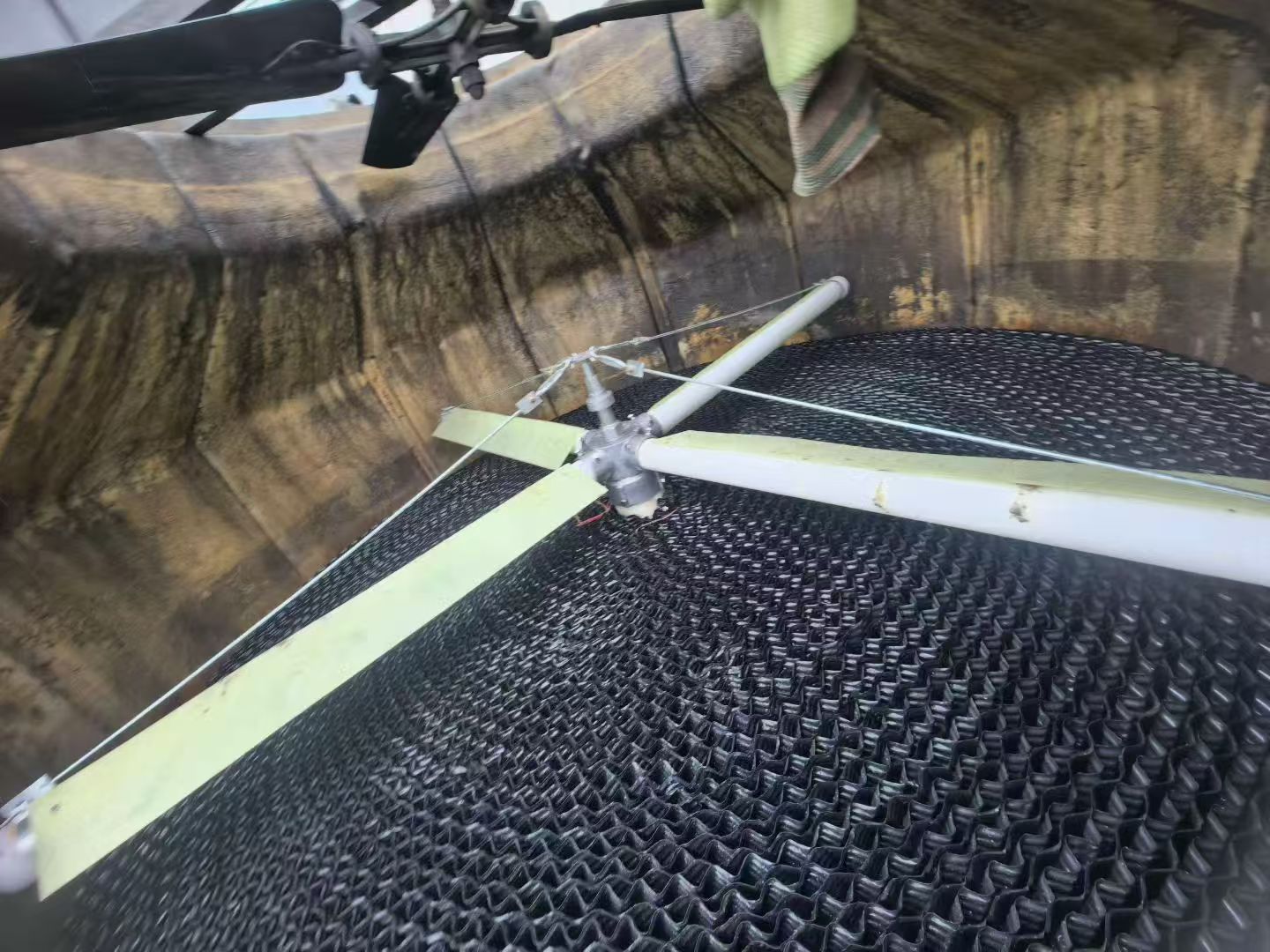
Cooling tower fill media replacement is an effective way to restore cooling performance, improve heat transfer efficiency, and support reliable industrial cooling tower operation. Over time, cooling tower fill can become clogged with dirt, scale, algae, and biological deposits. Plastic fill sheets may also deform, crack, or deteriorate due to heat, chemical exposure, and long-term operation.
When cooling tower fill no longer distributes water properly or provides sufficient contact between water and air, the cooling tower may struggle to achieve its required cold-water temperature. Replacing worn or unsuitable fill media can help recover thermal performance, reduce operating problems, and improve the efficiency of the cooling system.
For industrial facilities, cooling tower operators, maintenance contractors, and equipment distributors, choosing the right replacement fill is an important part of cooling tower maintenance and performance optimization.
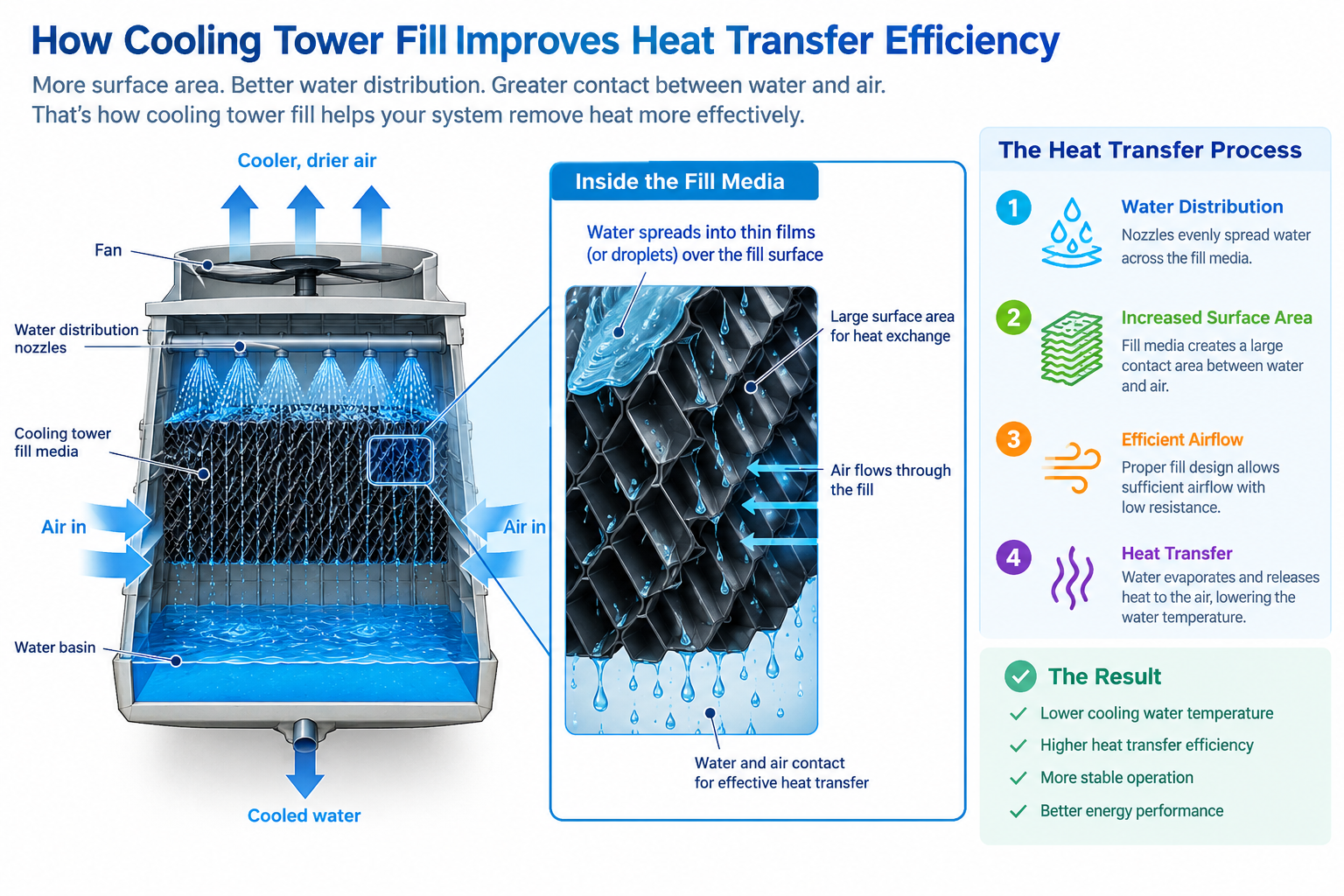
How Cooling Tower Fill Improves Heat Transfer Efficiency
Cooling tower fill media increases the contact area between circulating water and incoming air. As warm water flows through the fill, it spreads into thin films or breaks into droplets, depending on the fill design. Air passes through the fill and removes heat through evaporation and sensible heat transfer.
The effectiveness of this process depends on several factors:
Contact surface area: A larger effective surface area allows more heat exchange between water and air.
Water distribution: Uniform water distribution helps prevent dry areas and uneven cooling.
Airflow resistance: Proper fill design allows sufficient airflow without excessive pressure drop.
Water retention and contact time: Appropriate fill geometry supports effective interaction between air and water.
Fill cleanliness: Clean passages help maintain consistent water flow and airflow.
When fill media becomes blocked, damaged, or improperly installed, heat transfer efficiency can decline. Replacing the fill with a suitable design helps restore the conditions required for effective cooling.
2. Signs That Cooling Tower Fill Media Needs Replacement
Recognizing fill deterioration early can help prevent unnecessary energy consumption and production interruptions.
Higher Cooling Water Temperature
If the cooling tower consistently delivers water above its target temperature, inspect the fill alongside the water distribution system, fan, airflow, and operating conditions. Damaged or fouled fill may be contributing to poor thermal performance.
Clogged or Restricted Fill Passages
Mineral scale, suspended solids, algae, and biological growth can accumulate between fill sheets. Severe blockage restricts airflow and water movement, reducing effective heat transfer.
Deformed, Cracked, or Brittle Fill
PVC and PP fill media can deteriorate under unsuitable operating temperatures, chemical exposure, ultraviolet exposure, or mechanical stress. Deformed sheets may reduce airflow and create uneven water distribution.
Uneven Water Distribution
Dry sections, concentrated water channels, and excessive water accumulation may indicate fill blockage or damage. However, faulty nozzles, clogged spray headers, and distribution-system problems should also be checked.
Increased Fan Energy Consumption
Restricted airflow can increase system resistance and affect fan operating conditions. The actual energy impact depends on the tower design, fan controls, and operating point, so performance should be verified rather than assumed.
3. Choose the Right Cooling Tower Replacement Fill Media
Selecting appropriate replacement fill is essential for improving cooling performance. The best option depends on water quality, operating temperature, tower configuration, and maintenance requirements.
PVC Film Fill
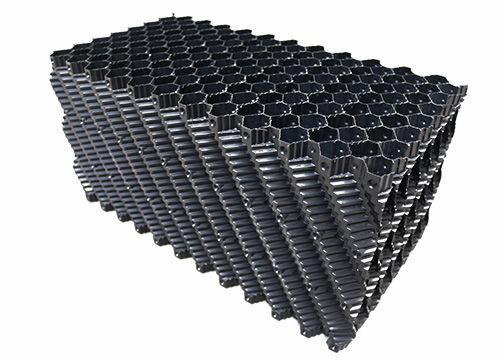
PVC film fill is widely used in industrial and commercial cooling towers. Its closely spaced sheets provide a large surface area for water-air contact.
Advantages:
Effective heat transfer in suitable applications
Compact design and efficient use of tower volume
Lightweight construction and convenient installation
Suitable for many conventional cooling water systems
PVC film fill is often appropriate where water quality is reasonably controlled and the operating temperature falls within the material's specified limits.
PP Film Fill
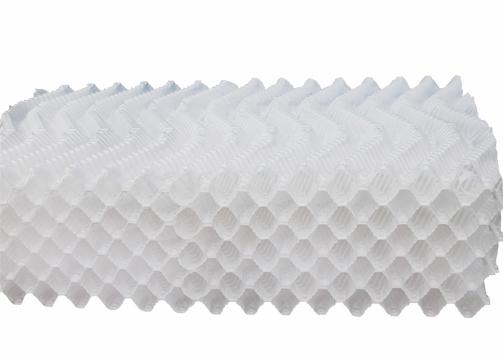
Polypropylene (PP) film fill is an alternative for applications requiring particular temperature resistance or chemical compatibility. Depending on the formulation and design, PP may offer advantages in certain demanding environments.
Advantages:
Potentially higher temperature tolerance than standard PVC grades
Good resistance to many chemicals
Lightweight construction
Available in different sheet patterns and configurations
Actual temperature limits and chemical compatibility must be confirmed with the manufacturer.
Splash Fill
Splash fill breaks water into droplets as it flows over bars, grids, or other splash elements. It is often considered for cooling towers handling water with higher suspended-solids levels or where fouling resistance is a priority.
Advantages:
Open structure that can reduce blockage risks
Suitable for selected dirty-water applications
Easier access for inspection in some configurations
Flexible installation options for industrial cooling towers
Splash fill may provide different thermal performance and airflow characteristics from film fill. It should be selected according to the tower's design and performance requirements.
4. How Fill Media Replacement Improves Cooling Tower Performance
Replacing deteriorated fill can improve cooling tower operation in several ways.
Restores Effective Heat Transfer Surface
New fill provides clean, properly formed surfaces for water distribution and air-water contact. This can improve heat transfer when the existing fill has lost effectiveness because of fouling or structural damage.
Improves Water and Air Distribution
Correctly installed replacement fill helps maintain the intended flow paths through the tower. Uniform distribution reduces the risk of dry zones, channeling, and underused fill areas.
Reduces Flow Restrictions
Removing heavily blocked fill can restore airflow and water passages. This may reduce excessive system resistance and help the fan and water distribution system operate closer to their intended conditions.
Supports Stable Cooling Water Temperatures
With suitable fill, adequate airflow, effective water distribution, and appropriate operating conditions, a cooling tower can more consistently approach its design performance.
Helps Reduce Maintenance Costs
New fill can reduce the need for repeated cleaning or repairs when the original media has reached the end of its useful life. The financial benefit depends on replacement cost, maintenance frequency, water quality, and operating conditions.
Important: Fill replacement cannot compensate for every cooling problem. Fan failures, insufficient airflow, poor nozzle performance, excessive water loading, and high ambient wet-bulb temperatures can also affect cooling capacity.
5. Cooling Tower Fill Media Replacement Process
A planned replacement project helps protect workers, maintain installation quality, and reduce downtime.
Step 1: Inspect the Existing Fill
Check for scale, biological growth, blocked passages, broken sheets, deformation, and support damage. Record the tower's operating temperatures and other available performance data.
Step 2: Confirm the Tower Specifications
Determine the tower type, dimensions, fill arrangement, water loading, airflow requirements, operating temperature, and available installation space. Confirm whether the tower uses crossflow or counterflow fill.
Step 3: Select Compatible Replacement Fill
Choose the material, sheet spacing, flute geometry, block dimensions, and support arrangement according to the tower design and water quality. For replacement projects, confirm compatibility with the original installation before ordering.
Step 4: Remove Old Fill and Inspect Supports
Shut down and isolate the equipment according to site safety procedures. Remove the existing fill and inspect supporting structures, distribution piping, and nearby components for damage or deposits.
Step 5: Install the New Fill
Install fill blocks according to the manufacturer's instructions. Maintain the required orientation, spacing, alignment, and support. Incorrect installation may create bypass airflow or uneven water distribution.
Step 6: Test and Monitor Performance
After installation, verify water distribution, airflow, fan operation, and leakage. Compare cold-water temperature, hot-water temperature, circulating water flow, and relevant ambient conditions with baseline or design data.
6. How to Select a Reliable Cooling Tower Fill Media Supplier
For industrial buyers, contractors, and cooling tower maintenance companies, supplier selection affects product compatibility, installation efficiency, and long-term performance.
Before purchasing cooling tower replacement fill, consider the following:
Material specifications: Confirm whether the product is PVC, PP, or another material and request documented operating limits.
Thermal performance: Ask for relevant performance data and application recommendations.
Dimensional compatibility: Confirm block size, sheet spacing, flute pattern, and installation arrangement.
Water quality requirements: Explain the presence of suspended solids, scale-forming minerals, biological growth, or chemical treatment.
Manufacturing and quality control: Request material specifications, dimensional tolerances, and inspection documentation where appropriate.
Customization and supply capacity: For large projects, check whether the manufacturer can provide custom dimensions, bulk quantities, export packaging, and replacement support.
A qualified cooling tower fill manufacturer should evaluate the actual application rather than recommend the same fill configuration for every tower.
CoolingTowerPart.com can support buyers looking for cooling tower fill media for maintenance, retrofit, and replacement projects. When requesting a quotation, provide the tower model, existing fill dimensions, material preference, operating temperature, water quality, and required quantity to help identify a suitable solution.
7. Frequently Asked Questions
How often should cooling tower fill media be replaced?
There is no universal replacement interval. Service life depends on water treatment, operating temperature, material quality, maintenance practices, and environmental conditions. Inspect the fill regularly and replace it when damage, severe blockage, or declining performance cannot be adequately corrected.
Does new cooling tower fill improve cooling capacity?
It can restore lost performance when deteriorated or fouled fill is a significant cause of poor cooling. The actual improvement depends on the original condition, fill design, airflow, water distribution, and ambient wet-bulb temperature.
Is PVC or PP better for cooling tower replacement fill?
PVC is widely used for conventional cooling applications, while PP may be preferred in selected higher-temperature or chemically demanding applications. Compare the manufacturer's temperature limits, chemical compatibility, and thermal performance before choosing.
Can film fill be replaced with splash fill?
Sometimes, but the change requires an engineering assessment. Film and splash fill have different heat-transfer characteristics, airflow resistance, water distribution requirements, and installation arrangements. Confirm that the proposed replacement can meet the tower's required cooling duty.
How can I improve cooling tower efficiency after replacement?
Maintain proper water treatment, clean distribution nozzles, verify fan and motor operation, inspect drift eliminators, and monitor operating temperatures. Regular maintenance helps the replacement fill maintain its intended performance.
Conclusion
Cooling tower fill media replacement is an important strategy for restoring heat transfer efficiency, improving water-air contact, and maintaining reliable cooling tower operation. By identifying fill deterioration, choosing the right PVC, PP, or splash fill, and following a controlled installation process, industrial facilities can improve performance and reduce avoidable maintenance problems.
For successful replacement projects, evaluate the entire cooling tower system rather than focusing on fill media alone. Work with an experienced supplier to confirm dimensions, material suitability, and thermal requirements before purchasing replacement fill.
Looking for cooling tower replacement fill media? Contact Power Tower Cooling Technology (Shaoxing) Co.,Ltd with your tower specifications and application requirements to discuss suitable fill options for your industrial cooling tower.
Recommended internal links for CoolingTowerPart.com: