Cooling tower fill media is one of the most important components inside an industrial cooling tower. It increases the contact area between hot circulating water and air, helping transfer heat more efficiently and reduce the temperature of the water before it returns to the process.
Choosing the right cooling tower fill media can affect thermal performance, water distribution, pressure drop, maintenance requirements, and equipment service life. This guide explains the main types, materials, applications, and selection factors for industrial buyers.
What Is Cooling Tower Fill Media?
Cooling tower fill media is the structured material installed inside a cooling tower to increase contact between water and air.
Without fill, water would fall through the tower relatively quickly, providing limited time and surface area for heat transfer. Fill media breaks the water flow into thin films or droplets and keeps water and air in contact over a larger effective area.
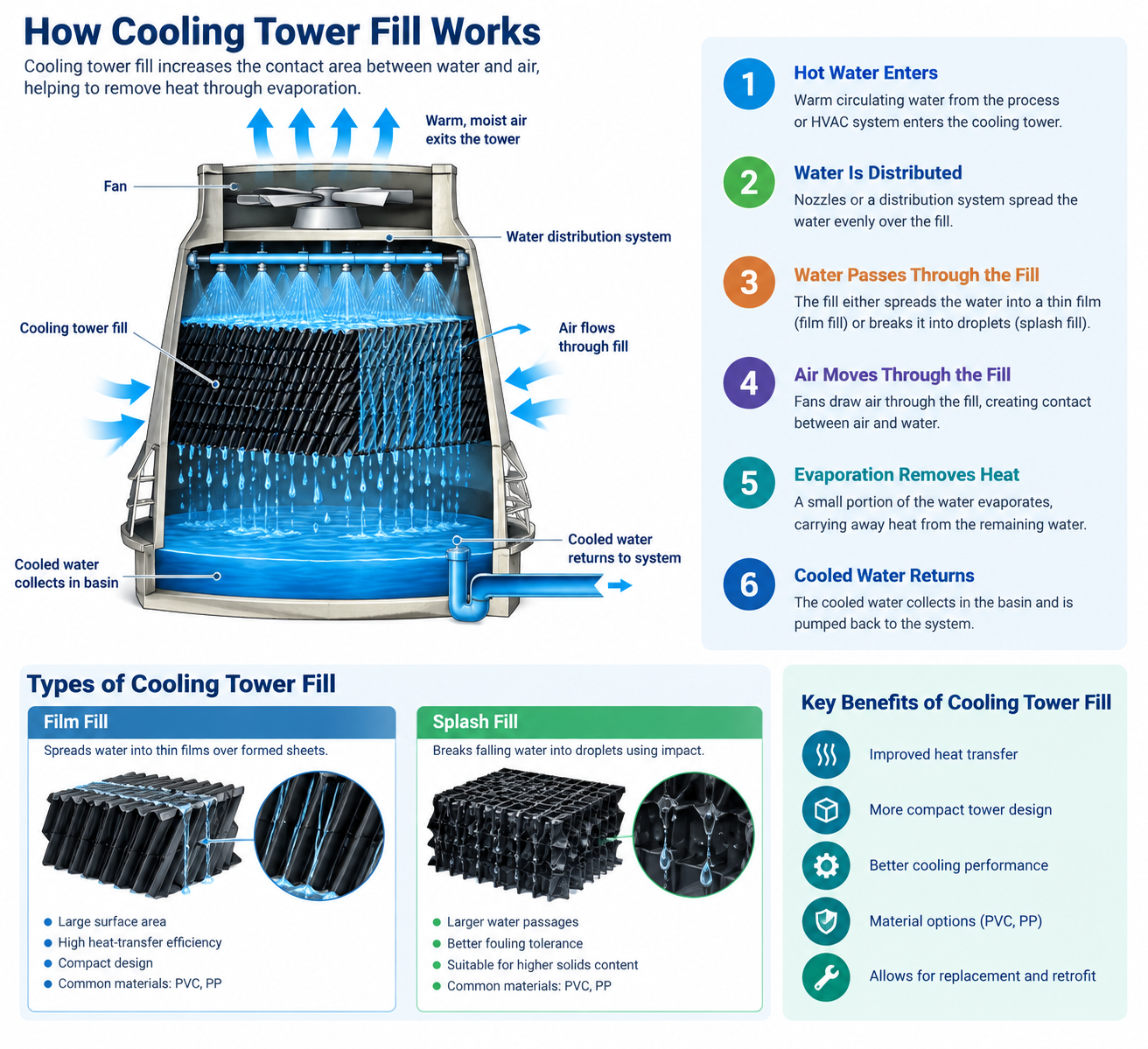
The basic cooling process is:
Warm process water enters the cooling tower.
A distribution system spreads water across the fill.
Water flows downward through the fill media.
Air moves upward or horizontally through the fill.
Heat transfers from the water to the air.
A portion of the water evaporates, removing heat.
Cooled water collects in the basin and returns to the system.
The design of the fill therefore plays a major role in overall cooling tower performance.
How Does Cooling Tower Fill Work?
The main purpose of fill is to increase water-air contact time and surface area.
In film fill, water spreads into thin layers across corrugated sheets. These sheets create a large surface area while maintaining controlled airflow passages.
In splash fill, water repeatedly hits bars, grids, or other surfaces and breaks into droplets. The resulting turbulence increases contact between water and air.
The ideal fill provides high heat-transfer performance without creating excessive air resistance or water-side blockage.
Main Types of Cooling Tower Fill Media
Industrial cooling towers generally use three major fill configurations.
1. Film Fill
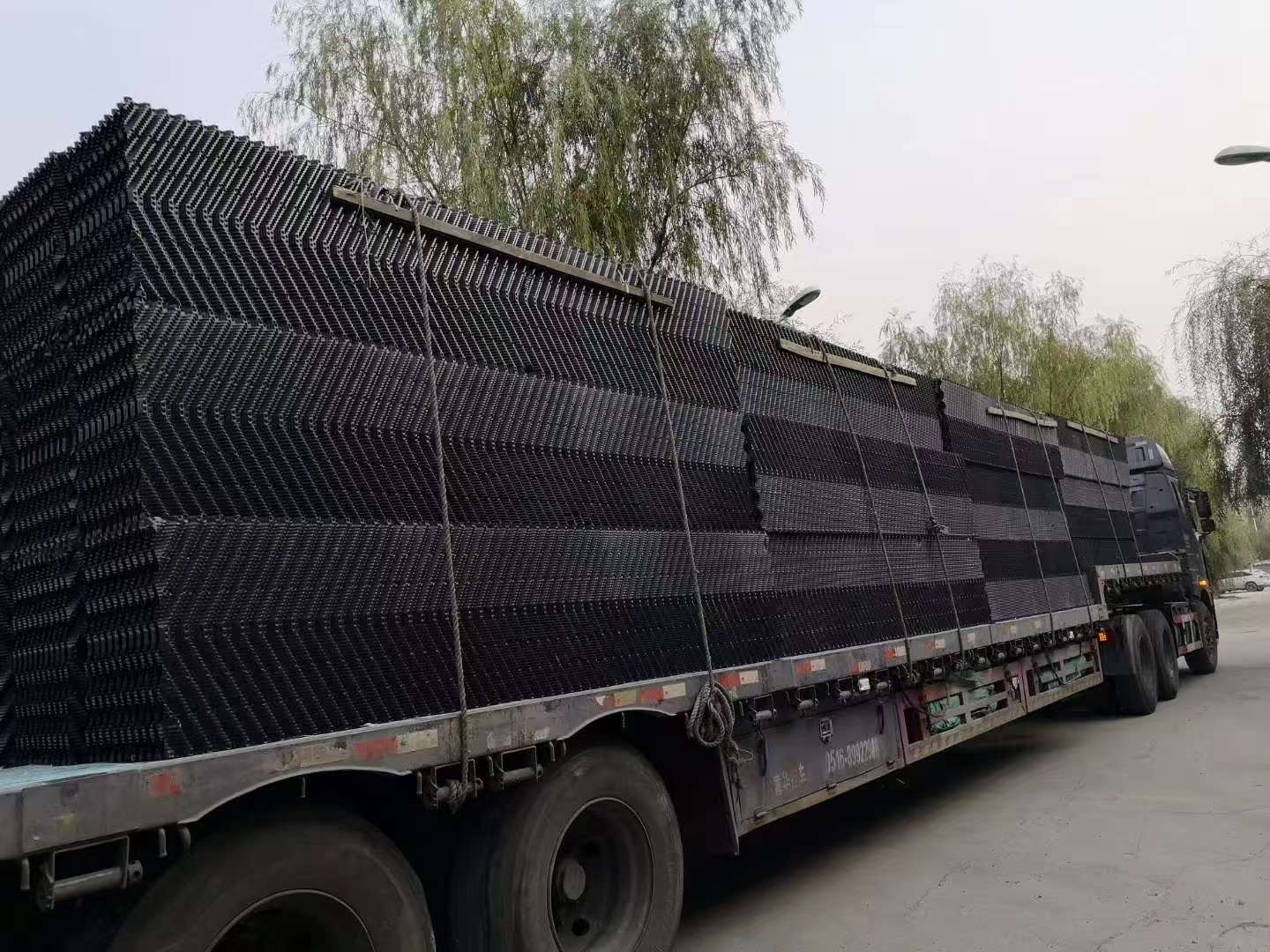
Film fill uses closely spaced sheets with corrugated or specially shaped surfaces. Water forms a thin film over the sheets while air passes through the channels.
Advantages include:
High effective surface area
Compact design
Good thermal performance
Suitable for many industrial applications
Efficient use of tower volume
Film fill is widely used where the circulating water is relatively clean.
Common film fill materials include PVC and PP.
2. Splash Fill
Splash fill uses grids, bars, sheets, or modular elements that break falling water into smaller droplets.
It is often selected for applications where water quality, suspended solids, biological growth, or fouling can make closely spaced film fill more difficult to maintain.
Advantages include:
Larger flow passages
Better tolerance of suspended solids
Lower tendency toward physical blockage
Suitable for dirtier industrial water
Easier access for some cleaning operations
Splash fill can be manufactured from PP, PVC, wood, or other specialized materials, depending on the operating environment.
3. Hybrid Fill
Hybrid cooling tower fill combines characteristics of film and splash designs. It can provide a balance between thermal performance and fouling resistance.
Hybrid solutions may be considered when an application requires better water distribution and heat transfer while maintaining larger passages than conventional high-density film fill.
Cooling Tower Fill Media Materials
The material used to manufacture cooling tower fill affects chemical resistance, temperature capability, mechanical strength, weight, and service life.
PVC Cooling Tower Fill
PVC cooling tower fill is widely used because it offers a practical combination of cost, thermal performance, chemical resistance, and manufacturability.
PVC film fill is commonly used in industrial and HVAC cooling towers where water temperatures and operating conditions are suitable for the material.
Typical benefits include:
PP Cooling Tower Fill
PP cooling tower fill is another popular choice, particularly where higher temperature capability or specific chemical resistance is required.
Polypropylene can be used for both film and splash fill designs.
Key benefits include:
The exact temperature and chemical limits should always be confirmed with the fill manufacturer.
Other Materials
Specialized cooling tower fill may also be produced from materials such as wood or other engineered plastics. Material selection depends on tower design, water chemistry, operating temperature, and maintenance requirements.
Film Fill vs. Splash Fill
| Feature | Film Fill | Splash Fill |
| Heat-transfer area | High | Moderate to high |
| Water passages | Smaller | Larger |
| Fouling tolerance | Lower | Higher |
| Suspended-solids tolerance | More limited | Generally better |
| Tower volume efficiency | High | Often lower |
| Typical water quality | Relatively clean | More contaminated water |
Neither design is universally suitable for every cooling tower. The correct choice depends on the water quality and thermal requirements of the application.
Industrial Applications of Cooling Tower Fill
Cooling tower fill media is used in many industries where process heat must be rejected.
Power Generation
Cooling towers in power plants handle large water flows and continuous heat loads. Fill must provide reliable thermal performance and withstand long operating cycles.
Manufacturing
Steel, metal processing, plastics, chemicals, and other manufacturing facilities use cooling towers to remove heat from production equipment and process systems.
Petrochemical and Chemical Plants
Chemical and petrochemical facilities may require fill materials with specific resistance to chemicals and elevated temperatures.
HVAC and Commercial Cooling
Large commercial buildings, hospitals, data centers, and district cooling systems commonly use cooling towers to reject heat from chilled-water systems.
Food and Beverage Processing
Cooling systems used in food and beverage facilities require careful attention to water quality, hygiene, corrosion, and maintenance requirements.
How to Choose the Right Cooling Tower Fill Media
Selecting fill based only on price can lead to poor long-term performance. Industrial buyers should consider several factors.
1. Water Quality
Check suspended solids, hardness, biological growth, oil contamination, and other potential fouling sources.
Clean water may be suitable for high-density film fill, while heavily contaminated water may favor splash fill.
2. Operating Temperature
Check the entering water temperature and expected operating range. PVC and PP have different temperature capabilities, so the manufacturer's specifications should be reviewed before selection.
3. Cooling Load
The required heat rejection determines the necessary fill volume, surface area, and configuration.
4. Airflow and Pressure Drop
Fill should provide effective heat transfer without creating unnecessary air resistance. Excessive pressure drop can increase fan energy consumption.
5. Chemical Compatibility
Water treatment chemicals, pH, oils, and other contaminants can affect fill materials. Confirm material compatibility before purchasing.
6. Maintenance Requirements
Consider how easily the fill can be inspected, cleaned, repaired, or replaced. For applications with frequent fouling, a more open fill configuration may reduce maintenance problems.
7. Replacement Compatibility
For retrofit projects, check the existing fill dimensions, sheet thickness, flute or corrugation pattern, support arrangement, block size, and water distribution system.
A replacement fill should not be selected solely by tower brand. The actual operating conditions and existing fill geometry are equally important.
Cooling Tower Fill Replacement
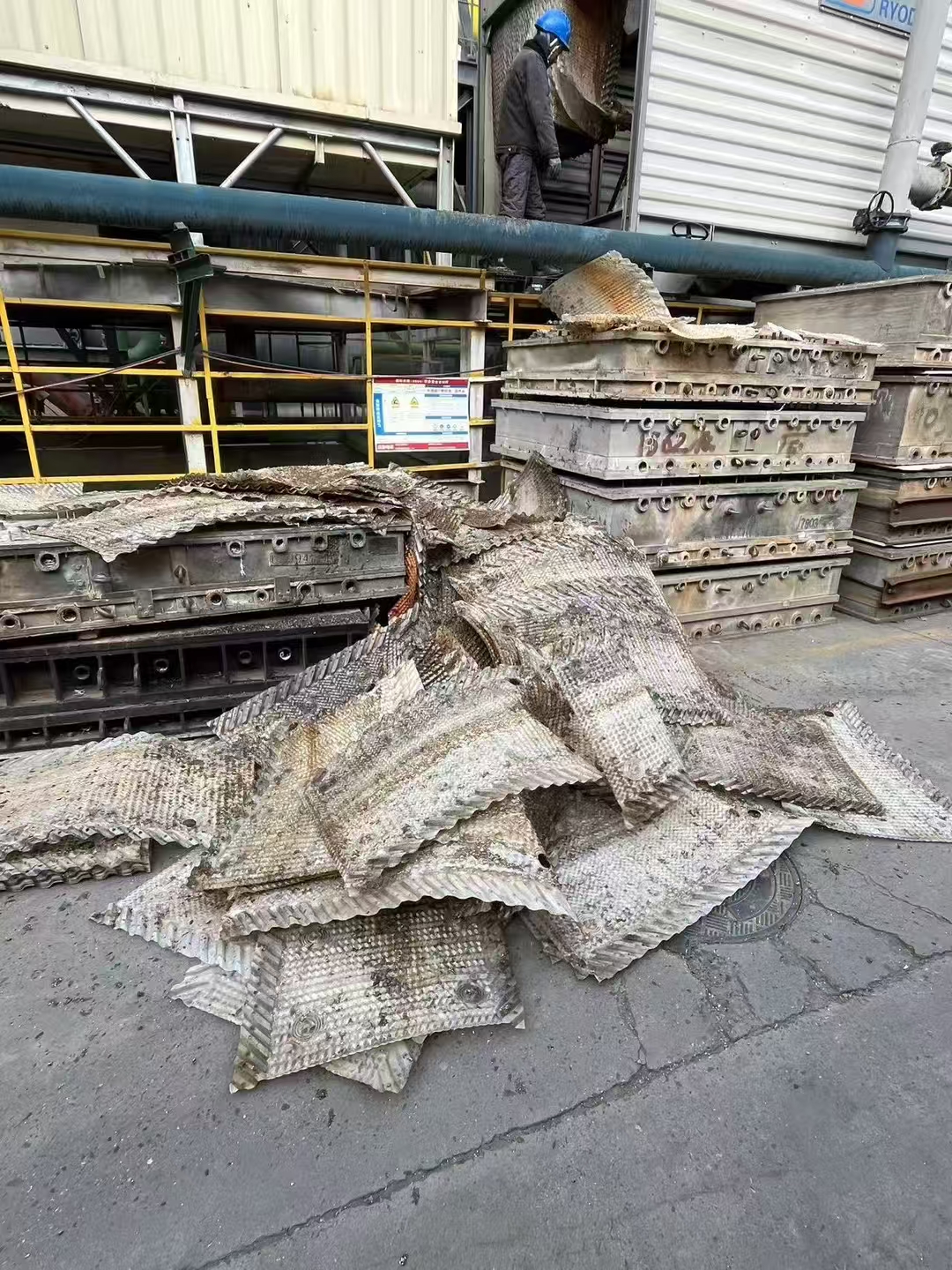
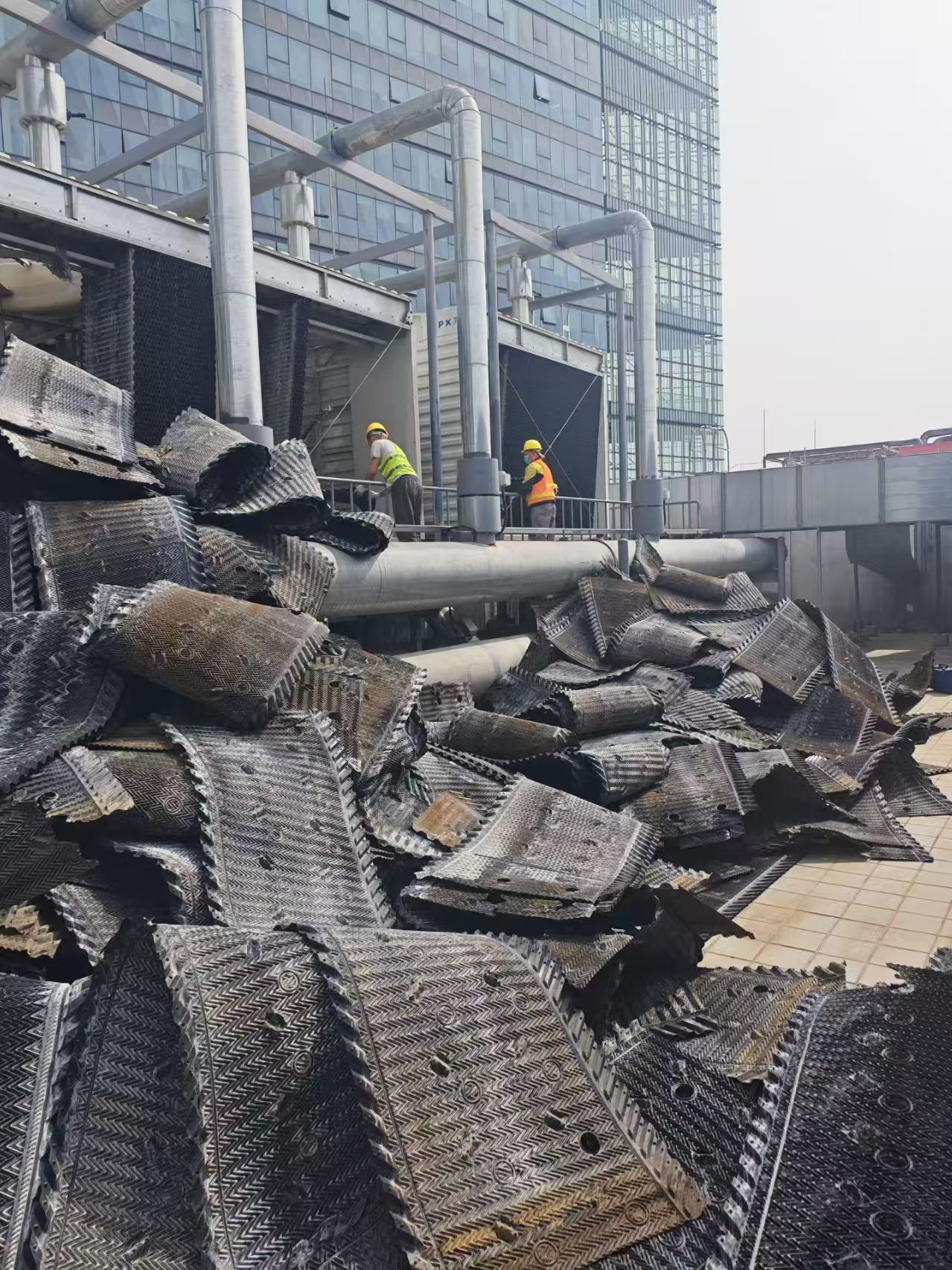
Over time, fill media can become damaged, brittle, deformed, scaled, or blocked. Reduced airflow and water distribution can lower cooling performance.
Common signs that cooling tower fill replacement may be necessary include:
Increased cold-water temperature
Higher fan energy consumption
Visible fill deformation
Excessive scale or biological growth
Broken or collapsed fill sheets
Uneven water distribution
Increased pressure drop
Before replacing fill, inspect the water distribution system, nozzles, drift eliminators, structural supports, and basin condition. A complete inspection helps identify whether poor thermal performance is caused by the fill or another component.
Benefits of High-Quality Cooling Tower Fill Media
Properly designed and correctly selected fill media can provide:
Improved heat-transfer efficiency
Better use of tower volume
Stable cooling performance
Reduced risk of premature blockage
Longer service life
More predictable maintenance
Better suitability for retrofit projects
The best results come from matching fill design and material to the actual cooling tower operating conditions.
Cooling Tower Fill Media for Industrial Buyers
When sourcing cooling tower fill media, industrial buyers should request complete technical information rather than comparing unit prices alone.
Important specifications may include:
Fill type: film, splash, or hybrid
Material: PVC or PP
Dimensions and module size
Sheet thickness
Flute or surface configuration
Operating temperature range
Chemical compatibility
Thermal performance data
Pressure-drop information
Installation requirements
Replacement compatibility
For large projects, suppliers should also provide samples, drawings, technical datasheets, and installation recommendations when required.
FAQ
What is the purpose of cooling tower fill media?
Cooling tower fill increases the contact area and contact time between water and air, improving heat transfer and helping the tower cool circulating water.
Is PVC or PP better for cooling tower fill?
Both materials are widely used. PVC is common for many standard applications, while PP can be advantageous in applications requiring higher temperature capability or particular chemical resistance. The correct material depends on operating conditions.
Which is better, film fill or splash fill?
The choice depends mainly on water quality, cooling requirements, fouling risk, and tower design. Film fill provides high surface area, while splash fill generally provides larger passages and better tolerance of contaminated water.
How long does cooling tower fill last?
Service life varies with water chemistry, temperature, UV exposure, mechanical conditions, cleaning practices, and operating conditions. Regular inspection is the best way to determine when replacement is required.
Can cooling tower fill be replaced?
Yes. Replacement fill is available for many industrial and HVAC cooling towers. Before ordering, verify dimensions, material, configuration, support requirements, and thermal requirements.
Conclusion
Cooling tower fill media is essential for efficient heat transfer in industrial cooling systems. Film, splash, and hybrid fills each offer different performance characteristics, while PVC and PP provide widely used material options.
For a successful selection, consider water quality, operating temperature, cooling load, airflow, chemical compatibility, maintenance, and replacement requirements. Choosing the right fill design and material can help maintain reliable cooling performance and extend the service life of the cooling tower.
For industrial replacement projects, CoolingTowerPart.com can supply PVC and PP cooling tower fill media in different configurations and sizes for a wide range of cooling tower applications.
Internal Links for Other CoolingTowerParts
Cooling Tower Nozzles
Cooling Tower Drift Eliminators
Cooling Tower Louvers
Cooling Tower Fan Blades
Cooling Tower Motors