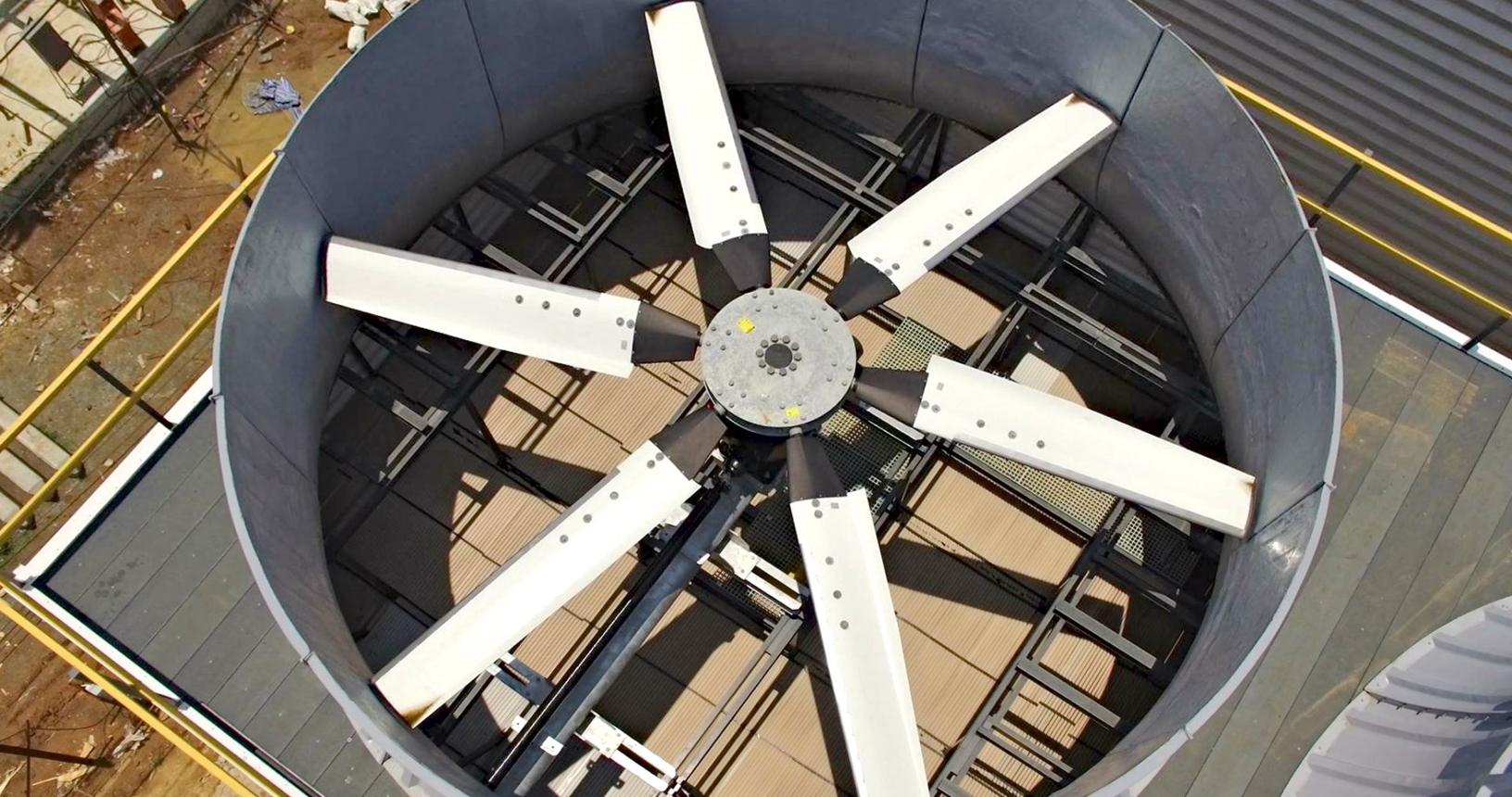
Cooling tower fan blade pitch adjustment is an important part of cooling tower maintenance and performance optimization. The blade pitch angle directly affects airflow, fan power consumption, motor load, and cooling efficiency. If the blade angle is too low, the fan may not deliver sufficient airflow. If it is too high, the fan can consume excessive power, overload the motor, and increase vibration.
Accurately measuring cooling tower fan blade angles helps maintenance teams establish consistent blade settings, identify installation errors, and improve operating efficiency. This guide explains how to measure cooling tower fan blade pitch, which tools to use, common measurement mistakes, and how to verify the final adjustment.
1. What Is Cooling Tower Fan Blade Pitch Angle?
Cooling tower fan blade pitch angle is the angle between a blade's reference line, typically its chord line, and a specified reference plane or direction. The exact definition depends on the fan manufacturer's design and measurement procedure.
For axial-flow cooling tower fans, blade pitch determines how much air the rotating blades move through the tower. Changing the pitch changes the aerodynamic loading on the fan.
The main effects of blade pitch include:
Airflow: Increasing pitch generally increases airflow within the fan's operating range.
Motor load: A higher pitch can increase the power required by the fan.
Cooling performance: Correct pitch helps maintain the required cooling capacity.
Vibration and noise: Uneven blade settings can contribute to unbalanced aerodynamic forces.
Energy efficiency: Proper adjustment helps the fan meet airflow requirements without unnecessary power consumption.
The relationship between pitch and performance depends on fan speed, blade design, system resistance, and operating conditions.
2. Tools Required to Measure Cooling Tower Fan Blade Angles
Before measuring the pitch angle, prepare the appropriate tools and consult the fan manufacturer's instructions.
Common measurement tools include:
| Tool | Main Purpose |
| Digital inclinometer | Measures blade angle relative to a defined reference plane |
| Blade pitch gauge | Measures blade pitch using a specified fan reference |
| Protractor or angle finder | Provides basic angular measurements |
| Tape measure | Checks blade position and measurement radius |
| Marker and inspection sheet | Records blade numbers and measured angles |
| Torque wrench | Tightens blade fasteners to specified values after adjustment |
A digital inclinometer is convenient for field inspections, but it does not automatically provide the correct fan pitch angle. The measurement reference, blade position, and gauge orientation must match the manufacturer's procedure.
3. Safety Precautions Before Measurement
Cooling tower fan blade pitch measurement must be performed with the fan safely shut down.
Follow these precautions before accessing the fan:
Shut down the fan motor and isolate its power supply.
Apply lockout/tagout (LOTO) procedures to prevent accidental startup.
Verify that the fan has stopped completely.
Secure access equipment and follow fall-protection requirements.
Inspect the blades, hub, and fasteners for visible damage.
Follow the cooling tower manufacturer's maintenance instructions.
Never measure blade angles while the fan is rotating. Do not enter or access hazardous fan areas unless the equipment has been properly isolated and the site safety requirements have been met.
4. How to Measure Cooling Tower Fan Blade Pitch Angles
Step 1: Identify the Correct Measurement Reference
First, determine how the fan manufacturer defines blade pitch angle. Different manufacturers may use different reference planes, measurement locations, or gauge orientations.
Some procedures specify an angle relative to the plane of fan rotation, while others use a particular gauge position or blade chord reference.
Do not assume that two fans with the same numerical pitch angle use the same measurement convention. Obtain the manufacturer's recommended pitch setting and measurement instructions before proceeding.
Step 2: Select a Consistent Measurement Radius
Blade geometry can change from the root to the tip. Therefore, the measured angle may vary depending on where the gauge is placed.
Identify the specified measurement radius, such as a stated distance from the hub or a defined percentage of blade radius. Mark the same radial position on every blade.
Measuring each blade at a different location can produce misleading results, even if the blades are installed correctly.
Step 3: Position the Blade for Measurement
Rotate the isolated fan manually only if the manufacturer's procedure permits it and the equipment can be moved safely.
Position the first blade where it can be accessed securely. Ensure the blade is stable and that the measurement surface is clean.
Place the pitch gauge or digital inclinometer on the specified blade reference surface. Keep the tool aligned consistently with the manufacturer's instructions.
Avoid measuring on curved edges, damaged surfaces, or areas that do not represent the intended blade reference.
Step 4: Measure and Record the Angle
Take the measurement using the specified gauge orientation. Record the result for the first blade.
Repeat the process for every blade, using the same measurement radius and reference method.
A measurement record can include:
Fan identification and model
Blade number
Measurement radius
Measured pitch angle
Manufacturer's target angle
Difference from the target
Inspection date and technician
For example, a five-blade fan may have five recorded measurements. The target angle must come from the applicable fan manufacturer's specification rather than a universal industry value.
Step 5: Compare the Blade Angles
Compare the measured values with the manufacturer's target and permitted tolerances.
If one blade differs significantly from the others, check the gauge placement, measurement radius, blade seating, hub condition, and blade adjustment mechanism.
Do not assume that all blades should be set to an arbitrary angle or simply averaged together. The specified target and allowable blade-to-blade variation must come from the fan manufacturer's documentation.
Step 6: Adjust the Pitch if Necessary
If the measured angles fall outside the specified limits, follow the manufacturer's adjustment procedure.
Depending on the fan design, adjustment may involve repositioning the blade in the hub, loosening designated fasteners, and setting the blade to the required angle.
Make small, controlled adjustments and remeasure each blade. Tighten all fasteners to the specified torque using the correct sequence.
Never adjust the blade pitch beyond the manufacturer's approved range to compensate for poor cooling performance without first identifying the underlying problem.
Step 7: Verify the Final Measurements
After adjustment, measure every blade again using the same reference, radius, and gauge orientation.
Confirm that each blade meets the target angle and permitted tolerance. Check the blade fasteners, hub, and surrounding components before returning the fan to service.
Once the area is clear and all safety procedures have been completed, conduct an authorized operational inspection. Check motor current, vibration, noise, airflow, and cooling performance against the equipment's operating requirements.

5. Common Mistakes When Measuring Fan Blade Angles
Several errors can make cooling tower fan pitch measurements unreliable.
Using the wrong reference plane: An inclinometer reading is meaningful only when its orientation matches the specified measurement method.
Measuring at different blade locations: Blade twist can cause different readings along the span. Always use the designated measurement radius.
Using an inconsistent gauge position: Small changes in tool placement can affect the result. Keep the gauge aligned in the same way for every blade.
Ignoring measurement tolerances: Minor differences may fall within the manufacturer's allowable limits. Use the specified tolerances rather than relying on visual judgment.
Adjusting pitch without checking motor load: A higher pitch may increase airflow but can also overload the motor. Verify the complete fan operating condition after adjustment.
Ignoring damaged components: Cracked blades, loose hubs, worn fasteners, and distorted blade roots should be inspected before pitch adjustment.
6. How Often Should Cooling Tower Fan Blade Angles Be Checked?
The appropriate inspection frequency depends on operating conditions, maintenance schedules, and the fan manufacturer's recommendations.
Measure blade pitch during:
Initial installation and commissioning
Scheduled preventive maintenance
Fan blade replacement or hub maintenance
Investigations into reduced airflow or cooling capacity
Inspections following abnormal vibration or mechanical damage
Record the measurements over time. Consistent records help maintenance teams identify changes in blade settings and detect potential mechanical problems before they cause major downtime.
7. Benefits of Accurate Cooling Tower Fan Pitch Measurement
Correct measurement and adjustment can help industrial facilities:
Maintain the required cooling tower airflow
Reduce unnecessary fan power consumption
Prevent excessive motor loading
Minimize problems associated with uneven blade settings
Support reliable fan operation
Improve maintenance planning and troubleshooting
However, pitch adjustment alone cannot resolve every cooling tower performance problem. Blocked fill, dirty air inlets, damaged drift eliminators, incorrect fan rotation, and other system issues may also affect cooling performance.
8. Frequently Asked Questions
What Is the Correct Cooling Tower Fan Blade Pitch Angle?
There is no single correct angle for every cooling tower fan. The required setting depends on blade design, fan diameter, rotational speed, motor capacity, and manufacturer specifications.
Can I Use a Digital Inclinometer to Measure Fan Blade Pitch?
Yes. A digital inclinometer can be useful when it is positioned according to the manufacturer's measurement procedure. Its reading should not be treated as the correct pitch angle unless the reference plane and gauge orientation are defined.
Should Every Blade Have the Same Pitch Angle?
Blades on the same fan generally need consistent settings according to the manufacturer's specifications. The permitted variation depends on the fan design and applicable maintenance instructions.
Does Increasing Blade Pitch Improve Cooling Tower Efficiency?
Increasing pitch may increase airflow, but it can also increase motor power consumption and mechanical loading. The best setting is the one that meets the required cooling duty without exceeding the fan and motor operating limits.
What Should I Do if Blade Angles Are Different?
Repeat the measurements using the same reference and radius. If the difference remains outside the manufacturer's tolerance, inspect the blade mounting, hub, fasteners, and adjustment mechanism before making corrections.
Conclusion
Measuring cooling tower fan blade pitch angles accurately is essential for reliable operation, airflow control, and energy management. By using the correct measuring tools, following a consistent reference method, recording every blade's angle, and checking the manufacturer's tolerances, maintenance teams can identify incorrect settings and make informed adjustments.
For industrial cooling tower maintenance and retrofit projects, always verify the fan model, blade specifications, motor limits, and approved pitch settings before adjusting the fan. Proper measurement and documentation help support safe operation, stable cooling performance, and long-term equipment reliability.
Recommended internal links for CoolingTowerPart.com:


