Introduction
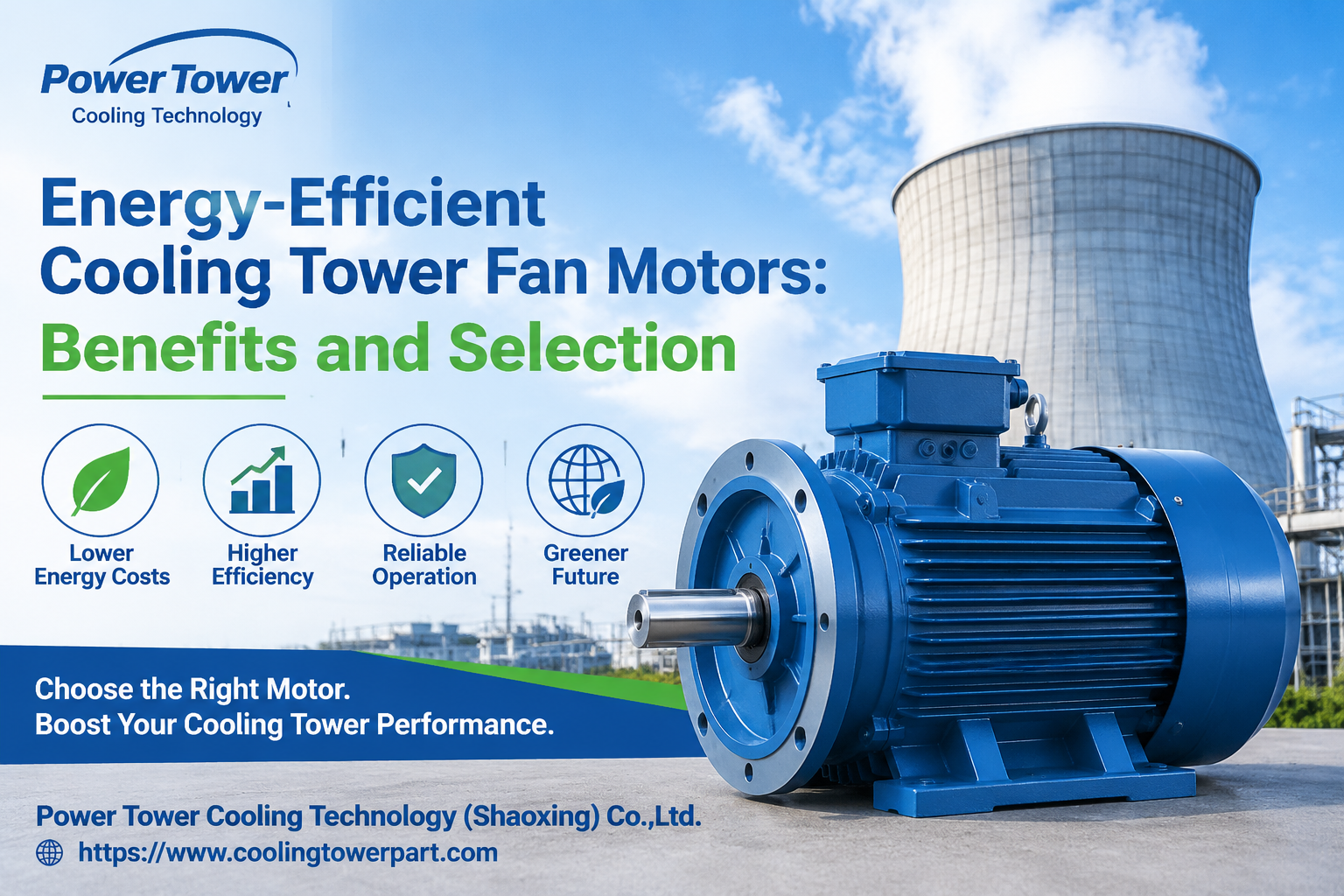
Cooling towers play an essential role in industrial heat rejection. From power plants and chemical facilities to HVAC systems and manufacturing plants, they help remove unwanted heat and maintain stable operating temperatures. But have you ever considered how much electricity a cooling tower fan motor consumes during daily operation?
The fan motor is one of the key components in a mechanical cooling tower. It drives the fan, moves air through the tower, and supports the heat transfer process between air and circulating water. If the motor is inefficient, incorrectly sized, or poorly matched with the fan system, energy consumption can increase significantly.
That is why more industrial operators are looking for energy-efficient cooling tower fan motors.
An efficient motor can help reduce electricity consumption, improve operating reliability, and support better long-term equipment performance. However, choosing the right motor involves more than simply selecting a high-efficiency model. You also need to consider motor power, operating speed, voltage, protection rating, environmental conditions, and compatibility with the fan and gearbox.
In this guide, we will explain the benefits of energy-efficient cooling tower fan motors and show you how to select the right option for your application. We will also introduce Power Tower Cooling Technology (Shaoxing) Co.,Ltd., a supplier of cooling tower components and replacement products.
1. What Is an Energy-Efficient Cooling Tower Fan Motor?
An energy-efficient cooling tower fan motor is an electric motor designed to convert electrical energy into mechanical power with relatively low energy losses.
Its primary job is simple: rotate the cooling tower fan at the required speed so that air can flow through the tower. This airflow helps transfer heat from the circulating water to the surrounding atmosphere.
However, not all motors perform equally. Some motors lose more energy through heat, friction, electrical resistance, and other factors. A high-efficiency motor reduces these losses and converts a greater proportion of its electrical input into useful mechanical output.
For industrial cooling towers, this difference matters because fan motors may operate for many hours each day.
1.1 How a Cooling Tower Fan Motor Works
Most mechanical cooling towers use electric motors to drive axial fans. Depending on the tower design, the motor may connect directly to the fan or transmit power through a gearbox and drive shaft.
The operating process generally follows these steps:
Electrical power enters the motor.
The motor converts electrical energy into rotational mechanical energy.
The shaft transfers torque to the fan or drive system.
The fan rotates and moves air through the cooling tower.
The airflow supports evaporation and heat transfer.
The motor must provide enough torque and power to meet the fan's operating requirements. A motor that is too small may struggle under load, while an oversized motor may increase initial costs and operate inefficiently if poorly matched to the system.
1.2 The Role of the Motor in Cooling Tower Performance
Think of the fan motor as the engine of the cooling tower's air-moving system. The fan blades create airflow, but the motor provides the power that makes this movement possible.
A motor problem can therefore affect the entire cooling process.
For example, if the motor cannot maintain the required speed, airflow may decrease. Lower airflow can reduce the tower's heat rejection capacity, depending on the operating conditions.
On the other hand, increasing motor power does not automatically improve cooling performance. The fan, gearbox, airflow resistance, water distribution, fill condition, and operating load must all work together.
The best solution is a properly matched motor and fan system.
2. Why Energy Efficiency Matters in Cooling Tower Motors
Industrial cooling towers often operate continuously or for extended periods. Even a relatively small improvement in motor efficiency can create meaningful energy savings over time.
But energy efficiency is not only about electricity bills. It can also influence operating temperatures, maintenance planning, equipment reliability, and environmental performance.
2.1 Reducing Electricity Consumption
Motor efficiency describes how effectively a motor converts electrical input into mechanical output.
For example, consider two motors that both deliver 30 kW of mechanical output:
The approximate electrical input is:
Electrical input = Mechanical output ÷ Motor efficiency
Motor A:
30 ÷ 0.90 = 33.33 kW
Motor B:
30 ÷ 0.95 = 31.58 kW
The difference is approximately 1.75 kW under these assumed operating conditions.
If both motors operate for 6,000 hours annually, the theoretical annual energy difference is approximately 10,500 kWh.
This example illustrates why motor efficiency deserves attention. Actual savings depend on operating load, motor performance, control strategy, and site conditions.
2.2 Lowering Operating Costs
Electricity is a major operating expense for many industrial facilities. Cooling tower fans may run for long periods, so motor energy consumption can contribute significantly to annual costs.
An efficient motor can reduce the electrical input required to deliver the same mechanical output.
However, the purchase price is only one part of the total cost. Buyers should also evaluate:
A motor with a higher initial price may offer a better long-term economic result if its efficiency and reliability justify the investment.
2.3 Supporting Sustainable Industrial Operations
Energy-efficient motors can help facilities reduce electricity demand and associated indirect emissions.
For companies working toward energy management or sustainability targets, improving cooling tower motor efficiency can be one practical step.
It is not necessary to replace every motor immediately. In many cases, a facility can begin by inspecting older equipment, checking actual operating loads, and identifying motors that are inefficient, oversized, damaged, or unsuitable for current operating conditions.
3. Main Types of Cooling Tower Fan Motors
Cooling tower motor selection depends on the tower structure, installation arrangement, operating environment, and drive configuration.
Several motor designs may be suitable, but the correct choice must follow the equipment manufacturer's requirements.
3.1 TEFC Motors
TEFC stands for Totally Enclosed Fan Cooled.
A TEFC motor has an enclosed housing that limits the entry of external contaminants. An external fan usually moves cooling air over the motor frame.
These motors are commonly considered for industrial environments where dust, moisture, and general exposure are concerns.
However, TEFC does not mean waterproof or suitable for every outdoor condition. Buyers should check the actual enclosure protection rating and the manufacturer's installation requirements.
3.2 Open Drip-Proof Motors
Open drip-proof motors allow cooling air to pass through the motor. Their construction is designed to limit the entry of falling liquid at specified angles.
They may be suitable for certain indoor or protected installations.
However, cooling towers are often exposed to humid air, water droplets, and changing outdoor conditions. An open motor should only be selected when its environmental suitability has been confirmed.
3.3 Vertical and Horizontal Motors
Motor mounting orientation is another important selection factor.
Horizontal motors are installed with the shaft arranged horizontally. Vertical motors are designed for vertical shaft arrangements and must meet the requirements of the connected equipment.
Some cooling tower fan arrangements use vertical motors, while other systems use horizontal motors connected through a gearbox or other drive components.
Do not assume that a motor can be installed in either orientation. Bearing design, thrust loading, lubrication, mounting structure, and shaft arrangement must all be checked.
3.4 Direct-Drive and Gear-Drive Systems
Cooling tower fans can use different drive arrangements.
Direct-drive systems connect the motor directly to the fan or through a suitable coupling. They may have fewer mechanical transmission components.
Gear-drive systems use a gearbox to reduce motor speed and transmit torque to the fan. This arrangement is common in certain industrial cooling tower designs.
Neither system is automatically more efficient in every application. Total performance depends on motor efficiency, gearbox losses, fan design, operating speed, and system resistance.
When replacing a motor, always verify the existing drive configuration before ordering.
4. Key Benefits of Energy-Efficient Cooling Tower Fan Motors
Why should industrial buyers consider high-efficiency cooling tower motors? The answer goes beyond reducing electricity consumption.
4.1 Improved Motor Efficiency
A high-efficiency motor reduces internal losses and converts more electrical energy into useful mechanical output.
Depending on the motor design, losses may occur in the stator winding, rotor, magnetic core, bearings, and ventilation system.
Improving these factors can increase motor efficiency and reduce unnecessary energy waste.
For facilities with long operating hours, even a modest efficiency improvement may be financially worthwhile.
4.2 Reliable Operation
Motor reliability depends on design quality, correct sizing, manufacturing standards, installation, and maintenance.
A properly selected motor can operate more consistently under its intended load and environmental conditions.
However, high efficiency alone does not guarantee reliability. Buyers should also review insulation systems, bearing arrangements, enclosure protection, cooling design, and manufacturer documentation.
4.3 Reduced Maintenance Requirements
An appropriately selected motor can help reduce unnecessary maintenance caused by unsuitable operating conditions.
For example, a motor exposed to excessive moisture or contamination may experience insulation deterioration or bearing problems. A motor that is incorrectly sized may also operate outside its intended performance range.
Choosing the right protection rating and mounting arrangement helps reduce these risks.
Routine inspection is still necessary. Efficient motors are not maintenance-free.
4.4 Better Compatibility with Variable Frequency Drives
Variable frequency drives (VFDs) control motor speed by adjusting the frequency and voltage supplied to the motor.
In suitable cooling tower applications, a VFD can help match fan speed to changing heat loads and operating conditions.
This may reduce unnecessary fan energy consumption during periods of lower cooling demand.
However, VFD operation requires careful consideration. Buyers should check:
Motor suitability for inverter operation
Insulation system and voltage stress
Bearing protection requirements
Minimum operating speed
Cooling performance at reduced speed
Harmonic and electromagnetic compatibility
Control and protection settings
A VFD should not be added without checking the motor, fan, gearbox, and control system as a whole.
5. How to Choose the Right Cooling Tower Fan Motor
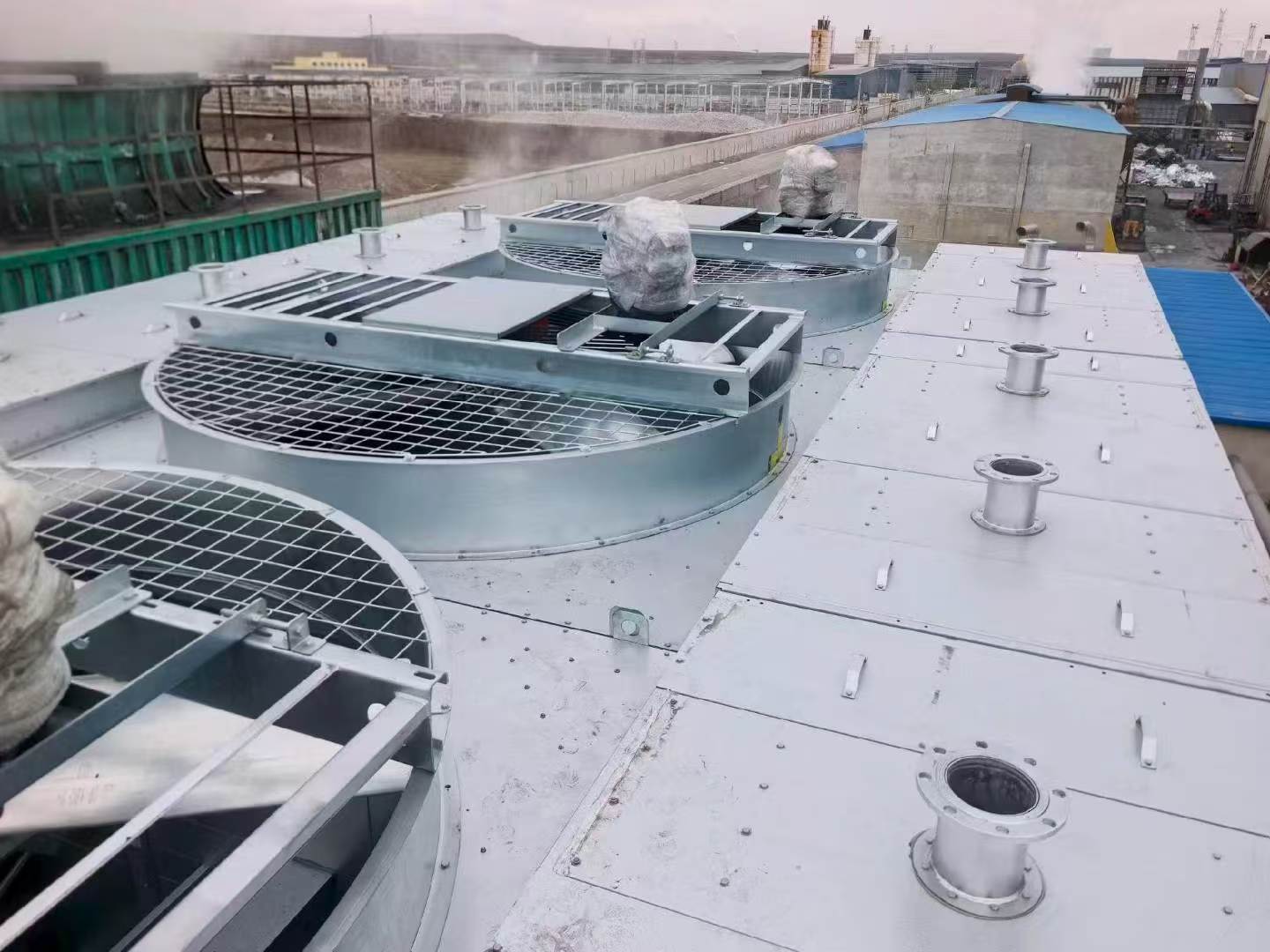
Choosing a cooling tower fan motor is not simply a matter of selecting the highest efficiency rating. The motor must match the mechanical and electrical requirements of the existing equipment.
Here are the main factors buyers should evaluate.
5.1 Determine the Required Motor Power
Motor power is one of the most important specifications.
The required power depends on the fan's operating point, airflow demand, static pressure, rotational speed, and drive-system losses.
Before selecting a replacement motor, collect the following information:
Existing motor rated power
Fan diameter and design
Required fan speed
Gearbox ratio, if applicable
Actual operating current
Site operating conditions
Manufacturer's original design data
Do not increase motor power simply because the existing motor frequently trips. The real cause may be excessive fan loading, incorrect blade pitch, mechanical friction, voltage imbalance, or a damaged drive component.
A qualified technician should determine the actual cause before selecting a larger motor.
5.2 Check Voltage, Frequency, and Speed
Electrical compatibility is essential.
Check the motor nameplate and confirm:
Rated voltage
Supply frequency
Number of phases
Rated speed
Full-load current
Starting method
Connection arrangement
A motor designed for one voltage or frequency may not operate correctly on another supply.
Speed is equally important. In a cooling tower fan system, changing motor speed can affect airflow, fan power demand, gearbox loading, and overall system performance.
For gear-driven fans, confirm that the motor speed and gearbox ratio provide the required fan speed.
5.3 Consider the Operating Environment
Cooling tower motors operate in environments that may include high humidity, water droplets, airborne chemicals, dust, and temperature changes.
These conditions can influence motor service life.
Before purchasing, consider:
The motor's enclosure and materials should be suitable for the actual installation environment.
5.4 Evaluate Protection and Insulation Ratings
Protection and insulation ratings help determine whether a motor is suitable for a particular application.
The IP rating describes protection against access to hazardous parts, solid objects, and water under specified test conditions.
The insulation class indicates the thermal capability of the motor insulation system under defined conditions.
For cooling tower applications, buyers should confirm the required IP rating, insulation class, temperature rise, and other environmental requirements with the motor manufacturer.
Do not select a motor based on one rating alone. The complete operating environment matters.
5.5 Match the Motor with the Fan and Gearbox
This is one of the most frequently overlooked parts of motor selection.
A cooling tower fan motor must work with the connected fan and drive system.
For a direct-drive arrangement, check shaft dimensions, coupling, mounting, rotational direction, and fan operating requirements.
For a gearbox-driven arrangement, confirm:
A motor may fit physically but still be unsuitable mechanically.
The goal is not merely to install a motor that fits. It is to restore the intended operating performance of the entire fan system.
6. Important Technical Specifications of Cooling Tower Fan Motors
Before requesting a quotation, prepare the motor's technical requirements. This helps suppliers identify compatible products and reduces the risk of ordering errors.
6.1 Rated Power and Full-Load Current
Rated power is commonly expressed in kilowatts (kW) or horsepower (HP).
Full-load current indicates the approximate current drawn under rated operating conditions. The actual current depends on voltage, frequency, load, power factor, and efficiency.
When evaluating a replacement motor, compare the nameplate information with the original equipment requirements.
6.2 Efficiency Class and Power Factor
Motor efficiency classes are defined by applicable standards, such as IEC efficiency classifications.
The required class depends on the market, motor type, rated output, and applicable regulations.
Power factor describes the relationship between real power and apparent power. A higher power factor can reduce current demand for a given real power under comparable conditions, but it is not the same as motor efficiency.
Buyers should review both values rather than treating them as interchangeable.
6.3 Enclosure and Cooling Method
The enclosure protects internal motor components, while the cooling method helps remove heat generated during operation.
The correct arrangement depends on installation conditions, motor design, and operating duty.
For outdoor cooling tower applications, check whether the motor is designed for the expected moisture exposure, ventilation, ambient temperature, and mounting position.
7. Common Cooling Tower Motor Problems
Even a high-quality motor can develop problems if it is incorrectly installed, overloaded, exposed to unsuitable conditions, or poorly maintained.
Recognizing early warning signs can help prevent unexpected shutdowns.
7.1 Motor Overheating
Motor overheating may result from:
Do not assume that overheating always means the motor is too small. Inspect the electrical supply and mechanical drive system before deciding on a replacement.
7.2 Excessive Vibration and Noise
Vibration and unusual noise may indicate bearing wear, loose mounting bolts, shaft misalignment, mechanical imbalance, or gearbox problems.
In cooling tower fan systems, damaged or unbalanced fan blades can also create vibration.
The motor should be inspected together with the fan, coupling, gearbox, shaft, and supporting structure.
7.3 Frequent Motor Tripping
Repeated tripping may be caused by overload, short circuits, ground faults, phase imbalance, incorrect protection settings, or mechanical resistance.
Resetting the motor repeatedly without identifying the cause is not a reliable solution.
A qualified electrician or maintenance technician should inspect the electrical and mechanical systems before restarting the equipment.
8. Practical Tips to Improve Cooling Tower Motor Efficiency
Buying an efficient motor is only the first step. Proper operation and maintenance are equally important.
8.1 Keep the Fan System Properly Balanced
Fan imbalance increases mechanical stress and can reduce equipment reliability.
Inspect blades for cracks, damage, corrosion, deposits, and loose connections. Check the hub and mounting hardware according to the manufacturer's instructions.
Never add improvised counterweights or adjust a rotating fan while it is running.
8.2 Maintain the Gearbox and Drive Components
For gear-driven cooling tower fans, gearbox condition can influence total drive-system efficiency.
Follow the manufacturer's lubrication schedule and use the specified lubricant.
Also inspect the coupling, shaft, seals, bearings, and mounting structure.
8.3 Use Variable Speed Control Where Appropriate
A VFD can help reduce fan speed when the cooling load is lower.
Because fan power demand often changes significantly with rotational speed, speed control can provide substantial energy-saving potential in suitable systems.
However, the actual benefit depends on the fan curve, system resistance, minimum airflow requirements, process conditions, and control strategy.
8.4 Inspect the Cooling Tower Regularly
Poor cooling performance is not always a motor problem.
Blocked fill, dirty air passages, poor water distribution, scale buildup, and damaged drift eliminators can all affect cooling tower performance.
A complete inspection helps determine whether the motor, fan, or another component needs attention.
8.5 Monitor Operating Conditions
Record motor current, voltage, vibration, temperature, and operating hours.
Comparing these readings over time can help identify abnormal changes before they develop into major failures.
Maintenance records also make future motor replacement and energy-efficiency evaluations easier.
9. Why Choose Power Tower Cooling Technology?
When purchasing cooling tower motors and related components, buyers need more than a product specification sheet. They need a supplier that understands cooling tower equipment and component compatibility.
Power Tower Cooling Technology (Shaoxing) Co.,Ltd. focuses on cooling tower components and replacement products for industrial cooling applications.
Its product range includes cooling tower fill, drift eliminators, fan-related components, and other replacement parts. For projects involving cooling tower fan motors and drive components, buyers should confirm the required motor specifications, configuration, and availability directly with the company.
9.1 Cooling Tower Component Experience
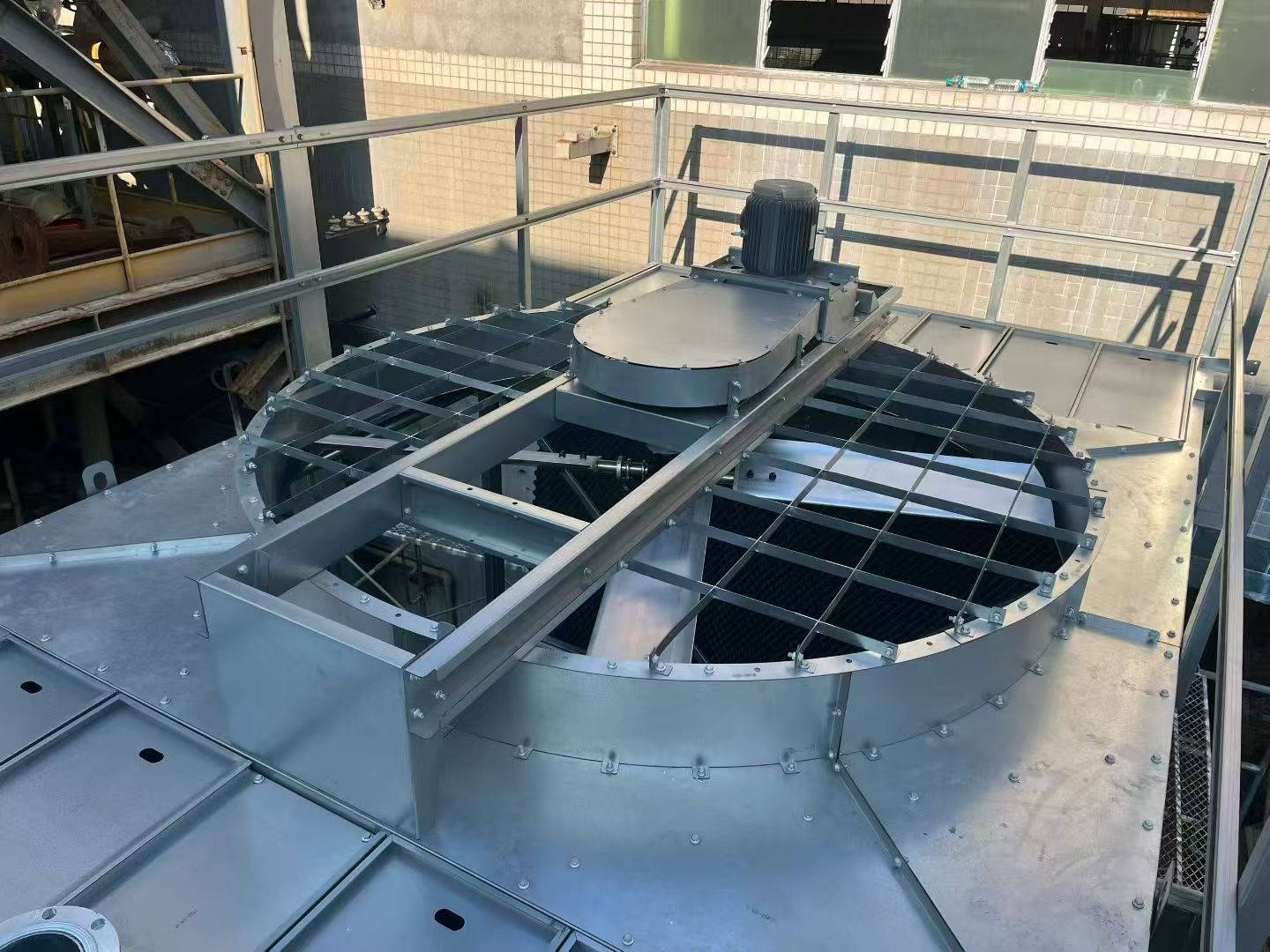
Cooling tower performance depends on the coordination of several components, including fans, motors, gearboxes, fill media, drift eliminators, and water distribution systems.
A supplier familiar with cooling tower components can help buyers identify the information needed to evaluate replacement products.
9.2 Support for Replacement Requirements
When replacing an existing motor, providing accurate technical information is essential.
Buyers can prepare the following details before contacting Power Tower:
Existing motor nameplate photo
Rated power and voltage
Frequency and rated speed
Mounting arrangement
Shaft dimensions
Protection and insulation ratings
Fan model and gearbox information
Installation photos
These details help clarify the replacement requirements and reduce compatibility risks.
9.3 Contact Power Tower
For cooling tower components and replacement inquiries, visit:
Website: https://www.coolingtowerpart.com
Company: Power Tower Cooling Technology (Shaoxing) Co.,Ltd.
When requesting a quotation, provide your application details and technical requirements so the appropriate product configuration can be evaluated.
10. Frequently Asked Questions
Q1: What is the best motor for a cooling tower fan?
There is no single best motor for every cooling tower. The right choice depends on rated power, speed, voltage, mounting arrangement, operating environment, enclosure protection, and compatibility with the fan and drive system.
Q2: Can an energy-efficient motor reduce cooling tower electricity costs?
Yes. A more efficient motor can reduce electrical input for the same mechanical output. The actual savings depend on operating hours, load, efficiency improvement, and electricity prices.
Q3: Can I replace my old cooling tower motor with a higher-efficiency motor?
In many cases, yes, but the replacement must match the original equipment requirements. Check power, speed, voltage, mounting, shaft dimensions, protection rating, and gearbox compatibility before purchasing.
Q4: Can a VFD improve cooling tower fan motor efficiency?
A VFD can reduce energy consumption when it allows fan speed to follow changing cooling demand. However, it must be correctly selected and configured for the motor, fan, gearbox, and process requirements.
Q5: Why does my cooling tower fan motor overheat?
Possible causes include overload, poor ventilation, high ambient temperature, voltage imbalance, bearing problems, frequent starting, or an unsuitable motor. A complete electrical and mechanical inspection is recommended.
Q6: How often should a cooling tower fan motor be maintained?
Maintenance frequency depends on the motor manufacturer's recommendations and site operating conditions. Regular inspections should include temperature, vibration, noise, electrical connections, ventilation, and bearing condition where applicable.
Q7: What information should I provide when buying a replacement motor?
Provide the existing motor nameplate, rated power, voltage, frequency, speed, mounting type, shaft dimensions, protection rating, and details of the connected fan or gearbox.
Conclusion
Energy-efficient cooling tower fan motors can help industrial facilities reduce electricity consumption, improve operating reliability, and manage long-term equipment costs.
However, choosing the right motor requires more than comparing efficiency ratings. You need to evaluate power, speed, voltage, environmental protection, mounting, and compatibility with the fan and gearbox.
A well-matched motor works as part of a complete cooling tower system. When the motor, fan, drive components, and cooling tower structure operate together correctly, the facility has a better foundation for reliable and efficient cooling.
For cooling tower component and replacement inquiries, contact Power Tower Cooling Technology (Shaoxing) Co.,Ltd. through https://www.coolingtowerpart.com and provide your equipment details to help identify a suitable solution.


