Why Is High-Quality Cooling Tower Fill Media Essential for Industrial Systems?
Cooling tower fill media plays a critical role in the heat rejection process of industrial cooling systems. By increasing the contact area between circulating water and air, it helps improve heat transfer and supports stable cooling tower operation. However, not all fill media products offer the same performance, durability, or compatibility.
For industries such as power generation, chemical processing, steel manufacturing, oil and gas, food production, and commercial HVAC, selecting the right cooling tower fill media is an important investment in operational reliability.
Sourcing high-quality cooling tower fill media requires more than comparing prices. Buyers must evaluate material properties, fill geometry, operating conditions, manufacturing quality, supplier experience, and long-term maintenance requirements.
This guide explains how industrial buyers can identify reliable products, avoid common sourcing mistakes, and choose cooling tower fill media that meets their specific project requirements.
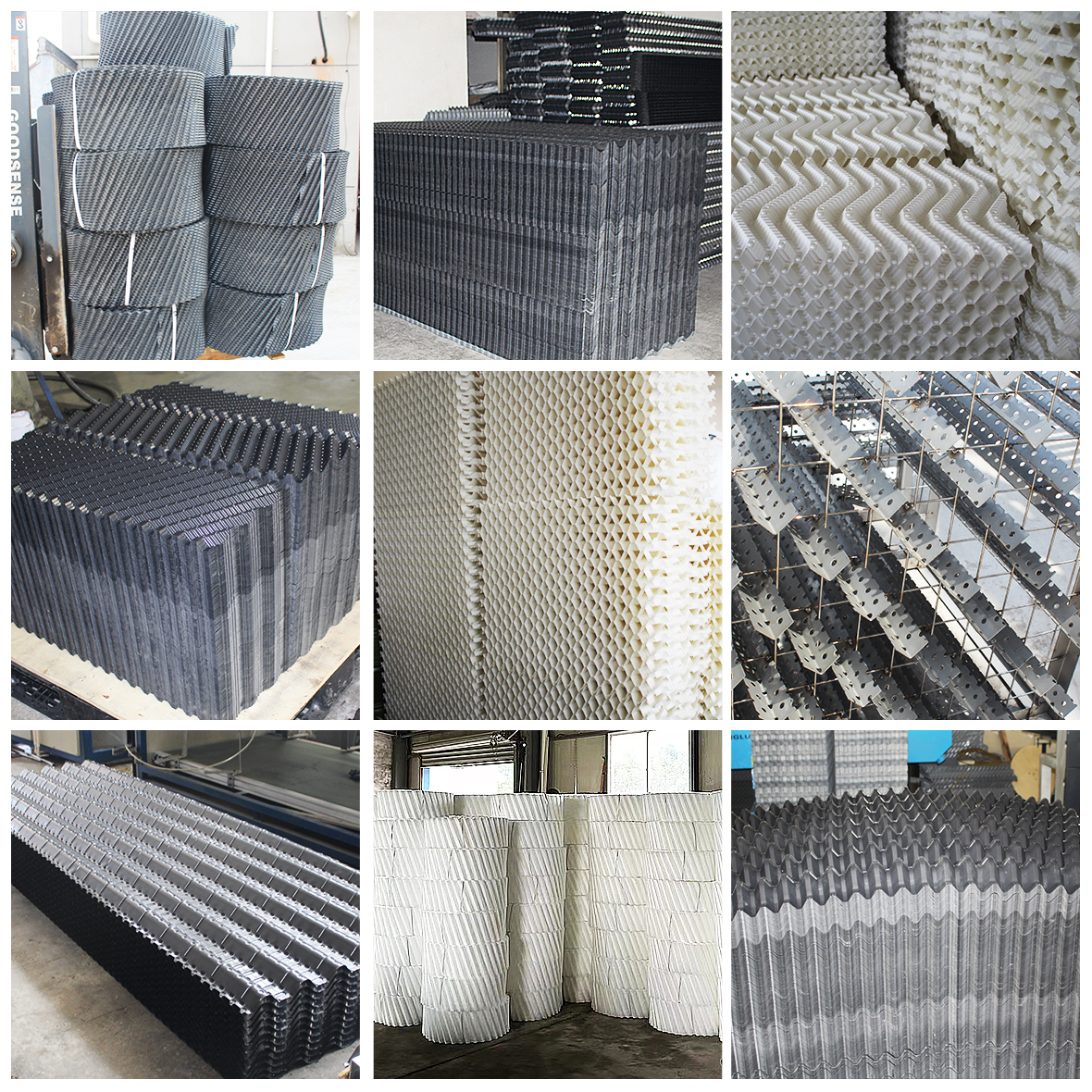
What Should Buyers Know About Cooling Tower Fill Media?
Cooling tower fill media is installed inside a cooling tower to increase the contact between water and air. This interaction promotes heat transfer and, in evaporative cooling systems, helps remove heat through evaporation.
The fill design affects cooling efficiency, airflow resistance, water distribution, fouling behavior, and maintenance requirements.
What Are the Main Types of Cooling Tower Fill Media?
Understanding different fill configurations is the first step toward choosing a suitable product.
Film Fill for High Heat Transfer Efficiency
Film fill consists of closely spaced sheets with specially formed surfaces. Water spreads across these surfaces as a thin film, increasing the area available for heat and mass transfer.
Common applications include:
Industrial cooling towers with relatively clean circulating water
Commercial HVAC systems
Crossflow cooling towers
Counterflow cooling towers
Replacement projects requiring compact heat-transfer media
Film fill can provide excellent thermal performance when the water quality, operating temperature, and maintenance program are appropriate.
Splash Fill for Demanding Water Conditions
Splash fill breaks falling water into smaller droplets through repeated contact with bars, grids, or other structural elements. This design promotes water-air contact without relying on narrow film-forming passages.
Splash fill may be appropriate for certain industrial applications involving suspended solids or more challenging circulating-water conditions. Its suitability depends on the specific design, water quality, and tower operating requirements.
Crossflow and Counterflow Fill Configurations
Crossflow and counterflow describe the relative movement of air and water inside the cooling tower.
In crossflow towers, air generally moves horizontally across the falling water. In counterflow towers, air moves upward against the downward flow of water.
The fill blocks, support structures, and water distribution systems must match the tower configuration. A product designed for one arrangement should not automatically be assumed suitable for the other.
Which Materials Are Commonly Used in Cooling Tower Fill Media?
PVC and polypropylene (PP) are widely used in plastic cooling tower fill applications. Their performance depends on the material grade, manufacturing process, thickness, and operating environment.
PVC Cooling Tower Fill Media
PVC fill is widely used in conventional industrial and HVAC cooling towers because it can provide a practical balance of formability, cost, and heat-transfer performance.
When sourcing PVC fill, buyers should confirm:
Maximum recommended operating temperature
Chemical compatibility with circulating water
Sheet thickness and dimensional consistency
Resistance to deformation under operating conditions
Suitability for the intended fill geometry
PP Cooling Tower Fill Media
PP fill is worth evaluating when an application requires different temperature or chemical-resistance characteristics from those offered by a particular PVC product.
However, buyers should not assume that every PP product performs better than PVC. Material selection must be based on documented specifications and actual operating conditions.
How Can You Identify High-Quality Cooling Tower Fill Media?
A reliable sourcing decision begins with measurable quality criteria. Attractive product photographs and competitive quotations cannot replace technical documentation and product verification.
Evaluate Material Quality and Manufacturing Consistency
The quality of the raw material influences the fill's mechanical strength, dimensional stability, and resistance to environmental exposure.
Ask the supplier to explain the material grade, manufacturing process, quality-control procedures, and recommended service conditions.
What Quality Indicators Should You Check?
Pay attention to the following characteristics:
Consistent sheet thickness
Uniform corrugation and surface geometry
Accurate block dimensions
Clean edges and stable bonding
Appropriate rigidity and flexibility
Resistance to cracking and deformation under specified conditions
For large industrial orders, request representative samples or inspection records before approving mass production.
Examine Fill Geometry and Heat-Transfer Design
Fill media is an engineered component rather than a generic plastic product. Its surface pattern, flute spacing, sheet angle, and passage dimensions influence water distribution and airflow.
A fill design with a large nominal surface area is not automatically the best choice. If the passages are unsuitable for the circulating water, deposits may accumulate and restrict airflow.
Balance Thermal Performance With Fouling Resistance
When comparing products, consider both cooling performance and the risk of blockage.
For relatively clean water, a high-efficiency film fill may be appropriate. For applications with heavier suspended-solid loads, a more open fill design may be worth evaluating.
The objective is to achieve an appropriate balance between heat transfer, pressure drop, cleanability, and maintenance cost.
Request Technical Documentation Before Ordering
Professional suppliers should be able to explain how their products match the proposed application.
Depending on the project, useful documents include:
Product data sheets
Material specifications
Dimensional drawings
Recommended operating-temperature limits
Thermal performance information
Airflow resistance or pressure-drop data
Inspection and quality-control records
Packaging and shipping specifications
For replacement projects, compatibility information is especially important because even a high-quality product may perform poorly if it does not match the original tower design.
How Should Industrial Buyers Match Fill Media to Their Cooling Tower?
The correct cooling tower fill media depends on the complete operating environment, not simply the tower's external dimensions.
Confirm the Existing Cooling Tower Configuration
Before requesting quotations, collect the original equipment information whenever possible.
Essential Technical Information for Sourcing
Prepare the following details:
Cooling tower manufacturer and model
Tower type: crossflow or counterflow
Existing fill material and configuration
Fill block length, width, and height
Sheet thickness and corrugation pattern
Required quantity and installation arrangement
Operating water temperature and flow rate
Water quality and suspended-solid concentration
Site location and expected delivery date
If the original drawings are unavailable, clear photographs, measured dimensions, and a sample of the existing fill can help the supplier assess compatibility.
Consider Water Quality and Operating Temperature
Water quality is one of the most important factors in fill selection. Mineral scaling, biological growth, suspended solids, and chemical treatment can all influence the performance and service life of fill media.
Match the Fill to Real Operating Conditions
For systems with relatively clean circulating water, film fill may provide a suitable balance of thermal performance and space efficiency.
For systems with significant suspended solids, splash fill or a more open fill configuration may reduce the risk of passage blockage.
High-temperature applications require particular attention to material selection. Buyers should verify the manufacturer's recommended continuous operating temperature rather than relying on a generic material description.
Check Compatibility With Water Distribution and Support Structures
Replacement fill must fit the tower's support system and work with its water distribution arrangement.
Incorrect block dimensions can create gaps, interfere with airflow, or leave portions of the tower underutilized. Changes in fill geometry can also affect pressure drop and thermal performance.
Before approving a substitute product, ask the supplier to confirm dimensional compatibility and identify any engineering modifications that may be required.
How Can You Find a Reliable Cooling Tower Fill Media Supplier?
A capable supplier should offer more than manufacturing capacity. Technical communication, quality assurance, customization, and delivery reliability are equally important.
Assess Manufacturing Experience and Product Range
Look for suppliers with experience producing fill media for industrial cooling towers, including replacement and customized projects.
A broader product range can be useful when the buyer needs to compare PVC film fill, PP fill, splash fill, and different crossflow or counterflow configurations.
Questions to Ask Potential Suppliers
Before placing an order, ask:
Can you manufacture fill media according to our drawings or samples?
What materials and thicknesses are available?
What operating conditions are supported by the proposed product?
Can you provide dimensional drawings and technical specifications?
How do you inspect product quality before shipment?
Can you support large-volume or repeat orders?
What are the production lead time and warranty conditions?
The quality of the supplier's answers can reveal whether it understands the technical requirements of the project.
Compare Customization Capabilities
Standard fill media may be sufficient for common cooling tower models. However, older equipment, nonstandard dimensions, and retrofit projects may require customized blocks.
A capable manufacturer should be able to assess dimensional requirements, material selection, block arrangement, and installation constraints before confirming production.
Why Customization Can Reduce Project Risk
Properly customized fill can reduce unnecessary cutting, installation adjustments, and material waste. It can also help maintain the intended airflow passages and water distribution pattern.
However, customization should preserve the tower's engineering requirements. Changes to flute geometry or fill density should be evaluated rather than approved solely because the dimensions match.
Review Quality Control and Order Traceability
For industrial buyers, consistent quality across the entire order is more important than the appearance of a single sample.
Ask whether the manufacturer checks raw materials, product dimensions, bonding quality, packaging, and finished quantities.
For repeat orders, retaining product drawings and agreed specifications can improve consistency between shipments and simplify future replacement purchases.
How Can You Compare Cooling Tower Fill Media Prices More Effectively?
Price comparison is an important part of procurement, but the cheapest quotation may not offer the lowest total project cost.
Compare Equivalent Technical Specifications
Before comparing unit prices, confirm that all quotations cover the same product requirements.
Build a Standardized Quotation Checklist
Compare the following items:
| Cost or specification | What to verify |
| Material | PVC, PP, or another specified material |
| Dimensions | Sheet and assembled block sizes |
| Thickness | Nominal thickness and tolerances |
| Fill design | Film, splash, or another configuration |
| Quantity | Total blocks, sheets, or cubic volume |
| Packaging | Protection against deformation and damage |
| Delivery | Production time and shipping arrangements |
| Warranty | Coverage and applicable conditions |
A standardized checklist reduces the risk of comparing technically different products as if they were equivalent.
Calculate Total Landed Cost
For imported cooling tower fill media, the total cost may include product value, packaging, international freight, insurance, customs duties, taxes, domestic transportation, and installation.
Buyers in Brazil should confirm applicable import charges and delivery terms with their customs broker or logistics provider.
Evaluate Cost Over the Expected Service Life
A product with a lower purchase price may require more frequent cleaning or earlier replacement if it is unsuitable for the operating environment.
A more useful comparison considers initial cost alongside expected maintenance, energy consumption, downtime risk, and replacement frequency. These costs should be estimated using the actual application rather than unsupported assumptions about product life.
What Packaging and Logistics Details Matter for International Orders?
Cooling tower fill media is often lightweight but bulky. Shipping efficiency can therefore have a substantial effect on the total cost of a large order.
Optimize Packaging Without Damaging the Fill
Ask the supplier how the fill will be stacked, secured, and protected during transportation.
Packaging should prevent excessive compression, deformation, and movement. For bonded fill blocks, the arrangement must also protect the bonding points.
Confirm Shipment Details Before Production
For international shipments to Brazil, confirm:
Total quantity and packing dimensions
Gross and net weight
Pallet or crate specifications
Container-loading arrangement
Estimated production and transit times
Shipping documents and delivery terms
Responsibilities for customs clearance
For large orders, requesting a preliminary packing plan can help buyers estimate freight costs and warehouse requirements.
Coordinate Delivery With the Maintenance Shutdown
Industrial cooling tower fill replacement may require a planned shutdown. Delayed delivery can extend downtime and disrupt production schedules.
Coordinate the delivery date with the maintenance team, installation contractor, and supplier. Allow sufficient time for transport, customs clearance, unloading, and inspection before the scheduled replacement.
What Common Sourcing Mistakes Should Buyers Avoid?
Even experienced procurement teams can encounter problems when purchasing replacement fill media.
Choosing Fill Based Only on Price
A low-cost product may be unsuitable for the tower's operating temperature, water quality, or airflow requirements.
Better approach: Compare technical specifications first, then evaluate price and total project cost.
Ignoring Water Quality
Film fill may become blocked rapidly when used in an application with unsuitable water quality and inadequate treatment.
Better approach: Share water-quality information with the supplier and evaluate fouling resistance before selecting the fill design.
Assuming All Fill Blocks Are Interchangeable
Similar-looking fill products may differ in flute angle, sheet spacing, dimensions, and airflow resistance.
Better approach: Verify the proposed product against the existing tower's design requirements.
Failing to Confirm Installation Requirements
Even compatible fill media can cause problems if support structures, water distribution, or installation clearances are overlooked.
Better approach: Confirm the installation arrangement and required accessories before approving the final order.
How Can High-Quality Cooling Tower Fill Media Improve Long-Term Performance?
The benefits of suitable fill media extend beyond the immediate replacement project.
Maintain Stable Cooling Performance
Properly selected fill helps provide effective contact between air and water. When combined with appropriate water distribution and maintenance, it supports consistent heat rejection.
Reduce Avoidable Maintenance
Selecting a fill design suited to the circulating water can help reduce fouling-related maintenance and minimize unnecessary cleaning interventions.
Support Energy-Efficient Operation
Fill geometry influences airflow resistance and heat transfer. A compatible, clean fill system can help the cooling tower operate closer to its intended design conditions.
Actual energy savings depend on the tower, fan, water flow, operating conditions, and control strategy. They should be evaluated through engineering calculations or measured operating data.
Simplify Future Replacement Projects
Maintaining accurate product drawings, material specifications, and supplier records makes subsequent orders easier to manage.
A documented replacement specification can also help ensure consistency across multiple cooling towers at the same industrial facility.
Frequently Asked Questions About Cooling Tower Fill Media
What Is the Best Cooling Tower Fill Media for Industrial Systems?
There is no single best option for every industrial system. PVC film fill can suit applications requiring high heat-transfer performance with relatively clean water, while selected PP or splash-fill designs may be more appropriate for demanding water conditions. The final choice should be based on tower design, operating temperature, water quality, and performance requirements.
How Do I Know When Cooling Tower Fill Media Needs Replacement?
Common warning signs include severe scaling, persistent blockage, broken or deformed sheets, collapsed fill blocks, uneven water distribution, and declining cooling performance. Inspection and cleaning results should be considered before deciding whether partial or complete replacement is necessary.
Can I Purchase Customized Cooling Tower Fill Media From an Overseas Manufacturer?
Yes. Many manufacturers can assess custom requirements based on drawings, dimensions, photographs, or physical samples. Buyers should confirm material specifications, compatibility, production tolerances, quality inspection, shipping arrangements, and installation requirements before placing an order.
How Can I Ensure the Replacement Fill Fits My Existing Cooling Tower?
Provide the original tower model, fill dimensions, block arrangement, material, and relevant operating information. If the original documentation is unavailable, provide accurate measurements and photographs. Ask the supplier to confirm compatibility before production.
How Long Does Cooling Tower Fill Media Last?
Service life varies with material quality, water chemistry, operating temperature, maintenance, and exposure to ultraviolet radiation or chemicals. Instead of relying on a universal replacement interval, establish an inspection schedule and monitor the condition and performance of the fill.
Conclusion: Source Cooling Tower Fill Media With Confidence
Sourcing high-quality cooling tower fill media for industrial systems requires a structured approach that combines engineering verification, material selection, supplier evaluation, and cost analysis.
Buyers should begin by identifying their tower configuration and operating conditions, then compare suitable fill materials and request technical documentation from qualified manufacturers. Dimensional compatibility, quality consistency, fouling resistance, and logistics planning should all be considered before an order is approved.
For industrial facilities, the right cooling tower fill media is not simply the product with the lowest price. It is the product that fits the existing system, supports reliable heat transfer, meets the application's operating requirements, and provides a practical balance between initial investment and long-term maintenance.
By following these sourcing principles, procurement teams can reduce replacement risks, improve purchasing decisions, and support dependable cooling tower operation.


