Cooling Tower Fan Blade Angle for Replacement Fan Blades
Cooling tower fan blade angle is a critical factor when selecting replacement fan blades for industrial cooling systems. The correct blade angle helps determine airflow, fan power consumption, cooling performance, and the mechanical load placed on the motor and drive system. When replacing worn, damaged, or outdated cooling tower fan blades, choosing the right angle is just as important as confirming blade diameter, material, and mounting dimensions.
For cooling tower manufacturers, maintenance contractors, and industrial buyers, understanding blade angle can help prevent installation problems and improve equipment reliability. An incorrect angle may result in insufficient airflow, excessive motor current, abnormal vibration, or increased energy consumption.
This guide explains how cooling tower fan blade angle affects replacement fan blade performance, which factors should be checked before ordering, and how to work with a professional cooling tower fan blade manufacturer to select a compatible replacement solution.
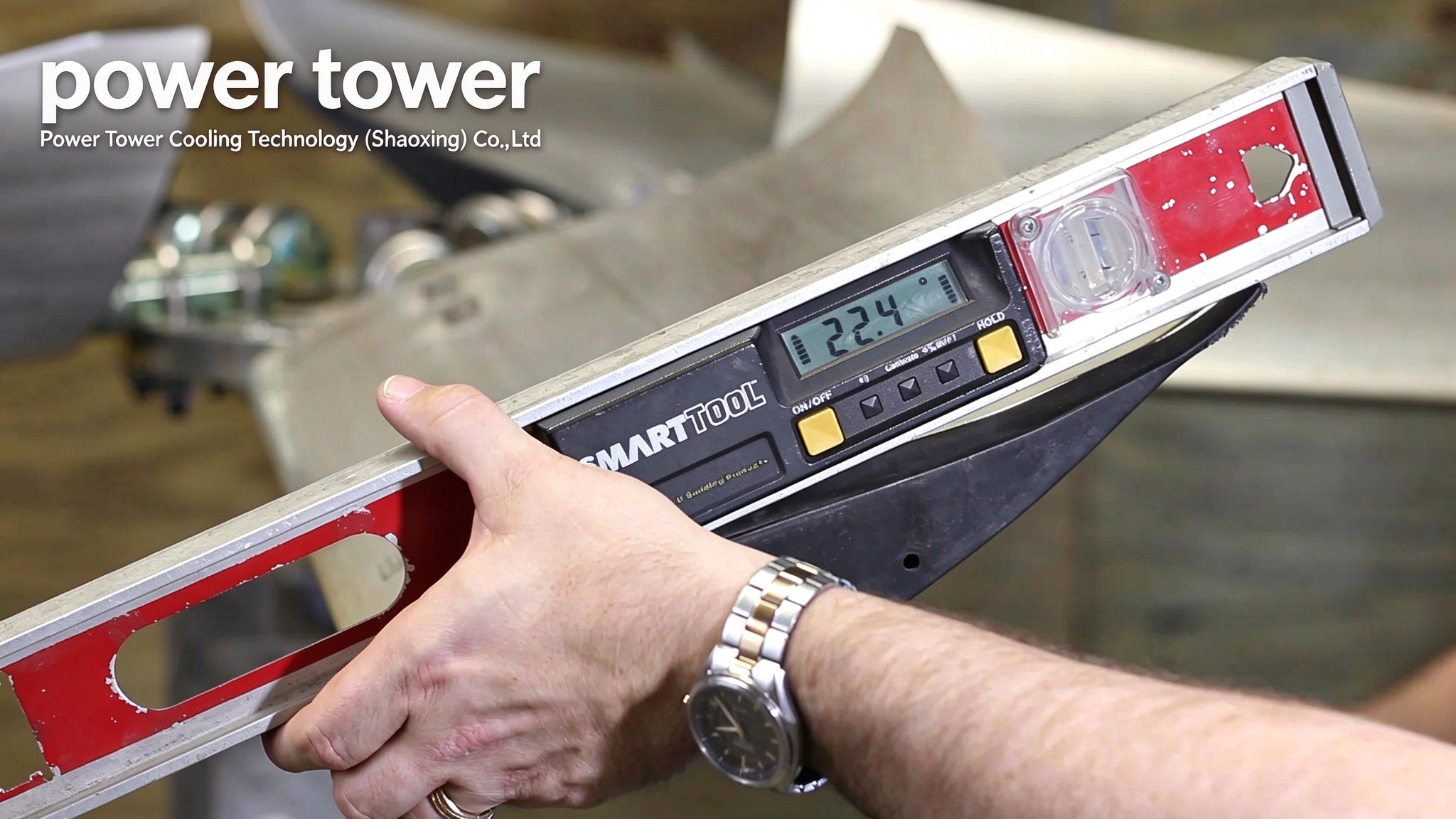
What Is Cooling Tower Fan Blade Angle?
Cooling tower fan blade angle generally refers to the pitch angle at which a blade is installed relative to a defined reference plane or direction of rotation. It influences how the rotating blade interacts with the air and generates the airflow required for heat rejection.
The exact definition and measurement method can vary between fan designs. Therefore, buyers should always follow the original manufacturer's drawing or measurement procedure when checking an existing fan blade angle.
How Does Blade Pitch Generate Airflow?
As the fan rotates, each blade accelerates air through the cooling tower. The blade profile and pitch determine how the blade develops aerodynamic force and how much power is required to move the air.
A suitable pitch angle helps the fan deliver its intended airflow under the designed operating conditions.
Why Is the Reference Plane Important?
Blade angle measurements are meaningful only when the reference plane is clearly defined. Different manufacturers may specify pitch using different reference methods.
When ordering replacement cooling tower fan blades, provide the original drawing, model number, or manufacturer's angle specification whenever possible. Avoid comparing angle measurements from different fan designs without confirming that they use the same reference.
Fixed-Pitch and Adjustable-Pitch Cooling Tower Fan Blades
Cooling tower fans may use fixed-pitch blades or adjustable-pitch blade assemblies.
Fixed-Pitch Fan Blades
Fixed-pitch blades are manufactured or installed at a specified angle for a particular fan configuration. When replacing them, the replacement must match the approved design and operating requirements.
Adjustable-Pitch Fan Blades
Adjustable-pitch blades allow the angle to be changed within a defined range. This can provide flexibility during commissioning or when matching airflow to operating requirements.
However, adjustability does not mean the angle can be changed arbitrarily. The manufacturer's approved settings, motor capacity, fan speed, and mechanical limits must be respected.
Why Is Cooling Tower Fan Blade Angle Important for Replacement Projects?
Replacing cooling tower fan blades is not simply a matter of installing components with similar dimensions. The aerodynamic characteristics must also be compatible with the original fan system.
Maintaining the Required Airflow
Cooling tower fans move air through the fill and other internal components to support heat and mass transfer. If the replacement blade angle differs significantly from the intended design, the fan may deliver too much or too little airflow.
How Can an Incorrect Angle Affect Cooling Performance?
An angle that is too small for the intended design may result in inadequate airflow. An angle that is too large may increase aerodynamic loading and power demand, potentially overloading the motor.
The relationship is not identical for every fan because blade geometry, rotational speed, and system resistance also affect the operating point.
Controlling Motor Power Consumption
Blade pitch influences the aerodynamic load on the fan. Increasing the pitch can increase airflow and power demand, but the actual response depends on the fan design and system conditions.
Why Should Motor Current Be Checked?
Motor current can provide useful information about loading when measured and interpreted correctly. During commissioning, the operating current should be checked against the motor nameplate, manufacturer limits, and the applicable operating conditions.
A replacement blade that causes excessive current may indicate an unsuitable pitch, incompatible geometry, or another system problem that requires investigation.
Reducing Vibration and Mechanical Stress
A suitable blade angle helps maintain the intended aerodynamic operating conditions. However, blade angle is only one factor affecting vibration.
What Else Can Cause Fan Vibration?
Common causes include:
Unequal blade pitch settings.
Differences in blade mass or geometry.
Incorrect blade installation.
Fan imbalance.
Loose mounting hardware.
Shaft or hub misalignment.
Worn bearings or drive components.
Before blaming the blade angle alone, inspect the complete fan assembly and drive system.
What Factors Determine the Correct Cooling Tower Fan Blade Angle?
There is no universal blade angle that works for every cooling tower. The correct setting depends on the original fan design and the operating conditions of the equipment.
Fan Diameter and Blade Geometry
Fan diameter, blade length, chord, curvature, and twist distribution influence aerodynamic performance.
Why Must Blade Geometry Match the Original Design?
Two blades may have the same diameter but produce different airflow and power requirements if their profiles or pitch distributions differ.
For replacement projects, confirm the complete blade specification rather than relying on diameter and angle alone.
Fan Rotational Speed
Rotational speed affects blade tip speed, airflow, aerodynamic loading, and mechanical stress.
How Does RPM Influence Blade Angle Selection?
A blade designed for one rotational speed may not be suitable for another speed, even if its dimensions are similar. Higher speeds can change the aerodynamic load and mechanical stresses experienced by the blades.
Confirm the actual operating RPM and the approved speed range before selecting replacement blades.
Motor Power and Drive Configuration
The motor and drive system must be capable of handling the fan's operating load.
Check Motor and Transmission Compatibility
Before changing the blade angle or selecting a different blade design, verify:
Motor rated power.
Motor nameplate current.
Actual fan rotational speed.
Gearbox or belt-drive configuration.
Hub and shaft compatibility.
Manufacturer-approved fan operating limits.
A blade angle that increases airflow beyond the intended design may exceed the available motor or transmission capacity.
Cooling Tower Airflow Resistance
Airflow resistance is affected by the fill, drift eliminators, louvers, fan cylinder, and other components.
Why Should Internal Components Be Inspected?
Blocked fill or restricted air passages can reduce airflow and change fan operating conditions. Increasing the blade angle to compensate for these problems may increase power consumption without addressing the actual cause.
Inspect the cooling tower's air passages and water distribution system before deciding that the fan blades require a different angle.
How to Select the Correct Angle for Replacement Cooling Tower Fan Blades
A systematic selection process helps reduce the risk of ordering incompatible components.
Step 1 — Identify the Original Fan Model
Record the cooling tower manufacturer, fan model, blade part number, and available technical specifications.
What If the Original Model Is Unknown?
Collect photographs of the complete fan, hub, blade mounting arrangement, and nameplate. Measure the fan diameter and other accessible dimensions.
These details can help a qualified manufacturer identify the configuration, but photographs alone may not be sufficient for final engineering approval.
Step 2 — Confirm the Existing Blade Angle
If the original angle specification is available, use it as the starting point for replacement selection.
How Should Blade Angle Be Measured?
Follow the manufacturer's specified reference plane and measurement procedure. For adjustable-pitch fans, record the approved setting and check whether all blades use the same setting.
Do not estimate the angle solely from a photograph or from the apparent inclination of the blade.
Step 3 — Verify Blade Dimensions and Mounting Details
The replacement blades must fit the existing assembly and maintain the intended mechanical configuration.
Key Dimensions to Record
Fan diameter.
Blade length and width.
Blade profile and material.
Number of blades.
Mounting hole pattern.
Hub interface and attachment details.
Blade angle or approved pitch range.
Fan rotational speed.
Accurate information helps the manufacturer evaluate whether the proposed replacement is technically suitable.
Step 4 — Review the Operating Requirements
Confirm the required airflow, cooling duty, motor power, and normal operating conditions.
Should the Replacement Use a Different Angle?
A different angle should be considered only when supported by engineering analysis or the fan manufacturer's recommendations. If the cooling tower is not achieving the required performance, investigate other possible causes before changing the blade setting.
These may include blocked fill, poor water distribution, damaged fan blades, motor problems, or an unsuitable fan operating point.
Step 5 — Confirm the Final Specification with the Manufacturer
Before production, request confirmation of the blade design, angle reference, material, dimensions, rotational speed, and mounting compatibility.
For customized replacement blades, written technical approval can reduce the risk of errors during manufacturing and installation.
Common Mistakes When Adjusting Cooling Tower Fan Blade Angle
Incorrect blade adjustment can increase operating costs and create avoidable mechanical problems.
Increasing the Angle to Obtain More Airflow
A larger blade angle does not guarantee better cooling tower performance.
What Can Go Wrong?
An excessive angle may increase motor load, power consumption, vibration, and mechanical stress. It may also move the fan away from its intended operating point.
Adjustments should remain within the approved range and be evaluated against actual operating data.
Using the Same Angle for Different Fan Models
Different fan models can have different blade profiles, diameters, and aerodynamic characteristics.
Why Is Model-Specific Verification Necessary?
The same nominal angle may produce different airflow and power requirements on different fans. Use the specification for the actual fan model rather than applying a setting copied from another cooling tower.
Ignoring Blade-to-Blade Consistency
For an adjustable-pitch fan, inconsistent settings can create uneven aerodynamic forces.
How Can Consistency Be Maintained?
Set each blade according to the manufacturer's procedure, using the same reference method and appropriate measurement tools. Confirm the specified attachment torque and balancing requirements before operation.
Changing Blade Angle Without Checking the Motor
A fan may appear to move more air after a pitch increase, but the motor may also draw more current.
What Should Be Checked After Adjustment?
Qualified personnel should verify motor current or power, vibration, fan speed, airflow where measurable, and cooling performance. Stop the equipment if abnormal vibration, mechanical interference, or an overload condition is detected.
How Can Cooling Tower Fan Blade Manufacturers Support Replacement Projects?
An experienced manufacturer can help buyers confirm compatibility and reduce uncertainty when original fan blade information is incomplete.
Customized Blade Manufacturing
Manufacturers may produce replacement blades according to approved drawings, existing specifications, or a verified sample.
What Can Be Customized?
Depending on the manufacturer's capabilities, customization may include:
Blade length and profile.
FRP or aluminum construction.
Blade pitch and twist distribution.
Mounting holes and attachment interfaces.
Surface finish and protective treatment.
Fixed-pitch or adjustable-pitch configuration.
Any change to the original design should be reviewed for aerodynamic and mechanical compatibility.
Material Selection and Durability
Cooling tower fan blades operate in environments with high humidity and potential exposure to water-treatment chemicals and UV radiation.
Choosing Between FRP and Aluminum
FRP blades may provide corrosion resistance and design flexibility, while aluminum blades can offer a useful balance of weight and structural strength. The correct material depends on the application, environmental conditions, and original fan design.
A professional supplier should explain the relevant material properties and operating limitations.
Quality Control and Technical Documentation
Manufacturers should verify the dimensions, mounting details, and other critical specifications of replacement blades.
What Documentation Should Buyers Request?
Depending on the product, useful documentation may include technical drawings, material specifications, dimensional inspection records, balance verification, and installation instructions.
These records support proper installation and make future replacement projects easier to manage.
How to Verify Performance After Replacing Cooling Tower Fan Blades
Correct installation is essential for ensuring that replacement blades operate safely and deliver the intended performance.
Inspect the Installation Before Startup
Confirm that the blades, hub, fasteners, guards, and fan cylinder are installed according to the manufacturer's instructions.
Follow Safe Commissioning Procedures
The fan should be inspected and commissioned by qualified personnel. Before any adjustment or physical inspection, isolate the power supply and follow the site's lockout/tagout procedures.
Ensure all guards are in place before operating the fan.
Measure Operating Power and Motor Current
Compare the fan's operating power or current with the approved limits and available baseline data.
Why Are Comparable Conditions Important?
Power measurements should be interpreted alongside fan speed and cooling demand. Differences in ambient conditions or system resistance can affect the results, so comparisons are most meaningful under similar operating conditions.
Monitor Airflow, Cooling Performance, and Vibration
Evaluate whether the fan provides the required airflow and whether the cooling tower achieves its intended thermal performance.
What Indicates a Successful Replacement?
A successful replacement should meet the approved performance requirements while operating within the specified mechanical and electrical limits. Abnormal vibration, excessive current, or unexpected cooling performance should be investigated before the system is considered fully commissioned.
FAQ About Cooling Tower Fan Blade Angle
What Is the Best Cooling Tower Fan Blade Angle?
There is no single best angle for all cooling tower fans. The correct angle depends on blade geometry, fan diameter, rotational speed, airflow requirements, motor capacity, and the manufacturer's design specifications.
Can I Use a Different Blade Angle for Replacement Fan Blades?
Only when the alternative angle has been confirmed as suitable for the specific fan design. A different setting may change airflow, power consumption, and mechanical loading.
Does a Larger Blade Angle Always Increase Cooling Efficiency?
No. Increasing the angle may increase airflow and power demand, but it does not necessarily improve overall cooling efficiency. The result depends on the complete fan and cooling tower system.
Should All Adjustable-Pitch Fan Blades Have the Same Angle?
They should follow the manufacturer's specified settings and tolerances. Consistent pitch is important for predictable aerodynamic loading and stable operation.
What Information Is Needed to Order Replacement Cooling Tower Fan Blades?
Provide the fan model, diameter, blade dimensions, material, existing angle specification, rotational speed, motor power, hub configuration, and required quantity. Drawings and photographs can help verify the configuration.
Conclusion
Cooling tower fan blade angle is an important consideration when selecting replacement fan blades for industrial cooling systems. The correct angle helps maintain the intended airflow, manage motor loading, and support reliable cooling tower operation.
However, blade angle should never be evaluated in isolation. Fan diameter, blade profile, rotational speed, material, mounting arrangement, motor capacity, and airflow resistance all influence the final result.
Before ordering replacement cooling tower fan blades, identify the original fan model, verify the existing angle specification, confirm all critical dimensions, and consult a qualified manufacturer if a design change is required. Following the approved installation and commissioning procedures can help reduce operating risks and ensure that replacement blades meet the system's performance requirements.


