FRP Fan Blade Manufacturer: Design, Materials And Performance
FRP fan blades play an important role in modern industrial cooling tower systems. As cooling towers become more demanding in terms of energy efficiency, airflow capacity, corrosion resistance, and long-term reliability, fiberglass-reinforced plastic (FRP) fan blades have become a popular choice for industrial applications. Compared with traditional metal fan blades, FRP fan blades offer several advantages, including lightweight construction, excellent corrosion resistance, flexible aerodynamic design, and reduced maintenance requirements.
Choosing a professional FRP Fan Blade Manufacturer is essential for obtaining reliable products that match specific cooling tower operating conditions. From material selection and blade structure to aerodynamic performance and manufacturing quality, every detail can influence the efficiency and service life of a cooling tower fan system.
This article explores FRP fan blade design, materials, manufacturing processes, performance characteristics, and important factors to consider when selecting an experienced manufacturer.
What Are FRP Fan Blades?
FRP fan blades are aerodynamic components manufactured from fiberglass-reinforced polymer materials. They are designed to generate airflow efficiently while maintaining sufficient mechanical strength under continuous operation.
In industrial cooling towers, fan blades draw warm, humid air through the tower and discharge it into the atmosphere. Their aerodynamic performance directly affects cooling efficiency, fan energy consumption, and overall system stability.
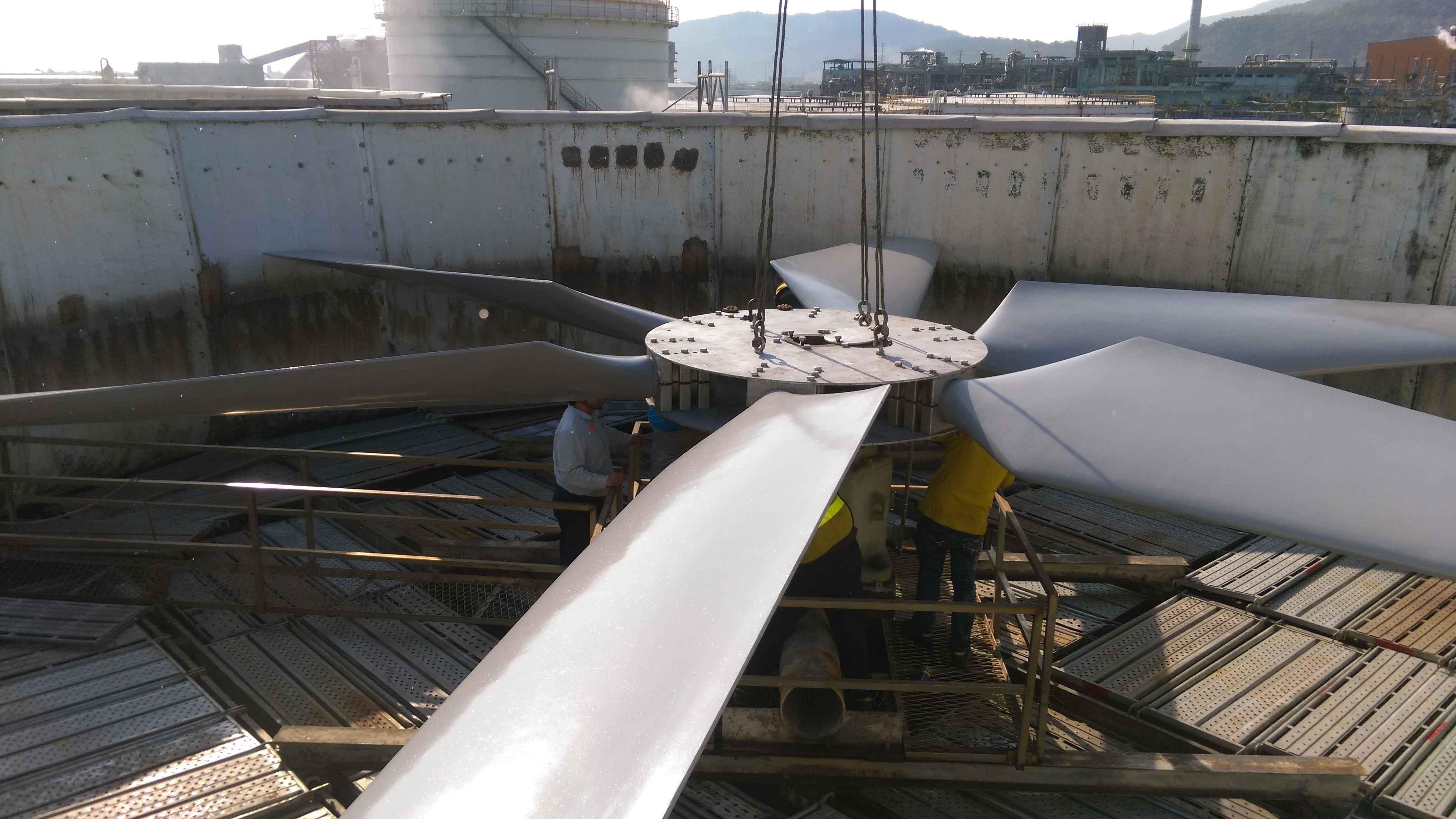
How Do FRP Fan Blades Work?
FRP fan blades operate by converting mechanical energy from a motor into airflow through rotational movement.
When the fan motor drives the hub assembly, the connected blades rotate at a specific speed. Their aerodynamic profiles create a pressure difference that moves air through the cooling tower.
Main Functions of FRP Cooling Tower Fan Blades
Generate sufficient airflow for heat rejection.
Maintain stable air movement throughout the cooling tower.
Reduce unnecessary energy consumption.
Support consistent cooling performance.
Resist moisture, chemicals, and corrosive environments.
Maintain structural stability during continuous operation.
A well-designed FRP fan blade can help industrial cooling towers achieve reliable airflow without requiring excessive motor power.
Why Choose an Experienced FRP Fan Blade Manufacturer?
Selecting the right manufacturer is not simply about comparing product prices. Manufacturing experience, material quality, aerodynamic engineering, and quality control all influence the final product.
An experienced FRP Fan Blade Manufacturer understands the operating requirements of different cooling tower configurations and can provide suitable solutions for replacement projects and new installations.
Professional Engineering and Product Design
Different cooling towers require different airflow volumes, static pressures, rotational speeds, and blade dimensions.
A professional manufacturer considers these parameters before recommending a blade design.
Customized Blade Design
Customized FRP fan blades can be developed according to:
Customized engineering helps ensure that the fan blade matches the existing fan system.
Consistent Manufacturing Quality
Manufacturing consistency is particularly important for industrial fan blades because dimensional differences and uneven weight distribution may cause vibration.
Reliable manufacturers implement quality control procedures throughout production, from raw material inspection to finished product testing.
Technical Support and Replacement Services
For cooling tower maintenance projects, customers may need replacement blades compatible with existing fan hubs and drive systems.
An experienced supplier can assist with dimensional measurements, blade selection, installation recommendations, and technical documentation.
FRP Fan Blade Materials and Their Characteristics
Material selection is one of the most important factors influencing FRP fan blade performance.
FRP materials generally combine reinforcing fibers with a polymer resin matrix. The fibers provide mechanical strength, while the resin protects the reinforcement and binds the composite structure together.
Fiberglass Reinforcement
Fiberglass is widely used in industrial FRP fan blade manufacturing because of its strength, relatively low weight, and resistance to environmental exposure.
Advantages of Fiberglass
Good tensile strength.
Excellent strength-to-weight ratio.
Corrosion resistance.
Flexible manufacturing possibilities.
Good fatigue performance when properly designed.
Compatibility with different resin systems.
The fiberglass reinforcement structure can be adjusted according to the mechanical requirements of the fan blade.
Resin Systems
The resin matrix influences the chemical resistance, temperature tolerance, and environmental durability of FRP fan blades.
Common Resin Options
Unsaturated Polyester Resin
Polyester resin is commonly used in general industrial FRP products. It offers economical manufacturing costs and suitable mechanical properties for many standard cooling tower applications.
Vinyl Ester Resin
Vinyl ester resin provides improved chemical and corrosion resistance compared with many general-purpose polyester formulations. It may be suitable for more aggressive operating environments.
Epoxy Resin
Epoxy resin offers strong adhesion and good mechanical properties. It is used in certain composite applications where specific structural or performance requirements justify its higher material cost.
The appropriate resin depends on operating temperature, chemical exposure, moisture conditions, and project requirements.
FRP Fan Blade Design and Aerodynamic Performance
Blade design directly determines how effectively a cooling tower fan converts rotational energy into airflow.
A professional FRP Fan Blade Manufacturer must consider aerodynamic efficiency and structural strength together rather than focusing on appearance or dimensions alone.
Aerodynamic Blade Profile
The blade profile affects airflow velocity, pressure generation, and aerodynamic resistance.
An optimized profile helps reduce unnecessary turbulence and improve the overall efficiency of the fan system.
Important Blade Design Parameters
Blade Chord Length
Chord length refers to the distance between the leading edge and trailing edge of a blade. It influences the aerodynamic surface area and airflow characteristics.
Blade Twist
Many industrial fan blades use a twisted profile. The blade angle changes along its length to account for differences in rotational speed between the inner and outer blade sections.
Blade Thickness
Blade thickness affects structural rigidity, weight, and aerodynamic resistance. The thickness distribution should meet mechanical requirements without creating unnecessary airflow resistance.
Blade Pitch Angle
Blade pitch is an important parameter affecting cooling tower fan performance.
A larger pitch angle generally increases the aerodynamic load and may increase airflow and motor power requirements. However, excessive pitch can overload the motor or reduce operating efficiency.
Why Is Correct Blade Pitch Important?
Helps achieve the required airflow.
Prevents excessive motor loading.
Supports stable fan operation.
Reduces unnecessary energy consumption.
Helps maintain suitable operating conditions.
The appropriate pitch angle should be determined according to fan speed, system resistance, motor capacity, and required airflow.
Blade Diameter and Structural Configuration
Fan diameter determines the overall airflow coverage of the cooling tower.
Manufacturers need to consider the available fan stack dimensions, blade clearance, hub structure, and installation conditions when designing replacement products.
Common Design Considerations
Fan diameter and blade length.
Number of blades.
Blade mounting arrangement.
Hub connection structure.
Rotational clearance.
Dynamic balance requirements.
A suitable design helps prevent mechanical interference and supports reliable operation.
FRP Fan Blade Manufacturing Process
The manufacturing process has a significant influence on the strength, consistency, and service life of FRP fan blades.
Different manufacturers may use different production techniques depending on blade geometry, material specifications, production volume, and structural requirements.
Raw Material Preparation
The first stage involves selecting and preparing fiberglass reinforcement, resin, additives, and other necessary materials.
Material quality should be checked before production to reduce the risk of manufacturing defects.
FRP Molding Process
FRP fan blades can be manufactured through different composite molding methods.
Common Manufacturing Methods
Hand Lay-Up Process
This method involves placing fiberglass reinforcement into a mold and applying resin manually. It offers flexibility for customized products and smaller production batches.
Vacuum-Assisted Molding
Vacuum-assisted processes help remove trapped air and improve resin distribution within the composite structure.
Compression or Matched-Mold Processes
Matched-mold production can provide better dimensional consistency and repeatability for suitable product designs.
The choice of manufacturing method depends on product specifications and required quality standards.
Curing and Finishing
After molding, the FRP fan blade undergoes curing to develop its required mechanical properties.
The blade is then trimmed, finished, and inspected.
Important Finishing Procedures
Remove excess material.
Smooth blade edges and surfaces.
Inspect the blade profile.
Check mounting holes and connection dimensions.
Verify product dimensions.
Inspect the surface for visible defects.
Proper finishing improves product appearance and helps ensure installation compatibility.
Performance Advantages of FRP Cooling Tower Fan Blades
FRP fan blades offer several advantages for cooling tower applications, especially in environments where moisture and corrosion are major concerns.
Lightweight Construction
FRP materials generally have a lower density than many conventional metal materials.
A lightweight blade design can reduce rotating mass and help decrease mechanical loads on certain components of the drive system.
Benefits of Lightweight Blades
Lower blade weight.
Easier transportation and handling.
More convenient installation.
Potentially reduced rotational inertia.
Flexible structural design.
Actual energy savings depend on the complete fan system, including motor efficiency, gearbox performance, fan diameter, and operating conditions.
Excellent Corrosion Resistance
Cooling towers operate in environments containing moisture, oxygen, and sometimes chemical contaminants.
Metal fan blades may experience corrosion depending on material selection, protective coatings, and operating conditions.
FRP blades provide good resistance to many common corrosive environments.
Applications in Corrosive Environments
FRP fan blades are suitable for various industrial cooling applications, including:
Chemical processing plants.
Petrochemical facilities.
Power generation plants.
Steel manufacturing facilities.
Wastewater treatment facilities.
Industrial HVAC systems.
The resin system should always be selected according to the actual chemical exposure.
Good Fatigue Performance
Cooling tower fans often operate for extended periods, creating repeated mechanical loading on the blades.
Properly designed FRP composites can provide good fatigue resistance under appropriate operating conditions.
However, blade life also depends on manufacturing quality, operating speed, vibration, installation accuracy, and maintenance.
Flexible Customization
FRP materials allow manufacturers to develop different blade geometries and dimensions.
This makes them suitable for both original equipment manufacturing and cooling tower replacement projects.
FRP Fan Blades vs. Aluminum Fan Blades
When selecting cooling tower fan blades, buyers often compare FRP and aluminum options.
Both materials have their own advantages, and the best choice depends on the operating environment and project requirements.
Material and Performance Comparison
Comparison | FRP Fan Blades | Aluminum Fan Blades |
Weight | Generally lightweight | Lightweight |
Corrosion resistance | Excellent with suitable resin | Depends on alloy and protection |
Design flexibility | High | Depends on manufacturing method |
Maintenance | Generally low | Requires corrosion inspection |
Customization | Flexible composite molding | Depends on fabrication process |
Chemical resistance | Depends on resin system | Limited in certain environments |
Which Material Is Better for Cooling Towers?
FRP fan blades are often preferred when corrosion resistance, customized aerodynamic profiles, and composite construction are important.
Aluminum blades may be suitable for applications where metal construction, established mechanical specifications, or particular cost considerations are priorities.
The selection should be based on actual operating conditions rather than material preference alone.
Quality Control Standards for FRP Fan Blade Manufacturers
Quality control is essential for ensuring that FRP fan blades meet mechanical and operational requirements.
A reliable manufacturer should inspect products at multiple production stages.
Dimensional Inspection
Dimensional accuracy helps ensure that the blades can be installed correctly.
Key Inspection Items
Weight and Balance Inspection
Uneven blade weight distribution can cause vibration during operation.
Manufacturers should control blade weight consistency and check the balance of the complete fan assembly according to applicable engineering requirements.
Why Is Fan Blade Balancing Important?
Poor balancing may lead to:
For large cooling tower fans, proper balancing is especially important because even relatively small imbalances can produce significant centrifugal forces at operating speed.
Structural and Surface Inspection
The manufacturer should inspect the composite structure for visible defects and verify that the blade meets specified mechanical requirements.
Inspection may include visual examination, dimensional measurement, and additional tests based on the project specification.
Applications of FRP Fan Blades in Industrial Cooling Towers
FRP fan blades are used in many industries that require reliable heat rejection and continuous cooling operations.
Power Plants
Power plants use cooling towers to remove heat from circulating water systems.
FRP fan blades provide corrosion-resistant airflow components for suitable cooling tower configurations.
Chemical and Petrochemical Industries
Chemical plants may expose cooling tower components to humid air and chemical contaminants.
FRP fan blades with an appropriate resin system can help reduce corrosion-related maintenance concerns.
HVAC and Commercial Buildings
Large commercial and industrial HVAC systems use cooling towers to reject heat from chillers and other equipment.
FRP fan blades can support reliable airflow and efficient cooling tower operation.
Steel and Metallurgical Industries
Steel manufacturing facilities require cooling water for various industrial processes.
Cooling tower fan blades in these environments must withstand demanding operating conditions, including continuous operation and potentially corrosive atmospheres.
Industrial Manufacturing Facilities
Factories in plastics, textiles, food processing, and general manufacturing also rely on cooling towers.
The correct fan blade configuration helps maintain stable cooling capacity and production efficiency.
How to Choose a Reliable FRP Fan Blade Manufacturer?
Choosing the right manufacturer is important for reducing procurement risks and ensuring long-term product performance.
Buyers should evaluate technical capabilities, production experience, quality management, and after-sales support.
Evaluate Manufacturing Experience
Look for manufacturers with experience producing FRP fan blades for industrial cooling towers.
A supplier familiar with different cooling tower brands and configurations may be better equipped to handle customized replacement requirements.
Check Material Specifications
Ask the manufacturer about fiberglass reinforcement, resin type, blade structure, and applicable operating temperature ranges.
Questions to Ask Before Ordering
What type of fiberglass reinforcement is used?
Which resin system is suitable for the application?
What is the maximum recommended operating temperature?
Can the blade pitch be customized?
What quality inspections are performed?
Can technical drawings be provided?
Confirm Customization Capabilities
Not all cooling tower fan systems use identical blade dimensions.
A qualified FRP Fan Blade Manufacturer should be able to evaluate drawings, samples, or existing product dimensions.
Review Quality Assurance Procedures
Ask about dimensional inspection, weight consistency, balance verification, production traceability, and product inspection records.
Clear quality procedures provide greater confidence in product consistency.
Consider Delivery and Technical Support
For international industrial projects, delivery schedules and technical communication are also important.
A dependable supplier should provide clear specifications, export packaging, and assistance with installation-related questions.
Why Is Proper FRP Fan Blade Installation Important?
Even a high-quality FRP fan blade may experience performance problems if installation is incorrect.
Proper installation helps maintain fan stability and reduces unnecessary mechanical stress.
Check the Fan Hub Assembly
Before installing new blades, inspect the hub assembly for cracks, corrosion, deformation, and loose connections.
Damaged hub components should be repaired or replaced before operation.
Set the Correct Blade Pitch
All blades should be installed at the specified pitch angle.
Uneven blade pitch can create airflow imbalance and increase vibration.
Verify Blade Clearance
Check the clearance between the blade tips and the fan stack.
Insufficient clearance may cause mechanical contact during operation, especially when structural movement or thermal expansion occurs.
Perform Balance and Trial Operation
After installation, verify assembly balance and check the fan system during controlled trial operation.
Monitor vibration, noise, motor current, and operating conditions before returning the equipment to normal service.
Maintenance Tips for Extending FRP Fan Blade Service Life
Regular maintenance helps identify potential problems before they lead to unexpected equipment failures.
Conduct Routine Visual Inspections
Inspect the blade surface for cracks, impact damage, delamination, erosion, and unusual deformation.
Special attention should be given to the blade root and mounting areas.
Monitor Fan Vibration
Unexpected vibration may indicate blade imbalance, loose connections, bearing problems, or gearbox issues.
Vibration monitoring helps maintenance teams identify abnormal operating conditions.
Keep Blades Clean
Dust, dirt, and accumulated deposits can affect blade surface conditions and potentially influence aerodynamic performance.
Clean blades using suitable methods that do not damage the resin surface.
Inspect Fasteners and Connections
Check mounting bolts and mechanical connections according to the equipment manufacturer's maintenance recommendations.
Loose connections should be corrected before continued operation.
Avoid Excessive Operating Loads
Operating the fan beyond its specified speed or mechanical limits may increase structural stress.
Maintain the recommended operating conditions to help extend blade service life.
Future Trends in FRP Fan Blade Manufacturing
The industrial cooling tower market continues to demand better energy efficiency, improved reliability, and lower maintenance costs.
These requirements are encouraging FRP fan blade manufacturers to improve material technology and production processes.
Advanced Composite Materials
Manufacturers are exploring improved fiberglass reinforcement and resin formulations to enhance strength, durability, and environmental resistance.
Improved Aerodynamic Design
Computer-aided engineering and computational fluid dynamics (CFD) can help engineers evaluate blade geometry and airflow characteristics.
These technologies support the development of more efficient fan blade profiles.
More Customized Manufacturing Solutions
Industrial buyers increasingly require replacement products that match existing cooling tower equipment.
Customized dimensions, blade pitch, hub interfaces, and material specifications are becoming important competitive advantages.
Sustainable Manufacturing
Manufacturers are also paying greater attention to production efficiency, material utilization, product durability, and waste reduction.
Longer-lasting components can help reduce replacement frequency and the environmental impact associated with equipment maintenance.
Conclusion: Choosing the Right FRP Fan Blade Manufacturer
FRP fan blades are important components in industrial cooling tower systems. Their lightweight construction, corrosion resistance, flexible design, and good mechanical properties make them suitable for a wide range of cooling applications.
However, the actual performance of an FRP fan blade depends on several factors, including material selection, aerodynamic design, manufacturing technology, quality control, installation accuracy, and maintenance practices.
When selecting an FRP Fan Blade Manufacturer, industrial buyers should consider more than the initial purchase price. Manufacturing experience, customization capabilities, technical support, and consistent product quality are equally important.
For industrial cooling tower replacement projects and new equipment installations, Power Tower Cooling Technology (Shaoxing) Co.,Ltd provides cooling tower component solutions, including FRP fan-related products. Selecting suitable fan blades according to the cooling tower's operating parameters can help improve airflow reliability and support long-term equipment performance.
FAQ About FRP Fan Blade Manufacturers
What Does an FRP Fan Blade Manufacturer Produce?
An FRP fan blade manufacturer produces fiberglass-reinforced plastic blades for industrial ventilation systems and cooling towers. Products may include customized blades with different lengths, profiles, pitch angles, and mounting configurations.
Why Are FRP Fan Blades Used in Cooling Towers?
FRP fan blades are used because they offer lightweight construction, corrosion resistance, and flexible aerodynamic design. These characteristics make them suitable for many humid and demanding industrial environments.
Can FRP Fan Blades Be Customized?
Yes. Professional manufacturers can customize blade dimensions, profiles, pitch angles, and mounting configurations according to cooling tower specifications and project requirements.
How Long Do FRP Cooling Tower Fan Blades Last?
Service life depends on material quality, manufacturing processes, operating conditions, installation accuracy, and maintenance. Regular inspection helps identify damage and maintain safe operation.
What Information Is Needed to Order Replacement FRP Fan Blades?
Buyers should provide the following information whenever possible:
Existing fan blade dimensions.
Fan diameter.
Number of blades.
Blade pitch angle.
Fan rotational speed.
Hub connection specifications.
Cooling tower model.
Operating temperature and environmental conditions.
Providing drawings, photographs, or an existing blade sample can also help the manufacturer evaluate the replacement requirements.
How Can Buyers Evaluate an FRP Fan Blade Manufacturer?
Buyers should review the manufacturer's production experience, material specifications, customization capabilities, quality inspection procedures, technical support, and experience with industrial cooling tower applications. These factors help determine whether the supplier can meet the project's technical and commercial requirements.


