FRP Fan Blade Manufacturer: Custom Solutions for Cooling Towers
Industrial cooling towers play an essential role in removing excess heat from manufacturing processes, power generation facilities, chemical plants, and commercial HVAC systems. Within these systems, cooling tower fan blades are critical components responsible for generating the airflow required for efficient heat rejection.
As industrial cooling requirements become more demanding, standard fan blade configurations may not meet every project's technical requirements. Different cooling tower models, operating environments, airflow demands, and installation conditions often require customized solutions.
This is why choosing an experienced FRP Fan Blade Manufacturer is important for industrial buyers. Fiberglass-reinforced plastic (FRP) fan blades offer lightweight construction, excellent corrosion resistance, flexible aerodynamic design, and reliable mechanical properties.
A professional manufacturer can provide customized FRP fan blades according to cooling tower dimensions, fan speed, blade pitch, hub structure, and operating conditions.
This article explores the advantages of customized FRP fan blades, material selection, manufacturing processes, design considerations, industrial applications, and how to select the right supplier for your cooling tower project.
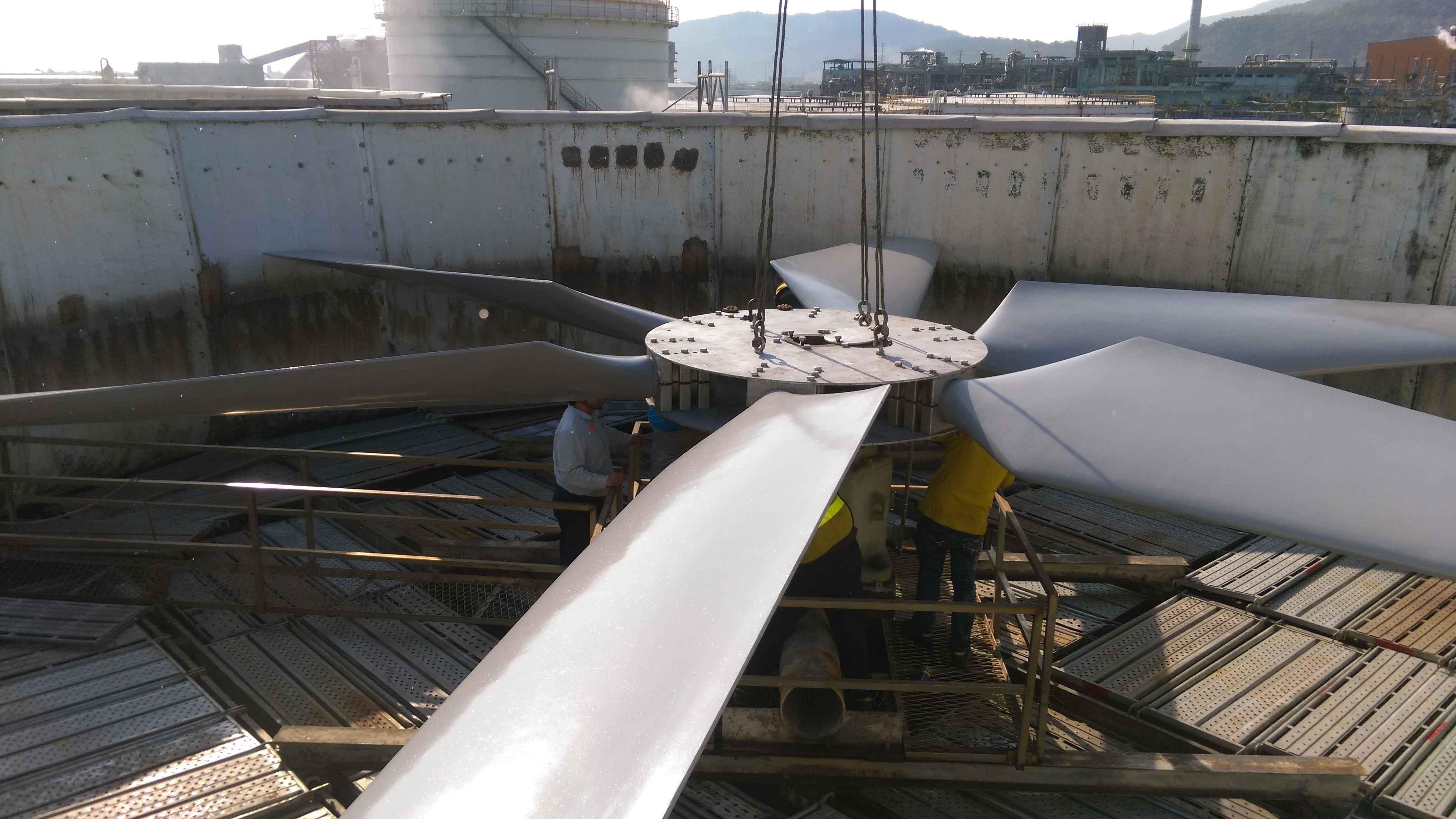
What Are FRP Fan Blades for Cooling Towers?
FRP fan blades are composite components manufactured using fiberglass reinforcement and polymer resin. They are designed to generate airflow in industrial cooling towers by converting mechanical rotational energy into air movement.
When the cooling tower fan rotates, the blades draw air through the tower and discharge warm, humid air into the atmosphere. This airflow supports the heat exchange process between circulating water and air.
Compared with conventional metal fan blades, FRP fan blades provide several advantages in environments where moisture, corrosion, and continuous operation are major concerns.
Main Functions of FRP Cooling Tower Fan Blades
FRP fan blades perform several important functions within cooling tower systems.
Generate Efficient Airflow
The aerodynamic profile of the blade determines how effectively the fan moves air through the cooling tower.
A properly designed blade helps achieve the required airflow while controlling aerodynamic resistance.
Support Stable Cooling Performance
Consistent airflow is important for maintaining the cooling tower's thermal performance.
Customized blade dimensions and pitch angles can help match the fan system to the required operating conditions.
Reduce Corrosion-Related Problems
FRP materials provide excellent resistance to moisture and many corrosive substances when the appropriate resin system is selected.
This makes them suitable for industrial cooling towers operating in humid or chemically aggressive environments.
Improve Fan System Compatibility
Customized FRP fan blades can be manufactured according to existing fan hub dimensions and cooling tower configurations, making them suitable for replacement projects.
Why Choose a Professional FRP Fan Blade Manufacturer?
The quality of an FRP fan blade depends on more than the raw materials used in production. Aerodynamic engineering, composite structure, manufacturing processes, and quality inspection all influence the final product.
Working with a professional FRP Fan Blade Manufacturer helps ensure that customized products meet specific cooling tower requirements.
Professional Product Engineering
Different cooling tower systems operate under different airflow, pressure, and mechanical conditions.
An experienced manufacturer evaluates important technical parameters before recommending a suitable blade configuration.
Key Engineering Considerations
These parameters help determine the appropriate blade structure and aerodynamic design.
Customized Manufacturing Capabilities
Standard products cannot always satisfy special installation requirements.
A qualified manufacturer should be able to develop customized blades according to customer drawings, samples, or technical specifications.
Reliable Product Quality
Consistent manufacturing quality is essential for industrial fan systems.
Manufacturers should control raw material selection, molding processes, curing conditions, dimensional accuracy, and finished-product inspection.
Technical Support for Replacement Projects
Many industrial facilities need replacement blades for existing cooling towers without replacing the complete fan assembly.
An experienced manufacturer can help evaluate existing dimensions, hub connections, blade pitch, and installation requirements.
Custom FRP Fan Blade Design for Different Cooling Towers
Customized design is one of the most important advantages of FRP fan blade manufacturing.
Different cooling tower structures require different fan configurations. A blade that works well in one application may not provide the same performance in another.
Customized Blade Dimensions
Blade dimensions influence airflow characteristics, structural strength, and installation compatibility.
Blade Length
Blade length is determined by the fan diameter and required installation clearance.
The manufacturer should confirm the distance between the blade tip and the fan stack before production.
Blade Width
Blade width affects the aerodynamic surface area and the distribution of aerodynamic loads.
A suitable width should be selected according to the fan's operating conditions.
Blade Thickness
Blade thickness contributes to structural stiffness and mechanical strength.
The thickness distribution should provide sufficient rigidity without adding unnecessary weight or aerodynamic resistance.
Customized Blade Pitch Angle
Blade pitch angle is a critical parameter affecting fan airflow and motor loading.
A larger pitch angle generally increases aerodynamic loading and may increase airflow and power consumption, depending on the complete fan system.
Benefits of Correct Pitch Adjustment
Helps achieve the required airflow.
Supports stable fan operation.
Helps prevent excessive motor loading.
Reduces unnecessary energy consumption.
Improves compatibility with system resistance.
The correct pitch should be determined through engineering evaluation rather than simply increasing the angle to obtain more airflow.
Customized Blade Profiles
FRP composite manufacturing allows different aerodynamic profiles to be developed for specific cooling tower applications.
Aerodynamic Profile Optimization
Manufacturers may evaluate:
Leading-edge shape.
Trailing-edge geometry.
Chord length.
Blade twist.
Thickness distribution.
Surface smoothness.
An optimized profile can help reduce unnecessary turbulence and improve airflow performance.
FRP Materials Used in Customized Cooling Tower Fan Blades
Material selection directly affects the strength, durability, corrosion resistance, and operating temperature range of FRP fan blades.
A professional manufacturer should select suitable fiberglass reinforcement and resin materials according to the actual application.
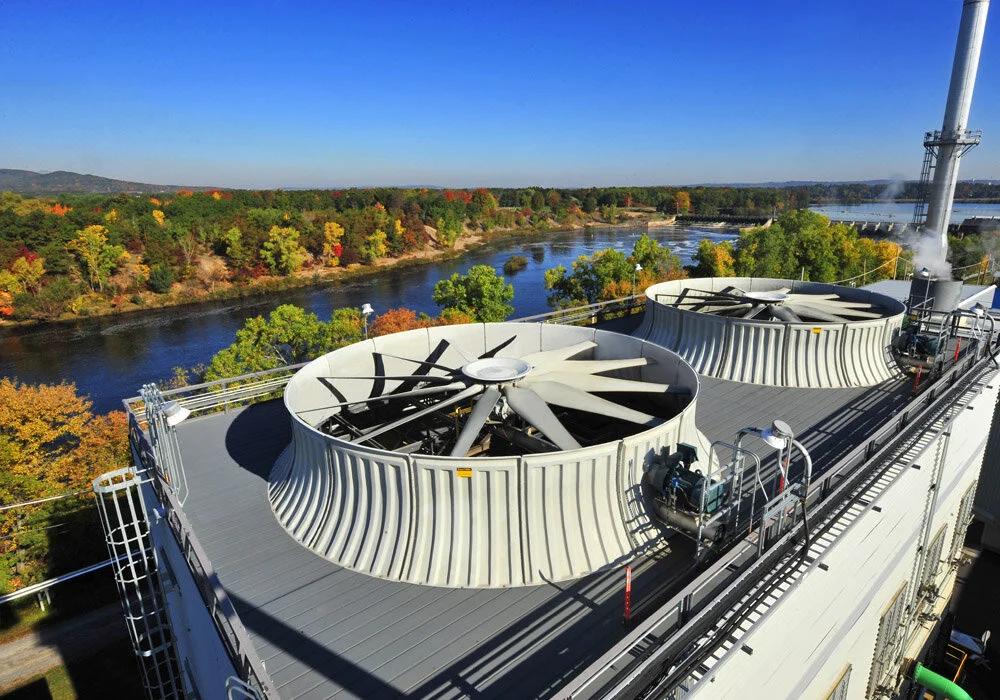
Fiberglass Reinforcement
Fiberglass is commonly used as the reinforcement material in industrial FRP fan blades.
It provides mechanical strength while maintaining relatively low weight.
Advantages of Fiberglass
Good tensile strength.
High strength-to-weight ratio.
Corrosion resistance.
Good fatigue performance when properly designed.
Flexible molding characteristics.
Compatibility with different resin systems.
The reinforcement arrangement can be adjusted according to blade dimensions and structural requirements.
Resin Selection for Different Operating Environments
The resin matrix binds fiberglass layers together and influences chemical resistance and environmental durability.
Polyester Resin
Polyester resin is widely used in general industrial FRP manufacturing.
It provides economical production costs and suitable mechanical properties for many standard cooling tower applications.
Vinyl Ester Resin
Vinyl ester resin provides improved resistance to many chemicals and corrosive environments.
It may be suitable for cooling towers operating in more aggressive industrial conditions.
Epoxy Resin
Epoxy resin offers strong adhesion and good mechanical characteristics.
It is used in certain specialized composite applications where specific structural requirements justify the higher material cost.
How to Select the Right FRP Material?
The selection should consider several operating factors:
Continuous operating temperature.
Chemical exposure.
Moisture conditions.
Mechanical loading.
Expected service life.
Maintenance requirements.
The manufacturer should confirm that the selected resin and composite structure are appropriate for the intended operating environment.
FRP Fan Blade Manufacturing Process
The manufacturing process has a direct influence on product consistency and mechanical performance.
Different FRP Fan Blade Manufacturers may use different molding techniques depending on product design, production volume, and customer requirements.
Raw Material Preparation
The production process begins with the preparation of fiberglass reinforcement, resin, and other necessary materials.
Raw materials should be inspected to confirm that they meet the required specifications.
Mold Preparation and Composite Forming
The mold determines the overall blade geometry and surface profile.
Hand Lay-Up Molding
Hand lay-up is a flexible manufacturing method in which fiberglass reinforcement is placed into a mold and impregnated with resin.
It can be used for certain customized products and smaller production batches.
Vacuum-Assisted Molding
Vacuum-assisted processes help remove trapped air and improve resin distribution within the composite structure.
Proper process control can help reduce internal voids and improve product consistency.
Curing Process
After molding, the blade undergoes curing to develop the required mechanical properties.
Curing conditions should be controlled according to the selected resin system.
Surface Finishing
After curing, the blade is trimmed and finished.
Common Finishing Procedures
Removing excess material.
Smoothing blade edges.
Inspecting surface quality.
Checking mounting hole positions.
Measuring blade dimensions.
Verifying the blade profile.
Proper finishing helps improve product appearance and installation compatibility.
Performance Advantages of Customized FRP Fan Blades
Customized FRP fan blades offer several benefits for industrial cooling tower applications.
Lightweight Construction
FRP materials generally have a lower density than many conventional metal materials.
A lightweight fan blade can reduce rotating mass and may help reduce certain mechanical loads in a properly designed fan assembly.
Practical Benefits
Easier transportation.
More convenient installation.
Reduced rotating inertia.
Flexible blade construction.
Potential reduction in mechanical loading.
The actual impact on energy consumption depends on the complete fan system and operating conditions.
Excellent Corrosion Resistance
Cooling towers operate in environments containing moisture and oxygen. Some industrial applications also involve chemical contaminants.
FRP materials provide good resistance to many corrosive conditions when an appropriate resin system is selected.
Suitable Industrial Environments
Chemical processing plants.
Petrochemical facilities.
Power stations.
Wastewater treatment plants.
Steel manufacturing facilities.
Industrial HVAC systems.
Flexible Aerodynamic Design
FRP composite manufacturing supports different blade shapes and structural configurations.
This allows manufacturers to develop products for different airflow requirements and cooling tower geometries.
Good Fatigue Performance
Cooling tower fan blades experience repeated mechanical loads during operation.
Properly engineered FRP composite blades can provide good fatigue performance under suitable operating conditions.
However, blade life also depends on installation accuracy, vibration, operating speed, material quality, and maintenance.
Custom FRP Fan Blades vs. Standard Fan Blades
Industrial buyers often need to decide whether to purchase standard products or customized solutions.
The right choice depends on equipment compatibility and project requirements.
Comparison of Standard and Customized FRP Fan Blades
Comparison | Standard FRP Fan Blades | Customized FRP Fan Blades |
Dimensions | Fixed specifications | Project-specific |
Blade pitch | Standard options | Customized |
Hub compatibility | Depends on existing model | Designed to match requirements |
Aerodynamic profile | Standard design | Application-oriented |
Lead time | May be shorter | Depends on design and production |
Applications | Common configurations | Special and replacement projects |
When Should You Choose Customized FRP Fan Blades?
Customized blades are especially useful when:
Existing fan blades are discontinued.
The original manufacturer is difficult to contact.
The cooling tower uses non-standard dimensions.
Special corrosion resistance is required.
Existing hub connections must be retained.
A replacement blade must match a specific operating configuration.
For replacement projects, accurate measurements and technical confirmation are essential before production.
Industrial Applications of Customized FRP Fan Blades
Customized FRP fan blades are suitable for many industries that rely on cooling towers for heat rejection.
Power Generation Plants
Power stations use cooling towers to remove heat from circulating water systems.
FRP fan blades can provide lightweight, corrosion-resistant airflow components for suitable cooling tower configurations.
Chemical and Petrochemical Industries
Chemical facilities may expose cooling tower equipment to aggressive environmental conditions.
Customized resin systems and blade structures can help address specific corrosion and operating requirements.
Steel and Metallurgical Plants
Steel production requires reliable cooling water systems for industrial equipment and manufacturing processes.
Customized FRP fan blades can support cooling tower operation in demanding industrial environments.
HVAC and Commercial Buildings
Large commercial buildings, factories, and industrial parks use cooling towers as part of their central cooling systems.
FRP fan blades can help provide suitable airflow for these applications.
Wastewater Treatment Facilities
Wastewater treatment plants often operate in humid environments where corrosion resistance is important.
FRP components can provide suitable solutions when materials are selected according to the actual exposure conditions.
How to Choose the Right FRP Fan Blade Manufacturer?
Choosing a reliable manufacturer is essential for obtaining customized products that meet technical and commercial requirements.
Buyers should evaluate manufacturing experience, engineering capabilities, quality control, and customer support.
Evaluate Industry Experience
Look for manufacturers with experience in cooling tower fan systems rather than general-purpose FRP products alone.
Knowledge of fan diameter, blade pitch, hub structures, and operating conditions is valuable for customized projects.
Check Quality Control Procedures
A reliable manufacturer should conduct inspections throughout production.
Important Quality Inspection Items
Raw material specifications.
Blade dimensions.
Blade weight consistency.
Pitch angle accuracy.
Surface quality.
Mounting hole positions.
Blade root structure.
Product balance requirements.
For complete fan assemblies, dynamic balancing should be performed according to the applicable technical requirements.
Review Customization Capabilities
Before placing an order, confirm whether the supplier can manufacture products based on drawings, samples, or existing product measurements.
Ask about the available blade profiles, resin options, and production methods.
Compare Technical Specifications
When comparing suppliers, make sure all quotations refer to the same product specifications.
Important details include material composition, blade dimensions, pitch angle, manufacturing process, inspection requirements, and packaging.
Evaluate Delivery and After-Sales Support
For international orders, buyers should also consider:
A reliable supplier should clearly communicate the manufacturing and delivery process.
What Information Is Needed for Custom FRP Fan Blade Orders?
Providing accurate technical information helps manufacturers evaluate the project and prepare suitable quotations.
Basic Product Information
Customers should provide the following details whenever possible:
Information | Description |
Cooling tower model | Identifies the equipment |
Fan diameter | Determines the fan size |
Blade quantity | Confirms fan configuration |
Blade length | Determines product dimensions |
Blade width | Supports design evaluation |
Blade pitch angle | Helps confirm aerodynamic requirements |
Fan rotational speed | Defines operating conditions |
Hub dimensions | Ensures mounting compatibility |
Motor power | Helps evaluate fan loading |
Operating environment | Supports material selection |
Drawings and Existing Samples
Technical drawings are particularly useful for customized replacement projects.
If drawings are unavailable, customers can provide clear photographs and accurate measurements of existing blades.
Why Are Product Samples Important?
An existing sample can help the manufacturer evaluate:
Blade profile.
Mounting structure.
Root dimensions.
Thickness distribution.
Surface condition.
Connection details.
The sample should be checked against the required operating specifications before being used as the basis for production.
FRP Fan Blade Installation and Maintenance
Correct installation is essential for maintaining the performance and reliability of customized FRP fan blades.
Even high-quality products may experience operational problems if installation and adjustment are incorrect.
Check the Fan Hub Before Installation
Inspect the fan hub for cracks, corrosion, deformation, and loose connections.
Damaged mounting components should be repaired or replaced before installing new blades.
Confirm Blade Pitch and Position
All blades should be installed according to the approved specifications.
Uneven pitch angles may cause airflow imbalance, vibration, and excessive motor loading.
Verify Blade Tip Clearance
Check the clearance between the blade tips and the fan stack.
Insufficient clearance may lead to mechanical contact during operation.
Perform Trial Operation
After installation, check the fan system under controlled operating conditions.
Important Monitoring Parameters
Any unusual operating condition should be investigated before the fan returns to normal service.
Routine Maintenance Recommendations
Regular inspections should include checking for cracks, delamination, surface damage, loose fasteners, and abnormal vibration.
Accumulated dirt should be removed using cleaning methods suitable for the FRP surface.
Why Choose Power Tower Cooling Technology (Shaoxing) Co.,Ltd?
When sourcing customized cooling tower fan blades, international buyers need a supplier that understands cooling tower equipment and industrial application requirements.
Power Tower Cooling Technology (Shaoxing) Co.,Ltd provides cooling tower product and component solutions for industrial customers.
For FRP fan blade projects, selecting suitable specifications requires consideration of fan diameter, blade length, pitch angle, hub dimensions, motor speed, and environmental conditions.
Cooling Tower Component Experience
Understanding cooling tower structures helps support product selection and replacement planning.
Customers should provide existing equipment information so that the appropriate fan blade configuration can be evaluated.
Customized Product Solutions
Different industrial projects have different installation and operating requirements.
Customized solutions can be evaluated according to customer drawings, product samples, and technical specifications.
Support for International Buyers
For overseas customers, clear technical communication and export coordination are important parts of the procurement process.
Product specifications, packaging arrangements, production schedules, and shipping details should be confirmed before order completion.
Replacement and Industrial Project Requirements
Whether replacing existing fan blades or sourcing components for a new cooling tower, product compatibility should be confirmed before manufacturing.
Power Tower Cooling Technology (Shaoxing) Co.,Ltd can be considered by industrial buyers seeking cooling tower component solutions and customized FRP fan blade products.
Future Trends in Customized FRP Fan Blade Manufacturing
The cooling tower industry continues to focus on energy efficiency, product reliability, and lower maintenance costs.
These trends are encouraging manufacturers to improve composite materials, aerodynamic design, and production technologies.
Advanced Composite Materials
New fiberglass reinforcement and resin formulations may help improve mechanical properties, durability, and resistance to environmental exposure.
Aerodynamic Optimization
Computer-aided design and computational fluid dynamics (CFD) are increasingly used to evaluate fan blade geometry.
These technologies help engineers analyze airflow distribution, pressure characteristics, and aerodynamic performance.
More Flexible Customization
Industrial customers increasingly require replacement products that match existing equipment.
Manufacturers with flexible mold design and engineering capabilities can better support different cooling tower configurations.
Better Manufacturing Consistency
Improved production process control, dimensional inspection, and material management can help manufacturers deliver more consistent products.
Conclusion: Find the Right FRP Fan Blade Manufacturer for Your Cooling Tower
Customized FRP fan blades are an important solution for industrial cooling towers that require reliable airflow, corrosion resistance, and specific installation dimensions.
Compared with standard products, customized FRP fan blades provide greater flexibility in blade length, pitch angle, aerodynamic profile, material selection, and hub compatibility.
However, product performance depends on more than customization alone. Material quality, composite structure, manufacturing technology, quality inspection, and installation accuracy all contribute to long-term reliability.
When selecting an FRP Fan Blade Manufacturer, industrial buyers should evaluate engineering experience, production capabilities, customization services, and technical support.
Power Tower Cooling Technology (Shaoxing) Co.,Ltd can support industrial buyers looking for cooling tower component solutions. By providing accurate drawings and operating parameters, customers can work with the supplier to evaluate suitable FRP fan blade specifications for their cooling tower projects.
FAQ About Custom FRP Fan Blades
1. Can FRP Fan Blades Be Customized for Different Cooling Towers?
Yes. FRP fan blades can be customized according to fan diameter, blade length, width, pitch angle, hub connection, and operating conditions.
2. What Are the Main Advantages of Customized FRP Fan Blades?
The main advantages include flexible dimensions, suitable aerodynamic profiles, corrosion resistance, lightweight construction, and improved compatibility with existing cooling tower systems.
3. What Materials Are Used to Manufacture FRP Fan Blades?
FRP fan blades generally use fiberglass reinforcement combined with polyester, vinyl ester, or epoxy resin. The material selection depends on mechanical requirements and operating conditions.
4. How Do I Select the Correct FRP Fan Blade Pitch Angle?
The pitch angle should be determined according to fan diameter, rotational speed, system resistance, required airflow, and motor capacity. It should not be adjusted without considering the fan system's mechanical and aerodynamic limits.
5. Can Customized FRP Fan Blades Replace Existing Metal Blades?
In some applications, yes. However, the replacement must be evaluated for dimensional compatibility, hub connections, structural requirements, rotational speed, and aerodynamic performance before installation.
6. What Is the Typical Service Life of FRP Cooling Tower Fan Blades?
Service life depends on material quality, resin selection, manufacturing technology, operating conditions, and maintenance. Regular inspections and proper installation help extend product life.
7. How Can I Get a Quotation from an FRP Fan Blade Manufacturer?
Prepare the fan diameter, blade dimensions, number of blades, pitch angle, fan speed, hub specifications, and cooling tower model. Drawings or photographs of the existing fan blades can also help the manufacturer evaluate your requirements and prepare an accurate quotation.


