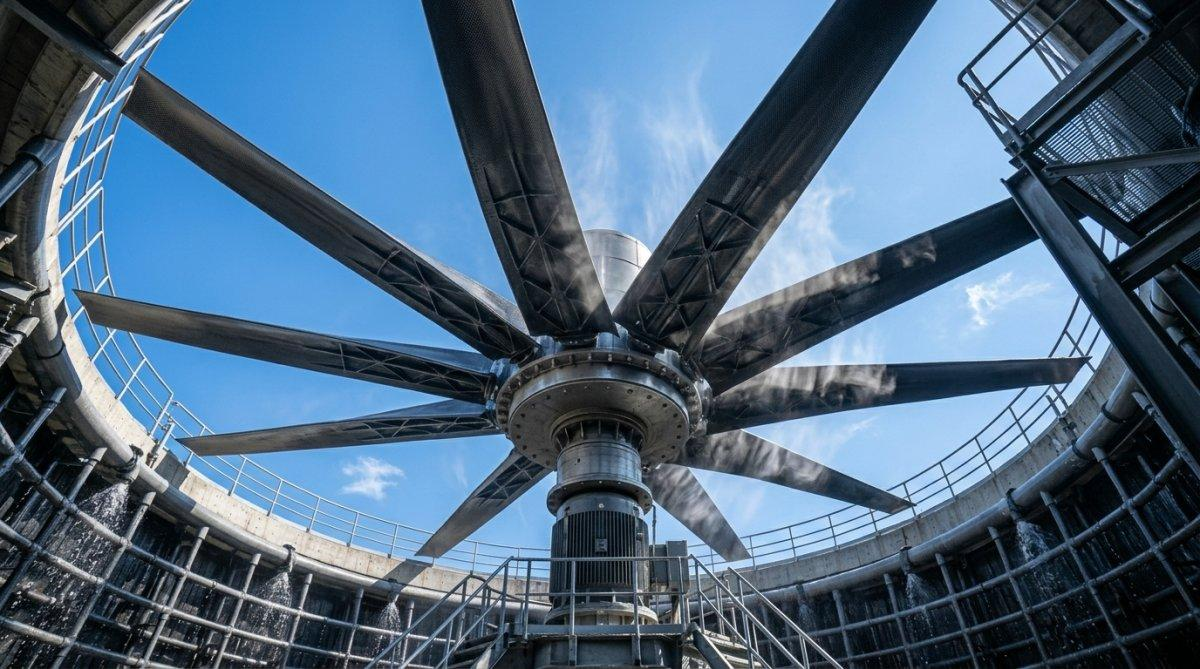
A cooling tower plays an essential role in industrial heat rejection. Whether it is used in a power plant, chemical facility, steel mill, HVAC system, or manufacturing factory, its performance depends heavily on effective airflow. At the center of this process is the cooling tower axial fan, which moves large volumes of air through the tower to support heat transfer and water cooling.
However, as cooling towers operate year after year, their fan systems may gradually lose efficiency. Fan blades can become damaged, motors may consume more electricity, and mechanical components can experience wear and vibration. In some facilities, the original fan design may no longer meet current cooling requirements.
Does this mean the entire cooling tower needs to be replaced? Not necessarily.
A cooling tower axial fan retrofit can provide a practical way to upgrade an existing fan system, improve airflow, reduce unnecessary energy consumption, and extend equipment service life. Depending on the condition of the existing equipment, a retrofit may involve replacing fan blades, upgrading the fan hub, adjusting blade pitch, improving the drive system, or modifying related components.
In this guide, we explain how cooling tower axial fan retrofits work, when they are necessary, how to select suitable replacement components, and what to consider during installation. We also introduce how Power Tower Cooling Technology (Shaoxing) Co.,Ltd supports cooling tower maintenance and replacement projects.
1. What Is a Cooling Tower Axial Fan Retrofit?
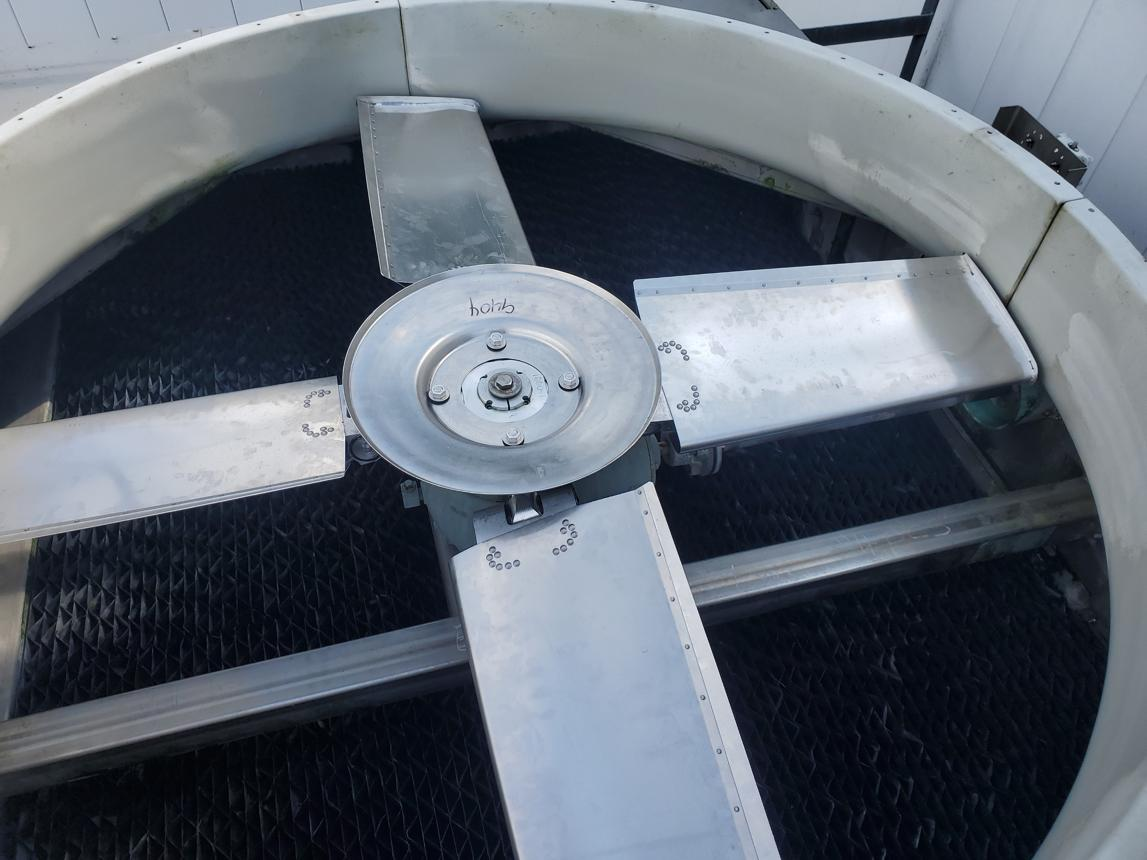
A cooling tower axial fan retrofit is the process of upgrading or modifying an existing fan system to improve its operating performance, reliability, or energy efficiency.
Unlike a complete cooling tower replacement, a retrofit focuses on the fan assembly and related components while retaining suitable parts of the existing tower structure.
Depending on the project, a retrofit may include:
Replacing old or damaged axial fan blades.
Installing a new fan hub or blade mounting system.
Optimizing blade pitch and configuration.
Upgrading the fan motor or gearbox.
Improving the fan cylinder or air outlet arrangement.
Replacing worn fasteners and supporting components.
The objective is not simply to install a newer fan. The upgraded system must match the cooling tower's actual airflow requirements, mechanical configuration, and operating conditions.
1.1 Retrofit vs. Complete Fan Replacement
Although the terms are sometimes used interchangeably, retrofitting and replacement can involve different levels of work.
A retrofit may retain the original hub, motor, gearbox, or mounting structure if those components are still suitable. A complete fan replacement may involve removing the entire assembly and installing a new fan system.
A retrofit is often worth evaluating when the tower structure remains in good condition but the existing fan has become inefficient or unreliable.
However, a retrofit is not always the best option. If the fan cylinder is severely damaged, the drive system is unsuitable, or the original design cannot meet the required operating conditions, a more extensive replacement may be necessary.
The best decision comes from a technical inspection rather than price alone.
1.2 Why Existing Cooling Tower Fans Need Upgrading
Cooling tower axial fans operate in demanding environments. They are exposed to moisture, temperature fluctuations, vibration, and sometimes chemicals from water treatment systems.
Over time, these conditions can affect fan performance.
Common reasons for upgrading include:
Aging fan blades and mounting components.
Corrosion or surface deterioration.
Increasing electricity consumption.
Insufficient airflow.
Excessive mechanical vibration.
Changes in plant cooling demand.
Difficulty obtaining original replacement parts.
In addition, an older fan may have been designed for operating conditions that are different from those of the current facility. Production expansion, higher process loads, and changing seasonal requirements may all create a need for a more suitable fan configuration.
2. Signs Your Cooling Tower Needs an Axial Fan Retrofit
How do you know when your cooling tower fan needs an upgrade?
The first step is to review operating data and maintenance records. Then inspect the fan assembly and other cooling tower components.
Remember that poor cooling performance does not always mean the fan is the problem. Blocked fill, uneven water distribution, restricted air inlets, and poor water treatment can produce similar symptoms.
The goal is to identify the actual cause before selecting a retrofit solution.
2.1 Insufficient Airflow
Insufficient airflow is one of the most common reasons for investigating a cooling tower fan retrofit.
When airflow decreases, the cooling tower may struggle to maintain the required cold-water temperature, especially during periods of high ambient temperature or increased process demand.
Possible causes include:
Damaged or deformed fan blades.
Incorrect blade pitch.
Unsuitable fan diameter.
Excessive resistance in the airflow path.
Poor fan-cylinder clearance.
Incorrect fan rotational speed.
Before replacing the fan, inspect the fill, louvers, drift eliminators, and air inlet areas. These components also influence airflow.
2.2 High Energy Consumption
A fan that consumes more electricity than expected may be operating inefficiently.
Possible causes include an unsuitable fan design, incorrect blade pitch, mechanical friction, motor problems, gearbox losses, or a mismatch between the fan and system resistance.
Plant operators should compare actual motor power, current, rotational speed, and cooling performance with historical or design values.
A properly selected retrofit should deliver the required airflow with an appropriate power input. Installing a larger fan without checking the system can increase electricity consumption instead of reducing it.
2.3 Excessive Vibration and Unusual Noise
Vibration is an important warning sign in cooling tower fan operation.
It may be caused by:
Unusual noise may also indicate blade damage, turbulent airflow, or mechanical wear.
If vibration becomes severe, stop the equipment and arrange a qualified inspection. Do not attempt to solve the problem by randomly adjusting blade pitch or adding weights.
2.4 Corrosion and Fan Blade Damage
Cooling tower fans operate in humid environments, making material deterioration an important maintenance concern.
Inspect the blades for cracks, deformation, erosion, corrosion, and loose connections. Pay particular attention to blade roots, leading edges, trailing edges, and hub mounting points.
Even a small crack can become more serious under continuous rotational loading.
If the blade material has deteriorated or its original shape has changed, replacement may be safer than continued operation.
3. Main Benefits of Cooling Tower Axial Fan Retrofitting
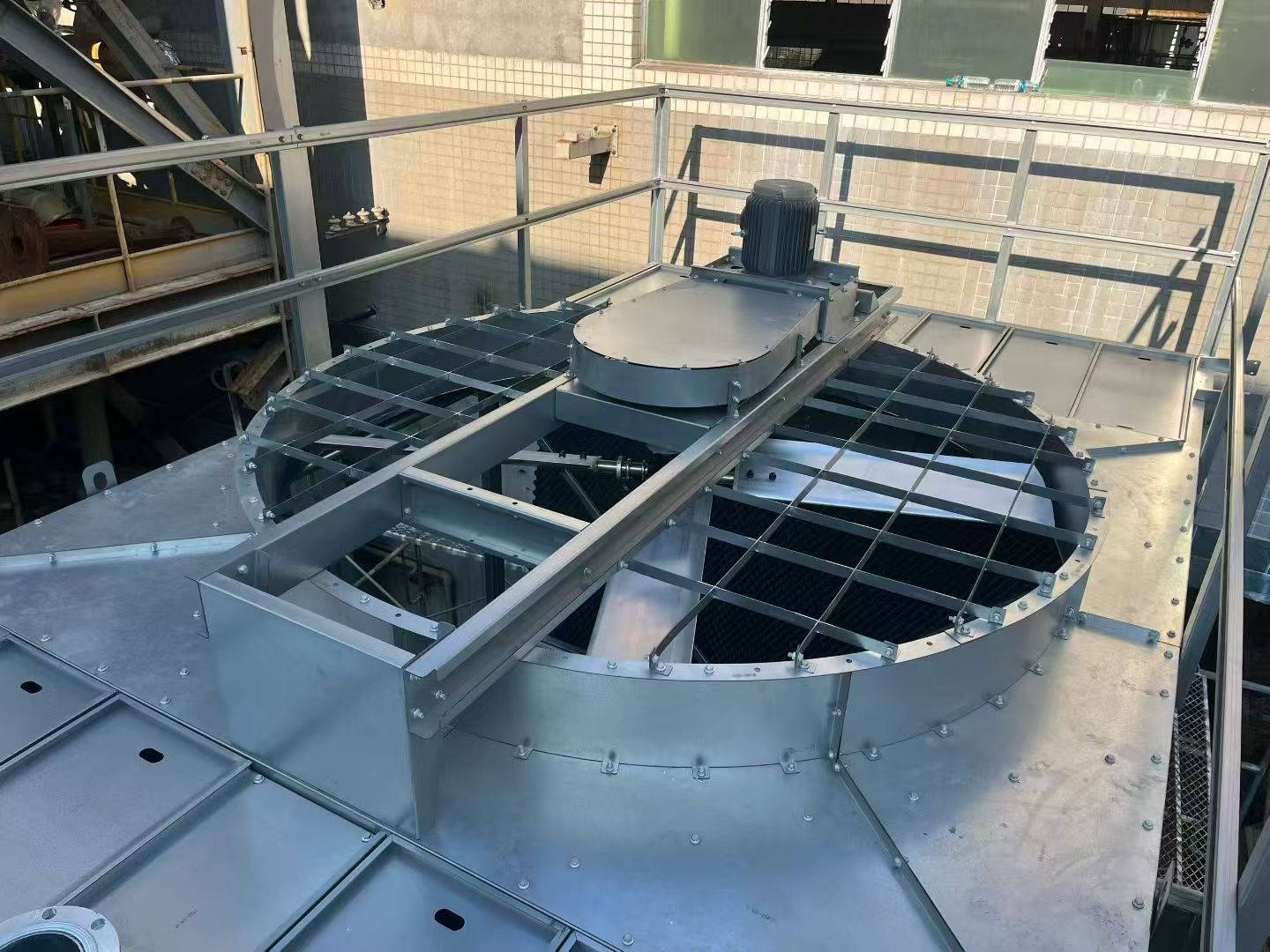
A properly engineered retrofit can improve several aspects of cooling tower operation.
The actual results depend on the original equipment, the condition of the cooling tower, and the selected replacement components.
3.1 Improved Cooling Performance
A suitable fan configuration can help restore or improve airflow through the cooling tower.
Better airflow may support more effective heat and mass transfer when the fill, water distribution, and operating conditions are also suitable.
This is particularly important for facilities where cooling demand has increased or the original fan has deteriorated.
The objective should be to achieve the required cooling duty, not simply maximize airflow.
3.2 Reduced Operating Costs
Electricity is a significant part of the operating cost of many industrial cooling towers.
An efficient fan operating at the correct duty point may reduce unnecessary power consumption.
However, energy use depends on several factors, including:
Fan aerodynamic efficiency.
Blade pitch and configuration.
Fan rotational speed.
Motor efficiency.
Gearbox or drive-system efficiency.
Airflow resistance.
A technical comparison should evaluate the existing system and proposed retrofit under equivalent operating conditions.
3.3 Improved Reliability and Equipment Service Life
Replacing damaged or unsuitable components can reduce the risk of unexpected shutdowns.
A retrofit also provides an opportunity to correct installation problems, inspect the drive system, and improve maintenance access.
The benefit is not limited to the fan itself. It comes from treating the fan as part of the complete cooling tower system.
4. Key Components to Evaluate Before Retrofitting
Before purchasing replacement components, inspect the parts that affect fan performance and mechanical compatibility.
A fan blade that looks suitable in a product photograph may not fit the existing hub, shaft, or fan cylinder.
Accurate measurements and engineering checks are essential.
4.1 Axial Fan Blades
Fan blades determine how air moves through the cooling tower.
Their profile, length, width, twist, material, and pitch all influence aerodynamic performance.
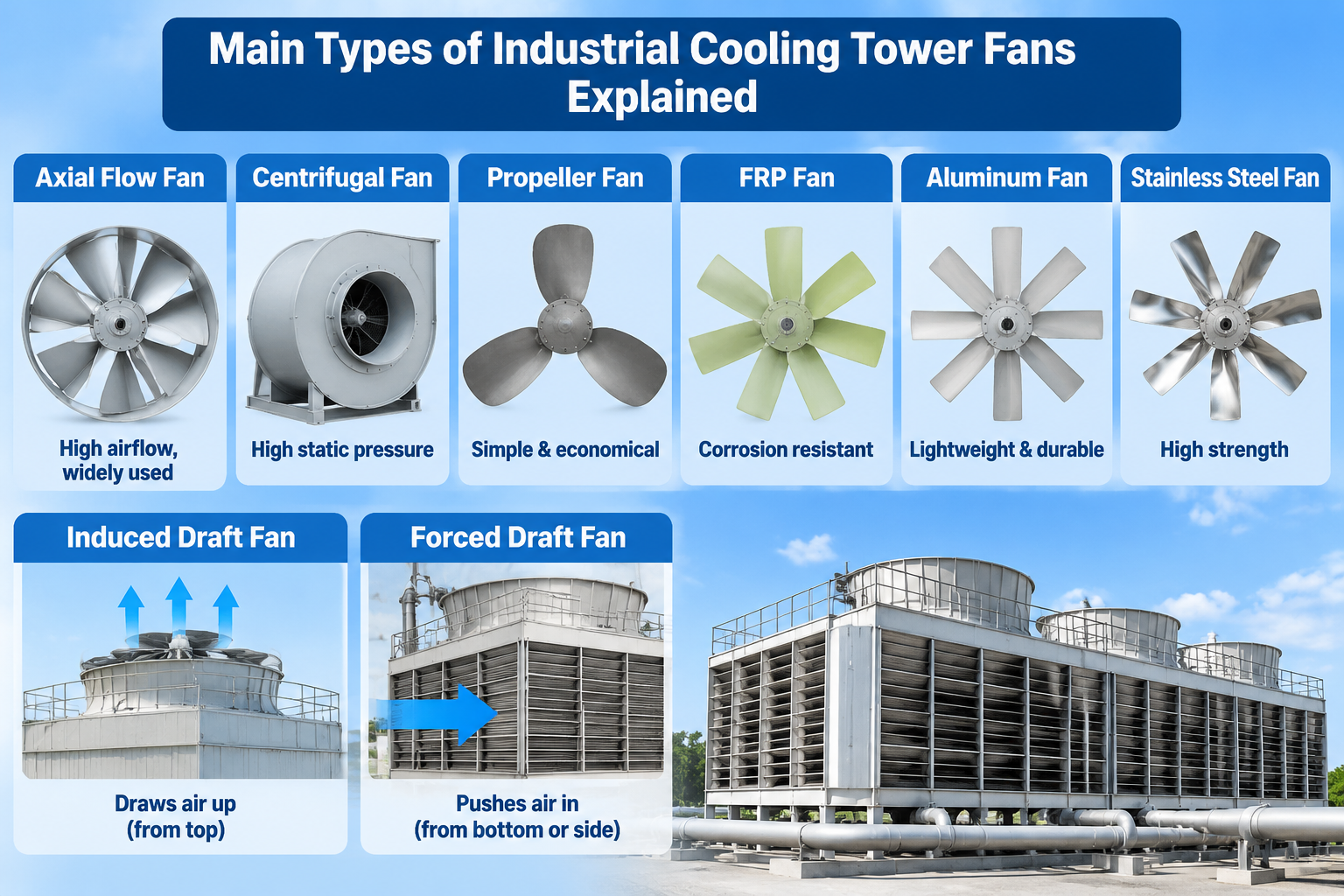
Common materials include fiberglass-reinforced plastic (FRP), aluminum, and other engineered materials selected for specific operating environments.
FRP blades are used in many industrial applications because they can offer a useful combination of strength, corrosion resistance, and relatively low weight.
When selecting replacement blades, consider:
Blade diameter and length.
Blade profile and aerodynamic design.
Material strength and corrosion resistance.
Operating temperature.
Rotational speed.
Mounting dimensions.
Expected service conditions.
The replacement blade must be suitable for the original hub and the complete fan system.
4.2 Fan Hub and Blade Pitch
The fan hub holds the blades and transfers rotational force from the drive system.
During a retrofit, inspect the hub dimensions, blade mounting details, fasteners, corrosion, and structural condition.
Blade pitch is another important factor.
Increasing blade pitch may increase airflow demand and motor loading. If the motor or gearbox cannot handle the additional load, the adjustment may cause overheating or mechanical problems.
Always follow the fan manufacturer's instructions and verify motor loading after any approved adjustment.
4.3 Motor, Gearbox, and Drive System
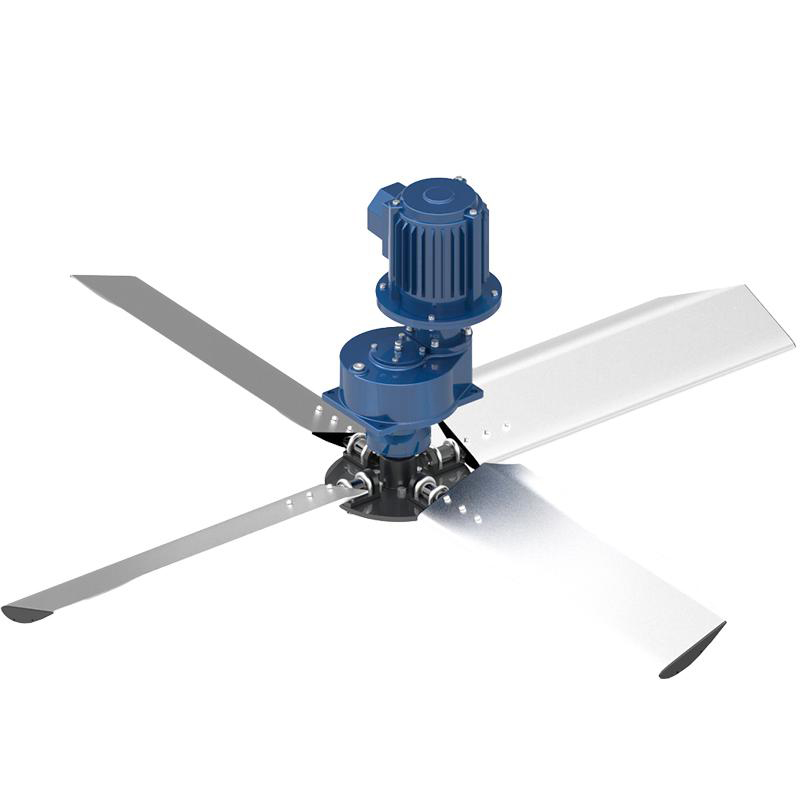
A new fan may not deliver the expected performance if the motor or gearbox cannot operate it correctly.
Before retrofitting, check:
Direct-drive, belt-drive, and gearbox-driven systems have different design requirements.
Any change to the drive system should be evaluated against the fan's operating limits and the cooling tower's mechanical design.
4.4 Fan Cylinder and Supporting Structure
The fan cylinder guides airflow and helps reduce losses around the fan.
Its diameter, height, shape, and clearance influence system performance.
Inspect the cylinder for cracks, deformation, loose panels, and corrosion.
The supporting beams, mounting frame, fasteners, and access platform should also be checked.
A replacement fan must maintain safe clearance and avoid interference with stationary structures throughout its operating range.
5. How to Choose the Right Cooling Tower Retrofit Fan
Choosing a fan based only on diameter or motor power is a common mistake.
A suitable replacement must match the required airflow, static pressure, rotational speed, installation geometry, and mechanical limits.
If the original fan information is unavailable, a detailed site survey becomes even more important.
5.1 Confirm Required Airflow and Static Pressure
Start with the cooling tower's design duty and actual operating conditions.
Relevant information may include:
Circulating water flow rate.
Hot-water temperature.
Cold-water temperature.
Entering-air wet-bulb temperature.
Required thermal performance.
Existing fan operating data.
The fan must overcome the resistance created by the fill, drift eliminators, louvers, and other airflow components.
Selecting a fan without considering system resistance can result in insufficient airflow or excessive power consumption.
5.2 Check Fan Diameter and Rotational Speed
Measure the existing fan diameter and available installation space.
Record the rotational speed and determine whether the proposed fan can operate safely within the existing drive arrangement.
A change in diameter or speed affects airflow, power demand, tip speed, and mechanical loading.
Check the fan-cylinder clearance and the structural capacity of the mounting arrangement before confirming the design.
5.3 Select Suitable Blade Material
Material selection should reflect the cooling tower's water chemistry, temperature, humidity, chemical exposure, and maintenance conditions.
FRP may be suitable for many industrial applications, while other materials may be appropriate for specific operating environments.
Consider not only the initial purchase price but also corrosion resistance, fatigue performance, repair options, and expected service life.
5.4 Consider the Operating Environment
Cooling towers in power plants, chemical facilities, steel mills, HVAC systems, and general manufacturing plants may face different operating conditions.
High humidity, chemical exposure, dust, salt air, and temperature fluctuations can influence material and component selection.
Provide the supplier with accurate site information rather than relying on a generic fan recommendation.
6. Cooling Tower Axial Fan Retrofit Process
A successful retrofit requires a clear process.
Rushing from inspection directly to purchasing can result in mismatched components, installation delays, and unexpected costs.
The following steps help organize a retrofit project.
6.1 Site Inspection and Data Collection
Begin by recording the existing equipment information.
Important details include:
Cooling tower model and cell arrangement.
Existing fan diameter.
Number of blades.
Blade dimensions and material.
Hub type and connection dimensions.
Motor specifications.
Gearbox details.
Fan rotational speed.
Available installation dimensions.
Take photographs of the existing fan from several angles.
Collect maintenance records and note any history of vibration, blade damage, corrosion, or poor cooling performance.
If possible, measure operating current, power, vibration, and fan speed under representative operating conditions.
6.2 Engineering Assessment
Review the collected information to determine whether the problem comes from the fan, drive system, airflow path, or another cooling tower component.
Check whether the existing fan cylinder and support structure can accommodate the proposed configuration.
Assess the fan duty point, motor loading, mechanical strength, clearances, and operating limits.
A qualified engineer or fan manufacturer should confirm the design before procurement.
6.3 Fan Selection and Configuration
Based on the assessment, select the appropriate fan type, blade profile, diameter, number of blades, material, hub arrangement, and pitch configuration.
Confirm the connection dimensions and whether the existing motor and gearbox can be retained.
Request technical drawings and installation requirements before production.
Do not assume that two fans with the same diameter are interchangeable.
6.4 Installation and Alignment
Before installation, isolate the equipment and follow the site's lockout and safety procedures.
Remove the old assembly according to an approved method.
Inspect the mounting surface, shaft, hub connection, and fasteners before installing the new components.
Follow the manufacturer's torque requirements and alignment instructions.
Confirm that all blades have the correct orientation and that the fan has adequate clearance from the cylinder and surrounding structures.
6.5 Testing and Commissioning
After installation, check fasteners, electrical connections, lubrication, guards, and access covers.
Conduct a controlled startup under the approved commissioning procedure.
Monitor:
Vibration.
Noise.
Rotational speed.
Motor current.
Power consumption.
Mechanical clearance.
Check for abnormal movement, rubbing, or uneven operation.
Compare the results with the project targets and record baseline data for future maintenance.
7. Common Cooling Tower Fan Retrofit Challenges
Retrofit projects often involve existing structures that were not designed for the proposed equipment.
Several challenges may occur during the process.
Limited installation space: The existing fan cylinder or support structure may restrict the dimensions of the replacement fan.
Missing technical drawings: Older cooling towers may have incomplete equipment records, making accurate site measurements essential.
Non-standard dimensions: Original fan hubs and blade connections may use special mounting arrangements.
Drive-system limitations: The existing motor or gearbox may not be suitable for the proposed fan configuration.
Incorrect problem diagnosis: Poor cooling performance may be caused by blocked fill or uneven water distribution rather than the fan itself.
To avoid these problems, inspect the complete airflow and water distribution systems, verify dimensions on site, and confirm compatibility before manufacturing or ordering replacement components.
8. Can an Axial Fan Retrofit Reduce Energy Consumption?
Yes, an axial fan retrofit can reduce energy use when the existing fan is inefficient or poorly matched to the required operating duty.
However, energy savings are not guaranteed.
The result depends on fan efficiency, operating speed, system resistance, motor and gearbox performance, and the plant's operating schedule.
A larger fan or steeper blade pitch may increase airflow, but it can also increase motor power demand.
For a meaningful comparison, record the existing fan's power consumption and operating conditions. Then evaluate the proposed fan at the same required cooling duty.
After commissioning, compare measured power consumption and thermal performance under similar operating conditions.
This approach provides a more reliable assessment than relying on theoretical energy-saving percentages.
9. Cooling Tower Axial Fan Retrofit Cost Factors
The cost of a retrofit depends on the project scope rather than the fan alone.
Important factors include:
Fan diameter and design.
Blade material and quantity.
Hub configuration.
Motor or gearbox modifications.
Structural changes.
Custom manufacturing requirements.
Lifting and installation requirements.
Labor and commissioning.
Delivery schedule.
Before requesting a quotation, prepare the cooling tower model, fan dimensions, blade details, motor and gearbox information, operating conditions, photographs, and required delivery schedule.
A complete technical inquiry helps suppliers provide a more accurate proposal and reduces the risk of purchasing unsuitable parts.
It is also important to compare the total project cost rather than the initial fan price alone. A technically suitable solution may reduce future maintenance work and avoid repeated replacement expenses.
10. Maintenance After Retrofitting
A retrofit is not the end of the maintenance process.
Regular inspections help protect the upgraded equipment and identify early signs of wear.
Follow the fan manufacturer's maintenance instructions and the plant's safety procedures.
10.1 Routine Visual Inspection
Check blades for cracks, deformation, erosion, corrosion, and loose connections.
Inspect the hub, fasteners, fan cylinder, support frame, and guards.
Look for signs of rubbing or contact between rotating and stationary components.
Record any changes rather than relying on memory.
10.2 Vibration and Operating Checks
Monitor vibration, noise, rotational speed, motor current, and power consumption.
Establish baseline readings during commissioning and compare future readings against them.
A sudden change may indicate imbalance, looseness, bearing wear, misalignment, or another developing fault.
Investigate abnormal readings promptly.
10.3 Keep the Complete Cooling Tower Clean
Fan performance is connected to the rest of the cooling tower.
Dirty fill, blocked louvers, damaged drift eliminators, and uneven water distribution can affect airflow and cooling performance.
Inspect and clean these components according to the site's water treatment plan and maintenance schedule.
A well-maintained fan cannot compensate for a severely blocked airflow path.
11. Why Choose an Experienced Cooling Tower Parts Supplier?
A retrofit supplier should do more than provide a product catalogue.
The supplier should understand cooling tower components, request the information needed to check compatibility, and communicate clearly about dimensions, materials, drawings, manufacturing, and delivery.
Before placing an order, consider the following:
Does the supplier understand industrial cooling tower applications?
Can the supplier review technical drawings and dimensions?
Are product specifications available?
Can the supplier support replacement-part inquiries?
Are material and connection details clearly confirmed?
Can the supplier communicate delivery and installation requirements?
For custom or replacement projects, provide photographs, measurements, and original equipment details.
The more complete the information, the easier it is to assess whether a proposed part is suitable.
12. Cooling Tower Parts Support from Power Tower
Power Tower Cooling Technology (Shaoxing) Co.,Ltd focuses on cooling tower parts and replacement solutions through its website:
https://www.coolingtowerpart.com
For cooling tower maintenance and retrofit projects, selecting compatible components is essential.
Depending on project requirements, Power Tower can assist customers with cooling tower fill and other related replacement parts, helping them evaluate product specifications and replacement requirements.
When a project involves an axial fan retrofit, customers should provide the existing fan specifications, dimensions, photographs, and operating data so the required components can be reviewed accurately.
The final fan design and drive-system configuration should be confirmed by qualified technical personnel.
Whether you are maintaining an existing cooling tower or planning a broader upgrade, a clear technical inquiry is the best starting point.
13. Frequently Asked Questions About Cooling Tower Axial Fan Retrofit
Q1: What is the main purpose of a cooling tower axial fan retrofit?
The main purpose is to improve or restore fan performance, reliability, and energy efficiency while retaining suitable parts of the existing cooling tower system.
The exact scope depends on the condition of the equipment and the required operating duty.
Q2: Can I replace only the cooling tower fan blades?
Sometimes.
Blade-only replacement may be possible when the existing hub is in good condition and the new blades are designed to match its connection, loading, and operating requirements.
Always confirm compatibility before ordering.
Q3: How do I know which axial fan size I need?
Start with the required airflow and static pressure. Then check fan diameter, rotational speed, motor power, installation space, and mechanical limits.
The cooling tower's design and operating data are essential for selecting a suitable fan.
Q4: Does a fan retrofit always reduce electricity consumption?
No.
Energy savings depend on the efficiency of the new configuration and whether it is correctly matched to the system.
A poorly selected fan can increase power consumption.
Q5: Can I keep the original motor and gearbox?
Possibly, but their capacity and condition must be checked against the proposed fan's load, speed, and operating requirements.
A technical assessment should be completed before deciding to retain the existing drive system.
Q6: What information should I send when requesting a retrofit quotation?
Provide the cooling tower model, fan diameter, blade count, hub dimensions, motor and gearbox specifications, operating conditions, photographs, and any available drawings.
This information helps the supplier evaluate the project more accurately.
Q7: How long does a cooling tower fan retrofit take?
The schedule depends on inspection, engineering, manufacturing, component availability, site access, installation, and commissioning.
Custom projects may require additional time for design confirmation and production.
Conclusion
A cooling tower axial fan retrofit can be an effective way to improve the performance and reliability of an existing cooling tower without replacing the entire structure.
However, a successful project starts with accurate inspection and engineering—not simply choosing a fan with a larger diameter or higher power rating.
Evaluate airflow requirements, fan geometry, blade material, hub compatibility, drive-system capacity, and installation clearances before purchasing replacement components.
After installation, verify the operating results and maintain the fan according to the manufacturer's recommendations.
For cooling tower parts and replacement inquiries, contact Power Tower Cooling Technology (Shaoxing) Co.,Ltd through https://www.coolingtowerpart.com.
Providing complete equipment information will help move your retrofit project toward a safer, more reliable, and technically suitable solution.


