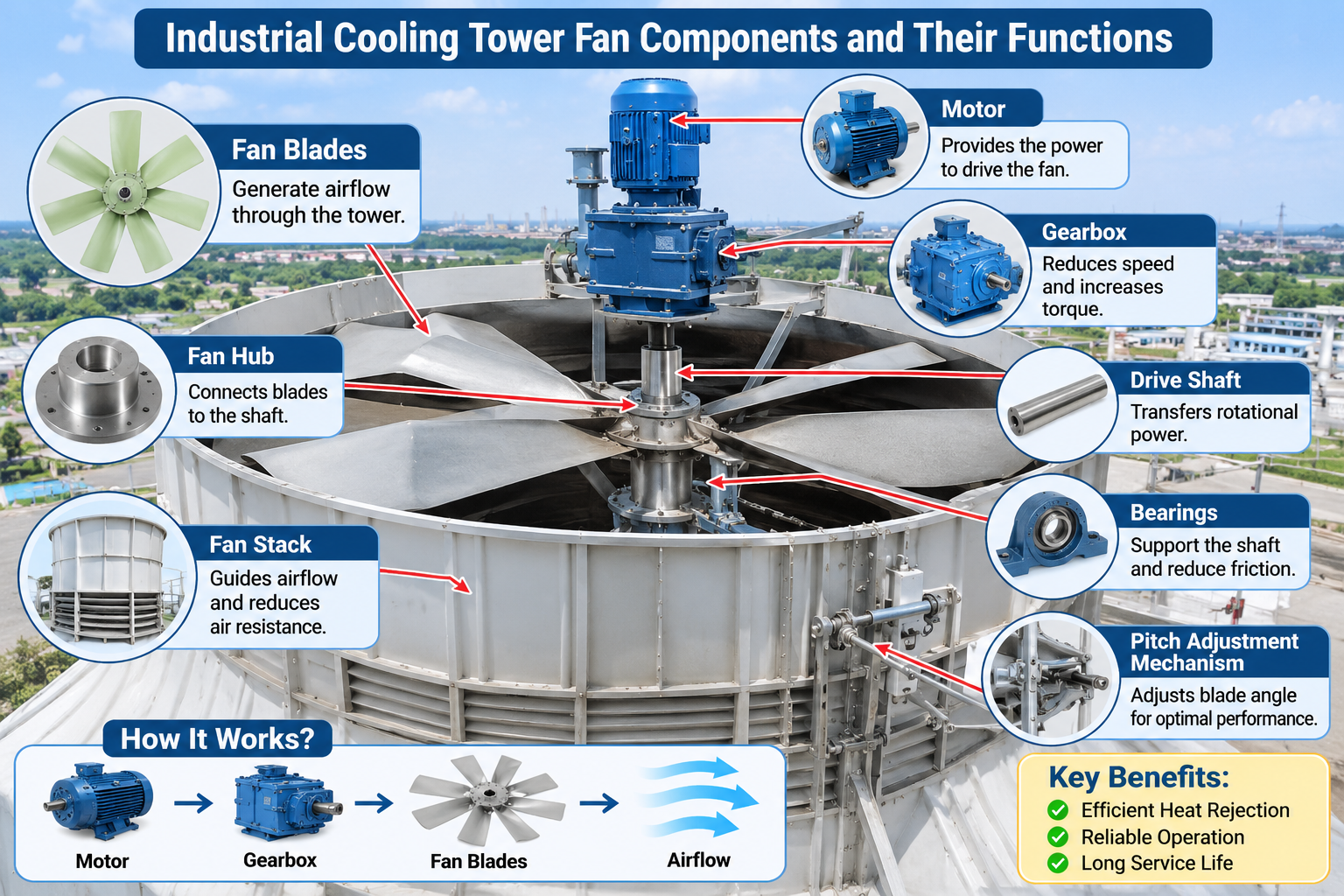
Introduction: Why Choosing the Right Cooling Tower Fan Matters
Are you planning to buy a cooling tower fan for a new installation, an equipment upgrade, or a replacement project? Choosing the right fan is more important than simply finding a product with the correct diameter. A properly selected cooling tower fan helps maintain stable water temperatures, improve heat rejection, reduce energy consumption, and support reliable operation.
A cooling tower works by transferring heat from circulating water into the surrounding air. The fan plays a central role in this process. It moves air through the tower, allowing heat and moisture to leave the system. If the fan cannot deliver the required airflow, the entire cooling tower may struggle to achieve its design performance.
However, not every cooling tower uses the same fan. Different tower designs, operating conditions, airflow requirements, and installation dimensions call for different configurations.
In this guide, we explain what to consider before you buy a cooling tower fan, how to compare fan materials and specifications, and how to choose a reliable supplier. We also introduce Power Tower Cooling Technology (Shaoxing) Co.,Ltd, a cooling tower parts supplier serving customers through www.coolingtowerpart.com.
What Is a Cooling Tower Fan?
A cooling tower fan is a mechanical component designed to move air through a cooling tower. It helps create the airflow needed for heat and mass transfer between the circulating water and the surrounding air.
Most mechanical-draft cooling towers use fans driven by electric motors. Depending on the tower design, the fan may be installed at the top, side, or another designated position.
Cooling tower fans are commonly used in:
Industrial manufacturing plants
Power generation facilities
Chemical and petrochemical plants
HVAC and commercial building systems
Data centers
Food and beverage processing facilities
Steel and metal processing plants
The fan must match the cooling tower's airflow requirements and mechanical configuration. A fan that looks suitable from the outside may still be unsuitable if its operating point, blade geometry, or drive arrangement does not match the system.
How a Cooling Tower Fan Works
When the fan rotates, it creates a pressure difference that moves air through the cooling tower. In a typical induced-draft tower, air enters through the air inlets, passes through the fill section, and exits through the fan stack.
As water flows over the fill, it comes into contact with the moving air. A portion of the water evaporates, removing heat from the remaining water. The cooled water collects in the basin and returns to the cooling process.
Think of the fan as the engine of the tower's airflow system. Without sufficient and properly distributed airflow, the cooling process becomes less effective.
The Role of the Fan in Heat Rejection
The cooling tower fan influences several aspects of tower operation:
Airflow volume through the tower
Heat rejection performance
Fan motor power consumption
Operating noise and vibration
Mechanical loading on the fan and drive system
A correctly selected fan helps the tower operate close to its intended design conditions. An incorrectly selected fan may cause insufficient airflow, excessive energy use, unstable operation, or mechanical problems.
Types of Cooling Tower Fans
Before you buy a cooling tower fan, identify the fan type required by your cooling tower. The two main categories used in mechanical ventilation systems are axial fans and centrifugal fans.
Axial Cooling Tower Fans
Axial fans move air parallel to the fan shaft. They are widely used in industrial cooling towers because they can deliver large airflow volumes with a relatively compact arrangement.
Common characteristics include:
High airflow capacity
Relatively simple mechanical structure
Suitable for many induced-draft cooling towers
Available with different blade numbers and profiles
Compatible with various blade materials and hub designs
Axial fans are frequently selected for large cooling towers where moving substantial volumes of air is essential.
When evaluating an axial cooling tower fan, check the required airflow, static pressure, fan diameter, rotational speed, blade pitch, and motor power. These parameters must work together rather than being considered independently.
Centrifugal Cooling Tower Fans
Centrifugal fans draw air into the impeller and discharge it in a direction generally perpendicular to the inlet flow. They are commonly used in applications where the airflow path or system resistance makes this configuration suitable.
Compared with axial fans, centrifugal fans often have different pressure and installation characteristics. They may be appropriate for certain forced-draft arrangements or specialized ventilation systems.
Before selecting one, confirm the tower's original design and the required airflow and pressure conditions. Do not replace an axial fan with a centrifugal fan, or vice versa, without an engineering assessment.
FRP Cooling Tower Fans
FRP stands for fiber-reinforced plastic. FRP cooling tower fans are popular in industrial environments because the material offers a useful combination of low weight, corrosion resistance, and structural strength.
FRP blades can be designed for different diameters and operating conditions. Their relatively low weight can also help reduce rotating mass, although the complete fan assembly must still be checked for mechanical suitability.
FRP fans are worth considering when the cooling tower operates in a humid, corrosive, or chemically challenging environment.
Key Factors to Consider Before You Buy a Cooling Tower Fan
Buying a cooling tower fan should begin with technical requirements, not price alone. A low-cost fan that does not match your system can lead to installation problems and additional operating expenses.
Airflow Capacity and Static Pressure
Airflow capacity is one of the most important fan selection parameters. It describes the volume of air the fan can move within a specified period, commonly expressed in cubic meters per hour (m³/h) or cubic feet per minute (CFM).
Static pressure represents the resistance the fan must overcome to move air through the system. This resistance may come from the fill, drift eliminators, louvers, air inlets, and other tower components.
A fan must be selected for the required operating point, where its performance characteristics match the system resistance.
Do not choose a fan based only on its maximum airflow rating. Ask for performance information under the actual operating conditions.
Fan Diameter and Rotational Speed
Fan diameter and rotational speed influence airflow, pressure, power demand, and mechanical loading.
A larger fan may move more air, but that does not automatically make it the best choice. The available fan stack diameter, blade-tip clearance, structural arrangement, and operating speed all matter.
Before ordering, confirm:
Existing fan diameter
Fan stack or cylinder dimensions
Required rotational speed
Motor and gearbox output speed
Available installation clearance
Permitted operating limits
The replacement fan should fit the tower and operate within the limits of its drive system.
Blade Design and Pitch Angle
Blade design affects the way a fan moves air. Blade profile, width, length, number of blades, and pitch angle all influence performance.
The pitch angle is especially important. It determines the angle at which each blade meets the airflow. An unsuitable pitch may reduce airflow or increase power consumption.
Some cooling tower fans allow blade pitch adjustment. This can provide flexibility during commissioning, but adjustments must follow the manufacturer's instructions and engineering limits.
Never change blade pitch simply to increase airflow without checking motor load, fan power, vibration, and the permitted operating range.
Motor and Drive System Compatibility
A cooling tower fan is part of a larger mechanical system. Its motor and drive arrangement must be compatible with the selected fan.
Depending on the tower, the drive system may include:
Electric motor
Gearbox
Drive shaft
Couplings
Bearings
Supporting structures
Check motor power, voltage, frequency, speed, mounting arrangement, and operating conditions. For gearbox-driven systems, confirm the gearbox output speed, shaft arrangement, and allowable mechanical load.
A fan that fits physically but exceeds the drive system's capacity is not a suitable replacement.
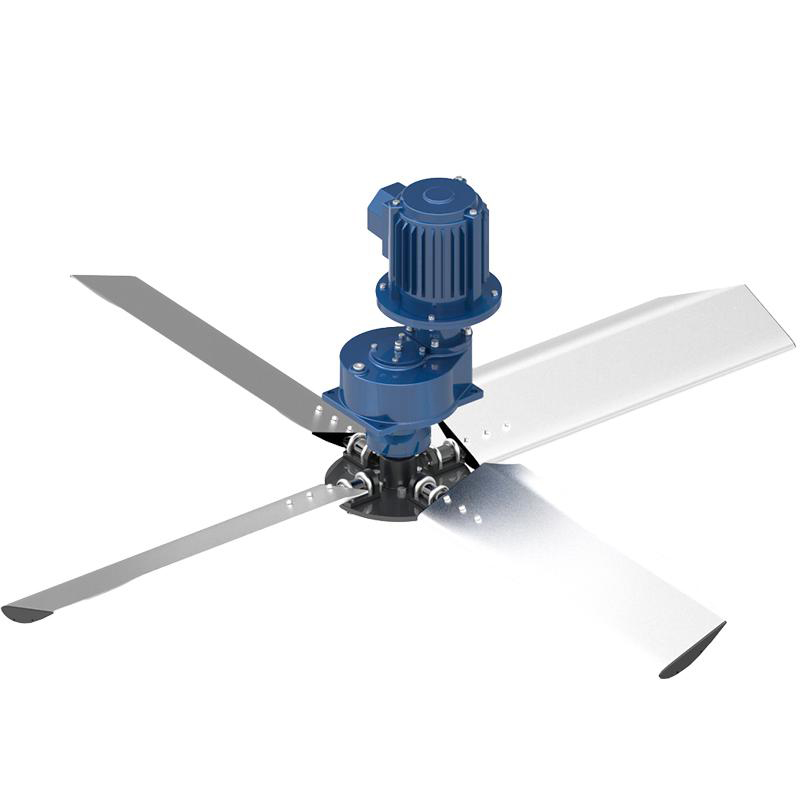
Choosing the Right Cooling Tower Fan Blade Material
Material selection affects corrosion resistance, weight, durability, maintenance requirements, and overall operating cost.
FRP Fan Blades
FRP fan blades are widely used in cooling towers because they combine relatively low weight with good corrosion resistance.
Potential advantages include:
Resistance to moisture and many common corrosive environments
Lower weight than some metal alternatives
Flexible blade design
Suitability for many industrial cooling tower applications
However, FRP performance depends on the resin system, reinforcement, manufacturing quality, blade construction, and operating environment. Confirm that the selected material is suitable for the chemicals, temperature, and mechanical loads present at your site.
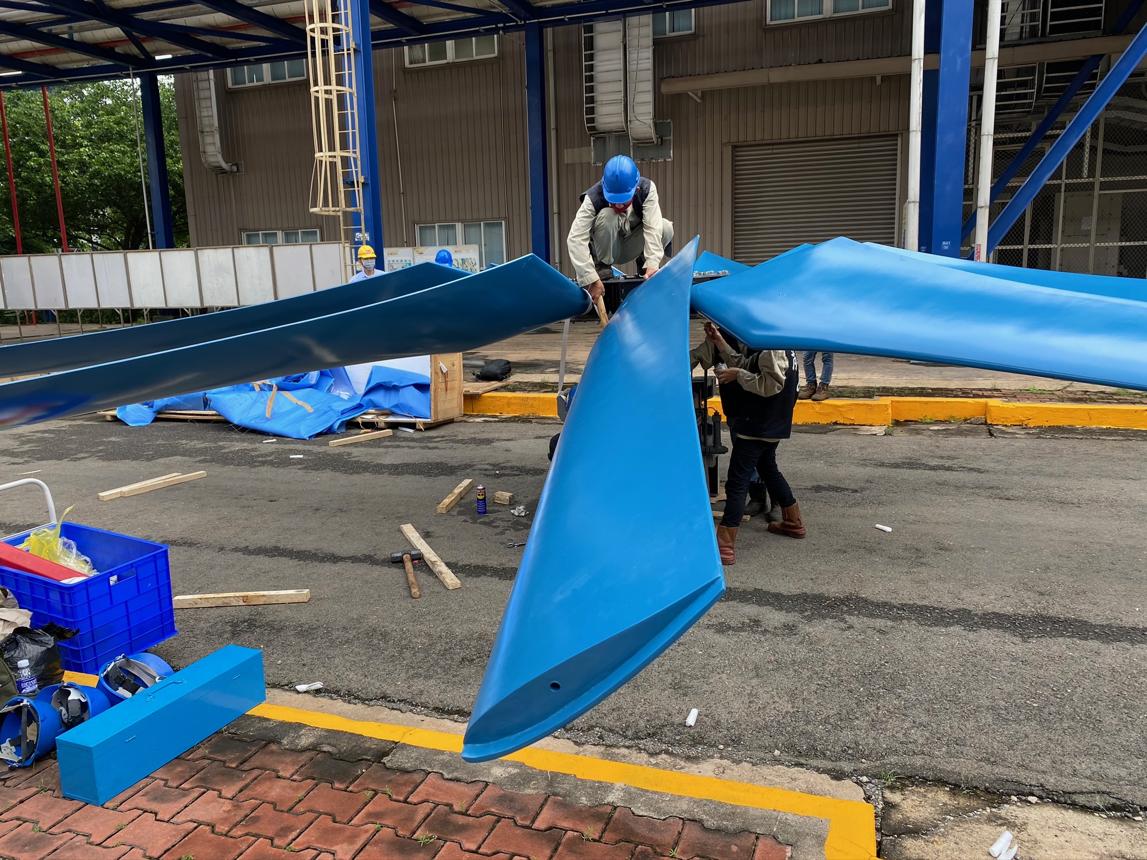
Aluminum Alloy Fan Blades
Aluminum alloy blades are lightweight and can provide a good strength-to-weight balance. They are used in some cooling tower fan designs and other industrial air-moving equipment.
Their suitability depends on the alloy, surface treatment, blade construction, and environmental conditions. In corrosive environments, the material and protective treatment require particular attention.
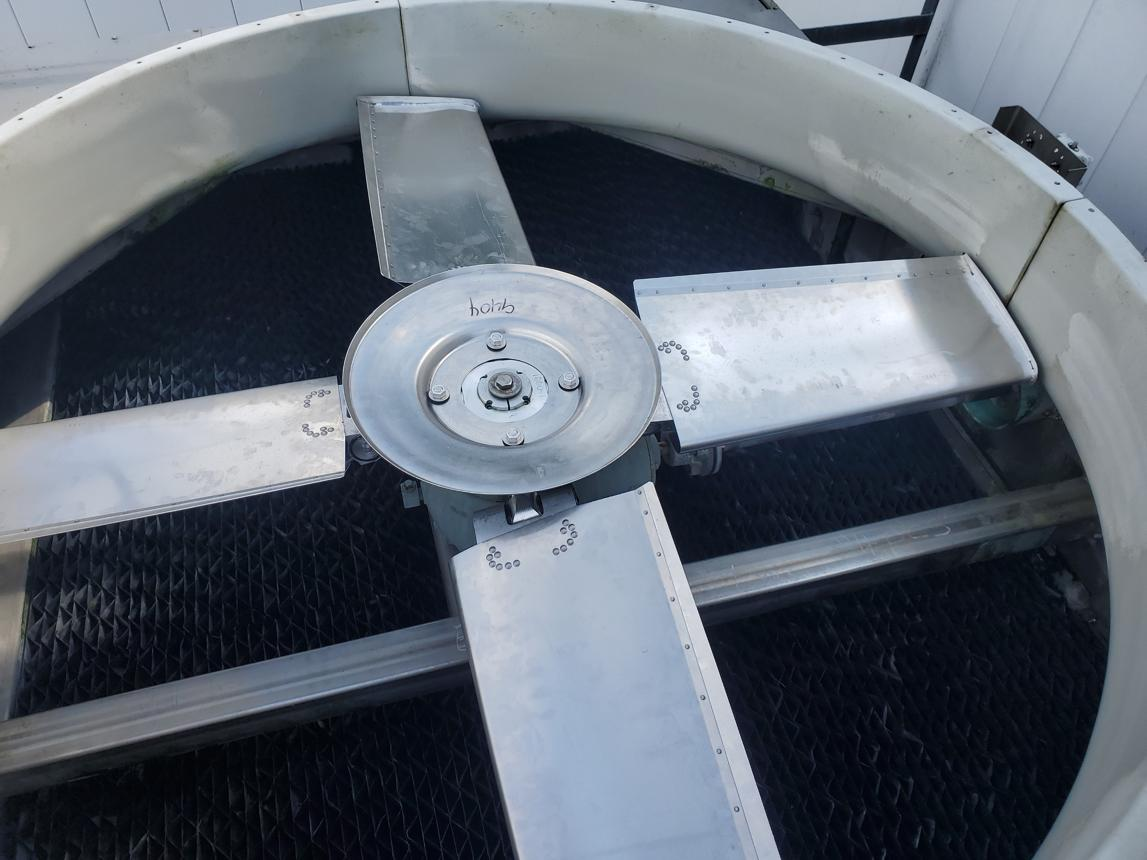
Stainless Steel Fan Blades
Stainless steel offers high mechanical strength and can provide corrosion resistance depending on the grade and environment.
However, stainless steel blades are generally heavier than FRP or aluminum alternatives. The added weight can affect the hub, shaft, bearings, gearbox, and motor load.
When considering stainless steel, verify the exact grade and confirm that the complete fan assembly is designed for the additional weight.
New Cooling Tower Fan vs. Replacement Fan
Are you buying a fan for a new cooling tower or replacing an existing unit? The purchasing process is slightly different.
For a new installation, start with the tower design conditions. These normally include the required cooling capacity, water flow, inlet and outlet water temperatures, ambient wet-bulb temperature, airflow requirement, and tower configuration.
For a replacement project, the existing equipment provides useful reference information. However, copying the old fan specifications is not always the best approach. The original fan may have been incorrectly selected, modified, or operated under different conditions.
A replacement assessment should consider:
Original fan model and specifications
Current cooling tower performance
Existing motor and gearbox condition
Fan stack dimensions
Blade and hub condition
Required airflow and static pressure
Any changes to the cooling process
If the tower has experienced reduced cooling performance, investigate the fill, water distribution, drift eliminators, air inlets, and drive system as well. A fan replacement alone may not solve the underlying problem.
How to Measure and Confirm Fan Specifications
Accurate measurements help prevent costly ordering mistakes. Before contacting a supplier, collect as much information as possible about the existing fan and cooling tower.
A useful purchasing checklist includes:
| Parameter | Information to Confirm |
| Fan type | Axial or centrifugal |
| Fan diameter | Overall fan diameter |
| Number of blades | Existing blade quantity |
| Blade material | FRP, aluminum alloy, stainless steel, or other |
| Hub type | Hub design and connection |
| Blade pitch | Existing pitch angle, if available |
| Rotational speed | Operating RPM |
| Airflow | Required airflow volume |
| Static pressure | Required system pressure |
| Motor power | Rated motor power |
| Drive system | Direct drive, gearbox, or other arrangement |
| Installation dimensions | Stack, mounting, and clearance dimensions |
Photographs are also helpful. Take clear pictures of the fan assembly, hub, blade connections, motor nameplate, gearbox nameplate, and installation area.
If possible, provide the original equipment model, drawings, and technical data sheet. These details allow the supplier to evaluate compatibility more accurately.
Cooling Tower Fan Installation and Commissioning
Correct installation is essential for safe and reliable operation. Even a suitable fan can perform poorly if it is installed incorrectly.
Before installation, inspect the fan stack, supporting structure, hub, fasteners, motor, gearbox, and related components. Check for corrosion, deformation, cracks, or other damage.
During installation, qualified personnel should follow the approved installation instructions and safety procedures.
Important checks include:
Correct fan orientation and rotation direction
Secure hub and blade connections
Consistent blade pitch where specified
Appropriate blade-tip clearance
Correct alignment of the drive system
Tightened fasteners according to specifications
Proper electrical connections and motor protection
After installation, conduct commissioning checks. Observe startup behavior, vibration, noise, motor current, and operating conditions. Compare measured performance with the approved design requirements.
Do not operate the fan if there are signs of abnormal vibration, blade interference, loose connections, or unexpected motor loading. Stop the equipment and investigate the cause.
Common Cooling Tower Fan Problems
Understanding common fan problems can help you decide whether to repair, replace, or upgrade your existing equipment.
Insufficient Airflow
Insufficient airflow may result from an unsuitable fan selection, incorrect blade pitch, low rotational speed, damaged blades, blocked air inlets, or excessive system resistance.
Check the fan and the entire airflow path before ordering a replacement.
Excessive Vibration
Vibration can be caused by unbalanced blades, loose fasteners, damaged bearings, shaft misalignment, or structural problems.
A vibrating fan should be inspected promptly. Continued operation may damage the hub, gearbox, motor, and supporting structure.
High Energy Consumption
High power consumption may indicate an inefficient operating point, incorrect blade pitch, mechanical friction, or an overloaded drive system.
Compare actual motor current and operating conditions with the equipment specifications. A fan upgrade may help, but the cause should be identified first.
Corrosion and Blade Damage
Moisture, chemicals, airborne particles, and environmental exposure can gradually damage fan components.
Regular inspections help identify surface deterioration, cracks, deformation, and connection problems before they develop into serious failures.
How Much Does a Cooling Tower Fan Cost?
The price of a cooling tower fan depends on more than its diameter. Two fans with similar dimensions may have very different prices because of differences in materials, engineering requirements, manufacturing processes, and accessories.
Important cost factors include:
Fan diameter and blade quantity
Blade material and construction
Hub design and connection requirements
Required airflow and static pressure
Motor and gearbox configuration
Custom dimensions or special designs
Inspection, packaging, and transportation
Installation and commissioning requirements
When comparing quotations, make sure you are comparing equivalent specifications. A lower quotation may exclude the hub, accessories, technical documentation, or other items required for installation.
It is also useful to consider total ownership cost. A suitable fan may offer better long-term value through reliable operation, manageable maintenance, and appropriate energy consumption.
For an accurate quotation, provide the supplier with your fan dimensions, technical requirements, application details, and photographs.
Where to Buy a Cooling Tower Fan
You can purchase cooling tower fans from specialized cooling tower manufacturers, industrial fan suppliers, replacement-parts companies, and engineering service providers.
The right purchasing channel depends on your project. If you need a fan for a new tower, a supplier with engineering and system-selection capabilities may be important. If you need a replacement, compatibility with the existing tower and drive system should be a priority.
Do not choose a supplier based only on a product photograph or a short price quotation. Ask whether the supplier can review your technical information and clarify the product configuration before production or shipment.
What to Look for in a Reliable Supplier
A reliable cooling tower fan supplier should be able to provide clear product information and communicate effectively throughout the purchasing process.
Consider the following points:
1. Product knowledge
The supplier should understand cooling tower fan types, blade materials, hub arrangements, and common installation requirements.
2. Technical documentation
Ask for relevant drawings, dimensions, performance information, and material details. The documentation should match the product being quoted.
3. Customization capability
Some cooling towers use non-standard dimensions or older fan assemblies. Confirm whether the supplier can evaluate special requirements.
4. Quality control
Ask about inspection procedures, material verification, dimensional checks, and product testing where applicable.
5. Communication and after-sales support
Clear communication helps prevent specification errors. A supplier should be willing to clarify technical questions before you place an order.
Why Technical Support Matters
A cooling tower fan is not an isolated component. Its performance depends on the interaction between the fan, motor, gearbox, tower structure, and airflow resistance.
That is why technical support matters. A supplier who checks the complete application can help identify missing information and reduce the risk of purchasing an incompatible product.
If you are unsure about the required fan specifications, send the supplier your existing equipment details and ask for a technical review before confirming the order.
Why Choose Power Tower Cooling Technology
Power Tower Cooling Technology (Shaoxing) Co.,Ltd focuses on cooling tower components and replacement solutions for industrial customers.
Through its website, www.coolingtowerpart.com, the company provides information and product support for customers looking for cooling tower parts and maintenance-related components.
When purchasing a cooling tower fan or planning a replacement project, customers should prepare the existing fan specifications, application conditions, and installation measurements. This information helps the supplier understand the project and assess the required configuration.
Power Tower aims to support customers with practical product communication and cooling tower parts solutions. Whether you are maintaining an existing cooling tower or sourcing components for an equipment upgrade, clear technical information is the starting point for a successful purchase.
If you are looking for a cooling tower fan, replacement blades, or related components, visit https://www.coolingtowerpart.com to learn more and contact the company with your requirements.
Cooling Tower Fan Maintenance Tips
Buying a suitable fan is only the first step. Regular maintenance helps protect your investment and supports stable cooling tower operation.
Here are several practical maintenance recommendations:
Inspect blades regularly. Look for cracks, deformation, corrosion, erosion, or other visible damage.
Check the hub and fasteners. Loose connections can cause vibration and mechanical damage. Follow the manufacturer's specified inspection and tightening procedures.
Monitor vibration and noise. Changes in operating sound or vibration may indicate imbalance, bearing problems, or alignment issues.
Check the drive system. Inspect the motor, gearbox, coupling, and related components according to their maintenance schedules.
Keep the airflow path clear. Remove obstructions that may restrict air movement through the tower.
Record operating data. Tracking motor current, vibration, and cooling performance can help identify changes before they become serious problems.
Always isolate the equipment and follow site safety procedures before carrying out inspections or maintenance.
Frequently Asked Questions
1. What type of cooling tower fan should I buy?
Axial fans are commonly used in mechanical-draft cooling towers because they can move large volumes of air. Centrifugal fans are suitable for certain applications with different airflow and pressure requirements. Your tower design and operating conditions should determine the correct type.
2. Are FRP cooling tower fans better than aluminum fans?
Neither material is automatically better for every application. FRP offers corrosion resistance and relatively low weight, while aluminum alloy provides a different balance of weight and mechanical properties. Compare the material, design, environment, and operating requirements before making a decision.
3. Can I replace my old cooling tower fan with a larger one?
Not without checking the system. A larger fan may require more power and may not fit the existing fan stack or drive arrangement. Confirm airflow, static pressure, rotational speed, motor capacity, gearbox limits, and mechanical clearances before changing the fan size.
4. What information do I need to buy a replacement cooling tower fan?
Prepare the existing fan diameter, blade quantity, blade material, hub dimensions, rotational speed, motor power, gearbox information, and installation measurements. Photos and original drawings are also useful.
5. How long does a cooling tower fan last?
Service life depends on material quality, operating conditions, installation, maintenance, and exposure to corrosion or mechanical stress. Regular inspections and proper operation can help extend service life, but damaged blades and components should be evaluated by qualified personnel.
6. Does a cooling tower fan affect energy consumption?
Yes. Fan efficiency, airflow requirements, operating speed, blade pitch, and system resistance all influence power consumption. A correctly selected fan can help avoid unnecessary energy use, but actual savings depend on the existing system and operating conditions.
7. Can I buy cooling tower fan blades separately?
In some fan designs, replacement blades can be purchased separately. However, the blades must be compatible with the existing hub, material, dimensions, pitch arrangement, and operating limits. Confirm compatibility before ordering individual blades.
8. How can I get a quotation for a cooling tower fan?
Send the supplier your required fan type, diameter, blade quantity, material, technical specifications, application details, and installation photographs. The more complete the information, the easier it is to evaluate the correct configuration and prepare a meaningful quotation.
Conclusion: Choose the Right Cooling Tower Fan for Long-Term Performance
When you buy a cooling tower fan, look beyond the purchase price. The right fan must match your tower's airflow requirements, operating conditions, installation dimensions, blade material, and drive system.
Start by checking the existing equipment or collecting the design specifications for a new installation. Compare fan performance, confirm mechanical compatibility, and work with a supplier who can review your technical requirements.
For industrial customers looking for cooling tower components and replacement solutions, Power Tower Cooling Technology (Shaoxing) Co.,Ltd provides product information and support through www.coolingtowerpart.com.
A well-matched cooling tower fan is more than a replacement part. It is an important investment in stable cooling performance, dependable operation, and long-term equipment value.


