When cooling tower fill becomes damaged, fouled, brittle, or inefficient, replacing the fill can restore heat-transfer performance without replacing the entire cooling tower. However, choosing the correct fill for cooling tower replacement requires more than measuring the overall fill pack.
Buyers need to consider fill size, material, thickness, sheet spacing, geometry, water loading, operating temperature, tower configuration, and installation requirements.
This guide explains the key cooling tower fill replacement specifications and what industrial buyers should check before ordering new fill media.
What Is Cooling Tower Fill Replacement?
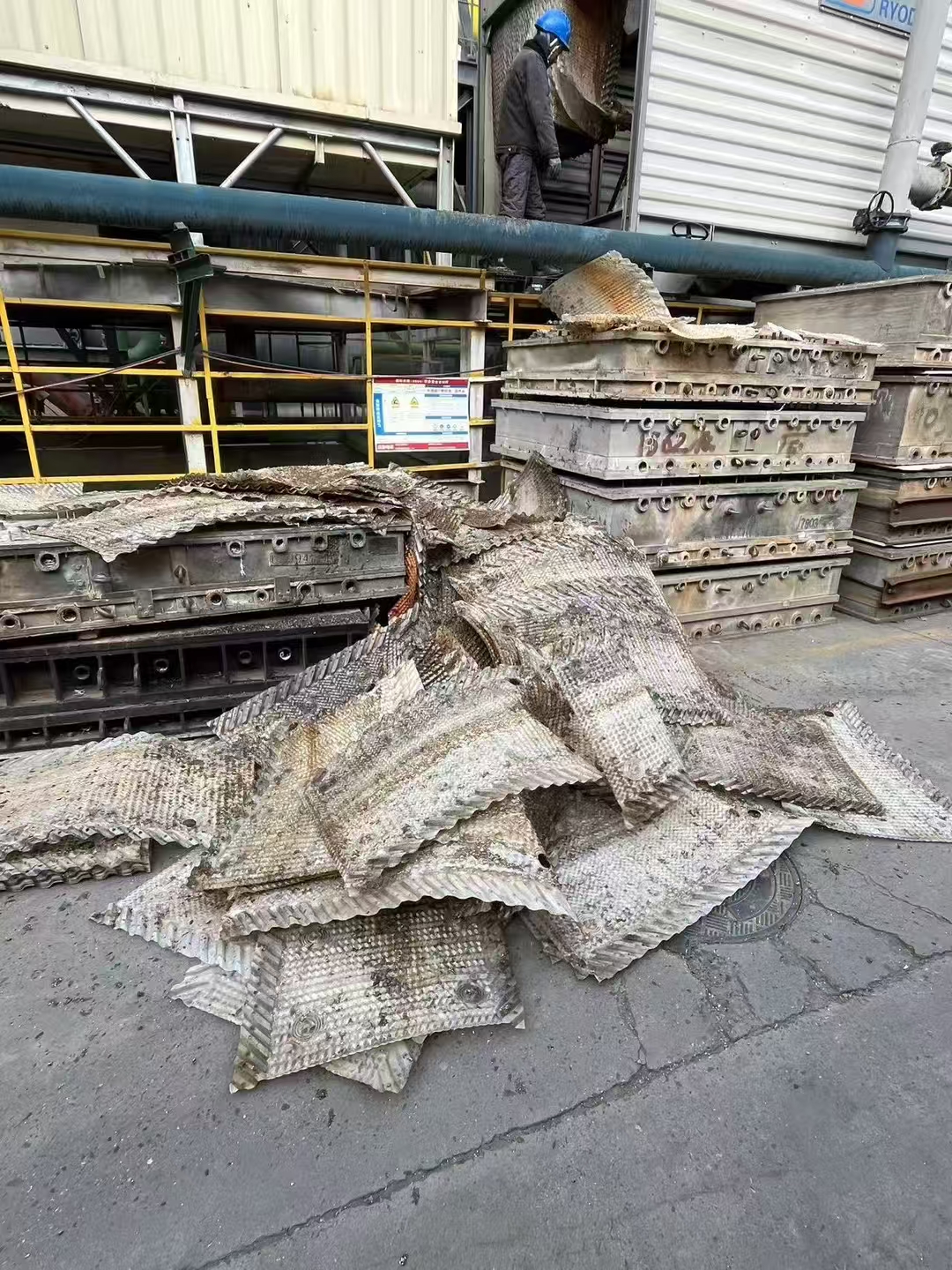
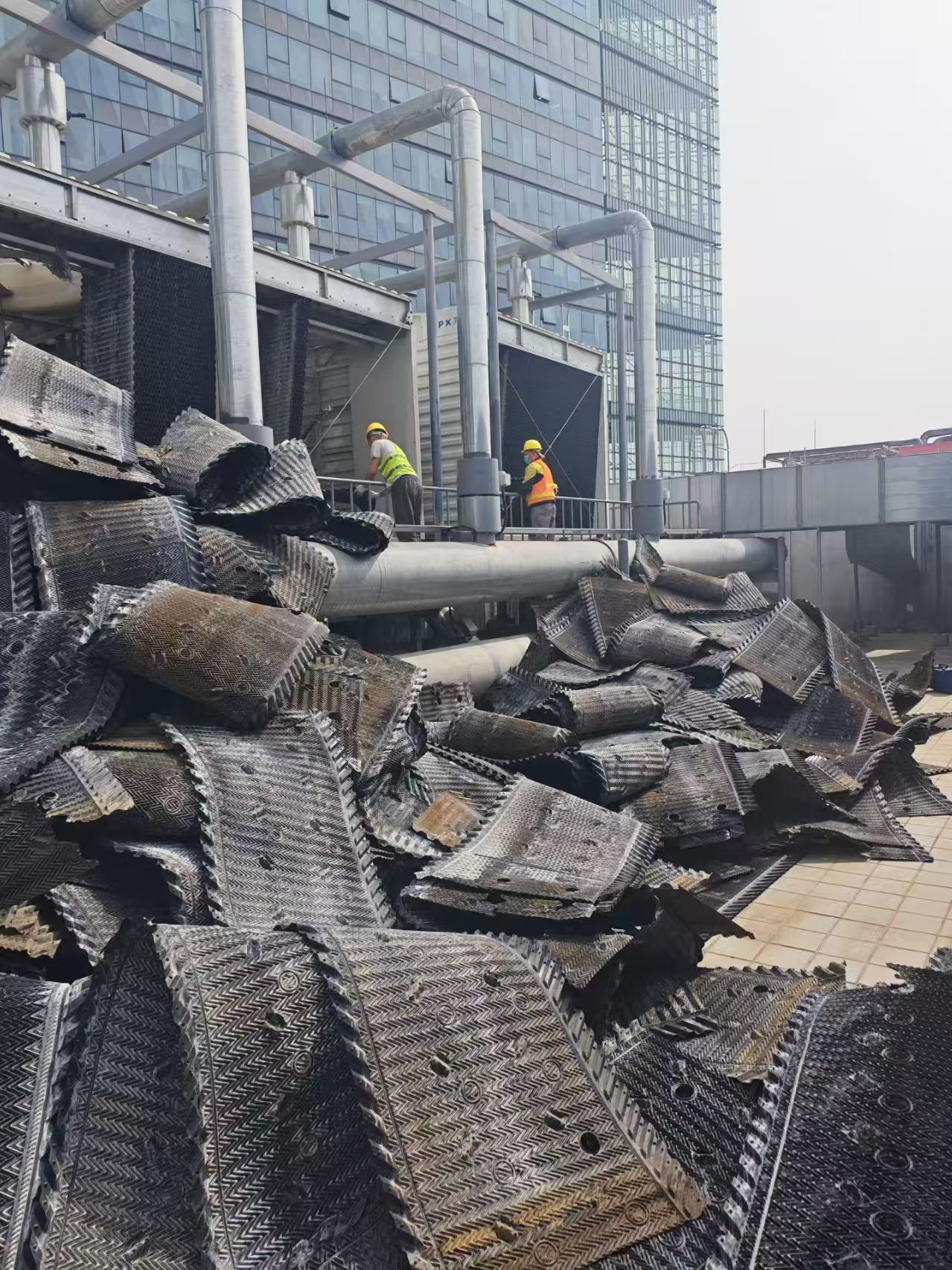
Cooling tower fill is the internal media that increases contact between circulating water and air. Over time, the fill can become clogged with scale, sediment, algae, or debris. Physical deterioration can also cause sheets to crack, deform, or collapse.
When cleaning no longer restores performance, cooling tower fill replacement may be necessary.
Replacing the fill can be part of a cooling tower retrofit or refurbishment project while retaining the existing tower structure, fan, basin, distribution system, and other components when they remain suitable.
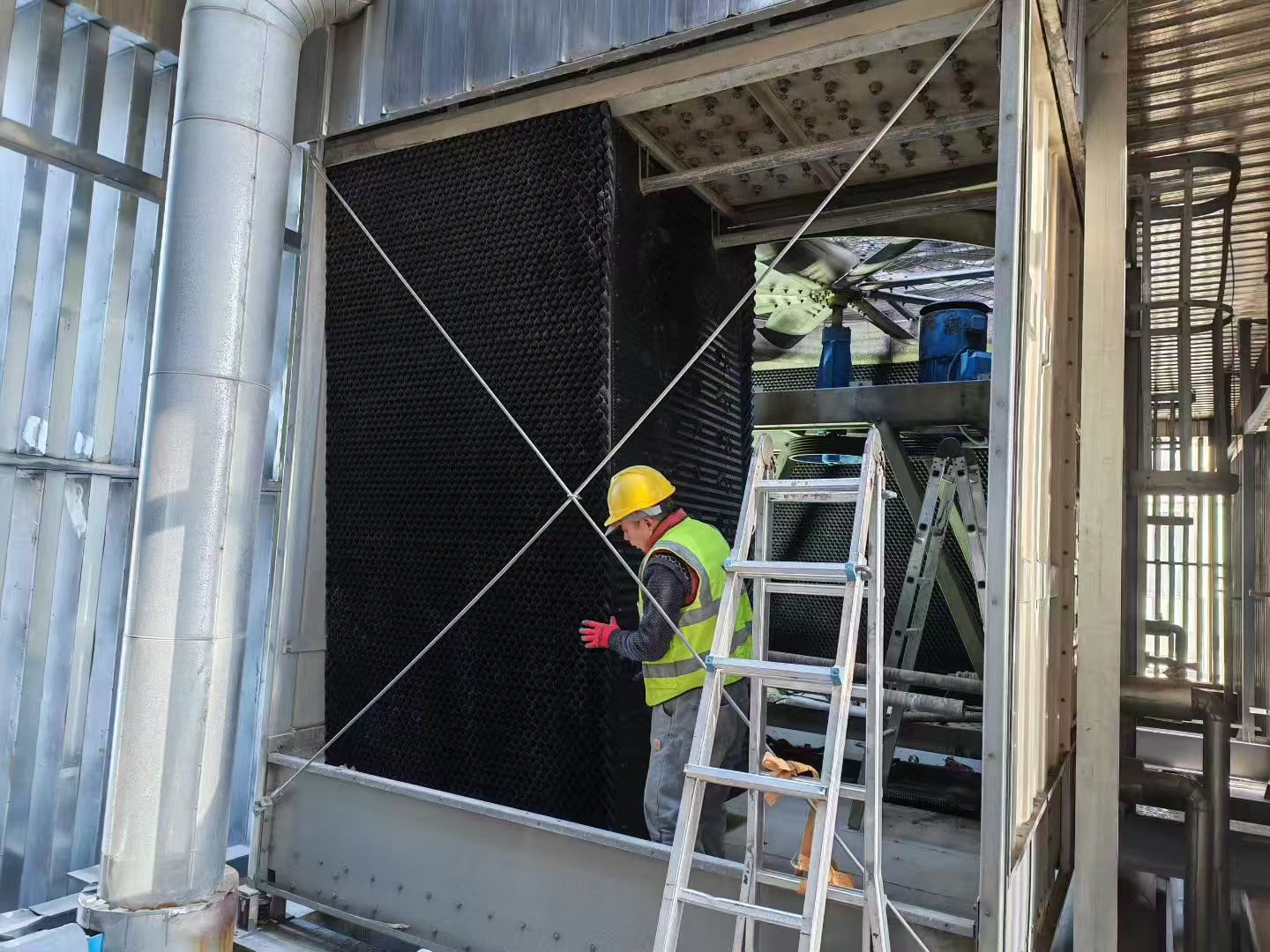
When Should Cooling Tower Fill Be Replaced?
Not every performance problem requires new fill. However, replacement should be considered when inspection identifies significant deterioration.
Common signs include:
Severe scale buildup
Permanent blockage
Cracked or brittle fill sheets
Collapsed fill packs
Broken splash bars
Deformed sheets
Excessive biological fouling
Poor water distribution through the fill
Increased airflow resistance
Reduced cooling capacity
Higher-than-normal cold-water temperature
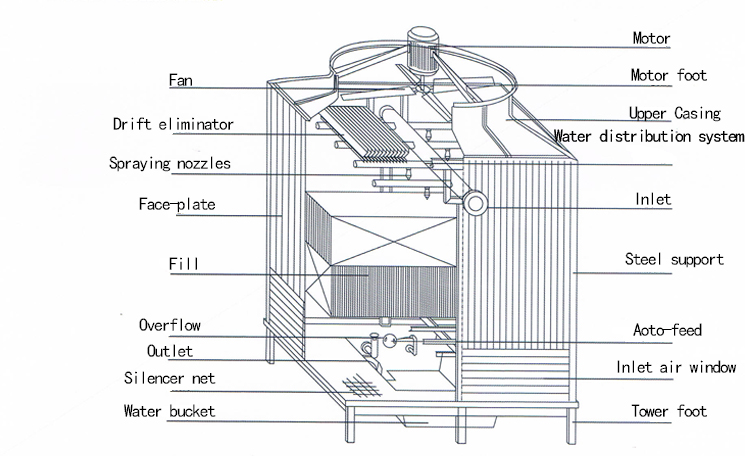
Before replacing the fill, inspect the cooling tower nozzles, distribution system, fan, drift eliminators, and water-treatment system as well. These components can also contribute to poor cooling performance.
Cooling Tower Fill Sizes
There is no universal cooling tower fill size. Dimensions depend on the tower design and the existing fill arrangement.
Important dimensions include:
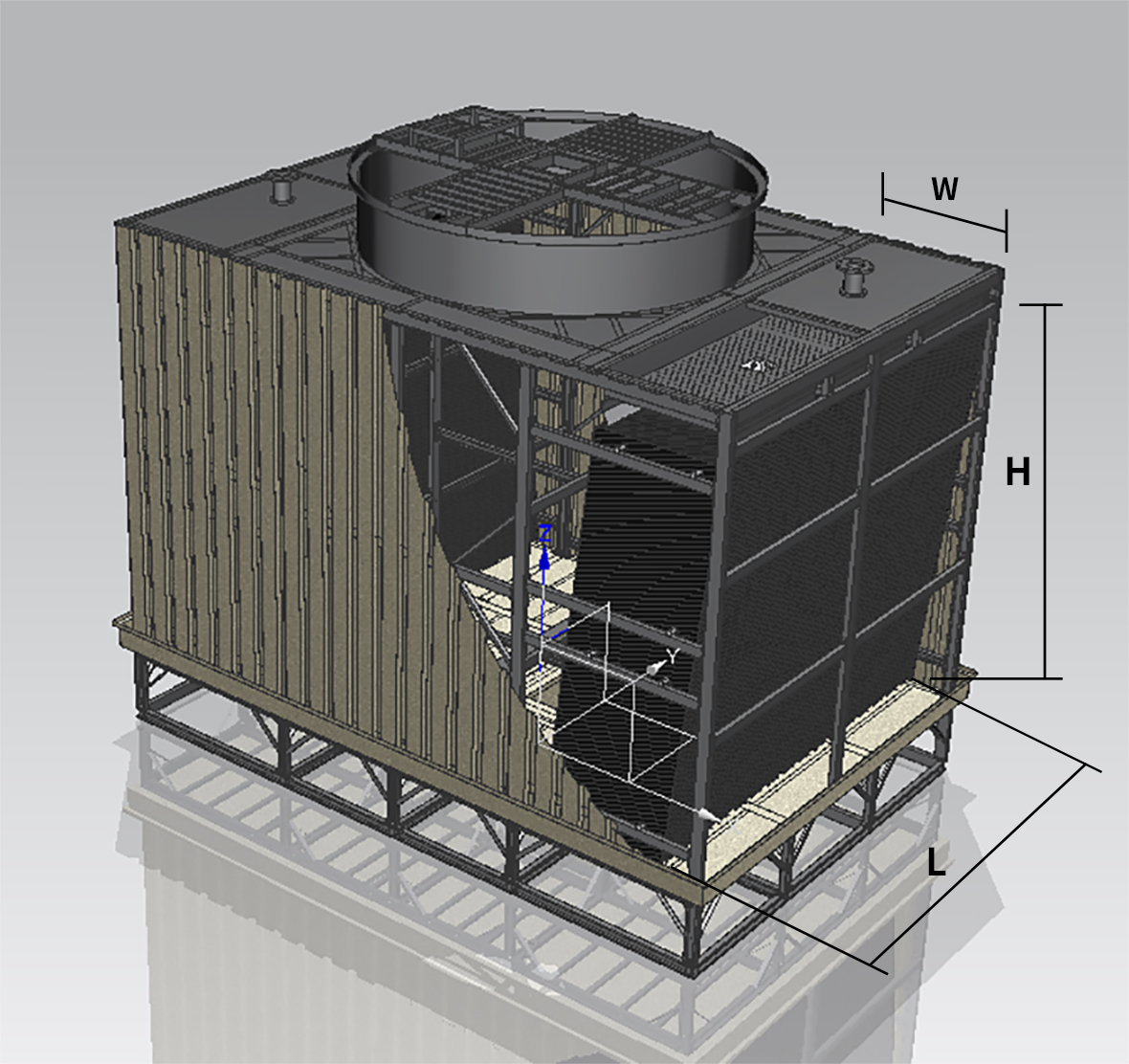
Fill Pack Length
The length should match the available installation space and support structure.
Fill Pack Width
Width determines how the fill fits between structural components and how the fill interfaces with the water distribution and airflow path.
Fill Height
Fill height affects the available heat-transfer area and must be compatible with the tower's design thermal duty.
Sheet Thickness
Film-fill sheets are available in different thicknesses. Thickness affects mechanical strength, weight, durability, and handling.
Sheet Spacing
The distance between adjacent sheets affects water distribution, air passage, pressure drop, and fouling resistance.
Module Dimensions
Some cooling tower fill is supplied as assembled modules or packs rather than individual sheets. Module dimensions should match the existing support arrangement.
Why Accurate Fill Dimensions Matter
A replacement fill pack that does not fit correctly can create installation and performance problems.
Incorrect dimensions may result in:
For this reason, buyers should provide accurate measurements and photographs when requesting a replacement.
Cooling Tower Fill Materials
The most common materials for cooling tower fill include PVC and polypropylene (PP).
PVC Cooling Tower Fill
PVC is widely used for film-fill applications.
Advantages can include:
Good thermal performance
Chemical resistance
Lightweight construction
Cost-effective production
Suitable forming characteristics
Good service life under appropriate conditions
PVC cooling tower fill is commonly used in HVAC and industrial cooling tower applications.
However, PVC fill should be selected according to the actual operating temperature and water chemistry.
PP Cooling Tower Fill
Polypropylene is commonly used for both film and splash fill.
PP can offer:
PP cooling tower fill is particularly common in industrial applications where water quality or operating temperature makes material selection important.
Film Fill vs. Splash Fill Replacement
The existing fill type is one of the most important replacement specifications.
Film Fill
Film fill uses formed sheets to spread water into thin films.
It provides a large effective water-air contact area and is widely used where high thermal performance is required.
Important specifications include:
Film fill requires appropriate water treatment because narrow passages can become blocked by scale, sediment, or biological growth.
Splash Fill
Splash fill uses bars, grids, or other structures to break falling water into smaller streams and droplets.
Important specifications include:
Splash-bar dimensions
Grid configuration
Module size
Material
Support spacing
Water loading
Operating temperature
Splash fill can be suitable for applications where suspended solids and fouling are concerns.
Important Cooling Tower Fill Specifications
When sourcing replacement fill, buyers should create a specification sheet containing the following information:
| Specification | What to Confirm |
| Fill type | Film, splash, or hybrid |
| Material | PVC, PP, or other material |
| Fill dimensions | Length × width × height |
| Sheet thickness | Actual thickness required |
| Sheet spacing | Existing spacing |
| Geometry | Corrugation or splash configuration |
| Operating temperature | Normal and maximum |
| Water flow | Circulating-water rate |
| Tower type | Crossflow or counterflow |
| Water quality | Solids, scale, biological fouling |
| Support structure | Existing support dimensions |
| Thermal duty | Required cooling performance |
Providing these details helps a supplier identify a compatible replacement more accurately.
Crossflow vs. Counterflow Cooling Tower Fill
Tower configuration also affects fill selection.
Crossflow Cooling Tower Fill
In a crossflow tower, air generally moves horizontally through the fill while water flows downward.
The fill must work with the tower's existing water distribution and airflow arrangement.
Counterflow Cooling Tower Fill
In a counterflow tower, air moves upward while water moves downward.
Fill geometry and water distribution are designed to support countercurrent air-water contact.
Crossflow and counterflow fill should not automatically be considered interchangeable. Always verify the tower configuration before ordering replacement fill.
How to Measure Cooling Tower Fill Before Replacement
Accurate measurements make the replacement process easier.
Step 1: Identify the Fill Type
Determine whether the tower uses film, splash, or hybrid fill.
Step 2: Measure the Existing Pack
Record length, width, and height. If multiple modules are installed, measure representative modules.
Step 3: Check Sheet Details
For film fill, record approximate sheet thickness, spacing, and geometry.
Step 4: Check the Support System
Measure support beams, hangers, bars, and installation clearances.
Step 5: Record Operating Conditions
Provide water temperature, water flow rate, tower type, and water quality information.
Step 6: Take Photos
Photos of the complete fill installation and close-ups of the existing media can help identify the replacement configuration.
Cooling Tower Fill Replacement and Thermal Performance
The purpose of replacement is not simply to fill the same space with plastic sheets. The new fill must provide appropriate heat and mass transfer under the tower's actual operating conditions.
Changing fill geometry can affect:
Heat-transfer area
Airflow resistance
Water distribution
Pressure drop
Fouling characteristics
Tower thermal capacity
For this reason, a replacement fill should be selected based on the complete tower application rather than price alone.
OEM-Compatible vs. Aftermarket Cooling Tower Fill
Industrial buyers often encounter both OEM and aftermarket replacement options.
An OEM-compatible cooling tower fill is designed to match the dimensions and operating requirements of an existing tower configuration.
An aftermarket replacement may provide a compatible alternative using equivalent or updated fill geometry and materials.
When comparing suppliers, look beyond the product name. Confirm actual dimensions, material, thermal requirements, installation configuration, and operating conditions.
How to Choose the Right Cooling Tower Fill Replacement
Before placing an order, check these key points:
Tower configuration – Crossflow or counterflow.
Existing fill type – Film, splash, or hybrid.
Material – PVC or PP.
Exact dimensions – Length, width, and height.
Operating temperature – Normal and maximum.
Water quality – Suspended solids, scale, and biological growth.
Water flow rate – Required water loading.
Airflow requirements – Fan capacity and fill pressure drop.
Support arrangement – Existing structural configuration.
Thermal duty – Required range and approach.
This information allows suppliers to recommend a replacement that is physically compatible and suitable for the application.
Frequently Asked Questions
What is the standard size of cooling tower fill?
There is no single standard size. Cooling tower fill dimensions vary by tower model, fill design, manufacturer, and application.
What material is best for cooling tower fill?
PVC and PP are widely used. The appropriate choice depends on operating temperature, water chemistry, fouling conditions, and fill design.
Can I replace film fill with splash fill?
In some retrofit projects, a different fill type may be possible, but it should not be treated as a direct replacement without checking the tower's thermal and hydraulic requirements.
How do I measure cooling tower fill?
Measure the fill module's length, width, and height, then record sheet thickness, spacing, geometry, and support dimensions where applicable.
How long does cooling tower fill last?
Service life varies according to water quality, temperature, UV exposure, cleaning practices, chemical treatment, and operating conditions. Regular inspection is the best way to determine when replacement is required.
Conclusion
Choosing the correct fill for cooling tower replacement requires careful attention to size, material, geometry, operating conditions, and tower configuration.
PVC film fill is widely used for high-surface-area heat transfer, while PP fill is available for both film and splash applications. Splash fill can be particularly useful where water quality and fouling resistance are important.
Before purchasing replacement fill, measure the existing installation and collect information about the tower, water flow, operating temperature, and water quality. A properly matched replacement can help restore water-air contact, maintain heat-transfer performance, and extend the useful life of the cooling tower.
Power Tower Cooling Technology (Shaoxing) Co.,Ltd supplies PVC cooling tower fill, PP cooling tower fill, film fill, splash fill, and replacement fill media for industrial and commercial cooling tower projects.
Internal Links for Other CoolingTowerParts
Cooling Tower reducer
Cooling Tower Nozzles
Cooling Tower Drift Eliminators
Cooling Tower Louvers
Cooling Tower Fan Blades
Cooling Tower Motors