Cooling tower fill is one of the most important components inside an industrial cooling tower. It increases the contact area between hot process water and moving air, allowing heat to transfer more efficiently before the cooled water returns to the system.
Whether you are designing a new cooling tower, replacing damaged fill, or upgrading an existing system, understanding cooling tower fill types, materials, performance, and applications is essential.
This guide explains what cooling tower fill is, how it works, the main types available, and how to choose the right fill media for industrial applications.
What Is Cooling Tower Fill?
Cooling tower fill, also called cooling tower fill media, is the internal material that increases the surface area available for heat and mass transfer between water and air.
Without fill, water would fall through the tower in relatively large droplets. The contact time and surface area would be limited, reducing cooling performance.
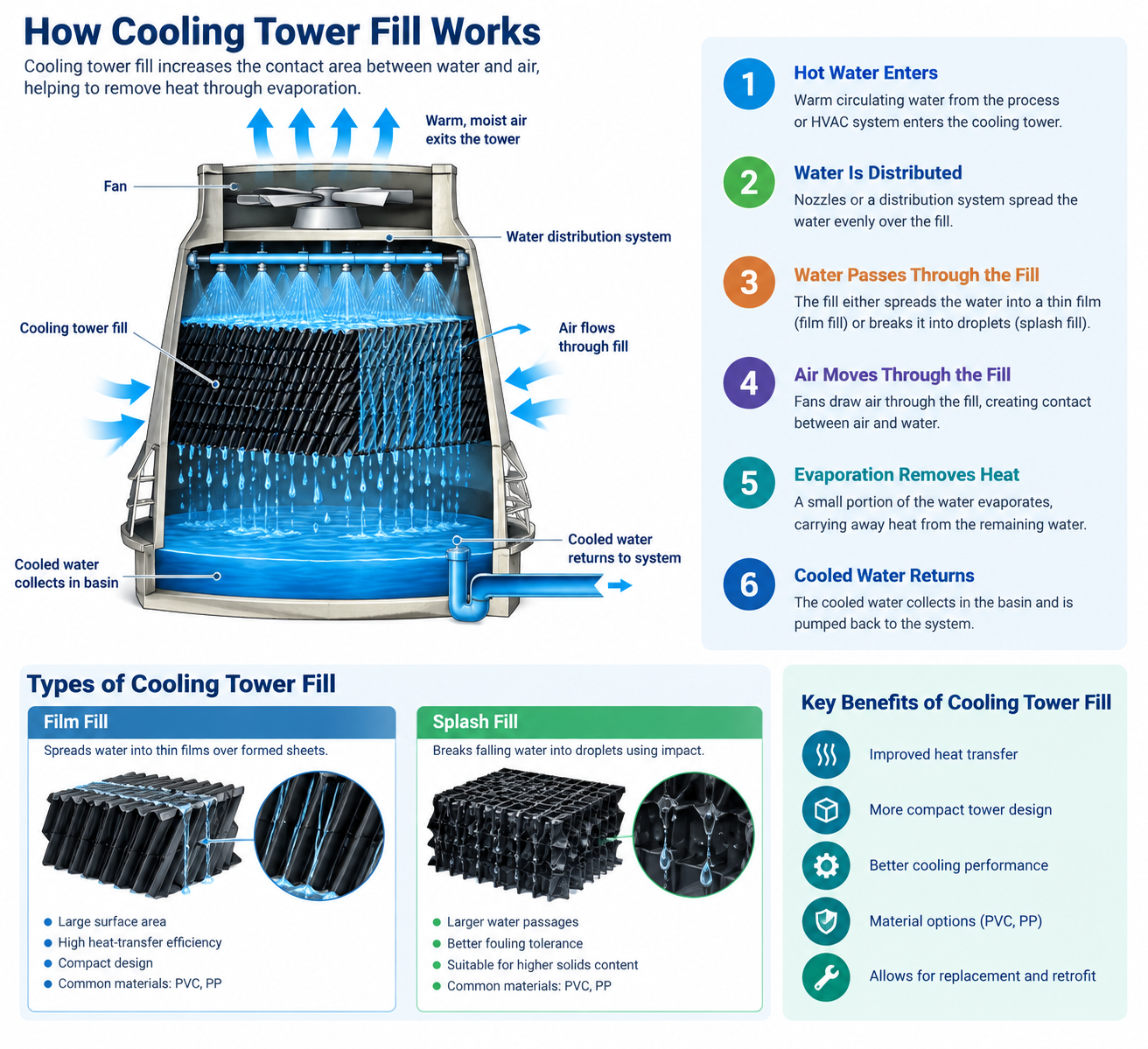
Cooling tower fill solves this problem by spreading water across a large surface or breaking it into droplets. As air moves through the tower, heat transfers from the warm water to the air. Some water also evaporates, removing additional heat from the circulating water.
Common cooling tower fill materials include:
Modern industrial cooling towers commonly use PVC or PP fill media because these materials offer a combination of chemical resistance, low weight, and good long-term performance.
How Does Cooling Tower Fill Work?
The basic function of cooling tower fill is simple: increase water-air contact for better heat transfer.
Warm water enters the cooling tower through the distribution system and flows downward through the fill. At the same time, air moves through the fill, either naturally or with the assistance of fans.
Inside the fill:
Water spreads over the fill surface or breaks into droplets.
The fill increases the contact area between water and air.
Heat moves from the water into the air.
A small portion of water evaporates.
Cooled water collects in the cold-water basin.
The larger contact area created by the fill allows the tower to achieve the required cooling duty within a relatively compact space.
Main Cooling Tower Fill Types
Cooling tower fill is generally divided into three major categories: film fill, splash fill, and hybrid fill.
1. Film Fill
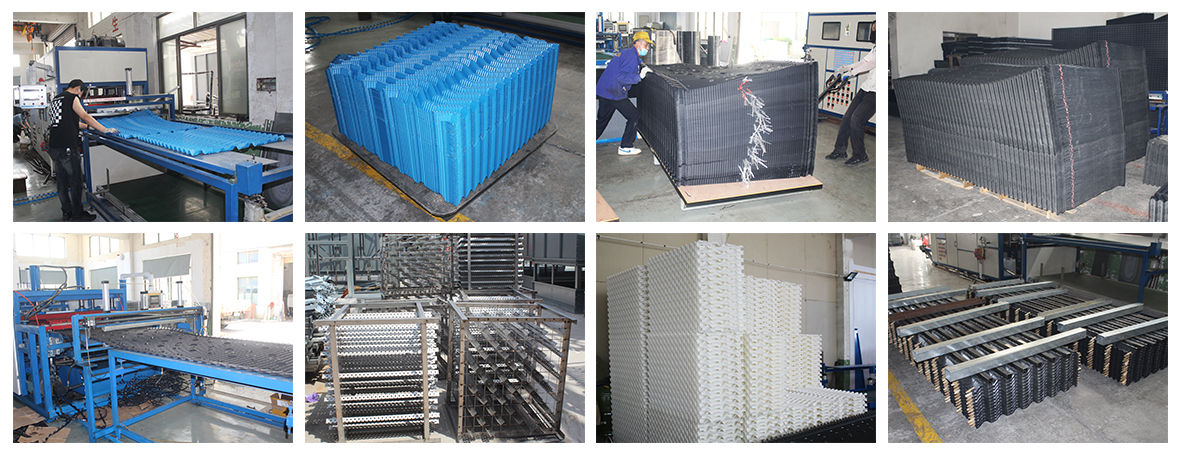
Film fill uses thin sheets formed with corrugations, grooves, or other surface patterns. Water flows over the sheets and forms a thin film.
The large wetted surface area promotes efficient heat and mass transfer.
Advantages of film fill include:
High thermal performance
Large effective surface area
Compact design
Efficient water distribution
Suitable for many industrial and HVAC cooling towers
PVC film fill is particularly common in crossflow and counterflow cooling tower applications.
However, film fill may be more sensitive to fouling and blockage when the circulating water contains high levels of suspended solids, biological growth, or other contaminants.
2. Splash Fill
Splash fill works differently. Instead of creating a continuous water film, it repeatedly breaks water into smaller droplets as water falls across the fill.
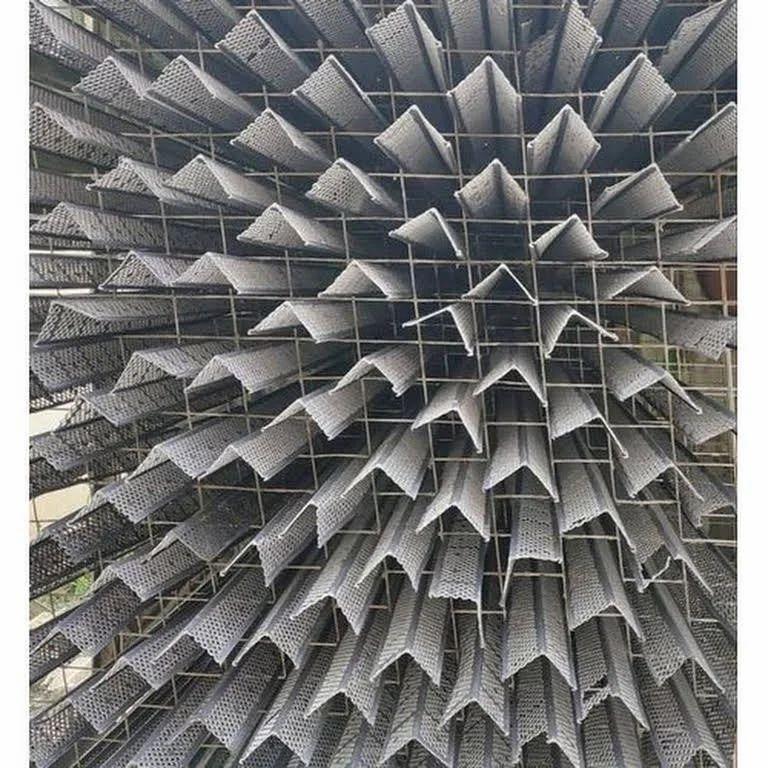
Common splash-fill designs include:
PP splash bars
PVC splash grids
Splash modules
Ladder-type splash fill
Hanging splash fill
Splash fill is often selected for applications where water quality is challenging because its open structure can provide better resistance to plugging than tightly spaced film-fill sheets.
It is widely used in industrial cooling towers and systems with relatively dirty or contaminated circulating water.
3. Hybrid Fill
Hybrid fill combines characteristics of film and splash technologies. Its design attempts to provide efficient heat transfer while maintaining greater resistance to fouling than conventional high-density film fill.
Hybrid cooling tower fill can be considered when the application requires a balance between thermal performance, water quality tolerance, and maintenance requirements.
Cooling Tower Fill Materials
PVC Cooling Tower Fill
PVC cooling tower fill is one of the most widely used options.
PVC provides:
Good corrosion resistance
Good chemical resistance in suitable operating conditions
Low weight
Cost-effective manufacturing
Good forming capability
Long service life when properly selected and maintained
PVC film fill is commonly used for standard industrial and HVAC cooling tower applications.
PP Cooling Tower Fill
PP cooling tower fill is made from polypropylene and is available in both film and splash configurations.
PP can offer good chemical resistance and higher temperature capability than standard PVC in appropriate applications.
PP splash fill is especially popular in industrial cooling towers where fouling resistance and mechanical durability are important considerations.
Other Materials
Special applications may use other polymers or materials based on temperature, chemical exposure, fire requirements, water quality, and tower design.
The correct material should always be selected according to the actual operating conditions rather than price alone.
Benefits of Cooling Tower Fill
Improved Heat Transfer
The primary benefit of cooling tower fill is increasing the effective contact area between water and air. Better contact generally improves the tower's ability to reject heat.
Higher Cooling Efficiency
Well-designed fill can help a cooling tower achieve the required cooling duty with an efficient combination of water flow, airflow, and tower volume.
Compact Cooling Tower Design
Because fill increases the effective heat-transfer area, a tower can achieve substantial cooling performance within a relatively compact footprint.
Reduced Water Temperature
Efficient fill helps lower circulating-water temperature before the water returns to the process or condenser system.
Retrofit and Replacement Flexibility
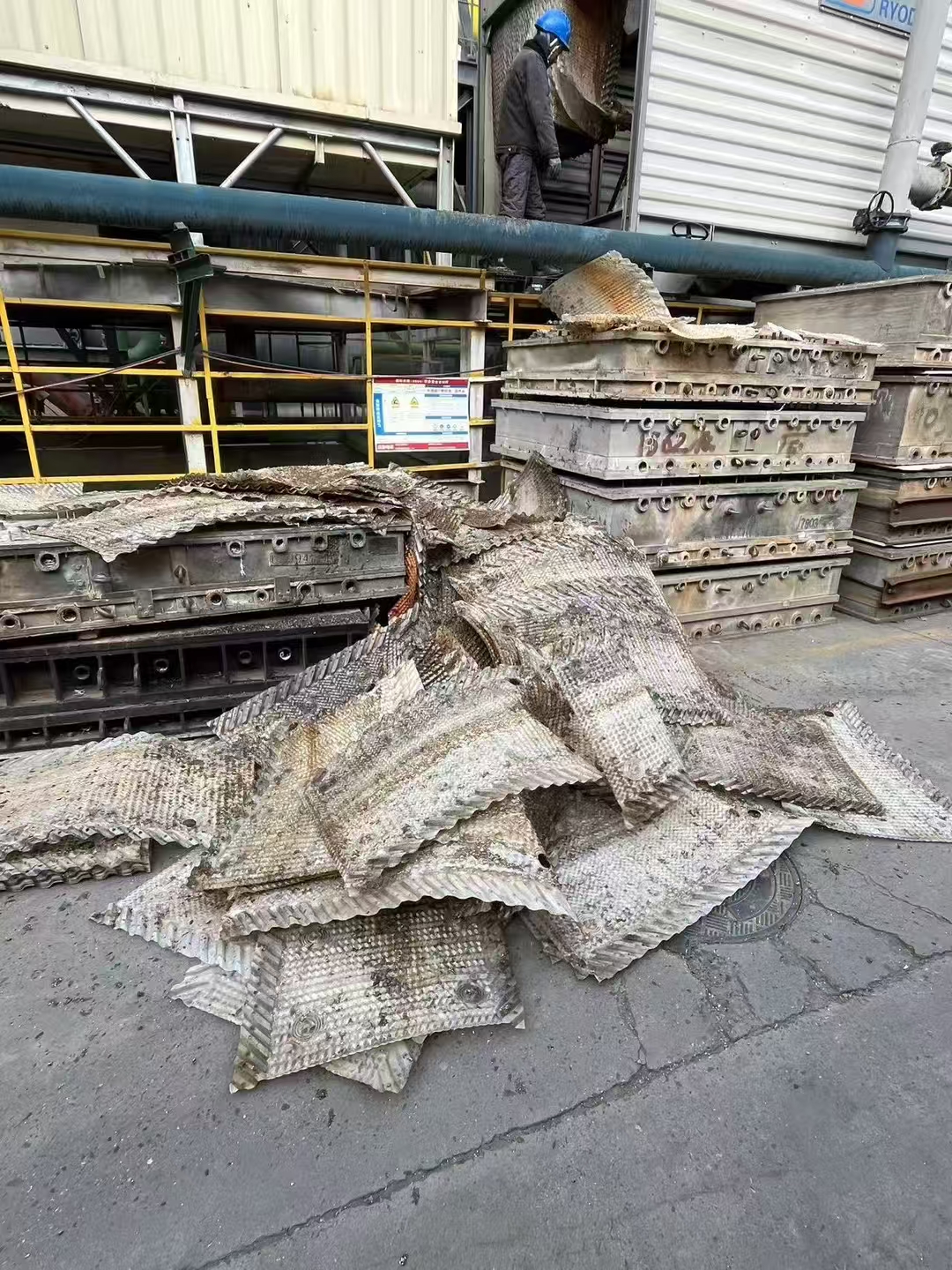
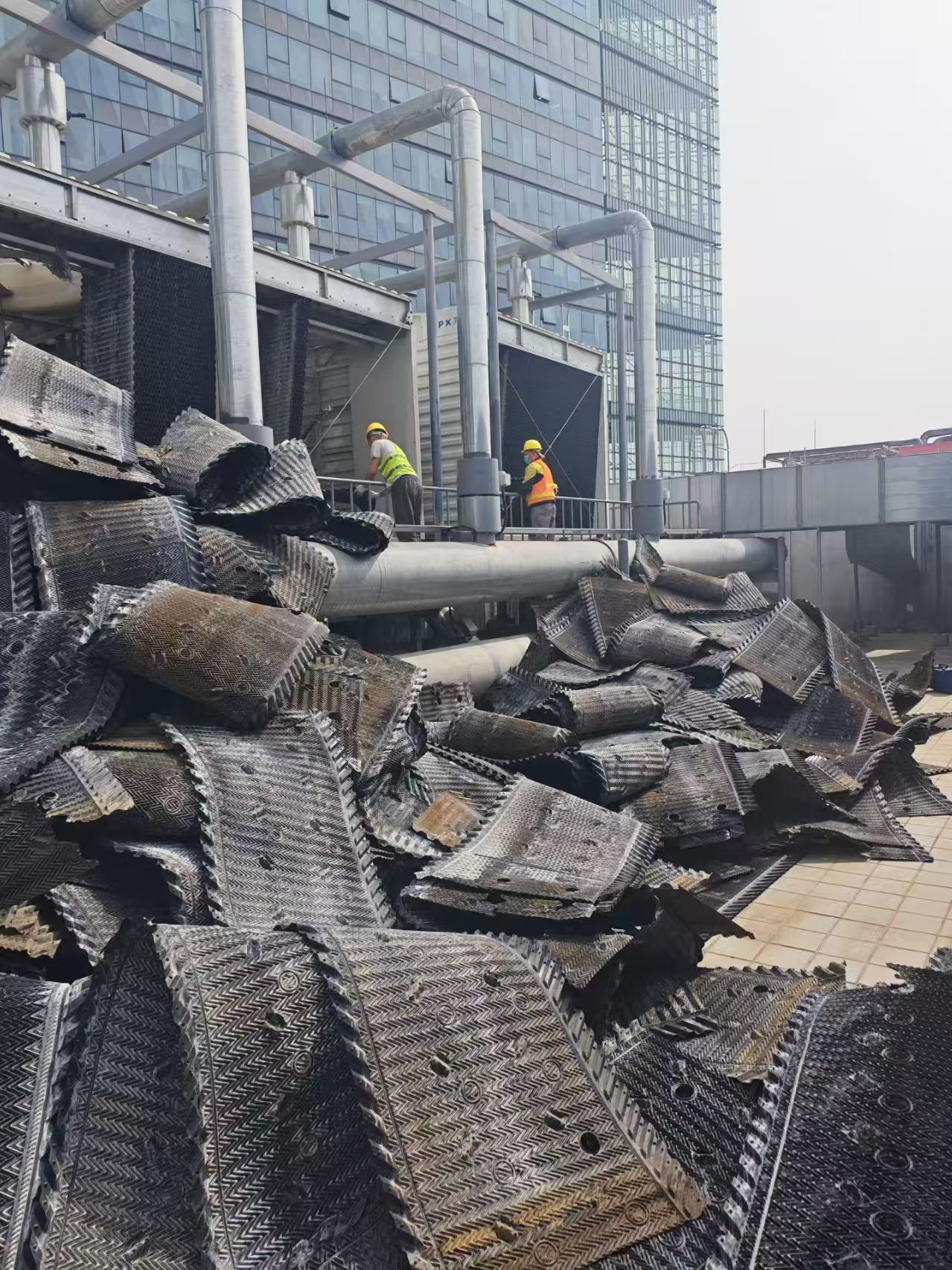
Replacement cooling tower fill can be used to restore performance when existing fill becomes damaged, brittle, clogged, or deformed.
A properly engineered replacement can also provide an opportunity to optimize the fill design for current operating conditions.
Film Fill vs. Splash Fill
Choosing between film and splash fill depends heavily on water quality and cooling requirements.
| Feature | Film Fill | Splash Fill |
| Heat-transfer efficiency | Generally high | Generally moderate to high |
| Surface area | High | Lower than film fill |
| Fouling resistance | Lower in heavily contaminated water | Generally better |
| Maintenance | Requires good water quality | Often more tolerant of solids |
| Typical material | PVC, PP | PP, PVC |
| Common application | Clean or treated water | Industrial/dirty water applications |
There is no universal fill type for every cooling tower. Water chemistry, suspended solids, biological growth, temperature, airflow, water loading, and required thermal performance should all be considered.
When Should Cooling Tower Fill Be Replaced?
Cooling tower fill does not necessarily need replacement on a fixed schedule. Its service life depends on operating conditions and maintenance.
Common warning signs include:
Cracked or brittle fill sheets
Deformed fill packs
Excessive scaling
Biological fouling
Plugged passages
Broken splash bars
Reduced cooling performance
Increased approach temperature
Uneven water distribution
If fill becomes severely damaged or blocked, cleaning may no longer restore the original performance. In such cases, cooling tower fill replacement may be more economical.
How to Choose the Right Cooling Tower Fill
Before purchasing replacement or new fill media, consider these factors:
1. Cooling Tower Design
Identify whether the tower is crossflow or counterflow and determine the available fill dimensions.
2. Water Quality
Check suspended solids, hardness, biological contamination, oil, and chemical composition. Poor water quality may favor splash or more open fill designs.
3. Operating Temperature
Confirm the normal and maximum water temperature and select a fill material suitable for the operating range.
4. Thermal Requirements
Consider water flow rate, air flow, hot-water temperature, cold-water temperature, and required approach.
5. Fill Dimensions
Replacement fill must fit the existing tower configuration. Incorrect dimensions can cause installation problems and poor water distribution.
6. Maintenance Requirements
Consider how easily the fill can be inspected, cleaned, removed, and replaced.
Cooling Tower Fill for Replacement Projects
For a replacement project, do not select fill solely by matching the old material.
A proper assessment should include:
Existing tower dimensions
Fill height and volume
Water loading
Airflow
Operating temperatures
Water quality
Existing nozzle or distribution system
Support structure
Required thermal performance
A compatible PVC or PP cooling tower fill replacement can help restore tower performance while reducing unnecessary modifications to the existing structure.
Frequently Asked Questions
What is the main function of cooling tower fill?
The main function of cooling tower fill is to increase the contact area and contact time between circulating water and air, improving heat and mass transfer.
What is the best material for cooling tower fill?
PVC and PP are widely used materials. The appropriate choice depends on temperature, water chemistry, fouling conditions, mechanical requirements, and tower design.
Is film fill better than splash fill?
They serve different operating conditions. Film fill generally provides high heat-transfer efficiency, while splash fill can offer greater tolerance to contaminated or solids-laden water.
How long does cooling tower fill last?
Service life varies significantly with water quality, operating temperature, chemical exposure, cleaning, and maintenance. Regular inspection is more reliable than using a fixed replacement interval.
Can cooling tower fill be replaced?
Yes. Replacement fill can be engineered for many existing crossflow and counterflow cooling towers, provided the dimensions, support arrangement, water loading, and thermal requirements are properly matched.
Conclusion
Cooling tower fill plays a critical role in the thermal performance of an industrial cooling tower. By increasing water-air contact, fill media improves heat transfer and allows the tower to cool circulating water efficiently.
The main choices include film fill, splash fill, and hybrid fill, with PVC and PP among the most common materials. The right option depends on water quality, thermal requirements, operating temperature, tower configuration, and maintenance conditions.
For new installations and cooling tower fill replacement projects, selecting the correct fill geometry and material is essential for achieving reliable performance and long service life.
Internal Links for Other CoolingTowerParts
Cooling Tower Nozzles
Cooling Tower Drift Eliminators
Cooling Tower Louvers
Cooling Tower Fan Blades
Cooling Tower Motors